Writing as Thinking: The Rhetorical Situation
Most people believe writing is the act of transcribing a finished thought. It almost never is. Writing is the machinery by which a vague hunch becomes a claim you can defend — which is why the blank page feels so hostile, and why the sentence you finally produce is often smarter than the idea you started with. This chapter gives you a working diagnostic tool: the rhetorical situation, a five-part read on who is writing, to whom, about what, in what setting, and for what purpose. You will use it to explain why a text message to your charge nurse, a discussion-board post, and a policy memo can carry the identical information and yet only one of them lands. Every move here is shown twice — the version that misses, and the version that works — because rhetorical awareness is a skill you practice, not a theory you memorize.
By the end of this chapter you can
- Define the five elements of the rhetorical situation — writer, audience, message, context, purpose — and identify each in a text you did not write.
- Explain how writing functions as generative thinking rather than transcription, and use at least two low-stakes invention moves to find out what you actually believe.
- Analyze an audience by expertise, stance, and stake, then predict which objections that audience will raise before it raises them.
- Distinguish purpose from topic, and write a one-sentence purpose statement using an action verb.
- Adjust register, diction, and sentence length to fit a genre without changing the underlying claim.
- Apply the classical appeals — ethos, pathos, logos, kairos — as diagnostic categories on your own drafts.
- Recognize constraints and affordances in an assignment prompt and convert them into a checklist before drafting.
- Revise a paragraph so it fits a different audience while preserving its factual content.
- Evaluate your own draft against a rhetorical rubric and name the single highest-leverage fix.
Section 1Writing Is Thinking, Not Transcription
The transcription myth
Ask a room of students why writing is hard and most will describe the same problem: they know what they want to say but cannot get it onto the page. That description contains a hidden and false premise — that a complete, articulated thought is already sitting in the mind, waiting to be typed out. If that were true, writing would be a typing-speed problem. It is not. The blockage is almost always that the thought is not yet finished, and the page is the only place it can finish.
Consider what happens when you write a single sentence about something you half-understand. You commit to a subject, then a verb, then an object. Each commitment closes off alternatives and forces a decision you had been quietly avoiding. Write “the nursing shortage is caused by burnout” and you have now claimed a causal relationship, singular and total. Read it back and you immediately feel the objection: caused, or worsened? The only cause? Burnout among whom? The sentence did not report a thought. It exposed one, and in exposing it, improved it.
This is why professional writers routinely say they write to find out what they think. It is not modesty or mysticism. It is a description of how the mechanism works. Generative writing — writing done to produce ideas rather than to display them — is a distinct activity from presentational writing, the polished artifact you hand in. Confusing the two is the single most common cause of the blank page. You are trying to perform the second while you still need the first.
What a thought looks like before and after
The difference is visible. Below is a student’s raw note from a nursing ethics course, then the sentence that same student wrote after twenty minutes of low-stakes freewriting on the same idea. Nothing external was added — no new reading, no instructor comment. The thinking happened in the writing.
| Stage | What was written | What changed |
|---|---|---|
| Initial note | “Nurses should be able to refuse assignments they think are unsafe.” | A slogan. No agent, no mechanism, no limit. “Think are unsafe” makes it purely subjective. |
| After freewriting | “A refusal policy protects patients only if the hospital defines ‘unsafe’ by ratio and acuity in advance — otherwise the nurse absorbs the legal risk of a judgment call made at 3 a.m.” | The claim now has a condition, a definition, and a named consequence. It can be argued with, which means it is finally an argument. |
Notice that the second version is not simply longer. It is more falsifiable. Someone could disagree with it on specific grounds. The first version invites nodding; the second invites a conversation. That is the reliable signal that thinking has occurred.
Two invention moves you can run today
Because generative writing is a separate activity, it needs separate rules — chiefly, that quality does not count. Two moves are worth building into your habit now. Chapter 3 develops a fuller toolkit, but these two carry most of the weight.
Freewriting: set a timer for eight minutes and write continuously about your topic without stopping, correcting, or rereading. If you stall, write “I am stuck because” and keep going — that phrase is remarkably productive, because the reason you are stuck is usually the real problem. When the timer ends, read back and underline the one sentence that surprised you. That sentence is your draft’s starting point, not the tidy topic sentence you planned.
The believing and doubting game, adapted from Peter Elbow: write four sentences defending the position you disagree with, then four sentences attacking the position you hold. This is uncomfortable by design. Students who do it consistently produce stronger arguments not because they change their minds but because they discover the counterargument early, while there is still time to answer it, rather than in a peer’s comment two days before the deadline.
Writing does not record finished thinking — it produces it, which is why generative drafting must be separated from polished presentation.
Section 2The Five Elements of the Rhetorical Situation
The five parts
Every act of writing happens inside a situation. Rhetoricians have described that situation in slightly different ways — Lloyd Bitzer emphasized the exigence, the real-world problem that calls the writing into being, while Richard Vatz argued that writers largely create the exigence by choosing what to make salient. That disagreement is genuine and unresolved, and it matters less than the practical point both sides accept: writing that ignores its situation fails, no matter how correct its content.
For working purposes, use five elements. Memorize them as a checklist you run before you draft and again before you submit.
| Element | The question it answers | What goes wrong when you skip it |
|---|---|---|
| Writer | Who am I in this exchange, and what standing do I have? | You borrow a voice that does not fit — a first-year student writing like a federal agency, or a clinician writing to patients like a chart note. |
| Audience | Who reads this, what do they already know, and what do they want? | You over-explain what they know and skip what they do not. The most common failure by far. |
| Message | What am I actually claiming, in one sentence? | The draft reports on a topic instead of asserting anything. Reader finishes and says “so?” |
| Context | What is the setting, timing, medium, and surrounding conversation? | Right argument, wrong moment or wrong channel. A three-page memo where a two-line message was needed. |
| Purpose | What do I want to happen after they read? | The writing informs when it needed to persuade, or vice versa. No change occurs. |
Reading a situation you did not create
Apply the checklist to something concrete. A hospital posts this sign in a staff break room: “Refrigerator will be emptied Friday at 5 p.m. Unlabeled items will be discarded.” Writer: facilities management, institutional and anonymous, with the standing to dispose of property. Audience: staff who store food there, most of whom will skim while walking past. Message: label your food or lose it. Context: a break room, read in seconds, competing with four other notices. Purpose: change behavior before Friday, and pre-empt complaints afterward.
Now notice how the analysis explains the design. The sign is two sentences because the reading context allows no more. It uses passive voice — “will be emptied” — deliberately, because naming an agent would invite argument with that agent. It leads with the deadline because that is the actionable part. Nothing here is accidental, and a student who writes a rhetorical analysis of this sign is doing exactly what Chapter 2 will formalize.
The same information, three situations
Here is the test that makes the concept stick. One fact — a unit’s hand-hygiene compliance dropped from 91 percent to 74 percent — written three ways. The content never changes. Everything else does.
| Situation | The writing | Rhetorical logic |
|---|---|---|
| Text to a colleague | “Heads up — hygiene audit came back at 74. They’re going to say something at huddle.” | Shared knowledge is assumed, so no definitions. Purpose is to warn a peer, so the tone is confidential and the sentence is short. |
| Email to the unit | “Our hand-hygiene compliance fell from 91% to 74% this quarter. Beginning Monday, we will run 60-second glove-and-gel checks at each shift change. Please plan for the extra minute.” | Audience needs the number, the cause for concern, and above all the action required of them. Purpose is behavioral, so the request is explicit and dated. |
| Quality report to administration | “Q3 hand-hygiene compliance on 4-West declined 17 percentage points to 74%, below the 90% institutional threshold. Observed drivers include two travel-nurse cohorts onboarded without the standard hygiene module and a dispenser outage in Rooms 412–418 lasting nine days.” | Audience wants causes and accountability, not instructions. Purpose is to justify a resource request, so the prose supplies evidence and precision. |
Swap any of these into another slot and it fails. The text message sent to administration reads as unserious; the quality report sent to the unit reads as blame with no instruction. Same facts, different situations, different writing. That is the whole concept in one table.
Writer, audience, message, context, and purpose form a diagnostic checklist — run it before drafting, and most “bad writing” turns out to be a mismatch, not a mistake.
Section 3Audience: The Reader You Are Actually Writing For
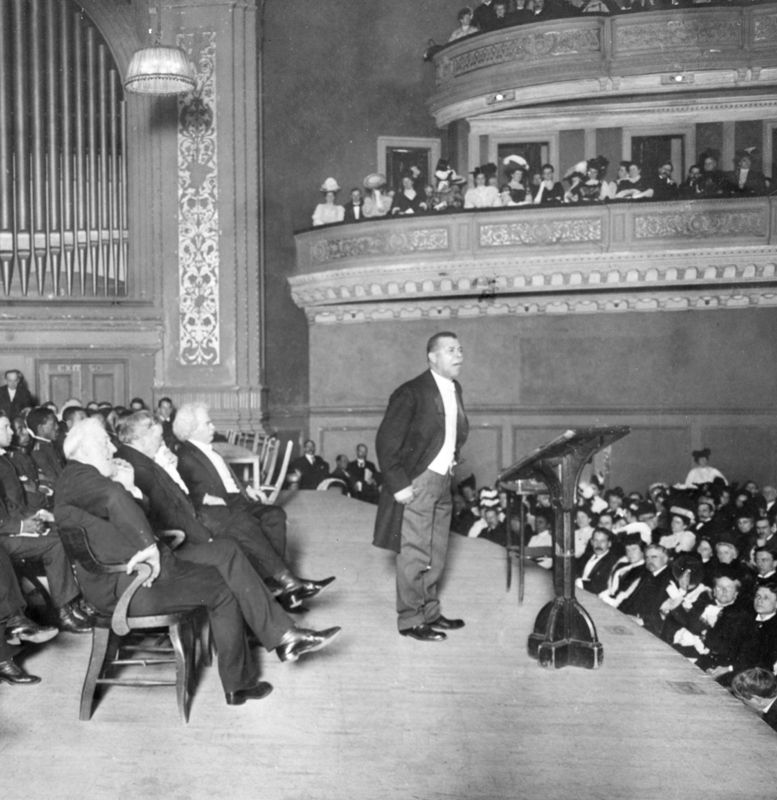
Three variables that matter
“Know your audience” is true and useless. It becomes usable when you break the audience into three variables you can actually estimate. Expertise: what do they already know, and what vocabulary can you use without a gloss? Stance: are they inclined to agree, undecided, or resistant? Stake: what does this decision cost them — time, money, status, workload, safety?
Stake is the one writers forget, and it is the one that determines whether anything happens. A reader who agrees with you completely but whose workload doubles under your proposal is not an ally. A resistant reader whose life gets easier is closer to a yes than an enthusiastic one who must sacrifice. Before you draft, write one sentence: “If my reader accepts this, the cost to them is ____.” If you cannot fill the blank, you do not know your audience yet.
Expertise cuts both directions. Under-explaining loses the reader; over-explaining insults them and, more practically, buries your point under material they will skim past. The reliable diagnostic is the first-mention test: for every specialized term, ask whether this specific reader has met it before. If yes, use it bare. If no, define it inline in six words or fewer — not in a parenthetical essay.
Before and after: fitting the reader
The passage below explains the same clinical concept to two different readers. Watch what changes and, more importantly, what does not: the underlying claim is identical in all three.
| Reader | Version | What the writer decided |
|---|---|---|
| Mismatched draft, sent to a patient | “Your labs demonstrate a hypokalemic state secondary to loop diuretic therapy, necessitating supplementation and serial monitoring of serum potassium.” | Nothing. This is a chart note pasted into a patient conversation. Every term assumes expertise the reader lacks, and the nominalizations — supplementation, monitoring — hide who is supposed to do what. |
| Revised for a patient | “Your water pill is pulling potassium out along with the extra fluid, and your level is now low. We’ll add a potassium tablet and recheck your blood in two weeks. Call us sooner if you get muscle cramps or a fluttering heartbeat.” | Plain words, a named cause, a stated plan, and the warning signs the reader needs to act on. Same medicine, different reader. |
| Revised for a nursing colleague | “K+ is 3.1 on furosemide — oral repletion started, BMP in two weeks. Watch for cramping and ectopy.” | Abbreviations are efficient here because they are shared. Length drops by more than half without losing anything this reader needs. |
The patient version is not “dumbed down.” It contains one thing the chart-note draft omits entirely — when to call, and what should prompt the call — because that is the information this reader can act on. Fitting an audience is not simplification. It is selection.
Writing for the resistant reader
Most consequential writing is aimed at someone who does not already agree. The instinct is to argue harder. The better move is to demonstrate that you understand the objection before you answer it, which costs you three sentences and buys you the reader’s attention for the rest of the page. Rogerian argument formalizes this as stating the opposing view in terms its holder would accept — a demanding standard, and a useful one.
| Move | Weak version | Stronger version |
|---|---|---|
| Naming the objection | “Some people say this costs too much, but that is short-sighted.” | “A second float nurse per shift costs roughly $180,000 a year, and this unit has already absorbed two budget reductions. That objection is real.” |
| Answering it | “Patient safety should come first.” | “The comparison, though, is not against zero. Three injury falls last quarter added roughly $120,000 in non-reimbursed length-of-stay costs — and that is one quarter. The float position is cheaper than the falls it is meant to prevent.” |
| Conceding honestly | “Obviously there is no downside.” | “This will not help on nights when acuity spikes across three units at once, and it does not address documentation load.” |
The stronger column does something the weak column cannot: it makes the writer credible. A reader who sees her own objection stated fairly, with a real number attached, will extend trust to the paragraphs that follow. A reader who sees her objection caricatured stops reading.
Analyze your reader by expertise, stance, and stake — and treat the resistant reader’s strongest objection as material to be answered, not avoided.
Section 4Purpose, Genre and Register

Purpose is a verb, not a topic
Students routinely confuse the two. “My paper is about vaccine hesitancy” names a topic. It does not tell you, or the writer, what the paper is supposed to accomplish, which means there is no way to tell whether the draft succeeded. A purpose statement uses an action verb aimed at a reader: I want to persuade skeptical parents that the measles schedule is safe by walking through what the adverse-event data actually shows. Now the draft is testable. Did the skeptical parent move? If not, the paper failed, however elegant its sentences.
Write the purpose statement for yourself, not for the reader. It rarely appears in the finished text. It appears at the top of your working file, where it stops you from wandering into an interesting paragraph that serves no one.
| Topic (not a purpose) | Purpose statement (usable) | Test of success |
|---|---|---|
| Nurse staffing ratios | Persuade a hospital board that mandated ratios reduce total cost by cutting turnover and readmissions. | Does a board member ask for the cost model? Then it worked. |
| My clinical rotation | Reflect on one moment in which my assumption about a patient was wrong, and explain what I now do differently. | Can a reader name the changed behavior? If not, it is a diary entry. |
| Social media and teens | Explain to first-year students how correlation studies on screen time are designed, so they can read the headlines critically. | Can the reader spot a confounder in a news article afterward? |
Genre is a set of reader expectations
A genre is a repeated kind of writing that a community has come to expect in a particular shape: the lab report, the cover letter, the discharge instruction, the discussion-board post, the argumentative essay. Genres are not arbitrary containers. Each one evolved because a community kept needing to do a certain kind of work, and the form is the accumulated solution.
This has a practical consequence. When you meet an unfamiliar genre, do not ask “what are the rules?” Ask “what work does this do, and for whom?” The rules follow. A discharge instruction is short, second-person, and organized by what happens next because a tired patient reads it once at the curb. A lab report puts methods before results because a reader cannot judge what the results mean without first knowing how they were produced. Chapter 13 works through four academic genres in detail; here, the point is only that genre awareness is a form of audience awareness in disguise.
The fastest way to learn a genre is to collect three real examples and mark what they share — opening move, typical length, how sources appear, whether the writer uses I. That is genre analysis, and it takes twenty minutes.
Register: the dial you adjust
Register is the level of formality and the vocabulary band you choose — distinct from correctness. Casual register is not incorrect English; it is English calibrated for a different setting. The failure mode is not informality but mismatch, and mismatch in either direction reads as a signal that the writer misjudged the room.
| Register problem | Draft sentence | Revised |
|---|---|---|
| Too casual for an academic argument | “Honestly the whole ratio thing is kind of a mess and nobody really knows what’s going on.” | “Ratio research is genuinely contested: large observational studies associate lower ratios with reduced mortality, but staffing levels are rarely randomized, so the causal question stays open.” |
| Inflated, hiding a simple point | “It is incumbent upon the practitioner to facilitate the utilization of appropriate communicative modalities.” | “Talk to patients in words they use.” |
| Clinical register aimed at the public | “Ambulate as tolerated and monitor for dyspnea on exertion.” | “Walk a little more each day. Stop and rest if you get short of breath.” |
| Falsely certain for contested evidence | “Studies prove that mandated ratios save lives.” | “Several large observational studies associate lower ratios with reduced mortality, though causation remains debated.” |
Purpose names what you want to change in a reader, genre names the shape that community expects, and register is the formality dial — misjudging any one of them sinks otherwise sound content.
Section 5Appeals, Constraints and a Working Diagnostic
Ethos, pathos, logos, kairos
Aristotle named three means of persuasion, and they survive because they are diagnostic rather than prescriptive. They do not tell you what to write; they tell you where a draft is thin. Ethos is the credibility a reader grants the writer — built through accuracy, fair treatment of opposing views, appropriate register, and, yes, clean mechanics. Logos is the reasoning and evidence: the structure of the claim and the quality of its support. Pathos is the appeal to the reader’s values and feelings, legitimate when it is honest and manipulative when it substitutes for reasons. To those three, composition courses routinely add a fourth term from the wider Greek tradition: kairos, timing — the rightness of this argument, in this forum, at this moment. It is not one of Aristotle’s three, and it is the one writers neglect most.
Use them as a checklist on your own draft. Most weak arguments are not weak everywhere; they are strong in one appeal and empty in another, and naming which one tells you what to fix.
| Appeal | Diagnostic question | Symptom when it is missing | Concrete fix |
|---|---|---|---|
| Ethos | Why should this reader trust me here? | Sweeping claims, no sources, opposing views caricatured, typos in the opening line. | Cite one credible source in the first page; state one limitation of your own position. |
| Logos | What is the claim, and what supports it? | Assertions repeated at increasing volume; anecdote doing the work of evidence. | Attach a number, study, or documented case to each major claim. |
| Pathos | Why should the reader care, in human terms? | Technically correct and completely inert; the reader agrees and does nothing. | Open with one specific case — a named shift, a real patient, a concrete consequence. |
| Kairos | Why this argument now, to this forum? | Good argument, ignored; it arrived after the decision or into the wrong conversation. | Tie the opening to a current event, deadline, policy review, or recent incident. |
Constraints are information
An assignment prompt or workplace request carries constraints — length, format, deadline, required sources, prohibited moves — and affordances, the things the medium lets you do that others do not. Students often read constraints as arbitrary hurdles. They are better read as compressed descriptions of the rhetorical situation. A 1,200-word cap tells you the reader has limited time. A required peer-reviewed source tells you the community values a certain kind of evidence. A prohibition on first person tells you which genre conventions apply.
Convert them into a checklist before you draft, not after. Ten minutes spent here prevents the most demoralizing kind of revision — the kind where the writing was good and simply answered the wrong question.
| Prompt language | What it constrains | What it tells you about the situation |
|---|---|---|
| “In 1,000–1,200 words” | Length | Two or three developed points, not five. Cut scope before you cut depth. |
| “Using at least three peer-reviewed sources” | Evidence type | The audience is academic; personal experience may open, but cannot carry, the argument. |
| “For an audience unfamiliar with the topic” | Expertise level | Define terms on first use; do not assume the instructor’s knowledge. |
| “Analyze, do not summarize” | Purpose | The reader already knows the content. Value comes from your interpretation. |
| “Take a position and defend it” | Genre | Balanced neutrality will read as evasion here, even though it is a virtue elsewhere. |
The diagnostic, run on a real paragraph
Here is a student paragraph, followed by a rhetorical diagnosis and the revision that diagnosis produced. The assignment: persuade a hospital’s nursing leadership to fund a debriefing program after codes. Audience: a director with a budget and no free hours.
Draft. “Debriefing is very important for nurses after difficult events. Studies show that it helps with stress and burnout. Many hospitals have implemented debriefing programs and found them to be beneficial. Nurses deserve support after traumatic experiences, and it is important that hospitals take this seriously and provide resources for their staff.”
Diagnosis. Logos is thin — “studies show” with no study, “many hospitals” with no hospital. Ethos suffers for the same reason and because nothing is conceded. Pathos is asserted rather than shown; “traumatic experiences” is abstract. Kairos is absent entirely: nothing explains why this budget cycle. And the stake is unaddressed — the director’s real objection is time off the floor, which the paragraph never names.
Revision. “After the pediatric code on 3-East in March, four of the six responding nurses worked the remainder of a twelve-hour shift without a single structured conversation about it. Two have since transferred. A 2021 systematic review of post-event clinical debriefing reported gains in team performance and staff-reported coping, though the studies were small and heterogeneous and effects on acute stress symptoms remain inconsistent. The objection is time: a fifteen-minute hot debrief pulls staff off the floor at the worst possible moment. It also costs about ninety minutes of nursing time, against the roughly $50,000 the system spends to replace one experienced nurse. With the retention line item under review this quarter, this is the moment to fund a pilot on one unit.”
The revision is barely longer. It gained a specific case (pathos), a named source with its limits stated (logos and ethos), the reader’s own objection named and costed (audience stake), and a reason for now (kairos). No new research was required — only a pass with the diagnostic in hand.
Run every draft through ethos, logos, pathos, and kairos, and read the assignment’s constraints as a description of the situation — the diagnosis usually names one fix worth more than an hour of line editing.
The chapter in one breath
Writing is not the transcription of finished thought; it is the process that finishes it, which is why generative drafting has to be separated from the polished thing you submit. Once you have something to say, the question becomes whether it fits its situation — and every act of writing sits inside one, made of five parts: writer, audience, message, context, purpose. The most common failure is audience, and audience becomes tractable when you estimate three variables: what the reader knows, where the reader stands, and what accepting your claim will cost the reader. Purpose is a verb aimed at that reader, not a topic. Genre is the shape a community expects because the form solves a recurring problem. Register is the formality dial, and mismatch in either direction — too casual, or inflated to hide a thin idea — reads as misjudgment. The classical appeals give you the diagnostic: Aristotle’s ethos for credibility, logos for reasoning and pathos for why the reader should care, plus kairos for timing. Run all four on your own draft, read the assignment’s constraints as a description of the situation, and you will usually find one high-leverage fix that a week of sentence-polishing would never have produced.
Words worth knowing
| Term | What it means |
|---|---|
| Rhetorical situation | The full set of circumstances surrounding a piece of writing: writer, audience, message, context, and purpose. |
| Exigence | The problem, gap, or occasion that calls the writing into being. Bitzer treated it as existing in the world; Vatz argued writers largely create it by choosing what to highlight. |
| Generative writing | Writing done to produce and discover ideas, judged by usefulness rather than polish. |
| Presentational writing | The finished, edited artifact intended for a reader. |
| Freewriting | Timed, continuous writing without stopping to correct, used to surface ideas the writer had not yet articulated. |
| Believing and doubting game | An invention exercise, associated with Peter Elbow, in which the writer argues for the opposing view and then against her own. |
| Audience | The actual reader or readers, best analyzed by expertise, stance, and stake rather than as an undifferentiated group. |
| Stake | What accepting a claim will cost the reader in time, money, workload, status, or risk. |
| Purpose statement | A one-sentence declaration, using an action verb, of what the writing should accomplish in a specific reader. |
| Genre | A recurring form of writing shaped by the repeated work a community needs it to do, carrying predictable reader expectations. |
| Register | The level of formality and vocabulary chosen for a setting — a matter of fit, not correctness. |
| Ethos | The credibility a reader extends to a writer, built through accuracy, fairness to opposing views, and appropriate presentation. |
| Logos | The appeal through reasoning and evidence: the structure of the claim and the quality of its support. |
| Pathos | The appeal to a reader’s values and emotions; legitimate when honest, manipulative when it replaces reasons. |
| Kairos | The timeliness and fitness of an argument for this moment and this forum. |
| Constraints | Limits imposed by the situation or assignment — length, format, deadline, required evidence — readable as information about the audience. |
| Affordances | What a particular medium or genre makes easy or possible that others do not. |
| Straw man | A distorted, weakened version of an opposing view, presented so it can be easily defeated. |
| Rogerian argument | An approach that begins by stating the opposing position in terms its holder would accept, to establish common ground before arguing. |
| First-mention test | A check applied to each specialized term: has this specific reader met it before, and if not, can it be defined in a few words inline? |