Early Adulthood
Somewhere in the early twenties the body arrives at the finest condition it will ever know — fastest, strongest, most fertile — and then, almost imperceptibly, begins a long descent that no one notices for decades. But early adulthood is far more than a physical summit. It is the season when thinking grows supple enough to hold contradiction, when the central psychological task becomes learning to share a life without losing oneself, and when most people choose partners, build families, and settle into the work that will define them. This chapter follows the young adult body at its peak, the maturing adult mind, and the twin projects of love and work that Freud once named as the whole of what a healthy person must be able to do. It also asks a newer question: in an age of long schooling and late marriage, when exactly does adulthood begin?
By the end of this chapter you can
- Describe the physical peak of early adulthood and the health habits laid down here that shape the rest of life.
- Explain postformal thought and how adult reasoning goes beyond Piaget's formal operations.
- Describe the growth of expertise and how experts differ from novices.
- Summarize Erikson's stage of intimacy versus isolation and the virtue it yields.
- Relate infant attachment to the adult attachment styles seen in romantic relationships.
- Distinguish the components of Sternberg's triangular theory of love and the kinds of love they produce.
- Describe contemporary patterns of partnering and family formation.
- Explain the role of work in adult identity and describe Arnett's concept of emerging adulthood.
Section 1The body at its peak

The physical summit
For most of the body's systems, the years from roughly 18 to 40 are the best they will ever be. Muscle strength and mass, cardiovascular fitness, bone density, reaction time, and reproductive capacity all crest in the twenties or very early thirties. This is why elite athletes in most sports peak young: a sprinter's fastest legs, a swimmer's largest lungs, a gymnast's most forgiving joints belong to early adulthood. Maximal oxygen uptake (VO₂ max), the single best index of aerobic fitness, is highest in the late teens and twenties. The immune system is robust, injuries heal quickly, and the person simply feels durable — which is exactly the feeling that makes the next idea so easy to ignore.
A slow, silent decline begins
Even at the summit, the descent has already started. Senescence — the gradual biological decline of the body's systems — begins in early adulthood, but so slowly that it changes nothing about daily life for a long time. After about age thirty, untrained aerobic capacity falls by roughly one percent a year; muscle mass, lung capacity, and cardiac reserve edge downward; and peak bone mass — the greatest bone density a person will ever hold — is reached and then, imperceptibly, begins to erode. None of this is felt in the moment. A thirty-two-year-old is not aware of losing anything, and that gap between how young adults feel and what their tissues are quietly doing is the crux of the health story.
| System / capacity | Peaks around | What happens after the peak |
|---|---|---|
| Muscle strength & mass | Mid-20s to early 30s | Very gradual loss (sarcopenia) that only matters much later, and slower in the active |
| Aerobic fitness (VO₂ max) | Late teens to 20s | Falls roughly 1% per year after ~30 if untrained; training blunts the drop |
| Bone mass | ~30 | Peak bone mass sets the lifetime reserve against later osteoporosis |
| Reaction time & speed | Early-to-mid 20s | Slows subtly across adulthood |
| Reproductive capacity | 20s | Female fertility declines gradually from the early 30s and faster after 35 |
The habits that write the future
Because the body forgives so readily now, early adulthood is when lifelong health habits are set almost by accident — how a person eats, moves, sleeps, drinks, smokes, and manages stress. The leading causes of premature death in later life are not mysterious diseases but the slow accumulation of behavior: tobacco use, poor diet, physical inactivity, and heavy alcohol use. Atherosclerosis is already forming in the arteries of many healthy-feeling twenty-somethings, and the bone banked before thirty is the buffer that decides who fractures a hip at seventy. The cruel irony is that the person who most needs to invest in prevention — the young adult with decades to gain — is the one who feels least in need of it.
- Most physical capacities — strength, aerobic fitness, bone density, reaction time, fertility — peak in the twenties or early thirties.
- Senescence begins even at the peak, but declines are so slow they go unnoticed for years.
- Peak bone mass reached near age 30 sets the reserve against later osteoporosis.
- The health habits set in early adulthood are the largest lever on health decades later — yet feeling invincible makes prevention a hard sell.
Section 2The maturing adult mind
Beyond formal operations
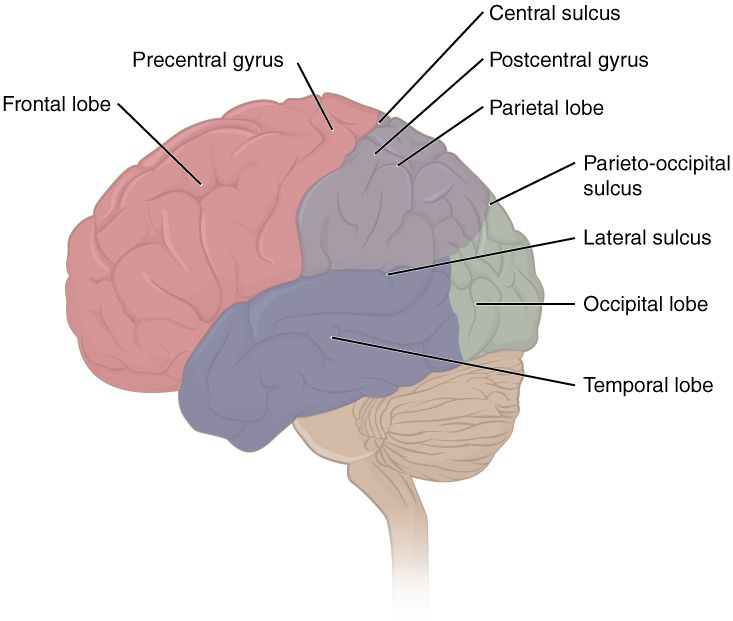
Piaget's stage theory ends with formal operational thought — the adolescent's new power to reason abstractly, test hypotheses, and follow pure logic. But logic alone is a poor tool for most of the problems adulthood actually delivers, which are messy, contradictory, and bound up with people. A young manager weighing whether to fire an underperforming but struggling employee, or a couple deciding whose career to relocate for, cannot find the answer by deduction; the "right" answer depends on context, values, and competing truths. Many researchers therefore describe a further, uniquely adult mode called postformal thought. It is relativistic — it accepts that knowledge is shaped by context and viewpoint rather than being simply true or false; it is dialectical — it holds and integrates contradictions instead of forcing a single answer; and it is pragmatic — it bends abstract logic to fit the real constraints of a situation.
William Perry traced this shift in college students, who typically move from dualism (every question has one right answer, held by authorities) through multiplicity (all opinions seem equally valid) toward commitment within relativism (choosing and standing behind a position while knowing others exist). Labouvie-Vief added that mature adult thinking reintegrates emotion with logic rather than treating feeling as noise. Schaie captured a related idea: young adults enter an achieving stage, in which intelligence is applied not to acquire knowledge for its own sake but to reach long-term goals like career and family.
The growth of expertise
The other great cognitive story of early adulthood is the building of expertise — deep, organized skill in a chosen domain. Expertise is not raw intelligence and it is not merely time served; it is the product of years of deliberate practice, the effortful, feedback-rich, goal-directed work that Anders Ericsson distinguished from simply doing an activity over and over. (The popular "ten thousand hours" figure comes from this research, though Ericsson emphasized that it is the quality and focus of practice, not a magic number of hours, that matters.) As expertise grows, the mind reorganizes: the expert nurse, mechanic, or chess master perceives meaningful patterns where the novice sees scattered details, acts quickly and almost automatically, adapts flexibly to the unexpected, and — crucially — knows the limits of their own knowledge.
| Dimension | Novice | Expert |
|---|---|---|
| Knowledge | Isolated facts and rules | Large, richly interconnected, well-organized |
| Perception | Notices surface features | Sees meaningful patterns and "chunks" |
| Processing | Slow, effortful, step-by-step | Fast, automatic, efficient |
| Flexibility | Rigid, bound to the rules | Adapts the approach to the situation |
| Self-knowledge | Overestimates skill, misses gaps | Accurate about what they do and don't know |
- Postformal thought extends beyond Piaget's formal operations: relativistic, dialectical, and pragmatic reasoning for ill-defined real-world problems.
- Perry charted the college move from dualism to commitment within relativism; Schaie's achieving stage applies intellect to life goals.
- Expertise is built through deliberate practice, not mere repetition or general intelligence.
- Experts reorganize knowledge into patterns, act efficiently, adapt flexibly, and judge their own limits accurately — but their skill stays domain-specific.
Section 3Intimacy versus isolation
Erikson's sixth stage
In Erik Erikson's eight-stage map of the life cycle, young adulthood is the season of intimacy versus isolation. Having forged a coherent sense of self in the identity crisis of adolescence, the young adult now faces a new task: to fuse that identity with another person's in genuine closeness — the capacity to commit to a deep, mutual relationship that demands sacrifice, compromise, and the risk of being truly known. Erikson insisted on the order: you must know who you are before you can lose yourself in another without fear of disappearing. The young adult who cannot manage this closeness slides toward isolation — loneliness, guardedness, and a self-absorption that keeps others at arm's length. When the stage is resolved well, its lasting gift, in Erikson's language, is the virtue of love: the mature ability to be devoted to another despite differences and difficulties.
Attachment carries forward
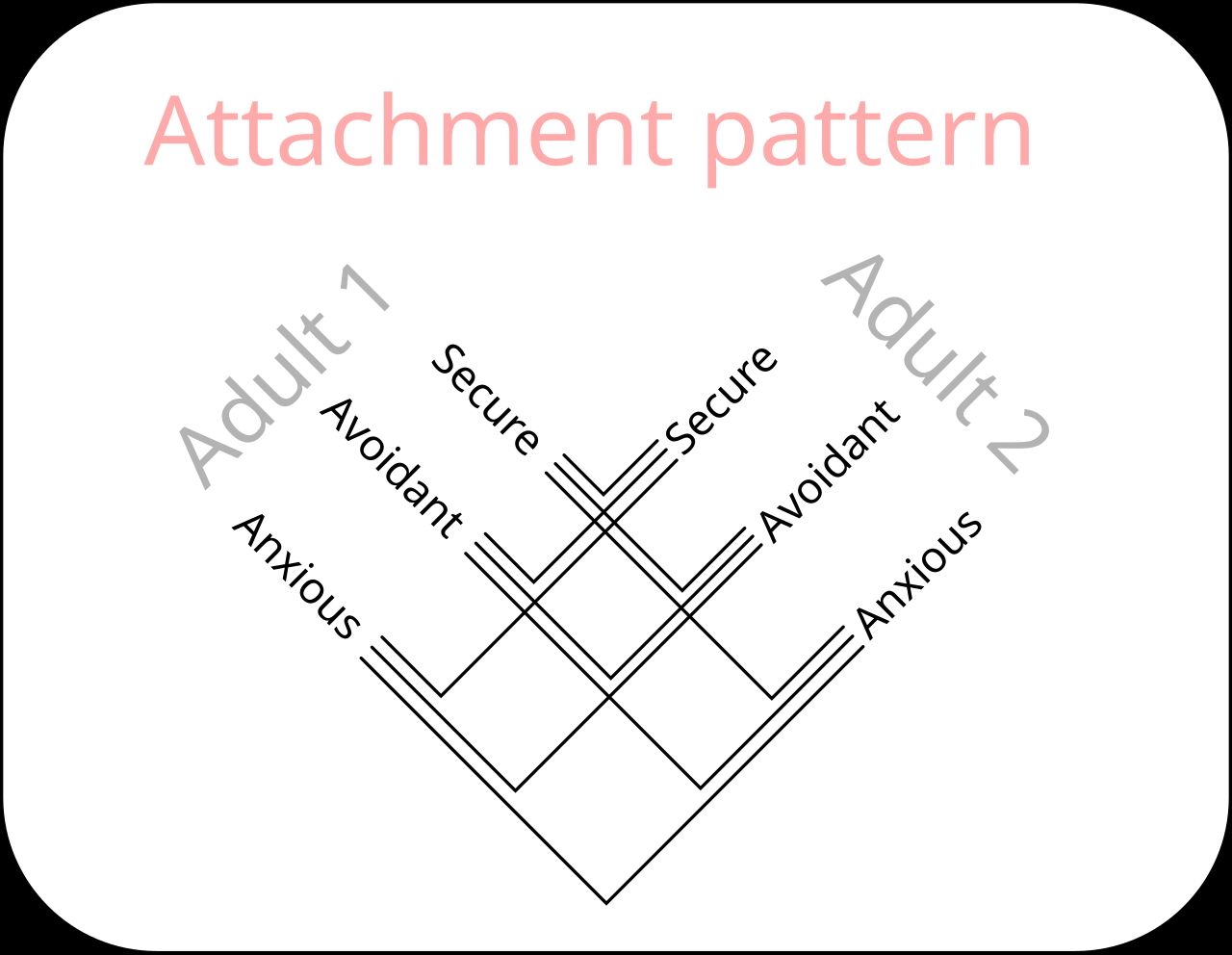
How readily a young adult manages intimacy is shaped, in part, by patterns laid down long before. Bowlby argued that infants build an internal working model of relationships from early caregiving, and Ainsworth's Strange Situation sorted those models into secure and insecure styles. Hazan and Shaver proposed that these same models resurface in adult romance, producing recognizable adult attachment styles. Secure adults are comfortable with both closeness and independence and trust their partners; anxious (preoccupied) adults crave near-total closeness and fear abandonment; avoidant (dismissing) adults prize self-reliance and grow uneasy when a relationship asks for dependence. These styles are tendencies, not sentences: through a stable, responsive relationship or through reflection and therapy, an insecurely attached person can develop what researchers call earned security.
| Attachment style | How it feels in close relationships | Early echoes |
|---|---|---|
| Secure | At ease with intimacy and autonomy; trusts and depends comfortably | Consistent, responsive caregiving |
| Anxious / preoccupied | Longs for merger; watchful for signs of rejection | Inconsistent, unpredictable caregiving |
| Avoidant / dismissing | Values independence; keeps emotional distance | Rejecting or emotionally unavailable caregiving |
Friends and the social convoy
Intimacy is not the property of romance alone. Close friendships, often at their most abundant in early adulthood, meet many of the same needs for disclosure, support, and belonging. Antonucci's image of the social convoy captures it well: each of us travels through life inside a moving circle of relationships — partner, family, friends — that offers protection and company along the way. The size and warmth of that convoy matter for health. Chronic loneliness is now recognized as a genuine medical risk, associated with worse cardiovascular and immune outcomes, which is one more reason Erikson's stage is about survival as much as sentiment.
- Erikson's young-adult stage is intimacy versus isolation; its virtue is love, and it presumes a resolved identity.
- Infant internal working models resurface as adult attachment styles: secure, anxious/preoccupied, and avoidant/dismissing.
- Attachment style is a tendency, not destiny — earned security is possible.
- The social convoy of partners, family, and friends buffers stress; chronic loneliness is a real health risk.
Section 4Love and partnership

The triangle of love
Robert Sternberg's triangular theory of love proposes that love is built from three ingredients. Intimacy is emotional closeness — warmth, trust, and the sense of being deeply connected. Passion is the drive toward romance and physical attraction. Commitment is the decision to love and to maintain that love over time. Present alone or in combination, the three components generate distinct kinds of love. Romantic love couples intimacy with passion but lacks lasting commitment; companionate love joins intimacy and commitment after passion has cooled — the deep, affectionate bond of long marriages and old friendships; and consummate love, the complete form, holds all three at once. Researchers have long noted, as Hatfield and Berscheid emphasized, that passionate love burns hot and early but fades, while companionate love tends to grow — a shift that surprises couples who mistake the cooling of passion for the failure of love.
| Kind of love | Intimacy | Passion | Commitment |
|---|---|---|---|
| Liking (friendship) | ✓ | — | — |
| Infatuation | — | ✓ | — |
| Empty love | — | — | ✓ |
| Romantic love | ✓ | ✓ | — |
| Companionate love | ✓ | — | ✓ |
| Fatuous love | — | ✓ | ✓ |
| Consummate love | ✓ | ✓ | ✓ |
Partnering and family formation
Early adulthood is when most people choose long-term partners and, often, begin families — but the shape of that path has changed markedly. In many industrialized societies the median age at first marriage has risen into the late twenties or beyond, cohabitation before or instead of marriage has become common, and family forms have grown more diverse. When people do partner, they tend to choose others who resemble them in age, education, values, and background — a pattern called assortative mating. The move into parenthood is among the most profound transitions of the period: deeply rewarding, but also stressful enough that couples commonly report a dip in marital satisfaction in the demanding early years with a first child, before it recovers. And none of this is universal — cultures vary widely in whether marriages are arranged or chosen for love, and in how much the couple, rather than the extended family, is treated as the core unit.
- Sternberg's triangular theory builds love from intimacy, passion, and commitment, whose combinations yield seven kinds of love.
- Passionate love peaks early and fades; companionate love (intimacy plus commitment) tends to grow and sustains long relationships.
- Contemporary partnering features later marriage, common cohabitation, and diverse family forms; people pair by assortative mating.
- The transition to parenthood is rewarding but often dips marital satisfaction in the early, demanding years.
Section 5Work and the road to adulthood
Work and identity
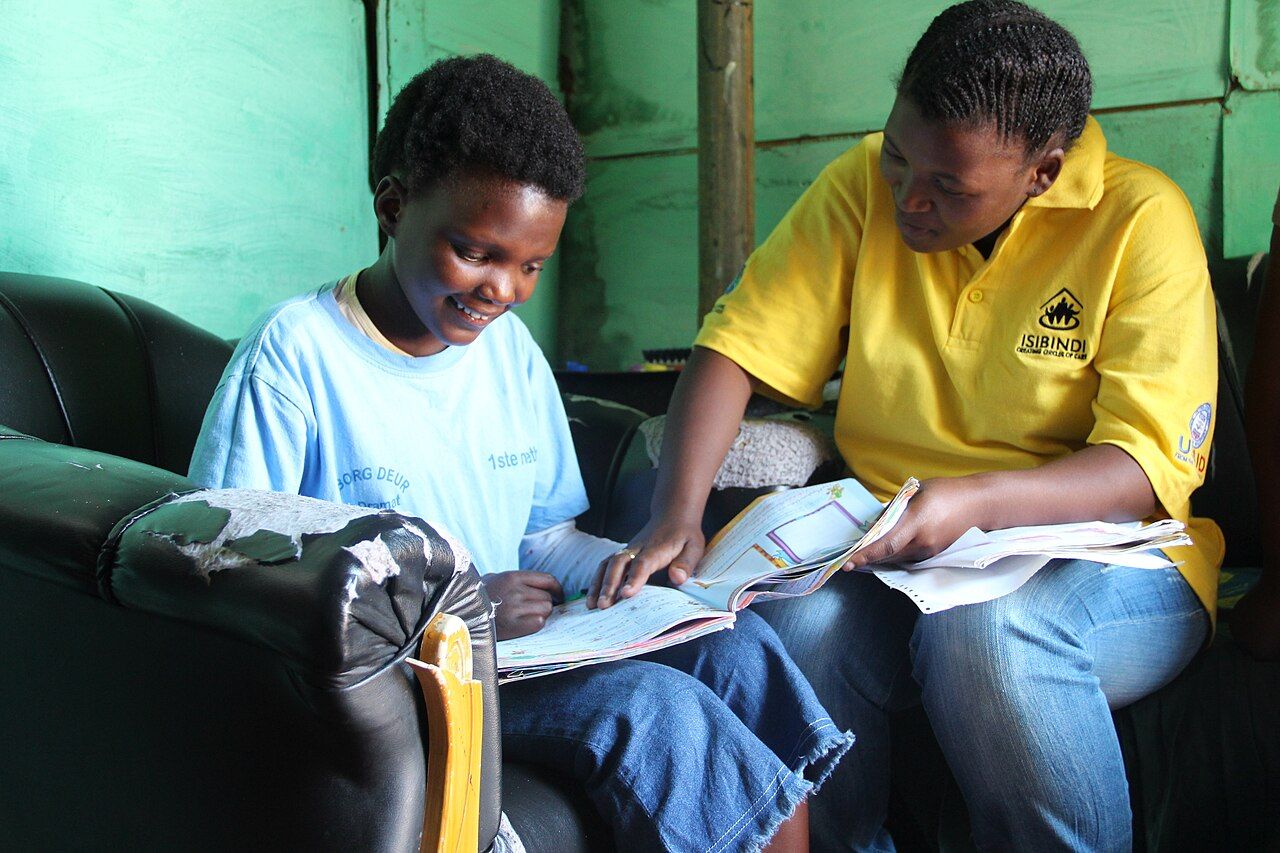
Alongside love, work is the great organizing project of early adulthood — the other half of Freud's formula for a healthy life. Work supplies far more than income. It structures the day, confers a social role and status, provides a community of colleagues, and answers, in shorthand, the question "what do you do?" that so often stands in for "who are you?" John Holland's influential model matches people to occupations by vocational personality type — the six RIASEC types of Realistic, Investigative, Artistic, Social, Enterprising, and Conventional — on the premise that satisfaction and stability follow when a person's interests fit the work. Donald Super described a longer arc across the lifespan; in early adulthood most people are in the establishment stage, entering a field, trying roles, and gradually stabilizing into a career that becomes part of who they are.
Emerging adulthood
The passage from adolescence to full adulthood has stretched out. Longer schooling, later marriage, and later parenthood have opened a new life phase that Jeffrey Arnett named emerging adulthood, roughly ages 18 to 25 (extending toward 29), characteristic of industrialized societies. Arnett described five features: intense identity exploration, especially in love and work; instability in relationships, jobs, and living situations; a self-focused freedom from obligations; a feeling of being in-between, neither adolescent nor fully adult; and a wide-open sense of possibilities and optimism. It is a period of trying on lives before committing to one.
| Feature of emerging adulthood | What it looks like |
|---|---|
| Identity exploration | Trying out possibilities in love and work to find a fit |
| Instability | Frequent changes in residence, relationships, jobs, and schooling |
| Self-focus | Fewer obligations to others; time to concentrate on oneself |
| Feeling in-between | No longer an adolescent, not yet feeling fully adult |
| Possibilities / optimism | High hopes; the sense that life is wide open |
When does adulthood begin?
If not marriage or a first job, what marks the crossing into adulthood? When Arnett asked young people, they did not point to the old role transitions — finishing school, marrying, becoming a parent. They named quieter, psychological, individualistic milestones: accepting responsibility for oneself, making independent decisions, and becoming financially independent. Adulthood, by this account, is less an event than an internal achievement — a shift in how a person carries themselves in the world — which is why two people the same age, one married with children and one single and still in school, may each feel, accurately, only partly grown up.
- Work shapes adult identity, structure, and status; Holland matches people to jobs by vocational type (RIASEC), and Super's establishment stage describes settling a career.
- Arnett's emerging adulthood (~18–25) is a distinct phase marked by identity exploration, instability, self-focus, feeling in-between, and optimism.
- Young people define adult status by psychological markers — responsibility, independent decisions, financial independence — over role transitions.
- Because adulthood is an internal achievement, its timing varies widely from person to person.
The chapter in one breath
- The body peaks physically in the twenties and early thirties; senescence then begins so slowly it goes unfelt, while the health habits set now shape health for decades.
- Postformal thought carries reasoning past Piaget's formal operations into relativistic, dialectical, and pragmatic thinking for real-world problems.
- Expertise grows through deliberate practice, reorganizing knowledge into patterns that let experts act quickly, flexibly, and self-aware — within a single domain.
- Erikson's young-adult crisis is intimacy versus isolation, yielding the virtue of love and building on a resolved identity.
- Infant attachment resurfaces as adult attachment styles (secure, anxious, avoidant), which are tendencies open to change, not fixed fates.
- Sternberg's triangular theory combines intimacy, passion, and commitment; passion fades while companionate love deepens and sustains partnerships.
- Work anchors adult identity, and Arnett's emerging adulthood describes the extended, exploratory bridge into an adulthood now defined more by responsibility than by milestones.
ReferenceWords worth knowing
A quick reference for the terms in this chapter — skim it now, or circle back whenever a word trips you up.
- Adult attachment styles
- Patterns of relating to romantic partners — secure, anxious/preoccupied, avoidant/dismissing — that echo infant attachment.
- Assortative mating
- The tendency to choose partners who resemble oneself in traits such as age, education, values, and background.
- Cohabitation
- Living together in a romantic partnership without being married; increasingly common before or instead of marriage.
- Commitment (Sternberg)
- The component of love that is the decision to love another and to maintain that love over time.
- Companionate love
- Deep, affectionate love combining intimacy and commitment without intense passion; typical of enduring bonds.
- Consummate love
- The complete form of love in Sternberg's theory, holding intimacy, passion, and commitment together.
- Deliberate practice
- Effortful, focused, feedback-rich practice aimed at improvement; the engine of expertise, distinct from mere repetition.
- Emerging adulthood
- Arnett's proposed life stage (~18–25) between adolescence and full adulthood, marked by exploration and instability.
- Establishment stage
- Super's career phase of early adulthood in which a person enters, tries out, and stabilizes an occupation.
- Expertise
- Deep, well-organized skill in a specific domain, built over years of deliberate practice.
- Intimacy (Sternberg)
- The component of love that is emotional closeness, warmth, and connection.
- Intimacy versus isolation
- Erikson's sixth psychosocial stage, the young-adult task of forming close bonds; its virtue is love.
- Passion (Sternberg)
- The component of love that is romantic and physical attraction and drive.
- Passionate love
- Intense, arousing early-stage love that tends to burn hot and then fade.
- Peak bone mass
- The greatest bone density a person attains, reached around age 30, setting the reserve against later osteoporosis.
- Postformal thought
- Adult reasoning beyond Piaget's formal operations: relativistic, dialectical, and pragmatic.
- Relativistic thinking
- Recognizing that knowledge is shaped by context and viewpoint rather than being absolutely true or false.
- Senescence
- The gradual biological decline of the body's systems, which begins even at the physical peak.
- Social convoy
- Antonucci's image of the moving circle of relationships that accompanies and supports a person through life.
- Triangular theory of love
- Sternberg's model in which love is composed of intimacy, passion, and commitment.
- VO₂ max
- Maximal oxygen uptake, the best single index of aerobic fitness; highest in the late teens and twenties.
- Vocational personality type
- Holland's idea (the RIASEC types) that job satisfaction follows when work fits a person's interests.