Substance Use and Addictive Disorders
No group of patients is more reliably mistreated by health care than people with substance use disorders, and no group responds more dramatically when the care is good. A substance use disorder is a chronic, relapsing, treatable brain condition — not a moral failure, not a choice a person keeps making out of weakness, and not something a person can be shamed out of. The nurse who understands the reward circuitry, who screens every patient rather than the ones who “look like” they use, who can score a CIWA-Ar and a COWS, who knows that naloxone reverses respiratory depression and that thiamine goes in before glucose, and who says person with an alcohol use disorder instead of alcoholic, changes outcomes measurably. This chapter builds that nurse. You will learn the neurobiology, the screening instruments, the withdrawal emergencies that kill, the medications that work, and the harm-reduction stance that keeps people alive long enough to recover.
By the end of this chapter you can
- Explain the mesolimbic reward pathway and the binge/intoxication, withdrawal/negative affect and preoccupation/anticipation cycle that sustains a substance use disorder.
- Apply the eleven DSM-5-TR criteria to grade a substance use disorder as mild, moderate or severe, and distinguish tolerance and withdrawal from addiction.
- Use person-first, non-stigmatising language and rewrite stigmatising chart entries into behavioural, observable documentation.
- Perform SBIRT screening using validated tools including AUDIT-C, CAGE-AID, DAST-10 and CRAFFT, and interpret a toxicology screen’s limits.
- Demonstrate motivational interviewing responses and contrast them with confrontational, non-therapeutic responses.
- Assess and manage alcohol withdrawal using CIWA-Ar, recognise delirium tremens and Wernicke encephalopathy, and escalate with SBAR.
- Manage opioid overdose with naloxone, score opioid withdrawal with COWS, and explain precipitated withdrawal risk with buprenorphine.
- Compare methadone, buprenorphine, naltrexone, acamprosate and disulfiram by mechanism, monitoring and patient teaching.
- Integrate harm reduction, trauma-informed care, milieu management and safe delegation for patients with co-occurring disorders.
Section 1What Addiction Is: Neurobiology, Diagnosis and Language
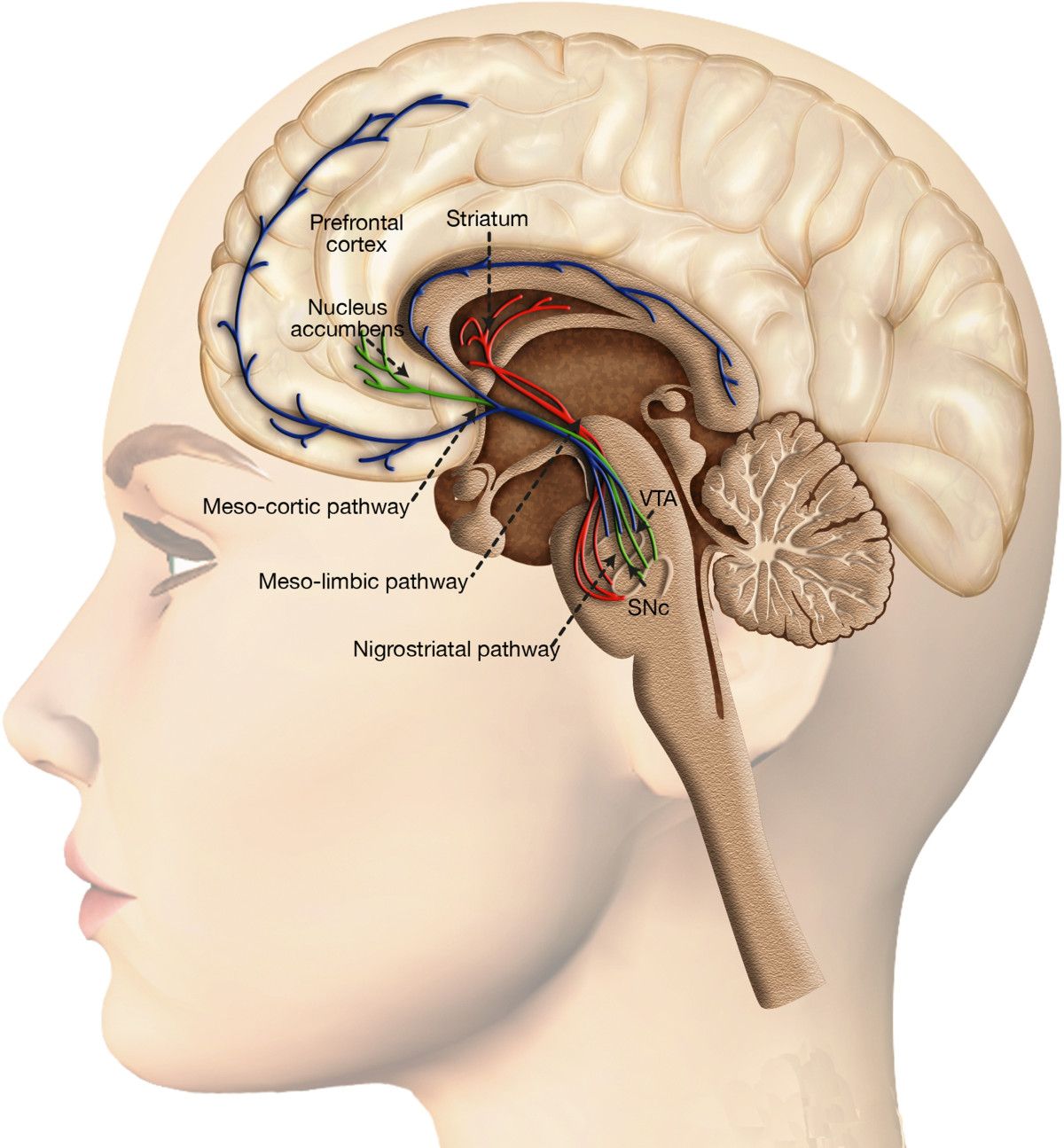
The reward pathway and the three-stage cycle
Every substance with addictive potential, whatever its chemistry, converges on one circuit: dopaminergic neurons projecting from the ventral tegmental area to the nucleus accumbens and onward to the prefrontal cortex. This is the mesolimbic pathway, and in ordinary life it is the machinery of learning — it tags food, safety, sex and social connection as worth repeating. Natural rewards raise accumbens dopamine modestly and briefly. Cocaine blocks dopamine reuptake and floods the synapse. Opioids disinhibit VTA neurons by suppressing GABA interneurons. Alcohol works indirectly through GABA-A potentiation and NMDA blockade, with downstream dopamine release. Nicotine binds nicotinic acetylcholine receptors on VTA cells directly. The magnitude and speed of the signal are pharmacological, not motivational, and that is precisely why willpower is the wrong frame.
Repeated surges cause the brain to defend itself. Dopamine D2 receptors down-regulate; the circuit becomes less responsive to ordinary pleasures, a state called anhedonia. Meanwhile the amygdala and extended amygdala recruit stress systems — corticotropin-releasing factor, dynorphin, noradrenaline — so that the absence of the drug now feels like threat. Simultaneously the prefrontal cortex, the seat of inhibition, planning and consequence-weighing, becomes hypofunctional. The result is a person with an amplified drive, a dysphoric baseline and weakened brakes. That is not a description of a character; it is a description of a circuit.
Clinicians usually teach this as a three-stage cycle. Binge and intoxication is basal-ganglia driven and produces the reward and the incentive salience that make cues so powerful. Withdrawal and negative affect is extended-amygdala driven and produces the dysphoria, irritability, anxiety and sleep disruption that make continued use feel like relief rather than pleasure. Preoccupation and anticipation is prefrontal and produces craving, planning and the collapse of alternative goals. Understanding which stage a patient is in tells you what they need: stage one needs safety, stage two needs symptom-targeted treatment and stage three needs cue management, contingency support and medication.
Two further mechanisms matter clinically. Incentive sensitisation means that cues associated with use — a street, a friend, a payday, a smell, the sound of ice in a glass — acquire the power to trigger craving even years into recovery, which is why relapse after long abstinence is a neurological event and not evidence that treatment failed. And allostasis means the reward set-point itself resets downward, so that the person is chasing normal, not euphoria. Say that sentence to patients. It is often the first time anyone has described their experience accurately.
From use to disorder: reading the DSM-5-TR criteria
DSM-5-TR collapsed the old abuse/dependence split into a single substance use disorder graded by severity, which was a clinical improvement because it removed an artificial line and acknowledged a spectrum. Eleven criteria are assessed over a twelve-month period; two to three met is mild, four to five is moderate, and six or more is severe. The same eleven apply across substance classes, with the caveat that a withdrawal syndrome is not defined for every class — there is no established phencyclidine withdrawal criterion, for instance.
The criteria group naturally into four clusters, and teaching them as clusters makes them memorable at the bedside. Impaired control: taking more or longer than intended, unsuccessful efforts to cut down, great time spent obtaining or recovering, and craving. Social impairment: failure to meet role obligations, continued use despite interpersonal problems, and giving up important activities. Risky use: use in physically hazardous situations and continued use despite a known physical or psychological problem caused or worsened by it. Pharmacological: tolerance and withdrawal.
Notice what is not on the list. Quantity is not a criterion. Frequency is not a criterion. Legality is not a criterion. Whether the substance is prescribed, purchased or brewed at home is not a criterion. Students often ask “how much is too much?” and the honest answer is that the diagnosis is functional: it is about what the substance is doing to the person’s life and to their control, not about a threshold on a bottle. This is why the person drinking two glasses of wine nightly with no impairment does not have a disorder, while the person drinking the same amount but unable to stop despite worsening pancreatitis may have a severe one.
| Cluster | Criteria | What it sounds like in the interview |
|---|---|---|
| Impaired control | Larger amounts or longer than intended; persistent desire or failed attempts to cut down; much time obtaining, using, recovering; craving | “I only meant to have two.” “I quit every Monday.” “My whole day is arranged around it.” |
| Social impairment | Failure in major role obligations; continued use despite social or interpersonal problems; important activities given up | “I got written up again.” “My sister will not let me see the kids.” “I stopped playing ball.” |
| Risky use | Use in hazardous situations; continued use despite a known physical or psychological problem it causes | “I drive after.” “The doctor said my liver, but…” |
| Pharmacological | Tolerance; withdrawal | “It takes a fifth now to feel it.” “I shake until the first one.” |
| Severity | 2–3 mild · 4–5 moderate · 6 or more severe | Grade it; do not just say “positive.” |
Language is an intervention
Controlled studies have shown that when clinicians read a vignette describing a “substance abuser” they recommend more punitive responses than when the identical vignette says “person with a substance use disorder.” The word changed the treatment plan. That finding should end the debate about whether language is a soft issue. In this book it is a clinical skill, assessed like any other.
The rules are simple and absolute. Person first: a person with an opioid use disorder, never “an addict,” “a junkie,” “a user” or “an abuser.” Toxicology results are positive or negative, never “clean” or “dirty” — a person is not dirty. Someone in remission is in recovery or has been abstinent for eight months, not “clean.” A newborn is an infant with neonatal opioid withdrawal syndrome, never “an addicted baby,” because infants have physiological dependence, not a use disorder. And medications for opioid use disorder are treatment, never “replacing one addiction with another,” a phrase that has cost lives.
The harder discipline is documentation. Words like difficult, manipulative, attention-seeking, non-compliant and drug-seeking are not findings. They are judgements that travel through the chart and change how every subsequent clinician approaches the patient. Replace them with the observable behaviour and, where you can, a hypothesis about what the behaviour communicates. “Drug-seeking” becomes “Patient requested additional analgesia four times in two hours; rates pain 9 of 10; has an opioid use disorder on buprenorphine 16 mg daily, which raises baseline opioid requirement; pain plan discussed with provider.” That sentence is longer, and it is the difference between a treated patient and an abandoned one.
| Do not write or say | Write or say instead | Why |
|---|---|---|
| Addict, abuser, alcoholic, junkie | Person with a substance use disorder / alcohol use disorder | Separates the person from the condition; reduces punitive responses by clinicians |
| Clean / dirty urine | Negative / positive toxicology screen | Moral vocabulary applied to a lab value |
| Drug-seeking | Requesting analgesia; describe frequency, rating, current MOUD dose | Judgement replaces assessment and blocks legitimate pain care |
| Non-compliant | Has not been able to take the medication as prescribed; barriers identified are… | Names a solvable problem instead of blaming |
| Manipulative, attention-seeking | Describe the behaviour and the unmet need it may signal | These labels predict worse care and are not clinical findings |
| Relapsed, fell off the wagon | Returned to use; recurrence of use | Chronic-disease framing; nobody “relapses” morally from asthma |
| Committed suicide | Died by suicide | “Committed” carries criminality; suicide is not a crime |
One more piece of framing belongs here because students absorb the opposite from media. People with mental illness and substance use disorders are far more likely to be the victims of violence than the perpetrators of it. Rates of assault, sexual violence, robbery and homicide victimisation among people with serious mental illness and among people who use drugs are several times those of the general population. When you walk into a room, the base rate says the person in front of you has more likely been hurt than done harm. Let that shape your posture.
A substance use disorder is a chronic brain condition of impaired control, social impairment, risky use and neuroadaptation — graded mild to severe — and the words a nurse chooses to describe it measurably change the care the patient receives.
Section 2Assessment: Screening, History and the Honest Conversation
SBIRT and the validated screens
SBIRT — Screening, Brief Intervention and Referral to Treatment — is the public-health framework nurses are expected to deliver. Screen every adult and adolescent patient, in every setting, with a validated instrument. Brief intervention is a five- to fifteen-minute motivational conversation delivered to anyone screening positive at low or moderate risk. Referral to treatment is for those at high risk or meeting criteria for a disorder. The evidence for the screening and brief-intervention components is strongest for alcohol, but the structure organises the nurse’s role well across substances.
Universal screening matters because clinical suspicion is a biased instrument. Studies consistently show clinicians under-detect substance use in women, in older adults, in professionals, in insured patients and in white patients, and over-attribute it in Black patients and in patients who are unhoused. A validated screen applied to everyone corrects for the clinician’s pattern-matching. Screen the retired schoolteacher with the same script you use for the man who arrived by ambulance.
Learn the instruments by what they are for. The NIAAA single question — “How many times in the past year have you had five or more drinks in a day (four for women)?” — is a one-line adult alcohol screen; any answer of one or more is positive. AUDIT-C is three questions scored 0–12, positive at 4 or more for men and 3 or more for women. The full AUDIT has ten items and grades risk. CAGE asks about Cutting down, Annoyance at criticism, Guilt and Eye-opener; CAGE-AID adapts it to include drugs; two or more yes answers is positive, though CAGE detects dependence rather than risky use and misses many. DAST-10 screens drug use other than alcohol and tobacco. CRAFFT is the adolescent screen — Car, Relax, Alone, Forget, Family/Friends, Trouble — positive at 2 or more. TWEAK and T-ACE are validated in pregnancy, where sensitivity to lower quantities matters. The WHO ASSIST and the TAPS tool are the combined instruments that screen tobacco, alcohol, prescription and illicit substances in one pass.
| Tool | Population and target | Items | Positive |
|---|---|---|---|
| NIAAA single question | Adults, unhealthy alcohol use | 1 | 1 or more heavy drinking days in a year |
| AUDIT-C | Adults, risky drinking | 3 | 4 or more (men); 3 or more (women) |
| AUDIT (full) | Adults, risk stratification | 10 | 8 or more suggests hazardous use |
| CAGE / CAGE-AID | Adults, likely dependence (alcohol / plus drugs) | 4 | 2 or more yes |
| DAST-10 | Adults, non-alcohol drug use | 10 | 3 or more |
| CRAFFT | Ages 12–21 | 6 (plus 3 opening frequency items) | 2 or more |
| T-ACE / TWEAK | Pregnancy | 4 / 5 | 2 or more |
| CIWA-Ar | Alcohol withdrawal severity (not a screen) | 10 | 8–10 treat; 15 or more severe |
| COWS | Opioid withdrawal severity (not a screen) | 11 | 5–12 mild; 13–24 moderate; 25–36 mod-severe; 37 or more severe |
The substance use history, the mental status exam and the labs
A positive screen earns a full history. For every substance the patient reports, obtain: the specific agent, the route (oral, intranasal, inhaled, intravenous), the typical amount, the frequency, the time of the last use and the amount at last use, the age at first use, the longest period of abstinence and what supported it, prior withdrawal history including any seizure or delirium, prior treatment episodes, and any overdose history. The time and amount of last use is the single most operationally important item on the list, because it sets your withdrawal clock. Alcohol withdrawal begins at six to twenty-four hours; short-acting opioid withdrawal at eight to twelve; benzodiazepine withdrawal may not begin for several days with long-acting agents.
Fold the substance history into the mental status exam rather than treating them as separate. Appearance may show poor dentition, cellulitis, track marks, nasal septal erosion, jaundice, spider angiomata, palmar erythema or ascites. Behaviour and motor activity may show tremor, psychomotor agitation, ataxia or nodding. Speech may be pressured with stimulants or slurred with sedatives. Mood and affect are frequently dysphoric and labile. Thought process and content may reveal stimulant-induced paranoia or alcoholic hallucinosis. Perception screening asks directly about hallucinations, including the tactile formication of stimulant use. Cognition screening — orientation, attention, recall — is essential, because confusion in a person who uses alcohol is Wernicke encephalopathy until proven otherwise. Insight and judgement are described, not graded morally.
Risk screening is not optional here. Substance use disorders raise suicide risk several fold, and the risk is highest during intoxication, during withdrawal and in the weeks after a return to use. Ask directly using the language of Chapter 4 — “Have you had thoughts of killing yourself?” — and ask about access to means, including the lethality of the substances themselves. If the patient discloses ideation, respond with the safety planning and risk-response steps developed in Chapters 4 and 13. Also screen for interpersonal violence, because rates of intimate partner violence and sexual assault victimisation are very high in this population and disclosure is more likely when the question is routine.
Interpret laboratory data with humility. A urine drug screen is an immunoassay: it tells you a class was detected above a cut-off, not how much, not when, and not whether the person is impaired. False negatives are common — many standard panels miss fentanyl, buprenorphine, methadone, oxycodone, tramadol, clonazepam, lorazepam and most synthetic cannabinoids unless specifically ordered. False positives occur too. Cannabis metabolites may be detectable for weeks in chronic use, which says nothing about current intoxication. Confirmatory testing is gas chromatography–mass spectrometry or liquid chromatography–tandem mass spectrometry. Supporting labs include a comprehensive metabolic panel, liver enzymes with an AST/ALT ratio above 2 suggesting alcohol-related injury, gamma-glutamyl transferase, carbohydrate-deficient transferrin, magnesium, phosphate, an elevated mean corpuscular volume, prothrombin time and ammonia, plus hepatitis B and C and HIV testing with consent.
Motivational interviewing: what to say and what it does
Confrontation does not work. Decades of research show that arguing, warning and lecturing increase what motivational interviewing calls sustain talk — the patient’s own arguments for not changing — and that sustain talk predicts continued use. The alternative is a stance built on four processes: engaging, focusing, evoking and planning; and a spirit of partnership, acceptance, compassion and evocation. The core micro-skills are the OARS: Open questions, Affirmations, Reflective listening and Summaries. Your job is to elicit the patient’s own reasons for change and get out of the way.
Two habits do most of the work. The first is rolling with resistance — when a patient pushes back, you do not push harder; you reflect and redirect. The second is asking permission before informing: “Would it be all right if I shared what we usually see with drinking at that level?” That single sentence converts a lecture into a collaboration, and patients almost always say yes.
| Patient says | Non-therapeutic response and why it fails | Therapeutic response and why it lands |
|---|---|---|
| “I can stop any time I want. I just do not want to.” | “If that were true you would not be in the hospital with pancreatitis.” — Confrontation. The patient must now defend their position, and defending it strengthens it. | “So stopping feels like something within your control, and right now it is not what you want. Tell me what would have to be different for you to want to.” — Reflects, does not argue, and evokes change talk. |
| “Everybody drinks like this. My whole family does.” | “That does not make it healthy.” — A correction. Shuts the topic down and signals judgement. | “It sounds normal where you come from, and you are also here with me talking about it. What made you mention it?” — Accepts the frame, then gently notes the discrepancy. |
| “I used again last week. I know, I blew it.” | “You were doing so well. What happened?” — Well-meant, but frames the person as having disappointed you and invites shame, the strongest predictor of continued use. | “A return to use is part of how this illness behaves; it does not erase the four months before it. What was happening in the hours before?” — Normalises without excusing and moves straight to a trigger analysis. |
| “I do not need methadone. I am not swapping one drug for another.” | “That is a myth, methadone is medication.” — True, and it will not persuade anyone, because it corrects rather than explores. | “A lot of people tell me that. Can I ask what you have heard about it, and then would it be okay if I told you what it does in the brain?” — Explores first, asks permission, then informs. |
| “Why do you keep asking me this? I already told the last nurse.” | “It is hospital policy.” — True and dismissive; tells the patient this is bureaucracy, not care. | “That is frustrating, and I am sorry you are repeating yourself. I ask because what you tell me changes the medicines I can give you tonight if you start to withdraw.” — Validates and gives the clinical reason. |
| “My pain is a 9. The buprenorphine is not covering it.” | “You are already on an opioid.” — Factually irrelevant and functionally an accusation; a very common and very harmful reflex. | “Being on buprenorphine actually raises how much analgesia you need, not lowers it. I am going to page the team about your pain plan now.” — Corrects the myth, treats the pain, believes the patient. |
Screen everyone with a validated tool, take a history that pins down substance, route, amount and time of last use, read toxicology as a limited immunoassay rather than a verdict, and respond with reflection and permission rather than confrontation.
Section 3Intoxication, Overdose and Withdrawal Emergencies
Alcohol withdrawal: the one that kills
Chronic alcohol exposure potentiates inhibitory GABA-A transmission and suppresses excitatory NMDA glutamate transmission. The brain compensates by down-regulating GABA-A receptors and up-regulating NMDA receptors. Remove the alcohol and you unmask a hyperexcitable, unopposed glutamatergic state — autonomic storm, tremor, seizure, delirium. This is why alcohol and sedative withdrawal can be fatal while opioid withdrawal, though brutal, generally is not. Students should be able to state that contrast in one sentence on demand.
The timeline is testable. Six to twenty-four hours: minor withdrawal — tremor, anxiety, diaphoresis, nausea, tachycardia, hypertension, insomnia. Twelve to twenty-four hours: alcoholic hallucinosis, typically visual or tactile, with an intact sensorium — the patient knows the bugs are not real. Twenty-four to forty-eight hours: withdrawal seizures, usually generalised tonic-clonic, often single or in a brief cluster. Forty-eight to ninety-six hours and up to five days: delirium tremens — fluctuating clouded consciousness, disorientation, severe agitation, hallucinations, fever, and autonomic instability with heart rates above 120 and marked hypertension. Untreated delirium tremens carries mortality reported historically around 15 to 20 percent and still around 1 to 4 percent with treatment. Risk factors include prior delirium tremens or withdrawal seizure, older age, concurrent illness, a high blood alcohol level on arrival while appearing sober, and low platelets or potassium.
Assess with the CIWA-Ar, ten items scored to a maximum of 67: nausea and vomiting, tremor, paroxysmal sweats, anxiety, agitation, tactile disturbances, auditory disturbances, visual disturbances, headache, and orientation/clouding of sensorium. Symptom-triggered dosing driven by CIWA-Ar reduces total benzodiazepine exposure and length of stay compared with fixed schedules. Typical protocols dose at a score of 8 to 10 or more, reassess hourly while symptomatic, and flag scores of 15 or more as severe. The critical caveat: CIWA-Ar requires a patient who can communicate. Do not use it in a patient who is intubated, aphasic, delirious from another cause, or non-English-speaking without interpretation — and remember that an anxious, tachycardic patient with pain, sepsis or a pulmonary embolism will score high for reasons that have nothing to do with alcohol.
Treatment is benzodiazepines, which restore GABA-A tone: lorazepam, diazepam or chlordiazepoxide. Prefer lorazepam in significant hepatic impairment or in older adults, because it is glucuronidated rather than oxidised and has no active metabolites (the LOT drugs — lorazepam, oxazepam, temazepam). Phenobarbital is used in refractory cases. Beta-blockers and clonidine may blunt autonomic signs but do not prevent seizures or delirium and can mask a rising CIWA-Ar. Add thiamine 100 mg or more, folate, and magnesium; correct potassium and phosphate. Give thiamine before or with any glucose-containing fluid, because a glucose load consumes remaining thiamine and can precipitate Wernicke encephalopathy.
Wernicke encephalopathy is the acute, reversible triad of confusion, ophthalmoplegia or nystagmus, and ataxia — and the full triad is present in only about a tenth of cases, so treat on suspicion. Untreated it progresses to Korsakoff syndrome: irreversible anterograde and retrograde amnesia with confabulation. Confabulation is not lying; the patient is filling gaps without awareness, and correcting them harshly is both cruel and useless.
Opioids: overdose, withdrawal and the fentanyl era
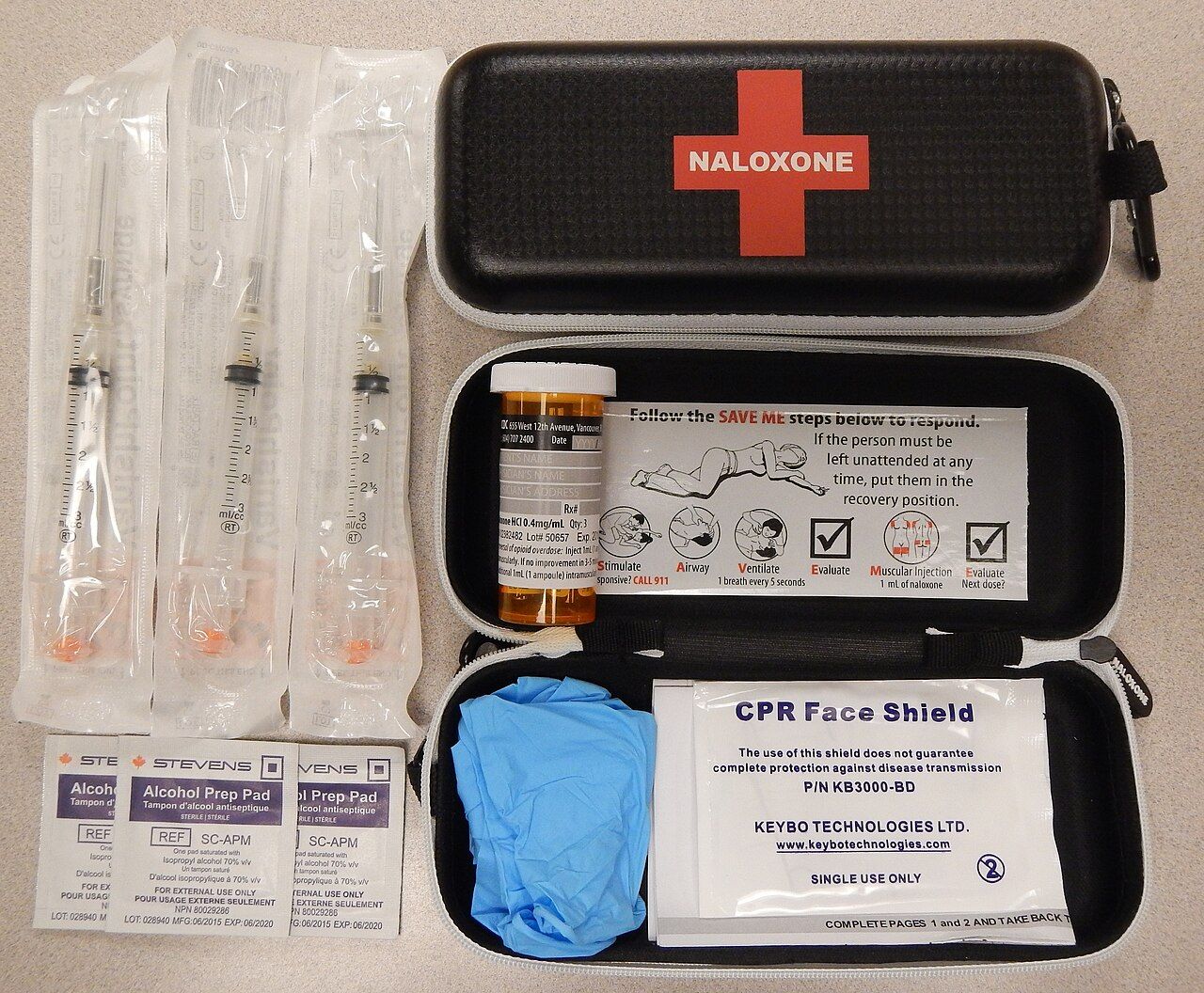
Opioid intoxication produces the classic triad of miosis, respiratory depression and depressed consciousness, with bradycardia, hypotension, hypothermia and decreased bowel sounds. Respiratory depression is what kills, and it is what naloxone treats. Naloxone is a competitive mu-opioid antagonist given intranasally, intramuscularly, subcutaneously or intravenously; onset is one to three minutes intravenously and two to five minutes intranasally. Its duration — roughly 30 to 90 minutes — is shorter than that of many opioids, and far shorter than methadone or extended-release formulations, so re-sedation is expected and the patient must be observed, often with repeat dosing or an infusion. Fentanyl and its analogues, which now dominate the illicit supply, frequently require repeated doses. Chest-wall rigidity from high-dose fentanyl can impair ventilation independently of central depression.
Naloxone in a person with physiological opioid dependence precipitates abrupt withdrawal — vomiting, agitation, diarrhoea, pain. Titrate to respiratory adequacy, not to full alertness. The goal is a respiratory rate of about 12 and adequate oxygenation, not a fully awake and furious patient who then leaves against advice and uses again to relieve the withdrawal you caused. Naloxone should be dispensed to every patient with an opioid use disorder, to patients on high-dose opioid therapy, and to their families, and every nurse should be able to teach its use.
Opioid withdrawal is the mirror image of intoxication and is scored with the COWS: resting pulse, sweating, restlessness, pupil size, bone or joint aches, runny nose or tearing, gastrointestinal upset, tremor, yawning, anxiety or irritability, and gooseflesh skin. Onset is 8 to 12 hours after a short-acting opioid, peaking at 36 to 72 hours; with methadone, onset is 24 to 48 hours and the course can run two weeks. Symptoms are the opposite of the intoxicated state — mydriasis, hyperalgesia, lacrimation, rhinorrhoea, piloerection, yawning, cramping, vomiting, diarrhoea, insomnia and profound dysphoria. It is agonising and it is generally not lethal in a healthy adult, though dehydration from vomiting and diarrhoea can be dangerous, and it is dangerous in pregnancy because it can precipitate preterm labour or fetal distress.
Treat it. The historical practice of letting people “detox” untreated is neither humane nor evidence-based, and it drives patients out of the hospital. Buprenorphine or methadone should be offered; adjuncts include clonidine or lofexidine for autonomic symptoms, loperamide for diarrhoea, ondansetron for nausea, NSAIDs for aches, and hydroxyzine or trazodone for sleep. Critically: an inpatient admission is a treatment-initiation opportunity. Starting buprenorphine in hospital and linking to outpatient care markedly improves engagement, and the window closes when the patient leaves.
Stimulants, sedatives and the rest
Stimulant intoxication — cocaine, methamphetamine, prescription amphetamines — produces mydriasis, tachycardia, hypertension, hyperthermia, diaphoresis, agitation, paranoia and, in severe cases, seizures, myocardial infarction, aortic dissection, intracranial haemorrhage and rhabdomyolysis. Hyperthermia is the most lethal element; cool aggressively. Benzodiazepines are the first-line agent for agitation, hypertension and tachycardia because they treat the sympathetic drive at its source. Avoid unopposed beta-blockade in acute cocaine toxicity, which risks unopposed alpha vasoconstriction. Stimulant withdrawal is not medically dangerous but is psychiatrically dangerous: profound crash with hypersomnia, hyperphagia, severe dysphoria, vivid dreams and a real risk of suicidal ideation. Screen for suicide risk during the crash.
Sedative-hypnotic withdrawal — benzodiazepines, barbiturates, and now also gabapentinoids and, alarmingly, xylazine adulterants — shares alcohol’s mechanism and its lethality. Never stop benzodiazepines abruptly in a dependent patient. Long-acting agents may delay onset for several days, so a patient can look well on day one and seize on day four. Flumazenil is not a routine reversal agent; in a benzodiazepine-dependent patient it can precipitate refractory status epilepticus. Xylazine, a veterinary alpha-2 agonist increasingly mixed into the fentanyl supply, produces prolonged sedation not reversed by naloxone and severe necrotic wounds — give naloxone anyway for the opioid component and support ventilation.
Other classes in brief. Cannabis withdrawal is real and includes irritability, sleep disturbance, decreased appetite and craving; cannabinoid hyperemesis syndrome presents with cyclical vomiting relieved by hot showers. Hallucinogens require a calm, low-stimulus environment and reassurance rather than restraint; phencyclidine is the exception, producing violent agitation with vertical and horizontal nystagmus, hypertension and analgesia, treated with benzodiazepines and a quiet room. Inhalants risk sudden sniffing death from catecholamine-sensitised dysrhythmia, so avoid catecholamines and startling the patient. Nicotine withdrawal — irritability, poor concentration, appetite increase — is routinely ignored on inpatient units and is a major driver of agitation; offer nicotine replacement on admission.
| Class | Intoxication | Withdrawal | Nursing priority |
|---|---|---|---|
| Alcohol | Slurred speech, ataxia, nystagmus, disinhibition, respiratory depression at high levels | Tremor 6–24 h, hallucinosis 12–24 h, seizure 24–48 h, DTs 48–96 h; can be fatal | CIWA-Ar, symptom-triggered benzodiazepines, thiamine before glucose, seizure precautions |
| Opioids | Miosis, respiratory depression, sedation, hypotension | Mydriasis, myalgia, rhinorrhoea, vomiting, diarrhoea, piloerection; rarely fatal | Naloxone titrated to respirations; COWS; offer buprenorphine or methadone |
| Sedative-hypnotics | Sedation, ataxia, respiratory depression (worse with alcohol) | Mirrors alcohol; may be delayed days with long-acting agents; can be fatal | Never stop abruptly; long taper; flumazenil is not routine |
| Stimulants | Mydriasis, hyperthermia, hypertension, paranoia, chest pain, seizures | Crash: hypersomnia, hyperphagia, dysphoria, suicidal ideation | Cool the patient; benzodiazepines first; no unopposed beta-blockade; suicide screening in the crash |
| Cannabis | Conjunctival injection, tachycardia, appetite, impaired coordination, anxiety | Irritability, insomnia, appetite loss, craving | Reassurance; consider hyperemesis syndrome in cyclical vomiting |
| Hallucinogens / PCP | Perceptual distortion; PCP: violence, vertical nystagmus, analgesia, hypertension | Minimal physiological withdrawal | Low stimulus, calm reorientation; benzodiazepines for PCP agitation |
| Inhalants | Euphoria, ataxia, perioral rash, arrhythmia | Mild | Do not startle; avoid catecholamines; cardiac monitoring |
Red flags and SBAR escalation
Escalate immediately, do not wait for the next scheduled assessment, for any of the following: a CIWA-Ar score of 15 or more or a rise of 5 or more between checks; a new withdrawal seizure; heart rate above 120 or systolic pressure above 180 with tremor and diaphoresis; new disorientation or fluctuating consciousness; temperature above 38.3 degrees Celsius in withdrawal; a respiratory rate below 10 or oxygen saturation falling in a patient who received opioids or sedatives; return of sedation after naloxone; confusion with ataxia or eye findings; suicidal ideation with a plan; and any pregnant patient in opioid or alcohol withdrawal.
Alcohol and sedative-hypnotic withdrawal can kill and are managed with symptom-triggered benzodiazepines plus thiamine before glucose, while opioid withdrawal is rarely lethal but must still be treated — and naloxone is titrated to respiratory adequacy, not to alertness.
Section 4Pharmacotherapy: Medications That Actually Work
Medications for opioid use disorder
Medications for opioid use disorder (MOUD) are the most effective treatment in all of addiction medicine. Methadone and buprenorphine each reduce all-cause mortality by roughly half compared with no medication, and they outperform abstinence-only counselling by a wide margin on retention, overdose and infectious complications. Any programme, unit or family member who insists that a person taper off MOUD to prove commitment is asking them to accept a higher chance of dying. Nurses need to be able to say this clearly and kindly.
Methadone is a full mu agonist with a long and variable half-life of 8 to 59 hours. Given daily, it eliminates withdrawal, blunts craving and blocks euphoria from other opioids by occupying receptors. In the United States it can be dispensed for opioid use disorder only through a federally certified opioid treatment programme — though a hospitalised patient may be continued or dosed for withdrawal by any inpatient team. The dangers are front-loading and QT prolongation. Because the analgesic effect lasts hours but the drug accumulates for days, patients can die of respiratory depression on day three of a dose that felt inadequate on day one; the rule is start low, go slow. Obtain a baseline ECG and monitor the QTc, and check for interactions — CYP3A4 inducers such as rifampin, phenytoin and carbamazepine drop levels and precipitate withdrawal, while inhibitors raise them.
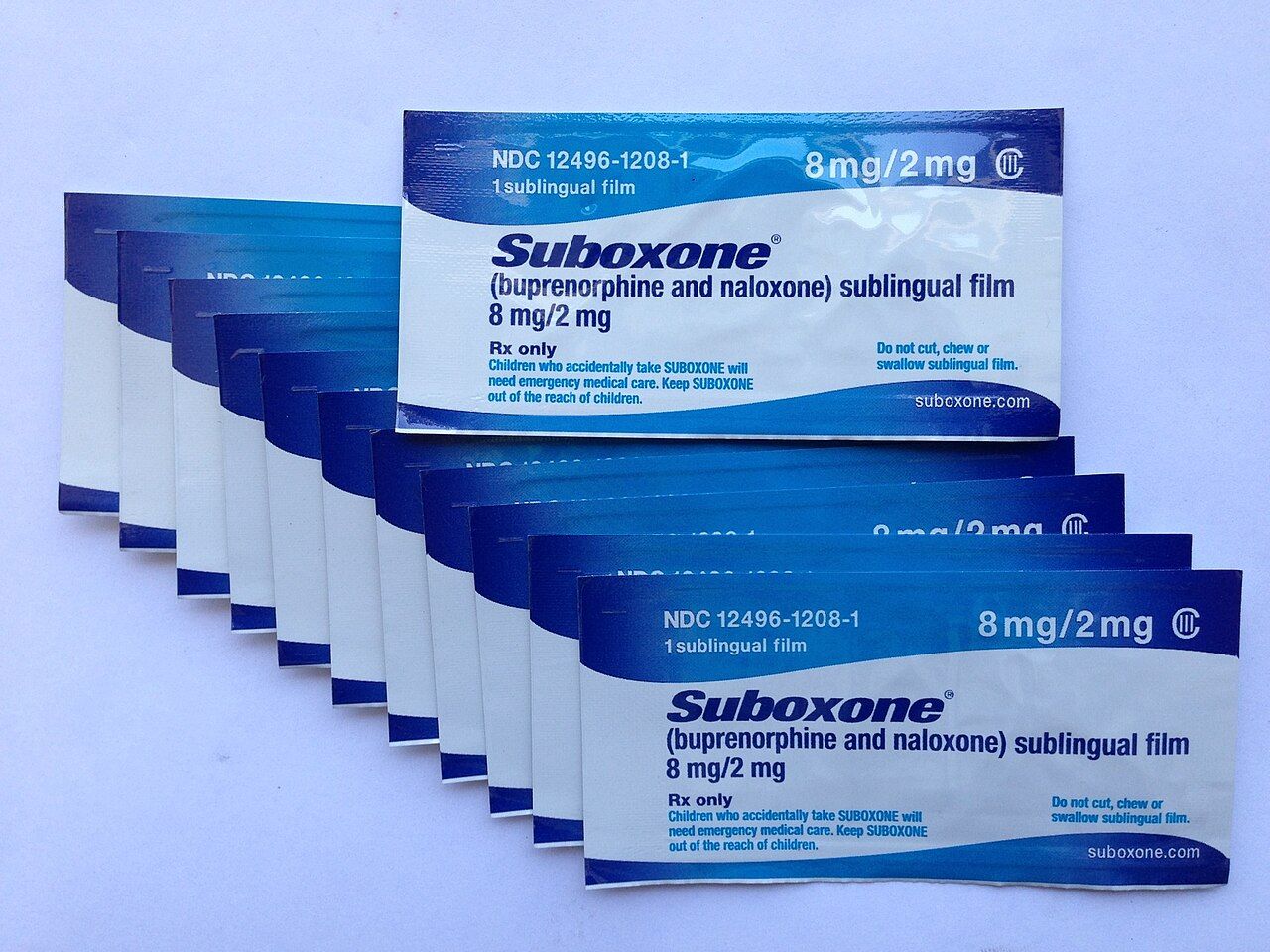
Buprenorphine is a partial mu agonist with very high receptor affinity and slow dissociation. The partial agonism gives it a ceiling effect on respiratory depression, which makes it much safer in overdose than methadone; the high affinity is why it precipitates withdrawal if given too early and why it blocks other opioids. It is available sublingually, often co-formulated with naloxone to deter injection (the naloxone has poor sublingual bioavailability), and as a monthly extended-release subcutaneous injection. Sublingual films must dissolve fully under the tongue — teach patients not to chew, swallow, eat or drink during dissolution, and to rinse afterwards to protect the teeth, since dental caries is a documented adverse effect.
Naltrexone is a full opioid antagonist, available orally and as a monthly intramuscular extended-release injection. It is not a substitute; it blocks. Because of that, the patient must be fully opioid-free — typically 7 to 10 days from short-acting opioids and 10 to 14 from methadone — before the first dose, or severe precipitated withdrawal follows. Two teaching points are safety-critical. First, opioid tolerance falls while on naltrexone, so a return to prior doses after stopping carries a high overdose risk. Second, standard opioid analgesia will not work while receptors are blocked, so the patient needs a medical alert and the surgical team needs advance notice.
Medications for alcohol use disorder
Naltrexone is also first-line for alcohol use disorder, where it reduces heavy drinking days and craving by blunting the endogenous opioid contribution to alcohol’s reward. Monitor liver enzymes; it is contraindicated in acute hepatitis or hepatic failure and in patients requiring opioid analgesia. Acamprosate modulates glutamatergic and GABAergic transmission to restore balance after chronic alcohol exposure, supports maintenance of abstinence, is dosed three times daily (which hurts adherence), is renally cleared — so it is the alcohol agent of choice in hepatic impairment and is contraindicated in significant renal impairment — and commonly causes diarrhoea.
Disulfiram is different in kind: it does not reduce craving. It inhibits aldehyde dehydrogenase so that acetaldehyde accumulates if alcohol is consumed, producing flushing, throbbing headache, nausea, violent vomiting, tachycardia, hypotension, dyspnoea, confusion and, rarely, cardiovascular collapse. It works only through anticipated aversion and therefore requires a motivated patient, ideally with supervised administration. Teach hidden alcohol sources exhaustively: mouthwash, cough and cold preparations, liquid medications, aftershave, hand sanitiser, colognes, vanilla extract, sauces and vinegars. The reaction can begin within 10 minutes and last hours, and the drug’s effect persists up to 14 days after the last dose. Never give disulfiram to a patient who is intoxicated or who has not consented with full understanding.
Do not forget nicotine. Nicotine replacement therapy in patch, gum, lozenge, inhaler and spray forms should be offered on admission to every patient who smokes; combining a long-acting patch with a short-acting form is more effective than either alone. Varenicline, a partial nicotinic agonist, is the single most effective agent; monitor for vivid dreams, nausea and mood changes. Bupropion is also effective and is contraindicated with a seizure disorder or an eating disorder. There are no approved medications for stimulant or cannabis use disorder; contingency management — structured incentives for negative toxicology — has the best evidence for stimulants and is a psychosocial intervention nurses can support.
| Medication | Mechanism | Key monitoring | Patient teaching |
|---|---|---|---|
| Methadone | Full mu agonist, long half-life | Baseline and periodic ECG for QTc; sedation on days 1–5; CYP3A4 interactions | Daily dosing at a certified programme; do not add sedatives or alcohol; tell every prescriber |
| Buprenorphine / buprenorphine-naloxone | Partial mu agonist, high affinity, ceiling on respiratory depression | COWS before induction; liver enzymes; precipitated withdrawal risk | Let the film dissolve fully; no eating or drinking during; rinse mouth for dental health |
| Naltrexone (oral or monthly IM) | Opioid antagonist; also reduces alcohol reward | Liver enzymes; confirm 7–14 opioid-free days first | Opioid analgesics will not work; tolerance falls — overdose risk if use resumes; carry medical alert |
| Acamprosate | Glutamate/GABA modulation | Renal function; contraindicated in severe renal impairment | Three times daily; keep taking it even if you drink; diarrhoea is common |
| Disulfiram | Aldehyde dehydrogenase inhibition — aversive | Liver enzymes; never if intoxicated or without consent | Avoid all hidden alcohol including mouthwash and sanitiser; effect lasts up to 14 days |
| Nicotine replacement | Receptor substitution | Skin irritation; sleep disturbance with 24-hour patch | Combine patch plus a short-acting form; rotate patch sites |
| Varenicline | Partial nicotinic agonist | Nausea, vivid dreams, mood change | Start before the quit date; take with food and water |
| Thiamine | Cofactor replacement | Give before or with glucose | Prevents Wernicke encephalopathy; take the whole course |
Methadone and buprenorphine halve mortality in opioid use disorder and should never be tapered to prove commitment; naltrexone, acamprosate and disulfiram serve different alcohol-treatment goals; and patients on medication for a use disorder still require full, aggressive treatment of acute pain.
Section 5Recovery, Harm Reduction, the Milieu and Special Populations

Harm reduction is nursing care
Harm reduction is a set of practical strategies aimed at reducing the negative consequences of substance use without requiring abstinence as a precondition of care. It includes naloxone distribution, syringe services, fentanyl test strips, safer-use education, wound care, hepatitis and HIV testing and treatment, low-barrier medication access and simply continuing to see the patient. Some students arrive believing this enables use. The evidence says otherwise: syringe service participants are about five times more likely to enter treatment, and naloxone distribution does not increase drug use. More fundamentally, a dead patient cannot recover, and abstinence-only gatekeeping has never been shown to improve outcomes.
Harm reduction rests on a stance as much as a set of services: meet the patient where they are, without moralising, and keep the door open. A patient who says “I am not stopping” is telling you where to start, not ending the conversation. The nurse’s response is “Then let us make sure what you are doing is as safe as it can be” — naloxone in the house, never use alone, test the supply, do not mix with benzodiazepines or alcohol, start with a smaller amount after any period of abstinence because tolerance falls, rotate injection sites, and here is my number when you want something different.
Recovery itself is best understood using the chronic-disease model. Return to use occurs in roughly 40 to 60 percent of people, comparable to relapse rates in hypertension and asthma when treatment is interrupted. We do not call an asthma exacerbation a moral failure or discharge the patient from care. The stages-of-change framework — precontemplation, contemplation, preparation, action, maintenance — helps match intervention to readiness, and relapse-prevention work centres on identifying triggers, building refusal skills, planning for high-risk situations and treating the emotional states (the classic HALT: hungry, angry, lonely, tired) that precede a return to use. Mutual-help groups — twelve-step programmes, SMART Recovery, Refuge Recovery — and peer recovery coaches add durable social scaffolding. Do not, however, refer a patient to a group that requires them to stop their MOUD.
Trauma-informed care and co-occurring disorders
Assume a trauma history may be present. In substance use treatment populations, histories of childhood abuse, neglect, sexual assault and community violence are the norm rather than the exception, and substances are frequently self-medication for the resulting hyperarousal, intrusion and dissociation. Trauma-informed care means building safety, trustworthiness and transparency, peer support, collaboration, empowerment and cultural humility into ordinary practice — not running a special programme. Concretely: explain before you touch, offer choices about the order of care, avoid cornering a patient physically, knock, do not stand between a patient and the door, and treat restraint and seclusion as failures to be prevented rather than tools to be used. Chapter 13 develops this fully.
Ask about trauma without excavating it. “Many people who use substances have had frightening or harmful things happen to them. Has anything like that happened to you?” is enough. If the patient discloses, your job is containment and referral, not detailed exploration — asking someone to narrate a trauma in an acute setting with no follow-up can re-traumatise. Believe the disclosure, thank them, ask what helps them feel safe now, and document only what is clinically necessary.
Co-occurring disorders — a substance use disorder plus another mental illness — are present in roughly half of people with either condition. The old debate about which came first has largely been abandoned in favour of integrated treatment: treat both, at the same time, by the same team. Sequential models, where a patient must be abstinent before psychiatric care or stable before addiction care, mostly produce patients who receive neither. Some practical points: a substance-induced mood or psychotic disorder should improve within days to weeks of abstinence, while an independent disorder persists; do not diagnose a personality disorder during active use or acute withdrawal; and prescribe benzodiazepines for anxiety in this population with great caution, favouring SSRIs, buspirone, hydroxyzine and behavioural strategies.
Milieu, delegation and safety on the unit
The therapeutic milieu on a unit caring for patients with substance use disorders runs on structure, consistency and clear expectations applied to everyone. Contraband search on admission, consistent limits communicated by every staff member, predictable routines, group programming, and visitors managed transparently all reduce conflict. When staff apply limits inconsistently, patients experience the environment as unpredictable and unsafe, and the resulting behaviour gets labelled “splitting” when it is actually a rational response to inconsistency. Team communication in handoff and huddle is the fix.
Limit-setting is a therapeutic act, not a punishment. Do it in advance, in plain language, with the rationale and the alternative attached: “Medications are given at the window at the posted times so nobody gets a wrong dose. If you feel you need something sooner, come find me and I will assess you.” Then follow through exactly as stated. Nurses who negotiate limits under pressure teach the unit that pressure works; nurses who apply limits coldly teach that the unit is punitive. Warm and consistent is the target.
Delegation on a behavioural unit follows one rule: assistive personnel may perform tasks, not assessments or therapeutic interventions requiring nursing judgement. Unlicensed assistive personnel may obtain vital signs and report them, perform 1:1 observation or 15-minute safety checks and document them, conduct environmental safety rounds, assist with hygiene and activities of daily living, escort patients, gather belongings for contraband search under RN supervision, record intake and output, and report verbatim what a patient says. Unlicensed assistive personnel may not score a CIWA-Ar or COWS, perform a suicide-risk assessment, administer medications including naloxone in most facilities, conduct group therapy, lead de-escalation, evaluate the response to an intervention, provide patient teaching, or make a decision about restraint. An LPN or LVN can reinforce teaching, administer many medications and collect data, but the initial assessment, the care plan and the evaluation remain with the RN.
De-escalation always precedes restraint. Reduce stimulation, keep your voice low and slow, maintain a non-threatening posture with hands visible, offer choices, name the feeling, use the patient’s name, and give space and time. On this population it usually works, because most agitation you meet is driven by withdrawal, intoxication, pain or fear, all of which respond better to symptom treatment and time than to force. Physical intervention is a genuine last resort, never a response to staff convenience or a substitute for adequate staffing; the procedural requirements that govern it are set out in Chapter 13.
Two legal points are specific enough to this population to belong here. First, capacity fluctuates with the substance itself. A patient who is acutely intoxicated, in florid withdrawal or delirious cannot give an informed refusal, so a demand to leave against advice inside that window calls for a capacity assessment and vigorous symptom treatment, not a signature on a form — and the demand very often evaporates once the withdrawal is treated. Once sober and oriented, a patient with a substance use disorder retains exactly the same right to refuse care as any other adult, and nothing about the diagnosis dilutes it. Second, confidentiality is protected here more tightly than anywhere else in health care, because federal 42 CFR Part 2 governs substance use treatment records over and above ordinary privacy rules: without specific written consent, a Part 2 programme generally cannot release records to family, employers, courts or even other treating clinicians, and cannot confirm that the person is enrolled at all. Know the consent form your setting uses, and tell patients where the line sits before they cross it rather than after.
Special populations and the nurse who is unwell
In pregnancy, opioid agonist treatment with methadone or buprenorphine is the standard of care; medically supervised withdrawal is discouraged because it carries high relapse rates and risks of preterm labour and fetal distress. Alcohol is teratogenic and no safe amount is established — fetal alcohol spectrum disorders remain a leading preventable cause of intellectual disability. Alcohol withdrawal in pregnancy is a medical emergency for two patients. Punitive reporting policies deter pregnant people from seeking care and worsen outcomes; nurses must know their state’s reporting law and must disclose it honestly rather than obtaining information under false reassurance.
Neonatal opioid withdrawal syndrome presents at 24 to 72 hours after birth with a high-pitched cry, hypertonia, tremor, poor feeding, sneezing, yawning, loose stools, sweating and excoriation. First-line care is non-pharmacological and is nursing care: rooming-in, skin-to-skin, breastfeeding when not contraindicated, swaddling, low light, minimal handling, small frequent feeds. The Eat, Sleep, Console approach has reduced both medication use and length of stay. Morphine or methadone is added when function does not improve. Say it precisely: this infant has physiological dependence, never “an addicted baby.”
Adolescents are screened with CRAFFT, are more vulnerable because the prefrontal cortex matures into the mid-twenties, and require confidentiality discussed openly at the start including its limits. Older adults are chronically under-screened; use the same tools, watch for falls, confusion, incontinence and “dementia” that is actually alcohol-related cognitive impairment or benzodiazepine effect, and remember that age-related changes in body water and hepatic metabolism mean lower thresholds for harm. Prescribed medications are a common source in this group.
Finally, nurses. Substance use disorders occur among nurses at roughly the rate seen in the general population, with easier access and enormous stigma attached. Warning signs include frequent wastage discrepancies, volunteering for medication administration, patients reporting unrelieved pain, frequent absences or unexplained disappearances, mood swings, and arriving early or staying late without reason. Every nurse has a legal and ethical duty to report suspected impairment — not to protect a colleague by covering shifts. Most boards of nursing now run alternative-to-discipline programmes offering confidential monitored treatment and eventual return to practice. Reporting a colleague to such a programme is not betrayal; it is how you keep both the patients and the nurse alive.
Keeping people alive comes first — harm reduction, trauma-informed practice, integrated treatment of co-occurring disorders, a consistent milieu with correctly delegated tasks, and non-punitive care of pregnant patients, infants, adolescents, older adults and impaired colleagues are all one continuous nursing responsibility.
The chapter in one breath
A substance use disorder is a chronic, relapsing, treatable condition of the mesolimbic reward circuit, defined not by quantity but by impaired control, social impairment, risky use and neuroadaptation, graded mild to severe across eleven DSM-5-TR criteria — and tolerance and withdrawal alone are not addiction. Nurses screen everyone with validated tools rather than trusting suspicion, take a history that pins down substance, route, amount and time of last use, read a toxicology screen as a limited immunoassay rather than a verdict, and respond with reflection, affirmation and permission-asking instead of confrontation, because confrontation predictably increases sustain talk. Alcohol and sedative-hypnotic withdrawal can kill and are managed with symptom-triggered benzodiazepines guided by CIWA-Ar, plus thiamine given before glucose to prevent Wernicke encephalopathy; opioid withdrawal is agonising but rarely lethal, is scored with COWS, and must still be treated, with naloxone titrated to respiratory adequacy rather than alertness. Methadone and buprenorphine halve mortality and are never tapered to prove commitment; naltrexone, acamprosate and disulfiram serve different alcohol goals. Around all of it sits harm reduction, trauma-informed care, integrated treatment of co-occurring disorders, safe delegation, de-escalation before restraint, and language that treats the person as a person.
Words worth knowing
| Term | What it means |
|---|---|
| Substance use disorder | A chronic, relapsing, treatable condition marked by impaired control, social impairment, risky use and pharmacological adaptation; graded mild, moderate or severe by criteria count |
| Tolerance | The need for more of a substance to achieve the same effect, or a reduced effect from the same amount; a normal neuroadaptation, not addiction by itself |
| Withdrawal | A substance-specific syndrome that appears when a substance is reduced or stopped after sustained heavy use |
| Craving | An intense subjective urge to use, driven by cue-conditioned incentive salience; a formal DSM-5-TR criterion |
| Mesolimbic pathway | Dopaminergic projection from the ventral tegmental area to the nucleus accumbens and prefrontal cortex; the shared final common circuit of addictive substances |
| SBIRT | Screening, Brief Intervention and Referral to Treatment — the public-health framework for universal substance screening |
| CIWA-Ar | Ten-item Clinical Institute Withdrawal Assessment for Alcohol, revised; drives symptom-triggered benzodiazepine dosing; requires a communicative patient |
| COWS | Eleven-item Clinical Opiate Withdrawal Scale; guides buprenorphine induction timing and withdrawal management |
| Delirium tremens | Life-threatening alcohol withdrawal delirium at 48–96 hours with clouded fluctuating consciousness, hallucinations, fever and autonomic instability |
| Wernicke encephalopathy | Acute reversible thiamine-deficiency syndrome of confusion, ophthalmoplegia and ataxia; treat on suspicion, give thiamine before glucose |
| Korsakoff syndrome | Irreversible amnestic disorder with confabulation following untreated Wernicke encephalopathy |
| Naloxone | Competitive opioid antagonist reversing respiratory depression; short duration means re-sedation is expected; titrate to respirations |
| Precipitated withdrawal | Abrupt severe withdrawal when a high-affinity partial agonist or antagonist displaces a full agonist from opioid receptors |
| MOUD | Medications for opioid use disorder — methadone, buprenorphine, naltrexone; the highest-evidence treatment, roughly halving mortality |
| Ceiling effect | The plateau in a partial agonist’s maximal effect — for buprenorphine, on respiratory depression — that improves overdose safety |
| Harm reduction | Strategies that reduce the consequences of use without requiring abstinence: naloxone distribution, syringe services, test strips, low-barrier care |
| Motivational interviewing | Collaborative, goal-directed communication using OARS to evoke the patient’s own reasons for change; rolls with resistance rather than confronting |
| Neonatal opioid withdrawal syndrome | Withdrawal in a newborn exposed to opioids in utero; managed first with rooming-in, skin-to-skin and low stimulation; the infant has dependence, not a use disorder |
| Contingency management | Structured tangible reinforcement for verified target behaviours such as negative toxicology; the strongest evidence base for stimulant use disorder |
| Alternative-to-discipline programme | Confidential board-of-nursing monitored treatment pathway allowing an impaired nurse to receive care and return safely to practice |