VERBAL AND NONVERBAL COMMUNICATION
Two codes run at once every time you open your mouth. One is made of words, which are arbitrary symbols that carry no meaning until a listener supplies it. The other is made of everything else — face, hands, posture, distance, timing, the shape of your voice — and it leaks whether you intend it to or not. Communication breaks down most visibly at the seam between the two: the words say one thing, the body says another, and the listener believes the body. This chapter is a workshop. You will build sentences that are specific enough to act on, learn the named traps that make ordinary language treacherous, take apart the nonverbal channels one at a time, and practice putting the codes back together so they say the same thing. Along the way you will meet a famous statistic about body language and learn exactly why it is wrong, which will make you a more careful consumer of everything else you are told about communication.
By the end of this chapter you can
- Explain why meaning lives in people rather than in words, using the triangle of meaning and a case of bypassing.
- Distinguish denotation from connotation and predict which word choice will cost you an audience.
- Place a statement on the abstraction ladder and rewrite it at the rung the situation actually requires.
- Diagnose allness, static evaluation, polarization, and euphemism in your own drafts, and repair the first two with indexing and dating.
- Convert accusatory you-language into I-language and judge when hedges help rather than hurt.
- Identify the major nonverbal channels — kinesics, oculesics, vocalics, haptics, proxemics, chronemics, artifacts, and environment — and name what each one does in a speech.
- Apply the six functions of nonverbal behavior — repeating, substituting, complementing, accenting, regulating, and contradicting — to a live example.
- Explain why the “7–38–55” claim is a misreading of the original research, and state what the evidence does support.
- Adapt verbal and nonverbal choices for culture, camera, and clinical or workplace settings, and score a delivery against a rubric.
Section 1Words Do Not Contain Meaning
A word is a symbol, and symbols are arbitrary
There is nothing dog-like about the word dog. The sound is a convention, agreed on by speakers of English and by nobody else on earth. That is what makes language a symbolic system: the connection between a word and the thing it names is arbitrary, learned, and revocable. Change the community and the sound changes. Change the era and the meaning drifts. Nothing anchors the two together except habit.
Ogden and Richards drew this as a triangle in 1923, and their diagram is still the fastest way to see the problem. At one corner sits the symbol — the word you say. At the top sits the reference — the thought in the head of whoever is processing that word. At the third corner sits the referent — the actual thing out in the world. The line between symbol and referent is drawn as a dotted line, because there is no direct connection. Words touch things only by passing through somebody’s mind.
That dotted line is where communication goes wrong. When you say soon, you are not transmitting a duration. You are triggering whatever soon means in your listener’s experience — and in a hospital, soon to a charge nurse and soon to a family member sitting in a waiting room differ by about four hours. Neither of them is misusing the word.
The practical rule follows directly. Meanings are in people, not in words. You cannot make a word mean something by insisting on it. You can only choose words whose likely interpretation, in this audience, is close enough to yours to be safe — and then check.
Denotation is the dictionary. Connotation is the temperature.
Denotation is a word’s agreed-upon, referential meaning — roughly what a dictionary would give you. Connotation is the cloud of feeling, association, and social judgment that rides along with it. Thrifty, frugal, economical, tight-fisted, and cheap denote a similar behavior. They do not land anywhere near each other.
Connotation is where speeches quietly succeed or fail, because listeners rarely object to connotation out loud. They just cool off. Say welfare recipients and half a room stiffens; say families receiving assistance and the same room stays with you, even among listeners who hold identical policy views. Say a patient is noncompliant and you have described a moral failing; say the patient has not been able to take the medication as prescribed and you have described a problem that has causes you can go find. Same referent. Different room.
This is not a call to soften everything. Sometimes the hot word is the honest one, and reaching for the cool synonym is cowardice dressed as tact. The skill is knowing which one you picked and why. Before you use a loaded term, ask: is the heat carrying information my audience needs, or is it just heat?
The abstraction ladder: choose your rung on purpose
S. I. Hayakawa popularized a device called the abstraction ladder. At the bottom rung sits a specific thing at a specific moment — observable, countable, arguable only about the facts. Each rung upward drops detail and adds category, until at the top you have a word so large it can mean almost anything: quality, professionalism, wellness, communication.
Neither end of the ladder is better. High rungs are how you state a thesis, name a value, or cover a lot of ground fast. Low rungs are how you prove something, give an instruction someone can follow, or make an audience actually see it. The error is not living at one end — it is living at one end without noticing. Speeches that stay high sound impressive and change nothing. Speeches that stay low become an unsorted pile of detail.
| Rung | Clinical example | Workplace example | What you can do with it |
|---|---|---|---|
| 5 — highest | Quality of life | Team culture | Name a value; almost nothing else |
| 4 | Functional status | Communication problems | Group a topic; label a section of a speech |
| 3 | Mobility | Meeting behavior | State a thesis or a claim to be supported |
| 2 | Walking with assistance | Interrupting in stand-ups | Make a claim testable; set up evidence |
| 1 — lowest | “At 9:15 Mr. Alvarez walked forty feet down the east hall with a rolling walker and one-person assist, then sat and said his right knee hurt.” | “In Tuesday’s stand-up, Devon cut in on Priya three times before she finished a sentence.” | Prove it; act on it; hand it to someone else |
Run the ladder both directions when you prepare. Start with your abstract claim and climb down until you hit something a stranger could have witnessed — that is your evidence. Then start with a pile of details and climb up until you find the one sentence that says what they add up to — that is your point. A speech that only climbs down is a report. A speech that only climbs up is a slogan. You need the round trip.
Words are arbitrary symbols that carry no meaning of their own, so your job is not to say the right word but to choose the word most likely to land the way you intend — and then verify that it did.
Section 2Language That Does the Work
Revise for the ear: specific, plain, and the right size
Writing that is merely acceptable on paper is often unusable out loud. A reader can back up; a listener cannot. So the standards tighten: shorter units, concrete nouns, live verbs, and no term the audience has to decode while you keep talking. Below is a revision table. Cover the right column, try your own fix, then compare.
| Weak version | What goes wrong | Stronger version |
|---|---|---|
| “The patient exhibited a suboptimal response to the intervention.” | Abstract at every word; nobody can act on it | “His pain went from an eight to a seven after the second dose.” |
| “We need to enhance our communication going forward.” | Top-rung nouns; no behavior named, no time named | “Starting Monday, whoever takes the call posts a two-line summary in the group chat before they leave.” |
| “Utilize the appropriate methodology in order to facilitate compliance.” | Inflated language; three long words doing one short word’s job | “Use the checklist so people actually follow the steps.” |
| “The resident passed during the night shift.” | Euphemism so soft the family may not understand what happened | “Mrs. Herrera died at about 2 a.m. I am so sorry.” |
| “There was an unfortunate downsizing of headcount.” | Doublespeak; the sentence names no actor, so nobody appears to have decided anything | “We laid off eleven people. I made that call.” |
| “Just check his O sat and titrate PRN per protocol.” | Jargon aimed at the wrong audience — fine for a nurse, opaque to a family | “We will keep a clip on his finger that reads his oxygen, and turn the oxygen up or down as that number moves.” |
| “Everybody knows this policy is a disaster.” | Allness plus polarization; one sentence, two overreaches | “Four of the six charge nurses I asked said the policy adds twenty minutes to their shift.” |
| “You never listen to me in these meetings.” | You-language plus never; the listener defends instead of hearing | “When I got cut off twice on Tuesday, I stopped bringing things up. I would like to finish a thought.” |
| “Sorry, this is probably a dumb question, but I sort of wondered whether maybe we should double-check the dose?” | Stacked disclaimer, hedge, and tag — the safety concern disappears inside the padding | “Before we give this, I want to double-check the dose.” |
| “He’s a slow learner.” | Static evaluation: freezes a person into a permanent trait | “On the first two shifts in September he needed the steps written down. He has not needed that since.” |
Four traps with names, and the two repairs that fix most of them
Allness is the habit of speaking as if you have said everything there is to say about a subject. It shows up as always, never, everybody, nothing but. Allness is rarely a lie; it is a shortcut that invites a listener to spend the next ninety seconds hunting for the counterexample instead of following your argument. One exception and your credibility takes the hit.
Static evaluation treats a person or situation as if it were frozen. “Marcus is terrible with patients” describes a state, permanently, on the basis of episodes that had dates. People change, units change, policies change; the sentence does not.
Polarization collapses a range into two poles — safe or dangerous, competent or incompetent, ally or enemy. Most of professional life happens in the space polarization erases. And bypassing, from Section 1, is the same-word-different-meaning failure.
Two repairs, borrowed from the general semantics tradition, handle most of these. Indexing means attaching a number or an identifier so you are talking about this case rather than the category: not “night-shift nurses,” but “night-shift nurse #1 and night-shift nurse #2,” who may differ completely. Dating means attaching a time: not “Marcus is terrible with patients,” but “Marcus in his first month was terrible with patients.” Both repairs cost you four words and buy back an enormous amount of accuracy.
I-language, and the honest version of “powerless speech”
I-language reports your own observation and reaction instead of diagnosing the other person. The structure that works has three parts: the behavior you observed, the effect it had, and what you want. “When the schedule came out Friday afternoon” (behavior, dated) “I could not arrange childcare in time” (effect, concrete) “so I am asking for it by Wednesday” (request, actionable). Compare with “You are so inconsiderate about the schedule.” The second version feels better to say and works worse.
The one caution: I-language is not a magic wand, and a hostile sentence with I feel stapled to the front is still hostile. “I feel that you are lazy” is you-language in a costume. If the word after feel is that, you are probably about to accuse someone.
You have likely heard that hedges (“sort of,” “maybe”), disclaimers (“this is probably dumb, but”), tag questions (“...right?”), and fillers make a speaker sound weak. Researchers in the 1970s studying courtroom testimony described a cluster like this as powerless speech and found it reduced perceived credibility. That work has held up in broad outline — stacked hedging does cost you authority, especially in evaluative settings such as a job interview, a testimony, or a graded speech.
But the picture is more mixed than the textbook version suggests. Later research found that tentative language can increase perceived warmth and openness to persuasion in collaborative settings, that the penalty is applied unevenly across speakers of different genders and social positions, and that some of what gets labeled “weak” is really just a dialect or generational feature being judged by an outdated standard. The defensible advice is narrower than “never hedge”: strip hedges out of your core claims and your safety-critical statements, and keep them where you are genuinely uncertain or deliberately inviting disagreement. “I think the dose is wrong” is fine in a brainstorm and dangerous at a bedside.
Precision is a set of repeatable moves — drop a rung on the ladder, index it, date it, cut the padding — and each move can be applied to a sentence you have already written.
Section 3The Channels You Are Always Broadcasting On
Eight channels, one body
Nonverbal communication is not one thing. It is a bundle of separate channels that can agree, disagree, or run at different speeds, and treating them separately is what makes them trainable. You cannot fix “my delivery is stiff.” You can fix “my hands stay locked at my waist and my rate climbs to 190 words a minute.”
| Channel | What it covers | Worked example | What to do with it in a speech |
|---|---|---|---|
| Kinesics | Gesture, posture, movement of the body | Holding up three fingers while saying “three reasons” | Gesture at the height of your ribcage, not your waist; let hands return to a neutral rest, not a lock |
| Oculesics | Eye behavior: gaze, aversion, blink, pupil | Finishing a full sentence to one person before moving on | Sweep in sentences, not syllables; three to five seconds per person, then move |
| Vocalics (paralanguage) | Everything about the voice except the words | Dropping pitch and pausing before the thesis | Pause where you want the audience to think; slow the sentence that matters most |
| Haptics | Touch: handshake, pat, guiding hand, clinical touch | A hand on a forearm before delivering hard news | Rare in speaking, central in clinical and interpersonal work; ask before you touch |
| Proxemics | Use of space and distance | Stepping out from behind the lectern for a story | Move on transitions, plant on points; never pace on your evidence |
| Chronemics | Use of time: punctuality, wait time, pacing, turn length | Arriving eight minutes early to set up | Time signals status and respect before you say a word; finish early rather than late |
| Artifacts and appearance | Clothing, badge, grooming, objects you carry | A stethoscope draped over the shoulders in a hallway conversation | Dress one notch above your audience; remove anything that will hold your hands hostage |
| Environment | Room, seating, lighting, arrangement | Moving two chairs out of a row into an angle | Arrive early enough to change one thing about the room |
Notice how many of these are decisions you make before you speak. Chronemics, artifacts, and environment are all settled by the time you say “good morning.” A student who rehearses gestures for two hours and then arrives four minutes late, in a jacket with a broken zipper, to a room they have never seen, has optimized the smallest of the eight channels.
Face and eyes: powerful, and more contested than you were taught
The face is the highest-bandwidth channel you have. Ekman and Friesen’s widely used scheme sorts body and face behavior into five kinds. Emblems are gestures with a direct verbal translation and can substitute for speech outright — a thumbs-up, a shrug, a finger to the lips. Illustrators accompany and depict speech: the hands that draw the size of the tumor while you describe it. Affect displays show emotion, primarily in the face. Regulators manage turn-taking — the inhale, the raised finger, the eyebrow flash that says your turn. Adaptors are self-soothing behaviors with no communicative intent: ring-twisting, hair-touching, clicking a pen. Adaptors are the ones that spike under stress and the ones an audience reads as nervousness.
Emblems are worth a warning, because they are the least universal of the five. The thumbs-up, the ring-shaped “OK,” the beckoning palm-up finger, and the raised index finger all carry meanings ranging from neutral to obscene depending on where you are standing. Emblems are vocabulary, and vocabulary is local.
Now the honest part. You have probably been told that a small set of facial expressions for basic emotions is universal across all human cultures — a claim associated with Ekman’s cross-cultural studies from the late 1960s onward. That claim was mainstream for decades and is now seriously disputed. A substantial body of work, including a large 2019 review led by Lisa Feldman Barrett, argues that the evidence for reliable, universal, one-to-one mapping between facial configurations and emotional states is much weaker than the popular version implies: people express a given emotion in many ways, and the same configuration means different things in different contexts and cultures. Other researchers defend a more limited universality. This is a live scientific argument, not a settled fact, and you should be suspicious of anyone selling you certainty about “reading” faces.
The voice: your most trainable channel
Vocalics covers pitch, rate, volume, quality, articulation, and pause. It is the channel with the shortest distance between practice and improvement, because unlike gesture it can be fixed with a recording and a stopwatch. Conversational English runs somewhere around 150 words per minute; anxious speakers routinely hit 190 or more and cannot hear themselves doing it. The fix is not “slow down,” which nobody can execute. The fix is a specific place to put a pause.
| Element | Weak version | Stronger version | Why it works |
|---|---|---|---|
| Rate | One unbroken 40-second sentence at 190 wpm | Mark a slash in the script at every idea boundary; breathe at each slash | Gives the audience processing time and gives you air |
| Pause | “So the point is um that we should um act now” | “So the point is this. [pause] We should act now.” | A pause replaces the filler and adds emphasis for free |
| Pitch | Every sentence rises at the end, turning claims into questions | Rise on genuine questions; land flat or falling on claims | Terminal rise on a claim reads as uncertainty to many listeners |
| Volume | Constant, medium, indoor voice throughout | Set your baseline for the back row, then drop — do not raise — for intensity | Contrast carries emphasis; a whisper after a full voice is louder than a shout |
| Articulation | “jeetyet,” “gonna,” dropped word endings under speed | Slow only the technical terms and proper names; let the rest run | Audiences forgive casual speech but not a garbled key term |
| Quality | Shallow chest breathing, tight throat, thin sound | Two slow abdominal breaths before you stand; unlock the jaw | Vocal tension is a downstream symptom of held breath |
Space, touch, and time carry status
Hall proposed four zones of conversational distance: intimate (touching to about 18 inches), personal (about 18 inches to 4 feet), social (about 4 to 12 feet), and public (12 feet and beyond). Treat the numbers as a rough map of one cultural setting rather than a law of nature — Hall was describing middle-class adults in the mid-century United States, and comfortable distance varies substantially by culture, relationship, age, gender, and how crowded the room is.
Health care is the great exception to all of it. Clinical work routinely requires operating inside the intimate zone with strangers, which is precisely why announcing and asking matter so much there. “I am going to listen to your lungs now — is it all right if I lift the back of your gown?” costs three seconds and converts an intrusion into a procedure. The same principle scales down to ordinary life: touch, distance, and time are the channels where consent is most often assumed and least often asked.
Chronemics is the quietest status signal in any organization. Who waits, and for how long, and who is allowed to run long, tells you the hierarchy faster than the org chart does. For a speaker the lesson is simple and unglamorous: start on time, end at or before your limit, and treat a five-minute assignment as a five-minute assignment. Running over is not passion. It is a statement that your time is worth more than everyone else’s.
Nonverbal communication is not a mood you project but eight separate, trainable channels — and the ones settled before you open your mouth are often the ones that decide how you are received.
Section 4Fit: How the Two Codes Combine
Six things nonverbal behavior does to words
The two codes are not parallel systems that happen to run at once. Nonverbal behavior acts on your words in six identifiable ways. Learn the six and you can diagnose a delivery problem instead of just feeling that something was off.
| Function | What it does | Worked example | Failure mode |
|---|---|---|---|
| Repeating | Restates the verbal message in another channel | “It is the second door on the left” while pointing left | Pointing the wrong way; now you have created a contradiction |
| Substituting | Replaces words entirely | A shrug instead of “I have no idea” | Substituting an emblem your audience reads differently than you do |
| Complementing | Adds nuance the words alone cannot carry | “I am fine” said warmly, with a small laugh, after a minor stumble | Flat delivery drains a good sentence of everything but its denotation |
| Accenting | Marks one part of the message as most important | Pausing, then slowing on “forty percent of patients” | Accenting everything, which accents nothing |
| Regulating | Manages turn-taking and flow | An audible inhale plus a small forward lean to claim the next turn | Missing another person’s turn-yielding cue and talking over them |
| Contradicting | Says the opposite of the words | “Great, no problem at all” delivered through a tight jaw | The listener believes the body and stops trusting the words |
Work the table in reverse the next time a rehearsal feels wrong. Was the gesture supposed to repeat and pointed the wrong way? Did you accent nothing, or everything? Did the emphasis land on the wrong word? Stress the first word of “I did not say she stole the money” and you are saying someone else said it; stress she and you are saying someone else stole it. Identical words, different accusations.
Mixed messages and the credibility rule
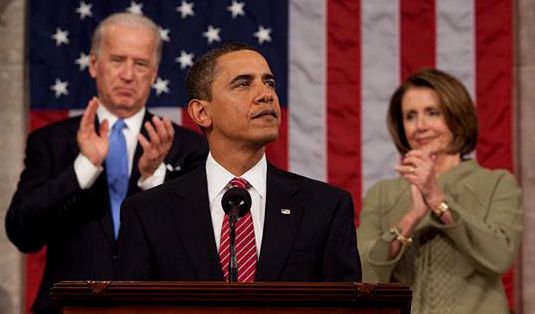
When the codes disagree, you have produced a mixed message, and listeners handle it in a predictable way: they discount the words and believe the nonverbal channel. The reasoning is intuitive, and mostly sound. Words are the code you control deliberately, so words are the code you would fake. The face, the voice, and the hands are believed precisely because they are harder to manage.
This has one enormous consequence for a beginning speaker. If your content is excellent and your delivery says “I do not believe this and I want to sit down,” your audience will not conclude that you are nervous. They will conclude that your content is weak. Anxiety and dishonesty produce overlapping nonverbal profiles, and audiences are bad at telling them apart — which is unfair, and which you have to manage anyway.
The management strategy is not to fake confidence. It is congruence on the parts you can control. Slow the rate. Plant the feet. Land the last word of the sentence instead of trailing off. Look at one friendly face and finish a full thought there. None of that requires feeling calm, and all of it changes what the room concludes.
Immediacy: the behaviors that shrink the distance
Immediacy is the set of behaviors that signal approachability and psychological closeness. It is one of the better-supported ideas in this chapter: across a large body of instructional-communication research, teachers who display more immediacy behaviors are consistently rated as more effective and more liked, and the association with student motivation and perceived learning is reasonably robust. (The evidence that immediacy raises objectively measured learning is thinner — another place to keep your claims modest.)
Immediacy is not charisma and it does not require an outgoing personality. It is a short list of behaviors: reducing physical distance, orienting your torso toward the person, leaning slightly in, making and holding eye contact, smiling, using open gestures instead of crossed arms, calling people by name, using inclusive pronouns (we, us, our), varying your vocal pitch, and being available before and after. Every one of those is a decision, not a trait.
Consider the two versions of the same opening. Version A: the speaker stands behind the lectern, reads from a page, arms braced on the edges, and says “Today I will be discussing hand hygiene compliance.” Version B: the speaker steps to the side of the lectern, looks at the third row, and says “Raise your hand if you have ever walked out of a patient room and realized halfway down the hall that you forgot. [pause] Yeah. Me too. Let us talk about why that happens.” Same topic, same evidence to follow. The second one has already made the audience part of the problem.
Nonverbal behavior repeats, substitutes, complements, accents, regulates, or contradicts your words — and when it contradicts them, the audience believes the body, which is why congruence beats polish.
Section 5Using Both Codes on Purpose
Adapting across cultures without turning people into categories
Every rule in this chapter is a rule about a community, not about humans. Edward T. Hall proposed a distinction between high-context communication, where much of the meaning lives in the situation, the relationship, and what is implied, and low-context communication, where meaning is expected to be stated explicitly in words. It is a genuinely useful lens: the same sentence — “That will be difficult” — can be a soft refusal in one setting and an invitation to problem-solve in another. It is also a lens you should hold loosely. Reviews of the empirical literature have found the high-context and low-context framework much less well tested than its popularity suggests, and treating whole nations as fixed points on a scale produces exactly the stereotyping it was meant to prevent.
Display rules — learned norms about which emotions may be shown, by whom, how strongly, and in what setting — are on firmer ground and are more immediately useful. Some workplaces expect visible enthusiasm; others read it as unserious. Some families grieve loudly and some quietly. Neither is a defect. A nurse who reads a stoic patient as “not in much pain” has confused a display rule with a symptom, and that error has clinical consequences.
The same caution applies to claims about gender differences in nonverbal behavior. There are measurable average differences in some behaviors — several meta-analyses find, for instance, that women on average decode nonverbal cues somewhat more accurately — but effect sizes are generally modest, overlap between groups is large, and researchers disagree about how much of the difference reflects socialization, status differences, or the situation being measured. Averages tell you almost nothing about the specific person in front of you.
The workable rule is behavioral, not categorical: observe, do not assume; ask when it matters; adjust when you get feedback. That is a skill you can practice in any room, and it does not require memorizing a country list.
On camera, both codes get cropped
Video strips away most of proxemics, all of the room, most peripheral gesture, and — because of latency — the fine timing that regulates turn-taking. Turn transitions in face-to-face talk are timed to within about two-tenths of a second, so even a few hundred milliseconds of transmission delay blurs the cue by which people know whose turn it is — which is why online meetings produce so much simultaneous talking and so many collisions. You have to rebuild deliberately what a room gives you free.
The camera should sit at or slightly above eye level, which means stacking the laptop on books. Frame yourself from mid-chest up so your hands are visible when you gesture — a head-only frame amputates your kinesics. Put your light in front of you, not behind; a window at your back turns you into a silhouette. Look at the lens for your most important sentence, not at the faces, even though that feels wrong. Verbally, over-signal the structure: “Three things. First...” is more necessary online than in person because listeners have fewer cues to track where you are. And name the person you are handing the turn to, out loud, because the nonverbal handoff is not going to work.
A rehearsal protocol you can actually run
Rehearsing by reading the outline in your head does nothing for either code. Here is a four-pass protocol that takes about forty minutes and targets a different layer each time.
Pass 1 — Words only, out loud, seated. Read it aloud at conversational volume. You are hunting for sentences your mouth stumbles over, terms your audience will not know, and any spot where you cannot say the sentence without looking at the page. Fix by shortening, not by memorizing.
Pass 2 — Voice. Record audio only. Play it back with the script in hand and mark three things: every filler, every place your pitch rose on a claim, and your words-per-minute over one timed minute. Choose exactly three fixes. Do not chase all of them.
Pass 3 — Body, standing, muted. Record video with the sound off and watch it. Sound-off viewing is the trick; it makes adaptors, weight-shifting, and locked hands impossible to miss because your brain is not busy with the content.
Pass 4 — Full run to one human. Ask them for exactly two things: the sentence they remember, and the moment they got lost. Anything more general than that is not usable feedback.
| Dimension | Needs work | Competent | Strong |
|---|---|---|---|
| Specificity | Stays on the top rungs; no observable detail | Claims are supported by at least one concrete example each | Every major claim descends to something a stranger could have witnessed |
| Word choice | Jargon or euphemism the audience cannot decode | Technical terms are defined on first use | Terms are defined and then used, so the audience leaves with new vocabulary |
| Hedging | Disclaimers and tags on core claims | Main claims stated without padding | Hedges appear only where uncertainty is real, and are labeled as such |
| Eye contact | Reads from page or scans without landing | Regular contact across the room | Full thoughts delivered to individual people, distributed across all sections |
| Gesture | Hands locked, pocketed, or in constant adaptors | Occasional purposeful gestures, hands return to rest | Gestures illustrate content and arrive with or just before the word |
| Vocal variety | Monotone or uniformly fast; fillers frequent | Some variation in rate and pitch; few fillers | Pauses used for emphasis; rate slows on key material; fillers replaced by silence |
| Movement and space | Pacing, rocking, or frozen behind the lectern | Stable stance, occasional purposeful movement | Moves on transitions and plants on points; uses space to mark structure |
| Congruence | Delivery contradicts the content’s stated importance | Delivery does not undercut the message | Face, voice, and body all say what the words say |
Adaptation is a behavioral skill — observe, ask, adjust — and it is learned by rehearsing one channel at a time rather than by memorizing rules about groups of people.
The chapter in one breath
Words are arbitrary symbols, so meaning does not travel inside them — it is rebuilt by every listener out of their own experience, which is why bypassing is so common and why a word’s connotation often matters more than its denotation. Because that is true, precision is a craft rather than a talent: climb down the abstraction ladder until you reach something observable, index and date your claims so you are talking about this case at this time, convert accusation into I-language, and strip hedges out of anything that has to be believed. Running alongside all of that is a second code with eight channels — body, eyes, voice, touch, space, time, objects, and the room itself — several of which are decided before you speak. Nonverbal behavior does six specific jobs to your words, and when it contradicts them the audience believes the body. That is the real content behind the discredited 7–38–55 statistic. None of this is universal; display rules and comfortable distances differ, the science on facial universality is genuinely unsettled, and nobody can detect a liar. So adapt by observing rather than by categorizing, rehearse one channel at a time, and aim for congruence rather than polish.
Words worth knowing
| Term | What it means |
|---|---|
| Denotation | A word’s conventional, referential meaning — approximately what a dictionary records. |
| Connotation | The emotional and social associations a word carries beyond its denotation; often the thing an audience actually reacts to. |
| Triangle of meaning | Ogden and Richards’s model showing that a symbol connects to its referent only through a person’s thought — never directly. |
| Abstraction ladder | A scale from a specific observable instance up to broad categories; effective speakers move deliberately between rungs. |
| Bypassing | A misunderstanding in which two people use the same word for different things, or different words for the same thing, without noticing. |
| Jargon | Specialized vocabulary that speeds communication inside a group and blocks it outside one. |
| Euphemism | A softened substitute for a blunt term; useful for kindness, dangerous when it obscures what happened. |
| Allness | Speaking as though a statement covers every case — always, never, everyone — which one counterexample can defeat. |
| Polarization | Collapsing a range of possibilities into two opposed extremes, erasing everything in between. |
| Indexing | Attaching an identifier so a claim refers to a particular case rather than a whole category. |
| Static evaluation | Describing a person or situation as permanently fixed, ignoring that both change over time; repaired by dating the statement. |
| I-language | A three-part statement naming the observed behavior, its effect on you, and your request, instead of diagnosing the other person. |
| Hedge | A qualifier such as sort of or maybe that softens a claim; helpful where uncertainty is real, costly on core or safety-critical statements. |
| Kinesics | The study of body movement: gesture, posture, and facial behavior. |
| Emblem | A gesture with a direct verbal translation that can replace speech, such as a thumbs-up; meanings are culture-specific. |
| Adaptor | A self-touching or object-manipulating behavior with no communicative intent, which audiences nonetheless read as anxiety. |
| Vocalics | Also called paralanguage: pitch, rate, volume, quality, articulation, and pause — everything about the voice except the words. |
| Proxemics | The communicative use of space and distance, described by Hall as intimate, personal, social, and public zones. |
| Chronemics | The communicative use of time: punctuality, wait time, pacing, and how long one is permitted to speak. |
| Mixed message | A message whose verbal and nonverbal channels disagree; listeners typically discount the words and believe the nonverbal channel. |
| Display rules | Learned cultural and situational norms governing which emotions may be shown, by whom, and how intensely. |
| Immediacy | Verbal and nonverbal behaviors that reduce psychological distance and signal approachability, such as leaning in, using names, and inclusive pronouns. |