The Sociological Perspective
Why did you choose the major you chose, marry the person you married, or believe the things you believe? It feels like a string of private decisions — and it is — but sociology begins with a stubborn observation: those private decisions fall into patterns. People who share a social position tend to choose, marry, vote, worship, and even die in strikingly similar ways. Sociology is the systematic study of those patterns and the social forces that produce them. This chapter introduces the perspective itself — the habit of seeing the general in the particular — along with the thinkers who founded the field, the three great theoretical lenses sociologists still use, and the reason any of it matters for understanding your own life.
By the end of this chapter you can
- Define sociology and explain what makes its way of looking at the world distinctive.
- Use C. Wright Mills's sociological imagination to connect personal troubles to public issues.
- Summarize the contributions of Comte, Durkheim, Marx, and Weber to the founding of the discipline.
- Distinguish the three major theoretical paradigms — structural functionalism, conflict theory, and symbolic interactionism.
- Apply each paradigm correctly to the same social topic and predict the questions it would ask.
- Distinguish microsociology from macrosociology and place a research question at the right level of analysis.
- Explain how social facts and social forces shape outcomes that feel purely personal, using Durkheim's study of suicide as the classic case.
Section 1What sociology is
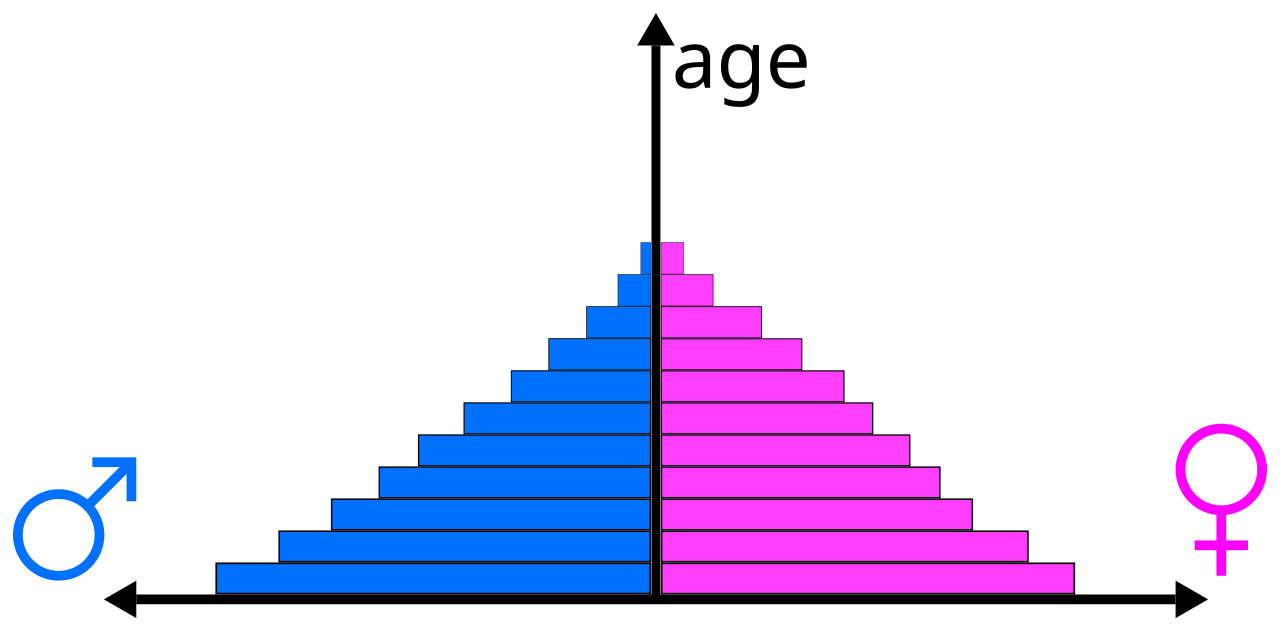
The study of society
Sociology is the systematic, evidence-based study of human social life — of groups, institutions, and whole societies, and of the relationships that bind individuals to them. Where psychology looks inward at the mind and biology looks at the body, sociology looks outward and across: it asks how the groups you belong to shape what you think, feel, and do. Its core insight is that human behavior is not simply the sum of individual choices. Rates of marriage, unemployment, church attendance, and even suicide stay remarkably stable from year to year within a given society, even though the specific people involved change entirely. That stability is the fingerprint of social forces — regularities that exist above the level of any single person and press on all of us.
Sociologists call these external regularities social facts, a term from Émile Durkheim. A social fact — a law, a custom, a rate of divorce, the expectation that you shake hands or bow — is external to any one individual, general across the group, and able to constrain behavior. You did not invent your language, your money, or your manners; you were born into them, and they shape you whether you consent or not. Studying social facts is what makes sociology a discipline and not just opinion about people.
The sociological imagination
In 1959 the American sociologist C. Wright Mills gave the perspective its most famous name: the sociological imagination, "the vivid awareness of the relationship between experience and the wider society." It is the capacity to step outside your own routine and see your private life as the intersection of biography and history — to grasp that what happens to you is bound up with the era and society you happen to live in. Mills's sharpest tool was a distinction between personal troubles and public issues. A trouble is private, felt by an individual within the range of their immediate relationships. An issue is public, rooted in the structure of society itself, and it cannot be solved by any one person's effort.
His example still lands. When one worker in a city of 100,000 is unemployed, that is a personal trouble, and we look sensibly to that person — their skills, their choices, their luck. But when 15 million workers are unemployed in a nation of 50 million employees, that is a public issue, and no amount of individual grit will fix it, because the problem lies in the economy's structure, not in any one résumé. The sociological imagination is the discipline of asking, of any personal experience, how many other people are in the same boat, and what social arrangement put them there?
Seeing the general in the particular
The sociologist Peter Berger described this move as "seeing the general in the particular" — recognizing, in the individual case, the workings of broad social patterns. It requires what Berger called a willingness to be surprised by the familiar, to treat your own everyday world as strange enough to question. Why do you queue politely, tip a server, or feel embarrassed by a silence in conversation? None of these is written in your genes; each is a social pattern you absorbed so thoroughly it feels like instinct. Learning to see it — to make the familiar strange — is the first skill of the discipline.
| Situation | As a personal trouble | As a public issue |
|---|---|---|
| One person divorces | Their specific relationship, choices, and history | Divorce rates near 40–50%; changing law, economics, and gender roles |
| A student drops out | That student's motivation and circumstances | Tuition costs, work demands, unequal school funding |
| A person is obese | Individual diet and exercise habits | Food deserts, marketing, the built environment, poverty |
| Someone can't find a job | Their skills, effort, and interview luck | Recession, automation, where jobs are located |
- Sociology is the systematic study of human social life — groups, institutions, and societies — and the forces that pattern them.
- Social facts (Durkheim) are external, general, constraining regularities that shape individuals from outside.
- The sociological imagination (Mills) links private biography to public history and distinguishes personal troubles from public issues.
- The perspective means "seeing the general in the particular" — making the familiar strange enough to question.
Section 2The founders

Comte and the birth of a science
Sociology was born in the upheaval of the 1800s — the French and Industrial Revolutions had shattered the old order of village, church, and monarchy, and thinkers scrambled to explain the new world of cities, factories, and mass politics. The Frenchman Auguste Comte (1798–1857) coined the word sociology in the 1830s and argued that society could be studied with the same rigor as physics. He championed positivism, the view that knowledge should rest on observable, measurable evidence rather than speculation, and proposed a "law of three stages" through which he believed human understanding progressed. Comte produced little empirical research himself, but he set the founding ambition: a science of society. The English writer Harriet Martineau, who translated and condensed Comte for the English-speaking world and studied morals and manners on both sides of the Atlantic, is often recognized as the first woman sociologist.
Durkheim: society as a reality of its own
Émile Durkheim (1858–1917), a founder of French academic sociology, gave the field its central object of study: the social fact. Society, he insisted, is not reducible to the individuals in it — it is a reality sui generis, of its own kind, that must be explained on its own terms. He analyzed social solidarity, the glue holding groups together, distinguishing the mechanical solidarity of small traditional societies (bound by sameness and shared belief) from the organic solidarity of modern ones (bound by interdependence and a complex division of labor). When that binding weakens and norms lose their grip, he warned, people fall into anomie — a state of normlessness. His landmark study Suicide (1897) showed that even this most private act follows social patterns, and it made him the intellectual ancestor of structural functionalism.
Marx: society as a struggle over resources
Karl Marx (1818–1883) was not a professor of sociology, but no thinker shaped the field more. He argued that the engine of history is class conflict — the struggle between those who own the means of production (the bourgeoisie) and those who must sell their labor to survive (the proletariat). Under industrial capitalism, Marx held, workers are exploited (paid less than the value they create) and alienated (cut off from their work, its products, and one another). Economic arrangements, in his view, form the base that shapes everything else — law, religion, politics, ideas. Whatever one makes of his politics, Marx's focus on power, inequality, and conflict became the foundation of conflict theory.
Weber: society as meaning and rationality
The German scholar Max Weber (1864–1920) both built on Marx and pushed back. Where Marx put economics first, Weber insisted that ideas also drive history — famously arguing in The Protestant Ethic and the Spirit of Capitalism that a religious worldview helped give rise to capitalism itself. His signature method was verstehen (German for "understanding"): to explain social action you must grasp the subjective meaning it holds for the people doing it. Weber saw the master trend of modern life as rationalization — the steady replacement of tradition and emotion by calculation, efficiency, and rules — and identified bureaucracy as its purest, and potentially most dehumanizing, expression.
| Founder | Big question | Key ideas | Legacy paradigm |
|---|---|---|---|
| Comte | Can society be studied scientifically? | Coined "sociology"; positivism; law of three stages | Scientific method in sociology |
| Durkheim | What holds society together? | Social facts; solidarity; anomie; Suicide | Structural functionalism |
| Marx | Who has power, and how do they keep it? | Class conflict; bourgeoisie vs proletariat; alienation | Conflict theory |
| Weber | What meanings drive social action? | Verstehen; rationalization; bureaucracy; Protestant ethic | Interpretive & interactionist work |
- Comte coined sociology and championed positivism — a science of society built on observable evidence.
- Durkheim made the social fact sociology's object of study and analyzed solidarity, anomie, and suicide.
- Marx centered class conflict, exploitation, and alienation, founding the conflict tradition.
- Weber stressed meaning (verstehen), rationalization, and bureaucracy, balancing Marx's economics with the power of ideas.
Section 3The three paradigms
Structural functionalism
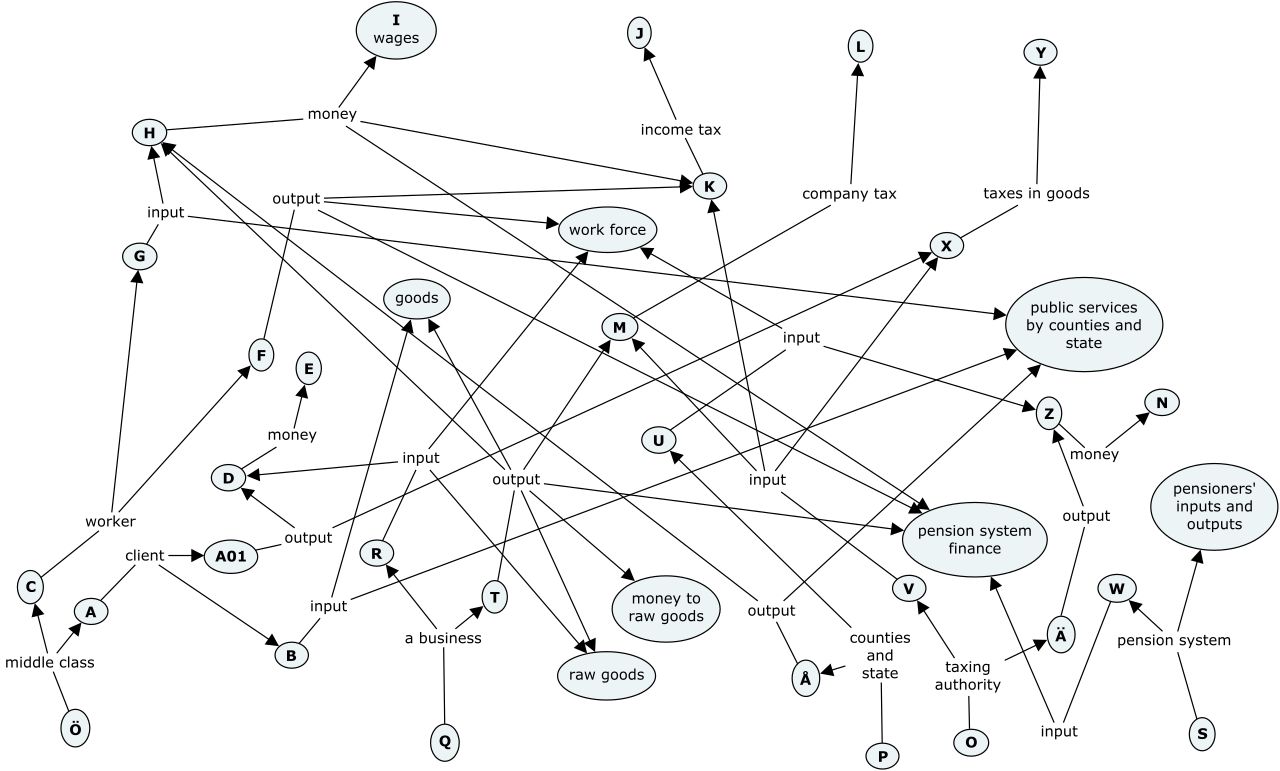
A paradigm is a broad theoretical lens — a set of basic assumptions that shapes the questions a researcher asks. Sociology's first great lens is structural functionalism, which grew from Comte, Durkheim, and Herbert Spencer and was refined by Talcott Parsons and Robert K. Merton. It views society as a system of interconnected parts — family, economy, education, religion, government — each performing a function that helps keep the whole stable, much as organs keep a body alive. Merton distinguished manifest functions (the intended, recognized consequences of a social pattern) from latent functions (its unintended, often unnoticed ones), and added the idea of a dysfunction, a consequence that disrupts the system. A university's manifest function is to educate; a latent function is to introduce future spouses and delay entry into a crowded job market.
Conflict theory
Conflict theory, rooted in Marx and extended by many others, sees society not as a harmonious body but as an arena of competition over scarce resources — wealth, power, prestige. Where functionalism asks how society holds together, conflict theory asks who benefits from the way it is arranged and who is kept down. Social order, in this view, reflects the ability of dominant groups to protect their advantages, and change comes through struggle. The tradition has broadened far beyond economic class: feminist theory analyzes conflict along lines of gender, and the American sociologist W. E. B. Du Bois pioneered the study of racial inequality and "the color line." To a conflict theorist, a university does not just educate — it reproduces privilege by tracking children of the wealthy toward the top.
Symbolic interactionism
The third lens works at ground level. Symbolic interactionism, developed by George Herbert Mead and named by Herbert Blumer, holds that society is built and rebuilt through countless everyday interactions in which people exchange and interpret symbols — words, gestures, objects that carry shared meaning. We act toward things based on the meanings they hold for us, and those meanings arise in interaction. Charles Horton Cooley captured this with the looking-glass self: we come to see ourselves by imagining how we appear to others. Erving Goffman extended it into dramaturgy, analyzing social life as a theater in which we manage the impressions we give off. Where the first two paradigms zoom out to whole societies, interactionism zooms in on the handshake, the classroom exchange, the profile photo.
| Paradigm | Level | View of society | Guiding question | Key figures |
|---|---|---|---|---|
| Structural functionalism | Macro | A stable system of interdependent parts | What function does this serve for the whole? | Durkheim, Parsons, Merton |
| Conflict theory | Macro | An arena of struggle over scarce resources | Who benefits, and who is disadvantaged? | Marx, Du Bois, feminist theorists |
| Symbolic interactionism | Micro | A fabric woven from everyday meaningful interaction | How do people create and interpret meaning? | Mead, Cooley, Blumer, Goffman |
- A paradigm is a theoretical lens that decides which questions a sociologist asks.
- Structural functionalism (macro) sees society as interdependent parts serving functions; note manifest vs latent functions and dysfunctions.
- Conflict theory (macro) sees society as competition over scarce resources and asks who benefits — by class, gender, and race.
- Symbolic interactionism (micro) sees society built from meaningful everyday interaction; note the looking-glass self and dramaturgy.
Section 4Micro and macro
Two altitudes for one world
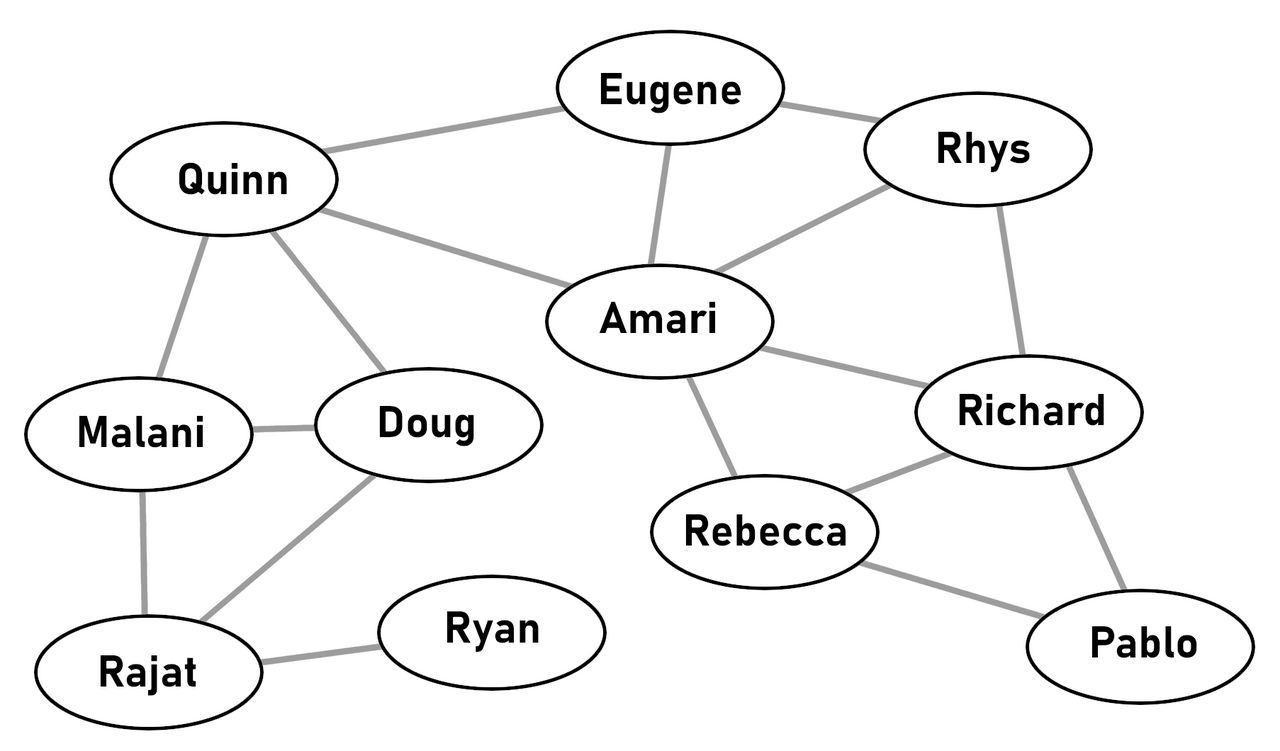
Sociologists study the same social world from different altitudes, and it is worth naming them. Microsociology examines small-scale, face-to-face interaction — a conversation, a family dinner, a doctor and patient, a job interview. Macrosociology examines large-scale structures and whole populations — the economy, the education system, social class, migration, a nation's rising average age. Some sociologists add a middle rung, the meso level, for organizations and communities that sit between the two. Symbolic interactionism is the natural home of micro work; functionalism and conflict theory usually operate at the macro level. Neither altitude is more "real" than the other, and the best sociology often links them.
The same phenomenon at each level
The levels are not different subjects — they are different resolutions on the same subject. Take education. At the macro level a sociologist charts graduation rates across income groups, funding gaps between districts, and the payoff of a degree in the labor market. At the micro level, another sociologist sits in a single classroom and watches how a teacher's expectations, a student's body language, and the give-and-take of praise and correction shape who comes to see themselves as "smart." The macro pattern (unequal outcomes by class) is produced, one interaction at a time, by the micro processes — and the micro interactions are steered by the macro structures the participants were born into. Good sociology keeps both in view.
| Feature | Microsociology | Macrosociology |
|---|---|---|
| Scale | Individuals and small groups | Institutions, populations, whole societies |
| Typical focus | Face-to-face interaction, meaning, identity | Structure, inequality, social change |
| Home paradigm | Symbolic interactionism | Functionalism, conflict theory |
| Example question | How do strangers negotiate space in an elevator? | Why is wealth distributed the way it is? |
| Typical evidence | Observation, interviews, ethnography | Surveys, census data, historical records |
- Microsociology studies face-to-face interaction; macrosociology studies large structures and whole societies.
- Some analyses add a meso level for organizations and communities.
- Micro and macro are two resolutions on the same reality — macro patterns are built from micro interactions, which are steered by macro structures.
- The paradigms map onto the levels: interactionism is micro; functionalism and conflict theory are macro.
Section 5Why it matters
The social forces behind private life
The reason the sociological perspective is worth learning is that it reveals causes you cannot see from inside your own life. The forces that shape you — your class, your era, your gender, your nationality, the institutions you pass through — are like water to a fish: so constant and surrounding that they become invisible. Sociology is the practice of noticing the water. It repeatedly shows that outcomes we experience as purely personal — whom we love, what we earn, how long we live, what we believe about ourselves — are patterned by social position in ways no individual chose. That is not a comforting message, but it is a clarifying one, and it is often the first step toward changing conditions that private effort alone cannot fix.
Durkheim's suicide: the classic proof
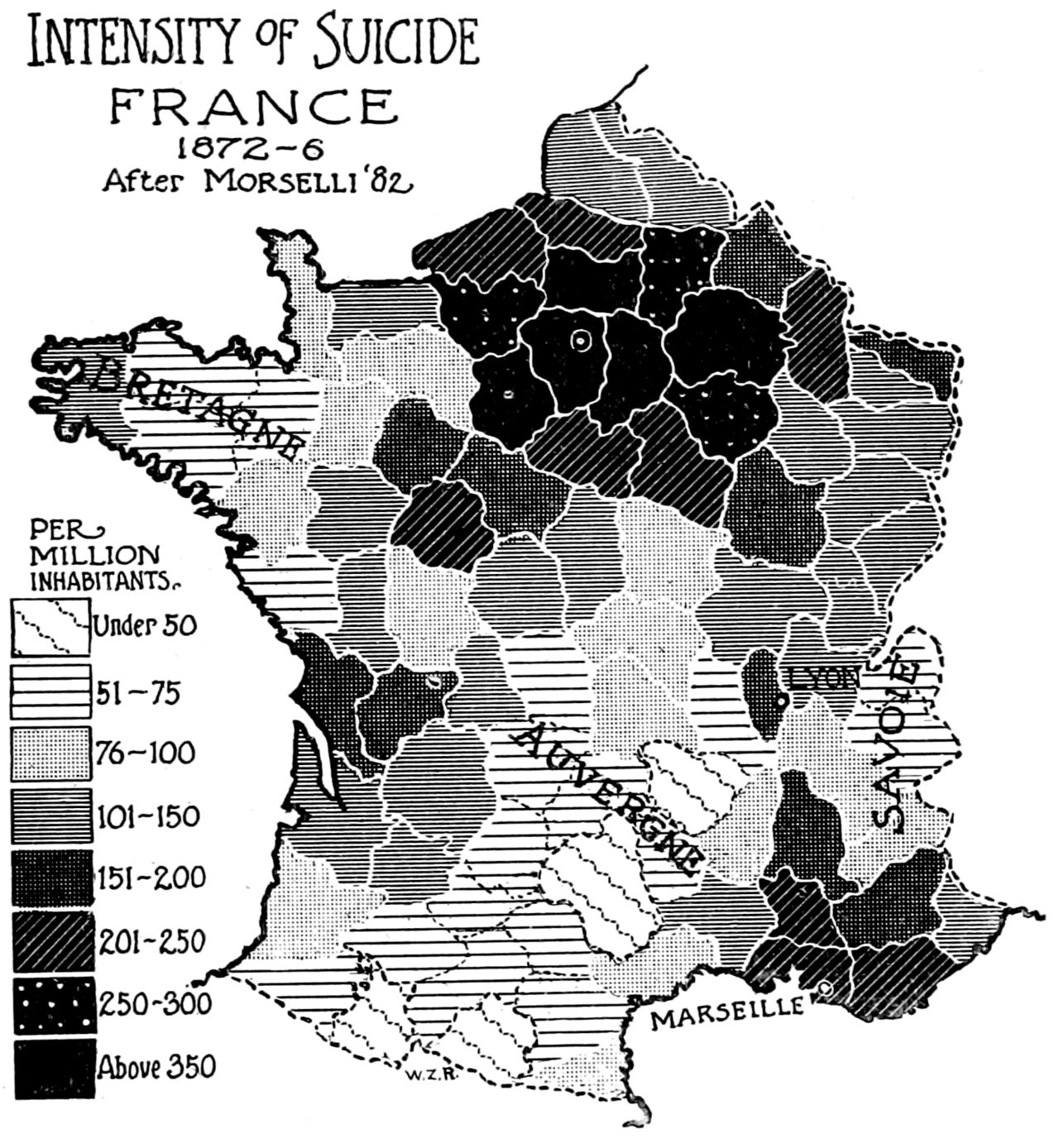
Nothing feels more individual than suicide, and that is exactly why Durkheim chose it. Studying official statistics across the regions of Europe, he found that suicide rates held steady within groups year after year and varied systematically between them: they were consistently higher among the unmarried than the married, among Protestants than Catholics, among the childless than parents, and they rose in times of sudden social disruption. Individual psychology could not explain a stable group rate — only a social fact could. Durkheim's answer was social integration: the more tightly a person is woven into a group with shared bonds and clear norms, the more protected they are; weak integration and normlessness (anomie) raise the risk. The most private act imaginable turned out to have a social address.
A perspective for citizens, not just scholars
You need not become a sociologist for the perspective to pay off. It makes you a sharper reader of the news, less quick to reduce a social problem to individual character and better at spotting the structure underneath. It trains a habit that Berger called debunking — looking past a society's official story to how it actually works. And it is practical: the skills of sociology — framing questions, gathering evidence, reading data on people and organizations — feed careers in public health, business, law, policy, social work, marketing, and management. Above all, the sociological imagination is a tool for humility and for agency at once: it locates you honestly within forces larger than yourself, and in doing so shows you where those forces might be changed.
| Feels like… | Is also shaped by… |
|---|---|
| "I chose my career freely" | Family resources, gender expectations, which majors your school offered |
| "My health is my own doing" | Income, neighborhood, occupation, access to care |
| "Whom I love is private" | Who is in your social networks, homogamy, cultural scripts about romance |
| "My beliefs are just mine" | How you were raised, your generation, your community and its institutions |
- Social forces are "the water" — so pervasive they become invisible; sociology is the practice of noticing them.
- Durkheim's study of suicide proved that even the most private act follows social patterns, explained by social integration, not individual psychology alone.
- The perspective trains debunking — seeing past a society's official story to how it works.
- Sociological skills apply widely — public health, policy, business, law, social work — and offer both humility and agency.
The chapter in one breath
- Sociology is the systematic study of social life — groups, institutions, and societies — and the social forces that pattern private behavior.
- Social facts (Durkheim) are external, general, constraining regularities; the sociological imagination (Mills) links personal troubles to public issues.
- The founders each set an agenda: Comte (positivism), Durkheim (social facts, solidarity), Marx (class conflict), Weber (meaning and rationalization).
- Structural functionalism sees society as interdependent parts serving functions; note manifest vs latent functions and dysfunctions.
- Conflict theory sees competition over scarce resources and asks who benefits — by class, gender, and race.
- Symbolic interactionism sees society built from meaningful everyday interaction — the looking-glass self, dramaturgy.
- Microsociology studies face-to-face interaction; macrosociology studies large structures — two resolutions on one reality.
- The perspective matters because it reveals the social causes of outcomes that feel personal, as Durkheim's Suicide classically showed.
ReferenceWords worth knowing
A quick reference for the terms in this chapter — skim it now, or circle back whenever a word trips you up.
- Anomie
- A condition of normlessness in which social norms weaken or break down, associated by Durkheim with higher rates of deviance and suicide.
- Bourgeoisie
- In Marx's theory, the class that owns the means of production and profits from the labor of others.
- Bureaucracy
- A large, formal organization run by rules, hierarchy, and impersonal procedure; for Weber, the purest expression of rationalization.
- Class conflict
- The struggle between social classes over resources and power that Marx saw as the engine of historical change.
- Conflict theory
- A macro-level paradigm that views society as an arena of competition over scarce resources and asks who benefits from social arrangements.
- Dramaturgy
- Goffman's approach analyzing social interaction as theater, in which people manage the impressions they present to others.
- Dysfunction
- A consequence of a social pattern that disrupts the stability or working of the larger system.
- Latent function
- An unintended, often unrecognized consequence of a social pattern (contrast with manifest function).
- Looking-glass self
- Cooley's idea that we develop a self-image by imagining how we appear to and are judged by others.
- Macrosociology
- The study of large-scale social structures, institutions, and whole societies.
- Manifest function
- The intended, openly recognized consequence of a social pattern.
- Microsociology
- The study of small-scale, face-to-face social interaction.
- Paradigm
- A broad theoretical framework whose basic assumptions shape the questions a researcher asks.
- Positivism
- The view, championed by Comte, that knowledge should be based on observable, measurable evidence.
- Proletariat
- In Marx's theory, the working class, who own no means of production and must sell their labor to survive.
- Social fact
- Durkheim's term for a way of acting or thinking that is external to the individual, general across the group, and able to constrain behavior.
- Social solidarity
- The bonds that hold a society together; Durkheim contrasted mechanical (based on sameness) with organic (based on interdependence).
- Sociological imagination
- Mills's term for the capacity to connect personal experience to broader social and historical forces.
- Sociology
- The systematic, evidence-based study of human social life, groups, institutions, and societies.
- Structural functionalism
- A macro-level paradigm that views society as a system of interdependent parts, each serving a function that maintains the whole.
- Symbolic interactionism
- A micro-level paradigm holding that society is constructed through everyday interaction in which people exchange and interpret shared symbols.
- Verstehen
- Weber's method of interpretive understanding — grasping the subjective meaning that social action holds for the people performing it.