An Age of Revolutions: American, French and Industrial
Between the 1760s and the 1840s the Atlantic world tore up its own operating instructions. Colonists in North America decided that a Parliament three thousand miles away could not tax them; within a generation the French decided that a king anointed by God could be tried by ordinary men and beheaded in a public square. While those political earthquakes ran their course, a quieter revolution in Lancashire cotton mills and Shropshire ironworks was multiplying what a single pair of hands could produce, pulling families off the land and into towns that grew faster than anyone could sewer them. These three revolutions were not separate stories. They shared debts, ideas, personnel and consequences. This chapter traces how they connected, why they produced such different outcomes, and how by 1848 Europeans had inherited a new political vocabulary—citizen, nation, class, rights—that Europe is still arguing about.
By the end of this chapter you can
- Explain how the Seven Years’ War and imperial debt set off the crisis between Britain and its North American colonies.
- Trace the American argument from no taxation without representation to full independence, and identify what the United States Constitution did and did not settle.
- Analyze the fiscal, social and intellectual causes of the French Revolution of 1789, including the Estates-General and the Declaration of the Rights of Man and of the Citizen.
- Distinguish the phases of the French Revolution—constitutional monarchy, republic, the Terror, the Directory and Napoleon—and explain what drove each transition.
- Assess the Haitian Revolution as a test of revolutionary universalism, and explain why it succeeded where other slave uprisings failed.
- Describe the technological, agricultural and institutional preconditions of the Industrial Revolution in Britain.
- Evaluate the social consequences of industrialization for wages, health, child labor and the working class, distinguishing evidence from rhetoric.
- Compare the ideologies born of this era—liberalism, conservatism, nationalism and early socialism—and explain the outcome of the revolutions of 1848.
- Weigh competing historical interpretations of why these revolutions happened when and where they did.
Section 1The Atlantic Crisis and the American Revolution
War, debt and a change of policy
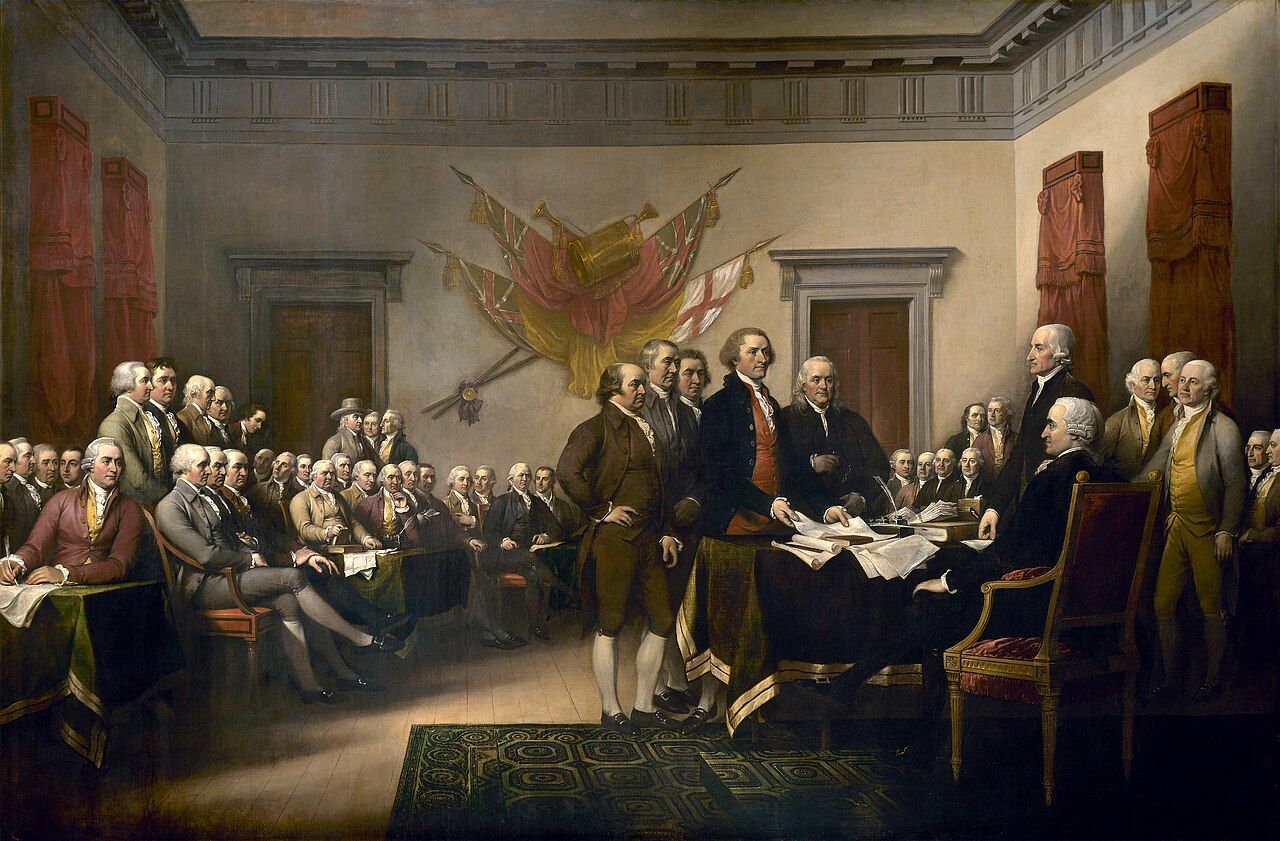
The American Revolution began as an accounting problem. Britain emerged from the Seven Years’ War (1756–1763) as the dominant power in North America and India, having stripped France of Canada and its Ohio Valley claims. Victory cost money. The national debt roughly doubled, from about £75 million to some £133 million, and servicing it consumed more than half of ordinary peacetime revenue. Ministers in London looked west, saw thirteen prosperous colonies that had been defended by British regulars, and concluded reasonably enough that the colonists should contribute to the cost of their own protection.
The instruments were modest by European standards. The Sugar Act (1764) actually lowered the duty on molasses while promising, for the first time, to collect it. The Stamp Act (1765) taxed paper—newspapers, legal documents, playing cards—a tax already familiar in Britain. The Townshend duties (1767) taxed glass, lead, paint, paper and tea. What made these measures explosive was not their weight but their principle. Colonial assemblies had voted their own internal taxes for over a century. A tax laid by Parliament, in which no colonist sat, looked to Americans like the thin end of a wedge that ended in arbitrary rule.
British officials answered with the doctrine of virtual representation: members of Parliament represented the whole empire, not merely the freeholders who elected them, exactly as they represented the unenfranchised residents of Manchester or Birmingham. Americans found the argument insulting rather than persuasive. If Manchester was badly represented, that was an argument for reforming Manchester, not for extending the defect across an ocean. By the time the Stamp Act Congress met in October 1765 and the Act was repealed the following March, the colonists had discovered two things that mattered more than the tax itself: that coordinated non-importation could hurt British merchants, and that the colonies could act together.
From resistance to independence
Escalation followed a grimly familiar pattern of provocation and overreaction. Troops quartered in Boston fired into a jeering crowd in March 1770, killing five, an incident patriot propagandists promptly christened the “Boston Massacre.” The Tea Act of 1773, which actually made tea cheaper by giving the East India Company a direct sales monopoly, was read as a bribe to swallow the principle of parliamentary taxation; on 16 December 1773 men in Mohawk disguise dumped 342 chests into Boston harbor. Parliament replied with the Coercive Acts, closing the port and rewriting the Massachusetts charter. The First Continental Congress convened in September 1774. Shots at Lexington and Concord came in April 1775.
Even then, independence was not the goal. Congress sent the Olive Branch Petition to George III in July 1775. What changed opinion was partly the king’s refusal to receive it, partly the hiring of German auxiliaries, and enormously Thomas Paine’s Common Sense, published in January 1776. Paine wrote in the plain idiom of a corset-maker turned journalist, and he attacked not a ministry but monarchy itself—“a French bastard landing with an armed banditti,” he called the Norman Conquest. Perhaps 150,000 copies circulated in a population of 2.5 million. Six months later Congress adopted Jefferson’s Declaration, whose opening claims were less original than they were compressed: Locke on natural rights, the Scottish Enlightenment on moral sense, English common-law grievance-listing, all fused into a paragraph a farmer could memorize.
The war itself was won by endurance, foreign help and geography. Washington’s central achievement was keeping the Continental Army in existence. Saratoga (October 1777) persuaded France to intervene openly in 1778, turning a colonial rebellion into a global war that stretched British resources to the Caribbean, Gibraltar and India. At Yorktown in October 1781, Cornwallis surrendered to a Franco-American force whose blocking element was the French fleet under de Grasse. The Treaty of Paris in 1783 recognized independence and handed the new republic territory to the Mississippi.
Constitution and unfinished business
Winning was easier than governing. The Articles of Confederation gave Congress no power to tax or regulate trade, and the near-collapse of public finance, plus Shays’s Rebellion of indebted Massachusetts farmers in 1786–87, convinced nationalists that the frame needed replacing. The Philadelphia Convention of 1787 produced a document of remarkable engineering: separated powers, a bicameral legislature reconciling large and small states, an independent judiciary, and an amendment process. The Bill of Rights followed in 1791.
It also produced compromises with slavery that would take a civil war to undo. The three-fifths clause counted enslaved people for representation while denying them any voice; the international slave trade was protected until 1808; a fugitive-slave clause obliged free states to return the escaped. The word “slavery” never appears, which tells you the framers knew what they were doing. Meanwhile the promise that “all men are created equal” was already being taken literally by people the framers had not consulted—by Elizabeth Freeman, who sued for and won her freedom in Massachusetts in 1781, and by the free Black petitioners of Boston and Philadelphia. The American Revolution launched a standard that outran its authors.
The American Revolution began as a constitutional dispute over who could tax whom and ended by producing a durable federal republic whose founding compromises with slavery embedded a contradiction at the heart of its own principles.
Section 21789: The French Revolution and the Republic
Why France broke
France in 1788 had the largest economy and the largest population in western Europe, and it was insolvent. Helping the Americans had cost roughly a billion livres, all of it borrowed, and by the late 1780s about half of state revenue went to debt service. Unlike Britain, France had no central bank and no funded national debt, so it borrowed at punishing rates through a patchwork of venal offices and short-term expedients. The tax system compounded the problem: the taille fell chiefly on peasants, the nobility and clergy enjoyed extensive exemptions, and tax farming siphoned off collections before they reached the treasury.
Society was legally divided into three estates—clergy, nobility, and everyone else. The Third Estate was around 97 percent of some 28 million people, and it included not only peasants but a growing, educated, prosperous bourgeoisie of lawyers, merchants and officials who paid for the state and were largely shut out of its highest honors. Historians disagree sharply about how far this was a class conflict. Marxist accounts once described a rising bourgeoisie overthrowing a feudal nobility; revisionists since Alfred Cobban and François Furet have pointed out that many nobles were commercially active and many revolutionary leaders were officeholders, not manufacturers. What is not in dispute is that the language of privilege had become intolerable to people who thought of themselves as citizens.
Then came weather. The volcanic eruption of Laki in Iceland (1783) and a catastrophic hailstorm in July 1788 wrecked harvests; bread prices in Paris climbed all through the following spring and peaked in July 1789 at a level that could consume 80 to 88 percent of a laborer’s daily wage. Hunger did not make the Revolution, but it filled the streets at the decisive moments.
From Estates-General to Republic
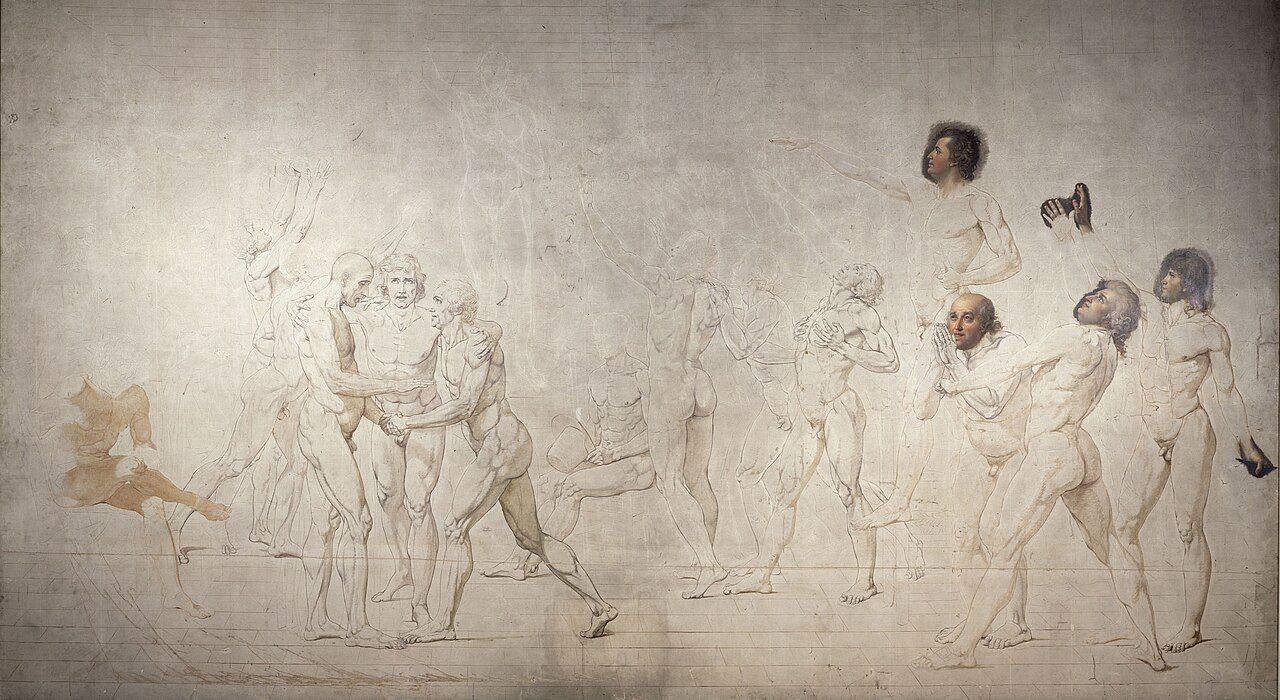
Louis XVI summoned the Estates-General for May 1789, the first meeting since 1614. The immediate quarrel was procedural and therefore fundamental: would the estates vote by order (giving clergy and nobility two votes to one) or by head? The Third Estate, doubled in numbers but not in power, waited six weeks and then on 17 June declared itself the National Assembly, representing the nation. Locked out of its hall three days later, its deputies swore the Tennis Court Oath not to disperse until France had a constitution. Sovereignty had changed hands on paper.
It changed hands on the street on 14 July, when Parisians seized the Bastille—a fortress holding seven prisoners but a great deal of gunpowder. In the countryside the Great Fear of late July sent peasants against seigneurial archives. On the night of 4 August the Assembly abolished feudal dues, tithes, venal office and provincial privilege in a few hours of competitive renunciation. The Declaration of the Rights of Man and of the Citizen (26 August) asserted that men are born free and equal in rights, that sovereignty resides in the nation, and that law is the expression of the general will. In October, market women marched to Versailles and brought the royal family back to Paris.
The constitutional monarchy of 1791 might have held. Two things killed it. The Civil Constitution of the Clergy (1790) reorganized the Church as a branch of the state and required an oath; roughly half the parish clergy refused, and the papal condemnation in 1791 split Catholic France permanently. And in June 1791 the king fled toward the eastern frontier, was recognized at Varennes and brought back under guard. A monarch who runs from his own constitution cannot easily be trusted to defend it. France declared war on Austria in April 1792 and Prussia joined against her within weeks; the monarchy fell on 10 August; the Republic was proclaimed on 22 September; Louis XVI was guillotined on 21 January 1793.
Terror and Thermidor
In 1793 the Republic faced foreign invasion, civil war in the Vendée, federalist revolts in Lyon and Marseille, and food riots. The Convention’s answer was emergency government: the Committee of Public Safety, the levy in mass (levée en masse) that put some 750,000 men under arms, the Law of the Maximum fixing prices, and the Revolutionary Tribunal. Roughly 17,000 people were executed by sentence, with tens of thousands more dead in prison or in the pacification of the Vendée, where the death toll may have exceeded 150,000.
Historians still argue whether the Terror flowed logically from the Revolution’s ideology—Furet’s view, that a politics of the indivisible general will has no room for legitimate opposition—or whether it was a contingent response to genuine emergency, as Georges Lefebvre and others held. Both readings explain something. Robespierre’s claim that virtue without terror is powerless was an ideological statement; the fact that the Terror wound down as the armies won was a circumstantial one. He fell on 9 Thermidor Year II (27 July 1794) and was executed the next day. The Directory that followed was corrupt, coup-prone and dependent on the army—which is how a Corsican artillery officer became the obvious solution.
| Phase | Dates | Regime | Defining act |
|---|---|---|---|
| Constitutional monarchy | 1789–1792 | National / Legislative Assembly | Declaration of the Rights of Man; Constitution of 1791 |
| Republic and Terror | 1792–1794 | National Convention | Execution of Louis XVI; Committee of Public Safety |
| Thermidorian reaction | 1794–1795 | Convention (post-Robespierre) | Dismantling of the Maximum and the Tribunal |
| Directory | 1795–1799 | Five Directors, two councils | Rule by coup; reliance on the army |
| Consulate and Empire | 1799–1815 | Napoleon Bonaparte | Civil Code (1804); coronation as Emperor |
France’s revolution began as a fiscal crisis that a privileged society could not resolve without redefining sovereignty, and once sovereignty moved to “the nation” each successive crisis pushed the definition of who spoke for the nation further and more violently.
Section 3Napoleon, Haiti and the Revolution Exported
The Napoleonic settlement
Napoleon Bonaparte seized power in the coup of 18 Brumaire (9 November 1799) and governed France until 1814, with a brief return in 1815. He is impossible to sort into hero or tyrant, because he was consistently both. He ended the Revolution’s political instability and preserved its social core. The Napoleonic Code of 1804 confirmed equality before the law, secure property, religious toleration and civil marriage—while restoring the legal subordination of wives to husbands. The colonies were excluded from the Code and governed by special laws; there, by a separate decree of 20 May 1802, Napoleon had already reimposed slavery. Political liberty he simply removed: the sixty-odd Paris newspapers were cut to thirteen in 1800 and to four by 1811, elections became plebiscites on decisions already taken, and Fouché’s police watched everyone else. The Concordat of 1801 made peace with the papacy without returning Church lands. The Bank of France, the lycée system, the prefects and a rationalized tax bureaucracy gave France an administrative machine that survived every later regime change.
Abroad he was a conqueror who carried the Revolution in his baggage train. He broke the Austro-Russian coalition at Austerlitz (1805), the Prussians at Jena-Auerstedt (1806) and the Russians at Friedland (1807). Wherever French armies went, they abolished serfdom and guild monopolies, imposed legal equality, dissolved the Holy Roman Empire (1806) and reorganized the German states. They also requisitioned food, conscripted men and looted art. The Spanish rising after 1808 taught Europe the word guerrilla and taught Napoleon that nationalism could be turned against him. The invasion of Russia in 1812 took roughly 600,000 men east; perhaps one in six came back. The Congress of Vienna (1814–15), guided by Metternich, redrew the map to contain France, restored legitimate dynasties and left behind a Concert of Europe, a standing habit of great-power consultation aimed at smothering revolution before it spread. But no congress could restore the belief that dynasties governed by right alone.
Saint-Domingue: the revolution nobody planned
The French colony of Saint-Domingue was the most profitable piece of real estate on earth—in the 1780s it produced about 40 percent of the world’s sugar and over half its coffee, worked by roughly 500,000 enslaved people under some 30,000 whites and a similar number of free people of color. Mortality was so high that the population was sustained only by continuous importation from Africa. When Paris declared that men are born free and equal, the colonists insisted the words did not travel.
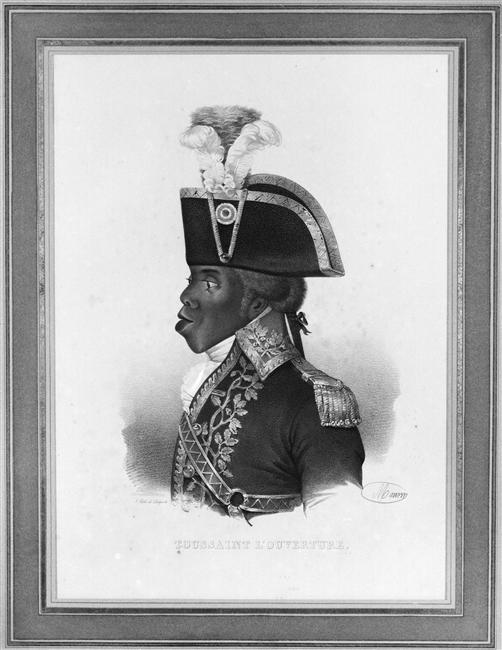
In August 1791 a mass uprising began in the northern plain, and the colony descended into a war of everyone against everyone, complicated by Spanish and British invasions. Toussaint Louverture, freed before the revolt and a skilled military organizer, emerged as the dominant figure, switching from Spanish to French service in 1794 after the Convention abolished slavery in the colonies. By 1801 he governed the whole island and issued a constitution naming himself governor for life. Napoleon sent his brother-in-law Leclerc with an expedition to restore slavery; Toussaint was seized under a flag of truce and died in a French prison in 1803. But yellow fever destroyed the French army, and Jean-Jacques Dessalines finished the war. On 1 January 1804 Haiti declared independence—the second independent state in the Americas and the only nation founded by a successful revolt of the enslaved.
The consequences ran in every direction. France, having lost its most valuable colony, sold Louisiana to the United States in 1803 for fifteen million dollars. Slaveholding societies from Virginia to Brazil tightened controls and told each other Haitian horror stories for decades. And in 1825 France extracted from Haiti an indemnity of 150 million francs—compensation to former slaveholders for their lost human property—a debt Haiti serviced into the twentieth century. Historians such as Michel-Rolph Trouillot have argued that Haiti was long “silenced” in European accounts precisely because it was unthinkable within them.
| American | French | Haitian | |
|---|---|---|---|
| Dates | 1765–1789 | 1789–1799 | 1791–1804 |
| Core grievance | Taxation without consent | Privilege and fiscal collapse | Slavery itself |
| Social violence | Limited; ~60,000 loyalists exiled | High; ~17,000 executed, Vendée war | Extreme; a decade of total war |
| Slavery outcome | Preserved in the South | Abolished 1794, restored 1802 | Abolished permanently |
| Final regime | Federal republic, durable | Empire, then restored monarchy | Independent state, crippled by indemnity |
Napoleon spread the Revolution’s legal and administrative reforms across Europe by force while betraying its political liberty, and Haiti showed that the Revolution’s universal claims could be seized by those it never intended to include.
Section 4The Industrial Revolution
Why Britain, why then
No single cause explains industrialization, and honest historians disagree about the weighting. What is agreed is a cluster of preconditions that happened to coincide in Britain after about 1760. Agriculture came first: enclosure of open fields, the Norfolk turnip-and-clover rotation publicized by Viscount “Turnip” Townshend, Robert Bakewell’s selective livestock breeding and better drainage raised yields enough that a shrinking share of the population could feed a growing one. By 1800 perhaps a third of English workers were still in agriculture, an extraordinarily low figure for the time. Enclosure also displaced smallholders and cottagers, supplying labor to towns—a process contemporaries experienced as dispossession, whatever its aggregate efficiency.
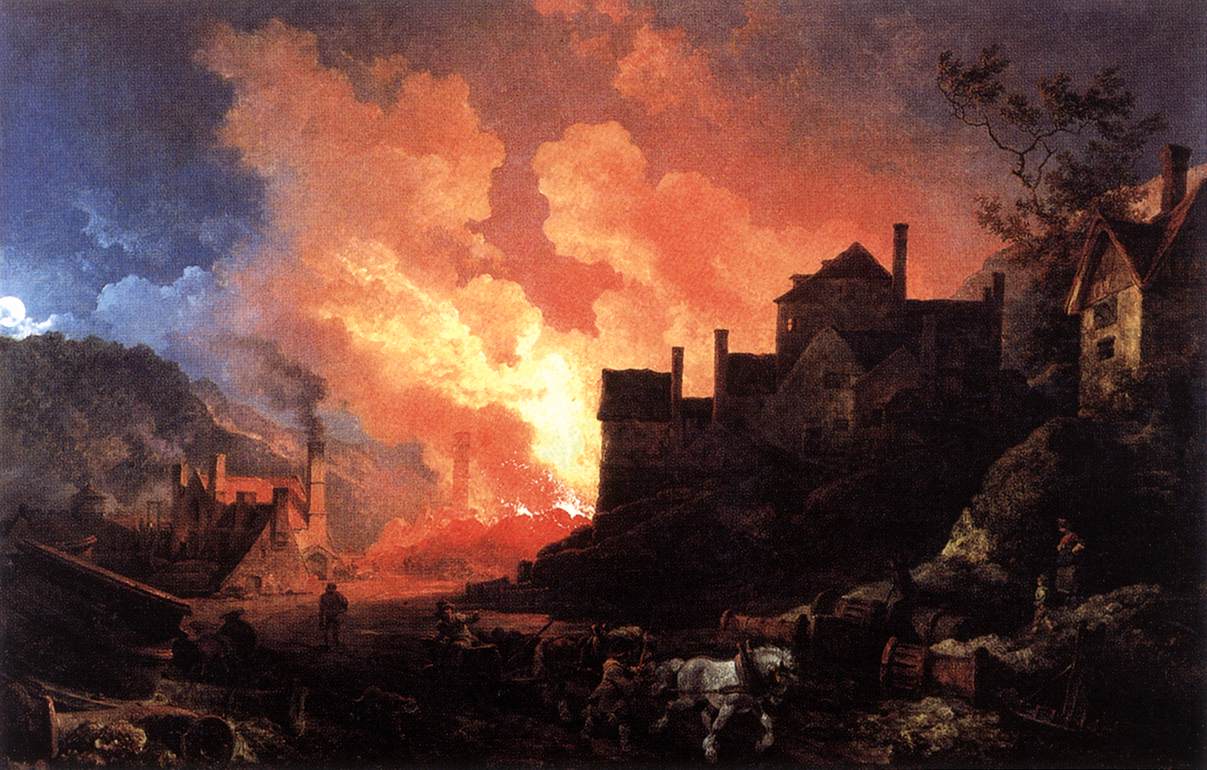
Second, coal. Britain had large, accessible coal seams near navigable water, and had been burning coal domestically since the sixteenth century because its forests were depleted. Coal is what made steam worth pursuing: Thomas Newcomen’s atmospheric engine (1712) was hopelessly inefficient but perfectly viable at a pit-head where fuel was almost free. James Watt’s separate condenser (patented 1769) and rotary motion (1781), commercialized with Matthew Boulton, cut fuel use by roughly three-quarters and freed the engine from the coalfield.
Third, institutions and markets. Britain had secure property rights, a funded national debt and a Bank of England that borrowed cheaply, patent law, no internal tariffs, dense canal and coastal shipping, and an Atlantic empire that supplied raw cotton—grown by enslaved labor in the American South and the Caribbean—and bought finished cloth. Robert Allen has argued that the decisive factor was a peculiar British price structure: high wages and cheap coal made labor-saving, fuel-burning machinery profitable in Britain and not in France or China. Joel Mokyr emphasizes instead a culture of “useful knowledge” linking tinkering artisans to natural philosophers. The debate is live.
Cotton, iron, steam and rails
Cotton was the pacesetter because it was a new industry with no guild restrictions and an elastic global market. John Kay’s flying shuttle (1733) sped weaving and created a yarn shortage; James Hargreaves’s spinning jenny (c.1764), Richard Arkwright’s water frame (1769) and Samuel Crompton’s mule (1779) answered it. Arkwright’s real innovation was arguably organizational: the Cromford mill of 1771 gathered workers under one roof, on a clock, under supervision. British raw cotton consumption rose from around 2.5 million pounds in 1760 to over 100 million by 1815 and roughly 600 million by 1850. Prices collapsed, and cheap washable clothing spread across the world.
Iron followed. Abraham Darby had smelted with coke at Coalbrookdale in 1709; Henry Cort’s puddling and rolling process (1783–84) made wrought iron in bulk. Transport then compounded everything. The Bridgewater Canal (1761) halved Manchester coal prices; George Stephenson’s Rocket won the Rainhill Trials in 1829, and the Liverpool and Manchester Railway opened in 1830. By 1850 Britain had over 6,000 miles of track. Railways were not just faster carts—they created national markets, standardized time, consumed enormous quantities of iron and coal, and mobilized capital through joint-stock companies on a new scale.
| Innovation | Approx. date | Associated with | Why it mattered |
|---|---|---|---|
| Coke smelting of iron | 1709 | Abraham Darby | Freed ironmaking from charcoal and forests |
| Flying shuttle | 1733 | John Kay | Faster weaving; created demand for yarn |
| Spinning jenny | c.1764 | James Hargreaves | Multiplied spindles per worker |
| Water frame and factory | 1769–71 | Richard Arkwright | Strong yarn plus the factory discipline model |
| Separate-condenser steam engine | 1769–81 | Watt and Boulton | Efficient rotary power anywhere |
| Puddling and rolling | 1783–84 | Henry Cort | Cheap wrought iron for machines and rails |
| Steam locomotive railway | 1825–30 | George Stephenson | National markets; huge demand for iron and coal |
Living through it
The human record is mixed and the argument over it is old. Real wages for most workers probably stagnated from the 1780s to the 1820s and then rose clearly after about 1840—the “pessimist” and “optimist” camps mostly differ over which decades to weight. What is not ambiguous is what happened to towns. Manchester grew from roughly 25,000 people in 1772 to over 300,000 by 1851. Housing went up back-to-back with no through ventilation; privies served dozens of families; water came from contaminated wells. Life expectancy at birth in 1840s Manchester and Liverpool ran around twenty-five years, far below the figure for healthy rural districts. Cholera arrived in Britain in 1831–32 and returned in 1848; Edwin Chadwick’s Report on the Sanitary Condition of the Labouring Population (1842) and the resulting Public Health Act of 1848 were the first systematic responses.
Work itself changed character. Time became the employer’s property, marked by a bell and enforced by fines—a shift E.P. Thompson analyzed in his classic essay on time and work-discipline. Children as young as five worked in mills and mines; the 1842 Royal Commission report on mines, with its engravings of children dragging corves through low galleries, shocked Parliament into banning underground work for women and boys under ten. The Factory Act of 1833 limited children’s hours and, crucially, created paid inspectors—the first labor law with teeth. The Ten Hours Act came in 1847. Workers organized too: Luddite machine-breaking (1811–13), the Peterloo massacre at Manchester in 1819 when cavalry charged a reform meeting, killing at least fifteen and injuring hundreds, the legalization of unions in 1824–25, and the Chartist movement, whose 1839, 1842 and 1848 petitions demanded universal male suffrage and the secret ballot. Chartism failed in its moment; five of its six points became law within a lifetime.
Industrialization broke the ancient link between population growth and falling living standards, but it did so through a decades-long transition whose first generation paid in shortened lives and lengthened working days.
Section 5New Ideologies and the Revolutions of 1848
The isms are born
Almost every political word we still argue with was coined or reshaped between 1789 and 1848. Liberalism meant constitutional government, careers open to talent, freedom of speech, press and religion, secure property and free trade—and, for most of its nineteenth-century adherents, a property qualification for voting. It was the creed of the professional and commercial middle classes. John Stuart Mill’s On Liberty (1859) gave it its most searching statement; Adam Smith’s Wealth of Nations (1776) and David Ricardo supplied its economics.
Conservatism was formulated in direct reaction. Edmund Burke’s Reflections on the Revolution in France (1790) argued that society is an inherited partnership between the living, the dead and the unborn, that abstract rights are a poor guide to practical government, and that reform should be gradual and grafted onto existing institutions. Joseph de Maistre pushed further toward throne and altar. Metternich turned conservatism into an international system at Vienna, using the Carlsbad Decrees (1819) to censor German universities.
Nationalism was in 1848 usually a liberal cause, not yet a militarist one. Johann Gottfried Herder had argued that each people has a distinctive language, folklore and spirit; Giuseppe Mazzini’s Young Italy fused national unity with republican democracy. And early socialism ranged widely: Robert Owen built a model community at New Lanark and an experiment at New Harmony, Charles Fourier designed cooperative phalanstèries, Louis Blanc argued for a guaranteed right to work through state-funded “social workshops” owned by their members. Marx and Engels, in the Communist Manifesto published in February 1848, dismissed all of them as “utopian” and offered instead a theory of history driven by class conflict, in which industrial capitalism would create the proletariat that would overthrow it. The pamphlet had almost no effect that year and enormous effect later.
| Ideology | Core claim | Key voice | Main constituency |
|---|---|---|---|
| Liberalism | Constitutional rule, individual liberty, property, free markets | Mill; Smith | Professional and commercial middle class |
| Conservatism | Continuity, prescription, gradual reform, established religion | Burke; Metternich | Landed aristocracy, church, monarchy |
| Nationalism | Political borders should follow national communities | Herder; Mazzini | Intellectuals, students, subject peoples |
| Socialism | Production should serve the community, not private profit | Owen; Fourier; Marx | Artisans and, later, factory workers |
Reform, repression and 1848
Britain reformed just enough to avoid rupture. The Great Reform Act of 1832 abolished the worst rotten boroughs and enfranchised much of the urban middle class, raising the electorate from roughly 500,000 to 800,000—about one adult man in five. Catholic Emancipation came in 1829, slavery was abolished in the British Empire in 1833–34 (with compensation paid to owners, not the enslaved), and the Corn Laws were repealed in 1846. On the Continent, the July Revolution of 1830 replaced Charles X with the “bourgeois king” Louis-Philippe, Belgium won independence, and a Polish rising was crushed.
Then came 1848. A potato blight and grain failure in 1845–47 caused the last great subsistence crisis in western Europe—and, in Ireland, a famine that killed about a million people and drove a million more overseas. A financial downturn threw urban workers out of jobs. In February a banquet campaign in Paris turned into a rising; Louis-Philippe abdicated and a Second Republic was declared. Within weeks Vienna, Berlin, Milan, Venice, Budapest, Prague and dozens of German states were in revolt. Metternich fled to England. The Frankfurt Parliament assembled to write a constitution for a united Germany.
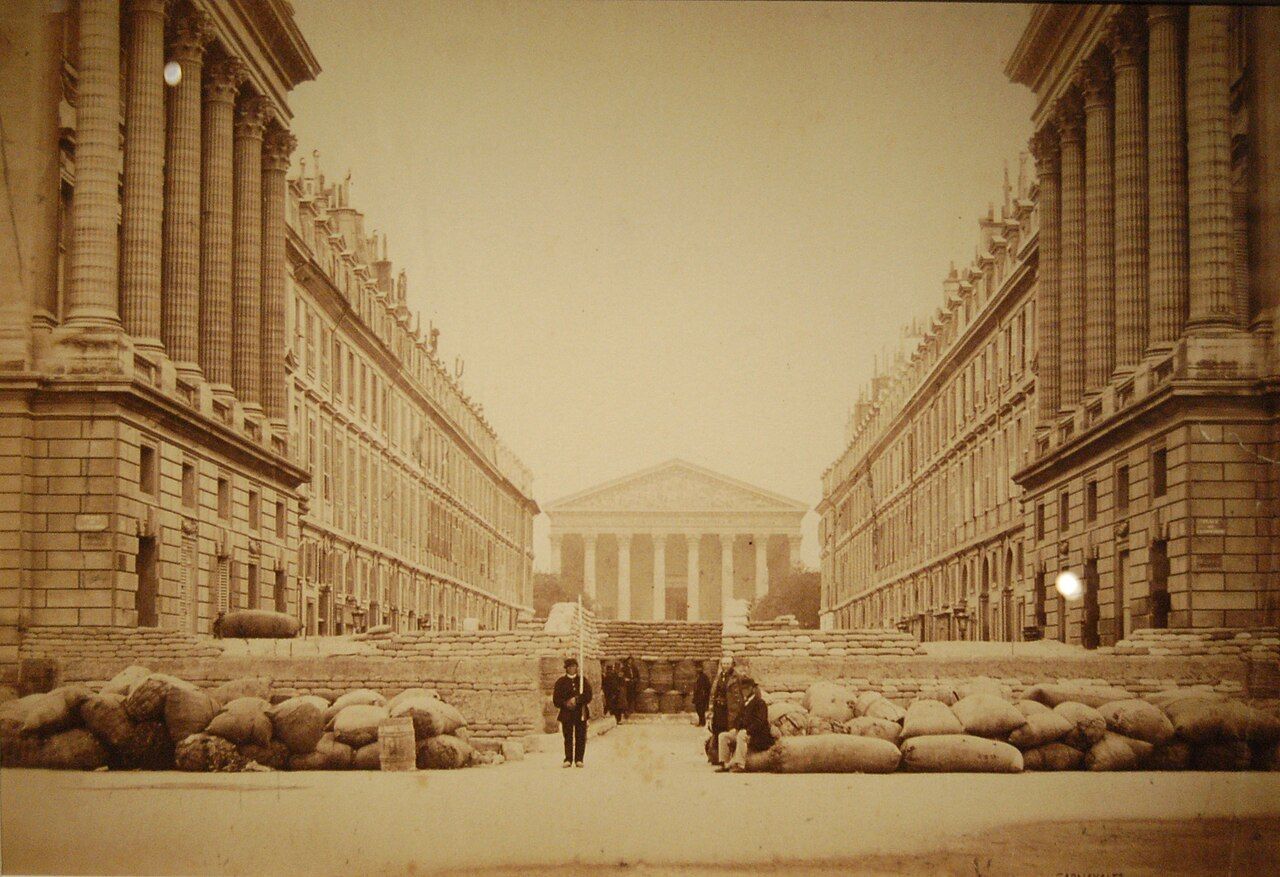
By mid-1849 nearly all of it had been reversed. The reasons are instructive. The revolutionaries split—liberals wanted constitutions and property qualifications, workers wanted bread and the right to work, and when the new Constituent Assembly closed the national workshops in June, the army killed some 1,500 Parisian workers in four days and deported thousands more to Algeria. Nationalists split too: Hungarians, Czechs, Croats and Germans all invoked national self-determination against one another, and the Habsburgs exploited it, using Croatian troops against Hungarians and Russian troops to finish the job in 1849. The Frankfurt Parliament offered the German crown to Frederick William IV of Prussia, who refused a “crown from the gutter.” In France, voters elected Louis-Napoleon Bonaparte president by a landslide; he made himself emperor in 1852.
Historians once called 1848 “the turning point at which modern history failed to turn,” a line usually traced to G.M. Trevelyan. The judgment is too neat. Serfdom was abolished in the Habsburg lands and never restored. Piedmont kept its constitution and became the engine of Italian unification. And the lesson conservative statesmen drew—that nationalism was too strong to fight and might be harnessed instead—runs straight to Cavour and Bismarck in the following chapter.
The revolutionary era generated the ideological menu—liberal, conservative, national, socialist—that Europe would use for the next century, and 1848 showed that these commitments could not be combined into a single winning coalition.
The chapter in one breath
Three revolutions, one long convulsion. Britain won an expensive war and tried to bill its colonies; the colonists answered that consent, not conquest, is the ground of taxation, and by 1789 they had a federal constitution that worked and a compromise with slavery that did not. France, bankrupted partly by helping them, called an Estates-General it had not used since 1614, and the meeting turned into a claim that sovereignty belongs to the nation—a claim that ran through the Declaration of the Rights of Man, the guillotining of a king, the Terror, and finally a general who kept the Revolution’s civil code while discarding its liberty. In Saint-Domingue, half a million enslaved people took the Declaration at its word and won the only successful slave revolution in history, then paid for it with an indemnity that lasted a century. Meanwhile in Lancashire and Shropshire, coal, cotton, credit and clock-discipline broke the old ceiling on human productivity, at the cost of a generation’s health. Out of all this came liberalism, conservatism, nationalism and socialism—and in 1848 they tore each other apart, leaving the old order standing but permanently on notice.
Words worth knowing
| Term | What it means |
|---|---|
| Virtual representation | British claim that MPs represented the whole empire, including those who could not vote for them; rejected by the colonists. |
| Articles of Confederation | The first U.S. framework (1781–89); a league of states with no federal taxing power, replaced by the Constitution. |
| Three-fifths clause | Constitutional rule counting three of every five enslaved people toward a state’s representation, boosting Southern power in Congress. |
| Estates-General | France’s medieval representative body of clergy, nobility and commons, summoned in 1789 for the first time since 1614. |
| Third Estate | Everyone outside the clergy and nobility—about 97 percent of French people, from peasants to wealthy lawyers. |
| Tennis Court Oath | Vow of 20 June 1789 by Third Estate deputies not to disperse until France had a constitution. |
| Great Fear | Rural panic and anti-seigneurial risings of summer 1789 that pushed the Assembly to abolish feudal dues on 4 August. |
| Declaration of the Rights of Man and of the Citizen | August 1789 statement that men are born free and equal in rights and that sovereignty resides in the nation. |
| Civil Constitution of the Clergy | 1790 law reorganizing the Church under state control; the required oath split French Catholics. |
| Committee of Public Safety | Twelve-man emergency executive of 1793–94, dominated by Robespierre, that directed the Terror and the war effort. |
| Levée en masse | The 1793 mass conscription decree that mobilized the whole population for war and created Europe’s first citizen army of scale. |
| Thermidor | The coup of July 1794 that overthrew Robespierre; by extension, the cooling phase after a revolution’s radical peak. |
| Napoleonic Code | 1804 civil code fixing legal equality, property and secularism—and the legal subordination of married women. |
| Enclosure | Conversion of open fields and commons into private, fenced holdings; raised yields and displaced smallholders. |
| Factory system | Concentration of powered machinery and supervised, clock-timed labor under one roof, pioneered by Arkwright at Cromford. |
| Luddites | Textile workers who destroyed machinery in 1811–13, protesting not technology as such but the collapse of skilled wages. |
| Peterloo | The 1819 cavalry charge on a reform meeting in Manchester that killed at least fifteen and became a symbol of repression. |
| Chartism | British working-class movement (1838–48) demanding universal male suffrage, secret ballot and paid MPs. |
| Liberalism | Belief in constitutional government, individual liberty, secure property and free markets; initially favored limited suffrage. |
| Concert of Europe | The post-1815 system of great-power consultation, shaped by Metternich, aimed at containing France and suppressing revolution. |