Relativism, Objectivity and Moral Disagreement
Somebody in your class, your unit or your family has said it: who are we to judge—it’s all relative. The sentence feels generous. It is also, on inspection, four or five different claims wearing one coat, and some of them contradict the others. This chapter takes the coat apart. We separate the plain anthropological fact that societies have differed enormously about right and wrong from the philosophical claim that there is therefore nothing to be right or wrong about. We follow the actual argument from Herodotus through William Graham Sumner and Ruth Benedict to J. L. Mackie and Gilbert Harman, and we test it the way a logician would. Then we ask the harder question: if moral judgements can be genuinely mistaken, how do you handle the ordinary situation of disagreeing with a colleague, a patient’s family or a whole culture—without either collapsing into shrugging or hardening into contempt?
By the end of this chapter you can
- Distinguish descriptive relativism, metaethical relativism and normative relativism, and explain why running them together causes most of the confusion in this debate.
- Reconstruct the cultural differences argument in premise–conclusion form and state precisely why it is invalid.
- Explain J. L. Mackie’s argument from relativity and argument from queerness, and how they support moral error theory rather than relativism.
- Compare moral realism, constructivism, expressivism and error theory on what, if anything, makes a moral claim true.
- Evaluate whether relativism can support tolerance, and show why most philosophers judge that it cannot.
- Use the idea of moral progress (abolition, foot-binding, duelling) to test relativist and objectivist accounts against real historical change.
- Apply the epistemology of peer disagreement—conciliationism versus the steadfast view—and the tools of moral uncertainty to a live clinical or workplace dispute.
- Practise cultural humility in a way that respects difference without abandoning human rights floors, using concrete cases in disclosure, consent and female genital cutting.
Section 1Five Things People Mean by “It’s All Relative”

The oldest version of the puzzle
Around 430 BCE, Herodotus told a story about the Persian king Darius (Histories 3.38). Darius asked some Greeks at his court what it would take for them to eat the bodies of their dead fathers. They said no price on earth. He then called in members of the Callatiae, an Indian people who did eat their dead, and asked—through an interpreter, so the Greeks could hear—what it would take for them to burn their fathers’ corpses instead. They cried out and begged him not to speak of such horror. Herodotus draws the moral by quoting the poet Pindar: custom is king of all.
Notice what the story establishes and what it does not. It establishes, vividly, that sincere and decent people can hold opposite convictions about the same act, each convinced the other is monstrous. It does not establish that neither of them is right, or that the question has no answer. Twenty-four centuries of argument sit in that gap. Almost every mistake made in this area is a mistake about that gap.
Descriptive, metaethical, normative
Descriptive relativism is an empirical claim: as a matter of anthropological and historical fact, moral codes differ across societies, sometimes fundamentally. This is a claim for fieldworkers and historians, not philosophers, and in its modest form it is obviously true. Societies have differed about slavery, infanticide, polygamy, usury, blood feud, the status of women, the treatment of animals and the disposal of the dead.
Metaethical relativism is a claim about truth: moral statements are not true or false full stop, but only true-relative-to-a-culture, a code or a set of agreements. On this view “widow-burning is wrong” is elliptical; the complete thought is “widow-burning is wrong according to the moral framework of modern liberal societies,” and a parallel statement indexed to another framework could be equally true. Gilbert Harman defended a sophisticated version in “Moral Relativism Defended” (1975), arguing that judgements of what a person ought to do make sense only against motivating attitudes the speaker and agent share.
Normative relativism is a claim about conduct: because codes differ, you ought not to judge, interfere with or criticise the practices of another culture. This is the version that gets recited in seminars, and it is the version with the most obvious internal trouble—it issues a universal command (never judge across cultures) that is itself not relative to any culture. Two further positions often travel under the same banner: individual subjectivism, which relativises morality to each person rather than each group, and moral error theory, which says moral claims aim at objective truth and uniformly miss.
| Position | Core claim | Type of claim | Chief difficulty |
|---|---|---|---|
| Descriptive relativism | Societies in fact hold different moral codes | Empirical | Deep differences may be fewer than they look once beliefs about facts are separated out |
| Metaethical relativism | Moral truth is only truth-relative-to-a-framework | About truth | Cannot make sense of a reformer being right against her own society |
| Normative relativism | You ought never to judge or interfere across cultures | About conduct | States a non-relative universal duty; self-undermining |
| Individual subjectivism | Moral truth is relative to each person’s attitudes | About truth | Makes moral disagreement between two people logically impossible |
| Error theory | Moral claims are objective in intent and all false | About truth | Owes an account of why we go on making and needing such claims |
Where the modern version came from
The modern doctrine is not ancient scepticism repackaged; it has a datable social-science pedigree. William Graham Sumner’s Folkways (1906) gave ethnocentrism its currency in English—the term itself had been used in German by Ludwig Gumplowicz decades earlier—and argued that the mores of a group generate its notions of right, so that “the mores can make anything right.” Ruth Benedict, in “Anthropology and the Abnormal” (1934) and Patterns of Culture (1934), argued that normality itself is culturally defined and that morality is essentially a name we give to socially approved habits.
The doctrine then met a political test. In 1947, as the United Nations drafted what became the Universal Declaration of Human Rights, the Executive Board of the American Anthropological Association published a Statement on Human Rights in American Anthropologist, largely drafted by Melville Herskovits, warning that a declaration “conceived only in terms of the values prevalent in Western Europe and America” would be an instrument of the same colonialism anthropology had documented. The Declaration was adopted anyway on 10 December 1948, 48 votes in favour, none against, eight abstentions. The discipline eventually changed course: in 1999 the AAA adopted a Declaration on Anthropology and Human Rights that explicitly grounds anthropological work in a commitment to human rights.
“Relativism” names at least five distinct claims—one empirical, several about truth, one about conduct—and an argument that is plausible for one of them is usually irrelevant to the others.
Section 2The Argument From Disagreement, and Why It Fails

Laying the argument out
James Rachels, in The Elements of Moral Philosophy (first edition 1986), gave the standard reconstruction and the standard reply. He called it the cultural differences argument:
| Step | Content | Status |
|---|---|---|
| Premise | The Greeks believed it wrong to eat the dead; the Callatiae believed it right. | True (a claim about beliefs) |
| Conclusion | Therefore there is no objective truth about how to treat the dead; it is only a matter of opinion. | Does not follow (a claim about reality) |
| Diagnosis | The premise concerns what people believe; the conclusion concerns what is the case. | Invalid form |
| Parallel | Some societies believed the earth flat, others round; therefore the earth has no shape. | Absurd, same form |
The point is not that the conclusion is false. It might be true. The point is that this argument does not get you there, and it is nearly always the only argument offered. Disagreement is compatible with objectivity everywhere else in human enquiry—nutrition, cosmology, epidemiology—so it is odd to treat it as decisive in ethics alone. Rachels adds a second stroke: many apparent moral differences dissolve when you separate values from beliefs about facts. Hindus who will not eat beef and Britons who will are not disagreeing about whether it is permissible to eat your grandmother; they are disagreeing about whether the cow might be your grandmother. Share the metaphysics of reincarnation and the practices converge. How far that move goes is genuinely contested, and the standard counter-case is Richard Brandt’s Hopi Ethics (1954). After extended fieldwork Brandt concluded that Hopi and Anglo-American attitudes to the suffering of animals differed in a way he could not trace back to any difference in non-moral belief—a residue that looked to him like disagreement in basic values. Whether such residues are real fundamental disagreements or merely analysis left unfinished is still argued over, and it is the point on which the descriptive question actually turns.
The consequences a consistent relativist must accept
Rachels then presses on what follows if metaethical relativism is true. First, we could no longer say that the practices of another society are morally inferior to our own—not merely that we should be cautious about saying it, but that the words would fail to express a coherent thought. Second, we could decide whether an action is right simply by consulting the standards of our own society; moral enquiry would become a form of opinion polling. Third—the sharpest one—the idea of moral progress becomes unintelligible. A reformer, by definition, holds a view her society rejects. On strict relativism, when the abolitionist Granville Sharp argued in the 1770s that English law could not sustain slavery, he was, by the standard of the code operative around him, simply wrong. When his society came round, it did not get better; it merely got different.
Relativists have replies. David Wong’s Natural Moralities (2006) defends a pluralistic relativism in which human nature and the functional requirements of social life constrain the space of workable moralities to a limited range—more than one true morality, but far fewer than infinitely many, and some codes ruled out entirely. Bernard Williams, in Ethics and the Limits of Philosophy (1985), offered a “relativism of distance”: our vocabulary of moral appraisal applies fully in real confrontations, where two ways of life are genuine options for the same people, and idles in notional confrontations with, say, a Bronze Age chieftain. Both are serious positions; neither rests on the bad argument from disagreement.
Mackie: the better argument, and where it lands
J. L. Mackie’s Ethics: Inventing Right and Wrong (1977) contains the strongest version of the case, and it is subtler than the one on the seminar table. His argument from relativity is inference to the best explanation, not deduction: the actual pattern of moral variation is better explained by the hypothesis that people’s moral views reflect their forms of life than by the hypothesis that people are perceiving, with varying success, a realm of objective values. His argument from queerness is metaphysical and epistemological: objective values would have to be entities of a very strange kind—facts with built-in action-guiding force, so that merely knowing them motivates—and we would need a faculty for detecting them unlike any of our known faculties.
Notice where Mackie lands. Not relativism but error theory: ordinary moral talk really does purport to describe objective facts, and there are no such facts, so ordinary moral claims are systematically false. Mackie then wrote a second half of the book about how to invent and maintain a morality anyway. Sharon Street’s “A Darwinian Dilemma for Realist Theories of Value” (2006) presses a related modern worry: if our evaluative tendencies were shaped by selection for reproductive fitness rather than for tracking moral truth, the realist owes an account of why the two would coincide. These are the arguments an honest objectivist must answer. The seminar-table argument is not.
The inference from “cultures disagree” to “there is no moral truth” is invalid; the serious anti-objectivist arguments, like Mackie’s, are about explanation and metaphysics, and they support error theory more naturally than relativism.
Section 3Objectivity Without Absolutism
What objectivity would and would not require
People reject moral objectivity because they picture something nobody defends: a fixed list of rules, exceptionless, written into the fabric of the universe, immune to context. Call that absolutism. Objectivity is a much weaker claim. To say a moral question has an objective answer is to say that what makes an answer correct is not simply that you or your group approve of it—that you can be mistaken, that evidence and argument bear on the question, and that two people who disagree are genuinely disagreeing rather than merely reporting different tastes.
Objectivity is compatible with a great deal of variation. It is compatible with the same underlying value licensing different practices in different circumstances—the duty to care for elders is discharged differently in a village with three generations under one roof and in a city where the adult children live 800 kilometres away. It is compatible with genuine moral dilemmas where two objective duties conflict and no option is clean. And it is compatible with a large zone of permissibility where several answers are equally acceptable and the choice is a matter of custom, not truth.
| Metaethical view | Are there moral facts? | What makes a claim true? | Representative figure |
|---|---|---|---|
| Robust moral realism | Yes, mind-independent | Correspondence to moral facts that hold whatever anyone thinks | Derek Parfit, Russ Shafer-Landau |
| Naturalist realism | Yes, natural facts | Moral properties are natural properties, e.g. what answers human needs | Richard Boyd, Peter Railton |
| Constructivism | Yes, but constructed | What idealised rational agents would agree to or could not reasonably reject | John Rawls, Christine Korsgaard, T. M. Scanlon |
| Expressivism | Not in the descriptive sense | Moral claims express attitudes; truth is earned within the practice | Simon Blackburn, Allan Gibbard |
| Metaethical relativism | Only framework-indexed | Correspondence to the standards of a particular code or agreement | Gilbert Harman, David Wong |
| Error theory | No | Nothing; all positive moral claims are false | J. L. Mackie, Richard Joyce |
The evidence from convergence and from progress
Two bodies of evidence are usually offered against the relativist. The first is convergence at the level of deep structure. Donald Brown’s Human Universals (1991) catalogued features found in every documented society, including some normative ones: a distinction between right and wrong, prohibitions on murder and on certain forms of theft, reciprocity, obligations to kin, redress of wrongs, some concept of fairness. The Moral Machine experiment (Awad and colleagues, Nature, 2018) collected roughly 40 million decisions about autonomous-vehicle dilemmas from participants in 233 countries and territories. It found three distinguishable cultural clusters—and, underneath them, near-universal preferences for sparing humans over animals, more lives over fewer, and the young over the old. The differences were real but were largely differences of magnitude, not of sign. Be careful how much weight you place here: universality of a tendency is not proof of its correctness, and Michele Moody-Adams argued in Fieldwork in Familiar Places (1997) that the ethnographic record was often read too quickly in both directions.
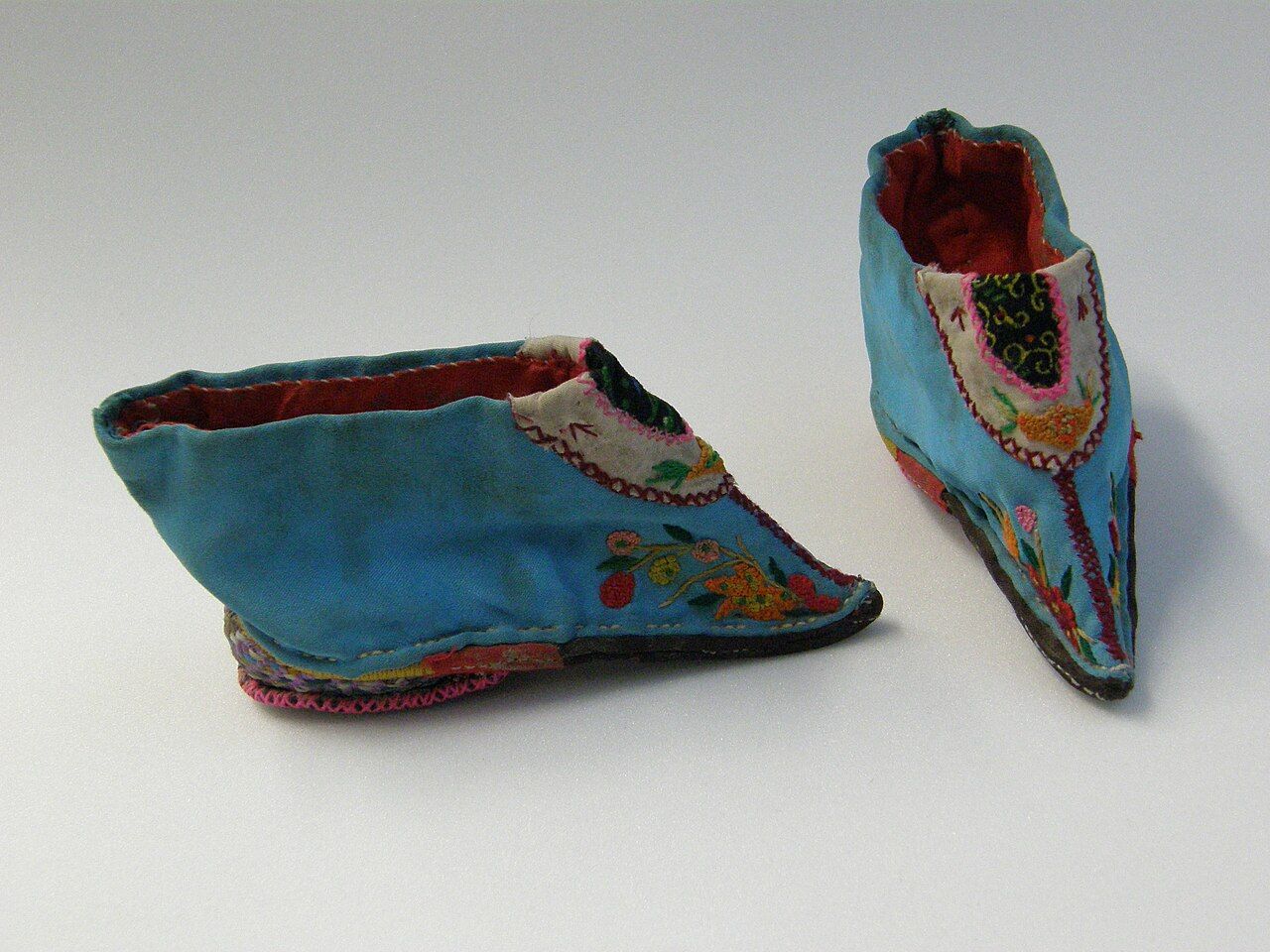
The second body of evidence is moral change that looks, from the inside and the outside, like progress. The transatlantic slave trade was legal, respectable and immensely profitable; Britain abolished the trade in 1807 and slavery in most of its empire in 1833; the United States abolished slavery by the Thirteenth Amendment in 1865; Brazil, last in the Americas, by the Lei Áurea of 1888. Duelling among British gentlemen was a matter of honour into the 1820s—the Duke of Wellington fought Lord Winchilsea in 1829 while serving as prime minister—and was effectively dead by the 1850s. Chinese foot-binding, practised in some form for roughly a thousand years, was attacked by anti-footbinding societies from the 1880s and 1890s, discouraged by imperial edict in 1902 and banned by the Republic in 1912; within about a generation it was finished.
Kwame Anthony Appiah’s The Honor Code (2010) examines these three cases—alongside a fourth that is not yet resolved, honour killing in Pakistan—and notes something awkward for both sides. In each, the moral arguments against the practice had been available and largely accepted for a long time before the practice ended. What changed was honour—the practice became a source of shame rather than standing, usually because the honour group widened to include people who despised it. That is a sobering finding about how moral change actually works. It is not, however, a finding that the change was not progress.
Method: how you actually argue about this
If ethics is not a matter of taste, what is the procedure? The dominant answer is John Rawls’s reflective equilibrium (A Theory of Justice, 1971): you move back and forth between particular judgements you hold with confidence, the general principles that would explain them, and background theories about persons and society, adjusting in whichever direction survives scrutiny, until the set coheres. It is not proof. It is the same method used in law and in much of empirical science: no foundational certainty, but real constraint, real error, and real revision. Rawls later added the idea of an overlapping consensus (Political Liberalism, 1993): people who disagree profoundly about the meaning of life can still converge, for their own reasons, on shared political principles. That is an underrated point for anyone working in a pluralistic hospital or firm.
It is worth saying plainly where professional opinion sits, since students often assume otherwise. In the 2020 PhilPapers survey of professional philosophers, about 62 per cent accepted or leaned towards moral realism against about 26 per cent for anti-realism. That is not an argument—head counts never are—but it should correct the widespread impression that sophistication in ethics means giving up on truth.
Objectivity in ethics requires only that moral claims can be mistaken and that argument bears on them—a far weaker and more defensible commitment than absolutism, and one that makes sense of moral reform in a way relativism struggles to.
Section 4Living With Disagreement: Tolerance, Humility and Peer Dispute
Tolerance needs a better foundation than relativism
The usual motive for relativism is tolerance, and this is where the doctrine most clearly fails its own purposes. If moral truth is relative to a culture’s code, then in a culture whose code is intolerant, intolerance is right. The relativist has no standing to object—she has already said that what makes an act right is its endorsement by the local framework. Bernard Williams called this “vulgar relativism” in Morality (1972) and judged it self-refuting, because it takes a non-relative moral principle of non-interference and attaches it to a theory that forbids non-relative moral principles.
Tolerance has better foundations, and you can hold all of them without any relativism. There is the epistemic ground: I might be wrong, my confidence outruns my evidence, and history is unkind to the certainties of every era. There is the autonomy ground: adults are entitled to run their own lives, and imposition damages the very thing that gives choices value. There is the consequentialist ground: coerced conversion is unstable and interference by outsiders usually backfires. And there is the humility of the outsider: you often do not understand the practice, its function or its meaning to participants. Every one of these reasons can be stated by someone who thinks there are moral truths. Indeed they must be—each is offered as a truth.
The universality debate, in the real world
This is not academic. In April 1993, at a regional meeting in Bangkok held ahead of the UN World Conference on Human Rights, ministers and representatives of Asian states issued the Bangkok Declaration, insisting that human rights must be considered in the context of national and regional particularities and various historical, cultural and religious backgrounds. Singapore’s Lee Kuan Yew—by then senior minister, having handed the premiership to Goh Chok Tong in 1990—and Malaysia’s prime minister Mahathir Mohamad made the case for “Asian values” prioritising order, family and community over individual claims against the state. The Vienna Declaration adopted that June answered directly, affirming in paragraph 5 that all human rights are universal, indivisible and interdependent, while acknowledging that historical and cultural backgrounds must be borne in mind.
Amartya Sen’s reply, in his 1997 Morgenthau Memorial Lecture “Human Rights and Asian Values,” is the model of how to do this well. He did not argue that Asia should adopt Western values. He argued the historical premise was false: the Indian emperor Ashoka in the third century BCE and the Mughal emperor Akbar in the sixteenth both articulated principles of tolerance and public reasoning well before comparable European statements, while Europe produced Plato’s authoritarianism and the Inquisition. Traditions are internally plural, and rulers who invoke “our culture” are frequently invoking one strand of it against dissenters who belong to the same culture. That last point matters enormously in practice: the people most often harmed by a culture-based defence of a practice are members of that culture who object to it.
When you and a peer disagree
Set cultures aside; consider the everyday case. A colleague you respect, who has the same training, the same information and the same time to think, reaches the opposite conclusion about whether to escalate a case to the ethics committee. What should you do with your own confidence? Philosophers call this the problem of peer disagreement, and the literature since Adam Elga’s “Reflection and Disagreement” (2007) and David Christensen’s work of the same period gives you two poles.
Conciliationism says that discovering an epistemic peer disagrees is itself evidence that you have erred, so you should reduce confidence—on the strongest version, split the difference. The steadfast view says you may retain your confidence, because you have access to your own reasoning and its apparent soundness, and if you have evaluated the evidence correctly then the disagreement shows your colleague erred, not you. Most working philosophers occupy a middle position sensitive to how much the dispute turns on shared evidence, how good your track record is in this kind of case, and whether the disagreement is one-off or a systematic pattern.
| Feature of the dispute | Leans conciliatory | Leans steadfast |
|---|---|---|
| Evidence base | Both saw the same chart, same data | You have information they lack |
| Track record | Comparable or theirs is better | Yours is demonstrably better in this domain |
| Number of dissenters | Several independent peers agree against you | One dissenter, or dissenters echoing each other |
| Source of the split | Neither can locate the point of divergence | You can point to their specific error |
| Independence | Views formed separately | Their view is downstream of one influential person |
| Interest | Neither party benefits from their view | Their conclusion serves an obvious interest |
There is also a practical toolkit for acting under moral uncertainty—uncertainty not about the facts but about which moral theory is correct. Will MacAskill, Krister Bykvist and Toby Ord’s Moral Uncertainty (2020) develops the idea of maximising expected choiceworthiness: give credence to each of the plausible theories, ask how much each cares about the options, and prefer the option that fares reasonably across them. The rough, usable version: when consequentialist, deontological and virtue-based reasoning all point the same way, act with confidence; when they diverge sharply, favour the option that is least catastrophic if you have backed the wrong theory, and buy yourself time and reversibility.
Tolerance, humility and openness to revision are best defended as moral truths in their own right, and the epistemology of peer disagreement gives you a concrete way to calibrate confidence rather than either capitulating or digging in.
Section 5Disagreement at the Bedside and in the Workplace
Who gets told: disclosure as a real test case
In 1995, Leslie Blackhall and colleagues published a study in JAMA of 800 people aged 65 and over in Los Angeles, 200 each from Korean American, Mexican American, African American and European American backgrounds. Asked whether a patient should be told of a diagnosis of metastatic cancer, 47 per cent of Korean American and 65 per cent of Mexican American respondents said yes, against 87 per cent of European American and 88 per cent of African American respondents. On who should make the decision about life support, the pattern was similar: the two former groups were far more likely to name the family rather than the patient. Read those numbers carefully, because the usual lesson drawn from them is the wrong one. No group came close to unanimity. Nearly half the Korean American respondents and roughly two-thirds of the Mexican American respondents wanted the patient told, so the spread of opinion inside each group was wide. Ethnicity predicts a tendency; it never predicts a person. Antonella Surbone documented parallel norms in Italy, where non-disclosure to cancer patients was standard well into the 1990s, and similar patterns were long described in Japan.
Here is the analytic move that matters. This is not a disagreement about whether patients should be protected from harm, or whether families should be involved, or whether suffering matters. It is a disagreement about what protects, and about the proper unit of decision-making—the individual or the family. Richard Shweder’s framework of three ethics—autonomy, community and divinity—is useful here: societies weight these differently, and a clinician trained entirely in the ethics of autonomy will systematically misread families operating in the ethics of community as obstructive.
The workable resolution is not to choose a culture’s norm over the patient’s. It is to make the choice itself the patient’s. This is often called negotiated or tiered disclosure: ask the patient, early and neutrally, how much they want to know and who they want involved. A patient may validly delegate decision-making to a son or a spouse; what a family cannot do is delegate on the patient’s behalf without ever asking. The framework respects the cultural norm and the individual, because it treats the norm as an option the patient may take up rather than a fact about them inferred from their surname.
Where the floor is: practices no framework licenses
Some cases do not resolve by negotiation. Female genital mutilation or cutting is the standard test. UNICEF estimated in 2024 that more than 230 million girls and women alive today have undergone it. It is defended in practising communities by reference to marriageability, cleanliness, honour and tradition; it is often performed by women on girls too young to consent; it produces haemorrhage, infection, chronic pain, obstetric complication and, in the more extensive forms, lifelong sequelae. The World Health Organization classifies all forms as a violation of the human rights of girls and women. The United Kingdom prohibited the practice in 1985 and strengthened the law in the FGM Act 2003; the United States criminalised it federally in 1996, and after a federal judge in Michigan struck down that statute on Commerce Clause grounds in United States v. Nagarwala (2018), Congress re-enacted it on a firmer constitutional footing in the STOP FGM Act of 2020. When the American Academy of Pediatrics suggested in 2010 that a symbolic “ritual nick” might be an acceptable harm-reduction compromise, the reaction was severe enough that the statement was retracted within weeks.
You can hold, simultaneously and without contradiction: that outsiders have often described this practice with contempt and inaccuracy; that criminal prosecution of mothers is frequently the worst available tool; that the most effective interventions have been community-led abandonment programmes rather than external prohibition; and that the practice is wrong and children are entitled to protection from it. Recognising a moral floor tells you that something must change. It does not tell you who should say so or how. That second question is empirical and tactical, and outsiders are usually worse at it than they think.
| Situation | Relativist reflex | Dogmatic reflex | Defensible response |
|---|---|---|---|
| Family asks you not to tell the patient her prognosis | Comply; it is their culture | Tell the patient regardless | Ask the patient privately how much she wants to know and who should decide |
| Patient refuses transfusion on religious grounds | Defer without exploring | Seek an order to override | Confirm capacity and voluntariness, check for coercion, document, offer alternatives |
| Colleague objects to participating in a lawful procedure | Anything goes | Comply or resign | Accommodate where timely transfer of care is genuinely available; do not permit abandonment or obstruction |
| Interpreter softens or edits what you said | Accept the mediation | Accuse the interpreter | Use a trained professional interpreter, not a relative; ask for verbatim rendering |
| Parents seek a harmful traditional procedure for a child | Respect the tradition | Report immediately | Engage, explain harm, involve community advocates; escalate to safeguarding if the risk is real |
Moral distress and the limits of your own certainty
Andrew Jameton named moral distress in 1984: the state of knowing the right thing to do while institutional constraints make it nearly impossible to do it. Decades of research since—particularly in critical care and, sharply, during the COVID-19 pandemic—link it to burnout and to leaving the profession. Two cautions belong here. First, moral distress is real and its usual cure is structural, not personal: escalation pathways that work, ethics consultation that is available at 2 a.m., staffing that permits the standard of care people were trained to give. Second, the confident phrase “knowing the right thing to do” deserves a second look in a chapter on disagreement. Sometimes the distress signals an institution failing. Sometimes it signals a genuinely hard case where a reasonable colleague, holding the same facts, has landed elsewhere. Learning to tell those apart is most of professional moral maturity, and it is why the peer-disagreement tools in Section 4 belong on the ward and not only in the seminar room.
Most cross-cultural clinical conflict is about who decides and who is told rather than about ultimate values, and it is best handled by asking the individual patient—while still recognising a small set of protections no cultural framework can license removing.
The chapter in one breath
Moral codes have differed profoundly across societies—Herodotus knew it, Sumner and Benedict documented it, and no serious person denies it. What does not follow is that moral claims are merely local. The cultural differences argument moves from a premise about beliefs to a conclusion about reality, and that step is invalid; many apparent value differences also dissolve once you separate values from factual and metaphysical beliefs about cows and the afterlife, though how much of the difference dissolves is itself disputed. The strongest anti-objectivist arguments are Mackie’s from relativity and queerness, and they support error theory rather than relativism. Meanwhile relativism cannot ground the tolerance it was invented to protect, cannot make sense of the reformer, and cannot explain why abolition, the collapse of foot-binding and the death of duelling look like progress rather than drift. Objectivity, properly understood, demands only that we can be wrong and that argument matters—not a fixed rulebook. So you argue: reflective equilibrium, overlapping consensus, calibrated response to peer disagreement, humility about your credences. And at the bedside you ask this patient what she wants, rather than reading it off her culture, while holding a floor beneath which no culture’s authority reaches.
Words worth knowing
| Term | What it means |
|---|---|
| Descriptive relativism | The empirical claim that moral codes differ, sometimes fundamentally, across societies and eras. |
| Metaethical relativism | The claim that moral statements are true or false only relative to a culture, code or set of agreements. |
| Normative relativism | The claim that one ought not to judge or interfere with the practices of another culture. |
| Cultural differences argument | The invalid inference from “societies disagree about X” to “there is no objective truth about X.” |
| Ethnocentrism | Sumner’s term for judging other groups by the standards of one’s own, treated as the natural centre. |
| Error theory | Mackie’s view that moral claims genuinely assert objective facts and are therefore all false. |
| Argument from queerness | Mackie’s claim that objective values would be metaphysically and epistemically unlike anything else we know. |
| Moral realism | The view that there are moral facts and that moral claims can be objectively true. |
| Constructivism | The view that moral truth is what suitably idealised agents would agree to or could not reasonably reject. |
| Expressivism | The view that moral utterances primarily express attitudes rather than describe moral facts. |
| Absolutism | The much stronger view that moral rules are exceptionless and context-independent; not required by objectivity. |
| Reflective equilibrium | Rawls’s method of mutual adjustment between considered judgements, principles and background theories. |
| Overlapping consensus | Agreement on shared principles by people who hold deeply different comprehensive worldviews. |
| Peer disagreement | Disagreement with someone of comparable evidence and competence; the question is what it does to your confidence. |
| Conciliationism | The view that discovering peer disagreement is evidence you have erred, so confidence should fall. |
| Steadfast view | The view that you may retain confidence despite peer disagreement, given access to your own reasoning. |
| Moral uncertainty | Uncertainty about which moral theory is correct, and the question of how to act rationally under it. |
| Cultural humility | Tervalon and Murray-García’s stance of lifelong self-critique and asking, contrasted with mastering facts about groups. |
| Moral distress | Jameton’s term for knowing the right action while institutional constraints prevent taking it. |
| Tiered disclosure | Asking a patient how much information they want and who should receive it, rather than assuming either way. |