Prefixes: Position, Number, Time and Negation
A suffix tells you what is happening; a root tells you where. The prefix tells you the rest — whether the finding sits above or below a structure, inside it or around it, whether there is too much or too little, one or many, whether it came before birth or after surgery, and whether it is present at all. Prefixes are a small closed set, perhaps sixty that matter clinically, and they recur relentlessly. Learn hyper- once and you own hypertension, hyperglycemia, hyperkalemia, hyperplasia, hyperthyroidism and every term not yet invented that will use it. This chapter groups the prefixes by the job they do — position, number and quantity, time and speed, negation and quality — then drills the pairs that look alike and mean opposite things, because those pairs are where careful students lose points and careless clinicians lose patients.
By the end of this chapter you can
- Define a prefix, state where it attaches, and explain why a prefix never takes a combining vowel.
- Decode and build terms using prefixes of position and direction, including peri-, endo-, epi-, sub-, inter-, intra-, retro- and trans-.
- Decode and build terms using prefixes of number and quantity, including mono-, bi-, tri-, poly-, olig-, pan-, hemi- and semi-.
- Distinguish hyper- from hypo- in speech and in writing, and apply both to laboratory and vital-sign vocabulary.
- Decode and build terms using prefixes of time, speed and sequence, including pre-, post-, neo-, brady-, tachy- and syn-/sym-.
- Decode and build terms of negation and opposition, including a-/an-, anti-, contra-, de- and non-.
- Separate the four quality prefixes dys-, eu-, mal- and pseudo- and use each correctly in a sentence about a patient.
- Explain and correctly use the classic confusable pairs ante-/anti-, inter-/intra-, ab-/ad-, hemi-/semi- and dysphagia/dysphasia.
- Pronounce prefixed terms with correct stress and show that a prefix does not change how the word ending forms its plural.
Section 1What a Prefix Is and What It Does
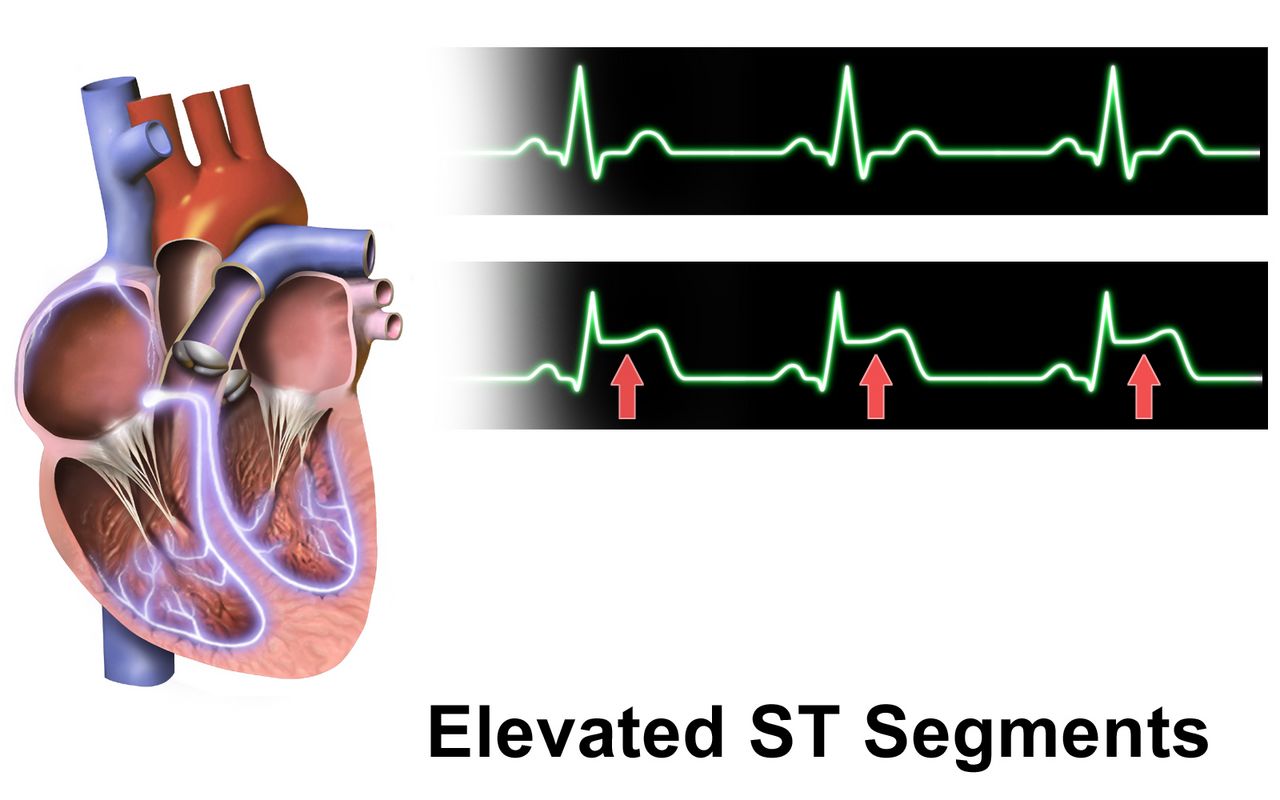
The front of the word carries the qualifier
A prefix is a word part fixed to the front of a term — pre meaning before, fix meaning fastened. It is never the subject of the term. The root supplies the subject and the suffix supplies the verdict; the prefix supplies the qualifier that turns a general statement into a specific one. Strip the prefix off and you are usually left with a real word that still means something, only vaguely. Tension is pressure. Hyper/tension is pressure above normal. Hypo/tension is pressure below normal. The root and suffix did not move; the whole clinical picture did.
Not every term has a prefix. Gastr/itis (gas-TRY-tis) is complete with a root and a suffix — inflammation of the stomach. Add a prefix and you narrow it: epi/gastr/ic means pertaining to the region above the stomach. That is the pattern to hold in mind. A prefix is optional, a suffix is essentially mandatory, and the root is the thing being talked about. When you meet a long unfamiliar term, split the suffix off first, then the prefix, and whatever is left in the middle is the root.
English does this too, which is worth noticing because it makes the medical versions feel less foreign. Submarine, transatlantic, antifreeze, postgame, preheat and bicycle all use prefixes you already decode without thinking. Medicine simply uses a longer and older list, mostly Greek and Latin, and applies it with more consistency than everyday English does. The consistency is the gift: once a prefix is learned, it behaves the same way in every term it enters.
Prefixes attach with no combining vowel
Chapter 1 established that a root joins a suffix through a combining vowel, nearly always o, when the suffix begins with a consonant — gastr/o/scopy, not gastrscopy. Prefixes follow a different rule, and it is simpler: a prefix attaches directly to whatever follows it, with no linking vowel added. We write peri/card/itis, not perio-carditis. We write sub/lingu/al, not subolingual. The prefix already ends in a vowel or a consonant that the language accepted centuries ago, and nothing is inserted.
What does change is the prefix itself, occasionally, to make the word easier to say. This is called assimilation and it produces the small spelling surprises that trip students up. The prefix a-, meaning without, becomes an- before a vowel or an h: a/pnea but an/emia, an/esthesia, an/uria. The prefix syn-, meaning together, becomes sym- before b, m or p: syn/drome and syn/apse, but sym/physis and sym/pathetic. The prefix in-, meaning not, becomes im- before b, m or p: in/continent but im/permeable. Learn the sound rule and the spellings stop looking arbitrary.
By convention, a prefix is written with a hyphen after it when it stands alone in a list or a glossary — peri-, hyper-, an- — exactly as a suffix is written with a hyphen before it — -itis, -ectomy, -megaly. The hyphen is a piece of notation telling you which end the part attaches to. It is never typed in the finished word. Writing peri-carditis in a chart note is not wrong so much as unfinished, the way showing your work is not the same as giving the answer.
One root, many prefixes
The fastest way to feel a prefix working is to hold the rest of the word still and swap the front. Take -cardia, a suffix meaning heart condition, and run prefixes through it. Take -plegia, paralysis, and do the same. Notice that in each set the root and suffix never change meaning; every difference you see is the prefix earning its keep.
| Term | Split | Prefix means | What the term means |
|---|---|---|---|
| tachycardia (tak-ee-KAR-dee-ah) | tachy/cardia | fast | Abnormally fast heart rate |
| bradycardia (brad-ee-KAR-dee-ah) | brady/cardia | slow | Abnormally slow heart rate |
| dextrocardia (deks-troh-KAR-dee-ah) | dextro/cardia | right | Heart positioned on the right side of the chest |
| hemiplegia (hem-ee-PLEE-jee-ah) | hemi/plegia | half | Paralysis of one side of the body |
| paraplegia (pair-ah-PLEE-jee-ah) | para/plegia | beside, alongside | Paralysis of both lower limbs |
| quadriplegia (kwod-rih-PLEE-jee-ah) | quadri/plegia | four | Paralysis of all four limbs |
| hypoglycemia (hy-poh-gly-SEE-mee-ah) | hypo/glyc/emia | below normal | Blood sugar below normal |
| hyperglycemia (hy-per-gly-SEE-mee-ah) | hyper/glyc/emia | above normal | Blood sugar above normal |
A prefix never changes the plural
Adding a prefix does not touch the ending of a word, so it does not touch how that word forms its plural. The plural is decided entirely by the final syllable, which came into English from Latin or Greek and kept its original behavior. Metastasis ends in -is, so its plural is metastases, and the prefix meta- has nothing to say about it. Diverticulum ends in -um, so many of them are diverticula. Memorize the endings once and every prefixed term inherits the rule for free.
| Singular ending | Plural ending | Example (singular) | Example (plural) |
|---|---|---|---|
| -a | -ae | bursa, vertebra | bursae, vertebrae |
| -us | -i | bronchus, embolus | bronchi, emboli |
| -um | -a | diverticulum, ovum | diverticula, ova |
| -is | -es | metastasis, epiphysis, diagnosis | metastases, epiphyses, diagnoses |
| -ix, -ex | -ices | appendix, apex | appendices, apices |
| -oma | -omata (or -omas) | carcinoma, fibroma | carcinomata, fibromata |
| -nx | -nges | phalanx, larynx, meninx | phalanges, larynges, meninges |
| -on | -a | ganglion, spermatozoon | ganglia, spermatozoa |
Two of these deserve a note. The -oma plurals are drifting: carcinomas and fibromas are accepted everywhere in modern clinical writing, and carcinomata now reads as formal or old-fashioned. Recognize it, do not feel obliged to write it. And meninx, singular of meninges, is almost never used; you will see the plural constantly in mening/itis and essentially never meet the singular in a chart.
A prefix attaches directly to the front of a term with no combining vowel, qualifies rather than names, and leaves the word’s ending — and therefore its plural — completely untouched.
Section 2Prefixes of Position and Direction
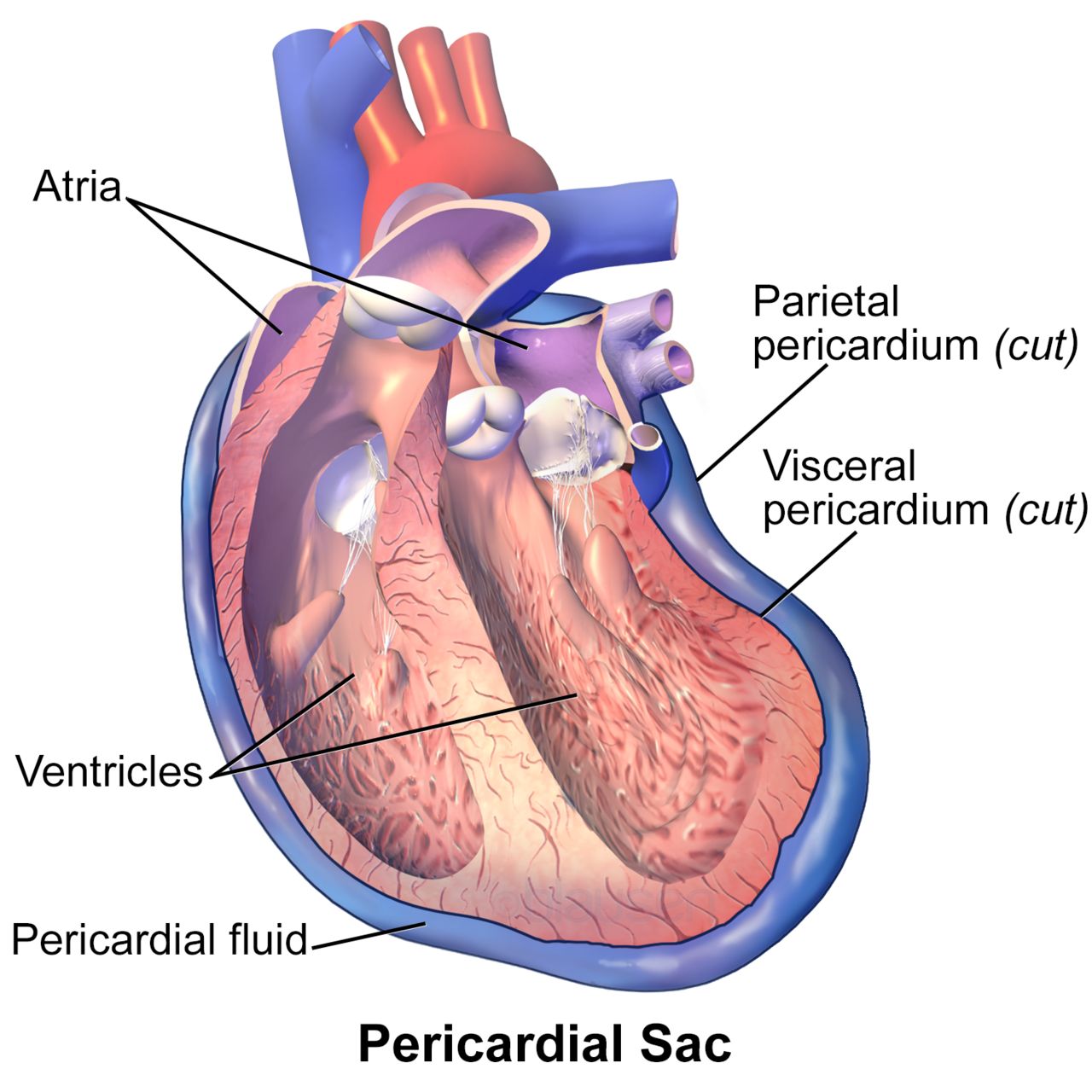
Inside, outside, around and upon
The largest family of prefixes answers the question where. These are the prefixes of layers and containment, and the heart is the classic teaching object because four of them stack on a single root. Working outward from the blood: endo/card/ium (en-doh-KAR-dee-um) is the tissue within the heart, the smooth lining the blood touches. My/o/card/ium is the muscle layer, named by root rather than prefix. Epi/card/ium (ep-ih-KAR-dee-um) is the membrane upon the heart. Peri/card/ium (pair-ih-KAR-dee-um) is the fibrous sac around the whole organ. Add -itis to any of them and you have named a real disease: endocarditis, myocarditis, pericarditis (pair-ih-kar-DYE-tis).
The same four prefixes then transfer, unchanged, to every other structure in the body. Endo/metr/ium is the lining within the uterus, and endometri/osis is that tissue in an abnormal condition outside it. Epi/derm/is is the outer layer of skin lying upon the dermis. Peri/oste/um (pair-ee-OSS-tee-um) is the membrane around the bone. Peri/anal, peri/orbital and peri/tonsillar all mean around the named structure, and each names an abscess a nurse will chart. Once you trust the prefix, none of these terms is new vocabulary; they are recombinations.
| Prefix | Meaning | Example term | What the example means |
|---|---|---|---|
| endo- | within, inner | endoscopy | Visual examination within a body cavity |
| intra- | within, inside | intravenous (IV) | Within or into a vein |
| inter- | between | intercostal | Between the ribs |
| epi- | upon, above, on | epidural (ep-ih-DOO-ral) | Upon or outside the dura mater |
| peri- | around, surrounding | periosteum | Membrane surrounding a bone |
| circum- | around | circumduction | Movement of a limb in a circular path |
| sub- | under, below, beneath | subcutaneous (sub-kyoo-TAY-nee-us) | Beneath the skin |
| infra- | below, inferior to | infraorbital | Below the eye socket |
| supra- | above, superior to | suprapubic | Above the pubic bone |
| extra- | outside of, beyond | extracellular | Outside the cell |
| ecto-, ec- | out, outside | ectopic (ek-TOP-ik) | Out of the normal place |
| meso- | middle | mesoderm | Middle germ layer of the embryo |
| retro- | behind, backward | retroperitoneal (reh-troh-pair-ih-toh-NEE-al) | Behind the peritoneum |
| para- | beside, near; also abnormal | parathyroid | Glands lying beside the thyroid |
| juxta- | near, adjoining | juxtaglomerular (juks-tah-gloh-MER-yoo-lar) | Adjoining the glomerulus of the kidney |
| meta- | beyond, after, change | metastasis (meh-TAS-tah-sis) | Spread of disease beyond its origin |
Direction of travel
A second group of position prefixes describes movement rather than a fixed location. Trans- means across or through, and it names routes of administration and surgical approaches: trans/derm/al patch, trans/urethr/al resection, trans/fusion (literally a pouring across). Per- also means through, and it is easy to confuse with peri-: a per/cutane/ous (per-kyoo-TAY-nee-us) procedure passes through the skin, whereas a peri/cardi/al effusion sits around the heart. The i is the whole difference.
Ab- means away from and ad- means toward, and they generate the movement vocabulary you will use at every bedside. Ab/duction carries a limb away from the midline; ad/duction brings it back toward the midline. The same pair explains ab/normal (away from normal) and ad/hesion (a sticking toward, tissue bound to tissue). Dia- means through or complete, giving dia/lysis (a separating through a membrane) and dia/rrhea (a flowing through). Ana- means up or apart and cata- means down, which is why ana/bol/ism builds molecules up and cata/bol/ism breaks them down.
| Prefix | Meaning | Example term | What the example means |
|---|---|---|---|
| ab- | away from | abduction | Moving a limb away from the midline |
| ad- | toward, near | adduction | Moving a limb toward the midline |
| trans- | across, through | transdermal | Through the skin, as a medicated patch |
| per- | through | percutaneous | Performed through the skin |
| dia- | through, complete | dialysis (dye-AL-ih-sis) | Separating wastes through a membrane |
| ex-, exo- | out, outward | exocrine | Secreting outward through a duct |
| ana- | up, apart | anabolism | Building larger molecules up from smaller ones |
| cata- | down | catabolism | Breaking larger molecules down |
| ipsi- | same side | ipsilateral (ip-sih-LAT-er-al) | On the same side of the body |
| contra- | opposite, against | contralateral (kon-trah-LAT-er-al) | On the opposite side of the body |
| ante- | before, in front of | antecubital (an-teh-KYOO-bih-tal) | In front of the elbow |
| post- | after, behind | posterior | Toward the back of the body |
Beside, behind and beyond: the ambiguous three
Para- is the most flexible prefix in medicine, and flexibility is a polite word for ambiguity. Its core sense is beside or near: the para/thyroid glands sit beside the thyroid, the para/nasal sinuses sit beside the nose, and para/vertebr/al muscles run alongside the spine. Its second sense is abnormal or disordered, which is how you get par/esthesia (par-es-THEE-zhah), an abnormal sensation such as pins and needles, and para/noia, a disordered state of mind. A third sense, alongside in the sense of assisting, gives us para/medic and para/professional. Context decides, and context is nearly always obvious once you know the three options exist.
Retro- means behind or backward, and it is a highly informative prefix because it usually announces a specific anatomical compartment or a reversed physiologic flow. The kidneys, pancreas and abdominal aorta are retro/periton/eal — behind the peritoneum — which is exactly why bleeding there can hide for hours from an abdominal exam. Retro/grade flow runs backward against the expected direction. Retro/version of the uterus means it tips backward. Retro/sternal chest pain sits behind the breastbone, the classic description a patient with cardiac ischemia gives.
Meta- means beyond, after or change, and its three senses are all clinically live. Meta/stasis is disease that has gone beyond its original site — literally a standing beyond — and the plural is metastases (meh-TAS-tah-seez). Meta/carp/als are the hand bones lying beyond the carpals of the wrist, and meta/tars/als the foot bones beyond the tarsals. Metabol/ism is the sum of chemical change. When you meet meta- in a new term, ask which of the three it is; usually the anatomy answers for you.
Position prefixes let a single root name a dozen different structures and diseases — endo-, epi- and peri- around one heart root give endocarditis, epicardium and pericarditis — so learning the prefix set multiplies vocabulary faster than learning terms one at a time.
Section 3Prefixes of Number, Size and Quantity
Counting: one, two, three, four, many, none
Number prefixes are the most literal in the language and the easiest to trust. Anatomy counts constantly — leaflets on a valve, limbs affected by paralysis, lobes in a lung, pregnancies in a history — and the count is usually announced at the front of the word. The tri/cusp/id valve has three cusps; the bi/cusp/id (mitral) valve has two. Tri/ceps has three heads of origin, bi/ceps two, quadri/ceps four. A tri/mester is a three-month division of pregnancy.
One complication: Greek and Latin both contributed number words, and medicine kept both. Latin gives uni-, bi-, tri-, quadri-, multi-, semi-; Greek gives mono-, di-, tri-, tetra-, poly-, hemi-. Both sets are correct, and which one appears in a given term is a fact of history rather than a rule you can derive. Uni/later/al and mono/cyte both mean one; quadri/plegia and tetra/plegia are exact synonyms for paralysis of all four limbs, with tetraplegia now preferred in rehabilitation literature because it does not mix a Latin prefix with a Greek suffix.
| Prefix | Meaning | Example term | What the example means |
|---|---|---|---|
| mono- | one, single | mononucleosis | Condition with an increase in single-nucleus cells |
| uni- | one | unilateral | Affecting one side only |
| bi-, bin- | two, twice, both | bilateral, binocular | Affecting both sides; involving both eyes |
| di- | two | disaccharide | Sugar made of two simple sugar units |
| dipl/o- | double | diplopia (dih-PLOH-pee-ah) | Double vision |
| tri- | three | trisomy 21 | Three copies of chromosome 21 instead of two |
| quadri-, quadr- | four | quadrant | One of four regions of the abdomen |
| tetra- | four | tetraplegia | Paralysis of all four limbs |
| multi- | many | multipara (mul-TIP-ah-rah) | Woman who has given birth more than once |
| poly- | many, much, excessive | polydipsia (pol-ee-DIP-see-ah) | Excessive thirst |
| hemi- | half (Greek) | hemigastrectomy | Surgical removal of half the stomach |
| semi- | half, partial (Latin) | semilunar | Half-moon shaped, as the aortic valve cusps |
| primi- | first | primigravida (pry-mih-GRAV-ih-dah) | Woman pregnant for the first time |
| nulli- | none | nullipara (nuh-LIP-ah-rah) | Woman who has never given birth |
| pan- | all, entire | pancytopenia (pan-sy-toh-PEE-nee-ah) | Deficiency of all blood cell types |
Trisomy 21 is worth pausing over, because it shows the profession changing its habits in real time. The condition was long called Down syndrome after John Langdon Down, who described it in 1866. The eponym persists in everyday speech and in patient-facing material, but the descriptive term trisomy 21 — tri- three plus som- body, meaning three copies of that chromosome — is what appears in a genetics report, because it says what is actually true of the cells. Note also that the possessive form Down’s syndrome has been dropped in American usage; the man did not own the condition. The same de-possessing happened to Parkinson disease, Alzheimer disease and Crohn disease in formal writing.
Too much and too little
Quantity prefixes are the workhorses of laboratory and vital-sign vocabulary, and the pattern is so regular it can be tabulated once and applied forever. Take a root for a substance, add the suffix -emia (blood condition) or -uria (urine condition), and put hyper- or hypo- in front. Hyper/kal/emia (hy-per-kah-LEE-mee-ah) is potassium above normal in the blood, from kalium, the Latin name behind the symbol K. Hypo/natr/emia (hy-poh-nah-TREE-mee-ah) is sodium below normal, from natrium, behind the symbol Na. Hyper/calc/emia, hypo/magnes/emia, hyper/glyc/emia and a dozen others follow with no new learning required.
Urine output has its own graded set, and knowing all three positions on the scale is more useful than knowing any one of them. Poly/uria (pol-ee-YOO-ree-ah) is excessive urine output. Olig/uria (ol-ig-YOO-ree-ah) is scanty output, conventionally under about 400 mL in twenty-four hours in an adult. An/uria (an-YOO-ree-ah) is essentially no output at all. The same three prefixes rewrite the menstrual vocabulary: poly/menorrhea, olig/o/menorrhea and a/menorrhea. Learn the scale once and it transfers.
| Prefix | Meaning | Example term | What the example means |
|---|---|---|---|
| hyper- | excessive, above normal | hyperkalemia | Potassium level above normal in the blood |
| hypo- | deficient, below normal, under | hypothermia | Body temperature below normal |
| olig/o- | scanty, few | oliguria | Abnormally small volume of urine |
| poly- | many, excessive | polyuria | Abnormally large volume of urine |
| macro- | large | macrocytic | Pertaining to abnormally large cells |
| micro- | small | microcephaly (my-kroh-SEF-ah-lee) | Abnormally small head |
| mega-, megal/o- | enlarged, great | megacolon | Abnormally dilated large intestine |
| iso- | equal, same | isotonic | Having the same concentration as body fluid |
| normo- | normal | normotensive | Having normal blood pressure |
| hetero- | different, other | heterogeneous | Made of unlike parts |
| homo-, homeo- | same, alike, unchanging | homeostasis | Maintaining a steady internal state |
| super-, ultra- | above, excess, beyond | ultrasonography | Imaging using sound beyond the audible range |
Note that megal/o- also lives at the back of words as the suffix -megaly, meaning enlargement, which is where you get cardi/o/megaly, hepat/o/megaly and spleen enlargement as splen/o/megaly. And macro- and micro- travel in pairs so reliably that meeting one should make you reach for the other: macro/cytic and micro/cytic anemia, macro/scopic and micro/scopic hematuria. Building the opposite term on purpose is one of the fastest ways to fix a prefix in memory.
Number and quantity prefixes are additive machinery: one root plus hyper-, hypo-, poly-, olig- or a- generates an entire graded vocabulary, so learn the scale rather than the individual words.
Section 4Prefixes of Time, Speed and Sequence
Before, during and after
Time prefixes organize the chart. Nearly every phase of care is labeled by one: pre/operative teaching, intra/operative blood loss, post/operative nausea. Notice that intra-, a position prefix, is doing temporal work here — within the period of the surgery. The same trio governs childbirth as ante/partum, intra/partum and post/partum, from partus, birth. Peri- joins them for the span that surrounds an event: peri/operative covers before, during and after the procedure, and peri/natal (pair-ih-NAY-tal) covers the period around birth.
Pre- and pro- both point forward, with a shade of difference. Pre- means before in time or place: pre/natal, pre/menstrual, pre/malignant. Pro- means before or forward, and often carries a sense of projection: a pro/gnosis (prog-NOH-sis) is a knowing-before, a forecast of outcome; a pro/drome (PROH-drohm) is a running-before, the early symptom set that precedes a full illness; a pro/lapse is a falling forward or downward of an organ. Post- is the mirror: post/mortem after death, post/prandial (post-PRAN-dee-al) after a meal, post/ictal after a seizure.
Fast, slow and new
Tachy- means rapid and brady- means slow, and this single pair unlocks a large chunk of the cardiac and respiratory vocabulary. Tachy/cardia is a heart rate above about one hundred beats per minute in an adult; brady/cardia is below about sixty. Tachy/pnea (tak-ip-NEE-ah) is rapid breathing; brady/pnea (brad-ip-NEE-ah) is abnormally slow breathing. Brady/kinesia (brad-ee-kih-NEE-zhah) is the slowness of movement characteristic of Parkinson disease, from kinesi/o, movement. The mnemonic students keep is that tachy shares its first letter with too fast, and a tachometer measures engine speed.
Neo- means new, and it shows up in two very different places. In obstetrics and pediatrics a neo/nate is a newborn, specifically an infant in the first twenty-eight days of life, and neo/natal care is the specialty that looks after them. In oncology a neo/plasm is a new growth, a tumor, and neo/plastic describes such a growth — but note carefully that neoplastic does not mean cancerous. A neoplasm may be benign (a lipoma, a fibroma) or malignant; the prefix says only that the growth is new. Malignancy is signalled by other word parts entirely — carcin/o, -sarcoma, or the word malignant itself. The prefix means the same thing in both; only the root differs. Re- means again or back, and it carries the vocabulary of return: re/lapse, re/mission, re/section, re/infarction, re/hydration.
| Prefix | Meaning | Example term | What the example means |
|---|---|---|---|
| pre- | before, in front of | prenatal | Before birth |
| pro- | before, forward | prodrome | Early symptoms preceding an illness |
| ante- | before | antepartum | Period before childbirth |
| post- | after, following | postprandial | After a meal |
| peri- | around, surrounding (in time) | perioperative | Around the time of surgery |
| intra- | during, within | intrapartum | During labor and delivery |
| neo- | new | neonate | Infant in the first 28 days of life |
| tachy- | fast, rapid | tachypnea | Abnormally rapid breathing |
| brady- | slow | bradycardia | Abnormally slow heart rate |
| re- | again, back | relapse | Return of disease after improvement |
| syn-, sym- | together, joined, with | syndactyly (sin-DAK-tih-lee) | Fingers or toes joined together |
| de- | down, from, removal of | defibrillation | Removing fibrillation by delivering a shock |
Syn- and sym- deserve one more look because the terms they build are so common that students stop seeing the prefix at all. A syn/drome is a set of signs that run together. A syn/apse is a joining-together of two neurons. The pubic sym/physis (SIM-fih-sis) is a growing-together of the two pubic bones, and sym/pathetic is a feeling-with. Remember the assimilation rule from Section 1: the n turns into an m before b, m or p, purely because that is easier for a mouth to say.
Time and speed prefixes convert a static term into a clinical timeline — preoperative, intraoperative, postoperative; antepartum, intrapartum, postpartum — and tachy-/brady- alone will decode most of the cardiac and respiratory rate vocabulary you meet.
Section 5Prefixes of Negation, Opposition and Quality
Absence: a- and an-
A- and an- mean without, absence of, not. This is the strongest negation in the language: it does not say reduced, it says none. A/pnea (AP-nee-ah) is the absence of breathing, not slow breathing. An/uria is the absence of urine output, not scanty output. A/sept/ic technique is technique without organisms. A/vascul/ar tissue has no blood supply. Choose the form by sound: an- before a vowel or h, a- before a consonant. That is why it is an/emia, an/esthesia, an/orexia, an/algesia but a/taxia, a/phasia, a/trophy, a/menorrhea.
Some of the most useful neurological terms in nursing are built this way, and they reward decoding rather than memorizing. A/phasia (ah-FAY-zee-ah) is without speech, from phas/o, speech — the loss of language after a stroke. A/gnosia (ag-NOH-zee-ah) is without knowing, the inability to recognize objects. A/praxia (ah-PRAK-see-ah) is without action, the inability to perform a learned movement on command. A/taxia (ah-TAK-see-ah) is without coordination, from taxis, order. An/algesia is without pain sensation, which is exactly what an analgesic provides.
Latin contributed a second, softer set of negatives that behaves the same way logically. In- and its assimilated forms im-, il- and ir- mean not: in/continence, in/fertility, im/permeable, ir/reversible. Watch out, though: in- has a second meaning, into, and both are common. An in/cision is a cutting into, not a failure to cut; in/tubation is putting a tube into an airway; in/halation is breathing in. Context, and specifically whether the term names an action or a lack, tells you which in- you are looking at. Non- and un- are the plain-English negatives and are used for the plain-English words: non/invasive, non/union, un/conscious, un/responsive.
| Prefix | Meaning | Example term | What the example means |
|---|---|---|---|
| a- | without, absence of | apnea | Absence of breathing |
| an- | without (before a vowel or h) | anesthesia | Without sensation |
| anti- | against | antipyretic (an-tee-pye-RET-ik) | Agent that works against fever |
| contra- | against, opposed to | contraindication | Reason a treatment should not be used |
| de- | down, away, removal of | dehydration | Removal or loss of body water |
| dis- | apart, separate from | disarticulation | Separation of a joint; amputation through a joint |
| in-, im-, ir- | not | incontinence | Inability to control elimination |
| in- | into, within (second sense) | incision | A cut made into tissue |
| non- | not | noninvasive | Not requiring entry into the body |
| un- | not | unresponsive | Not reacting to stimulus |
Opposition: anti-, contra- and de-
Negation says a thing is absent. Opposition says a thing is acting against something else, and that is a different job. Anti- is the prefix of the drug class list, and once you know the roots the whole pharmacy shelf reads itself: an anti/pyret/ic works against fever (pyret/o, fever), an anti/emet/ic against vomiting (emet/o, vomiting), an anti/coagul/ant against clotting, an anti/tuss/ive against cough (tuss/i, cough), an anti/pruritic against itching, an anti/hyper/tens/ive against high blood pressure. Notice that last one has two prefixes stacked, which is perfectly legal.
Contra- also means against, but it tends to mean opposed or opposite rather than actively fighting. A contra/indication is a circumstance that argues against giving a treatment. Contra/ception acts against conception. Contra/later/al means on the opposite side, the partner of ipsi/later/al. De- means down, away or removal, and it names things being taken off or reduced: de/hydration is loss of water, de/fibrillation removes fibrillation, de/compensation is the loss of a compensating mechanism, de/bridement (deh-BREED-ment) is the removal of dead tissue from a wound.
Quality: dys-, eu-, mal- and pseudo-
A fourth group of prefixes does not count, locate, time or negate. It judges. Dys- means painful, difficult, bad or abnormal, and it is arguably the highest-yield prefix in clinical nursing because it labels symptoms patients actually report. Dys/pnea (DISP-nee-ah) is difficult breathing. Dys/uria (dis-YOO-ree-ah) is painful urination. Dys/menorrhea is painful menstruation. Dys/plasia is abnormal formation of cells, a precancerous finding on a Pap report. Dys/rhythmia is an abnormal heart rhythm.
Eu- is the mirror image and means good, normal or easy. It is quieter in the chart because normal findings get charted less often, but it is the word you want when documenting that something is fine: eu/pnea (yoop-NEE-ah) is normal, unlabored breathing; eu/thyroid means thyroid function is normal; eu/glyc/emia means blood sugar is in range. Building the eu- word alongside the dys- word is a good study habit, because it forces you to state what normal actually is.
Mal- means bad or poor, and it usually describes a process that is functioning badly rather than a sensation: mal/absorption is poor uptake of nutrients, mal/nutrition is poor nourishment, mal/union is a fracture that healed in a bad position, mal/aise (mah-LAYZ) is a vague feeling of being unwell, and mal/ignant describes a tumor behaving badly. Pseudo- (SOO-doh) means false, and it warns you that something imitates a condition without being it: a pseudo/aneurysm is not a true aneurysm because it lacks all three vessel layers, pseudo/membranous colitis produces a false membrane on the bowel lining, and pseudo/hyper/trophy is a muscle enlarged by fat and fibrous tissue rather than by muscle fiber.
| Prefix | Meaning | Example term | What the example means |
|---|---|---|---|
| dys- | painful, difficult, abnormal | dysphagia (dis-FAY-jee-ah) | Difficulty swallowing |
| eu- | good, normal, easy | eupnea | Normal, unlabored breathing |
| mal- | bad, poor | malabsorption | Poor absorption of nutrients from the gut |
| pseudo- | false | pseudoaneurysm | False aneurysm lacking all vessel wall layers |
| ortho- | straight, correct, upright | orthopnea (or-THOP-nee-ah) | Difficulty breathing unless sitting upright |
| brady- | slow | bradykinesia | Abnormal slowness of movement |
| poikil/o- | varied, irregular | poikilocytosis (poy-kil-oh-sy-TOH-sis) | Red blood cells of irregular shapes |
| xen/o- | foreign, strange | xenograft (ZEE-noh-graft) | Graft taken from another species |
| auto- | self | autoimmune | Immune attack directed against one’s own tissue |
| allo- | other, different | allograft | Graft from another individual of the same species |
Negation prefixes state that something is absent (a-, an-, in-, non-), opposition prefixes state that something acts against (anti-, contra-, de-), and quality prefixes judge how well it is working (dys-, eu-, mal-, pseudo-) — three distinct jobs that students often collapse into one.
The chapter in one breath
A prefix sits at the front of a term, attaches with no combining vowel, qualifies rather than names, and leaves the word’s ending and plural untouched. Four jobs cover nearly all of them. Position prefixes answer where: endo- within, epi- upon, peri- around, sub- beneath, supra- above, inter- between, intra- inside, retro- behind, trans- across, para- beside, meta- beyond. Number and quantity prefixes count and measure: mono-/uni- one, bi-/di- two, tri- three, quadri-/tetra- four, poly-/multi- many, olig- few, pan- all, hemi-/semi- half, nulli- none, and above all hyper- above normal against hypo- below normal. Time and speed prefixes build the clinical timeline: pre-, intra-, post- and peri- around any event; ante-/post-partum; neo- new; tachy- fast; brady- slow; re- again; syn-/sym- together. Negation and quality prefixes judge: a-/an- absent, anti- and contra- against, de- removal, dys- difficult or abnormal, eu- normal, mal- poor, pseudo- false. The confusable pairs — hyper/hypo, inter/intra, ab/ad, ante/anti, hemi/semi, dysphagia/dysphasia — are worth more drill than any list, because in each pair both members are real words and a spell-checker will never save you.
Words worth knowing
| Term | What it means |
|---|---|
| prefix | A word part attached to the front of a term that qualifies its meaning; joins directly, with no combining vowel |
| assimilation | The change a prefix undergoes for ease of pronunciation, as syn- to sym- or in- to im- |
| pericarditis (pair-ih-kar-DYE-tis) | Peri- around + card- heart + -itis inflammation: inflammation of the sac surrounding the heart |
| endocardium (en-doh-KAR-dee-um) | Endo- within + card- heart + -ium structure: the inner lining of the heart chambers |
| retroperitoneal (reh-troh-pair-ih-toh-NEE-al) | Located behind the peritoneum, as the kidneys, pancreas and abdominal aorta |
| abduction / adduction | Movement of a limb away from the midline / toward the midline |
| ipsilateral / contralateral | On the same side of the body / on the opposite side |
| hyperkalemia (hy-per-kah-LEE-mee-ah) | Hyper- above normal + kal- potassium + -emia blood condition: potassium excess in the blood |
| hyponatremia (hy-poh-nah-TREE-mee-ah) | Hypo- below normal + natr- sodium + -emia blood condition: sodium deficiency in the blood |
| oliguria (ol-ig-YOO-ree-ah) | Olig- scanty + -uria urine condition: abnormally low urine output |
| pancytopenia (pan-sy-toh-PEE-nee-ah) | Pan- all + cyt- cell + -penia deficiency: reduction in red cells, white cells and platelets together |
| hemiparesis (hem-ee-pah-REE-sis) | Hemi- half + -paresis partial paralysis: weakness of one side of the body |
| nullipara (nuh-LIP-ah-rah) | Nulli- none + -para birth: a woman who has never given birth to a viable infant |
| perinatal (pair-ih-NAY-tal) | Peri- around + nat- birth + -al pertaining to: the period surrounding birth |
| tachypnea (tak-ip-NEE-ah) | Tachy- rapid + -pnea breathing: abnormally rapid respiratory rate |
| prodrome (PROH-drohm) | Pro- before + -drome running: early symptoms that precede the full illness |
| syndactyly (sin-DAK-tih-lee) | Syn- together + dactyl- digit: fingers or toes fused together |
| dysphagia / dysphasia | Difficulty swallowing / difficulty producing or understanding speech |
| eupnea (yoop-NEE-ah) | Eu- normal + -pnea breathing: easy, unlabored, normal respiration |
| pseudoaneurysm (SOO-doh-AN-yoo-rizm) | Pseudo- false + aneurysm: a contained arterial wall rupture lacking all three vessel layers |