The Digestive System
The digestive tract is a single continuous tube roughly nine metres long, and medical language treats it exactly that way: one organ per segment, one combining form per organ, stacked in anatomical order from lip to anus. That structure is a gift to anyone learning terminology, because once you know the sequence — or/o, pharyng/o, esophag/o, gastr/o, duoden/o, jejun/o, ile/o, col/o, rect/o, an/o — you can read a surgical report you have never seen before and know precisely where in the body the surgeon was working. This chapter builds that sequence, adds the accessory organs that pour enzymes and bile into it, then layers on the pathology, the diagnostic tests, the operations and the abbreviations you will meet on a real chart. It also slows down at the places students reliably stumble: ile/o against ili/o, -ectomy against -ostomy, and the three-part monster chol/e + cyst/o + -ectomy.
By the end of this chapter you can
- Name the combining forms of the alimentary canal in anatomical order and use them to locate any term along the tube, from stomat/o to proct/o.
- Build and decode terms using the digestive suffixes -pepsia, -phagia, -emesis, -chezia, -orexia and -prandial.
- Break down accessory-organ terms containing hepat/o, chol/e, cholangi/o, choledoch/o, pancreat/o and sial/o.
- Distinguish the classic look-alike pairs ile/o and ili/o, col/o and colp/o, and dysphagia and dysphasia.
- Define the common digestive pathologies — GERD, peptic ulcer disease, diverticulitis, cirrhosis, cholelithiasis — from their word parts rather than from memory.
- Interpret diagnostic terms built on -scopy, -graphy and -gram, including EGD, colonoscopy and ERCP.
- Separate the surgical suffixes -ectomy, -ostomy, -otomy, -plasty, -pexy and -rrhaphy and apply them correctly to digestive organs.
- Apply the singular and plural rules that govern diverticulum, villus, anastomosis and ruga.
- Expand the abbreviations a nurse or allied-health clinician meets daily on a gastrointestinal chart, including NPO, NG, PEG, LFT and BRBPR.
Section 1The Alimentary Canal, Mouth to Anus
One tube, one term per stop
Anatomists call the digestive tube the alimentary canal (al-ih-MEN-tar-ee), from the Latin alimentum, nourishment. It is technically outside the body: a hole running through you, lined by mucosa, open at both ends. Food is not truly inside you until it crosses that lining and enters the blood. That idea explains a great deal of digestive terminology, including why the contents of the bowel are described as sitting in the lumen (LOO-men), the open space inside a tube, rather than in the body proper.
The terminology follows the anatomy with unusual discipline. Every major segment has its own combining form, and those forms almost never wander into other body systems. When you see jejun/o in a word, the jejunum is involved — there is no second meaning to worry about. Learn the sequence in order, the way you would learn stops on a rail line, and you gain the ability to place an unfamiliar term anatomically before you know anything else about it. Jejunostomy must involve the middle part of the small intestine. Proctoscopy must involve the far end.
Two segments break the one-root rule and give you a choice, usually one Greek and one Latin. The mouth is or/o (Latin) or stomat/o (Greek); the tongue is lingu/o (Latin) or gloss/o (Greek). As a rough guide, the Latin form tends to appear in adjectives describing normal anatomy — oral cavity, lingual surface — while the Greek form tends to carry disease and procedure suffixes: stomatitis, glossectomy. The guide is not a law, but it predicts correctly far more often than not.
The upper tract: mouth, pharynx, esophagus, stomach
Digestion begins mechanically with the teeth and chemically with salivary amylase. The vocabulary of the mouth is dense because dentistry, speech therapy and nursing all draw on it. Gingiv/o gives us gingivitis (jin-jih-VYE-tis), inflammation of the gums; cheil/o gives cheilosis (kye-LOH-sis), the cracked and scaling lips seen in riboflavin deficiency; sial/o gives sialolithiasis (sigh-al-oh-lih-THIGH-uh-sis), the condition of stones in a salivary duct.
| Word part | Meaning | Example term | What the example means |
|---|---|---|---|
| or/o | mouth | oral | pertaining to the mouth |
| stomat/o | mouth | stomatitis | inflammation of the mouth |
| gingiv/o | gums | gingivectomy | surgical removal of gum tissue |
| dent/i, odont/o | tooth | periodontal | pertaining to around a tooth |
| gloss/o, lingu/o | tongue | hypoglossal | pertaining to under the tongue |
| cheil/o, labi/o | lip | cheilitis | inflammation of the lip |
| bucc/o | cheek | buccal | pertaining to the cheek |
| palat/o | palate, roof of the mouth | palatoplasty | surgical repair of the palate |
| sial/o | saliva, salivary gland | sialadenitis | inflammation of a salivary gland |
| pharyng/o | pharynx, throat | pharyngitis | inflammation of the throat |
| esophag/o | esophagus | esophagoscopy | visual examination of the esophagus |
| gastr/o | stomach | gastralgia | stomach pain |
| pylor/o | pylorus, stomach outlet | pyloromyotomy | incision into the pyloric muscle |
The esophagus (eh-SOF-uh-gus) is a muscular tube with a valve at each end. The lower one, the lower esophageal sphincter or LES, is the structure that fails in reflux disease. Gastr/o is among the busiest roots in medicine, and it stacks readily: gastr/o + enter/o + -logy = stomach + small intestine + study of = gastroenterology, the specialty. Add more roots and you get the workhorse endoscopy term esophag/o + gastr/o + duoden/o + -scopy = esophagogastroduodenoscopy (eh-sof-uh-goh-gas-troh-doo-od-eh-NOS-koh-pee), abbreviated EGD. The word literally lists the scope’s route in the order it travels.
Decode it, do not memorize it. Students freeze at esophagogastroduodenoscopy because it looks like one impossible word. It is four small ones. Read left to right and the scope travels with you: esophagus, then stomach, then duodenum, then “process of viewing.” Any term over five syllables in this chapter yields to the same treatment — find the suffix first, then read the roots in order.
The lower tract: small intestine, large intestine, rectum, anus
The small intestine has three named segments, and each has its own root: duoden/o (duodenum, doo-oh-DEE-num), jejun/o (jejunum, jeh-JOO-num) and ile/o (ileum, ILL-ee-um). Enter/o is the general combining form for the small intestine, so enteritis is inflammation anywhere along it and gastroenteritis is inflammation of the stomach and small intestine together — the diagnosis behind what patients call “stomach flu.” The large intestine begins at the cecum (SEE-kum), where the appendix hangs, and continues as ascending, transverse, descending and sigmoid colon before reaching the rectum.
| Word part | Meaning | Example term | What the example means |
|---|---|---|---|
| enter/o | small intestine | enteropathy | disease of the small intestine |
| duoden/o | duodenum, first segment | duodenal | pertaining to the duodenum |
| jejun/o | jejunum, middle segment | jejunostomy | surgical opening into the jejunum |
| ile/o | ileum, last segment | ileitis | inflammation of the ileum |
| cec/o | cecum | cecopexy | surgical fixation of the cecum |
| appendic/o, append/o | appendix | appendectomy | surgical removal of the appendix |
| col/o, colon/o | colon, large intestine | colonoscopy | visual examination of the colon |
| sigmoid/o | sigmoid colon | sigmoidoscopy | visual examination of the sigmoid colon |
| rect/o | rectum | rectocele | herniation of the rectum |
| an/o | anus | perianal | pertaining to around the anus |
| proct/o | anus and rectum | proctologist | specialist in the anus and rectum |
| peritone/o | peritoneum | peritonitis | inflammation of the peritoneum |
| abdomin/o, lapar/o, celi/o | abdomen, abdominal wall | laparoscopy | visual examination of the abdominal cavity |
Notice that appendectomy drops the ic of appendic/o. That is not a rule you can derive; it is simply the accepted spelling, and it is one of the few digestive terms where the shortened root wins. The related inflammation keeps the full root: appendicitis (uh-pen-dih-SIGH-tis), never “appenditis.”
The three abdominal roots deserve a moment. Abdomin/o appears in descriptive terms such as abdominal and abdominocentesis. Lapar/o is the surgical root — laparoscopy, laparotomy, laparoscopic cholecystectomy — and always implies working through the abdominal wall. Celi/o means the same thing but survives mainly in celiac (SEE-lee-ak), as in the celiac artery and celiac disease, where it refers to the belly generally rather than to any operation.
Suffixes that belong to digestion
A handful of suffixes appear almost exclusively in this system, and knowing them converts long symptom lists into readable words. -pepsia means digestion, so dyspepsia (dis-PEP-see-uh) is painful or difficult digestion, what patients call indigestion. -phagia means swallowing or eating, so dysphagia (dis-FAY-jee-uh) is difficulty swallowing and aphagia is the inability to swallow. -emesis means vomiting, giving hematemesis (hee-muh-TEM-eh-sis), the vomiting of blood, and the drug class name antiemetic.
| Suffix | Meaning | Example term | What the example means |
|---|---|---|---|
| -pepsia | digestion | dyspepsia | painful or difficult digestion |
| -phagia | swallowing, eating | polyphagia | excessive eating |
| -emesis | vomiting | hyperemesis | excessive vomiting |
| -chezia | defecation, stools | hematochezia | passage of bright red blood in the stool |
| -orexia | appetite | anorexia | lack of appetite |
| -prandial | meal | postprandial | after a meal |
| -lithiasis | condition of stones | cholelithiasis | condition of gallstones |
| -rrhea | flow, discharge | steatorrhea | flow of fat in the stool |
| -stalsis | contraction | peristalsis | wave-like contraction moving contents along |
| -ptosis | drooping, sagging | gastroptosis | downward displacement of the stomach |
Two of these carry a trap. Anorexia means only “without appetite” — a symptom documented in patients with cancer, infection or depression. It is not the same word as anorexia nervosa, the psychiatric diagnosis. Charting “anorexia” on a post-operative patient means the patient is not hungry, nothing more. Likewise -prandial shows up constantly in diabetes care: a postprandial glucose is drawn after eating, a preprandial value before.
The digestive tract assigns one combining form to each anatomical stop, so reading a term left to right walks you down the tube in order.
Section 2The Accessory Organs: Liver, Gallbladder and Pancreas
Organs that never touch the food
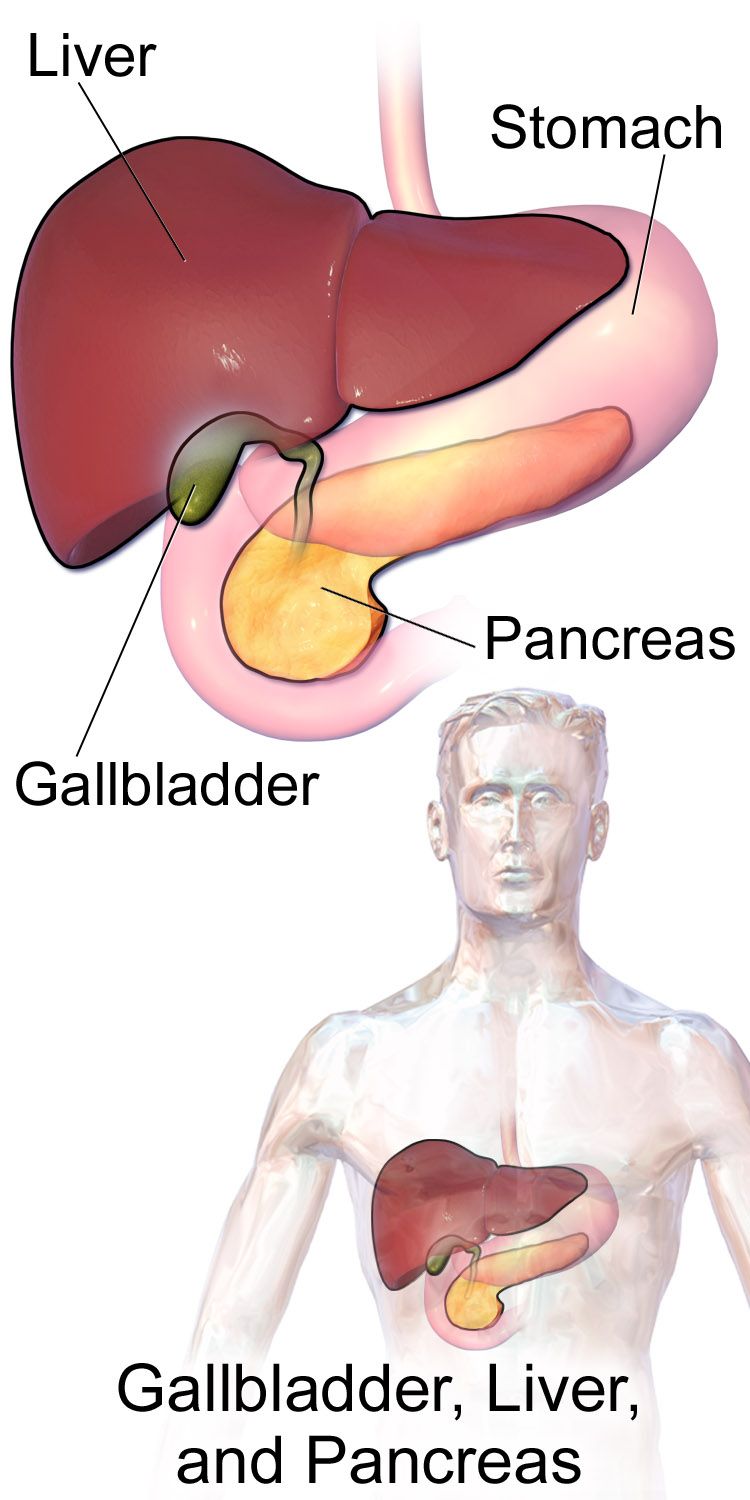
The accessory digestive organs are the teeth, the tongue, the salivary glands (sial/o), the liver, the gallbladder and the pancreas — structures that help digestion without food ever passing through them. This section covers the three that lie in the abdomen and deliver their secretions into the tube through ducts: the liver, the gallbladder and the pancreas. The liver manufactures bile, the gallbladder stores and concentrates it, and the pancreas produces both digestive enzymes and the hormones insulin and glucagon. Every one of these functions has generated a family of terms you will meet in charting.
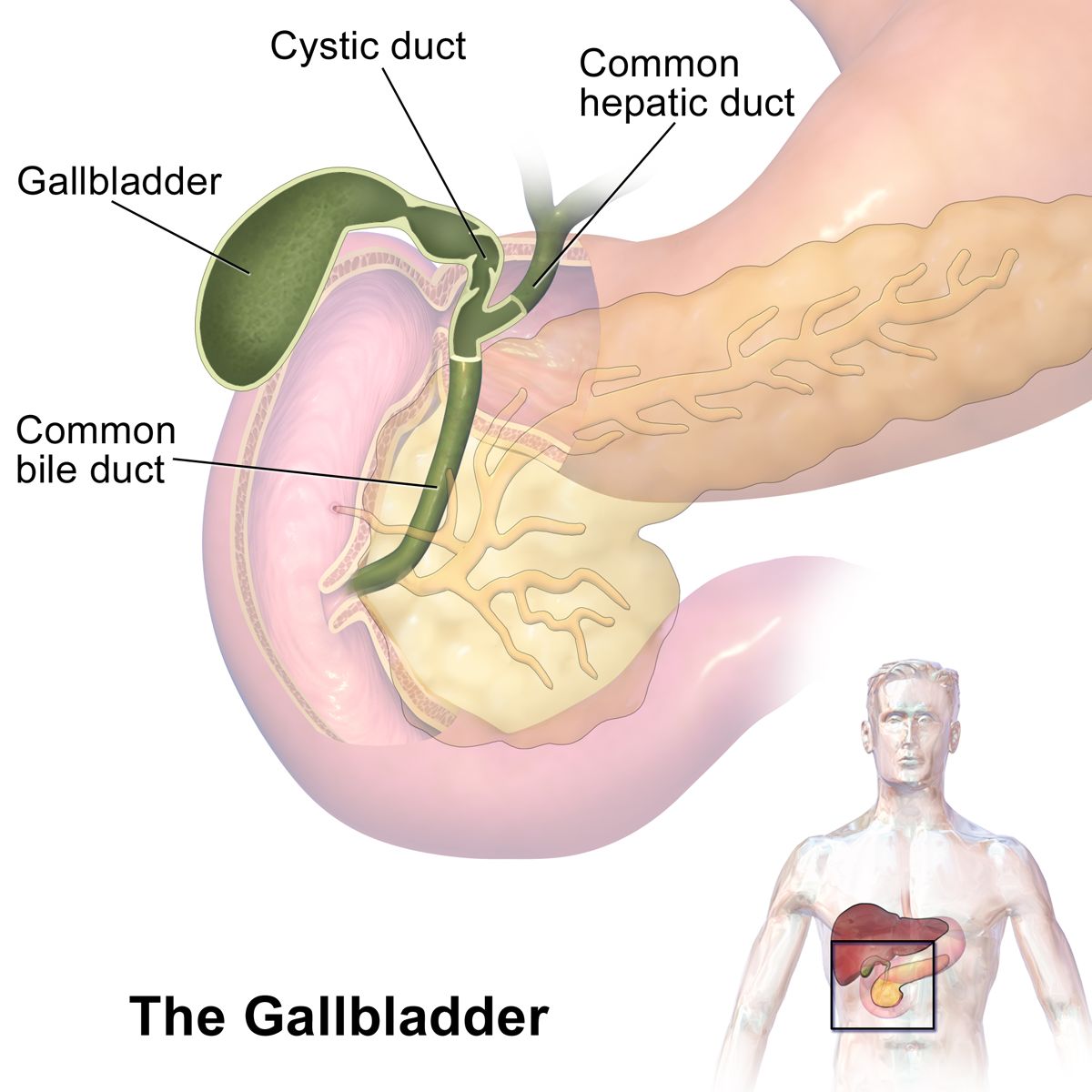
Because bile travels a plumbing system, biliary terminology is built around ducts, and it is the single densest cluster of look-alike roots in the book. Four roots share the prefix-like element chol-, and telling them apart is the difference between reading a report correctly and guessing. Take them one at a time and the confusion dissolves.
| Word part | Meaning | Example term | What the example means |
|---|---|---|---|
| hepat/o | liver | hepatomegaly | enlargement of the liver |
| chol/e, chol/o | bile, gall | cholestasis | stoppage of bile flow |
| cyst/o | bladder, sac | cholecystitis | inflammation of the gallbladder |
| cholecyst/o | gallbladder | cholecystectomy | surgical removal of the gallbladder |
| cholangi/o | bile duct (any) | cholangitis | inflammation of a bile duct |
| choledoch/o | common bile duct | choledocholithiasis | condition of stones in the common bile duct |
| bil/i | bile | biliary | pertaining to bile or the bile ducts |
| pancreat/o | pancreas | pancreatitis | inflammation of the pancreas |
| lith/o | stone, calculus | lithotripsy | crushing of a stone |
| steat/o | fat | steatohepatitis | inflammation of a fatty liver |
| amyl/o | starch | amylase | enzyme that digests starch |
| lip/o | fat | lipase | enzyme that digests fat |
| prote/o | protein | protease | enzyme that digests protein |
| gluc/o, glyc/o | sugar, glucose | glycogen | storage form of glucose |
Now assemble the classic. Chol/e + cyst/o + -ectomy = bile + sac + surgical removal = cholecystectomy (koh-leh-sis-TEK-toh-mee), removal of the gallbladder. Nothing in that word says “gallbladder” outright; the language describes the organ as the sac that holds bile. Once you see that, the whole family opens up. Cholecystography is the process of recording an image of the gallbladder. Cholelithiasis (koh-leh-lih-THIGH-uh-sis) is the condition of stones in bile — gallstones. Choledocholithotomy is incision into the common bile duct to remove a stone.
The liver and its terminology
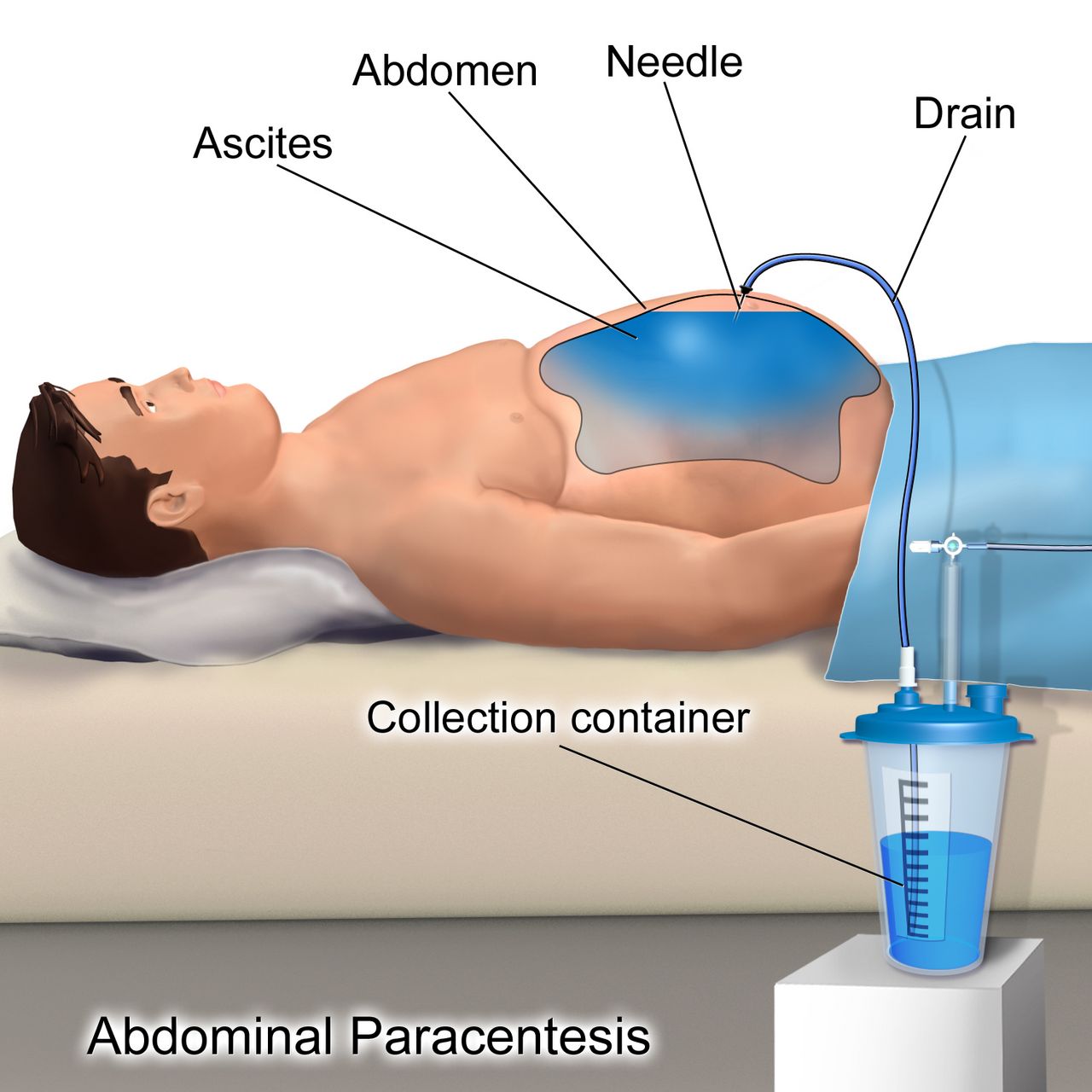
The liver is the body’s chemical plant: it detoxifies drugs, manufactures clotting factors and albumin, stores glycogen and produces bile. When it fails, the vocabulary of failure is distinctive. Jaundice (JAWN-dis), also called icterus (IK-ter-us), is the yellow staining of skin and sclerae by bilirubin, the pigment left over when red cells are broken down. Ascites (uh-SIGH-teez) is abnormal accumulation of fluid in the peritoneal cavity, a hallmark of advanced liver disease. Hepatic encephalopathy is confusion caused by toxins the failing liver can no longer clear — decoded, it is hepat/o + encephal/o + -pathy = liver + brain + disease.
Cirrhosis (sih-ROH-sis) is worth a careful look, because it does not follow the usual pattern. The root is Greek kirrhos, tawny or orange-yellow, describing the colour of the scarred liver at autopsy; the suffix -osis means abnormal condition. So the term literally means “an abnormal orange-yellow condition” — a purely visual name for irreversible fibrosis and nodular regeneration. It is one of the few important digestive terms that will not decode into a modern anatomical meaning, which is exactly why it should be learned as an exception rather than fought with.
Hepatitis is inflammation of the liver, and the modifier that follows carries the real information: hepatitis A, B and C name three unrelated viruses with different routes of transmission. Steatohepatitis adds steat/o, fat, and names the inflammation that develops in a fatty liver — the condition now widely called metabolic dysfunction-associated steatohepatitis, abbreviated MASH, which replaced the older term NASH in recent nomenclature. When you see hepat/o paired with a fat root, the story is almost always metabolic rather than infectious.
The pancreas and the shared duct
The pancreas is two organs in one anatomical package. Its exocrine tissue secretes amylase, lipase and proteases into the duodenum through the pancreatic duct; its endocrine tissue, the islets, secretes insulin and glucagon into the blood. The word parts match that split: exo- means outside and endo- means within, with -crine meaning to secrete. Chapter 14 returns to the endocrine half; here the exocrine half rules.
Pancreatitis (pan-kree-uh-TYE-tis) is inflammation of the pancreas, most often triggered by gallstones or alcohol. Its diagnosis rests on two enzyme levels — serum amylase and lipase — and both names decode cleanly: amyl/o starch plus -ase, the standard enzyme suffix, and lip/o fat plus -ase. Any term ending in -ase is an enzyme, and the root tells you what it digests. Any term ending in -ose is a sugar: glucose, lactose, sucrose, maltose. One letter separates the two families.
The pancreatic duct and the common bile duct usually merge just before entering the duodenum, which is why a gallstone lodged at the outlet can inflame the pancreas. That shared exit explains the name of the most cited procedure in this system: endoscopic retrograde cholangiopancreatography (koh-lan-jee-oh-pan-kree-uh-TOG-ruh-fee), or ERCP. Decode it and the procedure describes itself — a scope passed inward (endo-), contrast injected backward against the flow (retrograde), producing a recorded image (-graphy) of the bile ducts (cholangi/o) and the pancreas (pancreat/o).
Biliary terms name the plumbing, not the organ, so chol/e, cholecyst/o, cholangi/o and choledoch/o mark four different points along one path.
Section 3Signs, Symptoms and Pathology
The language of symptoms
Digestive complaints are described with a specific vocabulary that patients rarely use themselves, so part of your job is translation in both directions. A patient says “my food comes back up”; the chart says regurgitation. A patient says “burping”; the chart says eructation (ee-ruk-TAY-shun). A patient says “my stomach is growling”; the chart says borborygmus (bor-boh-RIG-mus), plural borborygmi, an onomatopoeic word that sounds like the noise it names.
Bleeding terminology is the highest-stakes set here, because the words encode where the blood came from. Hematemesis is vomited blood and points to a source above the ligament of Treitz — esophagus, stomach or duodenum. Melena (MEL-eh-nuh) is black, tarry, foul-smelling stool, blood that has been digested during a slow transit, which again means an upper source. Hematochezia (hee-muh-toh-KEE-zee-uh) is bright red blood passed rectally, usually from the colon or anorectum, though brisk upper bleeding can produce it too. Three words, three anatomical hypotheses, before a single test is ordered.
| Term | Word parts | What it means | Why it matters |
|---|---|---|---|
| dysphagia (dis-FAY-jee-uh) | dys- + -phagia | difficult swallowing | aspiration risk; triggers a swallow evaluation |
| odynophagia (oh-din-oh-FAY-jee-uh) | odyn/o + -phagia | painful swallowing | suggests esophagitis or ulceration |
| hematemesis | hemat/o + -emesis | vomiting of blood | upper gastrointestinal bleed |
| melena (MEL-eh-nuh) | melan- black | black tarry stool | digested blood from an upper source |
| hematochezia | hemat/o + -chezia | bright red blood per rectum | usually a lower source |
| steatorrhea (stee-uh-toh-REE-uh) | steat/o + -rrhea | fatty, floating, foul stool | fat malabsorption; pancreatic or small bowel |
| anorexia | an- + -orexia | loss of appetite | a symptom, not the eating disorder |
| eructation | Latin eructare | belching | often benign; may accompany reflux |
| flatus (FLAY-tus) | Latin, a blowing | gas expelled from the rectum | return of flatus signals bowel function after surgery |
| ascites (uh-SIGH-teez) | Greek askos, bag | fluid in the peritoneal cavity | advanced liver disease, heart failure, malignancy |
Disease of the upper tract
Gastroesophageal reflux disease (gas-troh-eh-sof-uh-JEE-al), GERD, is the backward flow of gastric contents into the esophagus when the lower esophageal sphincter fails. Decoded, gastr/o + esophag/o + -eal tells you the two organs involved and reflux tells you the direction: re- back plus flux flow. Chronic acid exposure can convert the normal squamous lining into intestinal-type columnar cells, a change called Barrett esophagus, which is a recognised precursor to esophageal adenocarcinoma and therefore triggers surveillance endoscopy.
Peptic ulcer disease, PUD, is an erosion through the mucosa of the stomach (gastric ulcer) or duodenum (duodenal ulcer). The dominant causes are infection with Helicobacter pylori (HEL-ih-koh-bak-ter pie-LOR-eye) and chronic NSAID use, not stress or spicy food. Watch the word peptic: it comes from the same Greek root as -pepsia, digestion, and refers to the acid-and-pepsin environment that does the damage. An ulcer that erodes completely through the wall is a perforation, a surgical emergency that produces board-like abdominal rigidity and free air under the diaphragm.
Two more upper-tract terms recur. Achalasia (ak-uh-LAY-zee-uh) is failure of the lower esophageal sphincter to relax, decoded as a- without plus chalasis relaxation, producing progressive dysphagia to both solids and liquids. Gastroparesis (gas-troh-puh-REE-sis) is gastr/o plus -paresis, partial paralysis: a stomach that empties too slowly, most often as a complication of long-standing diabetes.
Disease of the lower tract
Inflammatory bowel disease, IBD, is the umbrella over two chronic conditions. Crohn disease (KROHN) can affect any part of the tract from mouth to anus, characteristically in skip lesions with full-thickness inflammation; the terminal ileum is the classic site, which is why ileitis and ileocolic resection appear so often in these charts. Ulcerative colitis is confined to the colon and rectum and involves only the mucosal layer, spreading continuously rather than in patches. Note that IBD is not irritable bowel syndrome, IBS — a functional disorder with no inflammation and no structural damage. Two abbreviations, one letter apart, describing conditions with entirely different prognoses.
Diverticulosis (dye-ver-tik-yoo-LOH-sis) is the presence of small outpouchings of colonic mucosa pushed through weak points in the wall; diverticulitis (dye-ver-tik-yoo-LYE-tis) is what happens when one becomes inflamed or infected. The suffix carries the entire clinical difference: -osis is an abnormal condition, often silent, while -itis is inflammation, which means pain, fever and a treatment decision. That single-suffix distinction repeats across medicine, and diverticular disease is the cleanest example of it.
Obstruction has its own vocabulary. Intussusception (in-tuh-suh-SEP-shun) is the telescoping of one segment of bowel into the segment ahead of it, most common in young children. Volvulus (VOL-vyoo-lus) is a twisting of the bowel on its mesentery, cutting off blood supply. An ileus (ILL-ee-us) is the absence of peristalsis without a mechanical block, common after abdominal surgery and one reason nurses document the return of bowel sounds and flatus so carefully. A hernia is protrusion of an organ through the wall that normally contains it, giving herni/o and the repair term herniorrhaphy (her-nee-OR-uh-fee).
| Word part | Meaning | Example term | What the example means |
|---|---|---|---|
| diverticul/o | diverticulum, pouch | diverticulectomy | surgical removal of a diverticulum |
| polyp/o | polyp, small growth | polypectomy | surgical removal of a polyp |
| herni/o | hernia, protrusion | hernioplasty | surgical repair of a hernia |
| -cele | hernia, swelling | rectocele | herniation of the rectum |
| -emesis | vomiting | hematemesis | vomiting of blood |
| -megaly | enlargement | hepatosplenomegaly | enlargement of liver and spleen |
| -osis | abnormal condition | diverticulosis | condition of having diverticula |
| -itis | inflammation | diverticulitis | inflammation of a diverticulum |
| -stenosis | narrowing | pyloric stenosis | narrowing of the stomach outlet |
| -pathy | disease | gastropathy | disease of the stomach |
| -paresis | partial paralysis | gastroparesis | weak, slow stomach emptying |
Singulars and plurals you will actually write
Digestive terms come mostly from Latin, so they take Latin plurals, and the chart will use them. Writing “diverticulums” marks you as new in a way that “diverticula” does not. The rules are few, and they carry across every remaining chapter of this book.
| Rule | Singular | Plural | Used in a sentence |
|---|---|---|---|
| -um becomes -a | diverticulum | diverticula | numerous diverticula in the sigmoid colon |
| -um becomes -a | ileum | ilea | rarely pluralized; there is one ileum |
| -us becomes -i | villus | villi | blunted villi on small bowel biopsy |
| -us becomes -i | bacillus | bacilli | gram-negative bacilli in the stool culture |
| -a becomes -ae | ruga | rugae | gastric rugae flatten when the stomach fills |
| -is becomes -es | anastomosis | anastomoses | two anastomoses were created |
| -is becomes -es | diagnosis | diagnoses | three active diagnoses on the problem list |
| -ix or -ex becomes -ices | appendix | appendices | one appendix per patient, but appendices at the back of a textbook |
| -nx becomes -nges | pharynx | pharynges | the pharynges of both patients were examined |
| -oma becomes -omata or -omas | carcinoma | carcinomata / carcinomas | both plurals are accepted; -omas is now standard |
| -x becomes -ces | varix | varices | esophageal varices were banded |
Varices (VAIR-ih-seez) deserves special mention because you will meet it in liver failure. A varix is a single dilated, tortuous vein; esophageal varices form when portal hypertension forces blood through collateral channels in the esophageal wall, and their rupture is one of the fastest bleeds in medicine. The singular is almost never used clinically, which is exactly why the plural looks unfamiliar the first time.
In digestive pathology the suffix usually carries the clinical weight — -osis names a quiet structural state, -itis names an active inflammatory problem.
Section 4Looking Inside: Diagnostic Terms
The three procedure suffixes that never change
Diagnostic terminology across all of medicine rests on a small set of suffixes, and the digestive system uses them more visibly than any other. -scope is the instrument used to look; -scopy is the process of looking. -graph is the instrument that records; -graphy is the process of recording; -gram is the record itself, the finished image. -meter measures and -metry is the process of measuring. Once those seven are secure, dozens of procedure names decode on sight, no matter which organ they attach to. The table below adds two more suffixes you will meet here — -centesis and -opsy — and then, in its last three rows, three prefixes rather than suffixes: endo-, trans- and per-. Note the trailing hyphen, which is how the book marks a prefix, and read the column heading as “word part” rather than “suffix.”
| Word part | Meaning | Example term | What the example means |
|---|---|---|---|
| -scope | instrument for viewing | sigmoidoscope | instrument for viewing the sigmoid colon |
| -scopy | process of viewing | colonoscopy | process of viewing the colon |
| -graphy | process of recording | cholangiography | process of recording an image of the bile ducts |
| -gram | the record or image | cholangiogram | the bile-duct image itself |
| -metry | process of measuring | esophageal manometry | measurement of esophageal pressures |
| -centesis | surgical puncture to remove fluid | abdominocentesis | puncture of the abdomen to withdraw fluid |
| -opsy | process of viewing (tissue) | biopsy | viewing living tissue removed for study |
| endo- | within, inward | endoscopy | viewing the inside of an organ |
| trans- | across, through | transabdominal | across or through the abdomen |
| per- | through | percutaneous | through the skin |
Build one from scratch. Take lapar/o, abdominal wall, and add -scopy: laparoscopy (lap-uh-ROS-koh-pee), the process of viewing inside the abdominal cavity through small incisions. Swap the suffix for -tomy and you get laparotomy, an open incision into the abdomen. Same anatomy, entirely different operation and recovery, decided by the suffix alone. This is why the suffix is read first.
Endoscopy: the workhorses
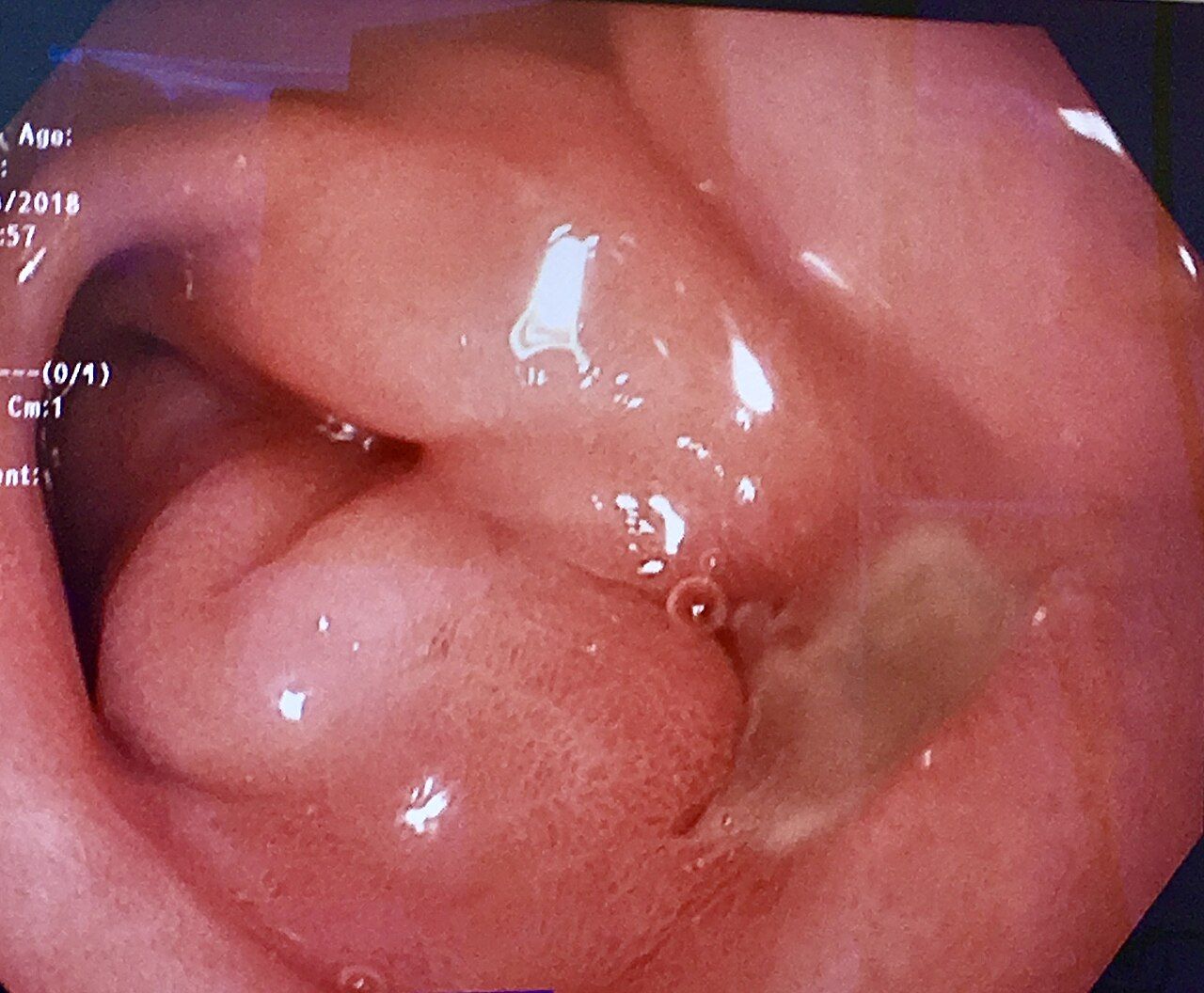
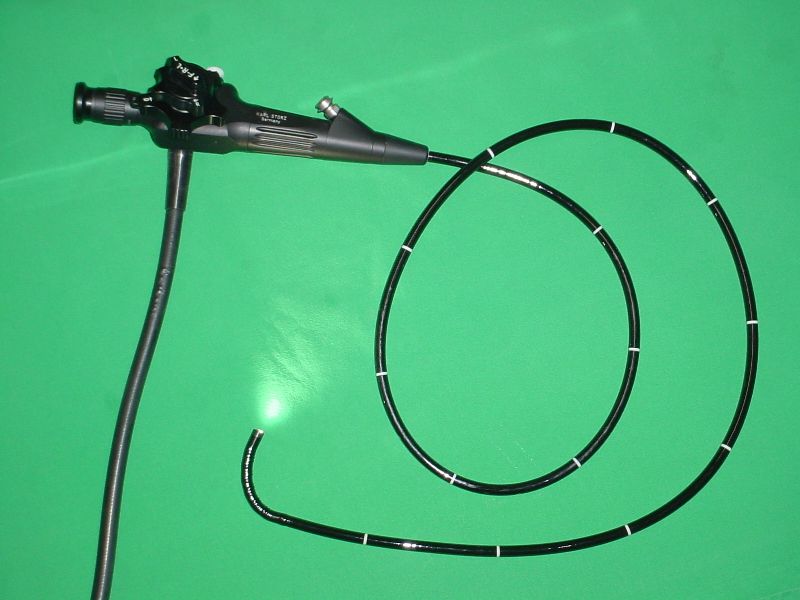
Esophagogastroduodenoscopy, EGD or “upper endoscopy,” passes a flexible scope through the mouth to inspect the esophagus, stomach and duodenum. It is both diagnostic and therapeutic: the same scope that finds a bleeding ulcer can clip it, and the same scope that finds varices can band them. Nursing responsibilities cluster around the airway and the sedation, and the patient is kept NPO beforehand — nil per os, nothing by mouth — because a stomach with contents is an aspiration risk.
Colonoscopy (koh-lon-OS-koh-pee) inspects the entire large intestine to the cecum, and it is the reference standard for colorectal cancer screening because a polyp found can be removed in the same session: polyp/o + -ectomy. Sigmoidoscopy (sig-moy-DOS-koh-pee) reaches only the sigmoid colon and rectum, so it requires less preparation but sees less bowel. Proctoscopy and anoscopy look only at the rectum and anal canal. Each name states exactly how far the scope goes, and the depth of the name is the depth of the exam.
ERCP combines endoscopy with imaging, threading a catheter through the duodenal papilla into the biliary and pancreatic ducts to inject contrast and, when indicated, remove a stone or place a stent. Its non-invasive counterpart is MRCP, magnetic resonance cholangiopancreatography, which produces the same map without a scope but cannot treat anything it finds. Capsule endoscopy has the patient swallow a camera the size of a large vitamin, giving images of the small intestine that neither an EGD nor a colonoscopy can reach.
Imaging, laboratory and stool studies
Contrast studies name the substance and the direction. An upper GI series follows swallowed barium down the esophagus and stomach; a barium enema introduces contrast from below to outline the colon. A barium swallow, also called an esophagram, outlines the esophagus with liquid barium. Do not confuse it with the modified barium swallow study (MBSS), a separate examination performed with a speech-language pathologist using several food and liquid consistencies to assess the oral and pharyngeal phases of swallowing and the risk of aspiration. Ultrasonography of the right upper quadrant is the first test for suspected gallstones, and a HIDA scan — hepatobiliary iminodiacetic acid scintigraphy — assesses whether the gallbladder fills and empties at all.
| Test | What is measured or seen | What an abnormal result suggests |
|---|---|---|
| ALT and AST | enzymes released by injured liver cells | hepatocellular injury — hepatitis, drugs, alcohol |
| Alkaline phosphatase, bilirubin | markers of bile flow | obstruction of the biliary tree, cholestasis |
| Serum albumin, PT/INR | proteins the liver manufactures | reduced synthetic function in chronic liver disease |
| Serum amylase and lipase | pancreatic digestive enzymes in blood | pancreatitis, especially when lipase is high |
| FOBT or FIT | occult (hidden) blood in stool | bleeding lesion; screening for colorectal cancer |
| Stool culture and C. difficile assay | pathogens and toxin in stool | infectious diarrhea, antibiotic-associated colitis |
| Urea breath test, stool antigen | evidence of H. pylori | infection driving peptic ulcer disease |
| Fecal fat | undigested fat in stool | malabsorption — steatorrhea |
| Paracentesis fluid analysis | cells, protein and culture from ascites | infection of ascitic fluid, malignancy |
Two vocabulary notes on that table. Occult means hidden, not supernatural: occult blood is present but invisible to the eye. And paracentesis (par-uh-sen-TEE-sis) decodes as para- beside or alongside plus -centesis surgical puncture — needle puncture through the abdominal wall to drain peritoneal fluid. The two standard sites are the midline just below the umbilicus and the left lower quadrant, so do not read para- here as “off to the side of the midline.” When the same procedure is named for the region rather than the position, it is called abdominocentesis. Both terms appear in charts, and they mean the same intervention.
Read the suffix first in any diagnostic term: -scopy looks, -graphy records, -gram is the picture, and -centesis punctures to drain.
Section 5Surgery, Eponyms and the Chart
Eight surgical suffixes, eight different operations
Nowhere in medical terminology does a suffix change the meaning of a word more decisively than in surgery. The root tells you the organ; the suffix tells you what was done to it, and the difference between two of these words can be the difference between a patient going home with an intact bowel and a patient going home with an appliance on the abdomen. Learn these eight as a set and check them against each other every time. The last row of the table is not a suffix at all: anastomosis is a free-standing noun, listed here because it names the operation that so often follows a resection.
| Word part / term | Meaning | Example term | What the example means |
|---|---|---|---|
| -ectomy | surgical removal, excision | gastrectomy | removal of all or part of the stomach |
| -otomy | incision, cutting into | laparotomy | incision into the abdominal wall |
| -ostomy | creation of an artificial opening | colostomy | opening from the colon to the body surface |
| -plasty | surgical repair or reshaping | pyloroplasty | surgical widening of the pylorus |
| -pexy | surgical fixation, suspension | proctopexy | surgical fixation of the rectum |
| -rrhaphy | suturing, stitching | herniorrhaphy | suture repair of a hernia |
| -tripsy | crushing | cholelithotripsy | crushing of a gallstone |
| -desis | binding, surgical fusion | arthrodesis | surgical fusion of a joint (contrast term) |
| anastomosis (a term, not a suffix) | surgical connection of two structures | ileocolic anastomosis | joining ileum to colon after resection |
Common digestive operations, decoded
Laparoscopic cholecystectomy is the most common abdominal operation in many hospitals: through the abdominal wall (lapar/o), using a scope, removing (-ectomy) the bile sac (chol/e + cyst/o). Appendectomy removes the appendix, still often performed laparoscopically and still urgent once perforation is a risk. Hemicolectomy uses hemi-, half, to name removal of one side of the colon, typically for cancer; the surgeon then creates an anastomosis (uh-nas-toh-MOH-sis) to restore continuity.
Feeding routes have their own family of terms, and every one of them is an -ostomy. A gastrostomy tube enters the stomach directly through the abdominal wall; when it is placed endoscopically it is a PEG, percutaneous endoscopic gastrostomy — through the skin, using a scope, into the stomach, an opening. A jejunostomy or J-tube delivers feed past the stomach, useful in gastroparesis or high aspiration risk. A nasogastric tube, NG, is not surgical at all: nas/o + gastr/o + -ic, through the nose to the stomach, used for decompression or short-term feeding.
Bariatric surgery terminology mixes these parts freely. Roux-en-Y gastric bypass creates a small gastric pouch and a gastrojejunostomy; sleeve gastrectomy removes the greater curvature of the stomach, leaving a tube. Bariatric itself decodes as bar/o, weight or pressure, plus -iatric, pertaining to treatment — the treatment of weight. Recognising bar/o also unlocks baroreceptor and hyperbaric elsewhere in your studies.
Eponyms and where they stand today
The digestive system carries more eponyms — terms named after people — than almost any other. Some remain in daily use, others are being replaced by descriptive names. Current style, followed by most journals and by the American Medical Association style manual, drops the possessive apostrophe: Crohn disease, not Crohn’s disease; Barrett esophagus, not Barrett’s. You will still see both forms in charts, and neither is a comprehension problem, but the non-possessive version is the one to write.
| Eponym | What it names | Status and descriptive alternative |
|---|---|---|
| Crohn disease | transmural inflammatory bowel disease, any segment | in universal use; no accepted alternative |
| Barrett esophagus | intestinal metaplasia of the lower esophagus | in universal use; a precancerous change |
| Mallory-Weiss tear | mucosal tear at the gastroesophageal junction from retching | still standard |
| McBurney point | tenderness point over the appendix | still taught; a physical exam landmark |
| Murphy sign | arrest of inspiration on right upper quadrant palpation | still used in suspected cholecystitis |
| Whipple procedure | pancreaticoduodenectomy | the descriptive term is preferred in operative notes |
| ampulla of Vater | shared outlet of bile and pancreatic ducts | often written hepatopancreatic ampulla |
| sphincter of Oddi | muscular ring controlling that outlet | eponym still dominant |
| Meckel diverticulum | congenital outpouching of the ileum | eponym still dominant |
Notice pancreaticoduodenectomy: pancreas plus duodenum plus removal. The eponym tells you nothing; the descriptive term tells you exactly which organs left the body. That is the argument against eponyms in a nutshell, and it is why documentation standards keep drifting toward built terms even when the eponym is famous.
The abbreviations on a real chart
Gastrointestinal charting is abbreviation-heavy, and the same letters can mean different things in different contexts. Read the surrounding note, and when an abbreviation is on your facility’s do-not-use list, spell it out. Below are the ones you will meet in a first clinical rotation.
| Abbreviation | Expansion | What it tells you |
|---|---|---|
| GI | gastrointestinal | the system itself; “upper GI bleed” |
| NPO | nil per os, nothing by mouth | hold food, fluids and often oral medication |
| PO | per os, by mouth | route of administration |
| GERD | gastroesophageal reflux disease | chronic acid reflux |
| PUD | peptic ulcer disease | gastric or duodenal ulceration |
| LES | lower esophageal sphincter | the valve that fails in GERD |
| EGD | esophagogastroduodenoscopy | upper endoscopy |
| ERCP | endoscopic retrograde cholangiopancreatography | scope plus contrast imaging of ducts |
| IBD / IBS | inflammatory bowel disease / irritable bowel syndrome | structural inflammation versus functional disorder |
| UC / CD | ulcerative colitis / Crohn disease | the two forms of IBD |
| NG | nasogastric | tube from nose to stomach |
| PEG | percutaneous endoscopic gastrostomy | long-term feeding tube into the stomach |
| TPN | total parenteral nutrition | nutrition given intravenously, bypassing the gut |
| LFT | liver function tests | ALT, AST, alkaline phosphatase, bilirubin, albumin |
| N/V | nausea and vomiting | symptom shorthand |
| BM | bowel movement | documented for frequency and character |
| BRBPR | bright red blood per rectum | hematochezia; suggests a lower source |
| FOBT / FIT | fecal occult blood test / fecal immunochemical test | screening for hidden stool blood |
| RUQ, LUQ, RLQ, LLQ | right and left upper and lower quadrants | where the pain is; RUQ suggests gallbladder |
| CBD | common bile duct | the choledoch/o structure |
| HAV, HBV, HCV | hepatitis A, B and C viruses | which virus, and therefore how it spreads |
Two cautions. BS can mean bowel sounds or blood sugar, and only the note tells you which; write it out. And parenteral in TPN decodes as par- beside plus enter/o intestine — literally “beside the intestine,” meaning nutrition delivered by any route that bypasses the gut — for TPN, intravenously. TPN is chosen when the gastrointestinal tract cannot be used at all or cannot meet the patient’s needs. Whether that same patient is also NPO is a separate order that depends on the underlying problem; being on TPN does not by itself make a patient NPO.
In digestive surgery the suffix names the operation, so -ectomy, -otomy and -ostomy must be read deliberately every single time.
The chapter in one breath
The digestive system is the most orderly vocabulary in medical terminology because the anatomy is a line. Learn the combining forms in sequence — stomat/o, pharyng/o, esophag/o, gastr/o, pylor/o, duoden/o, jejun/o, ile/o, cec/o, col/o, sigmoid/o, rect/o, an/o — and any term places itself along the tube on sight. The accessory organs branch off that line through ducts, which is why hepat/o, chol/e, cholecyst/o, cholangi/o, choledoch/o and pancreat/o form a family that must be read to the last letter. Digestion-specific suffixes — -pepsia, -phagia, -emesis, -chezia, -orexia, -prandial — turn symptom lists into readable words, while -osis and -itis separate a quiet structural finding from an active inflammatory one. Diagnostic terms rest on -scopy, -graphy, -gram and -centesis; surgical terms rest on -ectomy, -otomy, -ostomy, -plasty, -pexy and -rrhaphy. Guard the look-alikes: ile/o against ili/o, col/o against colp/o, dysphagia against dysphasia. Write Latin plurals correctly, drop the possessive from eponyms, and spell out any abbreviation that could be misread.
Words worth knowing
| Term | What it means |
|---|---|
| alimentary canal | the continuous digestive tube from mouth to anus |
| peristalsis (per-ih-STAL-sis) | wave-like muscular contraction that moves contents along the tract |
| dysphagia (dis-FAY-jee-uh) | difficulty swallowing; dys- + -phagia |
| dyspepsia (dis-PEP-see-uh) | painful or difficult digestion; indigestion |
| hematemesis (hee-muh-TEM-eh-sis) | vomiting of blood, indicating an upper tract source |
| melena (MEL-eh-nuh) | black tarry stool from digested blood |
| hematochezia (hee-muh-toh-KEE-zee-uh) | bright red blood passed rectally |
| steatorrhea (stee-uh-toh-REE-uh) | fatty, foul-smelling stool from fat malabsorption |
| GERD | gastroesophageal reflux disease; backward flow of gastric contents |
| peptic ulcer disease | erosion through gastric or duodenal mucosa, usually from H. pylori or NSAIDs |
| diverticulitis (dye-ver-tik-yoo-LYE-tis) | inflammation of one or more colonic diverticula |
| cirrhosis (sih-ROH-sis) | irreversible fibrosis and nodular scarring of the liver |
| ascites (uh-SIGH-teez) | abnormal fluid accumulation in the peritoneal cavity |
| jaundice / icterus | yellowing of skin and sclerae from excess bilirubin |
| cholelithiasis (koh-leh-lih-THIGH-uh-sis) | the condition of gallstones |
| cholecystectomy (koh-leh-sis-TEK-toh-mee) | surgical removal of the gallbladder |
| ERCP | endoscopic retrograde cholangiopancreatography; scope plus contrast imaging of the bile and pancreatic ducts |
| colostomy (koh-LOS-toh-mee) | surgically created opening from the colon to the abdominal wall |
| anastomosis (uh-nas-toh-MOH-sis) | surgical joining of two hollow structures; plural anastomoses |
| paracentesis (par-uh-sen-TEE-sis) | needle puncture of the abdomen to drain ascitic fluid |