LISTENING
You will spend more of this course listening than speaking, and more of your working life listening than doing almost anything else — yet listening is the one communication skill almost nobody was ever taught. We get years of instruction in reading and writing, a little in speaking, and none at all in the thing we do most. The result is predictable: nearly everyone rates themselves an above-average listener, and the people around them quietly disagree. This chapter treats listening as a trainable performance skill with named moves, visible failure modes, and a rubric you can score yourself against. You will see what your brain is actually doing in the two seconds after someone stops talking, why good intentions collapse in a noisy room, and how to paraphrase, probe, and confirm in ways that change what happens next. Every technique arrives with a weak version and a stronger version side by side, because the difference between them is usually one sentence wide.
By the end of this chapter you can
- Distinguish hearing from listening and trace a single message through the six stages of the listening process, including Brownell’s HURIER model.
- Identify your default listening style and name one recurring situation in which it costs you accuracy or goodwill.
- Select the appropriate listening purpose — informational, critical, empathic, or appreciative — for a given situation and defend the choice.
- Diagnose at least six forms of pseudolistening in a transcript and prescribe a specific one-move repair for each.
- Explain the speech–thought differential and use the spare capacity deliberately instead of drifting.
- Produce a paraphrase, a reflection of feeling, and an open probe on demand, then score them against a rubric.
- Deliver criterion-referenced feedback on a classmate’s speech that names evidence, effect, and one change.
- Apply teach-back and closed-loop confirmation to verify understanding in a workplace or clinical exchange.
Section 1Hearing Is Not Listening
Hearing is automatic. Listening is a decision you make and then keep making.
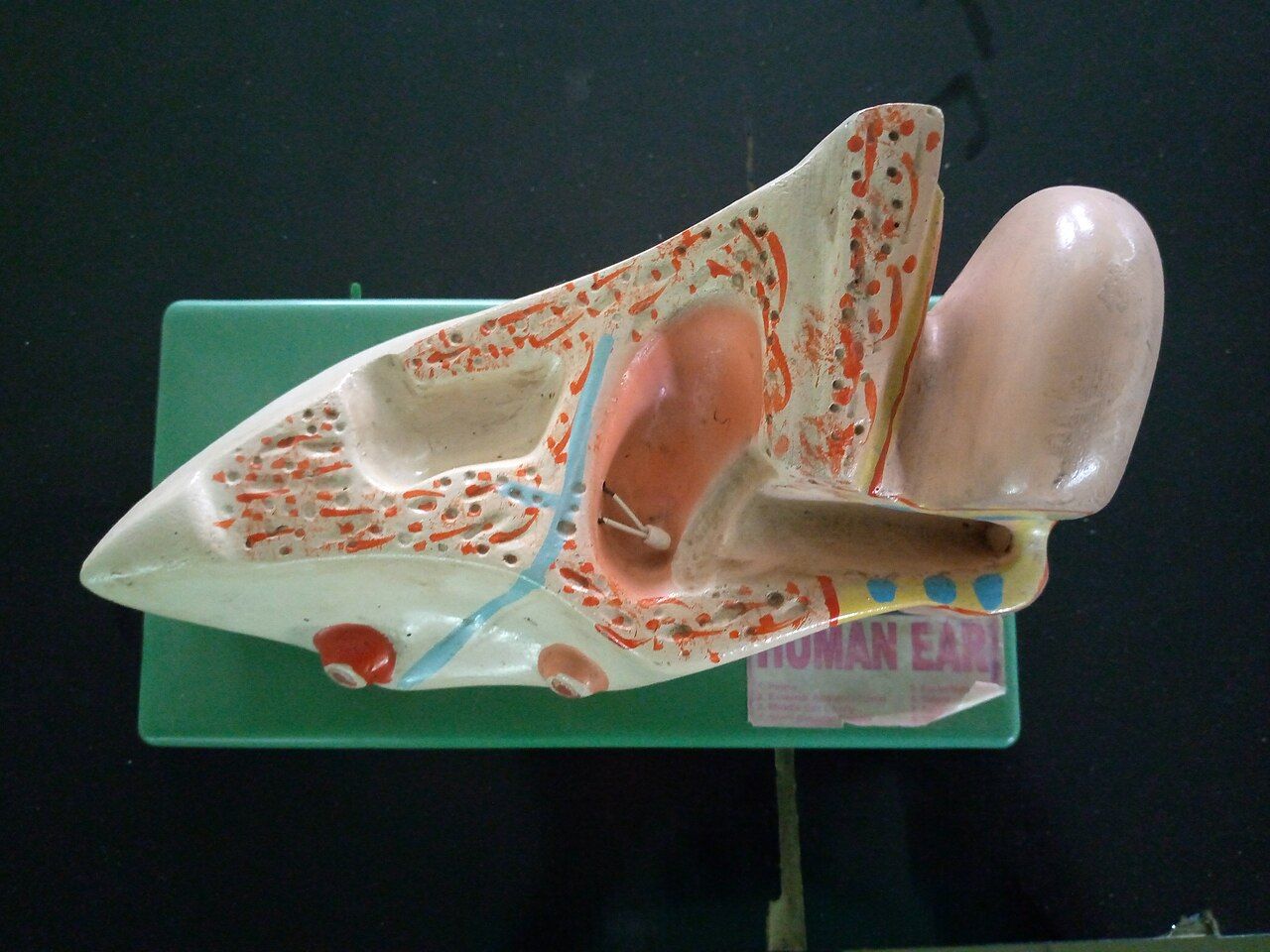
Hearing is a physiological event. Air pressure waves move the eardrum, three small bones amplify the motion, and hair cells in the cochlea fire. You cannot switch it off. Sit in a quiet room and you will hear the refrigerator compressor, a car outside, your own swallowing. None of that required your consent.
Listening is what happens next, and it is voluntary, effortful, and easy to fake. It is the active process of receiving, attending to, understanding, remembering, evaluating, and responding to spoken and nonverbal messages. Every one of those verbs takes work, and every one of them can fail independently. You can hear perfectly and understand nothing. You can understand perfectly and remember nothing. You can remember everything and respond in a way that convinces the speaker you were not there at all.
Notice how much this changes the diagnosis when something goes wrong. “I told you about the schedule change” and “You never told me” are usually both true statements about different stages. The message was sent, it was heard, and it died somewhere between attention and memory. Naming the stage is the first practical skill in this chapter, because the repair for a failure of attention is nothing like the repair for a failure of understanding.
The six stages: what your brain does in two seconds
Communication researcher Judi Brownell organized listening into six stages under the acronym HURIER: hearing, understanding, remembering, interpreting, evaluating, and responding. Other scholars slice the process differently — some models begin with selective attention as its own stage, others fold interpreting into understanding — and there is no settled consensus on the exact number. The value of any of these models is not the count. It is that they force you to ask where a breakdown occurred instead of concluding that someone “wasn’t listening.”
Work through one real sentence. Maya, a second-semester nursing student, is receiving a shift handoff. The outgoing nurse says: “Bed 4, Mr. Ellison, seventy-two, came in with chest pressure, troponin negative times two, he’s on telemetry, pain-free since about four, and he gets really anxious when the alarm goes off, so warn him before you silence it.”
That is about fifteen seconds of speech carrying seven discrete facts, one causal relationship, and one behavioral instruction. Maya hears all of it. Whether she listens to it depends on six separate things going right. The table below uses the staging this chapter will work with: attending gets a row of its own, because that is where most breakdowns start, and interpreting and evaluating share one.
| Stage | What it does | How it fails in the handoff | Repair move |
|---|---|---|---|
| Hearing / receiving | Physically registers the sound | Two alarms and a vacuum in the hallway mask “troponin negative times two” | Change the environment: “Can we step to the other side of the desk?” |
| Attending / selecting | Chooses this signal over competing ones | Maya is mentally rehearsing her own question about the IV pump | Park your question in writing, in two words, and return to the speaker |
| Understanding | Assigns meaning to the words | She hears “telemetry” but is not sure whether that means continuous monitoring or a pending order | Ask at the seam, not at the end: “Telemetry — he’s on it now, or ordered?” |
| Remembering | Holds the message long enough to use it | Seven facts exceed working-memory capacity; the alarm instruction evaporates | Write in the speaker’s order, not in your own; chunk into three groups |
| Interpreting / evaluating | Judges relevance, credibility, and implication | She files “anxious about alarms” as personality trivia rather than a care instruction | Ask what each item is for: “So the warning is to keep his heart rate down?” |
| Responding | Signals back what was received | She nods and says “Got it” — which confirms nothing | Read back the two items that matter most, out loud |
How much do we actually retain? Be careful with the famous number.
You will encounter a widely repeated claim that listeners recall only about twenty-five percent of what they hear. The figure traces largely to mid-twentieth-century work by Ralph Nichols, and it has been reprinted in textbooks and corporate training decks for seventy years. It deserves an asterisk. The original testing conditions were narrow, the material was lecture content rather than conversation, and the quarter figure described delayed recall — immediate recall in the same work ran closer to half. The finding has never been cleanly replicated under modern methods. Communication scholars disagree about whether any single retention percentage is meaningful at all, since recall depends enormously on the material, the listener’s prior knowledge, and what the listener is trying to do with the information.
Here is the defensible version, and it is still sobering. Unaided recall of continuous speech drops fast, it drops fastest for detail rather than gist, and listeners consistently overestimate how much they retained. That last point is the useful one. The gap is not primarily between what you hear and what you keep — it is between what you keep and what you believe you kept. Confidence outlives accuracy.
Test it on yourself this week. After the next lecture or meeting, before you look at any notes, write down everything you can recall for ninety seconds. Then compare against the notes or the recording. Most people are startled twice: once by how little is on the page, and once by how certain they had felt.
Hearing happens to you and listening is something you do, which is why every listening failure has a specific stage — attention, understanding, memory, or response — and a specific repair.
Section 2Listening on Purpose
Four purposes, four different jobs
Skilled listeners do not listen harder. They listen differently depending on what the moment requires. Before you deploy a single technique, answer one question: what am I listening for? Four purposes cover most of what you will do in this course and at work.
Informational listening aims at accurate acquisition. You are building a mental model you can act on later — a procedure, a set of dates, a diagnosis, a drug schedule. Critical listening aims at evaluation. You are testing a claim: is the evidence real, is the reasoning sound, is something being left out? Empathic listening aims at understanding another person’s experience from inside their frame, without correcting or solving it. Appreciative listening aims at enjoyment — music, a well-told story, a speech you admire — and it is the only one of the four where drifting is allowed.
Most listening disasters are not failures of effort. They are purpose mismatches: you brought critical listening to a moment that needed empathic listening, or informational listening to a sales pitch that needed critical listening. The mismatch feels to the speaker like a personality flaw in you, which is why it damages relationships out of proportion to the actual error.
| Purpose | The question you are answering | What good looks like | Signature failure |
|---|---|---|---|
| Informational | What exactly is being claimed, and in what order? | You can restate the structure without the speaker’s words | Copying words you cannot explain |
| Critical | Should I believe this, and what would change my mind? | You can name the evidence type and the strongest counter-case | Rejecting the speaker instead of testing the claim |
| Empathic | What is this like from where they are standing? | The speaker says “yes — exactly” to your paraphrase | Jumping to advice; making it about your similar story |
| Appreciative | What is working here, and why does it land? | You can name one craft choice you want to steal | Passive consumption with nothing retained |
Your default style, and what it costs you
Beyond purpose, people carry habitual preferences. A well-known instrument developed by Watson, Barker, and Weaver in the 1990s sorted listeners into four listening styles: people-oriented (attends to feelings and relationships), action-oriented (wants the point, the task, the next step), content-oriented (wants detail, evidence, and precision), and time-oriented (manages the clock and signals urgency). A later revision by Bodie, Worthington, and Gearhart relabeled and restructured the categories as relational, analytical, task-oriented, and critical, partly because the original scale’s measurement properties did not hold up well. Take the labels as useful vocabulary rather than as a validated personality type — the evidence supports the idea that people have stable preferences more strongly than it supports any particular four-box scheme.
What matters practically is the friction between styles. Watch what happens when an action-oriented manager listens to a content-oriented analyst.
Analyst: “So we pulled eighteen months of scheduling data, and if you look at the swing shifts specifically — and I should say the January numbers are incomplete because of the system migration —” Manager (interrupting): “Bottom line it for me.” The manager thinks she is being efficient. The analyst hears that the caveat she was about to raise, which is the reason the whole analysis might be wrong, is unwelcome. She stops raising caveats. Six weeks later a decision gets made on incomplete January data.
The repair is not for the manager to become content-oriented. It is one sentence of style-bridging: “Give me the headline first, then the caveats — I want both, in that order.” That sentence names the manager’s preference without punishing the analyst’s.
Choosing the purpose out loud
Here is a move almost nobody uses and everybody should. When you are not sure which kind of listening a person needs, ask. It takes four seconds and it prevents the most common relational injury in this chapter.
Your roommate comes home from a twelve-hour shift and says, “They floated me to med-surg again and I had eight patients.” There are three plausible responses and only one of them requires no guessing.
Weak (unrequested problem-solving): “You should really talk to your charge nurse about the float rotation.” This answers a question that was not asked. Weak (competitive story): “That’s nothing — last week I had nine and two of them were total care.” This converts her experience into a preamble for yours. Strong (purpose check): “Ugh. Do you want to vent, or do you want to figure out what to do about it?” Now she picks the listening you provide. If she says vent, your job is paraphrase and reflection, and advice is off the table until she asks.
Decide what you are listening for before you decide how to listen, because most listening failures are purpose mismatches rather than effort failures.
Section 3Where Listening Breaks
Fake listening and its species
Pseudolistening is the performance of attention without the substance of it: the nod, the “mm-hm,” the eye contact held while the mind is elsewhere. It is so common that most people do it without noticing, and it has recognizable subtypes worth naming, because you cannot fix a habit you cannot name.
Stage-hogging (or monopolizing) treats the other person’s turn as loading time for your own. Selective listening tunes in only for topics that concern you and tunes out the rest — a chronic problem in meetings and handoffs, where the item you skipped is the item that mattered. Defensive listening hears attack in neutral statements, so “the report came in Thursday” becomes “you were late.” Ambush listening attends carefully but only to collect ammunition. Insulated listening is the opposite of selective: it systematically avoids the one topic the listener does not want to deal with. And glazing over is the honest drift — no strategy, just a mind that wandered off and did not report back.
The diagnostic table below gives you a symptom, a name, an underlying cause, and one concrete move. Use it on a transcript of your own conversations before you use it on anyone else.
| What it sounds like | Name | What is really happening | One-move repair |
|---|---|---|---|
| “Right. Right. Totally.” delivered at even intervals | Pseudolistening | Attention has left; the social script is running on autopilot | Replace the next “right” with a content paraphrase; you cannot fake one |
| “That reminds me of when I …” | Stage-hogging | Rehearsing your turn instead of processing theirs | Ask one follow-up question before you say anything about yourself |
| “Wait, go back — what did you say about my unit?” | Selective listening | Attention keyed only to self-relevant cues | Write one line per agenda item, including the ones that are not yours |
| “So you’re saying I did it wrong.” | Defensive listening | Threat appraisal fires before comprehension finishes | Paraphrase the literal content first, then ask if criticism was intended |
| “Hold on — two minutes ago you said the opposite.” | Ambush listening | Listening for contradictions, not for meaning | Steelman it: state their strongest version before you rebut anything |
| “Anyway, about the schedule …” after a hard disclosure | Insulated listening | Avoidance of an emotionally costly topic | Name the avoidance out loud: “I skipped past that. Can we go back?” |
| Silence, then “Sorry, what?” | Glazing over | Spare cognitive capacity wandered off task | Predict the speaker’s next point in your head — it uses the same capacity productively |
| “I can hear you, keep going” while typing | Divided attention | Task-switching costs, not true parallel processing | Close the laptop or say honestly “give me ten seconds to finish this” |
The speech–thought differential, and the multitasking myth
Conversational English runs somewhere around 125 to 175 words per minute; formal presentation is often slower. Estimates of how fast we can process language internally run several times higher, and the specific numbers you will see quoted vary widely depending on how the measurement was done. Rather than defend a precise figure, hold the shape of the finding: listening leaves spare capacity. That gap between speaking rate and thinking rate is the speech–thought differential, and it is the single most exploitable fact in this chapter.
Untrained listeners spend the surplus on drift — grocery lists, replies, the sentence they wish they had said yesterday. Trained listeners spend it on four things: predicting where the speaker is going, silently summarizing what has been said so far, noticing what has not been said, and monitoring the nonverbal channel. All four are effortful, which is exactly why they crowd out drift.
What the surplus cannot cover is a second demanding task. The popular belief that some people can genuinely listen and work at the same time does not survive contact with the research on divided attention: what looks like parallel processing is rapid switching, and switching costs accuracy and time on both tasks. There is legitimate scientific debate about the boundaries — highly automated tasks like walking interfere very little, and individual differences exist — but no serious reading of the evidence supports composing an email while listening to a briefing. The person typing during your handoff is not a superior multitasker. They are sampling.
Four kinds of noise, and which one you can actually fix
Communication models label anything that distorts a message as noise, and it is worth separating the types because they call for different responses. Physical noise is external: alarms, hallway conversation, a bad connection. Physiological noise is internal and bodily: hearing loss, exhaustion, pain, hunger, a headache. Psychological noise is internal and mental: anxiety, prejudgment, defensiveness, preoccupation. Semantic noise is linguistic: jargon, ambiguity, or a word the two of you are using with different meanings.
Semantic noise is the sneakiest because it produces confident mutual misunderstanding. Consider a real exchange. A patient is told, “Your labs came back negative.” He goes quiet. The clinician reads the silence as absorption; it is actually alarm, because in ordinary English “negative” means bad. Nothing about the delivery was careless. The word simply carried two meanings and nobody checked which one landed.
Of the four, physical noise is the easiest to fix and the most often tolerated. Moving three feet, closing a door, or saying “I’m going to step somewhere quieter, hold that thought” solves more listening problems than any technique in Section 4 — and yet people routinely strain through a critical conversation next to an ice machine rather than risk seeming difficult.
Listening fails in named, recognizable ways — pseudolistening, divided attention, and four distinct kinds of noise — and naming the specific failure is what makes the repair a one-move fix rather than a resolution to try harder.
Section 4The Moves: Active Listening You Can Perform

Attending: the body does half the work
Before a single word leaves your mouth, your body has already told the speaker how much of you is in the room. A common teaching device is Gerard Egan’s SOLER acronym: sit squarely, open posture, lean slightly forward, eye contact, relax. It is a useful scaffold for beginners and it has been fairly criticized. Applied rigidly it produces a stiff, performed attentiveness that reads as fake, and its eye-contact prescription assumes a cultural norm that is not universal — in many communities sustained direct gaze at an elder, a supervisor, or a person of another gender signals challenge rather than respect. Later frameworks such as Stickley’s SURETY explicitly add awareness of the listener’s own internal state and treat the guidance as adjustable.
Use the principle, not the posture: reduce every physical signal that says you are leaving. That means the phone face-down and out of your hand rather than face-down on the table. It means squaring your torso, because body orientation is read as a signal of engagement alongside gaze and posture rather than instead of them. It means matching the speaker’s energy roughly rather than sitting granite-still. And it means letting silence sit for two or three seconds after they stop, because the most common cause of a truncated disclosure is a listener who filled the pause.
One concrete calibration: in most North American professional settings, eye contact roughly seventy percent of the time while listening reads as engaged; near one hundred percent reads as interrogation. If you are working across cultures or with a neurodivergent speaker, drop the rule entirely and take your cue from the other person — some people listen far better when not required to hold gaze, and forcing it costs them comprehension.
Paraphrase, reflect, probe: the three sentences that do the work
A paraphrase restates the content of what you heard in your own words and invites correction. A reflection of feeling names the emotion you think you detected and invites correction. An open probe is a question that cannot be answered with yes or no. Together these three cover nearly everything active listening asks of you, and all three are trainable in an afternoon.
The critical distinction is between paraphrasing and parroting. Parroting repeats the speaker’s words back and proves only that your ears work. A paraphrase re-encodes the meaning in different words, which is why it is diagnostic: if you cannot paraphrase, you did not understand, and you have just discovered that before it cost anyone anything.
Study the table below as a script bank. The left column is what people actually say; the right column is what the same person could have said with the same information and about the same number of words.
| Weak response | Why it fails | Stronger response |
|---|---|---|
| “So you’re saying the schedule change is bad.” | Echoes the gist and bolts on a judgment word the speaker never used; tests nothing | “Let me check — the change itself is fine, but the two-day notice is what makes childcare impossible?” |
| “I know exactly how you feel.” | Claims access to another person’s interior; often followed by your story | “That sounds exhausting in a specific way. Is it the workload, or that nobody asked you first?” |
| “Did that make you angry?” | Closed question; supplies the emotion instead of eliciting it | “What was going through your head when she said it?” |
| “Any questions?” | Invites a yes or no and puts the burden of ignorance on the listener | “What part of this would be hardest to explain to your partner tonight?” |
| “Uh-huh … uh-huh …” | Backchanneling without content; indistinguishable from drifting | “Okay — so far: negative labs, still short of breath, and it’s worse lying flat.” |
| “Why did you do it that way?” | “Why” questions about behavior trigger justification, not information | “Walk me through how you decided on that order.” |
| “Calm down and start from the beginning.” | Instructs the emotion away before acknowledging it | “You’re clearly rattled. Start wherever it makes sense — I’ll follow.” |
| “Got it, thanks.” | Confirms receipt, verifies nothing | “Got it — hold the metoprolol, page you if the systolic drops under 100.” |
Notice the pattern in the right-hand column. Almost every improvement does one of three things: it adds specific content the speaker can correct, it converts a closed question into an open one, or it names something rather than evaluating it. That is the whole craft in one sentence.
Retaining: notes as a listening tool, not a transcript
Working memory is small. Estimates of how many independent items an adult can hold at once cluster around four for most people, though the number depends heavily on how the material chunks — and the classic “seven plus or minus two” figure is now generally regarded as too generous. Either way, the handoff in Section 1 exceeded capacity, which is why note-taking is not an optional courtesy. It is capacity extension.
Good listening notes look nothing like transcripts. They are short, hierarchical, and written in the speaker’s order so that structure is preserved. Leave a wide margin for your own questions so that a question does not steal attention from the next sentence — two words in the margin, then back to the speaker. Star anything you did not understand rather than stopping to decode it, and clear the stars at the end.
You may have heard that handwriting notes beats typing them. The best-known study, by Mueller and Oppenheimer, reported that longhand note-takers performed better on conceptual questions, apparently because slower writing forces summarizing rather than verbatim capture. Subsequent replication attempts have found smaller effects, and in some cases none, so treat the medium as less important than the behavior. What consistently helps is generative note-taking: paraphrasing, condensing, and organizing while you listen. What consistently hurts is transcription, on any device.
Score yourself: an active-listening rubric
You cannot improve what you do not measure. Record a five-minute practice conversation (with permission), then score yourself honestly against the criteria below. A common first profile is a 1 on “checking” and a 3 on “attending” — exactly the shape of someone who looks like a good listener and is not yet one.
| Criterion | Not yet (1) | Competent (2) | Skilled (3) |
|---|---|---|---|
| Attending | Devices in hand; body angled away; frequent glances elsewhere | Devices away; generally oriented toward speaker | Body, gaze, and pacing adapt to the speaker’s comfort, not a formula |
| Paraphrasing | Repeats the speaker’s words or says nothing | Restates content accurately in own words at least once | Restates at natural seams, compresses, and invites correction (“is that right?”) |
| Reflecting feeling | Ignores or corrects emotion (“don’t worry about it”) | Names an emotion, sometimes the wrong one | Names emotion tentatively and adjusts when the speaker refines it |
| Probing | Closed questions; leading questions; multiple questions at once | Mostly open questions on the speaker’s topic | Open questions that open the door the speaker was already standing near |
| Checking / confirming | “Got it” with no content | Summarizes at the end of the conversation | Summarizes mid-stream and again at close; reads back action items verbatim |
| Restraint | Interrupts; advises unasked; redirects to own experience | Waits for pauses; advice offered but flagged as optional | Asks whether advice is wanted; tolerates silence without filling it |
Active listening is a small set of performable moves — attend, paraphrase, reflect, probe, confirm, restrain — and each one has a weak version and a stronger version separated by about ten words.
Section 5Listening When It Counts
The audience member’s job: critical listening and feedback that helps
For most of this course you will be an audience member, and audience listening is a graded skill in its own right. Critical listening means evaluating a claim on its merits: what type of evidence supports it, whether the source is in a position to know, whether the conclusion follows, and what is conspicuously absent. It is not skepticism as a personality. A critical listener is equally willing to be persuaded — they simply require reasons.
Practice on a real claim. Devon opens his persuasive speech: “Hospital parking fees are a hidden tax on nurses. At my facility, staff pay eighty-five dollars a month, and a survey of my unit found that ninety percent of us think it’s unfair.” A critical listener notes three separable things. The eighty-five-dollar figure is a verifiable fact and probably true. The “ninety percent” is a self-selected sample of a single unit — it establishes strength of feeling, not prevalence. And “hidden tax” is a framing device, not evidence: it is doing persuasive work before any argument has been made. None of that means Devon is wrong. It means you know exactly which part of his case to ask about.
Feedback is where critical listening becomes useful to someone else. Useless feedback is global and evaluative (“great job,” “kind of boring”). Useful feedback is criterion-referenced and follows a simple three-part shape: name the evidence you observed, name its effect on you as a listener, name one change. Compare.
| Vague feedback | What is missing | Criterion-referenced version |
|---|---|---|
| “Good energy!” | No behavior, no effect, nothing repeatable | “You raised your volume on each of the three main points, and I could tell where the sections divided.” |
| “It was a little confusing.” | No location, no cause, no fix | “I lost the thread at the parking-fee statistic — I couldn’t tell if ninety percent was your unit or the whole hospital. One clarifying phrase would fix it.” |
| “You said ‘um’ a lot.” | Counts a symptom, ignores the cause | “The fillers clustered right after each slide change. A two-second pause there instead would read as deliberate.” |
| “Try to be more confident.” | Prescribes an internal state, not an action | “You looked at your notes for most of the conclusion. Memorize just the last two sentences and deliver them to the back row.” |
| “I disagree with your whole premise.” | Rejects globally; gives the speaker nothing to work with | “Your strongest point was the eighty-five-dollar monthly figure. The premise I’d push on is that one unit’s survey speaks for the hospital — what wider data exists?” |
Listening across difference: culture, accent, and access
Listening norms are not universal. The amount of silence that feels comfortable, whether overlapping speech signals enthusiasm or rudeness, how much meaning is carried explicitly in words versus implicitly in context and relationship — all of this varies across cultures and communities. Edward Hall’s high-context and low-context distinction is the most commonly taught framework here, and it is worth knowing while also worth holding loosely: many scholars consider it too coarse and too prone to national stereotyping to describe individuals well. Use it as a reminder that your own norms are norms, not defaults.
Accent deserves specific attention because the failure is so often on the listener’s side. In a well-known study, Donald Rubin had undergraduates listen to a recorded lecture spoken by the same native English speaker while viewing a photograph of either a white instructor or an Asian instructor. Students shown the Asian photograph rated the speech as more accented and scored lower on a comprehension test — from identical audio. The implication is uncomfortable and useful: some of what we experience as “I can’t understand them” is expectation, and expectation is adjustable. Comprehension of unfamiliar accents also improves measurably with exposure and with the listener’s willingness to keep trying.
Access is the other half. If a listener is deaf or hard of hearing, uses a hearing aid or cochlear implant, is processing in a second language, or is neurodivergent, the burden belongs to the room, not to them. Practical moves that cost nothing: face the person and keep your mouth visible, one voice at a time, reduce background noise before increasing volume, turn on captions by default, repeat questions from the audience before answering them, and provide key terms in writing. Speaking louder at someone who is lip-reading and watching your mouth distort is the single most common well-intentioned mistake.
Confirming: teach-back, read-back, and the first thirty seconds
In high-stakes settings, the profession does not trust anyone’s feeling of understanding — including its own. It builds verification into the exchange. Three practices are worth carrying into any workplace.
Teach-back asks the listener to explain the information in their own words, framed so that the burden falls on the speaker. Weak: “Do you understand how to take the metformin?” That question has one socially acceptable answer. Strong: “I want to make sure I explained this clearly — when you get home, how are you going to take it?” The strong version tests the explanation, not the person, and it routinely surfaces errors that “do you understand?” never does. Closed-loop communication (read-back) is teach-back’s fast cousin for orders and handoffs: the receiver repeats the instruction verbatim and the sender confirms. “Two milligrams morphine IV push.” “Two milligrams morphine IV push.” “That’s correct.” It takes three seconds and closes the loop that “got it” leaves open. Structured handoff formats such as SBAR — situation, background, assessment, recommendation — help the listener as much as the speaker, because a known structure tells you what is coming and frees capacity for the content.
Finally, the opening. Research on clinical encounters has repeatedly found that patients are redirected very early in their opening statement; one 2019 study of primary and specialty care visits reported a median of about eleven seconds before interruption among the encounters where an interruption occurred, and found that most patients were never invited to set the agenda at all. Earlier studies using different methods reported somewhat longer intervals, so the exact number is contested — the direction is not. The practical version applies far beyond medicine: let the other person finish their opening statement. It is usually under a minute, it usually contains the actual problem, and interrupting it means spending the next ten minutes on the wrong one.
When the cost of misunderstanding is real, do not rely on the feeling of understanding — build verification into the exchange with teach-back, read-back, criterion-referenced feedback, and an uninterrupted opening statement.
The chapter in one breath
Hearing is physiology and listening is a choice you have to keep making, which is why every breakdown lands at a nameable stage: you did not receive it, did not attend to it, did not understand it, did not retain it, or did not signal any of that back. Before technique comes purpose — informational, critical, empathic, or appreciative — because most listening injuries are mismatches rather than laziness, and offering solutions to someone who wanted a witness is the classic case. Failures come in recognizable species with one-move repairs: pseudolistening, stage-hogging, defensive and ambush listening, divided attention, and four kinds of noise, of which the semantic kind does the quietest damage. The surplus capacity created by the speech–thought differential is the raw material of good listening; spend it on predicting, summarizing, and noticing gaps instead of drifting. The performable moves are few — attend, paraphrase, reflect, probe, confirm, restrain — and each has a weak and a stronger version about ten words apart. When stakes are high, distrust the feeling of understanding and verify: teach-back, read-back, criterion-referenced feedback, and an opening statement nobody interrupts.
Words worth knowing
| Term | What it means |
|---|---|
| Hearing | The involuntary physiological reception of sound waves by the ear; it requires no effort and no consent. |
| Listening | The active, voluntary process of receiving, attending to, understanding, remembering, evaluating, and responding to messages. |
| HURIER model | Brownell’s six-stage framework — hearing, understanding, remembering, interpreting, evaluating, responding — used to locate where a listening failure occurred. |
| Selective attention | The mental filtering that lets one signal through while suppressing competing ones; the stage most vulnerable to distraction. |
| Informational listening | Listening to acquire and retain accurate content, such as instructions, procedures, or data. |
| Critical listening | Listening to evaluate a claim — its evidence, reasoning, source credibility, and omissions — without prejudging the speaker. |
| Empathic listening | Listening to understand another person’s experience from inside their frame, withholding advice and evaluation. |
| Appreciative listening | Listening for enjoyment or craft, as with music, storytelling, or an admired speech. |
| Listening style | A habitual preference in how one listens — commonly labeled people-, action-, content-, and time-oriented, with later research proposing revised categories. |
| Pseudolistening | Performing the outward signals of attention — nodding, backchanneling, eye contact — while not processing the message. |
| Stage-hogging | Treating the other person’s turn as preparation time for your own; also called monopolizing. |
| Defensive listening | Perceiving attack in neutral or ambiguous statements, so that threat appraisal outruns comprehension. |
| Ambush listening | Attending carefully but only to gather material for a counterattack. |
| Speech–thought differential | The gap between how fast people speak and how fast listeners can process language, creating spare capacity that is either used or wasted. |
| Noise | Anything that distorts a message; commonly divided into physical, physiological, psychological, and semantic types. |
| Semantic noise | Interference caused by language itself — jargon, ambiguity, or a shared word carrying different meanings for speaker and listener. |
| Paraphrase | A restatement of the speaker’s content in your own words that invites correction; distinct from parroting the original wording. |
| Reflection of feeling | Tentatively naming the emotion you believe the speaker is expressing, so they can confirm or refine it. |
| Open probe | A question that cannot be answered yes or no, used to invite elaboration on the speaker’s own topic rather than supply an answer. |
| Teach-back | A verification method in which the listener explains the information back in their own words, framed as a check on the speaker’s clarity. |
| Closed-loop communication | Verbatim read-back of an instruction followed by the sender’s explicit confirmation; standard practice for high-risk orders and handoffs. |
| Criterion-referenced feedback | Feedback that names observed evidence, its effect on the listener, and one specific change, rather than a global evaluation. |