Interpersonal, Group and Workplace Communication
Almost none of the talking that decides your career happens behind a lectern. It happens at a counter at 6:58 in the morning, in a group chat at 11 at night, in a four-person project team where one person has stopped answering, in the ninety seconds when you hand a patient or a project or a shift to somebody else. These conversations have no podium, no slides and no applause — and they are graded anyway, by people who decide whether you are easy to work with, whether you are safe, whether you get the schedule you asked for. The good news is that the moves are learnable and small. A rewritten sentence. A named behavior instead of a named flaw. A meeting agenda written as questions. A four-line handoff. This chapter gives you the scripts, then shows you the weak version and the better version side by side so you can hear the difference.
By the end of this chapter you can
- Distinguish the content dimension from the relational dimension of a message and identify confirming and disconfirming responses in real dialogue.
- Rewrite a defensive statement into a supportive one using Gibb’s pairs and I-language in the XYZ format.
- Deliver an assertive request and specific behavioral feedback using a DESC script, and distinguish assertion from passivity and aggression.
- Name escalating conflict patterns, use a repair attempt, and construct a complete apology with a named behavior, a named impact, responsibility taken without an excuse, and a repair.
- Identify task, maintenance and self-centered roles in a group, set explicit norms, and explain why social loafing and groupthink occur and what reduces them.
- Write a question-based agenda with an explicit decision rule and facilitate a meeting to a documented decision with owners and dates.
- Plan, rehearse and deliver a group presentation with scripted verbal handoffs and assigned question-and-answer traffic control.
- Perform a structured handoff using SBAR and closed-loop communication, and escalate a concern using graded assertiveness and the two-challenge rule.
- Answer a behavioral interview question in STAR form and write workplace messages that carry tone and ask accurately.
Section 1The Interpersonal Layer: Climate, Confirmation and Owning Your Message

Every message says two things at once
Take one plain sentence: “Did you finish the intake notes?” The content dimension — the literal information being requested — is identical no matter who says it or how. The relational dimension is the message about the relationship carried in the tone, timing, volume, face and word choice, and it changes completely. Said by a peer at the coffee machine, it means we are equals and I am curious. Said by a supervisor who is standing over your shoulder at 4:55 on a Friday, it means I do not trust you to manage your own work. Said flatly, with no eye contact, while scrolling, it means you are an interruption.
Arguments in workplaces and families are almost never about the content. Nobody has a screaming fight about intake notes. They have a fight about being treated as incompetent, or invisible, or interchangeable, using intake notes as the vehicle. This is why “but I just asked a simple question” is such a poor defense: you may have sent a simple question and a complicated relational message in the same breath, and the second one is what got answered.
The tool for this is metacommunication — communication about the communication. It sounds like stepping outside the argument and describing it. “Can I flag something about how this is going? I think we’re arguing about the schedule, but I’m mostly reacting to the fact that it changed without anyone telling me.” Or, more simply: “I want to check my read — are you annoyed with me, or annoyed with the situation? Because I’m hearing the first one.” Used sparingly, metacommunication defuses. Used constantly, it becomes its own irritation, so spend it on conversations that matter.
Confirming and disconfirming responses
The single most powerful thing you do in interpersonal communication is signal whether the other person exists to you. Communication scholars describe confirming responses as messages that acknowledge the other person’s presence and worth, and disconfirming responses as those that deny them — not by attacking (that at least grants the person importance) but by treating them as irrelevant. Confirmation is usually described in three ascending levels: recognition (I notice you exist), acknowledgment (I am engaging with what you actually said), and endorsement (I am treating your view or feeling as legitimate). You do not have to agree to endorse; you have to grant that the feeling makes sense.
Watch all six happen to the same opening line — three that disconfirm, then the three ascending levels of confirmation. A classmate says: “I’m really nervous about presenting tomorrow.”
Impervious (no acknowledgment at all): you keep typing and say nothing. Tangential (hijacks the topic): “Speaking of tomorrow, did you see they moved the deadline?” Impersonal (a cliche instead of a person): “Everybody gets nervous, you’ll be fine.” Recognition: you turn your chair, look up, and say, “Yeah? Tell me.” Acknowledgment: “You’re nervous about tomorrow. Which part is worst — the opening or the questions at the end?” Endorsement: “That makes sense. It’s the first time this group has seen you present, and that’s a real thing to be nervous about. Want to run the opening on me?”
Notice that the good versions are not longer or softer. They are more specific. “You’ll be fine” takes two seconds and communicates I would like this conversation to end. “Which part is worst?” takes the same two seconds and communicates I am staying.
Owning the message: describe the behavior, not the person
Communication climate is the emotional weather of a relationship or team — the accumulated sense of whether it is safe to speak. Jack Gibb’s classic observational work on groups paired six defensive-producing behaviors with six supportive alternatives, and it remains the most practical rewriting tool in this chapter because each pair converts directly into a sentence.
| Defensive move | What it sounds like | Supportive rewrite |
|---|---|---|
| Evaluation (judging the person) | “You’re careless with the charting.” | Description: “Three of the last five notes were missing the pain reassessment.” |
| Control (I decide, you comply) | “From now on you’ll do intake and I’ll do discharge.” | Problem orientation: “We’re both getting buried at 3. How do you want to split it?” |
| Strategy (a hidden agenda, a setup) | “Hey, how busy are you Thursday?” (already planning to hand over a shift) | Spontaneity: “I need someone to cover Thursday. Are you open, and is it okay to ask?” |
| Neutrality (clinical indifference) | “That’s policy. Nothing I can do.” | Empathy: “This policy is landing hardest on you, and I get why that’s frustrating. Here’s what I can actually move.” |
| Superiority (rank as argument) | “When you’ve been here twelve years you’ll understand.” | Equality: “I’ve seen this go wrong before — can I tell you what happened, and you tell me if this case is different?” |
| Certainty (the closed verdict) | “That will never work here.” | Provisionalism: “I don’t think it would survive night shift, but I’ve been wrong. What would it take?” |
The workhorse form for description is the XYZ statement: when you do X, in situation Y, I feel Z — then add the request. “When you send the draft after midnight, on the night before it’s due, I get anxious because I can’t proofread it. Could you send yours by nine?” Compare that to “you always leave everything to the last second,” which contains no behavior (“everything”), no situation, no feeling and no request — only a character verdict, which is the one thing nobody can act on.
Conflicts are usually fought over the relational message, so the fastest de-escalation available is to swap a judgment about the person for a description of a specific behavior plus a request.
Section 2Saying the Hard Thing: Assertiveness, Feedback and Repair
Assertiveness is a middle setting, not a volume knob
Assertiveness is stating your position, need or boundary clearly while leaving the other person’s dignity intact. It is not the loud end of a dial with passivity at the quiet end — both passivity and aggression avoid the actual conversation, one by hiding the message and one by burying it in threat. The assertive version is usually the most specific of the four rather than the loudest, because it spends its words on behavior and a request instead of on hedging, apology or history.
| Style | What you say when a group partner misses two deadlines | What the other person hears | Typical result |
|---|---|---|---|
| Passive | “No worries at all, honestly, I had time, it’s fine.” | The deadlines were optional. | It happens a third time; you resent them silently. |
| Passive-aggressive | “Must be nice to have that kind of free time.” Plus a message to the other two members. | You are being punished for something unnamed. | The group splits; the behavior does not change. |
| Aggressive | “You’ve blown this group off twice. Nobody wants to work with you.” | I am on trial as a person. | Defense, counterattack or withdrawal; content never gets discussed. |
| Assertive | “The last two drafts came in after the deadline and I rewrote them the night before. I need your section by Thursday at six — or tell me now and we’ll move the date.” | Here is the behavior, here is the effect, here is the choice. | A commitment or an honest renegotiation — both usable. |
Two structural details make the assertive line work. First, it reports facts rather than motives: came in after the deadline instead of you don’t care. Second, it ends with a concrete, dated, checkable request. A complaint without a request is just weather; the other person cannot tell what would count as fixing it.
Feedback people can actually act on
Most feedback fails because it is a category rather than an event. “Be more professional,” “work on your communication,” “you need more confidence” — none of these tells anyone what to do differently at 8:15 tomorrow. The DESC script (Describe, Express, Specify, Consequences) forces the abstraction back down into behavior. Describe what happened in observable terms. Express the impact in one sentence. Specify the change you want. State the consequence — ideally the positive one.
| Situation | Weak version | DESC rewrite |
|---|---|---|
| Teammate interrupts others in huddles | “You’re kind of a steamroller in meetings.” | D: “In the last two huddles you finished Priya’s sentences three or four times.” E: “It made the room go quiet, and I lost the point she was making.” S: “Can you let people land the sentence before you respond?” C: “You get the best ideas in the room, and they’ll come out faster.” |
| Student employee is late | “Punctuality is an issue with you.” | D: “You clocked in after 7:15 on Monday, Tuesday and Friday.” E: “The 7:00 count doesn’t start without two people, so the whole shift starts behind.” S: “I need you clocked in by 7:00, or a text by 6:30 if you’re stuck.” C: “Do that for two weeks and I’ll put you on the schedule you asked for.” |
| Peer’s slides are unreadable | “Your slides are a mess.” | D: “Slides 4 through 9 have about 90 words each in 12-point type.” E: “From the back row I couldn’t read them, so I stopped listening and tried to read.” S: “Cut each to a headline and one image.” C: “Your data is the strongest part — this is the only thing hiding it.” |
Two habits raise the odds further. Ask permission first — “Do you have five minutes? I want to give you something on the huddles” — because ambushed people defend. And give it close to the event; feedback about something from six weeks ago is a grievance, not a coaching.
When it gets hot: de-escalation, repair and a real apology
John Gottman’s work on married couples labeled four escalating patterns — criticism (attacking character rather than behavior), contempt (eye-rolling, mockery, sarcasm, name-calling), defensiveness (counter-complaint and blame-shifting), and stonewalling (shutting down and going silent). Those labels travel well as a description of how any conversation deteriorates, though it is worth saying plainly that the strong predictive claims from that research have been criticized, and it was studied in romantic partners, not project teams. Use the four as a mirror for your own behavior rather than a diagnostic you apply to a coworker.
A repair attempt is any move that interrupts the spiral: a question instead of a rebuttal, an admission of a partial point, a break. Physiological arousal is real — heart rate climbs, working memory narrows, and people say things they will spend a month walking back. The script for a break should be prepared in advance, because you will not compose it while flooded: “I want to get this right and I’m too heated to be useful right now. Can we pick this up at three?” Note what makes it a repair rather than stonewalling — it names a return time.
Apologies fail in predictable ways. “I’m sorry if you were offended” makes the other person’s reaction the problem. “I’m sorry, but I was slammed” deletes everything before the comma. A complete apology has four parts: name the behavior, name the impact, take responsibility without an excuse, and state the repair.
Weak: “Sorry if I came off short in the huddle, it was a rough morning.” Complete: “I cut you off twice in the huddle. It made it look like your assessment didn’t matter, in front of the whole team. That’s on me. Going forward I’ll wait until you finish, and I’ll raise your point myself at the next one so people hear it came from you.”
An effective hard conversation trades judgments for observable behavior and ends with a dated, checkable request — and when you are the one who caused harm, an apology only counts if it names the behavior, names the impact, takes responsibility without an excuse, and offers a repair.
Section 3Working in Groups: Roles, Norms and Real Decisions
What changes when a third person walks in
Two people have one relationship to manage. Three people have three. Five people have ten, and eight people have twenty-eight. The communication load grows far faster than the head count, which is the arithmetic behind every group project you have ever hated. It is also why small teams outperform large ones on tasks that require coordination: past roughly five to seven members, the cost of keeping everyone informed starts eating the benefit of the extra hands.
Bigger groups also invite social loafing — the well-replicated finding that individual effort drops as group size rises, especially when individual contributions are invisible. People are not usually being cynical; when your output disappears into a pooled product, it becomes genuinely unclear how much of you is required. The countermeasures are structural, not motivational: keep the group small, make each person’s contribution identifiable and named, break the work into owned pieces with dates, and have the group — not just the instructor or manager — see who delivered what.
Norms are the unwritten rules a group settles into: how late is late, whether the group chat gets answered at night, whether disagreement is allowed, who is expected to do the formatting. Left implicit, norms form anyway, usually around whoever is loudest in the first meeting. A short team charter written in the first fifteen minutes prevents most of the misery. Sample lines that are worth stealing verbatim: “Drafts go in the shared folder, not in chat.” “Messages after 9 p.m. get answered in the morning; nobody has to reply at night.” “If you’re going to miss a deadline, say so 24 hours out — that’s fine, silence isn’t.” “We decide by majority after everyone has spoken once.”
You will also see the Tuckman stages — forming, storming, norming, performing, and the adjourning stage added later — in almost every textbook. Treat them as a useful map of a common pattern rather than a law: later research on real project teams found that groups often coast, then lurch into productive work at roughly the midpoint of the time they have, rather than climbing tidy steps, and some groups never storm at all. The practical value of the model is permission: the awkward, contentious middle of a group project is normal, not a sign your team is broken.
The roles people take, including the ones nobody wants
Group communication research sorts behaviors into task roles (moving the work forward), maintenance roles (keeping the relationships intact) and self-centered roles (serving the individual at the group’s expense). Roles are behaviors, not personalities — the same person can initiate in one meeting and block in the next. That distinction matters, because you address a behavior far more easily than you address a person’s character.
| Role | Type | What it sounds like | If it is missing or overdone |
|---|---|---|---|
| Initiator | Task | “Let’s start with the three options and cut one.” | Missing: forty minutes of circling. Overdone: nothing gets finished before the next idea. |
| Information seeker | Task | “Do we actually know the deadline, or are we guessing?” | Missing: the group builds on an assumption nobody checked. |
| Recorder | Task | “So the decision is Tuesdays, Marcus owns it, due the 14th.” | Missing: the meeting has to be repeated next week. |
| Gatekeeper | Maintenance | “Priya hasn’t weighed in yet — Priya?” | Missing: two people hold the whole meeting. |
| Harmonizer | Maintenance | “You two are actually agreeing, just using different words.” | Overdone: real disagreements get smoothed over before they are examined. |
| Blocker | Self-centered | “That won’t work.” (repeatedly, with no alternative) | Repair line: “What would have to be true for it to work?” |
| Dominator | Self-centered | Talks over 60 percent of the meeting. | Repair line: “Hold that — I want to hear the other three first, then come back to you.” |
| Distractor | Self-centered | Jokes, side stories, unrelated tangents at decision points. | Repair line: “Parking lot — I’ll write it down. Back to the vote.” |
A quick diagnostic for any group you are in: over one meeting, tally who spoke and for roughly how long. If two people account for most of the airtime, the group is not using its own information — and the quiet members frequently hold the objection that would have saved you.
Deciding, not just discussing
The most common group failure is not conflict; it is a long, pleasant discussion that ends with everyone assuming a different outcome. Fix that by naming the decision rule before the discussion, not after. Consensus (everyone can live with it) builds commitment but costs time and can stall on one holdout. Majority vote is fast and fair but leaves a losing minority who may not implement the decision. Expert decides works when one person genuinely knows more and everyone accepts that. Authority after discussion — the leader gathers input, then decides, and says so up front — is often the honest choice, and it is far better received than a fake consensus process with a predetermined result.
Groupthink, Irving Janis’s term for the drive toward agreement overriding realistic appraisal, is usually taught with symptoms like the illusion of invulnerability, self-censorship, pressure on dissenters and an illusion of unanimity. Two honest caveats: the complete causal model has held up unevenly in later empirical work, and the historical case studies were reconstructed after the outcomes were known. What has stood up better is the narrower, testable piece — groups converge prematurely, and structural countermeasures reduce it. Assign someone the explicit job of arguing the other side. Have the leader state a preference last, not first. Collect independent judgments before discussion. Schedule a second meeting to revisit a decision after people have slept.
Groups fail on structure more often than on goodwill — so make contributions identifiable, write the norms down, name roles as behaviors, and state the decision rule before the discussion instead of after it.
Section 4Meetings and Group Presentations
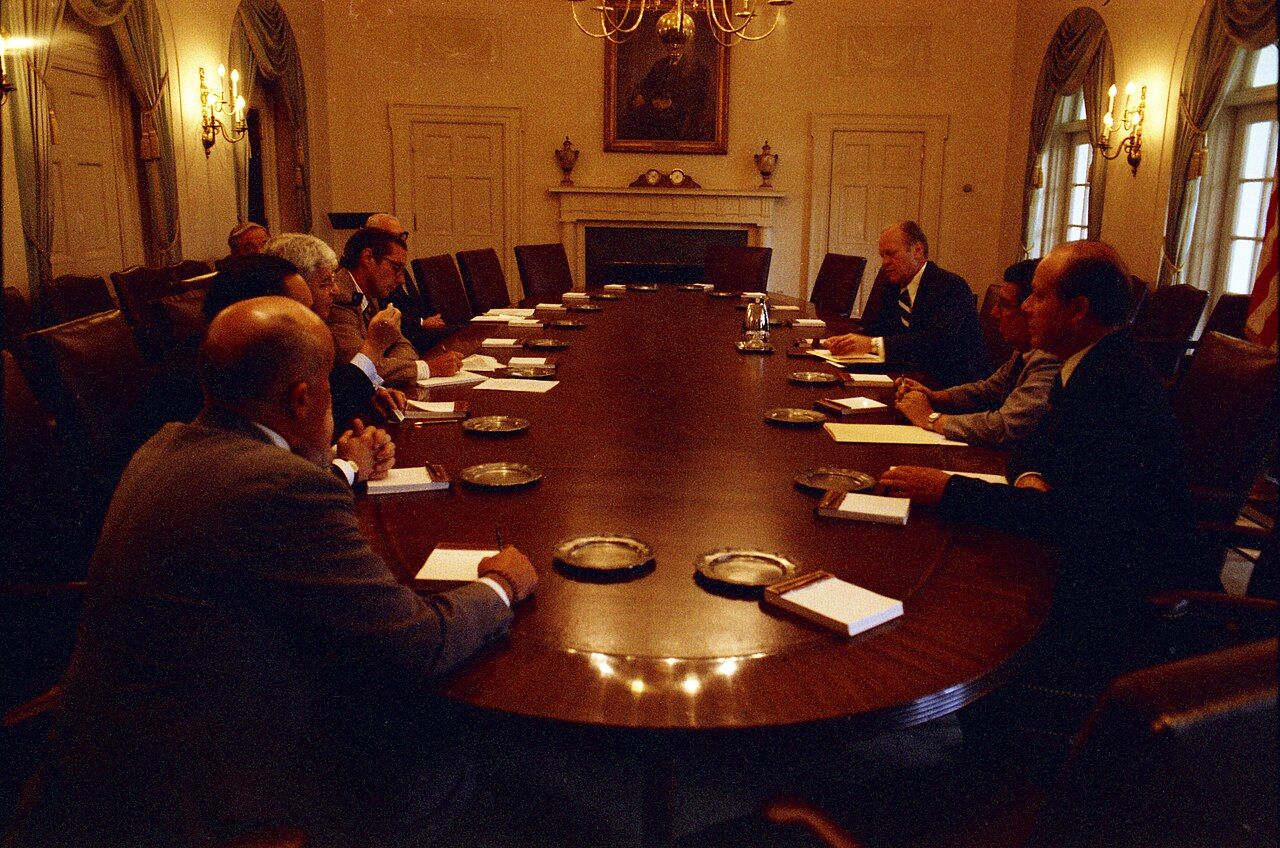
An agenda is a list of questions, not topics
“Scheduling” is not an agenda item. It is a subject heading, and a room full of people staring at a subject heading will produce forty minutes of anecdote. Write each item as a question the meeting must answer, with an owner, a time box and the decision rule. That single change is what lets the group tell when an item is finished, which is the only thing that reliably ends it.
| Topic-list agenda (weak) | Question agenda (strong) |
|---|---|
| 1. Scheduling | 1. Do clinical hours move to Tuesdays for the fall block? — Ana, 15 min — Decision: I decide after hearing objections. |
| 2. Orientation packet | 2. Which three items get cut from the orientation packet to fit 30 minutes? — Dev, 10 min — Decision: majority vote. |
| 3. Falls | 3. Do we have enough data to say falls cluster at shift change, or do we need two more weeks? — Priya, 10 min — Decision: consensus; if none by 3:40, defer. |
| 4. Other business | 4. Anything that must be decided before the 14th? — all, 5 min. Everything else to the parking lot. |
Send it in advance with any pre-reading attached, and say what people must have read. If a meeting exists only to transmit information that could be read, it should be an email — the test for whether a meeting is warranted is whether it requires people to react to each other in real time.
Facilitating: six moves that carry almost any meeting
First, open with the purpose sentence so nobody has to infer it: “By 3:45 we need one decision — whether clinical hours move to Tuesdays. I’ll decide after I’ve heard the objections, so the useful thing right now is objections.” Second, gatekeep deliberately. “Any questions?” reliably produces silence; a named, specific invitation does not: “Priya, you run Tuesdays — what breaks if we do this?” Third, park the tangents visibly so people can let go of them: “That’s a real issue and it’s not this decision. Parking lot, and I’ll bring it to the 14th.”
Fourth, time-check out loud: “Six minutes left on this item — do we decide or defer?” Fifth, summarize decisions as they land, in the room, in the exact words that will appear in the notes. Sixth, close with owners and dates. The last ninety seconds of a meeting are worth more than the middle twenty minutes: “Decision: Tuesdays, starting the fall block. Dev sends the revised packet by the 9th. Priya pulls two more weeks of falls data and reports on the 14th. Anything I got wrong?”
Online and hybrid meetings need the same moves with sharper edges. Call the name before the question, since remote participants cannot read the room’s eye contact. Decide out loud whether the chat is a real channel — if you are not going to read it, say so. Use round-robins rather than open floor, because unmuting has a cost that silence does not. And be explicit about cameras: a stated norm (“cameras optional, speak up when you have something”) beats a resentful unstated one.
Group presentations that do not sound like five solo speeches
The most common failure in a graded group presentation is five competent individual talks bolted together, with no shared thesis and four dead seams. Fix it upstream: build one outline before anyone builds slides. The group should be able to state a single sentence — “Falls on our unit cluster at shift change, and two low-cost changes cut them” — and every speaker’s section should visibly serve it.
Then script the handoffs, because that is where audiences (and rubrics) judge coherence. Weak: “Okay, um, so that’s my part. Devon?” Strong: “So the spike is at shift change, and it is not random. Devon is going to show you what two other units did about it — and one of them didn’t work.” The strong version summarizes, forecasts and hands the audience a reason to keep listening, in one breath and about four seconds.
Rehearse standing up, with the transitions and the timing, at least twice with the whole group. Assign question traffic before you present: “I take questions on the data, Devon takes implementation, Ana takes cost. If it’s outside all three, I’ll take it and we’ll follow up.” Agree on rescue lines for the two predictable emergencies. If a teammate blanks: “Let me add one thing to that while you pull the slide up.” If a teammate runs long: the timekeeper stands, and the next speaker opens with “We’re going to skip ahead to the part you asked about.” Nobody in the audience knows what you cut unless you announce it as a failure.
Write agendas as questions with owners and a decision rule, close every meeting with owners and dates, and in a group presentation rehearse the seams — the handoffs are where coherence is won or lost.
Section 5Workplace Communication: Interviews, Handoffs, Speaking Up and Messages
Interviews: stop describing yourself, start telling one story
Behavioral interview questions — “tell me about a time when” — are built on the premise that past behavior predicts future behavior. The trap is answering them in the present tense with adjectives. STAR (Situation, Task, Action, Result) keeps you in a single, dated, specific event, and the Result is the part most candidates leave off.
Question: “Tell me about a time you dealt with conflict on a team.”
Weak answer: “I’m really a people person, so honestly conflict doesn’t bother me. I always try to hear both sides and stay positive, and usually people appreciate that. I think communication is the key to everything.” (No event, no action, no result — the interviewer has nothing to write down.)
Stronger answer: “Last spring I was on a four-person capstone team, and two members stopped talking to each other after a disagreement over the data section. We were nine days out and I was the one who had to merge the sections, so getting them working again was my problem to solve. I asked each of them separately what outcome they actually wanted — turned out they agreed on the analysis and disagreed on who would present it. I proposed splitting the section by content instead of by person, and put it in writing that night so nobody had to reopen it. We submitted a day early and got the highest grade in the section. Since then I write the split down before the work starts, not after.”
Notice the ratio: one sentence of situation, one of task, two of action, one of result, and one line of what the person learned. The action sentences are the ones the interviewer is scoring, so they carry the detail. Also prepare the opener — “tell me about yourself” is not an invitation to autobiography. Use present, past, future in about sixty seconds: what you do now, the one or two experiences that qualify you, and why this specific role is the next step. And arrive with two questions of your own that could not be answered by the website; asking “what does someone need to do in the first ninety days for you to feel good about this hire?” does more for you than any answer you give.
Handoffs, read-backs and structured speech
When information moves between people, it degrades. SBAR (Situation, Background, Assessment, Recommendation) came out of the US nuclear submarine service, where urgent reports had to be compressed into a fixed order, and was adapted for health care at Kaiser Permanente to stop that degradation. It works just as well for an IT outage, a facilities problem or a student escalating an issue to an instructor. The format front-loads the point and ends with an explicit ask — the two things rambling reports lack.
| Part | Unstructured handoff (weak) | SBAR (strong) |
|---|---|---|
| S — Situation | “So, room 12 — he’s been kind of off all afternoon? He came in Tuesday, I think for the pneumonia thing, and the family was here earlier and they were asking a lot of questions. His numbers looked okay this morning. Anyway he seems more tired now. I don’t know, I just wanted to mention it.” | “This is Dana on 4 West calling about Mr. Alvarez in 12. He’s more short of breath in the last two hours.” |
| B — Background | “He was admitted Tuesday with community-acquired pneumonia, day three of antibiotics, history of heart failure.” | |
| A — Assessment | “Respiratory rate is up from 18 to 28, oxygen saturation dropped from 95 to 89 on room air, and he has new crackles at the bases. I think he’s worsening.” | |
| R — Recommendation | “I’d like you to come see him now, and I’d like an order for oxygen and a chest film. Can you be here in ten minutes?” |
The same skeleton, outside a hospital: “Situation: the shared drive has been down since 1:40 and eleven people can’t submit. Background: it went down after this morning’s update. Assessment: I think the update is the cause because the two machines that skipped it still connect. Recommendation: can we roll back the update on one machine to test, and can you tell people the deadline moves to Monday?”
Pair structured reports with closed-loop communication — name the person, state the instruction, have it repeated back, and confirm the read-back was right. Weak: “Somebody grab the second unit.” Strong: “Marcus, please hang the second unit of packed cells.” “Hanging the second unit of packed cells now.” “Thank you.” That last beat — the confirmation that the read-back was correct — is the part people skip, and it is the part that catches errors.
Speaking up when the stakes are high
The reason smart people stay quiet about obvious problems is rarely ignorance or cowardice. It is the authority gradient: the steeper the perceived rank difference, the more the junior person softens the message into a hint, and the more the senior person filters the hint out as noise. “Are you sure about that dose?” is a hint. Under time pressure, hints do not survive.
Graded assertiveness gives you a ladder of pre-written sentences that escalate in force, so you do not have to invent language while adrenaline is running. The widely taught CUS script supplies the top three rungs — concerned, uncomfortable, safety issue — and a curious question makes a natural rung below them. The two-challenge rule says that if you have raised a concern twice and received no meaningful response, you are obligated to go up the chain or stop the activity — and that doing so is expected, not insubordinate.
Step 1, curious question: “Help me understand the plan for the potassium — I may be missing something.” Step 2, state the concern (C): “I’m concerned. The last potassium was 5.8 and this order adds more.” Step 3, uncomfortable (U): “I’m uncomfortable giving this without a repeat level.” Step 4, safety (S): “This is a safety issue. I’m holding the dose until we recheck it, and I’m calling the charge nurse.” Rehearse these out loud once, in a calm room, and they will be available to you in a loud one.
Messages that carry tone: email, chat and voicemail
Writing that will be read at speed behaves like speech, and it fails the same way. In one widely cited experiment on email, senders predicted their intended tone — sarcasm, humor, seriousness — would be identified about eight times in ten; recipients actually identified it closer to half the time, while the same messages spoken aloud fared far better. Whatever the exact numbers, the direction is the useful part: you systematically overestimate how clearly your tone lands in text, because you can hear yourself saying it and the reader cannot.
Three habits follow. Put the ask first (bottom line up front) with a deadline. Keep one request per message. And when a thread turns emotional, escalate the channel — move from text to voice to in-person — rather than escalating the volume.
Weak email. Subject: “Quick question”. Body: “Hi — hope you’re well! I was looking at the schedule and I noticed some things that seemed off, and I also had a thought about the orientation packet, plus I wanted to circle back on the falls data when you get a chance. Let me know your thoughts!”
Stronger email. Subject: “Approve Tuesday clinical hours — need your yes by Thursday noon”. Body: “Ana — I need one approval: moving clinical hours to Tuesdays for the fall block. Two of three preceptors have confirmed availability; the third replies Wednesday. If you approve by Thursday noon, I’ll publish the schedule Friday. Two other items (orientation packet, falls data) are on the agenda for the 14th — nothing needed from you before then. Thanks, Dana.”
Voicemail has its own formula, because the listener is often writing your number down while your message plays: name and number first, one sentence of purpose, the specific ask, then the number again slowly. “Ana, it’s Dana Whitfield, 555-0148. I need your approval on Tuesday clinical hours before Thursday noon. A one-line reply by email is fine. Again, Dana Whitfield, 555-0148.”
One caution worth stating plainly: workplaces differ in how directly people are expected to disagree, how much context precedes a request, and how much silence means. Some of that varies by national and organizational culture, some by profession, some purely by individual. Broad frameworks such as high-context and low-context communication styles can sensitize you to the possibility that your directness reads as rudeness or your politeness reads as evasion. They are not a lookup table for predicting a specific colleague, and treating them that way is its own error. Watch the person in front of you, and when in doubt, ask how they prefer to receive things.
Professional communication runs on structure — STAR for interview stories, SBAR and read-backs for handoffs, graded assertiveness for safety concerns, and one clear ask with a deadline for anything written.
The chapter in one breath
Every message carries content and a relational signal, and it is almost always the relational signal that starts fights — which is why the fundamental repair move is swapping a judgment about a person for a description of a behavior, plus a request. Confirming responses cost nothing and buy enormous goodwill; specificity, not softness, is what makes them land. Assertiveness sits between the two failure modes of hiding the message and weaponizing it, and it ends in something dated and checkable. Feedback works when it names an event rather than a category, and apologies work only when they name the behavior, name the impact, take responsibility without an excuse, and state the repair. Groups multiply relationships faster than hands, so they need identifiable contributions, written norms, roles named as behaviors, and a decision rule announced before the discussion rather than discovered after it. Meetings run on questions, owners and dates; group presentations are won at the seams. And at work, structure carries you: STAR, SBAR, closed-loop read-backs, graded assertiveness, and one clear ask with a deadline in anything you type.
Words worth knowing
| Term | What it means |
|---|---|
| Content dimension | The literal information in a message — the words and their plain meaning. |
| Relational dimension | The simultaneous message about the relationship, carried in tone, timing, face and word choice. |
| Metacommunication | Talking about the communication itself, usually to interrupt a pattern that is going badly. |
| Communication climate | The emotional weather of a relationship or team — whether it feels safe to speak honestly. |
| Confirming response | A message that recognizes, acknowledges or endorses the other person’s presence and worth. |
| Disconfirming response | A message that treats the other person as irrelevant — ignoring, deflecting or answering with a cliche. |
| Gibb’s pairs | Six defensive behaviors (evaluation, control, strategy, neutrality, superiority, certainty) each matched to a supportive alternative. |
| XYZ statement | “When you do X, in situation Y, I feel Z” — description plus feeling plus request, instead of a character verdict. |
| Assertiveness | Stating a need or boundary clearly while leaving the other person’s dignity intact. |
| DESC script | Describe, Express, Specify, Consequences — a four-part frame for actionable feedback. |
| Repair attempt | Any move that interrupts an escalating conflict: a question, a partial concession, or a break with a stated return time. |
| Social loafing | The drop in individual effort as group size grows, especially when individual contributions are invisible. |
| Norms | The written or unwritten rules a group operates by; a team charter makes them explicit early. |
| Task, maintenance and self-centered roles | Behaviors that move the work forward, protect the relationships, or serve one member at the group’s expense. |
| Groupthink | Janis’s term for premature convergence on agreement over realistic appraisal; countered by structured dissent and independent judgments. |
| Decision rule | The stated method for reaching a decision — consensus, majority, expert, or authority after discussion — announced before the discussion. |
| Parking lot | A visible list where off-topic but real issues are recorded so the group can release them and continue. |
| STAR | Situation, Task, Action, Result — the structure for answering a behavioral interview question with one specific event. |
| SBAR | Situation, Background, Assessment, Recommendation — a structured handoff that front-loads the point and ends with an explicit ask. |
| Closed-loop communication | Naming the person, giving the instruction, receiving a read-back, and confirming it was correct. |
| Graded assertiveness | A pre-written escalation ladder (for example, concerned, uncomfortable, safety issue) used to raise a concern across an authority gradient. |
| Two-challenge rule | The expectation that a concern raised twice without a meaningful response must be escalated or the activity stopped. |