Sociological Research
Sociology is not opinion, and it is not common sense dressed up in long words. It is a science — a disciplined way of asking questions about human social life and answering them with evidence rather than hunches. This chapter walks through how sociologists actually do their work: how they turn a curiosity into a testable question, how they gather data through surveys, fieldwork, experiments, and existing records, and how they reason from what they find. Along the way you will meet the three great theoretical lenses that shape which questions get asked, and the ethical rules that protect the people who agree to be studied. Master this chapter and every claim in the rest of the book stops being something to memorize and becomes something you can interrogate.
By the end of this chapter you can
- Describe the steps of the scientific method as sociologists apply them, and distinguish a theory from a hypothesis.
- Explain how the three theoretical paradigms shape which research questions get asked.
- Design a survey and explain sampling, representativeness, and generalizability.
- Compare participant observation and ethnography, and weigh the trade-offs of field research.
- Explain how experiments establish causation and how secondary data analysis reuses existing evidence.
- Distinguish reliability from validity, and correlation from causation.
- Apply the core principles of research ethics: value neutrality, informed consent, confidentiality, and protection from harm.
- Explain how historical abuses such as the Tuskegee study reshaped today's ethical safeguards.
Section 1The research process

From common sense to social science
Everyone has theories about people. Why do the poor stay poor? Why do some marriages last? Common sense offers quick, confident answers — and it is wrong a great deal of the time. The whole point of sociology, a term coined by Auguste Comte in the 1830s, is to replace the confident guess with empirical evidence: information we can observe, measure, and check. Comte's positivism held that the social world, like the physical world, obeys discoverable patterns and can be studied with the methods of science. When Émile Durkheim set out to explain suicide — seemingly the most personal, private act imaginable — he did not speculate. He gathered official death records across regions and religions and found stable, predictable rates: Protestants died by suicide more often than Catholics, the unmarried more than the married, soldiers more than civilians. Something social, not merely individual, was at work. That study is the founding demonstration that human behavior leaves patterns a researcher can find.
The scientific method, step by step
Sociologists follow the same broad logic as any scientist, adapted to a subject that talks back. The process usually runs in this order: define the problem as a clear, answerable question; review the literature to see what is already known; state a hypothesis; give each idea an operational definition so it can actually be measured; collect data using a chosen method; analyze the results; and draw a conclusion, then report it so others can replicate the work. A study nobody can repeat is a story, not a finding. Central to the design are variables — things that change. The independent variable is the presumed cause the researcher varies; the dependent variable is the outcome that may respond to it. Asking whether class size (independent) affects test scores (dependent) is answerable; asking whether schools are "good" is not, until "good" is operationalized.
Theory and hypothesis, and the lens you choose
Beginners mix these two words up, so pin them down. A theory is a broad, evidence-tested explanation of how facts relate to one another — Durkheim's theory that weak social bonds raise suicide risk. A hypothesis is a single, narrow, testable prediction drawn from a theory, usually stated as a relationship between variables: "communities with more civic organizations will have lower suicide rates." A theory is the map; a hypothesis is the specific route you test today. Researchers reach hypotheses two ways. Deductive reasoning starts with a theory and tests a prediction from it; inductive reasoning starts with observations and builds toward a theory. And which questions you even think to ask depends on your paradigm — the theoretical lens through which you view society. The three dominant paradigms send researchers looking for very different things.
| Paradigm | Core idea & key thinkers | Level | A question it asks about schooling |
|---|---|---|---|
| Structural functionalism | Society is a system of interlocking parts, each serving a function that keeps the whole stable (Durkheim; Merton) | Macro | What functions — teaching skills, sorting talent, socializing children — does school perform for society? |
| Conflict theory | Society is an arena of competition over scarce resources; institutions reflect the interests of the powerful (Marx) | Macro | How does schooling reproduce class and racial inequality across generations? |
| Symbolic interactionism | Society is built and rebuilt through the meanings people create in everyday interaction (Mead; Cooley; Goffman) | Micro | How do a teacher's expectations shape how a student sees, and labels, herself? |
Notice that no paradigm is "the true one." Each is a flashlight pointed at a different corner of the same room. A complete picture of schooling needs all three, which is why sociologists learn to switch lenses deliberately rather than defend one to the death.
- Sociology replaces common-sense guessing with empirical evidence gathered by the scientific method.
- A theory explains how facts relate; a hypothesis is one testable prediction, usually about an independent and a dependent variable.
- Operational definitions turn fuzzy ideas into measurable ones; replication tests whether a finding is real.
- The three paradigms — functionalism, conflict theory, symbolic interactionism — shape which questions a researcher asks.
Section 2Surveys
Questionnaires and interviews
The survey is the workhorse of sociology — the most common way to gather data from a large number of people. A survey collects self-reported answers using either a written questionnaire that respondents fill out themselves, or an interview in which a researcher asks the questions aloud. The two formats trade breadth against depth. A questionnaire mailed or posted online can reach thousands cheaply, but it cannot ask a follow-up or read a hesitation. An interview reaches fewer people at greater cost, but it can probe, clarify, and follow a surprising answer where it leads.
Question wording is a craft. Closed-ended questions offer fixed choices — yes/no, or a Likert scale running from "strongly agree" to "strongly disagree" — and produce tidy quantitative data that is easy to compare and count. Open-ended questions let respondents answer in their own words, yielding rich qualitative detail that is harder to tabulate. Interviews themselves range from structured (every respondent gets identical questions in identical order, for comparability) to unstructured (a guided conversation that adapts). Whatever the format, surveys battle a constant enemy: social-desirability bias, the human tendency to report the flattering answer rather than the true one. People overstate how often they vote, exercise, and give to charity, and understate how much they drink.
Sampling: studying a few to learn about many
No one can interview an entire country, so researchers study a sample — a manageable subset — and reason back to the whole population they care about. The magic is not in the size of the sample but in how it is chosen. A probability (random) sample gives every member of the population a known, non-zero chance of selection; when that chance is equal for everyone, it is a simple random sample. Done right, it produces a representative sample: a miniature of the population, mirroring its mix of age, income, region, and everything else. That is what lets a poll of 1,200 people estimate the views of a nation of millions to within a few percentage points. The opposite is a convenience sample — whoever is easy to reach — which is fast, cheap, and usually biased in ways you cannot see.
| Sampling approach | How members are chosen | Representative? | Can you generalize? |
|---|---|---|---|
| Simple random | Every person has an equal chance (a lottery) | Yes, if done well | Yes |
| Stratified random | Population split into groups, then sampled at random within each | Yes — often more precise | Yes |
| Convenience | Whoever is easy to reach — a mall, a class, a website | No | No — findings apply only to those sampled |
| Volunteer / self-selected | People opt in themselves | No — joiners differ from non-joiners | No |
Generalizability
Generalizability is the payoff of good sampling: the confidence that what is true of your sample is true of the population. It is earned by representativeness, not by sheer numbers — a lesson learned the hard way. In 1936 the magazine Literary Digest mailed out ten million mock ballots and predicted, from over two million replies, that Alf Landon would defeat Franklin Roosevelt. It was one of the largest polls in history, and it was catastrophically wrong. The names had been drawn from telephone directories and automobile registrations — luxuries that, in the depths of the Depression, skewed toward the wealthy. George Gallup, using a scientifically representative sample a fraction of the size, correctly predicted Roosevelt's landslide. The magazine folded soon after.
- A survey gathers self-reported data by questionnaire or interview; closed questions count easily, open questions go deep.
- Researchers study a sample to learn about a population; a probability sample can be representative, a convenience sample cannot.
- Generalizability comes from representativeness, not raw sample size.
- Surveys must guard against social-desirability bias in what people are willing to report.
Section 3Field research
Into the field: participant observation
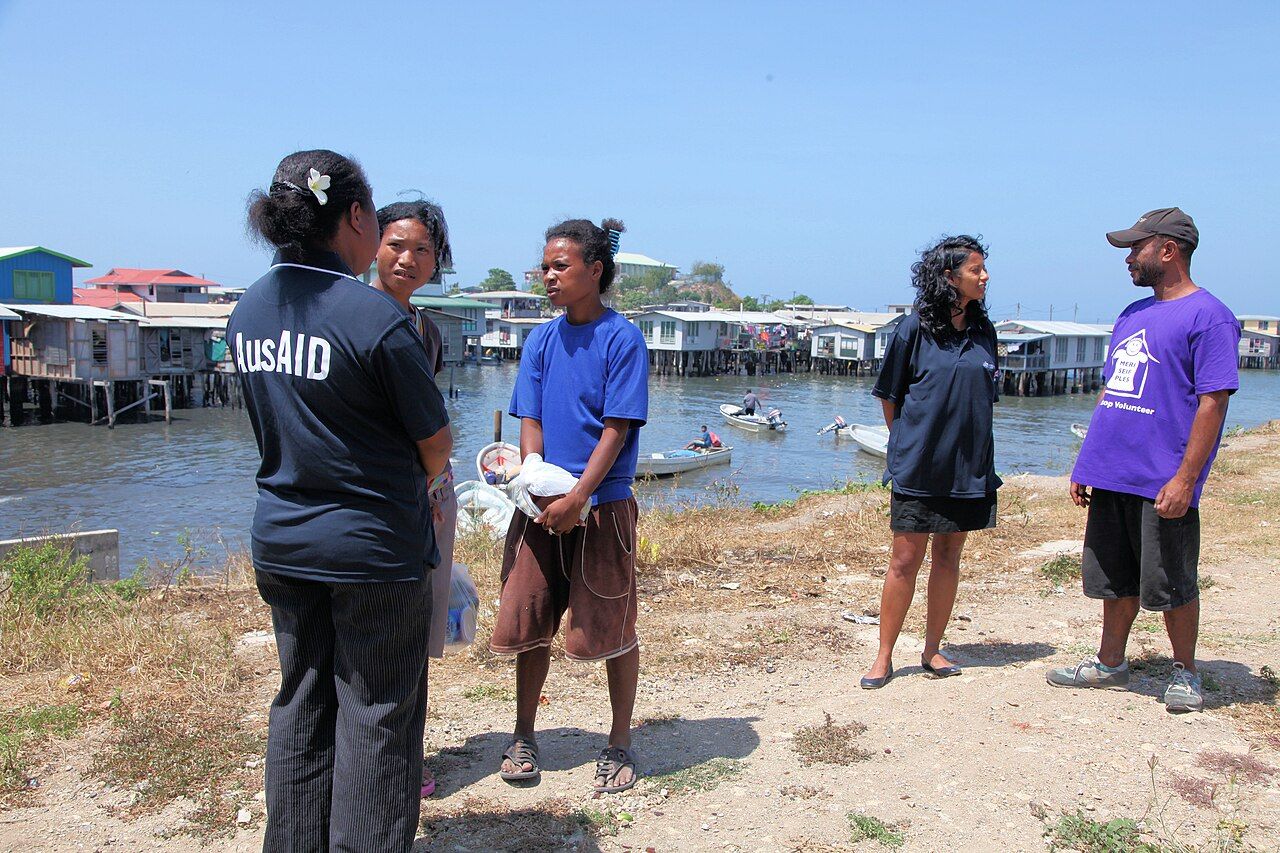
Some questions cannot be answered on a questionnaire. To understand how a street gang keeps order, how nurses cope with death, or how a religious commune sustains belief, a researcher has to be there. Field research is the study of people in their natural settings — the sidewalk, the shop floor, the waiting room — rather than in a lab or on a form. Its signature method is participant observation, in which the researcher joins the group being studied, taking part in daily life while systematically recording field notes. The classic example is William Foote Whyte's Street Corner Society, for which he spent years embedded with young men in an Italian-American neighborhood, learning their world from the inside. In nonparticipant observation, by contrast, the researcher watches without joining in — useful when participating would distort the very thing being studied.
Ethnography
Ethnography is field research at its most ambitious: the immersive, long-term study of an entire social setting or culture, aiming to describe it as its own members understand it. Borrowed from anthropology, where Bronisław Malinowski pioneered living among the people he studied, ethnography prizes thick description — capturing not just what people do but what it means to them. Erving Goffman's study of a mental hospital, Asylums, is a landmark of the form. Good ethnographers practice reflexivity: they examine how their own presence and background shape what they see. The occupational hazard is "going native" — identifying so completely with the group that critical distance is lost, and observation slides into membership.
Strengths and limits
Field research buys something no survey can: validity, the sense that you are measuring what really happens, in context, in its full messy detail. Its price is generalizability and reliability — the consistency that would let another researcher repeat the measurement and get the same result. One researcher's years in one neighborhood cannot be assumed to describe every neighborhood, and no one can exactly replicate a unique immersion. A study can be highly valid yet low in reliability, or the reverse; a good design seeks both. Field research is also slow, demanding, and vulnerable to the researcher's own bias. And it raises a sharp ethical edge: observing people who may not know they are being studied.
| Field method | What the researcher does | Key trade-off |
|---|---|---|
| Participant observation | Joins the group and takes part while recording field notes | Rich insider view, but risks reactivity and "going native" |
| Nonparticipant observation | Watches systematically without joining in | Less intrusive, but misses the insider's meaning |
| Ethnography | Immerses long-term to describe a whole culture or setting | Deep, contextual validity, but not generalizable or repeatable |
| Case study | Studies a single person, group, or event in exhaustive depth | Vivid detail, but one case may not represent others |
- Field research studies people in natural settings; participant observation joins the group, nonparticipant observation watches from outside.
- Ethnography is the deep, immersive study of a whole culture, prizing thick description and reflexivity.
- Field research delivers strong validity but weak generalizability and is hard to replicate.
- The Hawthorne effect — people changing because they are watched — threatens every observational study.
Section 4Experiments and secondary data
The experiment
Surveys and field research reveal patterns, but a pattern alone cannot prove that one thing causes another. To establish cause and effect, sociologists turn to the experiment: a controlled test in which the researcher deliberately changes one factor and watches what happens. The changed factor is the independent variable; the outcome measured is the dependent variable. The design's power comes from comparison. Participants are split, ideally by random assignment, into an experimental group that receives the treatment and a control group that does not. If the two groups were alike to begin with and differ only in the treatment, any difference in outcome can be credited to the treatment. Experiments may run in a laboratory, where control is tight but the setting artificial, or in the field, where realism is high but stray influences creep in. The famous Hawthorne studies were, in effect, a field experiment whose surprise result — the observation itself mattered — became a lesson in its own right.
Secondary data analysis
Not every study requires new data. Secondary data analysis mines information that already exists — government censuses, crime and health statistics, historical archives, court records, and the raw data from other researchers' surveys. It is fast, inexpensive, and often vast in scope: a lone scholar can analyze a national census that took thousands of workers to collect. Because the people involved are not reacting to a researcher in the room, secondary data is nonreactive (unobtrusive) — free of the Hawthorne effect. Durkheim's suicide study was itself a masterpiece of secondary analysis, built entirely from official records already on file. A specialized branch, content analysis, applies the same logic to texts and media — systematically coding advertisements, news stories, or song lyrics to reveal patterns, such as how gender roles are portrayed over time.
Strengths and limits of each
The experiment's gift is causation; its curse is artificiality and scale — you cannot randomly assign people to be rich or poor, and lab behavior may not match real life. Secondary data's gift is reach and low cost; its curse is fit — the data were gathered by someone else, for some other purpose, and may miss exactly the variable you need or define it in a way you would not have chosen.
| Method | What you do | Best for | Watch out for |
|---|---|---|---|
| Experiment | Change an independent variable; compare experimental and control groups | Establishing cause and effect | Artificial settings; many social variables can't be assigned |
| Secondary data analysis | Analyze existing records, statistics, or archives | Big-picture patterns, trends over time, low cost | Data fit the original purpose, not yours; gaps and coding issues |
| Content analysis | Systematically code texts, images, or media | Patterns in culture and communication | Coding choices can inject the researcher's bias |
- An experiment tests causation by comparing an experimental group and a control group, ideally with random assignment.
- Secondary data analysis reuses existing records; it is cheap, wide-reaching, and nonreactive.
- Content analysis is secondary analysis applied to texts and media.
- Correlation alone never proves causation; a third variable may drive both.
Section 5Research ethics
Value neutrality
Sociologists study things they care about — poverty, racism, crime — and caring can quietly bend a study toward the answer the researcher hoped to find. Max Weber insisted that scholars practice value neutrality (in German, Wertfreiheit): keeping personal values and politics from distorting the design, conduct, and interpretation of research. Value neutrality does not mean having no values, and it does not forbid studying injustice; it means being honest and transparent, following the evidence even when it contradicts your beliefs, and disclosing your assumptions so others can judge them. The goal is not a researcher without a heart, but a method that does not let the heart forge the data.
Informed consent and voluntary participation
People are not lab rats, and the modern rules exist to keep them from being treated as such. Informed consent requires that participants understand what the study involves, including its risks, and agree to take part freely. Voluntary participation means no one is coerced and anyone may withdraw at any time. Researchers protect identities through confidentiality (the researcher knows who said what but does not reveal it) or, more strongly, anonymity (not even the researcher can link answers to a name). Deception is discouraged and, where unavoidable, must be minimal and followed by a debriefing. In the United States, the American Sociological Association publishes a Code of Ethics, and virtually all research with human subjects must first be approved by an Institutional Review Board (IRB) that weighs risks against benefits before a single participant is recruited.
Protecting subjects: lessons written in harm
These safeguards were not born in the abstract; they were written in response to real damage. The Tuskegee syphilis study (1932–1972) deceived roughly 600 poor Black men in Alabama, leaving hundreds with untreated syphilis and withholding penicillin even after it became the standard cure — all to observe the disease's course. Stanley Milgram's obedience experiments and Philip Zimbardo's Stanford prison study inflicted serious psychological distress under deception. Laud Humphreys' Tearoom Trade covertly observed private behavior and traced participants to their homes. Public outrage over Tuskegee led to the National Research Act and the Belmont Report, whose three principles — respect for persons, beneficence, and justice — anchor research ethics and the IRB system today.
| Ethical principle | What it requires | What a violation looks like |
|---|---|---|
| Informed consent | Participants understand the study and its risks before agreeing | Tuskegee subjects were never told they had syphilis |
| Voluntary participation | No coercion; participants may quit at any time | Pressuring students or prisoners who cannot easily refuse |
| Confidentiality / anonymity | Identities and answers are protected | Publishing details that reveal who a respondent is |
| Protection from harm | Minimize physical and psychological risk | The lasting distress caused in the Stanford prison study |
| Value neutrality | Keep personal bias from shaping the findings | Designing a study so it can only confirm your politics |
- Value neutrality (Weber) means keeping personal bias out of the research, not pretending to have no values.
- Informed consent, voluntary participation, and confidentiality or anonymity protect the people studied.
- An IRB reviews studies in advance, guided by the Belmont Report: respect for persons, beneficence, justice.
- Modern safeguards were written in response to abuses like the Tuskegee study, Milgram, and Zimbardo.
The chapter in one breath
- Sociology is a science: it answers questions about social life with the scientific method and empirical evidence, not common sense.
- A theory explains how facts relate; a hypothesis is one testable prediction linking an independent to a dependent variable.
- The three paradigms — functionalism, conflict theory, symbolic interactionism — decide which questions get asked.
- Surveys reach many people by questionnaire or interview; a probability sample earns generalizability, a convenience sample does not.
- Field research and ethnography deliver deep validity in natural settings but sacrifice generalizability and are shadowed by the Hawthorne effect.
- Experiments establish causation with experimental and control groups; secondary data analysis reuses existing records cheaply and unobtrusively.
- Correlation is never proof of causation, and all research is bound by ethics: value neutrality, informed consent, confidentiality, and protection from harm.
ReferenceWords worth knowing
A quick reference for the terms in this chapter — skim it now, or circle back whenever a word trips you up.
- Control group
- The participants in an experiment who do not receive the treatment, used as a baseline for comparison.
- Correlation
- A relationship in which two variables change together; it does not, by itself, prove causation.
- Dependent variable
- The outcome a study measures — the factor that may respond to the independent variable.
- Ethnography
- The immersive, long-term study of a whole social setting or culture from its members' point of view.
- Experiment
- A controlled test of cause and effect in which a researcher varies an independent variable and compares groups.
- Field research
- The study of people in their natural, everyday settings rather than in a lab or on a form.
- Generalizability
- The extent to which findings from a sample can be applied to the larger population.
- Hypothesis
- A specific, testable prediction, usually stated as a relationship between variables.
- Independent variable
- The factor a researcher changes or presumes to be the cause of an outcome.
- Informed consent
- A participant's free agreement to take part after understanding the study and its risks.
- Operational definition
- A precise statement of how an abstract concept will be measured in a given study.
- Participant observation
- Field research in which the researcher joins the group being studied while recording observations.
- Population
- The entire group a researcher wants to understand and draw conclusions about.
- Positivism
- Comte's view that society can be studied scientifically to discover observable, law-like patterns.
- Probability sample
- A sample in which every member of the population has a known, non-zero chance of selection; when every chance is equal, it is a simple random sample.
- Reliability
- The consistency of a measure — whether it yields the same result when repeated.
- Sample
- The subset of a population that is actually studied.
- Secondary data analysis
- Research that analyzes existing data, such as censuses, archives, or other studies' records.
- Survey
- A method that gathers self-reported data from many people via questionnaire or interview.
- Theory
- A tested, evidence-based explanation of how and why facts are related.
- Validity
- Whether a measure actually captures the concept it claims to measure.
- Value neutrality
- Weber's principle of keeping personal values and bias from distorting research.