Applied Ethics
What Ethics Is, and What It Is Not
Somewhere in your working week there is a moment nobody trained you for. A family asks you to keep a diagnosis from their mother. A supervisor tells you to chart something you did not personally verify. A colleague cuts a corner that saves forty minutes and probably harms no one. You already know these moments feel different from ordinary problems, and you already have instincts about them. What you may not have is a vocabulary precise enough to explain those instincts to someone who disagrees, or to check whether they are worth trusting. That is the job of this chapter and this book. We begin by drawing a boundary: ethics is the systematic study of how we ought to act and what kind of people we ought to become — and it is not law, not religion, not custom, not etiquette, not compliance, and not simply how you feel about a thing at eight in the morning after a bad shift.
By the end of this chapter you can
- Distinguish descriptive ethics, normative ethics, metaethics and applied ethics, and sort a given question into the right one.
- Explain how the words ethics and morality are used in professional settings, and why that split is a useful convention rather than a discovery about the world.
- Show, with at least one historical case each, why ethics cannot be reduced to law, religion, custom, etiquette, feeling or compliance.
- State Hume’s law (the is–ought gap) and G. E. Moore’s naturalistic fallacy, and identify them in everyday arguments.
- Summarise the Euthyphro dilemma and say precisely what it does and does not establish about divine command theory.
- Map the three main families of normative theory — consequentialism, deontology and virtue ethics — onto the questions each answers best.
- Use the language of obligation accurately: obligatory, permissible, forbidden, supererogatory, prima facie duty, moral status, rights and correlative duties.
- Tell a genuine moral dilemma apart from moral distress, moral uncertainty and moral injury.
- Explain why professional codes function as floors rather than ceilings, drawing on the 1932–1972 Tuskegee study and the 1986 Challenger launch decision.
Section 1The Study of the Ought
A subject defined by a single question
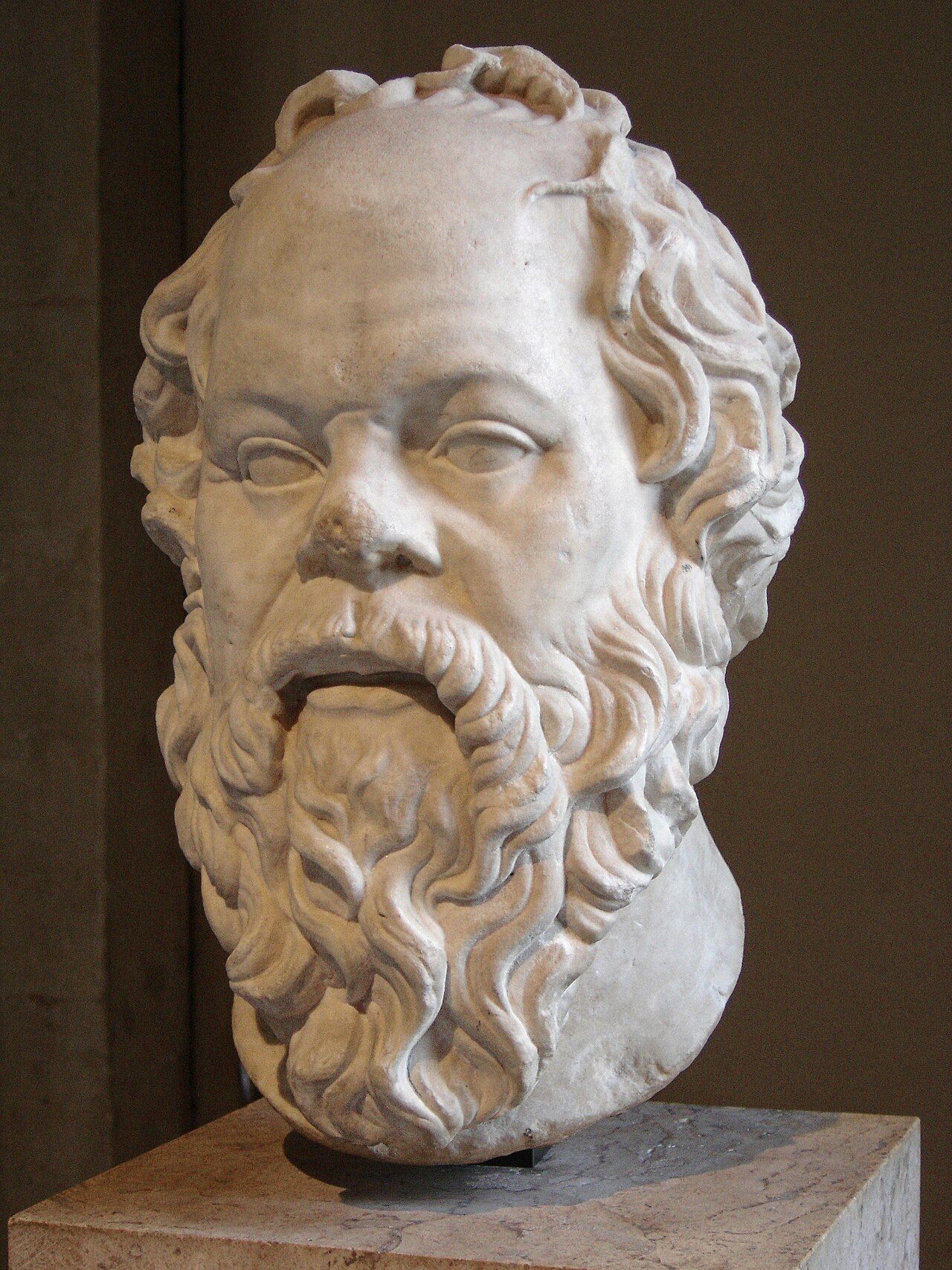
In Book I of Plato’s Republic, written around 375 BCE, Socrates stops an argument to remind his companions what is actually at stake. They are not debating a small matter, he says, but how a person ought to live. That sentence is the whole discipline in miniature. Ethics is the branch of inquiry that takes seriously the difference between what is the case and what ought to be the case — between describing how people behave and judging how they should. Physics, epidemiology and accounting are all in the business of description. Ethics is in the business of the ought.
That may sound abstract until you notice that almost every serious disagreement at work is an ought disagreement wearing a disguise. Two nurses agree completely about the patient’s creatinine, the family’s wishes and the hospital’s staffing ratio, and still disagree about what to do. No additional fact will settle it. What they need is a way to reason about the ought itself: to say what makes an action right, whose interests count, how much they count, and what to do when the answers pull in different directions. Ethics supplies that machinery. It does not supply certainty, and any book that promises certainty is selling something.
A word about the two nouns. Morality and ethics come from nearly identical roots — Latin mores and Greek ethos, both meaning custom or character — and most philosophers use them interchangeably. In professional and clinical settings a convention has grown up that is worth adopting because it is convenient, not because it is deep: morality names the actual norms a person or community lives by, while ethics names the systematic, critical reflection on those norms. On that convention, everyone has a morality; ethics is what happens when you hold it up to the light and ask whether it survives inspection.
Four kinds of question, four branches
Confusion in ethics is very often a category error — two people answering different questions and each wondering why the other is being obtuse. Four branches of inquiry are usually distinguished, and learning to name them will save you hours. Descriptive ethics is empirical: it asks what people actually believe and do, and it belongs to anthropology, sociology and psychology. When Gallup reports that roughly seven in ten American adults say doctors should be allowed to end a terminally ill patient’s life by painless means at the patient’s request, that is descriptive ethics. It tells you about a population, not about whether aid in dying is permissible.
Normative ethics asks the ought question directly: what makes actions right or wrong, and what general standard should guide us? This is the home of the great theories — utilitarianism, Kantian duty ethics, virtue ethics — and it occupies Chapters 3 through 6. Metaethics steps back further and asks about the status of moral claims themselves. When you say “torturing prisoners is wrong,” are you stating a fact that could be true or false, or expressing an attitude? Are there moral truths independent of what any culture believes? Chapter 7 lives here. Applied ethics — the reason this book exists — brings the tools to bear on concrete domains: clinical care, business, technology, the environment.
The branches interlock. A committee arguing about a ventilator allocation protocol is doing applied ethics, but its members are leaning on normative theories they may not have named, and their disagreement may turn out to be metaethical. Knowing which floor of the building you are on is the first practical skill this course teaches.
| Branch | The question it asks | A sample question | Who does it |
|---|---|---|---|
| Descriptive ethics | What do people actually believe and do? | What proportion of nurses report having falsified a chart entry? | Psychologists, sociologists, anthropologists |
| Normative ethics | What ought we to do, and why? | Is it ever right to deceive a patient for their own good? | Moral philosophers |
| Metaethics | What are moral claims, and can they be true? | Is “cruelty is wrong” a fact or an expression of feeling? | Philosophers of language and mind |
| Applied ethics | How do the general standards resolve this case? | Should this hospital ration ICU beds by predicted survival? | Clinicians, ethicists, lawyers, engineers, committees |
Why you cannot squeeze an ought out of an is
In 1740, in Book III of A Treatise of Human Nature — the volume on morals, which appeared a year after the first two — David Hume noticed something about the moral arguments of his contemporaries. They would proceed for pages in the ordinary way, making claims about what is and is not the case, and then, imperceptibly, the verbs would change: suddenly every sentence was about what ought to be. Hume asked, mildly, how this new relation had been deduced from the old ones. Nobody had an answer. The point has been known ever since as Hume’s law or the is–ought gap: no set of purely factual premises entails an evaluative conclusion without at least one evaluative premise smuggled in.
In 1903, in Principia Ethica, G. E. Moore sharpened a related complaint into what he called the naturalistic fallacy: the mistake of defining goodness in terms of some natural property such as pleasure, or survival, or what evolution selected for. His test was the open question argument. If “good” simply meant “pleasant,” then asking “this is pleasant, but is it good?” would be as empty as asking “this is a bachelor, but is he unmarried?” It is not empty. The question stays open, which suggests the two terms are not identical. Philosophers still argue about how much Moore proved, but the practical lesson is durable.
You will meet the gap constantly. “It is natural, so it is fine.” “Everyone does it, so it cannot be wrong.” “The algorithm found this pattern in the data, so we should act on it.” Each of these leaps from a description to a prescription and hopes you will not notice the seam. Facts matter enormously in ethics — you cannot reason well about opioid prescribing without knowing pharmacology — but they never do the work alone.
Ethics is the disciplined study of what we ought to do and become, and its central logical feature is that no pile of facts, however large, yields an ought without a stated value premise.
Section 2Six Things Ethics Is Not
Not law, and not compliance
The most common confusion is the easiest to dispel. Law and ethics overlap heavily — both prohibit assault and fraud — but they come apart in all four possible ways. Some things are legal and wrong: the Fugitive Slave Act of 1850 required citizens of free states to assist in returning escaped enslaved people, and the Nuremberg Laws of 1935 were duly enacted German statutes. Some things are illegal and right, or at least defensible: when Rosa Parks refused to surrender her seat in Montgomery on 1 December 1955, she was breaking a valid municipal ordinance. Some things are both, and some are neither.
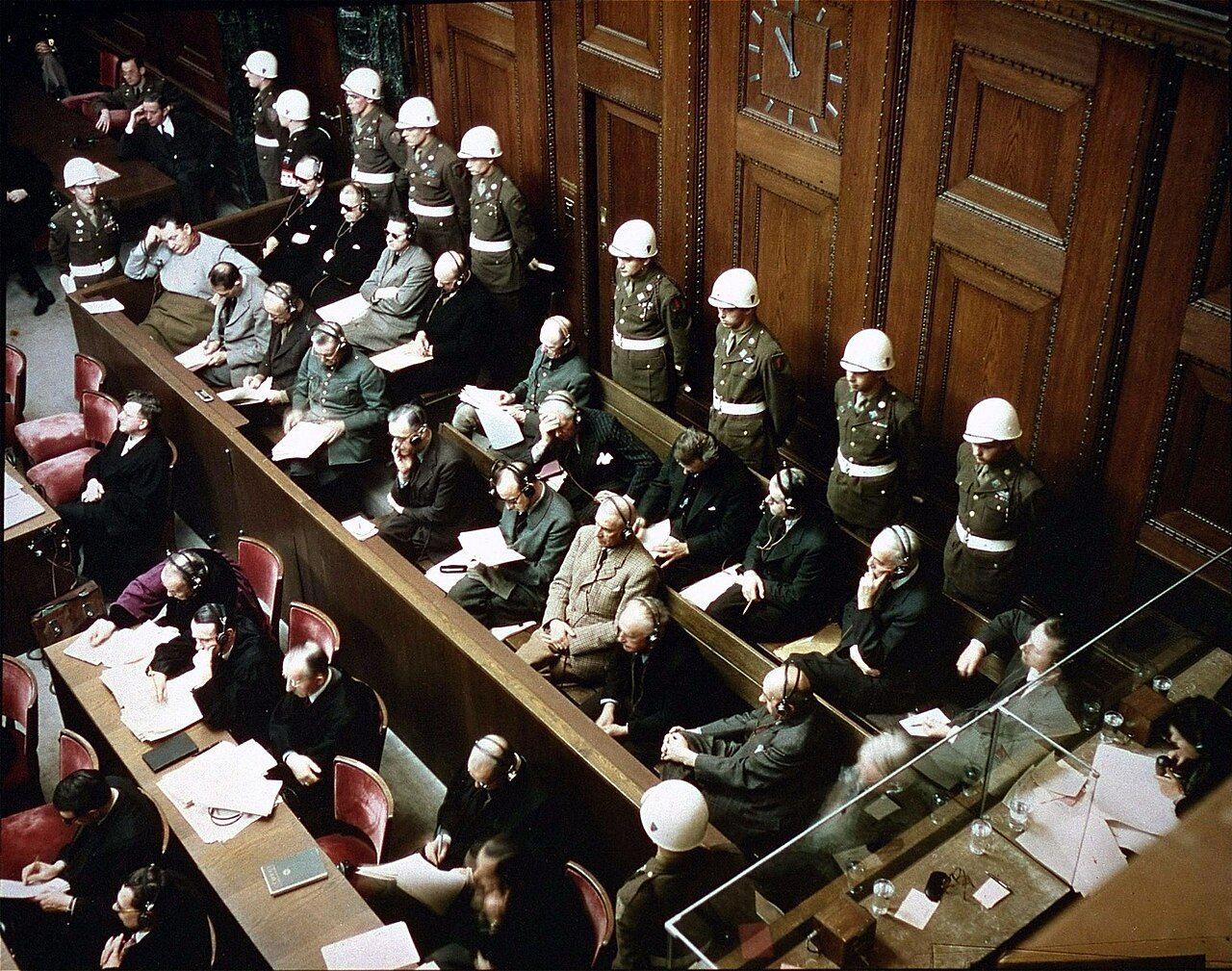
The Nuremberg Doctors’ Trial of 1946–47 forced this into legal doctrine. Twenty-three German physicians and administrators were tried for experiments on concentration camp prisoners; several argued that no German law had forbidden what they did and that no international code of research ethics existed. The tribunal answered by writing one. The Nuremberg Code of 1947 opens with the sentence that the voluntary consent of the human subject is absolutely essential. It had no direct statutory force anywhere, and it changed research worldwide, which tells you something about where moral authority actually comes from.
A modern cousin of this confusion is treating ethics as compliance — the belief that if you have completed the annual training module and followed policy, you have behaved ethically. Enron had a sixty-four-page code of ethics. In 1999 its board voted twice — in June and again in October — to waive that code so that chief financial officer Andrew Fastow could run the off-books partnerships that helped conceal the company’s debt; the firm filed for bankruptcy in December 2001, costing thousands of employees their jobs and much of their retirement savings. A code you can suspend when it becomes inconvenient is not a moral commitment. It is paperwork.
Not religion, though religions carry ethics
Most of the world’s moral traditions have been transmitted inside religious ones, and it would be both false and ungrateful to pretend otherwise. But ethics as a discipline is not identical to any theology, for two reasons. The first is practical: a nurse in a public hospital in a religiously plural society must be able to justify a decision to a Catholic family, a Muslim family, a Hindu family and an atheist family in terms all of them can evaluate. Shared moral reasoning is the only common currency available.
The second reason is older and sharper. In Plato’s dialogue Euthyphro, set outside the Athenian courts around 399 BCE, Socrates asks a young man who claims expertise in piety a devastating question: is what is holy loved by the gods because it is holy, or is it holy because the gods love it? This is the Euthyphro dilemma, and it presses on any divine command theory that defines rightness simply as what God commands. Take the first horn and there is a standard of goodness independent of the command, which the command tracks. Take the second and goodness becomes arbitrary — cruelty would have been good had it been commanded — which most believers themselves reject.
Serious theologians have serious replies, most commonly that God’s commands flow from a divine nature that simply is good, so the dilemma poses a false choice. This is a live debate rather than a settled rout, and honest teaching should say so. What the dilemma does establish is narrower and still important: appealing to authority, divine or otherwise, does not by itself end a moral argument, because one can always ask what makes that authority worth obeying.
Not feelings, not custom, not etiquette
“It just feels wrong” is where moral thinking often begins, and the psychology backs that up. Jonathan Haidt’s 2001 paper in Psychological Review argued that moral judgement is usually intuition first and reasoning afterwards; in his experiments participants were “morally dumbfounded,” certain that an act was wrong yet unable to produce a reason. Joshua Greene’s 2001 imaging studies in Science found that up-close, personal dilemmas recruit emotional circuitry that impersonal ones do not. Feelings are data. They are the smoke detector, and a smoke detector that never went off would be useless.
But a smoke detector also goes off when you make toast. Disgust has historically tracked people as often as pathogens — it has been mobilised against interracial marriage, against people with disabilities, against those with HIV. If a strong feeling were self-justifying, there would be no way to say that any of those reactions were mistaken, and we plainly want to say exactly that. The role of reasoning is to audit the intuition: to ask what the feeling is responding to, whether that feature is morally relevant, and whether we would accept the same reasoning applied to ourselves.
Custom fails for the same structural reason. Foot-binding, duelling and child labour were all customary, widely endorsed, and defended by decent people at the time. So does etiquette, which governs a real but different domain: which fork, how to address a judge, whether to use a colleague’s first name. Etiquette is local, largely arbitrary and revisable by agreement. Ethics claims a stronger kind of authority — you cannot repeal the wrongness of exploiting a patient by holding a vote. Confusing the two produces the person who is scandalised by informality and untroubled by cruelty.
| Ethics is confused with… | The tempting thought | Why it fails | Case in point |
|---|---|---|---|
| Law | “If it is legal, it is permitted.” | Laws can be unjust; law lags behind moral insight and is silent on much of life. | Fugitive Slave Act, 1850; Nuremberg Laws, 1935 |
| Compliance | “I followed policy, so I am clear.” | Policies are drafted by fallible institutions and can be waived by them. | Enron board waives its own ethics code, 1999 |
| Religion | “It is right because it is commanded.” | Euthyphro dilemma; and plural societies need shared reasons. | Plato, Euthyphro, c. 399 BCE |
| Feelings | “It feels wrong, therefore it is.” | Intuitions are informative but demonstrably trackable to bias. | Haidt’s moral dumbfounding studies, 2000–2001 |
| Custom | “This is how it is done here.” | Customs have endorsed slavery, foot-binding and child labour. | Reform movements of the 19th century |
| Etiquette | “It is rude, so it is wrong.” | Etiquette is conventional and locally revisable; ethics is not. | Forms of address versus fraud |
Law, compliance, religious authority, feeling, custom and etiquette all shape moral life, but none of them can substitute for moral reasoning, because each can be — and historically has been — wrong.
Section 3The Map of Moral Theory

Three questions, three families
Faced with a choice, you can ask three quite different things. What will happen? What am I required to do? What kind of person would do this? Each question, taken as the fundamental one, generates a family of theory, and the rest of this book is largely an extended examination of the three.
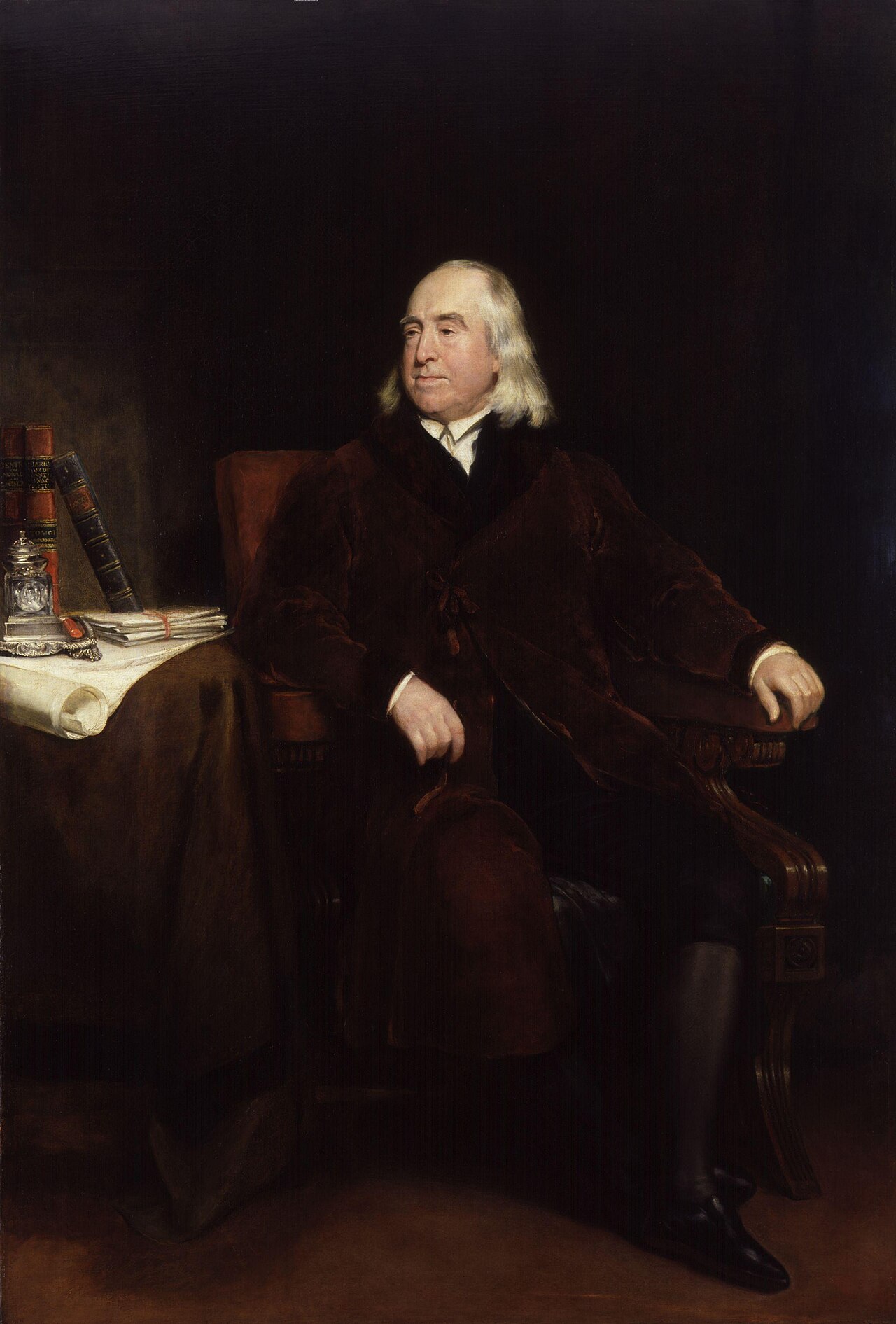
Consequentialism holds that the rightness of an act depends entirely on its outcomes. Its most influential form, utilitarianism, was systematised by Jeremy Bentham in An Introduction to the Principles of Morals and Legislation (1789) and refined by John Stuart Mill in Utilitarianism (1861): act so as to produce the greatest happiness, counting each person’s happiness equally. It is the native language of public health, cost–benefit analysis and triage, and its strength is that it takes suffering seriously wherever it occurs. Its notorious weakness is that it can, in principle, license sacrificing an individual for aggregate gain.
Deontology holds that some acts are right or wrong in themselves, regardless of outcome. Immanuel Kant’s Groundwork of the Metaphysics of Morals (1785) grounds this in the categorical imperative, one formulation of which requires that we treat humanity, in ourselves and others, always as an end and never merely as a means. This is where rights, consent and human dignity live — and where the intuition comes from that you may not harvest one patient’s organs to save five, no matter how the arithmetic looks. Its weakness is rigidity when duties collide.
Virtue ethics, the oldest of the three, asks not “what should I do?” but “what should I be?” Aristotle’s Nicomachean Ethics (c. 340 BCE) locates the moral life in stable traits of character — courage, honesty, temperance, practical wisdom — developed by habituation and aimed at eudaimonia, human flourishing. It captures something the other two miss: that the clinician you want at three in the morning is defined less by the rules she can recite than by the person she has become. Its weakness is that it gives less action-guidance in a specific hard case.
A fourth tradition, care ethics, grew out of dissatisfaction with all three — it argues that they abstract away the concrete relationships in which most moral work actually happens. It appears in the table below and is taken up in Chapter 6.
| Family | Core question | Founding text | Best at | Where it strains | Chapter |
|---|---|---|---|---|---|
| Consequentialism / utilitarianism | What outcome does this produce? | Bentham 1789; Mill 1861 | Policy, triage, resource allocation | Can justify sacrificing individuals | 3 |
| Deontology | What duty binds me here? | Kant 1785; Ross 1930 | Consent, rights, confidentiality | Rigid when duties conflict | 4 |
| Virtue ethics | What would a good person do? | Aristotle, c. 340 BCE | Professional formation, character | Thin guidance in a novel case | 5 |
| Care ethics | What does this relationship require? | Gilligan 1982; Noddings 1984 | Dependency, family, nursing | Risk of partiality and burnout | 6 |
The theories are lenses, not switches
Students often want to be told which theory is correct so they can stop worrying. Resist that. In practice, mature moral reasoning is more like clinical reasoning: you run the case past several frames and pay attention when they converge or diverge. If consequentialist, deontological and virtue analyses all point the same way, you can act with confidence. When they diverge, the divergence itself is diagnostic — it usually locates exactly what is hard about the case.
Consider the thought experiment that has done more teaching work than any other. In 1967 the Oxford philosopher Philippa Foot, in an article about abortion and the doctrine of double effect, described a runaway tram that will kill five workers unless the driver diverts it onto a spur where it will kill one. Judith Jarvis Thomson developed the family of cases in 1976 and 1985, adding the version in which you can stop the trolley only by pushing a large stranger off a footbridge. Most people say divert, and most people refuse to push, even though the arithmetic is identical. That gap between the two answers is not stupidity; it is the deontological intuition about using a person as a means asserting itself against the consequentialist calculation.
None of this means the theories are mere flavours. They make incompatible claims and cannot all be wholly right. But the working assumption of applied ethics, following W. D. Ross’s The Right and the Good (1930), is that our considered moral judgements are evidence too. A theory that tells you it would be fine to frame an innocent person to prevent a riot has, most of us think, produced a reason to doubt the theory.
Consequences, duties and character each capture something real, and skilled moral reasoning uses all three as lenses rather than betting everything on one.
Section 4The Working Vocabulary

Values, norms, principles and rules
These four words get used interchangeably and should not be. A value is something held to be worth pursuing or protecting — health, autonomy, honesty, fairness. Values are what you care about. A norm is a standing expectation about conduct within a community; norms may or may not be morally defensible, which is why “normal” and “right” are not synonyms. A principle is a general action-guiding standard, broad enough to cover many cases: respect autonomy, do no harm, act justly. A rule is specific and operational: obtain written consent before an invasive procedure; do not accept gifts over fifty dollars.
The distinction earns its keep when principles and rules conflict. Rules are efficient because they do not require deliberation in the moment — a surgical checklist works precisely because nobody debates it at the bedside. But rules are written in advance by people who could not foresee your case, and every rule eventually meets a situation that its authors would have exempted. When that happens, the right move is to go back to the principle the rule was serving and ask what it actually requires here. That is not rule-breaking. It is what the rule was for.
Notice, too, that a value conflict is not the same as a fact conflict. Two colleagues who disagree about disclosing a diagnosis to a patient with early dementia may hold identical values in identical rank order and simply disagree about her capacity. Diagnosing which kind of conflict you are in determines whether the fix is a conversation about values or a further assessment.
Obligatory, permissible, forbidden, supererogatory
Moral philosophy uses a small set of deontic categories that sort actions by their status. An act is obligatory if you are required to do it — reporting suspected child abuse where you are a mandated reporter. It is forbidden if you are required not to do it. It is permissible if it is neither required nor forbidden, which covers most of life. And it is supererogatory if it is morally admirable but goes beyond what duty demands: the surgeon who flies to a disaster zone on unpaid leave does something praiseworthy that nobody could have demanded of her.
That last category matters more than its odd name suggests. Confusing the supererogatory with the obligatory is a reliable route to burnout, and it is epidemic in caring professions. If every extra shift, every unpaid hour and every sacrifice of your own family is felt as a duty, then falling short of superhuman becomes a moral failure. It is not. Recognising the category lets you honour the person who goes beyond duty without condemning the person who merely meets it.
Two further pieces of vocabulary. A right is a justified claim that generates a correlative duty in others: your right to refuse treatment imposes on me a duty not to treat you against your will. Rights divide into negative rights (claims that others not interfere) and positive rights (claims to be provided with something), and much political disagreement is really about how many positive rights exist. Moral status is the question of who or what counts morally at all — competent adults certainly, but also infants, patients in persistent vegetative states, fetuses, animals, future generations and, increasingly contested, artificial systems. Chapters 12 and 13 return to this.
| Category | Meaning | Test | Clinical example |
|---|---|---|---|
| Obligatory | Required; omitting it is wrong | Blame is appropriate if you do not | Reporting a needle-stick exposure |
| Forbidden | Required not to do it | Blame is appropriate if you do | Falsifying a medication record |
| Permissible | Allowed, but not required | No blame either way | Choosing which of two equivalent dressings to use |
| Supererogatory | Praiseworthy beyond duty | Praise if you do; no blame if you do not | Volunteering for a month in a cholera outbreak |
| Prima facie duty | A real duty that can be outweighed | Survives as a “moral residue” even when overridden | Truth-telling, when overridden by an immediate duty to prevent harm |
Prima facie duties and moral residue
W. D. Ross, writing in 1930 against what he saw as the over-tidiness of both Kant and Mill, proposed that we recognise several prima facie duties — fidelity, reparation, gratitude, justice, beneficence, self-improvement and non-maleficence — none of which is absolute. Each is a genuine duty that holds unless outweighed by another. When you break a lunch appointment to help at the scene of a crash, the duty of fidelity did not evaporate; it was outweighed, and it leaves behind an obligation to apologise and explain. Ross called what settles this judgement, and he was candid that no formula supplies it.
The residue is the philosophically interesting part. If overridden duties simply vanished, you would owe nothing at all to the person you stood up, and that is not how it feels or how we behave. Bernard Williams pressed this point from 1965 onward against theories that treat moral conflict as merely apparent: the regret we feel after choosing rightly in a hard case is evidence that something real was sacrificed. In practice, moral residue is why a good institution debriefs after a difficult decision instead of declaring the matter closed.
Ross’s framework is also the direct ancestor of the approach that dominates clinical ethics today. When Tom Beauchamp and James Childress published Principles of Biomedical Ethics in 1979, their four principles — respect for autonomy, non-maleficence, beneficence and justice — were explicitly presented as prima facie, none automatically trumping the others. Chapter 8 unpacks them in full.
Precise vocabulary — values against norms, principles against rules, obligatory against supererogatory, duties that can be outweighed but not erased — is what turns a vague unease into an argument someone else can check.
Section 5Why Applied Ethics, and Why It Fails
Knowing is not doing
The uncomfortable finding of a century of research is that moral knowledge and moral behaviour come apart. The psychologist James Rest proposed in the 1980s that ethical action requires four separate components, each of which can fail independently: moral sensitivity (noticing that a situation has an ethical dimension at all), moral judgement (working out what is right), moral motivation (prioritising it over competing goals such as career or convenience), and moral character (having the persistence to carry it through against resistance). Most professional failures are not failures of judgement. People usually know. They fail at step one or step three.
Stanley Milgram’s obedience studies, run at Yale in 1961 and 1962 and first published in 1963, remain the starkest demonstration of step three collapsing. In the best-known variation, twenty-six of forty ordinary participants continued administering what they believed were escalating electric shocks to the maximum 450-volt level because a man in a grey coat calmly told them the experiment required it. Milgram’s interpretation has been contested — archival work by Gina Perry and others has shown the experimenter improvised beyond the script and that compliance varied enormously across the two dozen variations — and the Stanford prison study of 1971 has come under even heavier methodological criticism. The headline number is less secure than the textbooks once implied. What survives the criticism is the finding that situational pressure, especially graded and incremental pressure from an authority, predicts behaviour far better than people’s stated values do.
Hannah Arendt, reporting on Adolf Eichmann’s 1961 trial in Jerusalem, called this the banality of evil: catastrophic harm delivered not by monsters but by careerists processing paperwork. Historians have since complicated her portrait of Eichmann specifically, showing he was more ideologically committed than she believed. The general phenomenon she named is nevertheless well documented, and it should change how you think about prevention. If harm mostly comes from ordinary people inside systems, then designing better systems matters as much as producing better individuals.
What went wrong at Tuskegee, and on the night before Challenger
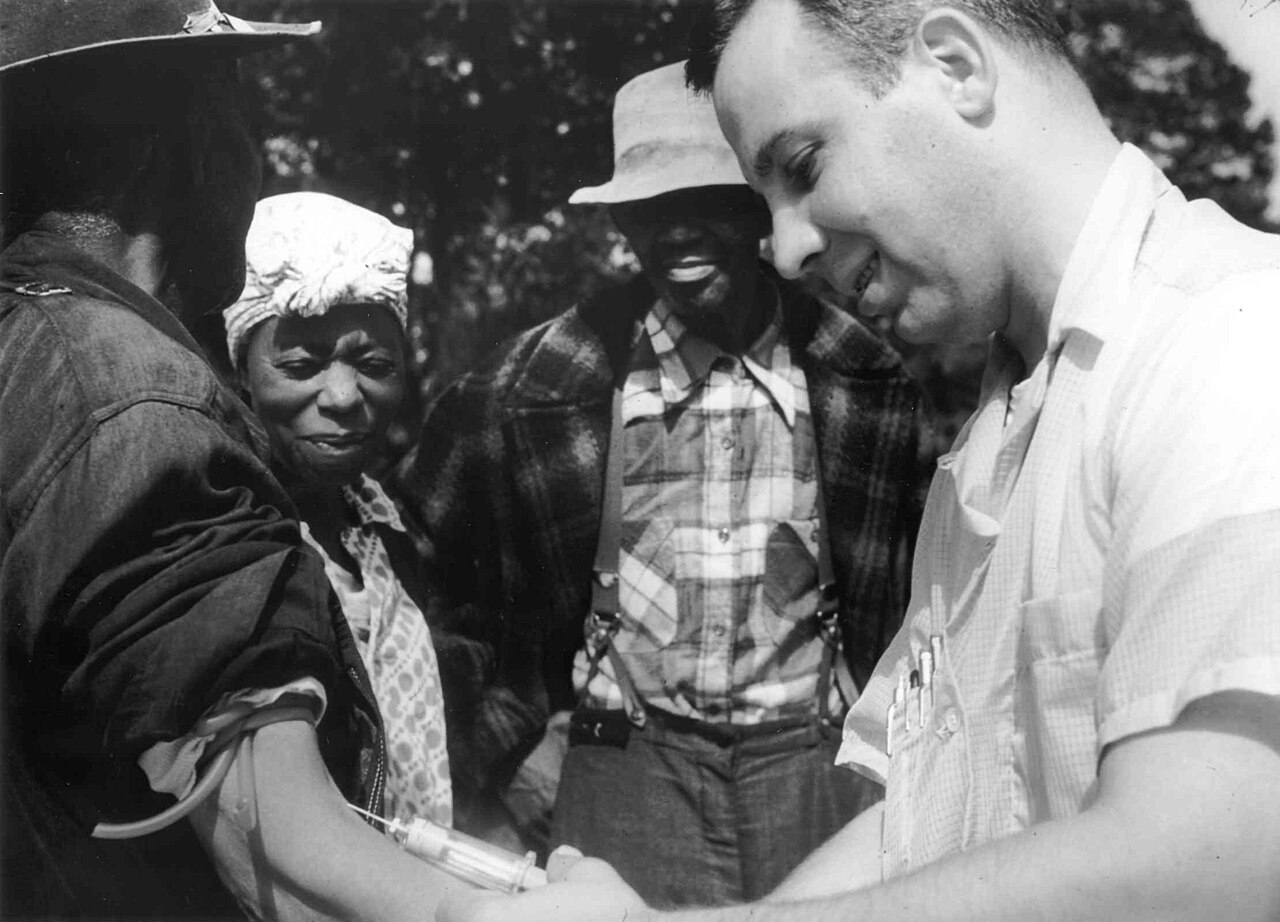
In 1932 the United States Public Health Service began a study in Macon County, Alabama, of the natural course of untreated syphilis in Black men. Six hundred men enrolled, 399 with latent infection and 201 controls. They were not told they had syphilis; they were told they were being treated for “bad blood” and given placebos, spinal taps described as free treatment, and a burial stipend. Penicillin became the standard cure by 1947. It was deliberately withheld, and the men were shielded from receiving it elsewhere, for another twenty-five years. A PHS venereal disease investigator named Peter Buxtun raised objections internally in 1966 and again in 1968 and got nowhere; he eventually gave the story to the Associated Press, and Jean Heller’s report ran on 25 July 1972. The study stopped that November.
Nothing about Tuskegee was rogue. It was funded, supervised, presented at conferences and published in the medical literature over four decades. It ended only because someone outside the chain of command was told. The consequences were structural: the National Research Act of 1974, which put institutional review boards on a statutory footing, and the Belmont Report of 18 April 1979 with its three principles of respect for persons, beneficence and justice. President Clinton apologised on behalf of the nation on 16 May 1997; five of the eight surviving participants were at the White House to hear it. The damage to Black Americans’ trust in medicine is measurable to this day.
The Challenger case shows a different failure mode. On the evening of 27 January 1986, engineers at Morton Thiokol including Roger Boisjoly and Allan McDonald argued against launching the next morning, because the rubber O-ring seals in the solid rocket boosters had never been tested near the forecast temperature and had shown erosion on previous cold launches. In the teleconference, senior management asked one of their own to set aside his engineering judgement and think like a manager. The recommendation was reversed. Challenger broke apart seventy-three seconds after lift-off on 28 January 1986; all seven aboard, including the teacher Christa McAuliffe, were killed. Nobody in that room wanted anyone to die. The organisation had simply made it easier to say yes than to say no.
Dilemma, distress, uncertainty and injury
The philosopher Andrew Jameton, then teaching ethics to nurses, introduced the term moral distress in 1984 to name an experience his students kept describing and had no word for: you know what the right course is, and institutional constraints prevent you from taking it. Staffing, hierarchy, cost, policy, a family’s insistence, an attending’s decision. The distinguishing feature is that the difficulty is not cognitive. Distress is not confusion; it is powerlessness, and it responds to different remedies. Confusion is treated with analysis. Powerlessness is treated with structural change — escalation pathways, ethics consultation, protected reporting, staffing standards.
Distinguish it from moral uncertainty, where you genuinely do not know what is right, and from a true moral dilemma, where two obligations conflict irreducibly. Distinguish all three from moral injury, a heavier concept brought from military psychiatry by Jonathan Shay in 1994 and developed by Brett Litz and colleagues in 2009: the lasting damage of having perpetrated, failed to prevent or witnessed acts that violate one’s deepest moral commitments. Sustained, unaddressed moral distress can become moral injury, and during the COVID-19 pandemic clinicians reported both at rates that made the distinction clinically urgent rather than academic.
Which brings us back to codes. Every profession has one — the American Nurses Association’s Code of Ethics for Nurses, first adopted in 1950 and most recently revised in 2025; the AMA’s, tracing to 1847. These documents are genuinely valuable: they encode hard-won consensus, they give you something to point at when pressured, and they set enforceable minimums. But they are floors. Wells Fargo employees opened roughly two million unauthorised customer accounts — a count a later review raised to about 3.5 million — and the bank paid a 185-million-dollar penalty in September 2016; it had a published code of ethics. So did the engineers who wrote Volkswagen’s emissions defeat device, revealed in September 2015. The point of studying ethics is to be the person who can tell when the floor is not high enough.
| Experience | What is happening | What it feels like | What actually helps |
|---|---|---|---|
| Moral uncertainty | You do not know which course is right | Confusion, second-guessing | Analysis, consultation, more information |
| Moral dilemma | Two obligations, both cannot be met | Being trapped; regret either way | Reasoned choice, then acknowledgement of residue |
| Moral distress | You know the right course but cannot take it | Powerlessness, frustration, anger | Structural change: escalation paths, staffing, ethics consults |
| Moral injury | You participated in or witnessed a deep violation | Shame, guilt, loss of trust in self or institution | Acknowledgement, restitution where possible, clinical support |
Ethical failure in professional life is rarely ignorance of the right answer — it is failure to notice, failure to act under pressure, or a system that made silence easier than objection.
The chapter in one breath
Ethics is the systematic study of how we ought to act and what we ought to become, and it divides into four kinds of inquiry: descriptive (what people do), normative (what makes acts right), metaethical (what moral claims even are) and applied (what follows in this case). Its defining logical feature, noticed by Hume in 1740 and sharpened by Moore in 1903, is that no accumulation of facts yields an ought without an explicit value premise. Ethics overlaps with law, religion, custom, etiquette, feeling and compliance, and is reducible to none of them — the Fugitive Slave Act was law, the Nuremberg Laws were statutes, and Enron had a sixty-four-page code. Normative theory clusters into three families that ask about consequences, duties and character; each captures something true, and skilled reasoning treats them as lenses rather than rival algorithms. A working vocabulary — obligatory, permissible, forbidden, supererogatory, prima facie duty, moral residue, moral status — converts unease into argument. And the hard lesson from Tuskegee, from Challenger, and from the research on moral distress is that knowing the right answer is only the first of several places where people fail.
Words worth knowing
| Term | What it means |
|---|---|
| Applied ethics | The use of moral theory to resolve concrete problems in a domain such as medicine, business or technology. |
| Banality of evil | Arendt’s term for grave harm produced by unremarkable people performing routine institutional roles without moral reflection. |
| Categorical imperative | Kant’s supreme moral principle, one formulation of which forbids treating any person merely as a means to an end. |
| Consequentialism | The view that the rightness of an act depends entirely on its outcomes. |
| Deontic categories | The classification of acts as obligatory, forbidden, permissible or supererogatory. |
| Deontology | The view that some acts are right or wrong in themselves, independent of consequences. |
| Descriptive ethics | The empirical study of what people actually believe and do morally. |
| Divine command theory | The view that an act is right because it is commanded by God; challenged by the Euthyphro dilemma. |
| Euthyphro dilemma | Socrates’ question of whether the holy is loved by the gods because it is holy, or holy because they love it. |
| Hume’s law | The principle that no ought-conclusion follows from purely is-premises without an evaluative premise. |
| Metaethics | Inquiry into the nature, status and truth-conditions of moral claims themselves. |
| Moral dilemma | A situation in which two genuine obligations conflict and neither can be met without violating the other. |
| Moral distress | Jameton’s term for knowing the right action but being prevented from taking it by institutional constraint. |
| Moral injury | Lasting psychological and spiritual damage from perpetrating, failing to prevent or witnessing a deep moral violation. |
| Moral residue | What remains owed after a genuine duty has been overridden by a stronger one — apology, explanation, regret. |
| Moral status | The question of which beings count morally and to what degree. |
| Naturalistic fallacy | Moore’s term for defining goodness in terms of a natural property such as pleasure or survival. |
| Normative ethics | Inquiry into general standards of right action and good character. |
| Prima facie duty | Ross’s term for a real duty that binds unless outweighed by a stronger competing duty. |
| Supererogatory | Morally admirable but beyond what duty requires; praiseworthy to do, not blameworthy to omit. |
Check yourself
MORAL REASONING AND ARGUMENT
Most moral disputes are not fights between good people and bad people. They are collisions between arguments — some careful, some sloppy, most never laid out clearly enough for anyone to inspect. This chapter hands you the tools to open an argument up: to separate the claim from the reasons offered for it, to find the unstated principle doing the heavy lifting, to tell a valid inference from a persuasive one, and to test a conclusion by asking what else it would commit you to. You will meet David Hume’s warning about sliding from is to ought, Stephen Toulmin’s anatomy of everyday reasoning, the counterexample method that philosophers have used since Socrates, and John Rawls’s idea that principles and judgements should be adjusted against each other until they fit. By the end you should be able to disagree productively — which is a rarer and more useful skill than winning.
By the end of this chapter you can
- Break a moral claim into premises and a conclusion, and reconstruct arguments in standard form.
- Identify the bridging premise or warrant that links a factual claim to a moral one, using the Toulmin model.
- Explain the is–ought gap and distinguish it from Moore’s naturalistic fallacy and the appeal to nature.
- Distinguish validity from soundness, and deductive from inductive and abductive reasoning.
- Diagnose at least eight informal fallacies that recur in ethical debate, including equivocation, false dilemma and the slippery slope.
- Test a principle with a counterexample, a thought experiment, an argument from analogy, and the universalizability test.
- Apply reflective equilibrium to revise either a principle or a judgement when the two conflict.
- Separate factual disagreement from evaluative disagreement and locate the crux of a dispute.
- Recognise motivated reasoning and moral dumbfounding in your own reasoning and respond to them honestly.
Section 1The Anatomy of a Moral Argument
Argument means something narrower than you think
In ordinary speech an argument is a quarrel. In ethics it is something much drier and much more useful: a set of statements in which one or more premises are offered as reasons to accept a conclusion. Raising your voice is not an argument. Neither is a strongly worded opinion, an anecdote told with feeling, or a link to an article. If nothing is being offered in support of anything else, there is no argument on the table — only a position.
This matters practically. On a hospital unit, in a boardroom, at a school committee meeting, people frequently talk past one another because nobody has bothered to write down what is actually being claimed. Consider a real and unremarkable exchange: a charge nurse says, “We can’t tell the daughter her mother’s diagnosis — the patient asked us not to.” That single sentence contains a conclusion (do not disclose), a factual premise (the patient made a request), and an unstated moral premise (competent patients’ confidentiality requests should be honoured even when family members are distressed). Only the third is genuinely contestable, and it is the one nobody said out loud.
Putting an argument into standard form — numbering the premises, drawing a line, writing the conclusion underneath — feels pedantic for about ten minutes and then becomes indispensable. It forces you to supply the missing pieces. An argument with a suppressed premise is called an enthymeme, and in moral discourse nearly every argument you encounter in the wild is an enthymeme. The suppressed premise is where the action is.
Toulmin’s map of everyday reasoning
Formal logic captures mathematical proof beautifully and everyday moral argument rather badly. The British philosopher Stephen Toulmin, in The Uses of Argument (1958), proposed a model closer to how a lawyer or a clinician actually reasons. Toulmin splits an argument into six parts: the claim (what you want accepted), the grounds (the facts you start from), the warrant (the general principle licensing the move from grounds to claim), the backing (what supports the warrant itself), the qualifier (“probably”, “in most cases”), and the rebuttal (the conditions under which the claim would fail).
Toulmin’s insight was that real arguments are rarely all-or-nothing. A physician does not conclude that a patient certainly has sepsis; she concludes that sepsis is probable enough to warrant treatment now, unless a specific alternative explanation emerges. Moral reasoning has the same texture. “You generally ought to keep a promise” is a warrant with a built-in qualifier and an open list of rebuttals — coercion, changed circumstances, a competing duty of greater weight.
The most useful column in Toulmin’s table is warrant. Ask any speaker, “What general rule would have to be true for your facts to support your conclusion?” and you will surface the real disagreement in a single question. Two people can agree entirely about the facts of a case and still differ, because they hold different warrants. Two people can share a warrant and differ because they disagree about the grounds. These are different problems and they require different remedies.
| Toulmin part | Question it answers | Example from a staffing dispute |
|---|---|---|
| Claim | What are you asking me to accept? | The unit should refuse the sixth admission tonight. |
| Grounds | What facts are you starting from? | Two nurses called out; the ratio would go to 1:7. |
| Warrant | What rule licenses that move? | Staff should not accept assignments that predictably endanger patients. |
| Backing | Why accept the warrant? | Professional codes, licensure duty, evidence linking ratios to mortality. |
| Qualifier | How strong is the claim? | Ordinarily — absent a declared mass-casualty event. |
| Rebuttal | When would it fail? | If refusal would leave patients with no care at all. |
Deductive, inductive, abductive
Arguments come in three broad shapes, and confusing them causes most of the bad tempers in ethics seminars. A deductive argument claims that if the premises are true the conclusion must be true. An inductive argument claims only that the premises make the conclusion probable — generalising from cases, projecting a trend, extrapolating from a sample. An abductive argument, sometimes called inference to the best explanation, says that a conclusion is the most plausible account of what we observe.
Moral arguments almost always mix all three. The moral principle at the core is usually deductive in form. The factual premises feeding it are usually inductive: how likely is harm, how often does this policy backfire, what did the trial data show. And the choice of which principle to apply is often abductive: which framework best explains the whole pattern of our confident judgements? Criticising a moral argument well means aiming your criticism at the right layer. It is a category error to demand mathematical certainty from an empirical premise, and equally a category error to treat a contested moral principle as if it were an established statistic.
An argument is premises offered in support of a conclusion, and the most important premise in a moral argument is usually the general principle nobody bothered to state.
Section 2From Facts to Values: The Is–Ought Problem
Hume’s paragraph
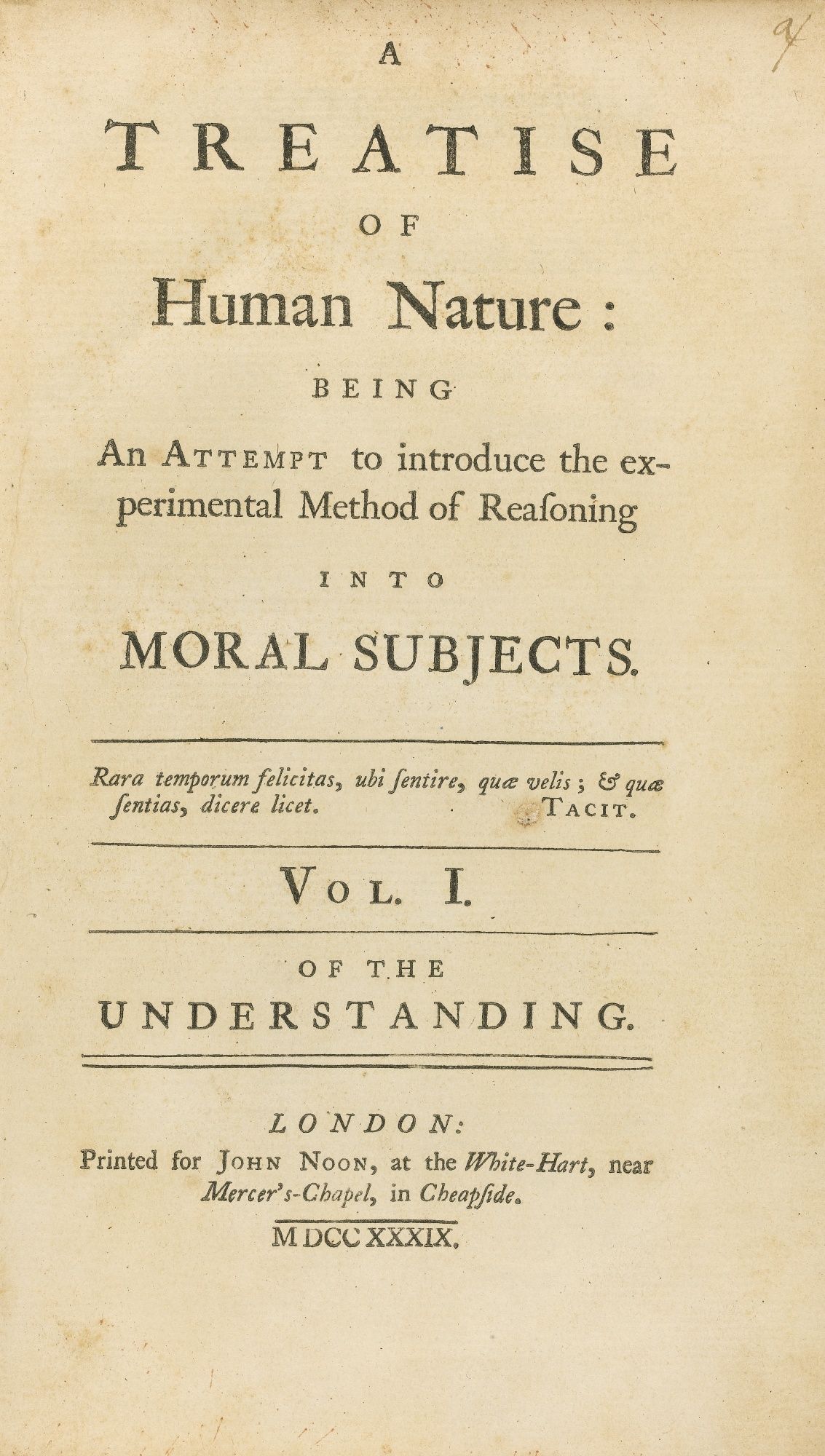
Near the end of Book III, Part I, Section I of A Treatise of Human Nature (1739–40), David Hume notes that authors writing about morality proceed for a while with ordinary statements about what is and then, without warning, every proposition becomes one about what ought to be. He observes that this change is imperceptible but of the last consequence, and asks that a reason be given for it. That single paragraph founded what is now called the is–ought gap or Hume’s Law: no set of purely descriptive premises entails an evaluative conclusion.
Test it. “This drug relieves pain” does not by itself entail “you should prescribe it.” “Ninety per cent of hospitals do it this way” does not entail “it is right.” “Humans evolved to favour kin” does not entail “favouring kin is permissible.” In each case a further premise is required, and that premise is evaluative: relieving pain matters, common practice is presumptively acceptable, evolved dispositions are morally authoritative. State the bridge and you can examine it. Leave it buried and you have smuggled a value in disguised as a fact.
Not every philosopher accepts Hume’s Law in its strongest form. John Searle argued in 1964 that the institution of promising generates an ought from an is: saying “I promise” is a fact that creates an obligation. Others reply that the institution itself carries a hidden normative premise. Philippa Foot and other neo-Aristotelians argue that facts about what a creature needs to flourish are already value-laden. Some scholars also dispute the standard reading of the passage itself, holding that Hume was attacking a particular style of moral argument rather than announcing an unbridgeable logical gap. The debate is live and unresolved; what is not in dispute is the practical lesson. Whenever an argument moves from data to duty, look for the bridge.
Three cousins that are not the same thing
Students routinely collapse three distinct errors. The is–ought gap is a logical point about entailment. G. E. Moore’s naturalistic fallacy, from Principia Ethica (1903), is a different and more specific claim: that good cannot be defined in terms of any natural property such as pleasure or evolutionary fitness. Moore’s test was the open question argument — if “good” simply meant “pleasant”, then “this is pleasant, but is it good?” would be as senseless as asking “this is a bachelor, but is he unmarried?” It is not senseless, so the definition fails. Many contemporary philosophers think Moore’s argument proves less than he supposed, but the label stuck.
The third cousin is the appeal to nature: the rhetorical move from “natural” to “good” and from “unnatural” to “wrong”. It appears in debates about food, sexuality, medication, contraception, gene editing and end-of-life care. It fails twice over. First, it needs the bridging premise that naturalness confers value, and that premise is hard to defend once you list natural things — cholera, drought, infant mortality — that nobody praises. Second, “natural” is ambiguous between at least four senses: occurring without human intervention, statistically typical, functionally proper, and morally uncorrupted. Arguments that slide between these senses are committing equivocation, which Section 3 takes up.
Building the standard moral syllogism
The workhorse structure in applied ethics has three lines: a moral principle, a factual premise, and a conclusion. Peter Singer’s famous argument in “Famine, Affluence, and Morality” (Philosophy & Public Affairs, 1972) has exactly this shape. Premise one: if it is in our power to prevent something very bad from happening without sacrificing anything of comparable moral importance, we ought to do it. Premise two: by donating a modest portion of our income we can prevent suffering and death without comparable sacrifice. Conclusion: we ought to donate. Singer illustrates premise one with the drowning-child case — walking past a shallow pond, you would wade in to pull out a drowning child, and muddying your clothes is not a comparable sacrifice.
Notice how the structure organises the objections. You can attack the principle (is proximity or special relationship morally relevant after all?). You can attack the factual premise (does aid reliably prevent death, or does it sometimes entrench bad governance?). You can accept both and dispute the strength of the conclusion (a duty, or a laudable extra?). Each of those is a different conversation. Without the standard form they get mashed into one shouting match.
| Argument | Moral premise | Factual premise | Where critics usually push |
|---|---|---|---|
| Singer on famine relief (1972) | Prevent very bad things at small comparable cost | Donations do prevent death cheaply | Effectiveness of aid; demandingness of the duty |
| Rachels on euthanasia (1975) | If two acts differ only in a morally irrelevant way, they are morally alike | Killing and letting die differ only in mechanism | The factual premise: intention and role differ too |
| Mandatory staff vaccination | Professionals must not impose avoidable risk on vulnerable patients | Vaccination measurably reduces transmission to patients | Size of the transmission effect; scope of employer authority |
| Supervised injection sites | Reducing preventable death outweighs symbolic disapproval | Sites reduce overdose deaths without raising drug use | Contested epidemiology; displacement effects |
No pile of facts by itself yields a moral conclusion — find the bridging value premise, state it plainly, and then argue about it.
Section 3Validity, Soundness and the Fallacies That Keep Coming Back
Valid is not the same as true
A deductive argument is valid when the conclusion follows necessarily from the premises — when it would be impossible for the premises to be true and the conclusion false. Validity says nothing about whether the premises are true. “All physicians are immortal; Dr Chen is a physician; therefore Dr Chen is immortal” is perfectly valid and obviously worthless. An argument is sound when it is valid and all its premises are true. Soundness is what you actually want; validity is the cheaper half.
The everyday payoff is that there are only two ways to reject a deductive moral argument: deny a premise, or show the inference is invalid. If you can do neither, you are rationally obliged either to accept the conclusion or to explain what else has gone wrong. This is uncomfortable, and it is the engine of philosophical progress. When a valid argument leads somewhere you refuse to go, that refusal is itself evidence — evidence that one of the premises is false. Philosophers call this running the argument backwards, or tollensing the ponens.
Two conditional forms are valid: modus ponens (if P then Q; P; therefore Q) and modus tollens (if P then Q; not Q; therefore not P). Two are invalid and constantly mistaken for the real thing: affirming the consequent (if P then Q; Q; therefore P) and denying the antecedent (if P then Q; not P; therefore not Q). “If a treatment is futile we may withhold it; this treatment is not futile; therefore we may not withhold it” denies the antecedent — there may be other good reasons to withhold, such as refusal by the patient.
The fallacies that dominate moral debate
An informal fallacy is a pattern of reasoning that is persuasive but defective in content rather than form. The list below is not exhaustive, but these eleven account for a startling proportion of what circulates in public ethical argument. Learn to name them, because naming is most of the cure.
Two deserve extra attention because they are so often misdiagnosed. The slippery slope is not automatically a fallacy. It is fallacious when the causal chain from first step to feared outcome is merely asserted; it is legitimate when the chain is supported by mechanism or evidence. Debates about assisted dying illustrate both. Critics predicted expansion after the Dutch Termination of Life on Request and Assisted Suicide Act, passed in 2001, took effect in April 2002; the regional review committees recorded 8,720 cases in 2022, roughly five per cent of all deaths in the country, and the eligible categories have been interpreted more broadly over time. Whether that constitutes a slope, a plateau, or an expected uptake of a newly lawful option is exactly the sort of question that requires data and careful definition rather than rhetorical gravity.
The second is the appeal to authority. Deferring to an expert is not fallacious; it is how anyone functions in a technical world. It becomes fallacious when the authority is outside their field, when the field itself lacks consensus, when the authority has an undisclosed interest, or when the appeal replaces reasons the audience could evaluate. A cardiologist’s view on stent indications carries weight. The same cardiologist’s view on immigration policy carries only whatever her arguments carry.
| Fallacy | What goes wrong | Ethics-flavoured example |
|---|---|---|
| Ad hominem | Attacks the arguer instead of the argument | “She only defends triage protocols because she is an administrator.” |
| Straw man | Refutes a distorted version of the position | “So you think patients should just be left to die at home.” |
| False dilemma | Presents two options when more exist | “Either full disclosure or lying to the family.” |
| Equivocation | Shifts the meaning of a key term mid-argument | “Life begins at conception” sliding between biological life and personhood |
| Begging the question | Assumes the conclusion in a premise | “Abortion is wrong because it kills an innocent person.” |
| Hasty generalisation | Generalises from an unrepresentative sample | “My uncle recovered without surgery, so surgery is overused.” |
| Appeal to nature | Treats “natural” as equivalent to “good” | “Pain in childbirth is natural, so analgesia is a distortion.” |
| Slippery slope (weak form) | Asserts a causal chain without support | “Allow one exception and consent collapses entirely.” |
| Tu quoque | Deflects criticism by alleging hypocrisy | “You eat meat, so you cannot criticise animal research.” |
| Appeal to consequences | Argues a claim is false because believing it would be bad | “If determinism were true nobody could be blamed, so it is false.” |
| Appeal to authority (weak form) | Defers to an expert outside their field, in a field lacking consensus, or with an undisclosed interest | “A Nobel laureate in physics says the embryo is a person, so it is.” |
Definitions are where arguments hide
An enormous share of ethical disagreement is definitional. “Person”, “harm”, “futile”, “consent”, “discrimination”, “natural”, “death” — each of these has an ordinary sense, a technical sense, and a contested moral sense, and arguments slide between them. When Mary Anne Warren proposed in 1973 that the concept of personhood is marked by traits such as consciousness, reasoning, self-motivated activity, capacity to communicate and self-awareness, she was not merely stipulating; she was offering a criterion that could be tested against cases. That is the right way to argue about definitions.
The wrong way is what logicians call persuasive definition: building your conclusion into the meaning of a word so that disagreement sounds like ignorance. Calling every unwanted medical intervention “assault” or every hard conversation “abuse” wins the argument by fiat and teaches nobody anything. If a definition would make your opponent’s position self-evidently absurd, that is a signal to slow down, not to press ahead.
Validity concerns the shape of an argument and soundness concerns its content — and most moral arguments fail on content, through hidden equivocations, false dilemmas and unsupported causal chains.
Section 4Testing a Principle: Counterexamples, Analogies and Thought Experiments
The counterexample method
The oldest tool in moral philosophy is also the simplest. Someone proposes a general principle; you construct a case in which the principle gives an answer almost everyone rejects. If the case is genuine, the principle is refuted, or at least must be qualified. Socrates uses the method throughout Plato’s dialogues — in Republic Book I, Cephalus offers “justice is telling the truth and paying your debts”, and Socrates asks whether you should return a borrowed weapon to a friend who has since gone out of his mind.
Counterexamples are how principles get refined rather than merely defeated. “Always tell the truth” meets the case of the murderer at the door and becomes “there is a strong presumption in favour of truthfulness, defeasible when disclosure would make you complicit in grave wrongdoing.” That is progress. The principle survives in a more careful form. Beware, though, of the temptation to add so many exceptions that the principle no longer rules anything out. A principle that accommodates every case predicts nothing and teaches nothing; a theory rescued by unlimited ad hoc exceptions has been saved at the price of saying anything.
A good counterexample has three properties. It is possible — not necessarily actual, but coherent. It is clear — the intuitive verdict is not itself contested. And it is targeted — it isolates the feature in dispute rather than importing a dozen distracting details. A counterexample that changes five variables at once tells you nothing about which one mattered.
Thought experiments and arguments from analogy
The trolley case began as a single paragraph in Philippa Foot’s 1967 essay on abortion and the doctrine of double effect, and was elaborated by Judith Jarvis Thomson in 1976 and 1985. Its purpose is often misunderstood. Foot was not asking what you would do on a real tramway; she was isolating a variable — the difference between harm you intend as a means and harm you foresee as a side effect — by holding the numbers constant. The scenario is artificial on purpose, in the way a laboratory is artificial on purpose.
An argument from analogy runs: case A and case B share features F; we agree A is wrong; therefore B is wrong. Thomson’s violinist in “A Defense of Abortion” (1971) is the most discussed example in modern philosophy: you wake to find your circulatory system connected to an unconscious violinist who will die if you disconnect within nine months. Thomson argues that even granting the violinist’s right to life, you are not obliged to remain plugged in — a right to life is not a right to the use of another person’s body. Critics answer by attacking the analogy: pregnancy usually involves prior voluntary action, a parental relationship, and killing rather than merely disconnecting. Whether these disanalogies are morally relevant is precisely the dispute, which is what a good analogy does — it converts a vague quarrel into a specific one.
James Rachels used the same technique in the New England Journal of Medicine in 1975. Smith drowns his six-year-old cousin in the bath for an inheritance; Jones intends exactly the same, but the child slips, strikes his head and falls face down in the water, so Jones simply stands by — ready to push the head back under if he has to, which he never does. Rachels contends that if you judge Jones no better than Smith, then the bare distinction between killing and letting die carries no moral weight, and the standard doctrine permitting withdrawal of treatment but forbidding active euthanasia rests on sand. Objectors reply that Rachels’s pair holds intention fixed and thereby proves less than it seems — in clinical practice, intentions and role obligations differ systematically between the two categories. That exchange is a model of how careful argument proceeds.
Universalizability and reflective equilibrium
A second family of tests asks what a principle would commit you to if applied consistently. R. M. Hare, in Freedom and Reason (1963), made universalizability the core of moral reasoning: if you judge an act right in one case, you must judge it right in every case that is similar in the morally relevant respects, including cases where you occupy the other role. This is the disciplined ancestor of “how would you feel if it were you?” It is not an appeal to sympathy but to consistency — and consistency is a demand you cannot decline without abandoning the pretence of reasoning.
Finally, John Rawls gave a name in A Theory of Justice (1971) to a procedure he had sketched two decades earlier: reflective equilibrium. When a principle and a considered judgement conflict, you may revise either. Neither has automatic priority. You work back and forth — adjusting the principle to accommodate the judgement, or abandoning the judgement because the principle is better supported — until the whole set coheres. Wide reflective equilibrium, a refinement developed by Norman Daniels, adds a third element: background theories about persons, society and knowledge that must also fit.
This method has been criticised, notably by Peter Singer, as a sophisticated way of preserving prejudice: if your starting intuitions are shaped by an unjust culture, coherence with them may simply systematise that injustice. Defenders reply that the method includes the option of discarding intuitions that cannot survive scrutiny, and that no alternative method starts from nowhere. The disagreement is genuine and unresolved. What is agreed is that a judgement you can no longer defend, and a principle you cannot live with, cannot both be kept.
| Test | What it asks | Classic instance | Failure mode |
|---|---|---|---|
| Counterexample | Does the principle give an unacceptable verdict anywhere? | Socrates and the borrowed weapon | Bizarre cases that prove nothing about real ones |
| Isolating thought experiment | Which single feature is doing the moral work? | Foot’s tram case, 1967 | Changing several variables at once |
| Argument from analogy | Are the cases alike in the relevant respects? | Thomson’s violinist, 1971 | Ignoring morally relevant disanalogies |
| Universalizability | Could you accept this rule from every position? | Hare, Freedom and Reason, 1963 | Describing the act so narrowly that only you fit |
| Reflective equilibrium | Do principles and judgements cohere overall? | Rawls, 1971 | Entrenching inherited bias as coherence |
Principles earn their keep by surviving cases — test them with targeted counterexamples, honest analogies and consistent universalisation, and revise whichever side of the conflict is weaker.
Section 5Reasoning Well When It Is Hard
The intuitive dog and its rational tail
Psychology complicates the tidy picture. In “The Emotional Dog and Its Rational Tail” (Psychological Review, 2001), Jonathan Haidt argued that moral judgement is usually an immediate intuitive response, with conscious reasoning arriving afterwards as advocacy rather than investigation. His research team documented moral dumbfounding: participants presented with harmless-but-taboo scenarios insisted the acts were wrong, offered reasons, watched those reasons dismantled, and then held the judgement anyway while admitting they could not say why.
Two conclusions are often drawn, and only one is warranted. The unwarranted conclusion is that reasoning is pointless. The warranted one is that reasoning is fragile and needs support — it works better slowly, in writing, in groups with dissenting members, and when the reasoner is not personally on the hook. It is also worth noting that residual conviction after your reasons fail is not always irrational. A strong intuition can be evidence that a real moral consideration is present which you have not yet articulated. The honest response is to say so, rather than to invent a bad reason on the spot.
Motivated reasoning is the specific hazard. In a well-known 1979 study, Charles Lord, Lee Ross and Mark Lepper gave students with opposing views on capital punishment the same mixed body of evidence; both groups rated the study supporting their prior view as better designed, and both reported ending up more confident than before. The biased evaluation of evidence has replicated robustly; the further claim that mixed evidence actively polarises attitudes has proved less reliable, and later work finds it inconsistently. If even the milder effect happens with a topic as abstract as deterrence statistics, expect worse when your job, your identity or your family is involved.
Separating what we disagree about
Productive disagreement begins by sorting the dispute into layers. Is the disagreement factual — about what happened, what will happen, or how likely something is? Is it conceptual — about what a term means? Is it evaluative — about which considerations matter and how much? Or is it about application — agreed principle, disputed fit? Each layer has its own repair.
Take supervised consumption facilities. Vancouver’s Insite opened in 2003 as North America’s first legally sanctioned site. A 2011 study in The Lancet by Brandon Marshall and colleagues reported a substantial fall in overdose mortality within 500 metres of the facility after opening; other researchers have questioned the comparison periods and the attribution. Notice what follows. Much of the public argument is framed as a values clash — compassion versus enabling — but a large part of it is an empirical dispute about effect sizes and study design. Sorting the layers does not dissolve the moral question, but it tells each side what evidence would move them, which is the definition of a productive disagreement.
Then locate the crux: the specific claim such that, if you changed your mind about it, you would change your conclusion. Asking “what would change your mind?” is not a debating trick. If neither side can answer, the discussion is not an inquiry and should be renamed. If both can answer, you have converted an argument into a research question.
A working procedure
Here is a sequence that holds up under pressure, whether you are on an ethics committee, writing a paper, or standing in a corridor with four minutes to decide. First, state the question as a decision, not a topic — not “confidentiality” but “should we tell this daughter this diagnosis today?” Second, gather the facts and mark the uncertain ones as uncertain. Third, identify who has a stake, including those not in the room. Fourth, write the strongest argument for the option you dislike — the principle of charity requires interpreting others’ positions in their best form, and steelmanning means improving them beyond what was said. Fifth, name the moral principles in play and check for hidden equivocation. Sixth, test the leading option with a counterexample and a universalisation. Seventh, decide, record the reasoning, and name what would trigger reconsideration.
Two closing cautions. Documented reasoning is worth far more than remembered reasoning; the Tuskegee syphilis study ran from 1932 until Jean Heller’s Associated Press report of 25 July 1972 even though its findings were published in medical journals throughout — because no independent body was ever required to review the justification and say whether it held. And a decision can be correct and still cost something. Bernard Williams called what remains moral residue — the legitimate regret that survives a right choice. Feeling it is not evidence that you reasoned badly. Feeling nothing might be.
| Layer of disagreement | Telltale sign | What actually helps |
|---|---|---|
| Factual | Both sides cite different studies or numbers | Agree in advance what evidence would settle it |
| Conceptual | The same word is used with different senses | Define terms explicitly; test definitions against cases |
| Evaluative | Facts agreed, verdicts still opposed | Surface and compare the competing warrants |
| Applicational | Shared principle, disputed fit to this case | Compare with settled cases on either side |
| Motivational | Confidence rises as evidence gets mixed | Write the opposing case; invite a genuine dissenter |
Good moral reasoning is a discipline of process — slow it down, write it down, sort the layers of disagreement, and argue against your own preferred answer before you commit to it.
The chapter in one breath
An argument is premises offered in support of a conclusion, and in ethics the decisive premise is usually the one nobody stated: the general principle that licenses moving from facts to a verdict. Toulmin called it the warrant; Hume warned that it can never be derived from description alone, and that warning — the is–ought gap — remains the single most useful diagnostic in applied ethics, distinct from Moore’s naturalistic fallacy and from the everyday appeal to nature. Once an argument is written in standard form, criticism becomes precise: deny a premise, or show the inference invalid. Validity concerns shape, soundness concerns content, and most real arguments fail on content through equivocation, false dilemmas, straw men and causal chains asserted rather than shown. Principles are then tested against cases — by counterexample, by isolating thought experiments like Foot’s tram and Thomson’s violinist, by Hare’s universalizability, and by Rawls’s reflective equilibrium, in which principle and judgement are adjusted against each other. Psychology adds the final caution: intuition arrives first and reasoning often follows as advocacy, so the remedy is procedural — write it down, sort factual from evaluative disagreement, find the crux, and steelman the view you intend to reject.
Words worth knowing
| Term | What it means |
|---|---|
| Premise | A statement offered as a reason to accept a conclusion. |
| Conclusion | The statement an argument is trying to establish. |
| Standard form | An argument rewritten with numbered premises above a line and the conclusion below. |
| Enthymeme | An argument with one premise left unstated, usually the moral one. |
| Warrant | In Toulmin’s model, the general rule licensing the move from grounds to claim. |
| Is–ought gap | Hume’s point that descriptive premises alone never entail an evaluative conclusion. |
| Naturalistic fallacy | Moore’s claim that “good” cannot be defined by any natural property such as pleasure. |
| Appeal to nature | Treating “natural” as equivalent to “good” without arguing for the link. |
| Appeal to authority | Fallacious only when the expert is outside their field, the field lacks consensus, the interest is undisclosed, or the appeal replaces evaluable reasons. |
| Validity | Property of a deductive argument whose conclusion must be true if its premises are. |
| Soundness | Validity plus premises that are actually true. |
| Modus tollens | Valid form: if P then Q; not Q; therefore not P. |
| Equivocation | Shifting the meaning of a key term partway through an argument. |
| Begging the question | Assuming the conclusion within one of the premises. |
| False dilemma | Presenting two options as exhaustive when others exist. |
| Counterexample | A case in which a proposed principle yields a verdict almost everyone rejects. |
| Disanalogy | A morally relevant difference that breaks an argument from analogy. |
| Universalizability | Hare’s requirement that a judgement apply to all relevantly similar cases, including role reversals. |
| Reflective equilibrium | Rawls’s method of adjusting principles and considered judgements until they cohere. |
| Moral dumbfounding | Retaining a moral judgement after being unable to defend any reason for it. |
| Moral residue | Legitimate regret that persists even after a correct but costly decision. |
Check yourself
CONSEQUENTIALISM AND UTILITARIANISM
Almost every institution you work inside already thinks like a consequentialist. Hospitals run triage protocols, insurers price risk pools, public health agencies count life-years, and legislatures commission cost-benefit analyses. All of these say the same thing in different vocabularies: the right action is the one that produces the best outcome. That claim sounds obvious until you press it, and then it fractures into hard questions. Best by what measure? Best for whom? Best judged when — before you act, or after the results are in? This chapter takes consequentialism seriously as the most administratively powerful moral theory yet devised, traces it from Jeremy Bentham’s campaign to rationalize English law through John Stuart Mill’s revision of it to the QALY spreadsheets that shape which drugs the National Health Service in England pays for, and then examines the objections that have never been fully answered. You will finish able to use the theory well and to name precisely where it breaks.
By the end of this chapter you can
- Define consequentialism and distinguish it from utilitarianism, which is one species of it.
- Explain the three commitments — welfarism, consequentialism proper, and impartial aggregation — that classical utilitarianism combines.
- Compare hedonistic, preference, and objective list theories of well-being and identify which one a given argument assumes.
- Contrast act utilitarianism with rule utilitarianism and evaluate the charge that rule utilitarianism collapses into act utilitarianism.
- Apply the expected value framework to decisions under uncertainty and explain why subjective and objective rightness can diverge.
- Analyze the standard objections — the separateness of persons, demandingness, the transplant case, and the Repugnant Conclusion — and state the strongest replies.
- Read a cost-effectiveness analysis using QALYs or DALYs and identify the value judgments buried in the arithmetic.
- Use consequentialist reasoning in a professional decision while naming its limits out loud.
Section 1The Core Idea and Its Machinery
What the theory actually claims
Consequentialism is the view that the moral quality of an act is determined entirely by its outcomes. Nothing else counts intrinsically — not the actor’s intentions, not the kind of act it is, not who is doing it to whom. Motives may matter instrumentally, because a person with good motives tends to produce good results, but on a strict consequentialist view a lie that saves a life is simply better than a truth that costs one. The whole theory turns on a single evaluative question: which available action makes the world go best?
Utilitarianism is the most famous version, but it is a species and not the genus. To get from consequentialism to classical utilitarianism you add two more claims. The first is welfarism: the only thing that makes an outcome good or bad is its effect on the well-being of sentient creatures. Beautiful landscapes, biodiversity, and cultural heritage matter, on this view, only because and insofar as somebody experiences or benefits from them. The second is impartial aggregation: you total up the well-being across everyone affected, counting each person’s interests equally, and the outcome with the highest total wins. The usual slogan for the impartiality clause — everybody to count for one, nobody for more than one — is Mill’s phrasing of a commitment he credited to Bentham; the exact words appear nowhere in Bentham’s own writing, but the commitment is unmistakably his.
Change any of those three components and you get a different theory that is still recognizably consequentialist. Drop welfarism and keep the rest and you get pluralistic consequentialism, which might treat knowledge, justice, or ecological integrity as good in themselves. Replace summing with something else — maximize the position of the worst off, or minimize the variance — and you get a distribution-sensitive consequentialism. G. E. Moore’s Principia Ethica (1903) is the standard example of ideal utilitarianism, holding that beauty and personal affection are good in themselves and not merely as sources of pleasure. Keeping the architecture clear helps: most objections aimed at “utilitarianism” actually target one component, and you should know which.
Bentham, Mill and the reform project
Jeremy Bentham (1748–1832) did not invent the theory as an academic exercise. He was a legal reformer who wanted a rational basis for criticizing English law, which in his day still hanged people for theft and criminalized homosexuality. His Introduction to the Principles of Morals and Legislation (printed 1780, published 1789) opens with the claim that nature has placed humanity under two sovereign masters, pain and pleasure, and that the principle of utility approves or disapproves of every action according to its tendency to increase or diminish happiness. From this he derived a program: punishment should be exactly severe enough to deter and no more, because punishment is itself a harm; laws that criminalize consensual acts producing no victim are simply bad arithmetic.
The theory’s radicalism came from its impartiality. If each person counts for one, then the pain of an enslaved person counts equally with the pleasure of a slaveholder, and the suffering of a woman denied property rights counts equally with the convenience of the men who benefit. Bentham wrote against slavery, for animal welfare, for the decriminalization of homosexual acts — in an essay drafted around 1785 that was too dangerous to publish and did not appear until 1978 — and for extending the vote to women, in a parliamentary reform plan he wrote in 1809 and published in 1817. Almost nobody else was willing to defend that list in print. His famous line about animals is that the question is not whether they can reason or talk, but whether they can suffer. Utilitarianism in its origin was not a corporate cost-benefit tool; it was a battering ram against inherited privilege.
John Stuart Mill (1806–1873) inherited the project from his father James Mill and from Bentham himself, then repaired what he saw as its crudest feature. In Utilitarianism (serialized 1861, book 1863) he insisted that pleasures differ in kind and not only in amount. Some are higher pleasures — those engaging the intellect, the imagination, the moral sentiments — and are more valuable even when less intense. His test was the verdict of competent judges who have experienced both, and his conclusion was that it is better to be a human being dissatisfied than a pig satisfied. Critics from Bentham’s side have argued ever since that this smuggles in a non-hedonic standard: if quantity of pleasure is not the whole story, something other than pleasure is doing the ranking.
The felicific calculus and its descendants
Bentham proposed measuring pleasures and pains along seven dimensions: intensity, duration, certainty, propinquity (how soon), fecundity (whether it breeds more of the same), purity (whether it is free of contrary sensations), and extent (how many are affected). This felicific calculus was mocked in his own century as absurd precision about the unmeasurable, and as literal arithmetic it is unusable. But look at what survived. Intensity and duration reappear in health utility weights. Certainty reappears as probability in expected-value calculation. Propinquity reappears as the discount rate in economics and climate policy. Extent reappears as the population denominator in every epidemiological rate you read.
The lineage matters because it explains why consequentialism dominates policy without anyone declaring allegiance to it. When the U.S. Office of Management and Budget requires a regulatory impact analysis, when a hospital ethics committee weighs a scarce-resource protocol, when the World Health Organization ranks disease burdens, the underlying logic is Benthamite even if nobody at the table has read Bentham. Learning the theory is therefore not optional cultural literacy. It is learning to read the machinery you already work inside.
| Component | What it claims | Deny it and you get |
|---|---|---|
| Consequentialism proper | Only outcomes determine rightness | Deontology, virtue ethics (Ch. 4–5) |
| Welfarism | Only well-being makes outcomes good | Ideal or pluralistic consequentialism |
| Impartiality | Everyone’s well-being counts equally | Ethical egoism; partialist views |
| Aggregation by summing | Maximize the total | Prioritarianism; maximin; egalitarianism |
| Maximizing | Anything short of the best is wrong | Satisficing consequentialism |
Consequentialism is a family, and classical utilitarianism is one member of it defined by welfarism plus impartial summing — so identify which component an objection targets before you accept or reject the whole theory.
Section 2What Counts as a Good Outcome
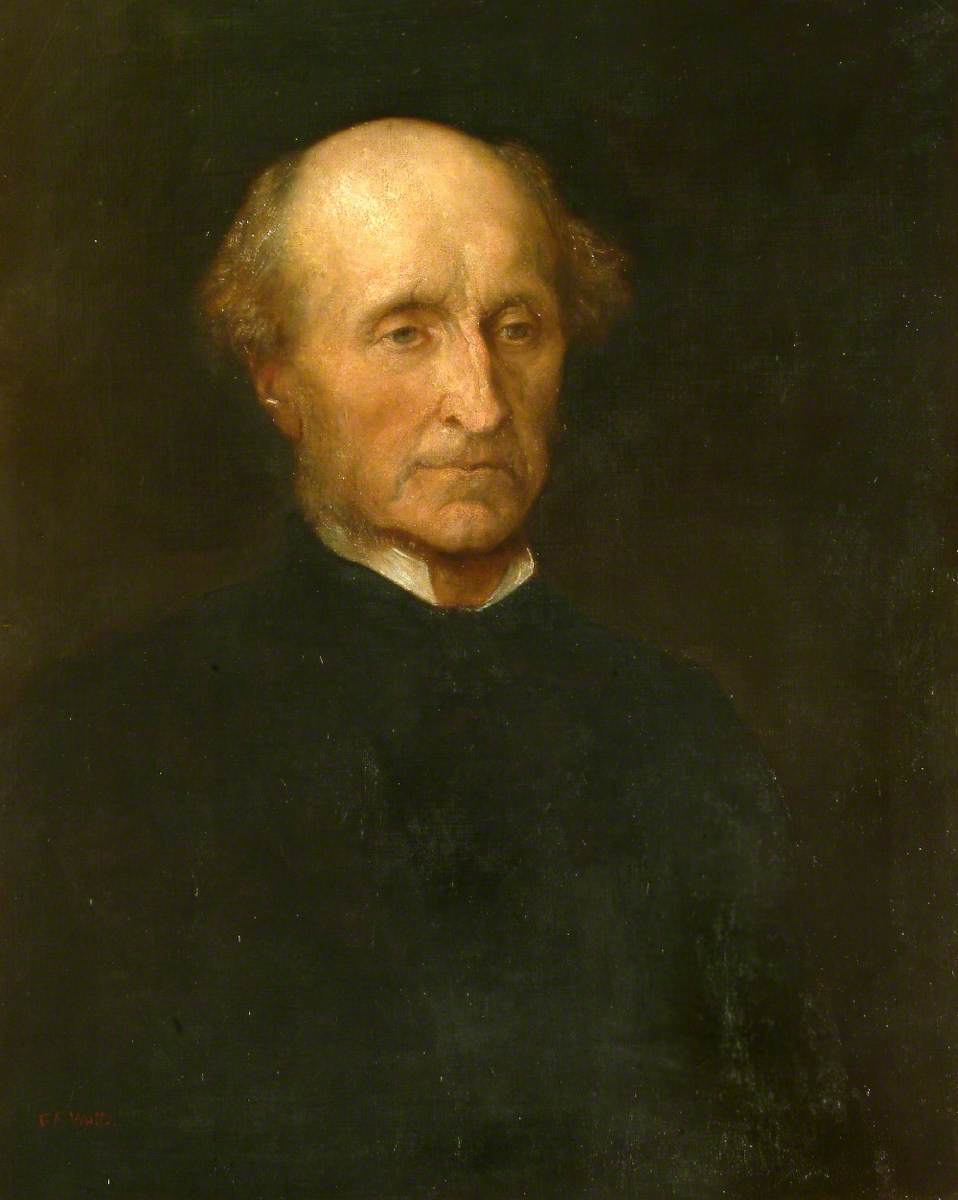
Three theories of well-being
Consequentialism is an empty frame until you say what makes an outcome good. Derek Parfit’s Reasons and Persons (1984) gave the standard taxonomy, and it is still the cleanest map available. Hedonism says well-being consists in pleasant experience and the absence of pain. This is Bentham’s view, and its virtue is that it explains why well-being matters — nobody needs an argument for why agony is bad. Its problem is illustrated by Robert Nozick’s experience machine thought experiment (1974): a tank that gives you any experience you want, indistinguishable from reality, for life. Most people say they would not plug in. If hedonism were true, refusing would be irrational. Something other than the feel of a life apparently matters to us.
Preference satisfaction theories say well-being consists in getting what you actually want. This is the view baked into modern economics, where utility just means a ranking of preferences revealed by choice. It handles the experience machine easily: you prefer real achievement, so simulated achievement does not satisfy your preference. But it inherits new troubles. People want things that are bad for them, want things based on false beliefs, and want things whose satisfaction they will never experience. Most preference utilitarians therefore retreat to informed or idealized preferences — what you would want if you were fully informed and thinking clearly. That repair works, but notice it has quietly moved the standard away from what people actually want.
Objective list theories say certain things make a life go well whether or not they are enjoyed or wanted: health, knowledge, deep friendship, autonomy, meaningful work, achievement. Martha Nussbaum and Amartya Sen’s capabilities approach is the most developed policy version, and it underwrites the United Nations Human Development Index, which since 1990 has ranked countries by life expectancy, education, and income rather than GDP alone. The obvious objection is paternalism: who assembles the list? The obvious reply is that every welfare policy already presupposes one, and it is more honest to argue about the list openly than to pretend a preference survey is neutral.
| Theory | Well-being is… | Strongest case | Hardest problem |
|---|---|---|---|
| Hedonism | Pleasure minus pain | Explains why suffering matters at all | Experience machine; wireheading |
| Preference satisfaction | Getting what you want | Respects individual difference; measurable | Adaptive, uninformed and malicious preferences |
| Informed preference | What an informed you would want | Filters out error | Idealization does the real work, not the person |
| Objective list | Health, knowledge, friendship, autonomy | Matches how we judge lives | Who writes the list? Paternalism |
Adaptive preferences and the measurement trap
Amartya Sen documented a pattern that should unsettle any preference-based measure. In a survey taken in 1944, after the Bengal famine of 1943, widows reported themselves in good health at rates that bore almost no relation to how badly the famine had left them. The same inversion runs through modern Indian data: Kerala, which has the longest life expectancy and the best medical coverage in the country, reports the highest rates of illness, while states such as Bihar, with far worse health services and shorter lives, report the least. People calibrate what they report to what they have learned to expect and to what they have been taught to recognize as illness. Philosophers call the underlying phenomenon adaptive preference, a term from Jon Elster’s Sour Grapes (1983), and it means a satisfaction survey taken in a deprived community can return numbers as high as one taken in a prosperous one. If you allocate resources by self-reported satisfaction, you will systematically underfund the people who have learned not to ask.
This is not a reason to abandon measurement. It is a reason to triangulate. Good welfare analysis pairs subjective reports with objective indicators — anemia prevalence, functional status, school completion — precisely because each catches what the other misses. The nurse who charts a patient’s pain as “three out of ten” while watching them guard the abdomen and refuse to move has encountered the same phenomenon on a single-patient scale.
Every consequentialist calculation smuggles in a theory of well-being, and naming that theory out loud is the single most clarifying move you can make in an applied ethics argument.
Section 3Act, Rule and the Problem of Uncertainty
Act utilitarianism and its practical costs
Act utilitarianism applies the principle directly to each individual choice: perform the act, among those available, whose consequences are best. It is elegant and it is unforgiving. It implies that if breaking a promise, telling a lie, or violating a confidence would produce even slightly more good than keeping faith, you are required to do it. There is no room for a rule to stand between you and the calculation.
Three practical problems follow. The first is calculation cost: deliberating about consequences takes time you often do not have, and the deliberation itself has costs. A nurse who paused to run a felicific calculus at every med pass would harm patients. The second is epistemic limitation: consequences ramify indefinitely, and our predictions decay fast. The third is coordination failure: institutions like promising, contracts, and professional confidentiality generate their benefits precisely because they are reliable. An agent who breaks them whenever the immediate math favors it destroys the practice that made them valuable.
Sophisticated act utilitarians answer that the theory is a criterion of rightness, not a decision procedure. It tells you what makes an act right; it does not tell you to compute in the moment. If following simple rules, cultivating honest dispositions, and trusting professional protocols produces better outcomes than case-by-case calculation — and empirically it usually does — then act utilitarianism itself instructs you to follow rules. R. M. Hare developed this as a two-level view in Moral Thinking (1981): intuitive-level rules for daily life, critical-level utilitarian reasoning for hard cases and for designing the rules.
Rule utilitarianism and the collapse objection
Rule utilitarianism shifts the object of evaluation. An act is right if it conforms to a rule whose general acceptance would produce the best consequences. Richard Brandt, who coined the term in 1959, and Brad Hooker in Ideal Code, Real World (2000) are its leading defenders. The appeal is immediate: rule utilitarianism can forbid the judge from framing an innocent man, because a rule permitting judicial frame-ups would be catastrophic if generally accepted, even though this particular frame-up might maximize utility.
The classic attack, which J. J. C. Smart pressed from 1956 onward and restated in Utilitarianism: For and Against (1973), is that rule utilitarianism either collapses into act utilitarianism or becomes irrational rule worship. Consider the rule “keep your promises.” A better rule is “keep your promises unless breaking one saves a life.” Better still is one with a second exception, and a third. Push the refinement to its limit and you reach “do whatever maximizes utility,” which is act utilitarianism wearing a rule’s clothing. Refuse to refine, and you are telling someone to keep a trivial promise while a person drowns — which is fetishizing the rule over the point of the rule.
Hooker’s reply is that the collapse argument ignores the cost of rules. Rules have to be internalized by ordinary people with limited memory and motivation; a code with unlimited exceptions could not be taught or learned, so the best code to internalize is genuinely simpler than act utilitarianism. This is a real reply and many philosophers find it sufficient. Others hold that it makes rule utilitarianism a theory about codes rather than about acts, which changes the subject. The dispute is genuinely unsettled.
Expected value and the two senses of “right”
Real decisions are made under uncertainty, so mature consequentialism evaluates acts by expected value: for each possible outcome, multiply its value by its probability, and sum. A treatment with a 90 percent chance of a good result and a 10 percent chance of a bad one is compared against alternatives on that basis. This is exactly what a number needed to treat, a risk-benefit discussion, or an actuarial reserve calculation is doing.
Expected value forces a distinction. An act is objectively right if it in fact produces the best outcome, and subjectively right if it maximizes expected value given the evidence reasonably available. These come apart constantly. A physician who prescribes the drug with the best evidence base and whose patient suffers a rare fatal reaction did the subjectively right thing and the objectively wrong one. Most working consequentialists hold that praise, blame, and professional accountability track subjective rightness, because that is the only thing an agent can control. Outcome bias — judging a decision harshly because it turned out badly — is the practical error this distinction exists to prevent.
Uncertainty also generates a real technical worry. If a tiny probability is attached to an enormous value, expected value calculation can be hijacked — the problem of Pascal’s mugging, named by Eliezer Yudkowsky in 2007 and given its best-known philosophical statement in Nick Bostrom’s 2009 Analysis paper of that title. Some theorists respond with bounded value functions, some with skepticism about tiny unsupported probabilities, some with risk-averse decision rules. There is no settled solution, and honest practitioners treat vanishingly small probabilities attached to astronomically large payoffs with suspicion rather than arithmetic.
Act utilitarianism is a criterion of rightness that usually recommends rule-following, rule utilitarianism must explain why it does not collapse into act utilitarianism, and under uncertainty both must be run on expected value rather than actual outcomes.
Section 4The Objections That Bite
The separateness of persons
The deepest objection is not about arithmetic errors; it is about what the arithmetic assumes. John Rawls argued in A Theory of Justice (1971) that utilitarianism extends to society a principle of choice that is only appropriate for one person. Within a single life, it makes sense to accept pain now for greater benefit later — the person who bears the cost is the person who reaps the reward. Utilitarianism treats humanity as if it were one great person, summing across individuals as though a burden imposed on you could be compensated by a benefit to someone else. But there is no experiential ledger where that balancing happens. Rawls called this failure to take seriously the distinction between persons.
The consequence is that classical utilitarianism is indifferent to distribution. Ten units of well-being spread evenly across five people and ten units concentrated in one are, on the raw theory, equally good. Utilitarians have real replies. The diminishing marginal utility of income means that in practice, transferring a dollar from a wealthy person to a poor one usually increases the total — so utilitarianism supports redistribution on empirical grounds. But that is a contingent argument, and it fails wherever the concentration of benefit is efficient. Prioritarianism, defended by Parfit in the Lindley Lecture he delivered in 1991 and published as “Equality or Priority?”, offers a structural fix: give extra weight to benefits that go to the worse off, so a gain to someone badly off counts for more than the same gain to someone flourishing. Many contemporary theorists find this the most defensible form of the view.
Transplant, the trolley, and the integrity objection
Judith Jarvis Thomson’s transplant case (1976) is the sharpest counterexample. A surgeon has five patients dying of organ failure and one healthy person in for a checkup whose organs would save all five. Killing the healthy patient maximizes lives saved. Virtually nobody thinks the surgeon may do it. Compare Philippa Foot’s trolley case (1967), where diverting a runaway trolley kills one instead of five and most people judge that permissible. The numbers are identical; the intuitions are not. Something about using a person as a means, rather than harming them as a side effect, is doing moral work that a pure sum cannot capture. Chapter 4 takes up the doctrine that tries to explain the difference.
The utilitarian reply is institutional. A world in which surgeons harvest healthy patients is a world where nobody goes to the hospital, so the practice would be catastrophic and the rule against it is easily justified on utilitarian grounds. This is correct as far as it goes. Critics answer that it gets the right verdict for the wrong reason: the surgery is not wrong because it would erode public trust, it is wrong because it wrongs that person. If your theory says the killing would be permissible in a perfectly secret one-off case, many people take that as a reductio.
Bernard Williams pressed a different attack in 1973 with the case of Jim and the Indians. Jim, a botanist, stumbles on a captain about to execute twenty villagers; the captain offers to release nineteen if Jim personally shoots one. Utilitarianism says shoot, and Williams conceded that is probably the right answer. His objection was to the ease of it — to a theory that treats Jim’s deep revulsion at becoming a killer as one more preference to be weighed. Williams called this an assault on integrity: utilitarianism alienates agents from the projects and commitments that constitute who they are, because it requires them to be a neutral channel for the best outcome regardless of authorship.
| Objection | The charge | Best utilitarian reply | Does it fully work? |
|---|---|---|---|
| Separateness of persons | Summing ignores who bears the cost | Diminishing marginal utility; adopt prioritarianism | Only by amending the theory |
| Transplant | Permits using a person as a means | Rule-level and institutional trust effects | Right verdict, arguably wrong reason |
| Integrity | Alienates agents from their own commitments | Good agents with projects produce more good | Instrumental, so it concedes Williams’ point |
| Demandingness | Leaves no morally free space | Distinguish rightness from blameworthiness | Contested; some bite the bullet |
| Repugnant Conclusion | Total view favors vast barely-worth-living populations | Average view; critical-level views | No, each fix generates new paradoxes |
Demandingness and population paradoxes
If everyone counts equally and you must maximize, then every dollar you spend on a restaurant meal is a dollar not spent preventing a death from malaria. Peter Singer’s “Famine, Affluence, and Morality,” written in 1971 during the East Bengal refugee crisis and published in 1972, argued that if we can prevent something bad from happening without thereby sacrificing anything of comparable moral importance, we ought to do it. Consistently applied, this eliminates the category of the supererogatory — the good deed beyond the call of duty — because nothing is beyond the call. Some utilitarians accept this and simply live differently; the effective altruism movement grew directly from it. Others distinguish being wrong from being blameworthy, arguing that ordinary people are not blameworthy for failing to be saints even if a better act was available.
The strangest problem is Parfit’s Repugnant Conclusion (1984). If what matters is the total sum of well-being, then a population of ten billion people living excellent lives is worse than a sufficiently enormous population — say a hundred trillion — whose lives are barely worth living, because the sum is larger. Parfit found this repugnant and spent decades failing to escape it. Switching to average well-being avoids it but implies that adding a happy person to a very happy world is bad, and that a world containing one blissful person beats a world containing billions of merely happy ones. Critical-level views set a threshold but then imply that adding lives just below it is bad even though those lives are worth living. This is a live and genuinely unresolved area, not a settled embarrassment; in 2021 a large group of population ethicists published a statement arguing the Repugnant Conclusion should not by itself be treated as decisive against a theory.
The strongest objections — separateness of persons, using people as means, integrity, demandingness, and the Repugnant Conclusion — are not refuted so much as managed, usually by amending the theory rather than defending it whole.
Section 5Consequentialism in Working Institutions

QALYs, DALYs and the arithmetic of health policy
The quality-adjusted life year is utilitarianism operationalized. One QALY equals one year in full health; a year lived at a health utility of 0.5 counts as half a QALY. Cost-effectiveness analysis divides the incremental cost of an intervention by the incremental QALYs it produces, yielding a cost per QALY that lets a hip replacement be compared with a cancer drug. The National Institute for Health and Care Excellence, created in 1999 as the National Institute for Clinical Excellence, has since 2004 used a reference range of roughly £20,000 to £30,000 per QALY in advising the NHS in England on what to fund; above the top of that range the case for a technology has to be increasingly strong. The disability-adjusted life year, developed for the World Bank’s 1993 World Development Report and central to the Global Burden of Disease studies, counts in the opposite direction — years of healthy life lost — so lower is better.
These tools do real good. They made explicit what was previously arbitrary, and they exposed enormous variation in value for money. But every value judgment in them is contestable, and disability rights scholars have pressed the hardest case. If a year lived with quadriplegia is weighted at 0.6, then saving the life of a person with quadriplegia produces fewer QALYs than saving an otherwise identical non-disabled person — the calculation encodes a judgment that some lives are worth less to extend. There is also strong evidence of a disability paradox: people living with serious impairments consistently rate their own quality of life far higher than the general public rates it for them, and standard weights are derived largely from the general public. U.S. federal law reflects the worry directly. Section 6301 of the Affordable Care Act added section 1182 to the Social Security Act, which bars the Patient-Centered Outcomes Research Institute from developing or employing a dollars-per-QALY threshold — the statute describes it as a measure that discounts the value of a life because of a disability — and bars the Secretary of Health and Human Services from using such a threshold to determine Medicare coverage or reimbursement.
| Measure | Direction | Origin | Typical use | Chief criticism |
|---|---|---|---|---|
| QALY | Higher is better | Health economics, 1970s | NICE technology appraisal | Discounts life with disability |
| DALY | Lower is better | World Bank / WHO, 1993 | Global Burden of Disease | Original age weights valued young-adult years most |
| Cost per life saved | Lower is better | Regulatory analysis | Safety rulemaking | Ignores quality and duration of life |
| Value of a statistical life | Higher justifies more spend | Wage-risk studies | U.S. DOT and EPA rules | Derived from workers’ constrained choices |
Triage, pandemics and crisis standards
Triage is consequentialism you can watch happen. Emergency departments use five-level acuity systems to sort by urgency; mass-casualty START protocols sort by survivability with available resources. During the COVID-19 pandemic, U.S. states published crisis standards of care that would govern ventilator allocation if demand exceeded supply. Most used the Sequential Organ Failure Assessment score to estimate short-term survival, and several added tiebreakers for life-cycle considerations or for essential workers.
The controversies that followed are a case study in the theory’s limits. Several states’ early protocols categorically excluded people with certain disabilities or set aside advance directives; disability rights groups filed federal civil rights complaints in March and April 2020, and the U.S. Office for Civil Rights secured revisions in Alabama, Pennsylvania, and elsewhere. The lesson is not that triage is wrong — refusing to prioritize under genuine scarcity simply means allocating by queue position or luck, which saves fewer people. The lesson is that maximizing lives saved is a defensible goal only when the survival estimate is individualized, evidence-based, and free of proxies that encode social judgments about whose life is worth living.
Using the theory well
A working professional does not need to be a utilitarian to reason like one competently. Three habits carry most of the value. First, always ask who is inside the calculation and who was left out — future patients, family caregivers, the night shift, the people downstream. Boundary-drawing is where most consequentialist analyses go wrong, and it is usually invisible. Second, be explicit about the well-being measure and its uncertainty. A cost per QALY reported to four significant figures with no confidence interval is a rhetorical device, not a finding. Third, treat side constraints as real. Whether you ground them in rights, in rule-level utility, or in professional codes, some things stay off the table — and a decision process that never says “not that, regardless of the numbers” should worry you.
Notice too where the theory is genuinely at its best. It handles scale and probability far better than its rivals, which is why it dominates public health, safety regulation, and resource allocation. It is impartial by construction, which makes it a good corrective to institutional favoritism. And it forces you to look at results, which is a discipline any profession that has ever defended a harmful tradition on the grounds that it was tradition badly needs. The mature position, held by many working ethicists, is pluralist: run the consequentialist analysis, take it seriously, and then check it against the duties, rights, and character questions the next three chapters develop.
Consequentialist tools already govern health policy, safety regulation, and triage, so the practical skill is not choosing whether to use them but auditing their boundaries, their well-being measure, and the constraints they must not override.
The chapter in one breath
Consequentialism holds that outcomes alone determine rightness; utilitarianism adds that only well-being counts and that it should be summed impartially across everyone affected. Bentham built the theory as a reform weapon against a legal system he thought cruel and irrational, and its impartiality made it radical — it counted the enslaved, the poor, women, and animals when almost nothing else did. Mill softened it by distinguishing higher from lower pleasures, at some cost to its hedonic purity. Every application requires a theory of well-being, and the choice between hedonism, preference satisfaction, and objective lists determines who gets counted and how. Act utilitarianism supplies a criterion of rightness that usually recommends following rules; rule utilitarianism supplies the rules directly but must answer the charge that it either collapses into act utilitarianism or worships rules. Under uncertainty the theory runs on expected value, which separates being right from being lucky. The serious objections — the separateness of persons, the transplant surgeon, integrity, demandingness, the Repugnant Conclusion — are managed rather than defeated, usually by amending the theory. Meanwhile QALYs, DALYs, and triage protocols run consequentialist logic in every hospital and health ministry on earth, which makes reading the arithmetic critically a professional skill and not an academic one.
Words worth knowing
| Term | What it means |
|---|---|
| Consequentialism | The view that only the outcomes of an act determine whether it is right. |
| Utilitarianism | Consequentialism plus welfarism plus impartial aggregation of well-being. |
| Welfarism | The claim that only effects on well-being make an outcome good or bad. |
| Principle of utility | Bentham’s standard: approve of actions in proportion to their tendency to increase happiness. |
| Felicific calculus | Bentham’s seven dimensions for measuring pleasure and pain, including intensity, duration and extent. |
| Higher pleasures | Mill’s category of intellectual and moral enjoyments held superior in kind, not merely amount. |
| Hedonism | The theory that well-being consists in pleasant experience and the absence of pain. |
| Preference satisfaction | The theory that well-being consists in getting what one wants, often idealized to informed wants. |
| Objective list theory | The view that specific goods such as health, knowledge and friendship make a life go well regardless of enjoyment. |
| Adaptive preference | A want or self-report shaped downward by deprivation, which distorts satisfaction-based measurement. |
| Act utilitarianism | Each individual act is right if it produces the best available outcome. |
| Rule utilitarianism | An act is right if it conforms to a rule whose general acceptance would produce the best outcomes. |
| Criterion vs. decision procedure | What makes an act right versus how an agent should actually deliberate; the two can differ. |
| Expected value | The probability-weighted sum of an act’s possible outcomes, used for decisions under uncertainty. |
| Separateness of persons | Rawls’ objection that summing across people ignores that burdens and benefits fall on different individuals. |
| Prioritarianism | The view that a benefit matters more the worse off its recipient is. |
| Demandingness objection | The charge that impartial maximizing leaves no space for personal projects or optional good deeds. |
| Supererogatory | Morally praiseworthy but not required; a category strict utilitarianism struggles to accommodate. |
| Repugnant Conclusion | Parfit’s result that a vast population with lives barely worth living can outrank a smaller flourishing one on the total view. |
| QALY | Quality-adjusted life year: one year in full health, used to compare the value of health interventions. |
| DALY | Disability-adjusted life year: a year of healthy life lost, used to measure disease burden. |
Check yourself
Deontology and the Ethics of Duty
Chapter 3 left us with a nagging problem: if only outcomes matter, then a good enough outcome can license almost anything — a framed defendant, a harvested patient, a lie told for someone’s own good. Deontology is the family of theories that answers, flatly, no. Some acts are wrong in themselves, whatever they produce, because of what they do to the person on the receiving end. This chapter works through that claim carefully, mostly through Immanuel Kant, who gave it its most demanding form, and through the twentieth–century philosophers who repaired and reshaped it: W.D. Ross on conflicting duties, Judith Jarvis Thomson and Philippa Foot on the trolley cases, Christine Korsgaard on lying to murderers. You will meet the Nuremberg Code, the Tuskegee syphilis study, and the daily deontology of a signed consent form. By the end you should be able to run a moral problem through duty–based machinery and see exactly where it grips and where it slips.
By the end of this chapter you can
- Define deontology and explain how it differs from consequentialism in the structure of its reasoning, not just its verdicts.
- Distinguish a hypothetical imperative from a categorical imperative, and explain why Kant thought only the latter yields moral obligation.
- Apply the Formula of Universal Law and the Formula of Humanity to a concrete case and state what each one detects.
- Explain Kant’s notions of the good will, autonomy, and dignity, and why he denies that heteronomous motives have moral worth.
- Distinguish perfect from imperfect duties, and duties to others from duties to self.
- Use W.D. Ross’s prima facie duties to analyze a genuine conflict of obligations and identify the duty proper.
- Evaluate standard objections to deontology — rigorism, the murderer at the door, conflicting duties, empty formalism, moral luck — and state the strongest available reply.
- Explain threshold deontology, the doctrine of double effect, and the acts/omissions distinction, and say what each is doing argumentative work for.
- Trace how duty–based ethics shaped informed consent, the Nuremberg Code, and modern research regulation.
Section 1Why Outcomes Are Not the Whole Story
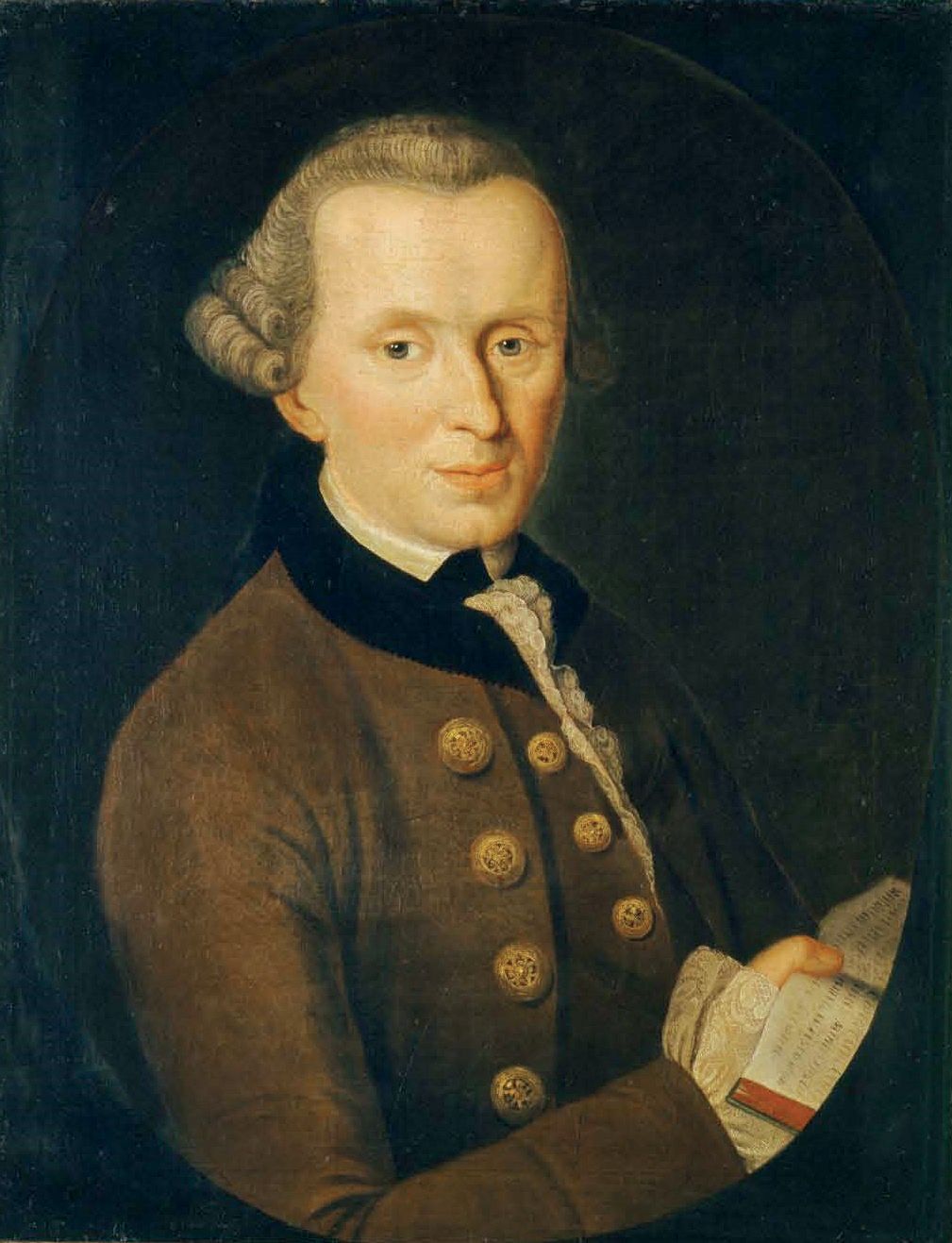
The complaint against consequences
Start with a case that has haunted moral philosophy since H.J. McCloskey posed a version of it in 1957. A town is on the edge of a riot; the mob will kill five innocent people unless someone is punished for a crime. The sheriff knows the real culprit has fled. He can frame an innocent man, hang him, and save five lives. A strict act utilitarian, counting only welfare, seems committed to the frame–up. Most people, including most utilitarians in their unguarded moments, find this monstrous — and not because they doubt the arithmetic. They find it monstrous because of what it does to the man in the cell. He is used. His life is spent as a means of crowd control, and nobody asked him.
That reaction is the seed of deontology, from the Greek deon, meaning duty or what is binding. Deontological theories hold that the rightness of an action is not determined solely by its consequences. Certain kinds of act — killing the innocent, lying, breaking a promise, using a person as a mere instrument — carry a moral character of their own. The term itself was coined by Jeremy Bentham, of all people, in manuscripts published after his death as Deontology (1834), though he meant something different by it; C.D. Broad gave it its modern sense in Five Types of Ethical Theory (1930).
Be careful about a common misreading. Deontologists are not indifferent to consequences. A surgeon who ignored outcomes would be a menace, not a Kantian. The claim is narrower and sharper: consequences are not the only thing that determines rightness, and some constraints hold even when violating them would produce more good. Philosophers call these agent–relative constraints. They are addressed to you, about what you may do, and they do not dissolve just because your violating them would prevent two other people from violating them. That last feature is what makes deontology genuinely strange to a consequentialist eye.
The paradox of deontology
Samuel Scheffler put the puzzle sharply in The Rejection of Consequentialism (1982). If killing an innocent person is a terrible thing, and what makes it terrible is something about the killing itself, why is it not better that there be fewer such killings in the world? Suppose you can prevent five murders only by committing one. A constraint against killing tells you not to. But then the theory seems to care more about keeping your own hands clean than about the value it claims to protect. Critics call this moral self–indulgence, a charge Bernard Williams examined and rejected in a 1976 essay of that name, later reprinted in his collection Moral Luck (1981).
The standard reply, developed by Frances Kamm and by Thomas Nagel, is that constraints are not about minimizing a quantity of badness in the world. They express a relation between you and the particular person in front of you. Nagel writes that when you aim at someone’s harm, you must, in the act, treat their resistance as an obstacle — you are pointed at them, and that is a distinct moral posture from failing to rescue. The value protected is not “fewer deaths” in the aggregate; it is the standing of each person not to be commandeered. Whether that reply fully works is one of the live fault lines in contemporary moral theory.
What a deontologist is committed to
Most deontological views combine three elements: a set of constraints (things you may not do), a set of duties (things you must do), and a set of options or prerogatives (space to pursue your own projects rather than maximizing good for everyone). That third element matters more than students expect. Utilitarianism is famously demanding — every spare dollar and hour is claimed by whoever needs it most. Deontology typically leaves you a life. You must not defraud your patients; you are not thereby obliged to work every waking hour.
| Question | Consequentialist answer | Deontological answer |
|---|---|---|
| What makes an act right? | It produces the best available outcome. | It conforms to a valid duty or constraint. |
| Where does moral value start? | In states of affairs — welfare, preference, wellbeing. | In persons and in acts — rational agents and what is done to them. |
| Can a good end justify a bad means? | In principle yes, if the sums come out right. | Not for acts falling under an absolute constraint. |
| May I do wrong to prevent more wrong? | Yes; that is simply minimizing. | Usually no; constraints are agent–relative. |
| How demanding is it? | Very — you must always maximize. | Moderate — duties bind, but leave personal room. |
| Typical failure mode | Justifying atrocities by arithmetic. | Rigid rule–following in the face of catastrophe. |
Deontology is the claim that some acts are right or wrong in virtue of what they are and whom they are done to, not solely in virtue of the outcomes they produce.
Section 2Kant: The Good Will and the Categorical Imperative
Nothing good without qualification except a good will
Immanuel Kant (1724–1804) spent his whole life in and around Königsberg, then the capital of East Prussia, and produced in 1785 a short book, the Groundwork of the Metaphysics of Morals, that reorganized moral philosophy around a single idea. It opens with one of the most quoted sentences in the discipline: nothing can be conceived in the world, or out of it, that can be called good without qualification except a good will. Intelligence, courage, wealth, even happiness can all be put to vicious use. A courageous villain is worse than a cowardly one. Only the will that acts from duty carries value that cannot be corrupted.
Kant then draws a distinction that trips people up on first reading. An act done in conformity with duty is not the same as an act done from duty. His example is a shopkeeper who charges honest prices — but only because cheating would ruin his reputation. He does the right thing; he does not act morally, because his motive is self–interest. Kant calls motives that come from outside reason — inclination, fear, desire, social pressure — heteronomous. Only when the will legislates the moral law to itself does it act autonomously, and only then does the action have moral worth.
This is a hard doctrine and it has been criticized since Friedrich Schiller mocked it in an epigram of 1796: must I despise my friends in order to help them from duty alone? Modern Kantians such as Barbara Herman and Marcia Baron read Kant more charitably. Duty need not be the felt motive on every occasion; it must be the limiting condition — the thing that would stop you if inclination pointed the wrong way. The kind nurse who genuinely likes her patients is not disqualified. She is disqualified only if her kindness would evaporate the moment she stopped liking someone.
Hypothetical and categorical imperatives
Kant observed that most practical advice takes a conditional form. “If you want to pass pharmacology, study the drug classes.” “If you want to avoid a lawsuit, document carefully.” These are hypothetical imperatives: they bind you only insofar as you hold the relevant end. Drop the end and the command dissolves. If you no longer care about passing, the advice has no grip.
Moral requirements do not work that way. “Do not falsify the chart” does not lapse if you stop caring about your license. It commands unconditionally. Kant calls such a command a categorical imperative, and he argues there is fundamentally only one, expressible in several formulations. The first, the Formula of Universal Law, runs: act only according to that maxim by which you can at the same time will that it should become a universal law.
The machinery is precise. A maxim is your subjective principle of action — roughly, what you are doing and why, stated as a policy. Not “I will borrow ten dollars,” but “whenever I need money, I will borrow it on a promise I know I cannot keep.” You then imagine that maxim as a law of nature that everyone follows, and ask whether it survives. Kant identifies two ways it can fail. A contradiction in conception occurs when universalizing the maxim destroys the very practice it depends on: if everyone made lying promises, promising would collapse and no one would accept your promise, so the maxim is self–defeating. A contradiction in the will occurs when you could coherently imagine the universalized world but could not rationally will it: a world where no one ever helps anyone is conceivable, but as a finite being who will sometimes need help, you cannot consistently will it.
The Formula of Humanity
The second major formulation is the one clinicians and lawyers reach for most: act so that you use humanity, whether in your own person or in that of another, always at the same time as an end, never merely as a means. This is the Formula of Humanity.
Note the word merely. Kant is not banning the use of other people; that would make ordinary life impossible. You use the pharmacist as a means to a prescription, the driver as a means to a destination. What you may not do is treat someone solely as an instrument — bypassing their rational agency, acting on them in a way to which they could not possibly consent. Deception and coercion are the paradigm violations. When you lie to someone, you cannot share your real maxim with them, because disclosing it would defeat it. Kant calls this the test of whether they could “contain in themselves the end of the action.”
From this Kant derives dignity. Things have a price and can be exchanged for an equivalent; persons have dignity, which admits of no equivalent. This is the philosophical taproot of every modern claim that a human being is not a commodity, and it flows directly into Article 1 of the German Basic Law of 1949 (“Human dignity shall be inviolable”) and the preamble to the 1948 Universal Declaration of Human Rights.
A third formulation, the Formula of the Kingdom of Ends, asks you to act as a legislating member of a community in which everyone is both author and subject of the law. Kant claims the formulations are equivalent; most scholars think they are at least not obviously so, and that the Formula of Humanity does the most practical work.
| Formulation | Test it applies | Catches | Worked example |
|---|---|---|---|
| Universal Law | Can the maxim be willed as a universal law without contradiction? | Free–riding, exceptions made for oneself | Falsifying one time sheet relies on everyone else’s being honest. |
| Humanity | Is anyone being used merely as a means? | Deception, coercion, bypassing consent | Enrolling a patient in a trial without telling them it is a trial. |
| Autonomy / Kingdom of Ends | Could I will this as law for a community of free rational beings? | Rules that only work if hidden | A billing practice you would never explain to the patient. |
For Kant, moral worth lies in a will that binds itself to a law it can universalize, and the deepest expression of that law is the requirement never to treat a rational being merely as an instrument.
Section 3Duties, Conflicts and W.D. Ross

Perfect and imperfect duties
Kant sorts duties along two axes, producing four boxes. The first axis is perfect versus imperfect. A perfect duty admits no exceptions and specifies exactly what you must not do: do not make lying promises, do not kill the innocent, do not commit suicide (Kant’s own contested example). An imperfect duty specifies an end you must adopt but leaves latitude in how and when: develop your talents, help others in need. You are not obliged to help every person on every occasion, but a policy of never helping anyone is forbidden. The second axis is duties to others versus duties to oneself — a category most contemporary ethicists find strange, but which Kant took seriously, because for him the moral law protects rational nature wherever it appears, including in you.
| Perfect duty (strict, no latitude) | Imperfect duty (meritorious, latitude) | |
|---|---|---|
| To self | Do not destroy yourself; do not degrade your rational agency | Cultivate your talents; do not let capacities rot |
| To others | Do not lie; do not make false promises; do not coerce | Beneficence — contribute to the ends of others |
The practical payoff is real. In a clinical setting, the duty not to deceive a patient is perfect: there is no latitude, no “I was busy.” The duty to advocate for patients beyond your assigned shift is imperfect: it is genuine, but you exercise judgment about when and how much. Confusing the two produces either burnout or misconduct, depending on which way you err.
Ross and prima facie duties
Kant’s system has an obvious weak spot. What happens when two perfect duties collide? Kant tended to deny it could really happen. Sir William David Ross (1877–1971), an Oxford philosopher best known outside ethics for translating Aristotle, thought this was plainly false to experience, and in The Right and the Good (1930) he built an alternative.
Ross proposed a plurality of prima facie duties — obligations that are real and that hold “other things being equal,” but that can be outweighed by a stronger duty in a given case. The name is unfortunate, and Ross apologized for it in the book itself: “prima facie” suggests mere appearance, whereas he meant something genuinely binding. Some writers prefer pro tanto duty. When duties conflict, one of them becomes your duty proper — the thing you actually ought to do, all things considered. The defeated duty does not vanish; Ross noted that it leaves what philosophers now call moral residue. You owe an explanation, an apology, sometimes compensation.
Crucially, Ross denied there is any master rule for ranking them. Weighing is a matter of judgment in the particular case — a position called moral intuitionism. Critics say this is an admission of defeat, a theory that tells you what matters and then shrugs. Defenders, including Robert Audi in more recent work, argue that this is simply honest: moral life does not come with an algorithm, and any theory that claims one is bluffing.
| Ross’s prima facie duty | What it requires | Everyday case |
|---|---|---|
| Fidelity | Keep promises; tell the truth | You said you would cover the shift |
| Reparation | Make good on harm you caused | You misplaced a colleague’s equipment |
| Gratitude | Return the good others have done you | A mentor who trained you now needs a reference |
| Justice | Distribute benefits and burdens fairly | Assigning the hardest patients to one nurse every night |
| Beneficence | Improve others’ condition | Sitting with a frightened patient past the end of a task |
| Self–improvement | Better your own virtue and knowledge | Keeping current with practice standards |
| Non–maleficence | Do not injure others | Refusing to give a drug you believe is wrongly dosed |
Working a conflict
Take a real–shaped case. A patient tells you, in confidence, that he intends to stop taking his anticoagulant and has not told the prescriber. Fidelity says keep his confidence. Non–maleficence and beneficence say the prescriber needs to know. A rigid Kantian reading gives you little traction, because the perfect duty here is not to lie, and staying silent is not lying. Ross gives you a vocabulary: confidentiality is a genuine duty; it is here outweighed by a serious and specific risk of harm; and the residue is real — you owe the patient an honest conversation about why you are breaking his confidence rather than doing it behind him. That last step is what separates a considered judgment from a rationalization.
Ross keeps deontology’s insight that duties are real and plural while conceding what Kant resisted — that duties genuinely conflict and must be weighed by judgment rather than by formula.
Section 4The Hard Cases: Lying, Trolleys and Thresholds

The murderer at the door
In 1797 Kant published a short, notorious essay, On a Supposed Right to Lie from Philanthropy, responding to the Swiss–French writer Benjamin Constant. Constant had argued that no one owes the truth to a would–be murderer asking where his intended victim is hiding. Kant disagreed. Truthfulness, he wrote, is an unconditional duty; lie to the murderer and you become responsible for whatever follows, including the possibility that your victim slipped out the back and the lie sends the murderer straight to him.
Almost no one finds this persuasive as stated, and it is the single most damaging exhibit against Kantian ethics. But the essay is more interesting than its reputation. Kant is partly making a legal point about liability under civil law rather than a purely moral one, and the 1797 essay is a polemic written by a man of seventy–three, not a considered part of the Groundwork. Christine Korsgaard argued in a well–known 1986 paper that Kant’s own Formula of Humanity gives a better answer than his Formula of Universal Law did: the murderer, by his own conduct, has placed himself outside the relation of mutual respect that grounds the duty of candor. Deception of someone who is already coercing you does not use them as a mere means in the objectionable way, because you are not undermining a rational agency they are currently exercising in good faith. Korsgaard concedes this is a repair, not an exegesis.
There is a further move worth knowing. Kant distinguishes a lie from a mere failure to disclose. You are rarely obliged to volunteer information. “I will not tell you” is not a lie, and in many real situations — a stalker calling a clinic, a family member fishing for a diagnosis — it is both honest and protective. Students who think Kantian ethics forces them to blurt everything have confused the duty not to deceive with a duty to disclose.
Trolleys, double effect and the acts/omissions line
Philippa Foot introduced the case in a 1967 paper on abortion and the doctrine of double effect, where the agent is the driver of a runaway tram who can steer onto a side track; Judith Jarvis Thomson developed it, named the trolley problem, and added the bystander–at–the–switch and footbridge variants in papers of 1976 and 1985. Take the version most people are shown. A runaway trolley will kill five workers. You, a bystander, can pull a lever diverting it to a side track where it kills one. Most people say pull. Now the footbridge variant: the only way to stop the trolley is to push a large man off a bridge into its path. Most people say do not push, even though the numbers are identical. Something other than arithmetic is doing the work.
Deontologists explain the gap with two tools. The doctrine of double effect, whose lineage runs back to Thomas Aquinas in the Summa Theologiae, distinguishes harm intended as a means or end from harm merely foreseen as a side effect. Divert the trolley and the one worker’s death is a foreseen side effect; if he miraculously stepped clear, you would be relieved and your plan would still work. Push the man and his body is the plan; if he bounced off harmlessly you would have failed. Thomson herself doubted that double effect explained the gap and kept looking for an account in terms of rights; but the feature she fastened on — that the footbridge case uses a person’s body as a physical instrument — is the Formula of Humanity violation in its purest form.
The acts/omissions distinction is the second tool: killing is generally held to be worse than letting die, other things equal. James Rachels attacked this directly in a famous 1975 New England Journal of Medicine paper, with a pair of cases — Smith drowns his young cousin in the bath; Jones intends to but finds the child already drowning and merely watches. Our judgments of the two men are identical, Rachels argues, so the bare act/omission difference cannot carry moral weight. Defenders reply that Rachels has held motive fixed at “murderous” and thereby smuggled the difference out of view; in ordinary cases, motive, effort, and the number of people who could have acted all differ.
| Condition of double effect | What it demands | Clinical illustration |
|---|---|---|
| The act itself is not wrong | Independently permissible or neutral | Giving morphine for pain is a legitimate act |
| Good effect is intended | Bad effect is foreseen, not aimed at | Relief of pain is the goal, not death |
| Bad effect is not the means | Good does not come through the harm | Comfort does not arrive by way of respiratory depression |
| Proportionality | Grave enough reason for the risk | Refractory pain at the end of life, not mild discomfort |
Thresholds and absolutes
Suppose a constraint against torture. Now suppose a device that will kill a million people, and one man who knows the code. Absolutists say the constraint holds regardless. Elizabeth Anscombe held that line fiercely: better known as a founder of modern virtue ethics, she also insisted on absolute prohibitions, and she protested Oxford’s 1956 decision to give Harry Truman an honorary degree on the grounds that he had ordered the deliberate killing of civilians. Threshold deontology, associated with Michael Moore and discussed by Nozick as “catastrophic moral horror,” says constraints hold up to some very high threshold and then give way.
Threshold views are practically attractive and theoretically awkward. Where exactly is the line? If a thousand deaths are not enough and a million are, what happens at 999,999? Any answer looks arbitrary, and once the constraint can be outweighed, it starts to look like a very heavy consequentialist weight rather than a constraint at all. The argument is unfinished. Being able to state the cost of each position is worth more than picking one and defending it reflexively.
The hard cases show that deontology’s power comes from distinctions — intending versus foreseeing, doing versus allowing, using versus harming — and that each of those distinctions is defensible but contested.
Section 5Duty in Practice: Consent, Rights and Professional Life
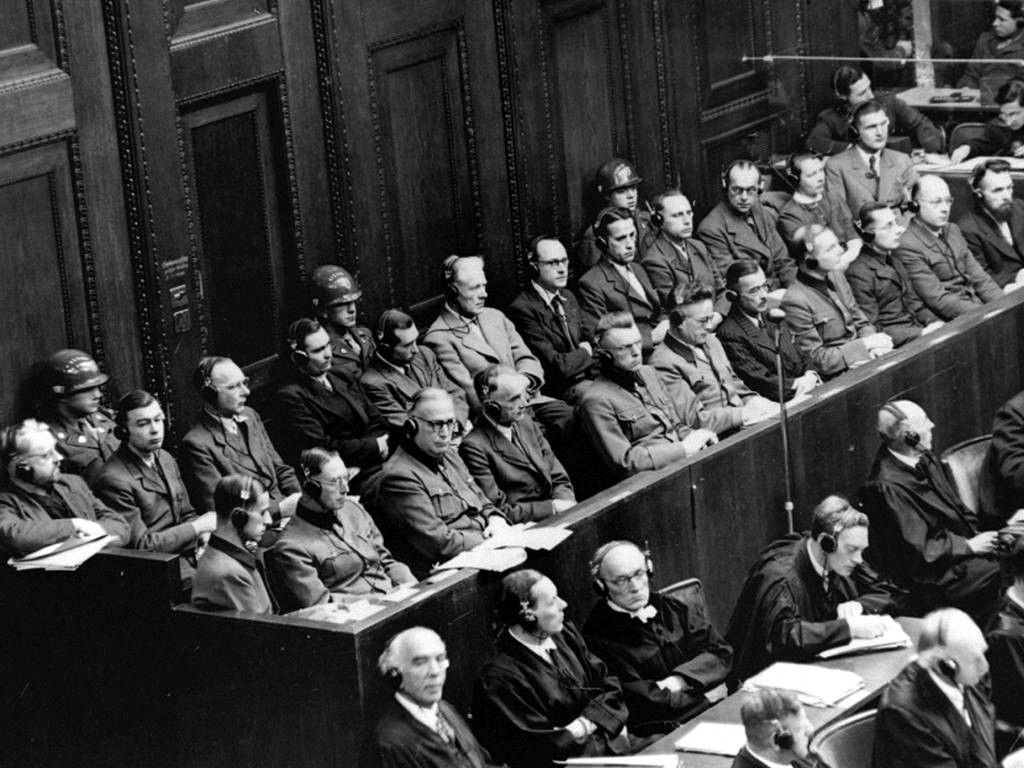
From Nuremberg to the consent form
The most consequential deontological document of the twentieth century was written by judges, not philosophers. At the Doctors’ Trial in Nuremberg, twenty–three German physicians and administrators were tried for experiments on concentration camp prisoners — freezing, high–altitude, seawater and infection studies conducted without consent and frequently to the point of death. Sixteen were convicted; seven were hanged in June 1948. In their August 1947 judgment the tribunal set out ten principles now called the Nuremberg Code. Its first sentence is uncompromising: the voluntary consent of the human subject is absolutely essential.
Read that as philosophy and it is pure Formula of Humanity. Note what the Code does not say. It does not say that experiments must produce enough scientific benefit to outweigh the suffering. It refuses the trade at the outset, because the subject is a person and not a resource. That refusal is the deontological move in its clearest institutional form.
It took the United States decades to absorb the lesson. The Tuskegee Study of Untreated Syphilis in the Negro Male ran from 1932 to 1972 under the U.S. Public Health Service, enrolling roughly 600 Black men in Macon County, Alabama, about 400 with latent syphilis. They were told they were being treated for “bad blood.” They were not treated. When penicillin became the standard cure in the late 1940s, it was withheld, and investigators actively worked to keep subjects from getting it elsewhere. The study ended only after Peter Buxtun, a PHS venereal disease investigator whose internal complaints had gone nowhere, passed the story to the press, and Jean Heller’s account appeared in July 1972. The resulting National Research Act of 1974 put institutional review boards on a statutory footing and created the commission that produced the Belmont Report in 1979 — respect for persons, beneficence, justice. Chapter 8 takes up those principles in detail; what matters here is the lineage. The consent form on a clipboard is a piece of applied Kantianism with a body count behind it.
Rights as the political face of duty
Deontology and rights talk are close kin. If I have a duty not to deceive you, you have a corresponding claim against me. Wesley Hohfeld’s analysis, published in the Yale Law Journal in 1913 and 1917, disentangled the vocabulary that lawyers and ethicists still use: a claim right correlates with someone’s duty; a liberty is merely the absence of a duty not to; a power changes legal relations; an immunity protects you from someone else’s power.
Robert Nozick, in Anarchy, State, and Utopia (1974), made the connection explicit with his phrase side constraints: rights are not goals to be maximized but boundaries on what may be done to individuals, and he traced the idea straight to Kant. John Rawls, though he built a very different theory in A Theory of Justice (1971), also placed himself in the Kantian tradition, arguing that principles of justice are what free and equal persons would choose behind a veil of ignorance. Chapter 6 develops these. The point here is that when a nurse says “the patient has a right to refuse,” she is speaking the descendant language of duty–based ethics, and the sentence means the refusal is not up for cost–benefit review.
What duty ethics gets right, and where it strains
The strengths are considerable. Deontology explains the moral weight of promises and consent better than any rival. It gives a principled account of why the vulnerable may not be sacrificed to majorities — the single most important safeguard in research and clinical ethics. It builds in equality: every rational being has the same dignity, and no one’s interests get extra weight for being clever or popular or rich. And it is honest about the limits of calculation, which matters in a profession where you rarely have the data a utilitarian calculation would need.
The strains are equally real. Duties conflict and the theory struggles to adjudicate. Rigid application produces monstrous results in extreme cases. Anscombe’s 1958 essay “Modern Moral Philosophy” pressed a deeper worry: talk of moral “obligation” and “law” may be a leftover from a religious framework, and without a lawgiver the notion of a law nobody legislated is incoherent. Kantians reply that reason itself is the legislator; whether that reply succeeds is a genuine open question. And there is moral luck, pressed by Bernard Williams and Thomas Nagel in a 1976 symposium: Kant insists the good will shines “like a jewel” regardless of results, yet we plainly do judge the drunk driver who kills differently from the drunk driver who gets home. Either our practice is confused or the theory is incomplete.
Most working ethicists are not card–carrying anythings. They use deontology to fix the boundaries — consent, honesty, non–exploitation — and then reason consequentially within them about how to do the most good. That is not intellectual cowardice; it is close to what Ross described, and it is how the four–principles framework in Chapter 8 actually functions in a hospital.
Informed consent, human rights and professional codes are duty–based ethics made institutional — they exist precisely to take certain harms off the negotiating table.
The chapter in one breath
Deontology begins from a refusal: the good end does not sanctify every means, because persons are not resources. Kant gave the refusal a rigorous form. Moral worth lies in the good will, in acting from duty rather than inclination; moral requirements are categorical rather than conditional on what you happen to want; and the supreme principle can be stated either as universalizability — act only on maxims you could will as law — or as the requirement never to treat humanity merely as a means. From these he derived perfect and imperfect duties, autonomy, and the dignity that has no price. Ross then repaired the system’s worst weakness by admitting that plural duties genuinely conflict and must be weighed by judgment, leaving moral residue when one loses. The hard cases — the murderer at the door, the footbridge, the ticking bomb — test the distinctions deontology depends on: intending versus foreseeing, doing versus allowing, absolute constraint versus threshold. None of those disputes is closed. What is settled is the institutional legacy: Nuremberg, the Belmont Report, informed consent, and the ordinary, unglamorous rule that a patient’s refusal is not subject to anyone else’s cost–benefit analysis.
Words worth knowing
| Term | What it means |
|---|---|
| Deontology | The family of theories holding that rightness depends on duties and constraints, not solely on consequences. |
| Good will | Kant’s term for a will that acts from duty; the only thing good without qualification. |
| Maxim | The subjective principle of an action — what you are doing and why, stated as a policy. |
| Hypothetical imperative | A command binding only if you hold a particular end (“if you want X, do Y”). |
| Categorical imperative | A command binding unconditionally on any rational agent, regardless of desires. |
| Formula of Universal Law | Act only on a maxim you can will to become a universal law without contradiction. |
| Formula of Humanity | Treat humanity always as an end, never merely as a means. |
| Autonomy / heteronomy | Self–legislation by reason, versus being governed by inclination or external pressure. |
| Dignity | The value of a rational being, which admits of no equivalent and cannot be traded for a price. |
| Perfect duty | A strict duty with no latitude, usually a prohibition (do not lie, do not coerce). |
| Imperfect duty | A duty to adopt an end, leaving latitude in how and when to act on it (beneficence, self–improvement). |
| Prima facie duty | Ross’s term for a real obligation that can be outweighed by a stronger one in a given case. |
| Duty proper | What you ought to do all things considered, after weighing competing prima facie duties. |
| Moral residue | The obligation that remains — apology, explanation, repair — when a genuine duty is overridden. |
| Agent–relative constraint | A restriction on what you may do, which does not dissolve even to prevent more violations by others. |
| Doctrine of double effect | The view that harm intended as means or end is worse than equivalent harm merely foreseen. |
| Acts/omissions distinction | The claim that killing is generally morally worse than allowing to die, other things equal. |
| Threshold deontology | The view that constraints hold absolutely until consequences become catastrophic, then give way. |
| Side constraint | Nozick’s term for a right that bounds permissible action rather than functioning as a goal to maximize. |
| Moral luck | The problem that we judge agents by outcomes beyond their control, which duty ethics says should not matter. |
Check yourself
Virtue Ethics and Character
Consequentialism asks what an act produces. Deontology asks what a rule requires. Virtue ethics asks a stranger question: what kind of person is doing the acting, and what kind of person will they become by doing it? That shift — from the deed to the doer — is old, roughly twenty-four centuries old, and it came back into professional life for a very practical reason. Health systems discovered that staff who could recite every rule still left patients unwashed and unfed. Something other than rule-knowledge was failing. This chapter works through Aristotle’s machinery of habit, practical wisdom and the mean; it takes seriously the parallel traditions in China, Rome, medieval Europe and southern Africa; it confronts the psychological evidence that character may be far weaker than the theory needs; and it lands where you work, on wards and in offices, where institutions either grow good practitioners or quietly grind them down.
By the end of this chapter you can
- Explain how virtue ethics differs from act-centred theories by asking about the agent rather than the action alone.
- Define eudaimonia, arete, hexis and the function argument, and show how Aristotle links them.
- Apply the doctrine of the mean to real cases, and state its limits.
- Distinguish phronesis (practical wisdom) from technical skill and from rule-following, and explain akrasia.
- Compare Aristotelian, Stoic, Confucian, Thomist and ubuntu accounts of character on at least three points of substance.
- Summarise the situationist challenge from Milgram, Darley and Batson, and Isen and Levin, and evaluate the main replies.
- Use MacIntyre’s distinction between internal goods, external goods, practices and institutions to diagnose an organisational failure.
- Identify moral distress and moral injury in clinical narratives and explain why they are structural, not merely personal.
- Construct a defensible virtue-based argument about a professional case, naming the virtues at stake and the reasoning that connects them to action.
Section 1From the Act to the Agent
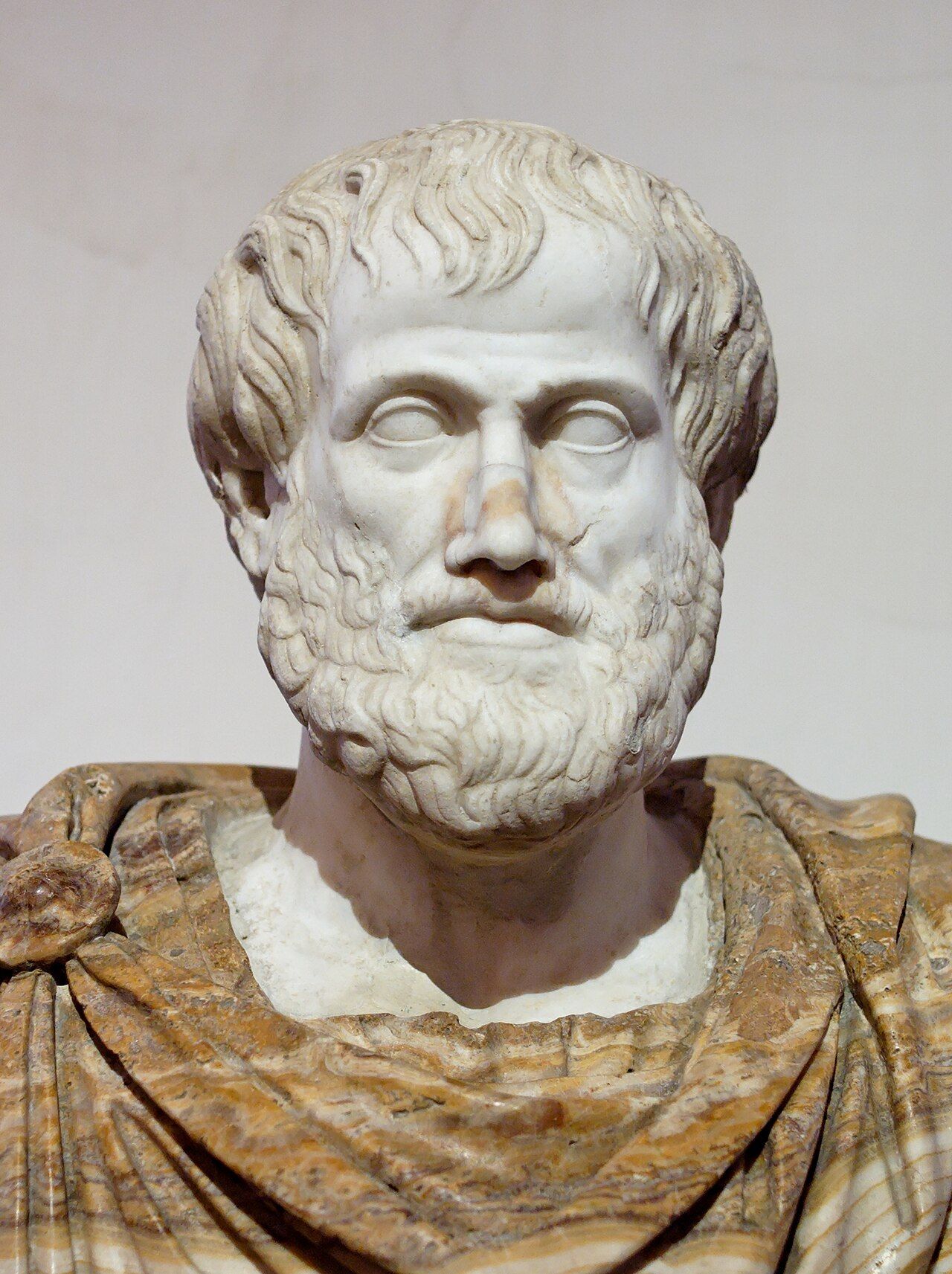
A question the other theories do not ask
Imagine two nurses who both stay late to sit with a dying patient. The first stays because the unit policy on end-of-life presence says someone must; she watches the clock and leaves at the earliest defensible moment. The second stays because she cannot imagine doing otherwise, notices that the daughter has not eaten since morning, and quietly arranges a sandwich. On a strict act-description, they did the same thing. Most people feel, immediately and stubbornly, that they did not.
Virtue ethics takes that intuition seriously and builds a theory on it. Its central claim is that the primary object of moral evaluation is not the isolated act but the character of the agent — the settled dispositions from which acts flow. A right action, on this view, is what a person of good character would characteristically do in the circumstances. The theory is agent-centred rather than act-centred, and it is aretaic (from arete, excellence) rather than deontic (from deon, duty).
This is not a way of dodging hard questions. It is a claim about explanatory order. Utilitarians and Kantians can, of course, praise good character — but for them character is derivative, valuable because it reliably produces good outcomes or dutiful choices. The virtue ethicist reverses the dependence: we understand what a good outcome is, and what a duty amounts to in a messy particular case, partly by asking what a wise and decent person would see and do.
Anscombe’s detonation
The modern revival has a precise starting point. In 1958 G. E. M. Anscombe, then at Oxford and later professor of philosophy at Cambridge, published a short, aggressive paper called “Modern Moral Philosophy” in the journal Philosophy. She argued three things. First, moral philosophy should be laid aside until we have an adequate philosophy of psychology — until we can say clearly what intention, wanting and pleasure actually are. Second, the concepts of moral obligation and moral “ought” are survivals from an earlier law-based conception of ethics, and outside that framework they survive as the notion “criminal” would survive after criminal law and criminal courts had both been abolished and forgotten: the word remains, the framework that gave it sense does not. Third, the differences between the major English moral philosophers from Sidgwick onward were, she said, of no great importance.
Anscombe also coined the word consequentialism in that paper, and she used it as an insult. Whatever one makes of her polemic — many philosophers think the second thesis overreaches badly — the effect was real. Philippa Foot’s Virtues and Vices (1978), Alasdair MacIntyre’s After Virtue (1981), Rosalind Hursthouse’s On Virtue Ethics (1999), Christine Swanton’s pluralist account (2003) and Julia Annas’s Intelligent Virtue (2011) built a live third option out of the wreckage.
Common misconception. Virtue ethics is often described as “the theory with no rules.” That is not right. Hursthouse points out that every virtue and vice term generates what she calls a v-rule: do what is honest, do not do what is cruel, do what is loyal. These are genuinely action-guiding. What virtue ethics denies is that such rules can be applied mechanically, by someone who lacks the perception to see when a situation calls for honesty rather than kindness.
What the three families actually disagree about
The differences are not merely verbal. They generate different answers, different failure modes, and different kinds of training.
| Question | Consequentialism | Deontology | Virtue ethics |
|---|---|---|---|
| Primary bearer of value | States of affairs (welfare, preference satisfaction) | Acts, as instances of maxims or duties | Persons and their settled dispositions |
| What makes an act right | It produces the best available outcome | It conforms to a binding duty — for Kant, one that survives universalisation | A person of practical wisdom would do it here |
| Role of motive | Strictly irrelevant to rightness | Central to moral worth, separate from rightness | Internal to the act’s description; not separable |
| Handling of emotion | Data about welfare; not itself virtue | Suspect; inclination can contaminate duty | Feeling rightly is part of acting rightly |
| Characteristic failure | Justifies too much; permits using people | Rigid in tragic conflicts; ignores context | Vague; risks circularity and cultural parochialism |
| Implied moral education | Teach calculation and impartiality | Teach principles and consistency | Teach habituation, perception and exemplars |
Note the last row. A theory implies a pedagogy. If you believe ethics is calculation, you run students through trolley variants. If you believe it is character, you put them beside a superb clinician for a year and make them talk about what they saw. Most professional programmes quietly do both, without saying so.
Virtue ethics relocates the primary question from “what should be done?” to “what would a person of good character do, and how does one become such a person?”
Section 2Aristotle’s Machinery: Habit, Mean, Wisdom

Eudaimonia and the function argument
Aristotle (384–322 BCE) opens the Nicomachean Ethics — lecture material from his Lyceum years, roughly 335–322 BCE, traditionally connected to his son Nicomachus as editor or dedicatee, though the connection is not secure — by asking what all human striving aims at. His answer is eudaimonia. The word is conventionally translated “happiness,” which is misleading; “flourishing” or “living well and doing well” is closer. Eudaimonia is not a feeling you can have on a Tuesday afternoon. It is an assessment of a whole life, which is why Aristotle writes that one swallow does not make a summer, and neither does one day (1098a18).
How do we work out what flourishing consists of? Aristotle uses the function argument (ergon argument, 1097b–1098a). A flute-player is good if she plays well; an eye is good if it sees well. Things have characteristic activities, and excellence is performing that activity well. What is the characteristic activity of a human being? Not mere life, which plants share; not perception, which animals share; but activity of the soul in accordance with reason. So the human good is activity of the soul in accordance with virtue, over a complete life.
Philosophers disagree sharply about whether this argument works. Critics say it slides from a descriptive claim about what humans distinctively do to a normative claim about what they should do; humans distinctively wage organised war too. Defenders, including Martha Nussbaum and Philippa Foot, reconstruct it as a claim about the form of life characteristic of a social, language-using, long-dependent species — a claim continuous with how we evaluate a good oak or a good wolf. You should know that this is contested ground rather than settled doctrine.
Habituation: how virtue is acquired
Aristotle divides excellences into intellectual virtues, which come chiefly through teaching and time, and virtues of character (moral virtues), which come through habit — ethos, from which Aristotle derives êthos, character, and so our word ethics (1103a17). His formula in Book II is deliberately provocative: we become just by doing just acts, temperate by doing temperate acts, brave by doing brave acts (1103a34–b1). You cannot read your way into courage.
A virtue, once formed, is a hexis — a stable state or disposition, not a passing feeling and not a raw capacity. Three conditions distinguish genuinely virtuous action from action that merely looks right (1105a30–33). The agent must (1) know what she is doing, (2) choose the act for its own sake, and (3) act from a firm and unchanging character. A student who happens to tell the truth because she has not yet thought of a lie is not honest. Honesty is what shows up under pressure, reliably, without an audience.
So development matters. The young cannot be held to account exactly as adults are, and character education is not a soft extra bolted onto the real curriculum. Aristotle is candid that some people, badly habituated, are effectively unreachable by argument — a bleak conclusion that his admirers usually soften and that the evidence on entrenched antisocial behaviour does not obviously refute.
The mean, and what it is not
The doctrine of the mean holds that each virtue of character lies between an excess and a deficiency in feeling and action. Courage sits between cowardice and rashness; generosity between meanness and prodigality. Crucially, the mean is relative to us, not an arithmetic midpoint: the right amount of food for an Olympic wrestler is not the right amount for a beginner (1106a36–b7). And the mean is not mediocrity. Aristotle says that with respect to being best, virtue is an extreme.
| Sphere of experience | Deficiency (vice) | Virtue (mean) | Excess (vice) |
|---|---|---|---|
| Fear and confidence | Cowardice | Courage | Rashness |
| Bodily pleasure | Insensibility | Temperance | Self-indulgence |
| Giving money | Meanness | Generosity | Prodigality |
| Anger | Inirascibility (never angry at injustice) | Good temper (praotes) | Irascibility |
| Self-presentation | Self-deprecation | Truthfulness | Boastfulness |
| Social conduct | Surliness | Friendliness | Obsequiousness, flattery |
| Others’ fortune | Spite | Righteous indignation | Envy |
Aristotle immediately blocks the obvious abuse. Some things admit of no mean at all: spite, shamelessness, envy, and among actions adultery, theft and murder (1107a9–17). There is no correct amount of murder. The doctrine is a heuristic about emotional calibration, not a licence to split every difference. Read those two passages together and you will notice a genuine inconsistency in Aristotle: the last row of the table above comes from his own list at 1108a35–b6, where spite and envy flank righteous indignation as extremes, while a page earlier he says both admit of no mean. He drops that triad in the detailed treatment of Book IV, and most editors treat it as unfinished rather than doctrine.
Clinical translation. The mean explains a pattern every preceptor recognises. The new graduate who escalates nothing is not calm, she is deficient in appropriate concern. The one who escalates everything is not vigilant, she is deficient in judgement. Competence is the calibrated middle, and it is learned by repeated corrected exposure — which is exactly Aristotle’s habituation, running under a different name.
Phronesis and akrasia
Phronesis, practical wisdom, is the master virtue that makes the rest work. It is the capacity to perceive what a particular situation calls for and to deliberate well about how to achieve a good end. Aristotle distinguishes it sharply from techne, craft knowledge, and from sophia, theoretical wisdom. A craft has a product separate from the making; practical wisdom’s “product” is acting well itself. Phronesis cannot be codified, because the particulars outrun any rule — which is why Aristotle says the decision rests with perception (1109b23).
Aristotle also holds a strong version of the unity of the virtues: you cannot fully possess one virtue without possessing practical wisdom, and practical wisdom brings the others with it. This is intuitively hard — we all know the brave coward, the honest bully — and most contemporary virtue ethicists retreat to a weaker “limited unity” thesis, holding only that the virtues constrain and inform one another.
Finally, Book VII treats akrasia, weakness of will: acting against one’s own better judgement. Socrates had denied it was possible, arguing that no one knowingly does wrong. Aristotle disagrees, and explains it partly through the way a person under the pull of appetite fails to bring the relevant knowledge to bear at the moment of action — knowledge possessed but not used, like a sleeping man’s. Anyone who has watched a smoking cardiologist light up outside the cath lab has watched akrasia. The concept matters professionally because it separates ignorance (fix with teaching) from weakness (fix with structures, defaults, accountability and habit).
For Aristotle, character is built by habituated action, calibrated as a mean relative to the person and situation, and governed by practical wisdom that no rule can replace.
Section 3Character Beyond Athens
Confucian ethics: character as relational
Kongzi (551–479 BCE), latinised as Confucius, taught in the turbulence of the late Spring and Autumn period; the Analects is a compilation by later students. The central excellence is ren, variously rendered benevolence, humaneness or co-humanity — the character written with the graphs for “person” and “two.” That etymology is doing philosophical work. For Confucius, one becomes a person through relationships, not prior to them.
Ren is cultivated through li, ritual propriety: the whole apparatus of manners, ceremony, mourning, greeting and deference by which a community makes decency habitual and visible. To a modern reader this looks like mere etiquette; the Confucian claim is that form shapes feeling, that how you bow trains what you value. Add yi (rightness or appropriateness), xiao (filial devotion) and zhi (wisdom), and the goal is the junzi, the exemplary person — a term Confucius deliberately reappropriated from “son of a lord” to mean someone noble by cultivation rather than birth.
The tradition then argues with itself, which is the interesting part. Mengzi (Mencius, c. 372–289 BCE) held that human nature is good, containing four “sprouts” that need only cultivation; his famous thought experiment is that anyone seeing a child about to fall into a well feels an immediate alarm and compassion, with no thought of reward. Xunzi (c. 310–235 BCE) flatly denied it: human nature is crooked, and virtue is the product of deliberate effort and ritual training, as a warped board is straightened by a press. That disagreement — is character grown or manufactured? — recurs in every moral education debate since.
Stoicism, Aquinas, and the Islamic refinement of character
The Stoics, founded by Zeno of Citium around 300 BCE and best preserved in Epictetus (c. 50–135 CE), Seneca and the emperor Marcus Aurelius (121–180), inherited the four cardinal virtues — wisdom, justice, courage and temperance — but made a radical addition: virtue is the only good. Health, reputation and wealth are “preferred indifferents,” worth pursuing but incapable of touching your flourishing. Epictetus, born enslaved, grounds this in the dichotomy of control: some things are up to us (judgement, impulse, desire) and some are not (body, property, reputation), and misery comes from confusing the two. Stoic practice — premeditation of adversity, the evening review of one’s day — is the direct ancestor of cognitive behavioural techniques, a lineage Aaron Beck and Albert Ellis both acknowledged.
Thomas Aquinas (1225–1274) absorbed the Aristotle newly available in Latin translation into Christian theology in the Summa Theologiae. He kept the four cardinal virtues as acquired by habituation, though he allows infused counterparts of them as well, and added three theological virtues — faith, hope and charity (caritas) — which he held are infused by grace rather than earned by practice. Charity, for Aquinas, orders all the rest. In the Islamic world the same Greek inheritance produced Miskawayh’s Tahdhib al-Akhlaq (The Refinement of Character, c. 1000 CE), written in the Buyid courts of Iraq and Iran, which treats the soul’s diseases on a medical analogy and prescribes regimens of habit. Baghdad worked the Aristotelian argument out some two centuries before Paris did, and the Arabic commentators were one of the channels through which Aristotle returned to the Latin West.
Ubuntu and the critique of the Greek inheritance
Southern African moral thought is often summarised by the Nguni maxim umuntu ngumuntu ngabantu — a person is a person through other persons. Ubuntu names a family of views, not a single doctrine, and philosophers such as Thaddeus Metz have worked to state it rigorously rather than sentimentally: roughly, an action is right insofar as it honours relationships of identity and solidarity with others. Archbishop Desmond Tutu drew on it explicitly as chair of the South African Truth and Reconciliation Commission (established 1995, public hearings from 1996, main report 1998), arguing for restorative rather than retributive justice. Notice that ubuntu and Confucianism converge on something Aristotle assumes but rarely defends: that the self is constituted by its relations.
Honesty requires naming the tradition’s failures. Aristotle held that women are deficient in authoritative reason and defended natural slavery in the Politics; his account of the magnanimous man is unbearably self-satisfied. Confucian role ethics has historically underwritten patriarchal hierarchy. These are not incidental blemishes to be waved away. The best contemporary response, made by Nussbaum in “Non-Relative Virtues” (1988), is that the framework can be separated from its author’s prejudices: every human community faces the same spheres of experience — fear, appetite, distribution, speech — and each names an excellence for it, which gives virtue ethics a route to cross-cultural criticism rather than relativism. Chapter 7 returns to whether that route holds.
| Tradition | Central excellence | Source of virtue | Goal | Distinctive move |
|---|---|---|---|---|
| Aristotelian | Phronesis | Habituation in a good polis | Eudaimonia over a complete life | The mean, relative to the agent |
| Stoic | Virtue as the sole good | Reason aligned with nature | Apatheia, freedom from disturbance | Dichotomy of control |
| Confucian | Ren (humaneness) | Ritual practice and role fulfilment | Becoming a junzi; harmonious society | Form shapes feeling |
| Thomist | Caritas (charity) | Habit plus infused grace | Beatitude, union with God | Acquired and infused virtues distinguished |
| Ubuntu | Solidarity and identity with others | Community and relationship | Personhood realised through others | Restorative rather than retributive justice |
| Care ethics (Ch. 6) | Caring attentiveness | Responsive relationships | Maintained webs of care | Rejects the impartial standpoint as primary |
Character ethics arose independently in several civilisations, converging on habituation and exemplars while disagreeing about human nature, the role of ritual, and whether the self is primarily individual or relational.
Section 4The Situationist Challenge
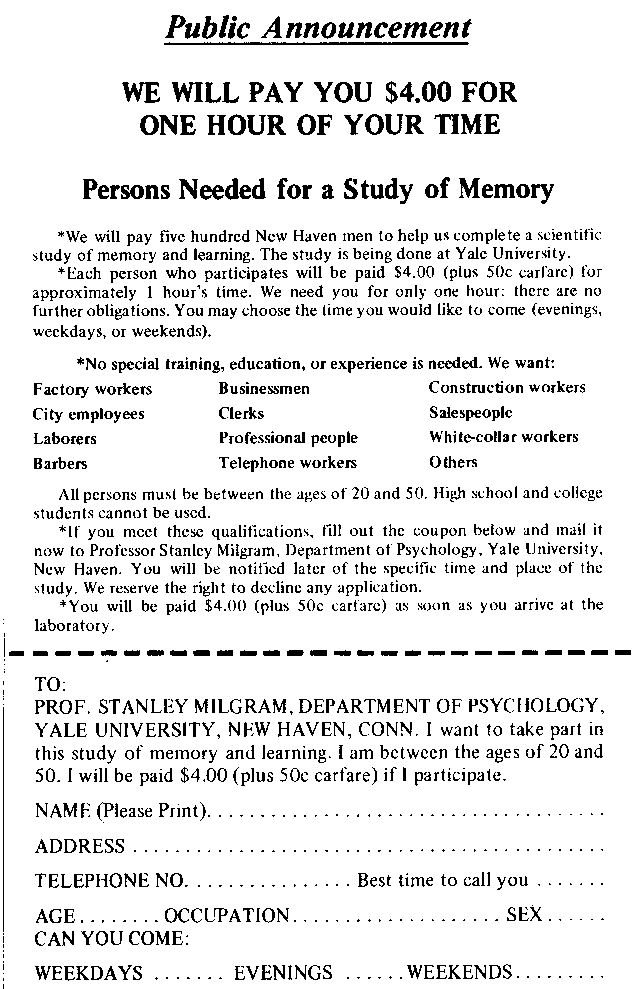
The evidence that character may not exist
Virtue ethics needs character traits to be real, cross-situationally consistent and reasonably stable. Beginning in the 1960s, a body of social psychology suggested they might be none of those things. The philosophers Gilbert Harman (“Moral Philosophy Meets Social Psychology,” 1999) and John Doris (Lack of Character, 2002) pressed the case hardest. Harman went furthest, suggesting we should abandon talk of character traits altogether; Doris argued for the milder but still damaging conclusion that traits are narrow and situation-specific rather than global.
| Study | Design | Headline result | Caveat you must know |
|---|---|---|---|
| Milgram, Yale, 1961–62 (pub. 1963) | Participants told to deliver escalating “shocks” to a confederate | 26 of 40 (65%) went to the maximum 450 volts in the first published condition | Compliance varied hugely across 20+ variants; Gina Perry’s archival work (2012) shows deviations from protocol and prodding beyond the script |
| Isen & Levin, 1972 | Dime planted in a payphone coin return; confederate then drops papers | 14 of 16 who found a dime helped; 1 of 25 who did not | Very small samples; later replications inconsistent, and the effect size is almost certainly inflated |
| Darley & Batson, Princeton, 1973 | Seminarians sent to give a talk, some on the Good Samaritan, in varying hurry | 63% helped a slumped stranger when unhurried, 10% when in high hurry | Talk topic had no effect; but “helping” was coded coarsely and n per cell was small |
| Zimbardo, Stanford, 1971 | Students assigned guard or prisoner roles in a mock prison | Widely reported as roles rapidly producing cruelty | Not a controlled experiment; Thibault Le Texier’s 2019 archival study documents that guards were coached, and the BBC Prison Study run by Reicher and Haslam in 2001 (broadcast 2002, published 2006) found quite different dynamics |
Add Walter Mischel’s earlier finding (1968) that personality-trait measures typically correlate with behaviour at around r = 0.3 — the so-called personality coefficient — and the picture is uncomfortable. The honest student is not reliably honest across settings; she is honest in the settings where honesty is cued and cheap.
Four replies, and what survives
The debate has since matured. Four replies deserve attention.
First, the empirical caution. Much of the situationist canon comes from an era of small samples and flexible analysis, and it has fared unevenly in the replication crisis of the 2010s. Ego depletion, a related pillar, failed a large multi-lab replication (Hagger and colleagues, 2016). This does not rescue global traits, but it should stop anyone from treating a 1972 study of 41 people as settled physics.
Second, the target is wrong. Rachana Kamtekar (2004) argued that situationists attack a folk conception of character — a bundle of independent behavioural habits — that Aristotle never held. Aristotelian virtue is unified by practical wisdom and is defined partly by how the agent sees the situation. Milgram’s participants were not failing to apply a courage-habit; they were misperceiving what was happening, exactly the failure phronesis is supposed to prevent.
Third, virtue is rare and hard. Aristotle says as much. If full virtue is an achievement of a lifetime, the finding that most undergraduates lack it is not a refutation; it is the premise. Gopal Sreenivasan (2002) additionally noted that the studies measure single behaviours in single situations, which is statistically the wrong instrument for detecting a stable disposition.
Fourth, the interactionist settlement. Mischel and Yuichi Shoda’s CAPS model (1995) proposes that people have stable if…then signatures: not “Ravi is aggressive” but “Ravi is aggressive when publicly criticised by a peer, and unusually forbearing when a frightened patient shouts at him.” Traits are real, but indexed to conditions. Most philosophers now work with something like this.
The practical upshot is the opposite of cynicism. If situations are powerful, then a serious person designs her situations: she does not rely on willpower at 3 a.m., she builds checklists, pre-commits, arranges to be observed, and avoids the hurry that Darley and Batson showed can turn a seminarian on his way to preach about the Good Samaritan straight past a man in a doorway. Character work becomes environmental engineering as much as self-improvement.
What this means for you on a ward
Take hand hygiene. Decades of education campaigns based on knowledge and attitude produced modest, decaying gains; the interventions that worked combined visible dispensers at the point of care, real-time feedback, and senior clinicians modelling compliance publicly — situation plus exemplar. Take speaking up about a wrong-site marking: individual courage predicts less than whether the team has a rehearsed script, an explicit escalation ladder, and a consultant who has visibly thanked someone for stopping the line. None of this shows courage is fictional. It shows courage is expensive, and that ethical institutions lower its price.
Situationist evidence undermines a crude picture of global, context-free traits but not the Aristotelian claim itself; the mature position is that character is real, conditional, hard-won, and heavily shaped by the environments we build.
Section 5Virtue in Professional Practice
MacIntyre: practices, internal goods, and institutions
Alasdair MacIntyre’s After Virtue (1981) supplies the most useful vocabulary in this chapter for anyone who works inside an organisation. A practice, in his technical sense, is a coherent, complex, socially established cooperative activity with standards of excellence internal to it — medicine, teaching, architecture, farming, chess. Practices generate internal goods: goods you can only get by engaging in the practice well, and which enrich everyone in it. Making a genuinely accurate diagnosis is an internal good of medicine. External goods — money, status, ratings, throughput targets — can be obtained many ways and are competitive by nature: more for me is less for you.
Virtues, on this account, are the qualities that let us achieve internal goods. And here is MacIntyre’s sting: practices cannot survive without institutions to house them, but institutions deal necessarily in external goods, so “the ideals and the creativity of the practice are always vulnerable to the acquisitiveness of the institution.” The relationship is not accidental corruption. It is structural, permanent, and requires justice, courage and truthfulness in the institution’s members to hold the line.
Two British inquiries make the abstraction concrete. The Bristol Royal Infirmary Inquiry, reporting in 2001 under Ian Kennedy, examined paediatric cardiac surgery deaths between 1984 and 1995 and found a “club culture” in which concerns raised by the anaesthetist Stephen Bolsin were absorbed and neutralised for years. The Mid Staffordshire NHS Foundation Trust Public Inquiry, reporting in February 2013 under Robert Francis QC, described patients left unwashed and without water while managers pursued foundation-trust status and financial targets; it made 290 recommendations and led to a statutory duty of candour. Worth noting for accuracy: widely circulated estimates of 400 to 1,200 excess deaths at Mid Staffordshire were derived from mortality statistics that Francis himself declined to endorse as a body count. The failure was one of culture and character rather than of arithmetic, and it is no less serious for that.
The virtues a health professional actually needs
Edmund Pellegrino and David Thomasma, in The Virtues in Medical Practice (1993), argued that clinical relationships have features — the patient’s vulnerability, the inequality of knowledge, the necessity of trust — that make character indispensable rather than ornamental. You cannot verify your surgeon’s honesty in the moment; you rely on it. The following table maps virtues onto the failure modes you will actually see.
| Virtue | What it looks like in practice | Deficiency | Excess or counterfeit |
|---|---|---|---|
| Fidelity to trust | Doing what you said you would do when no one checks | Quiet abandonment of the difficult patient | Boundary loss; over-involvement |
| Truthfulness | Disclosing an error to the patient before being asked | Concealment, vague euphemism | Brutal candour that ignores readiness |
| Courage | Stopping the line; escalating over a senior’s objection | Silence rationalised as respect for hierarchy | Reflexive confrontation that burns credibility |
| Compassion | Noticing the daughter who has not eaten | Detachment, depersonalisation, gallows contempt | Emotional flooding that disables judgement |
| Justice | Triaging by need, not by charm or familiarity | Unexamined bias in analgesia or referral | Rigid proceduralism blind to particular need |
| Practical wisdom | Knowing which of the above governs, here, now | Rule-following without perception | “Judgement” used to excuse unaccountable deviation |
Codes of conduct encode some of this. The American Nurses Association’s Code of Ethics for Nurses with Interpretive Statements (2015 revision) sets out nine provisions, and Provision 5 — the nurse owes the same duties to self as to others, including preservation of integrity — is unmistakably a virtue provision rather than a rule about acts. A code, however, is a floor. Aristotle’s point is that a floor cannot teach you to see.
The hidden curriculum. Frederic Hafferty and Ronald Franks (1994) named the phenomenon that formal ethics teaching is routinely overwhelmed by what students absorb from observed behaviour: how the attending speaks about the patient in the corridor, who gets thanked, what gets rewarded. If Aristotle is right that character comes from habituation, the hidden curriculum is not a nuisance alongside the real curriculum. It is the real curriculum.
Moral distress, moral injury, and the limits of individual virtue
Andrew Jameton coined moral distress in Nursing Practice: The Ethical Issues (1984) for a specific and important experience: you know the ethically right action, and institutional constraints prevent you from taking it. This is not uncertainty and it is not burnout. Its signature is powerlessness, and its residue accumulates — what Webster and Baylis (2000) named moral residue, and what Epstein and Hamric (2009) described as its crescendo effect, each episode leaving a higher baseline.
The related concept of moral injury comes from Jonathan Shay’s work with Vietnam veterans (Achilles in Vietnam, 1994) and was formalised by Brett Litz and colleagues in 2009: lasting psychological harm from perpetrating, failing to prevent, or witnessing acts that transgress deeply held moral beliefs. Wendy Dean and Simon Talbot argued in 2018 that much of what is labelled clinician burnout is better described as moral injury — a claim that shifts the remedy from resilience training for individuals to repair of the systems that force the transgression.
This is the honest closing note for a chapter on virtue. A theory centred on character can be weaponised: if the problem is your character, the solution is your resilience, and the rota stays broken. MacIntyre’s framework blocks that move. Where an institution systematically requires its members to act against the internal goods of their practice, the vice is the institution’s. Virtue ethics correctly assigns the virtue of justice to the organisation and the virtue of courage to those who name the failure — and it insists that the two are related, because unjust institutions are precisely the ones that make courage expensive. Chapter 14 takes up what to do about it.
Professional character is sustained or destroyed by institutions; virtue ethics is only honest when it holds organisations, not just individuals, to account for the conditions under which good practice is possible.
The chapter in one breath
Virtue ethics asks about the agent rather than the act, and it does so because motive, perception and habit look inseparable from what a person actually does. Aristotle grounds it in eudaimonia — flourishing over a complete life — reached through habituated action calibrated as a mean relative to the person and situation, and governed by phronesis, a practical wisdom no rulebook can supply. Anscombe’s 1958 attack revived the tradition, and Foot, MacIntyre, Hursthouse and Annas built it into a live third option. The same insight arose independently elsewhere: Confucian ren cultivated through ritual, Stoic virtue as the sole good, Thomist charity, ubuntu’s personhood through others — traditions that disagree productively about whether human nature is good and whether the self is prior to its relations. Situationist psychology — Milgram, Darley and Batson, Isen and Levin — showed that context predicts behaviour better than trait labels, and the mature reply is that character is real but conditional, rare, and heavily dependent on the environments we build. That last point is the professional payoff: MacIntyre’s practices, internal goods and predatory institutions explain Bristol and Mid Staffordshire better than any tally of broken rules, and they explain moral distress as a structural injury rather than a personal failing.
Words worth knowing
| Term | What it means |
|---|---|
| Akrasia | Weakness of will: acting against one’s own better judgement. Aristotle affirms it is possible; Socrates denied it. |
| Arete | Excellence or virtue — performing a characteristic function well. Applies to knives and horses as well as people. |
| Cardinal virtues | Wisdom, justice, courage and temperance; inherited from Plato and the Stoics and retained by Aquinas. |
| Doctrine of the mean | Each virtue of character lies between excess and deficiency in feeling and action, relative to the agent — not an arithmetic midpoint, and not applicable to acts like murder. |
| Eudaimonia | Flourishing or living well; the final end of human action, assessed over a complete life rather than moment to moment. |
| Function argument | Aristotle’s inference from a thing’s characteristic activity to what counts as its excellence; contested as a move from fact to value. |
| Hexis | A stable disposition or settled state of character, as opposed to a passing feeling or a bare capacity. |
| Hidden curriculum | What learners absorb from observed institutional behaviour rather than from formal teaching (Hafferty and Franks, 1994). |
| Internal goods | Goods obtainable only by engaging well in a practice, such as an accurate diagnosis; contrasted with external goods like money and status. |
| Junzi | The Confucian exemplary person; nobility earned by cultivation rather than inherited by birth. |
| Moral distress | Knowing the right action but being prevented from taking it by institutional constraint (Jameton, 1984); leaves accumulating moral residue. |
| Moral injury | Lasting harm from perpetrating, failing to prevent or witnessing acts that violate deeply held moral beliefs (Shay, 1994; Litz et al., 2009). |
| Phronesis | Practical wisdom: perceiving what a particular situation requires and deliberating well about it; distinct from craft skill and theoretical wisdom. |
| Practice (MacIntyre) | A complex cooperative activity with standards of excellence internal to it, housed — and endangered — by institutions. |
| Ren | Confucian humaneness or co-humanity, cultivated through ritual propriety (li) and realised in relationships. |
| Situationism | The view that behaviour is driven far more by situational features than by stable character traits. |
| Ubuntu | Southern African relational ethics: a person is a person through other persons; associated with restorative justice. |
| Unity of the virtues | The thesis that one cannot fully possess a single virtue without practical wisdom and hence the others; most modern writers hold a weakened version. |
| V-rule | Hursthouse’s action-guiding rule derived from a virtue term, such as “do what is honest, avoid what is cruel.” |
Check yourself
Care Ethics, Rights and Justice
Three of the most powerful ideas in modern moral life sit uneasily together. Care ethics says morality begins in the particular — this person, in front of me, who needs something only I can give right now. Rights say morality begins in the universal — there are things owed to every human being whether anyone feels like giving them or not. Justice asks a third question entirely: given that there is never enough of anything, who gets what, and on what defensible basis? A nurse holding a dying stranger’s hand is doing care ethics. The same nurse insisting that a confused patient still gets to refuse a treatment is doing rights. The same nurse’s hospital deciding which of eleven patients gets the last ICU bed is doing justice. This chapter takes each seriously on its own terms, shows where they genuinely conflict, and gives you tools for the moments when you cannot satisfy all three.
By the end of this chapter you can
- Explain care ethics as developed by Carol Gilligan, Nel Noddings, Joan Tronto and Eva Kittay, and state what it adds to the theories in Chapters 3–5.
- Apply Tronto’s four phases of care — caring about, taking care of, care-giving and care-receiving — and their moral elements of attentiveness, responsibility, competence and responsiveness to a real caregiving failure.
- Distinguish the four Hohfeldian incidents (claim, liberty, power, immunity) and identify the correlative duty attached to any claim-right.
- Contrast negative and positive rights, and explain why the 1966 human rights covenants were split into two documents.
- Compare the interest theory and will theory of rights and say what each explains better.
- Reconstruct John Rawls’s original position, veil of ignorance and difference principle, and state Robert Nozick’s entitlement theory objection.
- Explain the capability approach of Amartya Sen and Martha Nussbaum and why it challenges resource-based measures of equality.
- Evaluate real allocation systems — the Oregon Health Plan, MELD-based liver allocation, pandemic crisis standards — against competing criteria of urgency, utility, equity and lottery.
- Analyse a case in which care, rights and justice pull in different directions, and defend a resolution without pretending the conflict vanished.
Section 1The Ethics of Care
A different voice, and what it actually claimed
In 1982 the Harvard psychologist Carol Gilligan published In a Different Voice, a book that began as a complaint about a research method and ended as a moral theory. Her target was the developmental scale of her colleague Lawrence Kohlberg, who had ranked moral reasoning on six stages, with the highest stages reserved for people who reasoned from abstract, universalisable principles. The longitudinal study on which the stages were built, begun with his 1958 doctoral research on boys in Chicago and followed for two decades, was all male — 84 boys, in the figure Gilligan cited. When girls and women were scored on the resulting scale, they tended to land lower.
Gilligan looked at the transcripts rather than the scores. In Kohlberg’s famous Heinz dilemma — a man cannot afford a drug that would save his wife, should he steal it? — an eleven-year-old boy she called Jake treated the problem as arithmetic: life outranks property, so steal, and a judge would see that. A girl she called Amy refused the frame. She asked whether Heinz could talk to the druggist, worried about what happens to the wife if Heinz goes to jail, and treated the dilemma as a failure of relationship rather than a conflict of principles. On Kohlberg’s scale Amy looked immature. Gilligan argued she was reasoning in a different register, one oriented to responsibility in relationships rather than to rights among strangers.
It matters what Gilligan did and did not establish. The empirical claim that women and men differ systematically in moral orientation has fared poorly: Lawrence Walker’s meta-analyses in the 1980s found gender differences in Kohlbergian scoring to be very small and largely explained by education and occupation. Gilligan herself moved toward saying the two voices are two ways of framing any moral problem, available to anyone, rather than two sexes. The durable contribution is the philosophical one: a theory that only scores abstract impartial reasoning as mature will systematically undervalue the moral work of people who spend their lives keeping particular others alive.
Noddings, engrossment and the limits of caring
Two years later the philosopher of education Nel Noddings published Caring: A Feminine Approach to Ethics and Moral Education (1984), which turned the insight into a systematic ethic. Noddings analysed the caring relation as a pairing of the one-caring and the cared-for. The one-caring practises engrossment — receiving the other’s reality rather than projecting onto it — and motivational displacement, in which the other’s project temporarily becomes one’s own. Crucially, the relation is not complete until the cared-for responds: care that is offered and not received is, on this account, not yet care.
Noddings was frank about the consequence, which is also the standard objection. Caring in her strong sense requires proximity and reciprocity, so it thins rapidly with distance. She was reluctant to say we have caring obligations to starving children in distant countries in the same sense we have them to the child on our doorstep. Critics — including many who are sympathetic to care ethics — read this as a fatal parochialism: an ethic that cannot generate obligations to strangers has abandoned much of what ethics is for. Defenders reply that care ethics never claimed to replace justice, only to name a moral domain that justice-based theories had rendered invisible.
A second objection cuts deeper. Claudia Card and Sarah Hoagland warned in the late 1980s and early 1990s that an ethic elevating self-effacing attentiveness could ratify the exploitation of the very people who already do most of the world’s caring — disproportionately women, disproportionately poor, disproportionately immigrants and women of colour. If caring is a virtue and caring is what you are already forced to do, the theory can become a chain. Later care ethicists took this seriously; it is the reason Tronto and Kittay pushed the theory toward politics.
Tronto’s four phases and Kittay’s dependency
The political scientist Joan Tronto, working with Berenice Fisher, gave care ethics its most usable structure in Moral Boundaries (1993). She defined care broadly as everything we do to maintain, continue and repair our world so we can live in it as well as possible, and then broke the process into four phases, each with its own moral element. In Caring Democracy (2013) she added a fifth, caring with, the solidarity and trust that let a whole society sustain care rather than dumping it on households.
| Phase | What it involves | Moral element | Typical failure |
|---|---|---|---|
| Caring about | Noticing that a need exists at all | Attentiveness | The confused patient whose pain nobody registers because he cannot name it |
| Taking care of | Assuming that something must be done, by us | Responsibility | Everyone agrees the discharge plan is unsafe; nobody owns it |
| Care-giving | The hands-on work itself | Competence | Good intentions, wrong technique, pressure injury |
| Care-receiving | The cared-for’s response to what was done | Responsiveness | Nobody asks whether the intervention actually helped |
| Caring with | Sustaining care as a shared public undertaking | Solidarity, trust | Care privatised onto unpaid family, mostly women |
Eva Feder Kittay supplied the missing political principle in Love’s Labor (1999), a book informed by her life with her daughter Sesha, who has severe cognitive and physical disabilities. Kittay pointed out that the contractarian theories of justice, Rawls’s above all, start with citizens imagined as free, equal and fully cooperating — and that none of us is that, at the beginning or usually at the end, of our lives. Dependency is not an exception to the human condition; it is a phase of it. The person who does dependency work becomes dependent in turn, on a society willing to support her. Kittay named the obligation doulia, after the doula who cares for the mother so the mother can care for the infant: just as we require care to survive, we require that care be given to those who care for us.
The numbers are not small. AARP and the National Alliance for Caregiving estimated in their 2020 report that roughly 53 million adults in the United States had provided unpaid care to an adult or child with special needs in the prior year, the majority of them women. AARP’s 2023 Valuing the Invaluable report, working from a narrower count of caregivers, valued unpaid family caregiving at about 600 billion dollars for 2021 — well above what Medicaid spent that year on long-term services and supports. None of it appears in gross domestic product. Care ethics says that is not an accounting quirk. It is a moral choice about whose labour counts.
Care ethics relocates the moral centre from the impartial rule to the concrete relationship, and its mature political form — Tronto’s phases, Kittay’s doulia — demands that societies, not just individuals, take responsibility for dependency.
Section 2What a Right Actually Is
Hohfeld’s four incidents
“I have a right to that” is one of the most-used and least-analysed sentences in English. The Yale jurist Wesley Newcomb Hohfeld, in two articles in the Yale Law Journal in 1913 and 1917, showed that the word is doing four different jobs. Learning to separate them will resolve a surprising share of the arguments you will have at work.
| Incident | Meaning | Correlative in someone else | Health-care example |
|---|---|---|---|
| Claim (right in the strict sense) | X is owed something by Y | Y has a duty | A patient’s claim that you not touch her without consent |
| Liberty (privilege) | X has no duty not to do something | Y has no claim against X | A competent adult’s liberty to smoke, refuse dialysis, or eat badly |
| Power | X can alter legal or moral relations | Y has a liability to that change | Naming a health care proxy; withdrawing consent |
| Immunity | X cannot have her position altered by Y | Y has a disability | A patient’s immunity from having her advance directive overridden by a relative |
The practical payoff is the correlativity test. A genuine claim-right always names a duty-bearer. If you cannot say who owes the duty and what exactly they must do, you may be asserting something worth wanting rather than a right. “I have a right to a private room” is often a liberty (nobody may stop you paying for one) dressed up as a claim (the hospital must supply one). Conversely, notice how much of clinical ethics is about powers: consent is not primarily a claim to receive treatment but a power to change what others may permissibly do to your body.
Negative and positive, and why the split had a Cold War
Rights are also sorted by what they require of others. A negative right requires forbearance: do not kill me, do not search my home, do not treat me without consent. A positive right requires provision: give me an education, primary health care, a minimum income. Isaiah Berlin’s 1958 Oxford lecture Two Concepts of Liberty drew a parallel-looking distinction between freedom from interference and freedom to govern oneself, and the two debates have been entangled ever since — though Berlin’s positive liberty is self-mastery, not an entitlement to goods, and running the two pairs together causes a good deal of confusion.
The Universal Declaration of Human Rights, adopted in Paris on 10 December 1948 by 48 votes with 8 abstentions, contains both kinds. Its drafting committee was chaired by Eleanor Roosevelt and included René Cassin of France, Charles Malik of Lebanon, and P. C. Chang of China; the Canadian John Humphrey, who ran the UN Secretariat’s human rights division, produced the working first draft. Article 3 protects life, liberty and security of person. Article 25 asserts a right to a standard of living adequate for health and well-being, including medical care. When the Declaration was converted into binding treaty law, however, the two families were split into separate instruments: the International Covenant on Civil and Political Rights and the International Covenant on Economic, Social and Cultural Rights, both adopted in 1966 and in force in 1976. The split was not philosophical tidiness. Western states insisted that civil and political rights were immediately enforceable while economic rights were aspirational and resource-dependent; Soviet-bloc states pressed the opposite emphasis. The ICESCR’s language of “progressive realisation” is the fossil of that argument.
Is the distinction as clean as it looks? Increasingly, scholars say no. Henry Shue, in Basic Rights (1980), argued that every right generates three kinds of duty — to avoid depriving, to protect from deprivation, and to aid the deprived — so that even a paradigmatically negative right such as the right not to be assaulted requires courts, police and payroll. A right to a fair trial is expensive. The honest statement is that rights differ in how much provision they require, not in whether they require any.
Where rights come from, and who can hold them
Two rival accounts dominate. The will theory (or choice theory), associated with H. L. A. Hart, holds that to have a right is to have a kind of sovereignty: control over another person’s duty, including the power to waive it. The interest theory, developed by Joseph Raz and others, holds that X has a right when an aspect of X’s well-being is a sufficient reason to hold others under a duty. Each explains something the other struggles with. The will theory makes elegant sense of consent, waiver and the right to sue. But it implies that infants, people in comas and people with profound cognitive disability cannot hold rights at all, since they cannot waive duties — a conclusion most people find unacceptable, and one that Kittay attacked directly. The interest theory covers those cases easily, but has trouble explaining why my strong interest in your friendship does not put you under a duty.
Scepticism about rights has a long pedigree. Jeremy Bentham, in his critique of the French Declaration of 1789, dismissed natural rights as “nonsense upon stilts” and insisted that rights are the children of law. Karl Marx, in On the Jewish Question (1843), argued that the rights of man protect the isolated, self-interested individual and leave the structure of exploitation intact. More recently, some scholars have argued that human rights doctrine emerged from a specific European legal history and can flatten other moral traditions; others reply that the 1948 drafting was genuinely multicultural, pointing to Malik and Chang, and that the appeal to rights has been taken up most fiercely by anticolonial movements. This is a live disagreement, and you should not pretend otherwise.
Rights also collide with each other, which is why the language of absolute versus prima facie rights matters. Almost no legal system treats rights as unlimited. In Jacobson v. Massachusetts (1905) the United States Supreme Court upheld a five-dollar fine for refusing smallpox vaccination during an outbreak in Cambridge, holding that individual liberty is not an absolute exemption from reasonable public health regulation. Very few rights survive as true absolutes; the prohibition on torture is the usual candidate, and even that is contested at the margins by people arguing about definitions rather than about the principle.
A right is not a strong preference: it is a structured relation that names a holder, a duty-bearer and a specific duty, and the serious work in rights talk is done by distinguishing claims from liberties and powers, and negative duties from positive ones.
Section 3Justice: The Formal Idea and Its Rivals

The empty box, and the fight to fill it
Aristotle, in Book V of the Nicomachean Ethics, stated the formal principle of justice: equals should be treated equally and unequals unequally, in proportion to the relevant difference. He also separated distributive justice (how goods, offices and burdens are shared out) from corrective justice (how wrongs between parties are put right). The formal principle is correct and almost empty. It tells you to be consistent; it does not tell you which differences count. Skin colour is a difference. So is need, effort, contribution, seniority, prognosis and the ability to pay. Every serious theory of justice is an argument about which of these are morally relevant and why.
Note also a third category that the modern literature has revived: procedural justice, the fairness of the process rather than the outcome. Research by Tom Tyler and colleagues since the 1980s has repeatedly found that people’s judgements about the legitimacy of institutions depend heavily on whether they were treated with voice, neutrality and respect — sometimes more than on whether they won. That is not merely a psychological curiosity. When an allocation must produce losers, as allocation always does, procedure carries much of the moral weight.
Rawls, Nozick and the argument of the century
John Rawls’s A Theory of Justice (1971) reset the field. Rawls asked what principles free and rational people would choose to govern the basic structure of their society if they had to choose from the original position, behind a veil of ignorance that hid their own race, sex, class, talents, health and conception of the good. Not knowing whether you will be the surgeon or the person with cerebral palsy in a group home, what rules would you accept? Rawls argued you would reason cautiously — a maximin strategy, maximising the minimum — and select two principles in strict priority order: first, equal basic liberties for all; second, that social and economic inequalities attach to positions open under fair equality of opportunity, and that they work to the greatest benefit of the least advantaged. That second clause is the famous difference principle. Inequality is permitted, but only when it lifts the floor. Rawls measured advantage in primary goods: rights, liberties, opportunities, income, wealth and the social bases of self-respect.
Robert Nozick, Rawls’s Harvard colleague, answered three years later in Anarchy, State, and Utopia (1974). Justice, he argued, is historical, not patterned: a distribution is just if it arose by just steps, whatever shape it happens to have. His entitlement theory had three parts — justice in original acquisition, justice in voluntary transfer, and rectification when the first two were violated. His Wilt Chamberlain argument is the pivot. Start from whatever distribution you consider perfectly just. Now let a million basketball fans, over a season, each freely drop a separate twenty-five cents of their admission price into a box with Chamberlain’s name on it. The pattern is destroyed and Chamberlain is a quarter of a million dollars richer, yet every step was voluntary. So maintaining any pattern requires continuous interference with people’s free choices. Nozick’s conclusion, that redistributive taxation of earnings is on a par with forced labour, is deliberately provocative and widely rejected, but the structural point — that outcome-patterns and liberty are in permanent tension — is not easily dismissed.
A third position reframes the question. Amartya Sen, in his 1979 Tanner Lecture “Equality of What?” and later in Inequality Reexamined (1992) and The Idea of Justice (2009), argued that both Rawls and the utilitarians measure the wrong thing. Resources are inputs; what matters is what a person can actually do and be with them — her capabilities. Two people with identical incomes are not equally well off if one uses a wheelchair in a city of stairs, or is pregnant, or lives where malaria is endemic. Sen called these conversion factors. Martha Nussbaum pushed the approach further in Women and Human Development (2000) and Creating Capabilities (2011) by specifying ten central capabilities — life, bodily health, bodily integrity, senses and thought, emotions, practical reason, affiliation, other species, play, and control over one’s environment — that any decent political order must secure above a threshold. Sen has resisted fixing such a list, holding that it should emerge from public reasoning in each society. That disagreement between them is real and instructive.
| Rawls (1971) | Nozick (1974) | Sen / Nussbaum | |
|---|---|---|---|
| Central question | What would we choose behind the veil? | How did this holding arise? | What is this person actually able to do and be? |
| Metric of advantage | Primary goods | Holdings, justly acquired | Capabilities and functionings |
| View of inequality | Permissible if it benefits the worst-off | Permissible if it arose from just steps | Judge by the capability shortfall, not the income gap |
| Role of the state | Design the basic structure fairly | Minimal: protection, enforcement, redress | Secure a threshold of central capabilities |
| Signature objection | Ignores desert, and treats talents as a common asset | Original acquisition is historically filthy; ignores need | Which capabilities, chosen by whom, and how weighted? |
What the contract left out
A powerful line of criticism says the whole social contract framing smuggles in an idealised citizen. Carole Pateman’s The Sexual Contract (1988) argued that the classic contract theories presupposed a sexual division of labour that placed women outside the contracting public. Charles Mills’s The Racial Contract (1997) argued that the actual historical contract was among white Europeans and that its exclusions were not accidental noise but part of the design. Kittay pressed the disability version of the same complaint: parties in the original position are described as normal, fully cooperating members of society over a complete life, which quietly writes out both the profoundly dependent and those who care for them.
Iris Marion Young supplied the most useful reconstruction. In Justice and the Politics of Difference (1990) she argued that distribution is not the whole of justice: oppression also operates through exploitation, marginalisation, powerlessness, cultural imperialism and violence, none of which reduces neatly to who has how much. In Responsibility for Justice (2011, published after her death) she proposed the social connection model: when injustice is produced by the ordinary functioning of institutions in which many people participate, responsibility is not a matter of finding the guilty party but of shared, forward-looking political obligation to change the structure. That is exactly the shape of most health inequities, and it is why “nobody here did anything wrong” is a poor defence of a bad system.
Aristotle’s formal principle only demands consistency; the substantive theories — Rawls’s fair terms, Nozick’s just history, Sen and Nussbaum’s capabilities, Young’s structural account — disagree about which differences between people justify different treatment.
Section 4Justice Under Scarcity: How Real Systems Decide

The menu of allocation criteria
When a good is scarce and indivisible — a liver, an ICU bed, the first hundred thousand doses of a vaccine — the choice is not between allocating and not allocating. Refusing to decide is a decision, usually in favour of whoever is loudest, nearest or best connected. The available criteria are few, and each carries a characteristic objection.
| Criterion | Rule | Strength | Standard objection |
|---|---|---|---|
| Sickest first (urgency) | Highest immediate need wins | Matches the rescue intuition and clinical instinct | May waste the resource on those least likely to benefit |
| Best outcome (utility) | Maximise lives or life-years saved | Transparent, defensible under scarcity | Prognosis correlates with prior disadvantage, so it can launder inequity |
| Life-cycle / youngest first | Priority to those with fewer life-years lived | Everyone passes through every age | Frank age discrimination; devalues the old |
| First come, first served | Queue order | Simple, resists manipulation | Rewards proximity, information and transport — a wealth proxy |
| Lottery | Random selection among the eligible | Expresses equal moral worth; incorruptible | Ignores real differences in need and benefit |
| Instrumental value | Priority to those needed to save others | Multiplier effect in a pandemic | Slides easily into ranking people by social worth |
| Reciprocity | Priority to those who took risks for others | Recognises sacrifice | Hard to bound; who counts as having served? |
Most defensible real-world systems combine several. The influential framework by Govind Persad, Alan Wertheimer and Ezekiel Emanuel in The Lancet in 2009 argued exactly this: no single principle is sufficient, and a “complete lives” system should blend youngest-first, prognosis, lottery and instrumental value while explicitly rejecting allocation by social worth or ability to pay.
Three systems, three lessons
Oregon. In 1989 Oregon passed the Basic Health Services Act, designed by the emergency physician and later governor John Kitzhaber. Rather than cover everything for fewer people, Oregon would cover a ranked list of condition–treatment pairs for everyone below the poverty line, drawing the funding line wherever the legislature stopped. The first list, built partly from telephone surveys asking Oregonians to rate quality of life in various health states, was rejected in 1992 by Health and Human Services Secretary Louis Sullivan on the ground that it violated the Americans with Disabilities Act: the surveys systematically rated life with a disability as worth less, so treatments for disabled people fell down the list. Oregon rebuilt the methodology, received a waiver in 1993 and implemented the plan in February 1994. The lesson is not that rationing is wrong. It is that any measure of “benefit” embeds a judgement about whose life goes well, and that judgement can be discriminatory even when everyone involved is acting in good faith.
Transplantation. The United States National Organ Transplant Act of 1984 created the Organ Procurement and Transplantation Network, run under federal contract — for most of its history by UNOS, though the contract has since been broken into pieces. For years, liver allocation leaned heavily on waiting time and on where the patient was hospitalised, which rewarded early listing and good insurance. In February 2002 the system switched to the MELD score (and PELD for children) — a formula using bilirubin, INR and creatinine that predicts three-month mortality without a transplant. Allocation moved from “who has waited longest” toward “who will die soonest without it,” and waiting-list deaths fell. Lung transplantation adopted an allocation score in 2005 that explicitly balances urgency against expected post-transplant survival, and the 2014 kidney allocation system introduced longevity matching so that the longest-lasting kidneys go to recipients expected to use them longest. Each change traded one conception of fairness for another, in public, with data.
Pandemic crisis standards. In March 2020 the Italian anaesthesia society SIAARTI published guidance suggesting that, if ventilators ran out, an age limit might be needed — and provoked international argument. New York State had prepared ventilator allocation guidelines in 2015 using SOFA organ-failure scores with periodic reassessment and reallocation. In the United States in spring 2020, disability advocates filed complaints with the HHS Office for Civil Rights against several state plans, including Alabama’s, whose older guidance had contemplated deprioritising people with severe intellectual disability; Alabama withdrew the plan. Several states also revised protocols after evidence emerged that SOFA scores could disadvantage Black patients. Vaccine allocation raised the same questions globally: by the start of 2022, roughly one in ten people in low-income countries had received at least one dose, against something over 70 percent in many high-income countries, despite the COVAX mechanism created precisely to prevent that gap.
Cost, QALYs, and the thing Americans will not say out loud
The quality-adjusted life year (QALY) values a year of life multiplied by a health-state weight from 0 to 1. England’s National Institute for Health and Care Excellence, set up in 1999 as the National Institute for Clinical Excellence, has long used a reference range of roughly £20,000 to £30,000 per QALY as the zone above which a treatment needs special justification, with higher ceilings for end-of-life and highly specialised treatments. This is explicit, published rationing, and it is regularly and loudly criticised in the British press.
The United States does the same thing implicitly. The Affordable Care Act (2010) added section 1182 to the Social Security Act, which forbids the Patient-Centered Outcomes Research Institute from using a dollars-per-QALY figure as a threshold for what counts as cost-effective, and bars the Secretary from using such thresholds in Medicare coverage and reimbursement decisions. The rationing does not stop; it moves to formulary tiers, prior authorisation, network design, deductibles and the sheer unaffordability of care. Disability-rights organisations have long objected that QALYs devalue life with a disability by construction — if a year in a wheelchair is scored at 0.7, saving that year is worth less, which is precisely the Oregon problem in algebraic form. Health economists have proposed alternatives such as the equal-value-of-life-years-gained measure. There is no consensus, and you should be suspicious of anyone who tells you there is.
Every health system rations; the ethical question is not whether to allocate but whether the criteria are explicit, publicly defensible, revisable in light of evidence, and free of hidden judgements about whose life is worth less.
Section 5When Care, Rights and Justice Collide
The characteristic conflicts
The three frameworks do not merely emphasise different things; they can generate opposite verdicts. Consider four recurring shapes of conflict.
Care against justice. You spend forty minutes with a frightened patient whose daughter has flown in from out of state. Those forty minutes come out of the hour you have for eleven other patients. Care ethics licenses partiality toward the person in front of you; distributive justice asks why your attention should follow the loudest family. Both are right, which is why the resolution is not a formula but a defensible allocation of your own scarce attention — and, more importantly, a staffing structure that does not force the trade every shift.
Rights against care. A seventy-eight-year-old with early dementia but intact decisional capacity is going home to an apartment with stairs and no railings. You are certain she will fall. Her right to refuse and to choose where she lives is a claim-right and a power; your caring response wants to override it. Respecting the right may mean watching harm you could have prevented. The care-ethical answer is not to override but to work the relationship: negotiate, arrange, revisit, and stay present when she does fall.
Rights against rights. A patient claims a right to a treatment the system will not fund. Another patient’s right to a share of the same budget is invisible because she has no name and no lawyer. As the philosopher Norman Daniels has argued in his work on accountability for reasonableness (with James Sabin, from the late 1990s), when reasonable people disagree about limits, legitimacy has to come from the process: reasons that are public, relevant, revisable, and enforced.
Justice against care work itself. The people who do the most caring are frequently the worst placed in the distribution. Direct care workers in the United States — home health aides, personal care aides, nursing assistants — are disproportionately women, disproportionately Black and immigrant, and among the lowest paid workers in the economy, with median wages that leave a substantial share on public assistance. Kittay’s doulia and Young’s structural analysis converge here: this is not the result of anyone’s malice, and it is still an injustice that someone is obligated to fix.
Olmstead: a case where all three lined up
The clearest legal illustration is Olmstead v. L.C., decided by the United States Supreme Court on 22 June 1999. Lois Curtis and Elaine Wilson, two women with intellectual disability and mental illness, had been voluntarily admitted to a Georgia state psychiatric hospital. Their treating professionals concluded they could be served appropriately in the community. They remained institutionalised anyway, for years, because the community placements were not funded. The Court held 6–3, in an opinion by Justice Ruth Bader Ginsburg whose remedial section spoke only for a plurality, that unjustified institutional isolation of people with disabilities is a form of discrimination under Title II of the Americans with Disabilities Act, subject to a reasonable-modifications standard and the state’s available resources.
Read the case through all three lenses. Rights: the ADA claim-right against discrimination, held by Curtis and Wilson, with the state of Georgia as duty-bearer. Justice: a distributive question about whether states may prefer congregate settings for budgetary convenience, and the Court’s explicit acknowledgement of resource limits and the needs of others on the waiting list. Care: the finding turned on the professional judgement of the clinicians who actually knew these two women, and the remedy was about where and how care would be given — Tronto’s responsiveness written into law. The decision reshaped American long-term care policy and drove the growth of Medicaid home and community-based services. And the unfinished business is equally instructive: hundreds of thousands of people remain on state waiting lists for those services, which is exactly what “progressive realisation” looks like from the inside.
Working the three together
Practically, you can run any hard case through a short sequence. First, rights screen: is anyone’s claim-right, liberty or power being violated? If so, that usually settles it, because rights function as constraints rather than as weights. Second, justice check: if the good is scarce, are the criteria explicit and publicly defensible, do they track morally relevant differences, and would you accept them from behind the veil, not knowing who you would be? Third, care audit, using Tronto: was the need noticed, was responsibility taken, was the work competent, and did anyone check what the cared-for actually experienced? Fourth, name the residue. In genuine conflicts, doing the right thing still leaves damage. Bernard Williams argued that genuine moral conflict leaves a residue even when you choose correctly, and the literature calls that trace moral remainder; Andrew Jameton, writing about nursing in 1984, named the specific experience of knowing the right action and being institutionally blocked from taking it moral distress.
That last step is not a therapeutic afterthought. Persistent moral distress is a measurable driver of burnout and of nurses leaving the profession, and its causes are usually structural: staffing, throughput targets, futile treatment continued at family insistence. California’s AB 394, signed in 1999, made it the first state to mandate minimum nurse-to-patient ratios by unit; the regulations took effect in January 2004 at one nurse to six patients on medical–surgical units and tightened to one to five a year later. Research by Linda Aiken and colleagues, including a widely cited 2002 study in JAMA, found each additional surgical patient per nurse associated with roughly a seven percent increase in the odds of thirty-day mortality. Debate continues about the cost and the mechanism, and about whether fixed ratios are the best instrument. But the underlying claim is one that care ethics, rights and justice all endorse from different directions: the conditions of care are themselves an ethical object, not the neutral background against which ethics happens.
Rights set the floor, justice designs the middle distance, and care governs the last metre — and when they conflict, the honest move is to choose, justify, and name what was lost rather than pretend a formula dissolved the problem.
The chapter in one breath
Care ethics began as a challenge to a psychologist’s scoring sheet and became a full moral theory: Gilligan named a voice organised around responsibility in relationships, Noddings analysed the caring relation into engrossment and response, Tronto broke care into caring about, taking care of, care-giving, care-receiving and caring with, matched to attentiveness, responsibility, competence, responsiveness and solidarity, and Kittay showed that dependency is not an exception to the human condition but a phase of it — which is why the duty of doulia falls on societies, not only on households. Rights work differently. Hohfeld showed that the word conceals four distinct relations, and the useful discipline is always to name the holder, the duty-bearer and the duty; the 1948 Declaration and the split 1966 covenants show how contested the negative–positive divide has been. Justice supplies the third question. Aristotle’s formal principle is empty until you say which differences count, and Rawls, Nozick, Sen, Nussbaum and Young give sharply different answers. Real systems — Oregon’s ranked list, MELD-based liver allocation, pandemic crisis standards, NICE’s QALY threshold — are those arguments made operational. The three frameworks are not rivals to be ranked. They cover different levels: the floor, the structure and the room.
Words worth knowing
| Term | What it means |
|---|---|
| Care ethics | A normative theory taking the concrete relationship between a person with needs and a person who responds as the basic moral fact. |
| Engrossment | Noddings’s term for receiving another person’s reality as it is, rather than as you assume it to be. |
| Motivational displacement | Temporarily adopting the cared-for’s project as your own motive for action. |
| Tronto’s phases | Caring about, taking care of, care-giving, care-receiving and caring with — matched to attentiveness, responsibility, competence, responsiveness and solidarity. |
| Doulia | Kittay’s principle that society owes support to those who do dependency work, mirroring the care they give. |
| Claim-right | A right in the strict sense: X is owed something, and some identifiable Y has a correlative duty. |
| Liberty (privilege) | The absence of a duty not to act; nobody has a claim against you doing it, but nobody must help either. |
| Hohfeldian power | The ability to change moral or legal relations — consenting, refusing, appointing a proxy, waiving a right. |
| Negative / positive right | A right requiring others to refrain, versus one requiring others to provide. |
| Will theory / interest theory | Rival accounts of rights: control over another’s duty, versus an interest weighty enough to ground a duty. |
| Formal principle of justice | Aristotle’s requirement that like cases be treated alike and unlike cases in proportion to relevant differences. |
| Original position / veil of ignorance | Rawls’s thought experiment for choosing principles without knowing your own place in society. |
| Difference principle | Rawls’s rule that inequalities are just only if they benefit the least advantaged. |
| Entitlement theory | Nozick’s historical account: a distribution is just if it arose by just acquisition and voluntary transfer. |
| Capability approach | Sen and Nussbaum’s view that advantage should be measured by what a person can actually do and be, not by resources held. |
| Conversion factor | A personal, social or environmental feature that changes how much functioning a given resource yields. |
| Social connection model | Young’s account of shared, forward-looking responsibility for injustice produced by ordinary institutional processes. |
| QALY | A quality-adjusted life year: one year of life weighted by health state, used to compare interventions. |
| Accountability for reasonableness | Daniels and Sabin’s standard for legitimate limit-setting: public, relevant, revisable and enforced reasons. |
| Moral distress | Jameton’s term for knowing the right action and being institutionally prevented from taking it. |
Check yourself
Relativism, Objectivity and Moral Disagreement
Somebody in your class, your unit or your family has said it: who are we to judge—it’s all relative. The sentence feels generous. It is also, on inspection, four or five different claims wearing one coat, and some of them contradict the others. This chapter takes the coat apart. We separate the plain anthropological fact that societies have differed enormously about right and wrong from the philosophical claim that there is therefore nothing to be right or wrong about. We follow the actual argument from Herodotus through William Graham Sumner and Ruth Benedict to J. L. Mackie and Gilbert Harman, and we test it the way a logician would. Then we ask the harder question: if moral judgements can be genuinely mistaken, how do you handle the ordinary situation of disagreeing with a colleague, a patient’s family or a whole culture—without either collapsing into shrugging or hardening into contempt?
By the end of this chapter you can
- Distinguish descriptive relativism, metaethical relativism and normative relativism, and explain why running them together causes most of the confusion in this debate.
- Reconstruct the cultural differences argument in premise–conclusion form and state precisely why it is invalid.
- Explain J. L. Mackie’s argument from relativity and argument from queerness, and how they support moral error theory rather than relativism.
- Compare moral realism, constructivism, expressivism and error theory on what, if anything, makes a moral claim true.
- Evaluate whether relativism can support tolerance, and show why most philosophers judge that it cannot.
- Use the idea of moral progress (abolition, foot-binding, duelling) to test relativist and objectivist accounts against real historical change.
- Apply the epistemology of peer disagreement—conciliationism versus the steadfast view—and the tools of moral uncertainty to a live clinical or workplace dispute.
- Practise cultural humility in a way that respects difference without abandoning human rights floors, using concrete cases in disclosure, consent and female genital cutting.
Section 1Five Things People Mean by “It’s All Relative”
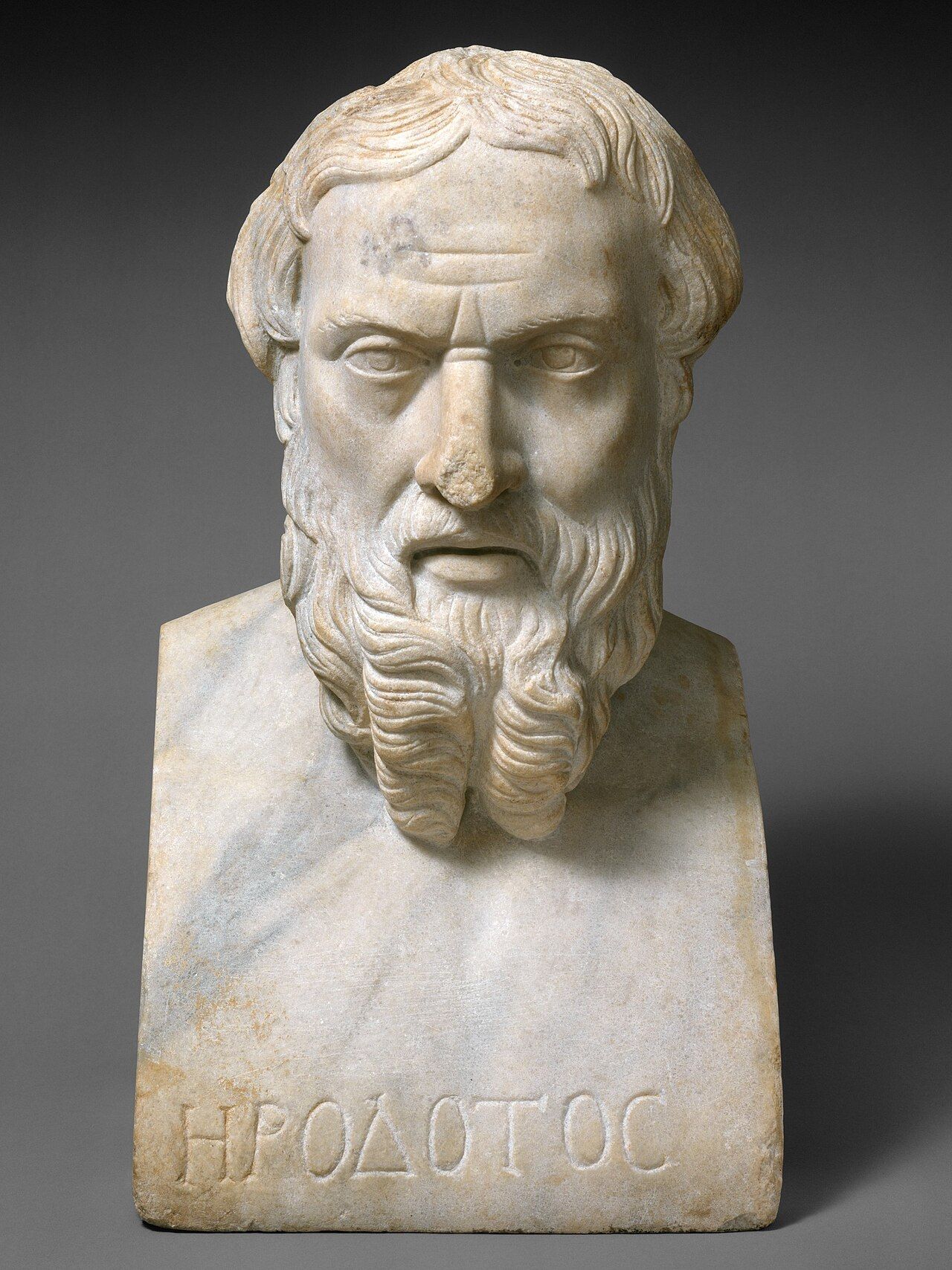
The oldest version of the puzzle
Around 430 BCE, Herodotus told a story about the Persian king Darius (Histories 3.38). Darius asked some Greeks at his court what it would take for them to eat the bodies of their dead fathers. They said no price on earth. He then called in members of the Callatiae, an Indian people who did eat their dead, and asked—through an interpreter, so the Greeks could hear—what it would take for them to burn their fathers’ corpses instead. They cried out and begged him not to speak of such horror. Herodotus draws the moral by quoting the poet Pindar: custom is king of all.
Notice what the story establishes and what it does not. It establishes, vividly, that sincere and decent people can hold opposite convictions about the same act, each convinced the other is monstrous. It does not establish that neither of them is right, or that the question has no answer. Twenty-four centuries of argument sit in that gap. Almost every mistake made in this area is a mistake about that gap.
Descriptive, metaethical, normative
Descriptive relativism is an empirical claim: as a matter of anthropological and historical fact, moral codes differ across societies, sometimes fundamentally. This is a claim for fieldworkers and historians, not philosophers, and in its modest form it is obviously true. Societies have differed about slavery, infanticide, polygamy, usury, blood feud, the status of women, the treatment of animals and the disposal of the dead.
Metaethical relativism is a claim about truth: moral statements are not true or false full stop, but only true-relative-to-a-culture, a code or a set of agreements. On this view “widow-burning is wrong” is elliptical; the complete thought is “widow-burning is wrong according to the moral framework of modern liberal societies,” and a parallel statement indexed to another framework could be equally true. Gilbert Harman defended a sophisticated version in “Moral Relativism Defended” (1975), arguing that judgements of what a person ought to do make sense only against motivating attitudes the speaker and agent share.
Normative relativism is a claim about conduct: because codes differ, you ought not to judge, interfere with or criticise the practices of another culture. This is the version that gets recited in seminars, and it is the version with the most obvious internal trouble—it issues a universal command (never judge across cultures) that is itself not relative to any culture. Two further positions often travel under the same banner: individual subjectivism, which relativises morality to each person rather than each group, and moral error theory, which says moral claims aim at objective truth and uniformly miss.
| Position | Core claim | Type of claim | Chief difficulty |
|---|---|---|---|
| Descriptive relativism | Societies in fact hold different moral codes | Empirical | Deep differences may be fewer than they look once beliefs about facts are separated out |
| Metaethical relativism | Moral truth is only truth-relative-to-a-framework | About truth | Cannot make sense of a reformer being right against her own society |
| Normative relativism | You ought never to judge or interfere across cultures | About conduct | States a non-relative universal duty; self-undermining |
| Individual subjectivism | Moral truth is relative to each person’s attitudes | About truth | Makes moral disagreement between two people logically impossible |
| Error theory | Moral claims are objective in intent and all false | About truth | Owes an account of why we go on making and needing such claims |
Where the modern version came from
The modern doctrine is not ancient scepticism repackaged; it has a datable social-science pedigree. William Graham Sumner’s Folkways (1906) gave ethnocentrism its currency in English—the term itself had been used in German by Ludwig Gumplowicz decades earlier—and argued that the mores of a group generate its notions of right, so that “the mores can make anything right.” Ruth Benedict, in “Anthropology and the Abnormal” (1934) and Patterns of Culture (1934), argued that normality itself is culturally defined and that morality is essentially a name we give to socially approved habits.
The doctrine then met a political test. In 1947, as the United Nations drafted what became the Universal Declaration of Human Rights, the Executive Board of the American Anthropological Association published a Statement on Human Rights in American Anthropologist, largely drafted by Melville Herskovits, warning that a declaration “conceived only in terms of the values prevalent in Western Europe and America” would be an instrument of the same colonialism anthropology had documented. The Declaration was adopted anyway on 10 December 1948, 48 votes in favour, none against, eight abstentions. The discipline eventually changed course: in 1999 the AAA adopted a Declaration on Anthropology and Human Rights that explicitly grounds anthropological work in a commitment to human rights.
“Relativism” names at least five distinct claims—one empirical, several about truth, one about conduct—and an argument that is plausible for one of them is usually irrelevant to the others.
Section 2The Argument From Disagreement, and Why It Fails

Laying the argument out
James Rachels, in The Elements of Moral Philosophy (first edition 1986), gave the standard reconstruction and the standard reply. He called it the cultural differences argument:
| Step | Content | Status |
|---|---|---|
| Premise | The Greeks believed it wrong to eat the dead; the Callatiae believed it right. | True (a claim about beliefs) |
| Conclusion | Therefore there is no objective truth about how to treat the dead; it is only a matter of opinion. | Does not follow (a claim about reality) |
| Diagnosis | The premise concerns what people believe; the conclusion concerns what is the case. | Invalid form |
| Parallel | Some societies believed the earth flat, others round; therefore the earth has no shape. | Absurd, same form |
The point is not that the conclusion is false. It might be true. The point is that this argument does not get you there, and it is nearly always the only argument offered. Disagreement is compatible with objectivity everywhere else in human enquiry—nutrition, cosmology, epidemiology—so it is odd to treat it as decisive in ethics alone. Rachels adds a second stroke: many apparent moral differences dissolve when you separate values from beliefs about facts. Hindus who will not eat beef and Britons who will are not disagreeing about whether it is permissible to eat your grandmother; they are disagreeing about whether the cow might be your grandmother. Share the metaphysics of reincarnation and the practices converge. How far that move goes is genuinely contested, and the standard counter-case is Richard Brandt’s Hopi Ethics (1954). After extended fieldwork Brandt concluded that Hopi and Anglo-American attitudes to the suffering of animals differed in a way he could not trace back to any difference in non-moral belief—a residue that looked to him like disagreement in basic values. Whether such residues are real fundamental disagreements or merely analysis left unfinished is still argued over, and it is the point on which the descriptive question actually turns.
The consequences a consistent relativist must accept
Rachels then presses on what follows if metaethical relativism is true. First, we could no longer say that the practices of another society are morally inferior to our own—not merely that we should be cautious about saying it, but that the words would fail to express a coherent thought. Second, we could decide whether an action is right simply by consulting the standards of our own society; moral enquiry would become a form of opinion polling. Third—the sharpest one—the idea of moral progress becomes unintelligible. A reformer, by definition, holds a view her society rejects. On strict relativism, when the abolitionist Granville Sharp argued in the 1770s that English law could not sustain slavery, he was, by the standard of the code operative around him, simply wrong. When his society came round, it did not get better; it merely got different.
Relativists have replies. David Wong’s Natural Moralities (2006) defends a pluralistic relativism in which human nature and the functional requirements of social life constrain the space of workable moralities to a limited range—more than one true morality, but far fewer than infinitely many, and some codes ruled out entirely. Bernard Williams, in Ethics and the Limits of Philosophy (1985), offered a “relativism of distance”: our vocabulary of moral appraisal applies fully in real confrontations, where two ways of life are genuine options for the same people, and idles in notional confrontations with, say, a Bronze Age chieftain. Both are serious positions; neither rests on the bad argument from disagreement.
Mackie: the better argument, and where it lands
J. L. Mackie’s Ethics: Inventing Right and Wrong (1977) contains the strongest version of the case, and it is subtler than the one on the seminar table. His argument from relativity is inference to the best explanation, not deduction: the actual pattern of moral variation is better explained by the hypothesis that people’s moral views reflect their forms of life than by the hypothesis that people are perceiving, with varying success, a realm of objective values. His argument from queerness is metaphysical and epistemological: objective values would have to be entities of a very strange kind—facts with built-in action-guiding force, so that merely knowing them motivates—and we would need a faculty for detecting them unlike any of our known faculties.
Notice where Mackie lands. Not relativism but error theory: ordinary moral talk really does purport to describe objective facts, and there are no such facts, so ordinary moral claims are systematically false. Mackie then wrote a second half of the book about how to invent and maintain a morality anyway. Sharon Street’s “A Darwinian Dilemma for Realist Theories of Value” (2006) presses a related modern worry: if our evaluative tendencies were shaped by selection for reproductive fitness rather than for tracking moral truth, the realist owes an account of why the two would coincide. These are the arguments an honest objectivist must answer. The seminar-table argument is not.
The inference from “cultures disagree” to “there is no moral truth” is invalid; the serious anti-objectivist arguments, like Mackie’s, are about explanation and metaphysics, and they support error theory more naturally than relativism.
Section 3Objectivity Without Absolutism
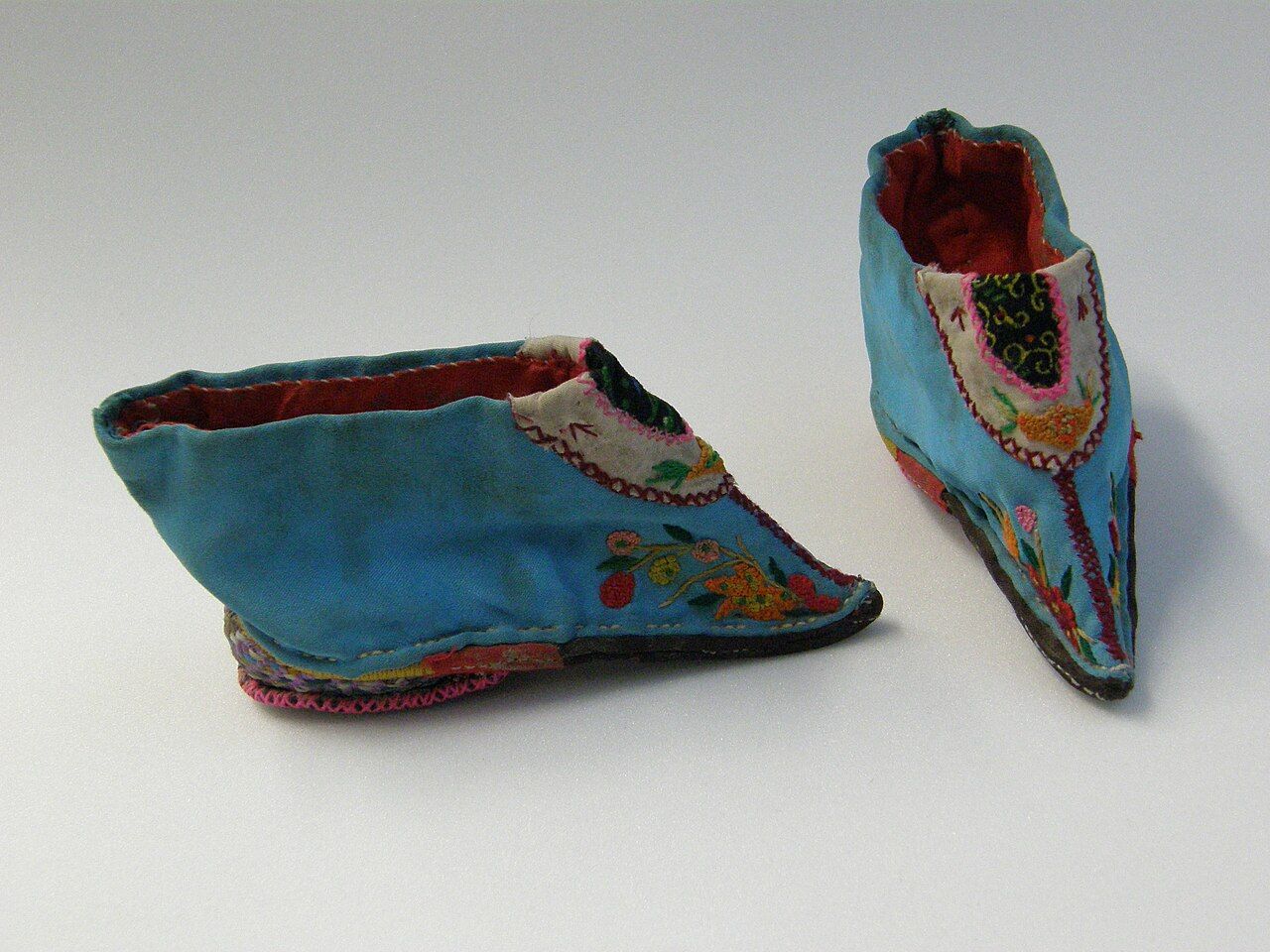
What objectivity would and would not require
People reject moral objectivity because they picture something nobody defends: a fixed list of rules, exceptionless, written into the fabric of the universe, immune to context. Call that absolutism. Objectivity is a much weaker claim. To say a moral question has an objective answer is to say that what makes an answer correct is not simply that you or your group approve of it—that you can be mistaken, that evidence and argument bear on the question, and that two people who disagree are genuinely disagreeing rather than merely reporting different tastes.
Objectivity is compatible with a great deal of variation. It is compatible with the same underlying value licensing different practices in different circumstances—the duty to care for elders is discharged differently in a village with three generations under one roof and in a city where the adult children live 800 kilometres away. It is compatible with genuine moral dilemmas where two objective duties conflict and no option is clean. And it is compatible with a large zone of permissibility where several answers are equally acceptable and the choice is a matter of custom, not truth.
| Metaethical view | Are there moral facts? | What makes a claim true? | Representative figure |
|---|---|---|---|
| Robust moral realism | Yes, mind-independent | Correspondence to moral facts that hold whatever anyone thinks | Derek Parfit, Russ Shafer-Landau |
| Naturalist realism | Yes, natural facts | Moral properties are natural properties, e.g. what answers human needs | Richard Boyd, Peter Railton |
| Constructivism | Yes, but constructed | What idealised rational agents would agree to or could not reasonably reject | John Rawls, Christine Korsgaard, T. M. Scanlon |
| Expressivism | Not in the descriptive sense | Moral claims express attitudes; truth is earned within the practice | Simon Blackburn, Allan Gibbard |
| Metaethical relativism | Only framework-indexed | Correspondence to the standards of a particular code or agreement | Gilbert Harman, David Wong |
| Error theory | No | Nothing; all positive moral claims are false | J. L. Mackie, Richard Joyce |
The evidence from convergence and from progress
Two bodies of evidence are usually offered against the relativist. The first is convergence at the level of deep structure. Donald Brown’s Human Universals (1991) catalogued features found in every documented society, including some normative ones: a distinction between right and wrong, prohibitions on murder and on certain forms of theft, reciprocity, obligations to kin, redress of wrongs, some concept of fairness. The Moral Machine experiment (Awad and colleagues, Nature, 2018) collected roughly 40 million decisions about autonomous-vehicle dilemmas from participants in 233 countries and territories. It found three distinguishable cultural clusters—and, underneath them, near-universal preferences for sparing humans over animals, more lives over fewer, and the young over the old. The differences were real but were largely differences of magnitude, not of sign. Be careful how much weight you place here: universality of a tendency is not proof of its correctness, and Michele Moody-Adams argued in Fieldwork in Familiar Places (1997) that the ethnographic record was often read too quickly in both directions.
The second body of evidence is moral change that looks, from the inside and the outside, like progress. The transatlantic slave trade was legal, respectable and immensely profitable; Britain abolished the trade in 1807 and slavery in most of its empire in 1833; the United States abolished slavery by the Thirteenth Amendment in 1865; Brazil, last in the Americas, by the Lei Áurea of 1888. Duelling among British gentlemen was a matter of honour into the 1820s—the Duke of Wellington fought Lord Winchilsea in 1829 while serving as prime minister—and was effectively dead by the 1850s. Chinese foot-binding, practised in some form for roughly a thousand years, was attacked by anti-footbinding societies from the 1880s and 1890s, discouraged by imperial edict in 1902 and banned by the Republic in 1912; within about a generation it was finished.
Kwame Anthony Appiah’s The Honor Code (2010) examines these three cases—alongside a fourth that is not yet resolved, honour killing in Pakistan—and notes something awkward for both sides. In each, the moral arguments against the practice had been available and largely accepted for a long time before the practice ended. What changed was honour—the practice became a source of shame rather than standing, usually because the honour group widened to include people who despised it. That is a sobering finding about how moral change actually works. It is not, however, a finding that the change was not progress.
Method: how you actually argue about this
If ethics is not a matter of taste, what is the procedure? The dominant answer is John Rawls’s reflective equilibrium (A Theory of Justice, 1971): you move back and forth between particular judgements you hold with confidence, the general principles that would explain them, and background theories about persons and society, adjusting in whichever direction survives scrutiny, until the set coheres. It is not proof. It is the same method used in law and in much of empirical science: no foundational certainty, but real constraint, real error, and real revision. Rawls later added the idea of an overlapping consensus (Political Liberalism, 1993): people who disagree profoundly about the meaning of life can still converge, for their own reasons, on shared political principles. That is an underrated point for anyone working in a pluralistic hospital or firm.
It is worth saying plainly where professional opinion sits, since students often assume otherwise. In the 2020 PhilPapers survey of professional philosophers, about 62 per cent accepted or leaned towards moral realism against about 26 per cent for anti-realism. That is not an argument—head counts never are—but it should correct the widespread impression that sophistication in ethics means giving up on truth.
Objectivity in ethics requires only that moral claims can be mistaken and that argument bears on them—a far weaker and more defensible commitment than absolutism, and one that makes sense of moral reform in a way relativism struggles to.
Section 4Living With Disagreement: Tolerance, Humility and Peer Dispute
Tolerance needs a better foundation than relativism
The usual motive for relativism is tolerance, and this is where the doctrine most clearly fails its own purposes. If moral truth is relative to a culture’s code, then in a culture whose code is intolerant, intolerance is right. The relativist has no standing to object—she has already said that what makes an act right is its endorsement by the local framework. Bernard Williams called this “vulgar relativism” in Morality (1972) and judged it self-refuting, because it takes a non-relative moral principle of non-interference and attaches it to a theory that forbids non-relative moral principles.
Tolerance has better foundations, and you can hold all of them without any relativism. There is the epistemic ground: I might be wrong, my confidence outruns my evidence, and history is unkind to the certainties of every era. There is the autonomy ground: adults are entitled to run their own lives, and imposition damages the very thing that gives choices value. There is the consequentialist ground: coerced conversion is unstable and interference by outsiders usually backfires. And there is the humility of the outsider: you often do not understand the practice, its function or its meaning to participants. Every one of these reasons can be stated by someone who thinks there are moral truths. Indeed they must be—each is offered as a truth.
The universality debate, in the real world
This is not academic. In April 1993, at a regional meeting in Bangkok held ahead of the UN World Conference on Human Rights, ministers and representatives of Asian states issued the Bangkok Declaration, insisting that human rights must be considered in the context of national and regional particularities and various historical, cultural and religious backgrounds. Singapore’s Lee Kuan Yew—by then senior minister, having handed the premiership to Goh Chok Tong in 1990—and Malaysia’s prime minister Mahathir Mohamad made the case for “Asian values” prioritising order, family and community over individual claims against the state. The Vienna Declaration adopted that June answered directly, affirming in paragraph 5 that all human rights are universal, indivisible and interdependent, while acknowledging that historical and cultural backgrounds must be borne in mind.
Amartya Sen’s reply, in his 1997 Morgenthau Memorial Lecture “Human Rights and Asian Values,” is the model of how to do this well. He did not argue that Asia should adopt Western values. He argued the historical premise was false: the Indian emperor Ashoka in the third century BCE and the Mughal emperor Akbar in the sixteenth both articulated principles of tolerance and public reasoning well before comparable European statements, while Europe produced Plato’s authoritarianism and the Inquisition. Traditions are internally plural, and rulers who invoke “our culture” are frequently invoking one strand of it against dissenters who belong to the same culture. That last point matters enormously in practice: the people most often harmed by a culture-based defence of a practice are members of that culture who object to it.
When you and a peer disagree
Set cultures aside; consider the everyday case. A colleague you respect, who has the same training, the same information and the same time to think, reaches the opposite conclusion about whether to escalate a case to the ethics committee. What should you do with your own confidence? Philosophers call this the problem of peer disagreement, and the literature since Adam Elga’s “Reflection and Disagreement” (2007) and David Christensen’s work of the same period gives you two poles.
Conciliationism says that discovering an epistemic peer disagrees is itself evidence that you have erred, so you should reduce confidence—on the strongest version, split the difference. The steadfast view says you may retain your confidence, because you have access to your own reasoning and its apparent soundness, and if you have evaluated the evidence correctly then the disagreement shows your colleague erred, not you. Most working philosophers occupy a middle position sensitive to how much the dispute turns on shared evidence, how good your track record is in this kind of case, and whether the disagreement is one-off or a systematic pattern.
| Feature of the dispute | Leans conciliatory | Leans steadfast |
|---|---|---|
| Evidence base | Both saw the same chart, same data | You have information they lack |
| Track record | Comparable or theirs is better | Yours is demonstrably better in this domain |
| Number of dissenters | Several independent peers agree against you | One dissenter, or dissenters echoing each other |
| Source of the split | Neither can locate the point of divergence | You can point to their specific error |
| Independence | Views formed separately | Their view is downstream of one influential person |
| Interest | Neither party benefits from their view | Their conclusion serves an obvious interest |
There is also a practical toolkit for acting under moral uncertainty—uncertainty not about the facts but about which moral theory is correct. Will MacAskill, Krister Bykvist and Toby Ord’s Moral Uncertainty (2020) develops the idea of maximising expected choiceworthiness: give credence to each of the plausible theories, ask how much each cares about the options, and prefer the option that fares reasonably across them. The rough, usable version: when consequentialist, deontological and virtue-based reasoning all point the same way, act with confidence; when they diverge sharply, favour the option that is least catastrophic if you have backed the wrong theory, and buy yourself time and reversibility.
Tolerance, humility and openness to revision are best defended as moral truths in their own right, and the epistemology of peer disagreement gives you a concrete way to calibrate confidence rather than either capitulating or digging in.
Section 5Disagreement at the Bedside and in the Workplace
Who gets told: disclosure as a real test case
In 1995, Leslie Blackhall and colleagues published a study in JAMA of 800 people aged 65 and over in Los Angeles, 200 each from Korean American, Mexican American, African American and European American backgrounds. Asked whether a patient should be told of a diagnosis of metastatic cancer, 47 per cent of Korean American and 65 per cent of Mexican American respondents said yes, against 87 per cent of European American and 88 per cent of African American respondents. On who should make the decision about life support, the pattern was similar: the two former groups were far more likely to name the family rather than the patient. Read those numbers carefully, because the usual lesson drawn from them is the wrong one. No group came close to unanimity. Nearly half the Korean American respondents and roughly two-thirds of the Mexican American respondents wanted the patient told, so the spread of opinion inside each group was wide. Ethnicity predicts a tendency; it never predicts a person. Antonella Surbone documented parallel norms in Italy, where non-disclosure to cancer patients was standard well into the 1990s, and similar patterns were long described in Japan.
Here is the analytic move that matters. This is not a disagreement about whether patients should be protected from harm, or whether families should be involved, or whether suffering matters. It is a disagreement about what protects, and about the proper unit of decision-making—the individual or the family. Richard Shweder’s framework of three ethics—autonomy, community and divinity—is useful here: societies weight these differently, and a clinician trained entirely in the ethics of autonomy will systematically misread families operating in the ethics of community as obstructive.
The workable resolution is not to choose a culture’s norm over the patient’s. It is to make the choice itself the patient’s. This is often called negotiated or tiered disclosure: ask the patient, early and neutrally, how much they want to know and who they want involved. A patient may validly delegate decision-making to a son or a spouse; what a family cannot do is delegate on the patient’s behalf without ever asking. The framework respects the cultural norm and the individual, because it treats the norm as an option the patient may take up rather than a fact about them inferred from their surname.
Where the floor is: practices no framework licenses
Some cases do not resolve by negotiation. Female genital mutilation or cutting is the standard test. UNICEF estimated in 2024 that more than 230 million girls and women alive today have undergone it. It is defended in practising communities by reference to marriageability, cleanliness, honour and tradition; it is often performed by women on girls too young to consent; it produces haemorrhage, infection, chronic pain, obstetric complication and, in the more extensive forms, lifelong sequelae. The World Health Organization classifies all forms as a violation of the human rights of girls and women. The United Kingdom prohibited the practice in 1985 and strengthened the law in the FGM Act 2003; the United States criminalised it federally in 1996, and after a federal judge in Michigan struck down that statute on Commerce Clause grounds in United States v. Nagarwala (2018), Congress re-enacted it on a firmer constitutional footing in the STOP FGM Act of 2020. When the American Academy of Pediatrics suggested in 2010 that a symbolic “ritual nick” might be an acceptable harm-reduction compromise, the reaction was severe enough that the statement was retracted within weeks.
You can hold, simultaneously and without contradiction: that outsiders have often described this practice with contempt and inaccuracy; that criminal prosecution of mothers is frequently the worst available tool; that the most effective interventions have been community-led abandonment programmes rather than external prohibition; and that the practice is wrong and children are entitled to protection from it. Recognising a moral floor tells you that something must change. It does not tell you who should say so or how. That second question is empirical and tactical, and outsiders are usually worse at it than they think.
| Situation | Relativist reflex | Dogmatic reflex | Defensible response |
|---|---|---|---|
| Family asks you not to tell the patient her prognosis | Comply; it is their culture | Tell the patient regardless | Ask the patient privately how much she wants to know and who should decide |
| Patient refuses transfusion on religious grounds | Defer without exploring | Seek an order to override | Confirm capacity and voluntariness, check for coercion, document, offer alternatives |
| Colleague objects to participating in a lawful procedure | Anything goes | Comply or resign | Accommodate where timely transfer of care is genuinely available; do not permit abandonment or obstruction |
| Interpreter softens or edits what you said | Accept the mediation | Accuse the interpreter | Use a trained professional interpreter, not a relative; ask for verbatim rendering |
| Parents seek a harmful traditional procedure for a child | Respect the tradition | Report immediately | Engage, explain harm, involve community advocates; escalate to safeguarding if the risk is real |
Moral distress and the limits of your own certainty
Andrew Jameton named moral distress in 1984: the state of knowing the right thing to do while institutional constraints make it nearly impossible to do it. Decades of research since—particularly in critical care and, sharply, during the COVID-19 pandemic—link it to burnout and to leaving the profession. Two cautions belong here. First, moral distress is real and its usual cure is structural, not personal: escalation pathways that work, ethics consultation that is available at 2 a.m., staffing that permits the standard of care people were trained to give. Second, the confident phrase “knowing the right thing to do” deserves a second look in a chapter on disagreement. Sometimes the distress signals an institution failing. Sometimes it signals a genuinely hard case where a reasonable colleague, holding the same facts, has landed elsewhere. Learning to tell those apart is most of professional moral maturity, and it is why the peer-disagreement tools in Section 4 belong on the ward and not only in the seminar room.
Most cross-cultural clinical conflict is about who decides and who is told rather than about ultimate values, and it is best handled by asking the individual patient—while still recognising a small set of protections no cultural framework can license removing.
The chapter in one breath
Moral codes have differed profoundly across societies—Herodotus knew it, Sumner and Benedict documented it, and no serious person denies it. What does not follow is that moral claims are merely local. The cultural differences argument moves from a premise about beliefs to a conclusion about reality, and that step is invalid; many apparent value differences also dissolve once you separate values from factual and metaphysical beliefs about cows and the afterlife, though how much of the difference dissolves is itself disputed. The strongest anti-objectivist arguments are Mackie’s from relativity and queerness, and they support error theory rather than relativism. Meanwhile relativism cannot ground the tolerance it was invented to protect, cannot make sense of the reformer, and cannot explain why abolition, the collapse of foot-binding and the death of duelling look like progress rather than drift. Objectivity, properly understood, demands only that we can be wrong and that argument matters—not a fixed rulebook. So you argue: reflective equilibrium, overlapping consensus, calibrated response to peer disagreement, humility about your credences. And at the bedside you ask this patient what she wants, rather than reading it off her culture, while holding a floor beneath which no culture’s authority reaches.
Words worth knowing
| Term | What it means |
|---|---|
| Descriptive relativism | The empirical claim that moral codes differ, sometimes fundamentally, across societies and eras. |
| Metaethical relativism | The claim that moral statements are true or false only relative to a culture, code or set of agreements. |
| Normative relativism | The claim that one ought not to judge or interfere with the practices of another culture. |
| Cultural differences argument | The invalid inference from “societies disagree about X” to “there is no objective truth about X.” |
| Ethnocentrism | Sumner’s term for judging other groups by the standards of one’s own, treated as the natural centre. |
| Error theory | Mackie’s view that moral claims genuinely assert objective facts and are therefore all false. |
| Argument from queerness | Mackie’s claim that objective values would be metaphysically and epistemically unlike anything else we know. |
| Moral realism | The view that there are moral facts and that moral claims can be objectively true. |
| Constructivism | The view that moral truth is what suitably idealised agents would agree to or could not reasonably reject. |
| Expressivism | The view that moral utterances primarily express attitudes rather than describe moral facts. |
| Absolutism | The much stronger view that moral rules are exceptionless and context-independent; not required by objectivity. |
| Reflective equilibrium | Rawls’s method of mutual adjustment between considered judgements, principles and background theories. |
| Overlapping consensus | Agreement on shared principles by people who hold deeply different comprehensive worldviews. |
| Peer disagreement | Disagreement with someone of comparable evidence and competence; the question is what it does to your confidence. |
| Conciliationism | The view that discovering peer disagreement is evidence you have erred, so confidence should fall. |
| Steadfast view | The view that you may retain confidence despite peer disagreement, given access to your own reasoning. |
| Moral uncertainty | Uncertainty about which moral theory is correct, and the question of how to act rationally under it. |
| Cultural humility | Tervalon and Murray-García’s stance of lifelong self-critique and asking, contrasted with mastering facts about groups. |
| Moral distress | Jameton’s term for knowing the right action while institutional constraints prevent taking it. |
| Tiered disclosure | Asking a patient how much information they want and who should receive it, rather than assuming either way. |
Check yourself
Bioethics: The Four Principles
A family tells the nurse that their mother must never hear the word “cancer.” A transplant coordinator has one liver and three candidates who will each die without it. A researcher in Malawi must decide whether a placebo arm is defensible when an effective drug exists but costs more per patient than the country spends on health per person per year. None of these is settled by picking a moral theory. Since 1979, the working language of medicine and research has been four principles — respect for autonomy, nonmaleficence, beneficence and justice — whose ancestor is not a seminar argument but a federal commission convened after a run of real atrocities. This chapter takes that framework seriously enough to test it: where each principle came from, what it actually requires, how the four collide, and what the framework genuinely cannot do. You will finish able to reason a bioethics case out loud, in order, with your work shown.
By the end of this chapter you can
- Trace the four principles to the research scandals and legal responses — the Nuremberg Code, Beecher’s 1966 exposure, Tuskegee, and the Belmont Report — that produced them.
- Distinguish Belmont’s three principles from Beauchamp and Childress’s four, and explain why respect for persons is broader than autonomy.
- State the three conditions of an autonomous choice and apply them to a real refusal or consent.
- Separate nonmaleficence from beneficence, and use the doctrine of double effect correctly — including its limits.
- Distinguish soft from hard paternalism and judge when an override of a patient’s choice is defensible.
- Apply the formal principle of justice and at least four material principles to a real allocation problem, such as kidney allocation or crisis standards of care.
- Explain clinical equipoise and the therapeutic misconception, and why both matter for research beneficence.
- Use specification and balancing to move from an abstract principle to an action, and state the conditions under which infringing a principle is justified.
- Summarise the strongest objections to principlism — from Clouser and Gert, from casuistry, from care ethics, and from cross-cultural bioethics — and say what survives them.
Section 1Where the Four Principles Came From
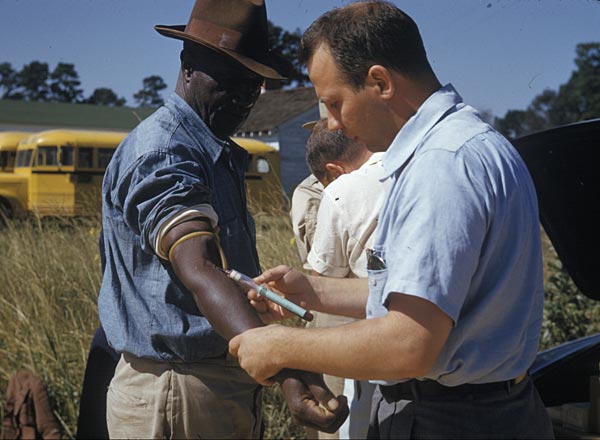
Bioethics was built out of wreckage
Most fields of ethics grow out of argument. Bioethics grew out of harm. In August 1947, the American military tribunal that tried twenty-three German physicians and administrators at Nuremberg — United States v. Karl Brandt — delivered its verdict together with ten points on permissible human experimentation. The first sentence of what became the Nuremberg Code is unhedged: “The voluntary consent of the human subject is absolutely essential.” The defendants had frozen prisoners, infected them with typhus, and operated without anaesthesia. Seven were hanged. And for roughly two decades, the profession outside Germany treated the Code as a document about Nazis rather than about medicine.
That comfort ended on 16 June 1966, when Henry K. Beecher, an anaesthesiologist at Massachusetts General Hospital, published “Ethics and Clinical Research” in the New England Journal of Medicine. Beecher described twenty-two studies — all from mainstream journals, most federally or industry funded — in which patients had been placed at risk without meaningful consent. He named no investigators, which was tactically shrewd; the point was that this was ordinary practice, not deviance. Two of his examples became notorious. At the Willowbrook State School on Staten Island, from 1956 into the early 1970s, Saul Krugman’s team deliberately infected children with intellectual disabilities with hepatitis virus, in an institution where infection was near-universal anyway and where admission for parents was easier through the research unit. At the Jewish Chronic Disease Hospital in Brooklyn in 1963, Chester Southam injected live cancer cells into twenty-two debilitated patients without telling them what the injections contained, reasoning that the word “cancer” would frighten them unnecessarily.
Then came the study that changed the law. From 1932 to 1972 the U.S. Public Health Service ran the Tuskegee Study of Untreated Syphilis in the Negro Male in Macon County, Alabama: 399 Black men with latent syphilis and 201 uninfected controls, told they were being treated for “bad blood,” enrolled with the promise of meals, transport and burial insurance. Penicillin became the standard cure by 1947. It was withheld, and researchers actively worked to keep participants from being treated elsewhere. Peter Buxtun, a PHS venereal-disease investigator, raised objections internally for years and eventually gave the story to the press; Jean Heller’s Associated Press report ran on 25 July 1972, and the study was shut down that November. What Tuskegee added to the record was not simply deception. It was the demonstration that a research burden can be laid, decade after decade, on the people with the least power to refuse it — a justice failure, not only a consent failure.
Belmont, and the birth of a common language
Congress responded with the National Research Act, signed on 12 July 1974, which created the National Commission for the Protection of Human Subjects of Biomedical and Behavioral Research and required institutional review boards for federally funded research. The Commission had eleven members — clinicians, lawyers, a theologian, psychologists — with the philosophers Stephen Toulmin and Tom Beauchamp working for it as staff. It met for four days in February 1976 at the Smithsonian’s Belmont Conference Center in Elkridge, Maryland, and that retreat produced the outline which, after two further years of drafting, became the Belmont Report. The Commission issued it in 1978; it was printed in the Federal Register in April 1979. It is about eight pages long. It is, by a wide margin, the most consequential eight pages in American bioethics.
Belmont names three basic principles and pairs each with an application. Respect for persons yields informed consent; it has two parts, treating autonomous people as capable of self-determination and protecting those whose autonomy is diminished. Beneficence yields systematic assessment of risks and benefits. Justice yields fair subject selection — the direct answer to Macon County and Willowbrook. The genius of the report is structural: it does not adjudicate between utilitarianism and Kantian ethics, because a federal commission containing a Jesuit, a civil-rights lawyer and a laboratory scientist was never going to agree on a foundational theory. It identifies principles that all of them already accepted and were prepared to be held to.
In 1979, the same year Belmont reached the Federal Register, Oxford University Press published Principles of Biomedical Ethics by Tom L. Beauchamp, a philosopher at Georgetown’s Kennedy Institute who had helped draft Belmont, and James F. Childress, a scholar of religious ethics who taught at Georgetown before making his career at the University of Virginia. Their book made two moves. It extended the framework from research to all of clinical medicine, and it split beneficence into two: the duty not to inflict harm (nonmaleficence) and the duty to act for others’ benefit (beneficence). Four principles, not three. Revised across successive editions over four decades, the book became the most-cited text in the field, and the approach acquired a name — principlism — and a nickname, the “Georgetown mantra.” The British physician Raanan Gillon popularised it in the United Kingdom, adding a further question he thought Americans skated over: scope. To whom, exactly, do we owe each of these duties?
What kind of thing a principle is
A principle in this sense is not a rule and not a theory. Beauchamp and Childress borrow W. D. Ross’s term: the four principles are prima facie binding, meaning each holds unless it conflicts with an equal or stronger obligation in the circumstances. When you break a promise to drive a friend to the airport because you are performing CPR on a stranger, the duty of promise-keeping did not evaporate; it was outweighed, and it leaves residue — you owe your friend an explanation and probably a taxi fare. Bioethical conflicts work the same way. The principle you overrode still has claims on you afterwards.
Where do the principles get their authority? Beauchamp and Childress ground them in what they call common morality: the set of norms that all morally serious people, in all cultures, already share — do not kill, do not steal, keep promises, prevent harm, tell the truth. This is a contested claim, and it is worth knowing that it is contested. Critics point out that a norm shared everywhere at a high level of abstraction may be applied so differently in different places that the shared part does no work. Beauchamp and Childress accept some of this and add two operations, specification and balancing, which Section 5 develops.
| Principle | What it demands | The question it puts on the table | Classic failure |
|---|---|---|---|
| Respect for autonomy | Do not control a competent person’s self-regarding choices; enable them | Does this person understand, and is the choice really theirs? | Southam’s cancer-cell injections, 1963 |
| Nonmaleficence | Do not inflict harm; do not impose unreasonable risk of harm | What is the harm, how likely, how severe, how reversible? | Withholding penicillin at Tuskegee |
| Beneficence | Act to prevent and remove harm and to promote good | What is the net benefit to this person, on their values? | Futile aggressive treatment nobody wanted |
| Justice | Distribute benefits, risks and costs fairly | Why this person and not that one? Who bears the burden? | Subject selection at Willowbrook |
The four principles are a post-atrocity settlement — a shared vocabulary built so that people who disagree about moral theory can still hold each other accountable to the same questions.
Section 2Respect for Autonomy
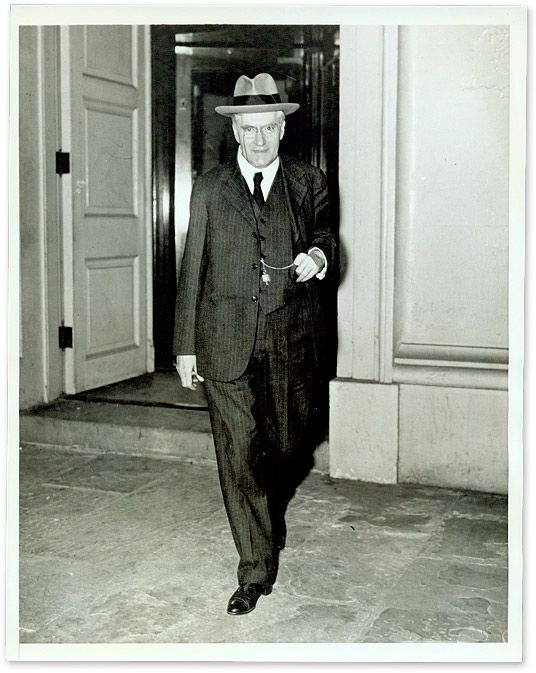
What autonomy actually is
The word is Greek — autos, self, and nomos, law — and originally described a city-state that made its own laws rather than taking them from a conqueror. Kant transplanted it to persons: a rational will that legislates the moral law for itself is the ground of human dignity. Mill gave it a different justification in On Liberty (1859), the harm principle, which holds that the only warrant for coercing an adult against their will is to prevent harm to others — a person’s own good, physical or moral, is not sufficient warrant. These are very different arguments. Kant is protecting rational agency; Mill is protecting individuality and social experiment. Modern bioethics cites whichever suits the case, which is untidy but usually harmless.
Beauchamp and Childress cut through the metaphysics by defining an autonomous choice rather than an autonomous person. A choice is autonomous when it meets three conditions: it is intentional (it is the act you meant to perform, not an accident); it is made with understanding (you grasp the nature and foreseeable consequences); and it is voluntary (free of controlling influences). Only the first is all-or-nothing. Understanding and voluntariness come in degrees, so autonomy comes in degrees — which is why the clinical question is never “is this patient autonomous?” but “is this choice, about this decision, autonomous enough?”
American law arrived at similar ground from a different direction. In Schloendorff v. Society of New York Hospital (1914), Mary Schloendorff consented to an examination under ether and expressly refused an operation; the surgeons removed a fibroid tumour anyway. Judge Benjamin Cardozo wrote that every human being of adult years and sound mind has a right to determine what shall be done with his own body, and that a surgeon who operates without consent commits an assault. Schloendorff herself lost: the hospital escaped liability under the charitable-immunity doctrine of the day, so the most quoted sentence in American medical law is dictum. The phrase informed consent is younger — it surfaces in Salgo v. Leland Stanford Jr. University Board of Trustees (1957), where a patient was left paralysed after an aortography nobody had described to him. Canterbury v. Spence (1972) then shifted the disclosure standard from what a reasonable physician would tell to what a reasonable patient would want to know. The machinery of consent, capacity and surrogates is Chapter 9’s business; what matters here is the principle underneath it.
Threats to voluntariness, and the honest limits of the principle
Voluntariness is where most real cases go wrong, and the vocabulary repays precision. Coercion is a credible threat of harm used to control — consent to this or I discharge you. Manipulation is influence by non-persuasive means: presenting a 10 per cent mortality as a 90 per cent survival and never the reverse, quietly omitting the option you would rather they not pick, recruiting a son to lean on his mother. Persuasion — offering reasons and evidence — is legitimate, and clinicians are often too timid about it. Someone who says “it’s entirely up to you” and recites options like a waiter reading specials is not respecting autonomy; they are abandoning a frightened person to a technical decision they were never trained to make. Building understanding is a duty, not an optional courtesy.
The principle also has a shape that is easy to get backwards. Autonomy in clinical ethics is first of all a negative right — a right against unwanted bodily intrusion. It is not a general entitlement to receive whatever one asks for. A competent adult may refuse a transfusion, dialysis, a ventilator or antibiotics, and that refusal binds even when it will kill them. That same adult cannot compel a clinician to prescribe antibiotics for a viral illness, supply an unindicated opioid, or perform an operation that cannot help. Exactly where the boundary sits for marginally beneficial treatment is genuinely disputed — the American Thoracic Society and its partner societies now prefer “potentially inappropriate” to “futile” precisely because value judgements hide inside the older word — but the asymmetry between refusal and demand is not.
Relational autonomy, culture, and the nudge
The strongest philosophical challenge to the standard picture comes from feminist bioethics. Susan Sherwin argued through the 1990s that the atomistic chooser of the textbooks does not exist, and Catriona Mackenzie and Natalie Stoljar’s 2000 collection Relational Autonomy fixed the name on the position. Selves are formed in relationships, and oppressive relationships can shape a person’s preferences themselves. A woman who “chooses” a procedure because refusing would cost her a place to live has satisfied the formal conditions and is not free. Relational autonomy does not abandon the principle; it argues that respecting autonomy sometimes means changing conditions rather than merely recording stated preferences. Ask, at least once, what would actually happen to this person if they said no.
Culture complicates it further. In a widely cited 1995 JAMA study, Leslie Blackhall and colleagues surveyed 800 older residents of Los Angeles across four ethnic groups and found sharply different views about disclosing a terminal diagnosis: European-American and African-American respondents largely favoured telling the patient directly, while Korean-American and Mexican-American respondents were substantially more likely to hold that the family should receive the news and make the decisions. The response that has largely prevailed in bioethics is not to abandon autonomy but to make it recursive — ask the patient how they want information handled and whom they want decisions made with. A woman who autonomously delegates to her son has exercised autonomy. A woman whose son delegated on her behalf, without ever asking her, has not.
Finally, autonomy meets choice architecture. Richard Thaler and Cass Sunstein’s Nudge (2008) argued for “libertarian paternalism”: arrange defaults so that people tend to do well, while leaving the exit open. The evidence that defaults matter is dramatic. Eric Johnson and Daniel Goldstein reported in Science in 2003 that European countries with presumed-consent (opt-out) organ donation showed effective consent rates ranging from about 86 per cent to almost 100, while culturally and economically similar opt-in neighbours sat far below — Austria at 99.98 per cent against Germany at 12. Defenders say some default is unavoidable, so it may as well be the beneficial one. Critics answer that a nudge which works precisely because nobody notices it looks more like manipulation than persuasion. Both can be true at once, which is why transparency about the default does most of the ethical work.
| Condition | Satisfied when | Common failure at the bedside | What to do about it |
|---|---|---|---|
| Intentionality | The act is willed, not accidental or reflexive | Signature taken during sedation or acute delirium | Re-consent when the patient is lucid; document the window |
| Understanding | Nature, purpose, risks, alternatives and the option of doing nothing are grasped | Jargon, reading level, no interpreter, no teach-back | Teach-back; professional interpreter; plain numbers in both framings |
| Voluntariness | No controlling coercion or manipulation | Family pressure, immigration or housing fear, one-sided framing | Speak with the patient alone once; name the pressure; change conditions where you can |
| Capacity (prerequisite) | Can communicate a choice, understand, appreciate, and reason | Assumed absent because the patient disagrees with you | Assess against the four abilities, decision by decision |
Respect for autonomy protects choices that are intentional, understood and voluntary, which makes it a duty to build understanding and remove pressure — not merely a duty to accept the first thing said.
Section 3Nonmaleficence and Beneficence

Do no harm, and what that cannot mean
Nonmaleficence is the duty not to inflict harm and not to impose unreasonable risk of harm. It is stated first in almost every clinical code, and it is almost always stated wrongly. Taken literally, “do no harm” would forbid surgery, chemotherapy, vaccination, childbirth analgesia and every intravenous line ever placed. Medicine harms constantly. The real principle is that harm must be proportionate to expected benefit, minimised in magnitude, and accepted by the person who bears it. What nonmaleficence rules out absolutely is a much narrower class: harm inflicted for no benefit to the patient, harm concealed, harm imposed on someone who did not agree to it, and harm caused by failing to meet the standard of due care — the legal and moral floor whose breach is negligence.
The scale of unintended harm is a live empirical dispute, and it is worth seeing how the argument runs. The Institute of Medicine’s 1999 report To Err Is Human extrapolated from studies in New York, Colorado and Utah to estimate that 44,000 to 98,000 Americans die each year from preventable errors in hospitals — a claim that reorganised patient safety in the United States. In 2016, Martin Makary and Michael Daniel argued in the BMJ for a figure above 250,000, making medical error the third leading cause of death. That estimate has been sharply criticised for extrapolating from small, non-representative chart reviews and for treating “error contributed” as “error caused” in patients who were often already dying. The honest summary is that iatrogenic death is common enough to be a major ethical problem and that no one knows the number well. The principle does not depend on the number.
Double effect, and withdrawing what you started
Some acts produce a good result and a bad one together. The doctrine of double effect, developed in the Catholic natural-law tradition and traceable to Aquinas’s discussion of self-defence, sets out when the bad effect may be tolerated. Four conditions must hold: the act itself must not be intrinsically wrong; the bad effect must not be the means to the good one; the agent must intend only the good effect, foreseeing but not aiming at the bad; and there must be proportionate reason. The classic clinical application is opioid titration for pain or breathlessness in a dying patient, where respiratory depression is foreseen but not intended. The United States Supreme Court leaned on the same reasoning in Vacco v. Quill (1997), distinguishing pain relief that may shorten life from assisted suicide.
Two cautions. First, the doctrine is philosophically contested; consequentialists reject the intention/foresight distinction as morally weightless, and even sympathetic critics note how easily intention is redescribed after the fact. Second, the empirical premise is usually false. Studies of proportionate opioid titration in palliative care have not shown shortened survival, and some suggest the opposite, because untreated pain and dyspnoea are themselves physiologically costly. So double effect is mostly reassurance clinicians do not need — and invoking it can do harm if it becomes an excuse for under-treating symptoms out of vague dread.
A related question is whether stopping a treatment differs morally from never starting it. The dominant position in bioethics and in Anglo-American law — stated plainly by the President’s Commission in its 1983 report Deciding to Forego Life-Sustaining Treatment — is that withholding and withdrawing are morally equivalent, since both are decisions not to provide a treatment on the same grounds. Survey after survey shows clinicians nonetheless feel withdrawal is worse, and that intuition has a cost: teams start reluctant to begin trials of therapy, because they fear they will not be able to stop. Explaining the equivalence to a family is often the single most useful thing an ethics consultant does. It is fair to acknowledge that a minority of scholars dispute the equivalence, particularly where withdrawal is the proximate cause of death and where a physician’s agency feels different in kind.
| Condition of double effect | Question to ask | Passes: morphine for terminal dyspnoea | Fails: a lethal bolus at family request |
|---|---|---|---|
| The act is not wrong in itself | Is the action, described honestly, a legitimate one? | Symptom relief is a core clinical act | Administering a drug at a dose whose only purpose is death |
| Bad effect is not the means | Does the good result through the harm? | Comfort comes from analgesia, not from apnoea | Relief is achieved precisely by causing death |
| Intention is the good effect | Would you be content if the bad effect did not occur? | Yes — a comfortable, still-living patient is the aim | No — death is the aim |
| Proportionate reason | Is the good grave enough to accept the risk? | Intractable suffering in the last hours | Not assessed by proportionality at all |
Beneficence: doing good, and how far the duty runs
Beneficence is the positive duty to prevent harm, remove harm and promote good. Beauchamp and Childress split it into general beneficence, owed to people at large, and specific beneficence, owed to those with whom we stand in a special relationship — patients, students, our own children. Professional roles convert what would otherwise be optional into obligatory: a passer-by may walk past a stranger’s distress; the nurse assigned to that patient may not. Beyond the obligatory sits the supererogatory — the live kidney donation to a stranger, the volunteer month in a cholera outbreak — praiseworthy, but not something you can be blamed for declining. Confusing supererogation with duty is a fast route to moral injury in health care, because it makes ordinary limits feel like failures.
Beneficence collides with autonomy in the form of paternalism: overriding a person’s choices for their own good. The distinction that does the work is between soft paternalism, which intervenes where the choice is substantially non-autonomous — the delirious patient pulling out a central line, the adolescent in an acute overdose, the driver refusing transport with a head injury and a fluctuating conscious level — and hard paternalism, which overrides a fully informed, competent, voluntary choice. Soft paternalism is widely accepted and arguably is not paternalism at all, since there is no autonomous choice to override. Hard paternalism is very difficult to justify in modern bioethics, and the burden of proof sits on the person proposing it.
Two cases mark the territory. In 1973, Donald “Dax” Cowart survived a propane explosion in Texas that killed his father, burned roughly two-thirds of his body, blinded him and cost him his fingers, and he asked repeatedly to be allowed to die during months of daily debridement he described as torture. He was treated anyway, recovered, qualified as a lawyer, and spent the rest of his life saying that although he was glad to be alive, forcing the treatment on him had been wrong and his refusal should have been honoured. His case is taught precisely because a good outcome does not settle it. In 1983, Elizabeth Bouvia, a woman in her twenties with severe cerebral palsy, sought to refuse force-feeding in a California hospital; in 1986 a California appellate court held that she had the right to refuse the nasogastric tube. Both cases turn on the same question: whose judgement of a life’s worth counts?
Research adds its own beneficence problems. Clinical equipoise, named by Benjamin Freedman in the New England Journal of Medicine in 1987, holds that a randomised trial is ethical when there is genuine uncertainty within the expert medical community about which arm is superior — not that the individual investigator must be personally undecided. It is the reason a trial can be started and, just as importantly, the reason a data safety monitoring board must stop one when equipoise is lost. Running against it is the therapeutic misconception, described by Paul Appelbaum and colleagues in 1982: participants routinely believe that the study protocol is individualised treatment chosen for them, even after being told about randomisation. Consent forms do not cure it. Asking a participant to explain, in their own words, how their treatment will be chosen usually does.
Nonmaleficence sets a floor of due care and proportionate risk, beneficence sets a positive duty measured on the patient’s own values, and the space between them is where paternalism must be argued for rather than assumed.
Section 4Justice: Who Gets What, and Why

Formal and material justice
Aristotle supplies the starting point, and it is nearly empty on purpose: equals should be treated equally, and unequals unequally in proportion to the relevant differences. This is the formal principle of justice. It tells you that treating two similar cases differently requires a justification; it does not tell you which differences count. All the argument lives in that gap. If two patients with identical kidney failure receive different priority, the formal principle demands that you name the difference — and then defend it as morally relevant. Age? Time on the list? Ability to pay? Likely years of graft function? Each answer is a material principle of justice, a substantive claim about what makes a distribution fair.
Four broad theories compete. Egalitarian accounts, following John Rawls, treat health as a precondition for fair equality of opportunity; Norman Daniels made this the standard defence of universal coverage in Just Health Care (1985), arguing that health care matters morally because disease restricts the range of life plans open to a person. Libertarian accounts, following Robert Nozick and, in bioethics, H. Tristram Engelhardt, hold that justice concerns free exchange and property rights, so there is no enforceable right to health care, only a right not to be interfered with. Utilitarian accounts maximise aggregate health benefit, which is the logic underneath cost-per-quality-adjusted-life-year thresholds. Capabilities accounts, from Amartya Sen and Martha Nussbaum, ask whether people are actually able to do and be the things a human life requires — a framing that captures why a wheelchair user in a building with no ramp has not received equal treatment merely by being handed the same insurance card.
| Material principle | The claim | Where you already see it | Where it breaks |
|---|---|---|---|
| To each an equal share | Everyone gets the same | Vaccine allocation by population; one vote | Ignores that a healthy 20-year-old and a dialysis patient do not need the same |
| To each according to need | Greater need, greater claim | Emergency triage; Medicaid eligibility | Sickest-first can waste scarce resources on those least likely to benefit |
| To each according to benefit | Give to those who gain most | Lung Allocation Score; QALY thresholds | Systematically disadvantages people with disabilities and comorbidity |
| To each according to contribution or merit | Desert earns priority | Priority for health workers in a pandemic | Slides quickly into blaming the sick for their illness |
| To each according to free exchange | Whatever the market allocates is just | Cosmetic surgery; concierge medicine | Cannot explain why anyone should be treated who cannot pay |
| To each by fair chance | Equal claims, so randomise | Lotteries for scarce trial slots or drugs | Wastes benefit when claims are not in fact equal |
Rationing in public: from the Seattle committee to crisis standards
In 1962 the Seattle Artificial Kidney Center had the first long-term dialysis programme in the world and space for a handful of patients. Belding Scribner’s shunt had made chronic dialysis possible; nothing had made it plentiful. The centre convened an anonymous seven-member Admissions and Policy Committee — a lawyer, a minister, a banker, a housewife, a labour leader, a state official and a surgeon — to choose who would receive it. Shana Alexander’s November 1962 article in Life, “They Decide Who Lives, Who Dies,” made the committee famous and then infamous: its criteria drifted into church attendance, marital status, scout leadership, net worth. Critics observed that the panel was, in effect, rewarding middle-class respectability. That scandal is a founding moment of American bioethics, and it produced a very American solution — in 1972 Congress extended Medicare to cover dialysis and transplantation for almost everyone with end-stage renal disease, effective July 1973, buying its way out of the rationing question for one disease and one disease only.
Organ transplantation could not be solved by an appropriation, because the scarce good is not money. The Organ Procurement and Transplantation Network, created by the National Organ Transplant Act of 1984 and run under federal contract by UNOS for almost all of its life, has spent four decades revising allocation rules, and each revision is a public argument about material principles. The Lung Allocation Score, introduced in 2005, replaced waiting time with a composite of urgency and expected post-transplant survival, deliberately blending need and benefit. The 2014 kidney allocation system added longevity matching, sending the kidneys expected to last longest to the candidates expected to live longest — a benefit-maximising move that critics argued disadvantaged older patients. From 2020 onward, fixed donation-service-area boundaries gave way first to distance-based circles and then, for lung in 2023, to continuous distribution — after litigation over why a patient’s address should determine survival.
The clearest recent example of the formal principle biting is race and kidney function. For decades, estimated glomerular filtration rate equations applied a correction factor that raised the reported eGFR for patients identified as Black, on the basis of average differences in creatinine generation. The effect was to make Black patients’ kidneys look healthier than they were, delaying referral, transplant listing and drug adjustment. A joint National Kidney Foundation and American Society of Nephrology task force recommended a race-free equation in September 2021, and the CKD-EPI 2021 equation was adopted widely. In 2023 the OPTN went further and required transplant programmes to recalculate waiting time for Black kidney candidates who had been disadvantaged by the old equation, restoring time to thousands of people. Nothing about that story required a new theory of justice. It required someone to ask whether the difference being used was actually relevant.
The COVID-19 pandemic ran the same argument in fast-forward. In March 2020 the Italian anaesthesia society SIAARTI published guidance contemplating an age limit on intensive care admission if resources collapsed, and Ezekiel Emanuel and colleagues published a widely used framework in the New England Journal of Medicine recommending that scarce resources be directed to maximise benefits, prioritise health workers, and use random selection among similar cases rather than first-come-first-served. Disability rights advocates immediately objected that scoring systems built on organ-failure scales and expected life-years would penalise people whose baseline function was already lower for reasons unrelated to the acute illness. Complaints filed with the Office for Civil Rights at the U.S. Department of Health and Human Services led several states, including Alabama, to withdraw or rewrite crisis standards in 2020. The disagreement was not about whether to ration; it was about which material principle to ration by.
Justice beyond the bedside: research, access and the global gap
Belmont’s justice principle was mainly protective: do not recruit the vulnerable because they are convenient. That remains necessary, but the emphasis has since flipped, because exclusion is also an injustice. If trials enrol mostly white men, the resulting evidence base fits mostly white men. The NIH Revitalization Act of 1993 required the inclusion of women and members of minority groups in NIH-funded clinical research and mandated analysis by subgroup. Progress has been real and incomplete: FDA drug trial snapshots have repeatedly shown Black participants in single-digit percentages in pivotal trials for conditions that disproportionately affect Black Americans. Both failures — over-recruitment as subjects, under-recruitment as beneficiaries — are the same principle violated in opposite directions.
Global research raised the sharpest version. In 1997 Peter Lurie and Sidney Wolfe argued in the New England Journal of Medicine that placebo-controlled trials of short-course zidovudine for perinatal HIV transmission in Africa and Asia were unethical because an effective regimen already existed; Marcia Angell’s accompanying editorial invoked Tuskegee directly. Defenders replied that the long regimen was unavailable in those countries at any price, so the placebo arm reflected the actual local standard of care and the trials answered the question those countries needed answered. The dispute drove revisions of the Declaration of Helsinki — first adopted by the World Medical Association in 1964 and revised repeatedly since, most recently in 2024 — toward requirements for post-trial access and for research to be responsive to the health needs of the host community. Scholarly opinion here has not converged, and you should be suspicious of any textbook that says it has.
Two further touchstones. The cells taken from Henrietta Lacks at Johns Hopkins in 1951 without her knowledge became HeLa, the most widely used human cell line in history, generating enormous scientific and commercial value while her descendants went without health insurance; the NIH reached a data-access agreement with the family in 2013, and a settlement with a biotechnology company followed in August 2023. And in the pandemic, the distributional facts were stark: by the end of 2021, when many high-income countries were administering third doses, the WHO target of vaccinating 40 per cent of every country’s population had been missed by most low-income countries, some of which remained in single-digit coverage. Whatever else justice requires, it requires an account of why those numbers looked like that.
Justice starts as an empty formal demand — name the difference and defend it — and becomes substantive only when you choose material principles, which is why allocation fights are really fights about which differences count.
Section 5Using the Framework — and Its Critics

Specification and balancing: how a principle becomes an action
“Respect autonomy” will not tell you what to do about a seventy-eight-year-old with early dementia who wants to go home alone. Principles are too abstract to guide action directly, and Beauchamp and Childress are explicit that two operations are needed to close the gap. The first is specification, a notion borrowed from Henry Richardson’s 1990 paper in Philosophy & Public Affairs: you narrow the scope of a norm by adding content about where, when, why, how, by what means, to whom and by whom. “Respect autonomy” becomes “respect a patient’s refusal of treatment when they have capacity for that decision, understand the consequences, and are not being coerced” — and can be specified further for adolescents, for fluctuating capacity, for advance refusals. A well-specified norm is a rule you can actually apply, and specification can itself be challenged, which is exactly the point: the argument becomes visible.
The second operation is balancing, which handles cases where two well-specified norms still collide. Balancing is where the framework is weakest, because “on balance, autonomy outweighs beneficence here” can be asserted without argument. Beauchamp and Childress try to discipline it by setting conditions on justified infringement of a prima facie principle. You should be able to state a realistic prospect that the overriding objective will be achieved, show that no morally preferable alternative exists, choose the least infringement compatible with the objective, seek to minimise the negative effects of the infringement, and act impartially. There is also moral residue: having overridden a principle, you still owe something — an apology, an explanation, a change to the system that forced the choice.
| Condition for justified infringement | What it asks | Worked example: holding a delirious patient to prevent self-extubation |
|---|---|---|
| Better reasons for the overriding norm | Is the competing obligation genuinely weightier here? | Preventing imminent airway loss outweighs momentary liberty in a non-autonomous state |
| Realistic prospect of achieving the aim | Will this actually work? | Restraint plus treating the delirium’s cause prevents the harm; restraint alone often does not |
| No morally preferable alternative | Have you exhausted the less restrictive options? | Family at bedside, lighting, sedation review, sitter tried first |
| Least infringement possible | Is this the smallest override that works? | Mitts rather than four-point restraint; hours, not days |
| Minimise the negative effects | What repairs the harm you are causing? | Explain afterwards; document; debrief the patient and family |
| Act impartially | Would you do this to any patient in this state? | Check that restraint is not tracking the patient’s language, race or perceived social status |
The serious objections
The most cited attack is K. Danner Clouser and Bernard Gert’s “A Critique of Principlism” (Journal of Medicine and Philosophy, 1990). Their charge is that the four principles are not principles at all but chapter headings — names for concerns, lacking any theory to rank them. Because nothing tells you what to do when they conflict, principlism gives the appearance of moral reasoning while leaving the real work to the intuitions of whoever is speaking. Worse, they argued, students learn to invoke a principle as though naming it were an argument. Anyone who has watched a case conference where each participant recites a different principle and the loudest wins knows the criticism has teeth.
A second challenge came from casuistry. Albert Jonsen and Stephen Toulmin — both veterans of the National Commission — argued in The Abuse of Casuistry (1988) that the Commission’s members agreed on particular cases far more readily than on the principles supposedly generating them, which suggests that moral knowledge lives in cases and analogies rather than in top-down rules. Their alternative reasons from settled paradigm cases outward, as case law does. The practical descendant of this view is the four-topics chart of Jonsen, Siegler and Winslade’s Clinical Ethics, which asks about medical indications, patient preferences, quality of life and contextual features — a structure many ethics consultants prefer to the four principles because it forces you to gather facts before naming values.
Care ethics, discussed in Chapter 6, objects that a framework of impartial principles misdescribes what actually happens in a hospital room, where morality runs through particular relationships, attentiveness and responsiveness rather than through the adjudication of competing claims. And cross-cultural bioethics objects that the four are not culturally neutral. Critics from East Asian, African and Islamic traditions have argued that the framework, as taught, ranks autonomy above the others in a way that reflects post-war American individualism rather than any global common morality; the family-centred disclosure norms long standard in Japan, and the relational personhood of Ubuntu-influenced African bioethics, do not map cleanly onto it. The 2005 UNESCO Universal Declaration on Bioethics and Human Rights, negotiated internationally, lists fifteen principles — including solidarity, social responsibility and protection of future generations — which is itself a comment on what four leaves out.
What survives, and how to actually use it
The defence of principlism is modest and, on the whole, persuasive. Nobody claims the four principles decide cases. They do three things well. They guarantee that four distinct kinds of moral consideration get raised even when the room is dominated by one profession’s habits. They give people with incompatible worldviews — a devout chaplain, a utilitarian intensivist, a family from another country — enough shared vocabulary to argue productively. And they force the disagreement into the open, so that a decision can be criticised, appealed and revised. That is not a theory of the good. It is a functioning public procedure, and public procedures are what institutions need.
Use them in this order. Get the facts first, because most apparent ethical dilemmas are factual confusion in costume: what is the diagnosis, prognosis and range of realistic options, and what has actually been said to whom? Then identify who the decision-maker is and on what basis. Then run each principle deliberately, writing one concrete sentence for each — not “autonomy is important” but “Mrs. Okafor has capacity for this decision and has consistently refused dialysis for eleven months.” Then name the conflict precisely, and specify: can either norm be narrowed so the collision disappears? If not, balance explicitly, say which principle you are overriding and why, and state what you owe as residue. Finally, ask the impartiality question — would this decision be the same for a patient with a different accent, address or insurer?
One last practical note. Clinical ethics consultation is now a recognised competency rather than an act of seniority. The American Society for Bioethics and Humanities published core competencies for health care ethics consultation in 1998 and has revised them since, and a formal individual certification, the HEC-C, launched in 2018. If you work in a hospital, you almost certainly have access to an ethics consultation service, and calling it early — while options remain open — is worth more than calling it once positions have hardened. The four principles are most useful before anyone has said something they cannot take back.
The four principles are an agenda and a public procedure, not a decision algorithm — their value lies in forcing every relevant consideration into the open where it can be specified, balanced and challenged.
The chapter in one breath
Bioethics acquired its working vocabulary the hard way. Nuremberg, Beecher’s 1966 catalogue, Willowbrook, Brooklyn and forty years in Macon County produced a federal commission, and that commission produced the Belmont Report’s three principles in 1978. Beauchamp and Childress extended them to clinical medicine and split beneficence in two, giving the four that everyone now argues with: respect for autonomy, nonmaleficence, beneficence and justice, each prima facie binding, none automatically first. Autonomy protects choices that are intentional, understood and voluntary — a negative right against intrusion, not a menu of entitlements — and it is shaped by relationships and culture more than the textbook picture admits. Nonmaleficence sets a floor of due care and proportionate risk; beneficence sets a positive duty that must be measured on the patient’s values, which is what makes hard paternalism so hard to justify. Justice starts empty — name the difference, defend it — and only becomes substantive when material principles are chosen, as the eGFR race coefficient and every organ allocation revision demonstrate. The framework does not decide cases. Specification, explicit balancing and honest residue are how it gets used, and its critics are right that naming a principle is not yet an argument.
Words worth knowing
| Term | What it means |
|---|---|
| Autonomy (respect for) | The duty not to control a competent person’s self-regarding choices, and to enable those choices through disclosure and support. |
| Nonmaleficence | The duty not to inflict harm or impose unreasonable risk of harm; its legal floor is the standard of due care. |
| Beneficence | The positive duty to prevent harm, remove harm and promote good, measured on the patient’s own values. |
| Justice | Fair distribution of benefits, risks and costs; formally, treat like cases alike unless a relevant difference is defended. |
| Principlism | The approach that reasons from four prima facie principles rather than from a single foundational theory. |
| Belmont Report | The 1978 U.S. commission report naming respect for persons, beneficence and justice, with consent, risk assessment and fair subject selection as their applications. |
| Nuremberg Code | The ten points on human experimentation issued with the 1947 Doctors’ Trial verdict, opening with the necessity of voluntary consent. |
| Common morality | Beauchamp and Childress’s claim that certain norms are shared by all morally serious persons and ground the four principles. |
| Prima facie | Binding unless outweighed by a stronger competing obligation in the circumstances; the duty persists even when overridden. |
| Specification | Narrowing an abstract norm by adding content about scope, means, circumstances and persons, until it can guide action. |
| Balancing | Weighing conflicting well-specified norms in a particular case, ideally against stated conditions for justified infringement. |
| Moral residue | What remains owed after a principle has been justifiably overridden — explanation, repair, or systemic change. |
| Soft paternalism | Intervening where a person’s choice is substantially non-autonomous, as in delirium or acute intoxication. |
| Hard paternalism | Overriding a fully informed, competent, voluntary choice for the person’s own good; rarely justifiable. |
| Doctrine of double effect | Conditions under which a foreseen but unintended harm may accompany a legitimate act aimed at a proportionate good. |
| Clinical equipoise | Genuine uncertainty in the expert community about which trial arm is superior — the ethical licence for randomisation. |
| Therapeutic misconception | A research participant’s belief that study procedures are individualised treatment chosen for their benefit. |
| Relational autonomy | The view that selves and preferences are formed in relationships, so respecting autonomy may require changing conditions. |
| Material principle of justice | A substantive criterion for distribution — need, benefit, effort, contribution, equal share, market exchange or lottery. |
| Casuistry | Case-based moral reasoning that argues from settled paradigm cases by analogy rather than from top-down principles. |
Check yourself
Consent, Confidentiality and the End of Life
A signature on a form is not consent. It is evidence that a conversation may have happened. The gap between those two sentences is where most of the trouble in this chapter lives, and where a great deal of real harm has been done to real people, within living memory, by clinicians who were not villains. Chapter 8 handed you the four principles. This chapter is what happens when respect for autonomy stops being a phrase on a slide and becomes something you have to do on a Tuesday afternoon, with an anxious patient, a family in the corridor and forty minutes you do not have. We trace how consent moved from the law of assault to a duty of disclosure, how confidentiality acquired its exceptions, and how courts and clinicians worked out who decides when the patient cannot. Then we go where the stakes run highest and the rules run thinnest: the last weeks of a life.
By the end of this chapter you can
- Trace the movement from simple consent (a defence against battery) to informed consent (a duty of disclosure), using Schloendorff, Salgo, Canterbury v. Spence and Montgomery.
- Distinguish the professional practice standard, the reasonable person standard and the subjective standard of disclosure, and identify which governs where.
- Explain how the Nuremberg Code, the Declaration of Helsinki and the Belmont Report arose from specific research abuses, including Tuskegee and Willowbrook.
- Break a consent encounter into its five elements—capacity, disclosure, understanding, voluntariness and authorisation—and name the recognised exceptions: emergency, waiver and therapeutic privilege.
- Assess decision-making capacity using the four abilities (understanding, appreciation, reasoning, expressing a choice) and apply a sliding scale to decisions of different gravity.
- Rank the surrogate standards—expressed wishes, substituted judgement, best interests—and explain what advance directives and POLST forms do and do not accomplish.
- State the legitimate limits of confidentiality, including the Tarasoff duty to protect, mandatory reporting and the permitted disclosures under HIPAA, and identify where duties to third parties are genuinely unsettled.
- Analyse end-of-life decisions using withholding versus withdrawing, the doctrine of double effect, medical futility, and the legal landmarks from Quinlan to Cruzan to Bland.
- Compare palliative sedation, voluntarily stopping eating and drinking and medical aid in dying, and describe the safeguards and the honest empirical disputes surrounding each.
Section 1How Consent Became a Duty
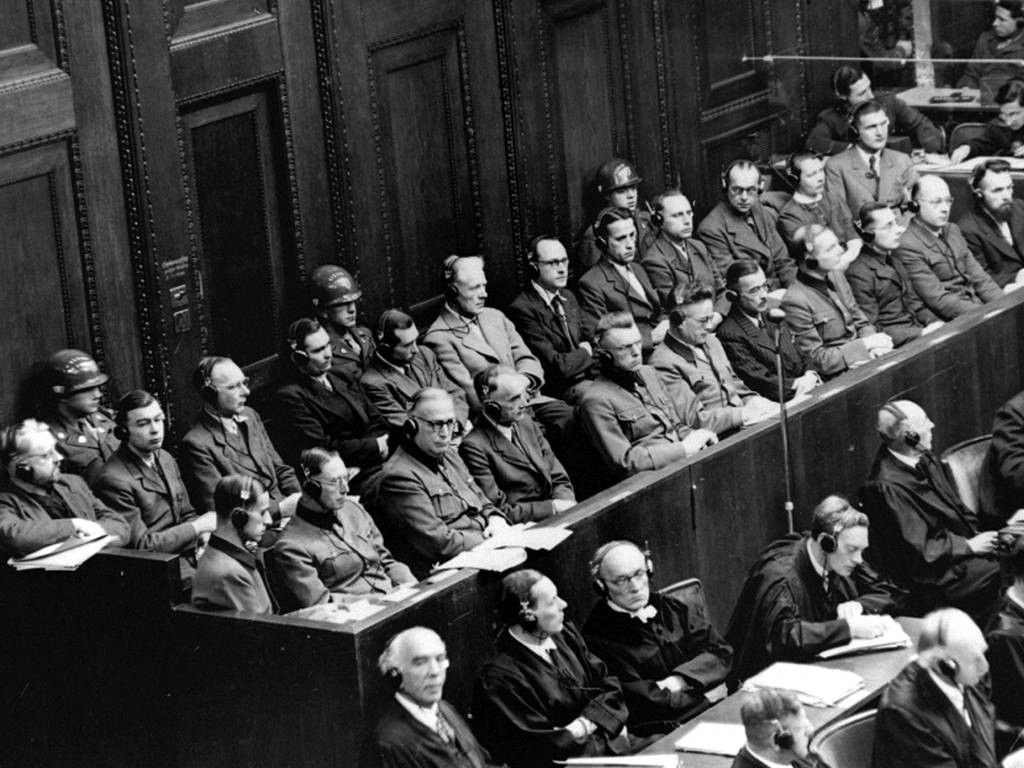
From battery to disclosure
Chapter 8 named the landmarks. What we need now is what they actually decided, because the differences between them are the differences between a consent that holds and one that does not. For most of medical history, consent was a thin thing. If a surgeon cut you without any permission at all, that was battery—an unconsented touching—and you could sue. If you had said yes to something, the law largely stopped asking what you had understood. The turning point most often quoted is a 1914 New York case, Schloendorff v. Society of New York Hospital. Mary Schloendorff agreed to an examination under ether to determine the nature of a fibroid tumour; she said explicitly that she did not want an operation. The surgeon removed the tumour anyway. Judge Benjamin Cardozo, writing for the court, produced the sentence that every consent lecture since has quoted: every human being of adult years and sound mind has a right to determine what shall be done with his own body. It is worth knowing that Schloendorff lost. Charitable immunity shielded the hospital, and Cardozo’s ringing line was dictum—not the holding, just the reasoning around it. Ethics often advances by memorable obiter remarks that outlive the judgments containing them.
The phrase informed consent itself dates to 1957, in Salgo v. Leland Stanford Jr. University Board of Trustees. Martin Salgo, 55, underwent translumbar aortography and awoke permanently paralysed from the waist down; nobody had mentioned that paralysis was a known risk. The California appellate court held that a physician violates a duty by withholding facts necessary to an intelligent decision. Three years later, Natanson v. Kline (Kansas, 1960) confirmed the duty but tethered its content to custom: a physician had to disclose what a reasonable practitioner in the same community would disclose. That is the professional practice standard, and it has an obvious flaw. If the whole profession has the habit of saying little, the standard ratifies the habit.
Canterbury v. Spence (D.C. Circuit, 1972) broke the loop. Jerry Canterbury was 19 when he underwent a laminectomy for back pain; he later fell from an unattended hospital bed and was left largely paralysed. He had not been told that paralysis was a risk of the surgery, a risk his surgeon estimated at about one percent. Judge Spottswood Robinson III held that the scope of disclosure is set by the patient’s informational need, not by professional convention, and that a risk is material when a reasonable person in the patient’s position would likely attach significance to it in deciding whether to proceed. That is the reasonable person standard. A minority of jurisdictions go further to a subjective standard, asking what this patient would have found material—more faithful to autonomy, harder to prove in court, since it invites hindsight from a plaintiff who now knows how things turned out.
The United Kingdom took the long way round. Bolam (1957) had made a doctor’s conduct defensible if a responsible body of medical opinion supported it, and Sidaway (1985) extended that deference to disclosure. Then came Montgomery v Lanarkshire Health Board, decided by the UK Supreme Court in March 2015. Nadine Montgomery was diabetic and small in stature. Her obstetrician did not tell her that shoulder dystocia carried a risk of roughly nine to ten percent in a vaginal delivery for a diabetic mother, on the reasoning that mentioning it would push women toward caesarean section. Her son Sam was born with cerebral palsy and a brachial plexus injury. The Court unanimously abandoned Bolam for disclosure: a doctor must take reasonable care to ensure the patient is aware of material risks and of reasonable alternatives, with materiality judged from the patient’s standpoint. The judgment explicitly noted that patients are now widely regarded as adults capable of understanding, not passive recipients of care.
| Standard | Test for what must be disclosed | Leading case | Where it prevails | Main criticism |
|---|---|---|---|---|
| Professional practice | What a reasonable practitioner would customarily disclose | Natanson v. Kline (1960) | Roughly half of US states | Lets a silent profession set the bar; requires expert testimony |
| Reasonable person (materiality) | What a reasonable person in the patient’s position would want to know | Canterbury v. Spence (1972) | Most other US states; UK since Montgomery (2015) | The “reasonable person” is a legal fiction, not your patient |
| Subjective | What this particular patient would have found material | Scott v. Bradford (Okla. 1979) | A small minority of jurisdictions | Depends on testimony coloured by hindsight |
| Modified objective (causation, not disclosure) | Not a disclosure test at all: would this plaintiff, in her particular position, have refused the procedure had she been told? | Reibl v. Hughes (Canada, 1980) | Canada applies the reasonable-person standard above to disclosure and this test to causation; some US courts use it in causation analysis | Easily mistaken for a fourth disclosure standard |
The research track: a separate scandal, a separate cure
Clinical consent evolved through malpractice suits. Research consent evolved through atrocity, and the two now run on separate machinery that students routinely conflate. Chapter 8 set the Nuremberg Code of 1947 at the origin of bioethics; what concerns us here is what the Code required beyond its famous first sentence. Its ten points were addressed to experimentation, not to treatment, and they included obligations clinicians forget: scientific merit and prior animal work, avoidance of unnecessary suffering, a qualified investigator, and—the one most often overlooked—the subject’s liberty to withdraw at any moment without penalty. A permission that cannot be revoked was never a consent to begin with. That principle now governs every trial protocol you will ever be asked to enrol a patient into.
The Code was widely admired and widely treated as a document about Nazis rather than about medicine. The World Medical Association’s Declaration of Helsinki, adopted in Helsinki in June 1964 and revised repeatedly since (most recently in 2024), brought the rules inside mainstream research; its 1975 Tokyo revision introduced the independent review committee. In the United States the decisive push was domestic. Henry Beecher, an anaesthesiologist at Harvard, published “Ethics and Clinical Research” in the New England Journal of Medicine in June 1966, summarising twenty-two published studies from reputable institutions in which subjects had been harmed or deceived. Two of his examples became notorious in their own right: at the Willowbrook State School on Staten Island, children with intellectual disability were deliberately infected with hepatitis virus in studies running from 1956 into the early 1970s; at the Jewish Chronic Disease Hospital in Brooklyn in July 1963, live cancer cells were injected into twenty-two debilitated patients who were not told what the injections contained.
The forty-year course of the Tuskegee study is set out in Chapter 8. Its consequences for consent practice ran in two directions, and both belong here. Legally, a class action brought by the civil rights lawyer Fred Gray settled in 1974 for roughly ten million dollars and lifetime medical care for survivors and their families; President Bill Clinton apologised formally on 16 May 1997, with five survivors present in the East Room. Socially, the damage outlived the apology. A body of research has documented lower institutional trust and lower research participation among Black Americans in its wake. The size and the mechanism of that effect are genuinely debated—some work attributes more of it to present-day experiences of discrimination in care than to the historical study itself—but the direction is not in question. The practical lesson for anyone taking a consent is uncomfortable: your patient’s willingness to say yes depends on a stock of institutional credibility you did not build and can nonetheless spend.
Congress responded with the National Research Act of 1974, which created the National Commission for the Protection of Human Subjects. Its Belmont Report (1979) named three principles—respect for persons, beneficence, justice—and, more usefully, mapped each onto a procedure: respect for persons yields informed consent, beneficence yields risk–benefit assessment, justice yields fair subject selection. Those procedures became regulation in the federal Common Rule (45 CFR 46), harmonised across agencies in 1991 and substantially revised in 2018. The institutional review board, or IRB, is Belmont with a filing cabinet.
| Abuse | Dates | What was done | Regulatory consequence |
|---|---|---|---|
| Nazi camp experiments | 1939–1945 | Hypothermia, low-pressure, seawater, infection experiments on prisoners | Nuremberg Code, 1947 |
| Willowbrook hepatitis studies | 1956–1971 | Institutionalised children deliberately infected; admission pressure alleged | Cited in Beecher 1966; fed the 1974 National Research Act |
| Jewish Chronic Disease Hospital | 1963 | Live cancer cells injected into 22 patients without disclosure | New York licensure action; strengthened peer review norms |
| US Public Health Service study at Tuskegee | 1932–1972 | Untreated syphilis in 399 Black men; treatment withheld after 1947 | National Research Act 1974; Belmont Report 1979; Common Rule |
| Guatemala STD experiments | 1946–1948 | Deliberate infection of prisoners, soldiers and psychiatric patients | Uncovered 2010; US apology 2010; Presidential Commission review 2011 |
| HeLa cell line | 1951 onward | Henrietta Lacks’s tumour cells taken and commercialised without consent | 2013 NIH–family data-access agreement; 2023 private settlement |
Informed consent was not deduced from principle; it was extracted, case by case and scandal by scandal, from institutions that had every incentive to keep deciding on the patient’s behalf.
Section 2The Anatomy of a Valid Consent
Five elements, and the one everybody skips
Tom Beauchamp and James Childress, whose Principles of Biomedical Ethics you met in Chapter 8, break a valid consent into components that map neatly onto what actually goes wrong at the bedside. The patient must have capacity to decide. There must be adequate disclosure: the diagnosis, the proposed intervention, its risks and benefits, the reasonable alternatives including doing nothing, and the likely course without treatment. The patient must reach genuine understanding, not merely be exposed to information. The decision must be voluntary, free of coercion and of manipulation. And there must be an actual authorisation—an affirmative act of permission.
The element that gets skipped is understanding. It is the only one you cannot fake with a document, and the only one that requires you to stop talking. The standard remedy is the teach-back method: after explaining, ask the patient to say back, in ordinary words, what they are agreeing to and why. Not “do you have any questions?”—which reliably produces “no” from people who are frightened or who do not want to look foolish—but “I want to be sure I explained this well. What will you tell your daughter about the plan?” The framing matters. Teach-back tests the explanation, not the patient.
The scale of the problem is measurable. The 2003 National Assessment of Adult Literacy found roughly a third of US adults at basic or below-basic health literacy. Studies of surgical consent forms have repeatedly put their reading level at or above high school, against a general recommendation of sixth to eighth grade. Comprehension also decays fast: patients recall a minority of what they are told in a consultation, and the proportion falls under stress. None of this argues for telling patients less. It argues for telling them differently—fewer items, plainer words, written back-up, more than one occasion.
Voluntariness, and the difference between persuasion and manipulation
Voluntariness is not the absence of influence. Every consultation influences. The ethical question is which influences leave the decision the patient’s own. Persuasion—offering reasons and evidence a rational person can weigh—is permitted and often obligatory; a clinician who has an opinion and hides it is not being neutral, merely unhelpful. Coercion—a credible threat that makes refusal unbearable—voids consent. Between them sits manipulation: framing effects, selective disclosure, trading on fear or gratitude. Telling a patient a procedure has a ninety percent survival rate, or a ten percent mortality rate, states the same fact with predictably different uptake. You cannot escape framing, so give both frames and say so.
Institutions add pressures no individual intends. A prisoner asked to join a trial, a student asked by her own instructor to be a research subject, an undocumented patient asked to sign anything at all—each faces a hidden cost to refusal. The Common Rule accordingly names prisoners, children, pregnant people and adults with impaired decision-making as populations needing additional protections, and requires review boards to consider whether payment amounts to undue inducement. Note a live disagreement here: Emily Largent and Franklin Miller have argued that fretting about payments corrupting judgement is itself paternalistic, and that under-paying research subjects is the commoner wrong. That debate is not settled.
The three exceptions, and how narrow they are
Consent has recognised exceptions, each narrower than clinicians tend to assume. The emergency exception applies when a patient lacks capacity, no surrogate is reachable, and delay threatens life or limb; consent to standard life-saving care is then presumed. It does not extend past the emergency and it does not cover an intervention the patient is known to have refused. A waiver occurs when a patient with capacity says, in effect, “I don’t want the details—do what you think best.” That is a legitimate exercise of autonomy, but it should be offered and documented as a choice, never assumed from silence.
Therapeutic privilege is the withholding of information because disclosure would harm the patient. It survives in some jurisdictions and is deeply disfavoured, because the version clinicians reach for—this news will upset him—would swallow the rule whole. The narrow defensible version requires a specific, evidenced expectation of serious harm, such as precipitating a suicidal act, not distress. The UK Supreme Court in Montgomery called the exception limited and warned that it must not subvert the general duty. If you find yourself invoking it, the safer move is almost always to change the pace and setting of disclosure, not its content.
| Element | Question it answers | Typical failure | Practical fix |
|---|---|---|---|
| Capacity | Can this person decide this, now? | Assumed from a diagnosis, an age or a chart label | Assess the four abilities for the decision at hand |
| Disclosure | Were the material facts and alternatives given? | Alternatives and “do nothing” omitted | Name at least two options plus non-treatment, with numbers |
| Understanding | Did it land? | “Any questions?” met with silence | Teach-back in the patient’s own words; trained interpreter |
| Voluntariness | Is the choice the patient’s own? | Consent taken on the trolley, after pre-medication | Consent earlier, in clothes, with a companion if wanted |
| Authorisation | Did the patient actually permit this? | Signature collected by someone who cannot answer questions | The person who can explain the procedure takes the consent |
Culture, family and the assumption of individualism
Western consent doctrine assumes a decider who is a single adult acting for herself. That assumption is not universal, and treating it as universal is its own failure of respect. The best-known evidence is Leslie Blackhall and colleagues’ 1995 study in JAMA, which surveyed 800 elderly residents of Los Angeles across four ethnic groups. Asked whether a patient should be told of a terminal prognosis, 87 percent of European Americans and 88 percent of African Americans said yes; among Mexican Americans the figure was 65 percent, and among Korean Americans 47 percent. Comparable patterns have been reported from Italy, Japan and much of the Middle East, where family-first disclosure was long standard and in places still is.
The resolution is not to guess a patient’s preference from a surname. It is to make the mode of decision-making itself a matter of consent. Ask early and plainly: “Some people want every detail themselves; some prefer I speak mainly with their family. How would you like information handled?” If the patient delegates, that is a valid waiver—autonomy exercised, not overridden. What is not acceptable is a family instructing you to conceal a diagnosis from a competent adult who has never been asked. You can check with the patient without disclosing anything, and you should.
One practical rule admits no exception. Use a trained interpreter, in person or by phone, not the patient’s child, spouse, or the bilingual aide passing in the corridor. Glenn Flores and colleagues, studying paediatric encounters in Pediatrics in 2003, found that errors by ad hoc interpreters were substantially more likely to carry clinical consequence than errors by hospital interpreters. Title VI of the Civil Rights Act of 1964 makes language access a legal obligation for federally funded providers; the ethics ran well ahead of the statute.
Valid consent is a process with five moving parts, and the part most often missing is understanding—which no form can supply and only a conversation can test.
Section 3Capacity, Surrogates and Planning Ahead
Capacity is not competence, and it is not global
Competence is a legal status determined by a court. Decision-making capacity is a clinical judgement made at the bedside, and it does not require a psychiatrist—the clinician proposing the treatment is usually the right person to assess it. Two properties of capacity cause most of the confusion. First, it is decision-specific: a woman with moderate dementia may lack capacity to consent to a Whipple procedure and retain capacity to refuse a flu shot or to name her son as her proxy. Second, it is time-specific: delirium fluctuates, sedation wears off, hypoglycaemia corrects. A capacity finding is a snapshot, and the honest note says which decision and when.
Paul Appelbaum and Thomas Grisso set out the operative framework in the New England Journal of Medicine in 1988 and Appelbaum restated it there in 2007. Capacity comprises four abilities. Understanding: can the patient restate the relevant information? Appreciation: does she recognise that it applies to her, rather than to patients in general? Reasoning: can she compare options and manipulate the information logically to reach a conclusion? Expressing a choice: can she communicate a stable decision? Appreciation is where psychiatric and neurological conditions most often bite. A patient can recite the risks of leaving against advice with textbook accuracy and still, because of psychotic denial of illness, not believe that any of it concerns him.
James Drane’s sliding scale, from a 1985 Hastings Center Report essay, adds a defensible asymmetry: the threshold of capacity required should rise with the risk of the decision and the imbalance between the benefits and burdens of the options. Agreeing to a low-risk, high-benefit intervention requires only that the patient be aware and assenting. Refusing a high-benefit, low-risk intervention—antibiotics for a treatable sepsis—warrants a more searching assessment. Critics of the sliding scale, including some disability scholars, note that in practice it operates only in one direction: patients who agree with us are rarely assessed at all. That criticism has real force. The corrective is to apply the same scrutiny to a risky yes as to a risky no.
England and Wales codified much of this in the Mental Capacity Act 2005, in force from 2007. Its five statutory principles are worth memorising because they are better drafted than most ethics guidance: capacity is presumed; a person is not to be treated as unable to decide until all practicable steps to help them decide have failed; an unwise decision is not itself evidence of incapacity; anything done for someone lacking capacity must be in their best interests; and it must be the least restrictive option available. That third principle is the one that saves patients from us. Refusing a recommended treatment is not a symptom.
| Ability | What you are testing | A question that tests it | Classic failure |
|---|---|---|---|
| Understanding | Retention and restatement of the facts | “In your own words, what did I say the operation involves?” | Delirium, severe dementia, language barrier misread as incapacity |
| Appreciation | Application of the facts to oneself | “What do you think is actually happening with your own heart?” | Psychotic denial; anosognosia after stroke |
| Reasoning | Comparison and inference across options | “How did you weigh surgery against the tablets?” | Severe depression collapsing all options to “it doesn’t matter” |
| Expressing a choice | A communicable, reasonably stable decision | “So what would you like us to do?” | Catatonia; aphasia (needs communication aids, not a capacity finding) |
Minors, and the awkward middle
Children complicate everything, because capacity develops gradually while legal authority arrives all at once. Most jurisdictions distinguish consent, which a parent or guardian gives, from assent, the child’s own agreement, which should be sought from roughly age seven and given real weight thereafter. The American Academy of Pediatrics has argued since its 1995 statement that soliciting assent and then proceeding regardless, without telling the child that agreement was not actually required, teaches the child that consent is theatre.
Exceptions cluster where requiring parental involvement would deter care altogether. Most US states allow minors to consent independently to some combination of contraception, sexually transmitted infection testing and treatment, prenatal care, and substance use or mental health services; the exact list varies state by state and changes. Emancipated minors—married, in military service, or judicially emancipated—consent as adults. The mature minor doctrine, recognised by courts in a number of states, allows an older adolescent judged to understand the decision to consent to treatment on her own. English law arrived at a similar destination through Gillick v West Norfolk and Wisbech Area Health Authority, decided by the House of Lords in 1985, which held that a child under sixteen with sufficient understanding and intelligence can consent to medical treatment; the phrase Gillick competence comes from it.
Two persistent tensions deserve naming. The first is billing: an adolescent may consent lawfully to confidential care and then be exposed when an explanation of benefits arrives at the family address—a plumbing problem with ethical consequences, and one that several states have legislated to fix. The second is refusal. Courts have been far more willing to let a mature minor accept treatment than to let one refuse life-saving treatment, which some scholars defend as protecting a still-forming self and others criticise as autonomy granted only when convenient. Both readings are defensible; the asymmetry is real, and you should be able to say why it exists.
When the patient cannot decide: the surrogate ladder
If capacity is absent, someone must decide, and there is a settled order of preference for the standard the surrogate applies. First, expressed wishes: a clear, applicable instruction the patient gave while capacitated, in a written advance directive or a documented conversation. Second, substituted judgement: the surrogate reconstructs what this patient would have chosen, from her values, her prior statements, the life she led. Third, and only when the first two give no purchase, best interests: an assessment of benefits and burdens for a reasonable person in the patient’s situation.
The empirical record for substituted judgement is sobering and worth knowing. A systematic review by David Shalowitz, Elizabeth Garrett-Mayer and David Wendler, published in Archives of Internal Medicine in 2006, pooled sixteen studies with more than 2,500 patient–surrogate pairs and found surrogates predicted patients’ treatment preferences correctly about 68 percent of the time—better than chance, worse than families and clinicians assume, and no better when the surrogate was patient-designated or when the pair had discussed the matter beforehand. This does not make substituted judgement worthless. It does mean you should ask surrogates for evidence, not intuition: not “what do you want us to do?” but “what did she say when her sister was dying?”
Who serves as surrogate is governed by statute in most US states, with a default hierarchy that typically runs spouse, adult child, parent, sibling, then other relative or close friend; a patient-appointed agent under a durable power of attorney for health care outranks the whole list. The Patient Self-Determination Act, effective December 1991, requires Medicare- and Medicaid-participating facilities to ask patients on admission whether they have an advance directive and to inform them of their rights—a modest procedural mandate that raised awareness far more than it raised completion rates.
Advance directives, POLST, and why documents underperform
An advance directive is an anticipatory instrument, and it comes in two flavours that do different jobs. The living will specifies treatments wanted or refused under stated conditions. The health care proxy or durable power of attorney appoints a person. Ethicists broadly agree that the proxy is the more robust instrument, because no document can anticipate the clinical situation that actually arrives, while a well-briefed person can adapt.
Living wills have been criticised hard, most famously by Angela Fagerlin and Carl Schneider in a 2004 Hastings Center Report essay arguing that the instrument has failed on every one of its own premises: too few people complete one, those who do often express preferences unstably, the documents are frequently unavailable when needed, their language rarely maps onto the decision at hand, and surrogates misread them anyway. Others reply that the exercise of advance care planning—the conversation, not the paper—retains value in preparing families and reducing decisional conflict. Recent commentary, including a widely discussed 2021 JAMA viewpoint by Sean Morrison, Diane Meier and Robert Arnold, has pressed the point that advance directives have not reliably changed the care people receive. The reasonable conclusion is that documents are necessary but weak, and conversations are what do the work.
POLST—Physician (or Portable) Orders for Life-Sustaining Treatment, called MOLST or POST in some states—is a different animal, and confusing it with an advance directive is a frequent and consequential error. Developed in Oregon in 1991, POLST is a standing medical order, signed by a clinician, portable across settings, and immediately actionable by paramedics. It is meant for people who are seriously ill or frail, whose death within a year would not surprise their clinician, and it addresses concrete decisions: attempt resuscitation or not, the intensity of medical intervention, artificial nutrition. An advance directive is for everyone over eighteen and speaks to a future; POLST is for the seriously ill and speaks to now.
| Instrument | Who it is for | Legal character | What it does | Main limitation |
|---|---|---|---|---|
| Living will | Any competent adult | Statement of wishes | Records treatments wanted or refused in stated conditions | Rarely matches the actual clinical situation |
| Durable power of attorney for health care | Any competent adult | Appointment of an agent | Names who decides; agent can adapt to events | Only as good as the briefing the agent received |
| POLST / MOLST | Seriously ill or frail patients | Signed medical order | Directs care now, across settings, including by EMS | Misapplied to healthy people; needs review as illness changes |
| Out-of-hospital DNR | Patients declining resuscitation at home | Signed order or bracelet | Prevents unwanted resuscitation by responders | Addresses one decision only |
| Psychiatric advance directive | People with relapsing psychiatric illness | Directive, sometimes with a Ulysses clause | Records treatment preferences and triggers for a future episode | Revocability during crisis is legally contested |
Capacity is decision-specific and time-specific, surrogates guess a patient’s wishes correctly only about two-thirds of the time, and the conversation that briefs a proxy does more good than any form the patient signs.
Section 4Confidentiality and Its Limits
Why the duty exists at all
The Hippocratic corpus already contains the promise: whatever I see or hear in the course of treatment, and which ought not to be spoken abroad, I will keep to myself. Twenty-five centuries later the justification has three strands, and knowing which one you are relying on tells you how far the duty stretches. The consequentialist argument is about access: if people believe their disclosures will travel, some will conceal symptoms, delay care, or lie—which harms them and, in infectious disease, harms everyone else. The deontological argument is about respect: information about a person’s body and history is theirs, and taking it into your keeping creates a duty of stewardship. The fidelity argument is about promising: professionals hold themselves out as safe, and a profession that breaks that implicit promise casually is not trustworthy at all.
The three come apart under pressure. The consequentialist argument is the weakest at the individual level—one quiet breach rarely deters anybody—and the strongest at the system level, which is why public health law protects surveillance data so fiercely. The fidelity argument explains why the sting of a breach is so personal: patients do not experience a leaked HIV status as a statistical harm.
Where the duty stops: Tarasoff and the duty to protect
On 27 October 1969, Prosenjit Poddar killed Tatiana Tarasoff at her home in Berkeley, California. Poddar had been a voluntary outpatient at the university’s student health service, where he told his psychologist, Lawrence Moore, of his intention to kill an unnamed but readily identifiable young woman. Moore wrote to the campus police asking that Poddar be detained; officers interviewed him, judged him rational, and released him after he promised to stay away from Tarasoff. The head of psychiatry then directed that Moore’s letter be returned and his notes destroyed. Nobody warned Tatiana or her family.
The Supreme Court of California ruled twice. In 1974 it announced a duty to warn the intended victim. On rehearing in 1976—the decision usually meant by Tarasoff—it recast the obligation as a broader duty to protect, dischargeable by warning the victim, notifying police, initiating civil commitment, or whatever the circumstances reasonably require. Justice Mathew Tobriner supplied the sentence that survived: the protective privilege ends where the public peril begins.
Three qualifications matter. First, Tarasoff is state law, not a national rule, and jurisdictions have gone in different directions; the Texas Supreme Court in Thapar v. Zezulka (1999) declined to recognise a duty to warn at all, and many states have enacted statutes that make disclosure permissive rather than mandatory and cap liability when a clinician acts in good faith. Second, the trigger in most formulations is a serious threat of violence against a reasonably identifiable person, not generalised dangerousness. Third, and least comfortable, clinicians predict violence poorly, so the duty asks professionals to act on a judgement the evidence says they make with modest accuracy. England reached comparable ground by a different route in W v Egdell (1990), where the Court of Appeal held a psychiatrist justified in disclosing his report to the hospital and the Home Office because the public interest in safety outweighed the patient’s interest in confidence.
| Situation | Disclosure permitted or required? | To whom | Limiting principle |
|---|---|---|---|
| Notifiable infectious disease | Required by statute | Public health authority | Named list of conditions; data protected downstream |
| Suspected child or elder abuse | Child abuse: required in every US state for named professions. Elder abuse: required in most, permissive in a few | Protective services or police | Reasonable suspicion suffices; investigating is not your job |
| Serious threat to an identifiable person | Permitted or required, depending on jurisdiction | The person at risk and/or police | Identifiable target; least disclosure that removes the peril |
| Treatment, payment, health care operations | Permitted without authorisation under HIPAA | Involved clinicians, payers, quality staff | Minimum necessary (not applied to treatment) |
| Court order or subpoena | Order: required. Subpoena: qualified | The court | A subpoena is not self-executing—seek counsel first |
| Impaired or unsafe colleague | Required by most professional codes | Supervisor, licensing board, safe-haven programme | Report the safety concern, not the diagnosis |
| Research use of identifiable data | Requires authorisation or an IRB waiver | Investigators | Waiver requires minimal risk and impracticability |
HIPAA: less than people think, and more
The Health Insurance Portability and Accountability Act passed in 1996; its Privacy Rule took effect on 14 April 2003, the Security Rule followed in 2005, and the HITECH Act of 2009 and the Omnibus Rule of 2013 added breach notification and extended direct liability to business associates. Two chronic misunderstandings are worth correcting. First, HIPAA does not forbid clinicians involved in a patient’s care from talking to each other; treatment, payment and health care operations are permitted uses, and the minimum necessary standard expressly does not apply to disclosures for treatment. HIPAA is regularly invoked to justify refusing information to the people who most need it. Second, HIPAA covers only covered entities and their business associates—providers, plans and clearinghouses. Your fitness tracker, your period app, your genealogy DNA service and most wellness platforms sit entirely outside it, and that gap widens every year as health data migrates to companies no health-privacy statute reaches.
The everyday breaches are not hackers. They are the lift, the cafeteria, the ward corridor and the curious click. In 2008 employees at UCLA Medical Center were found to have accessed the records of celebrity patients, including Britney Spears and Farrah Fawcett; more than a dozen were dismissed, California enacted new penalties, and the health system reached an $865,500 settlement with federal regulators in 2011. The lesson generalises: modern records log every view, curiosity is not a treatment relationship, and looking up a neighbour, an ex, a colleague or your own family member is a firing offence in most institutions and a reportable breach in many.
Some categories carry heightened protection. Federal rules at 42 CFR Part 2 have long placed substance use disorder treatment records under stricter consent requirements than HIPAA, on the reasoning that fear of exposure keeps people out of treatment; a 2024 final rule brought the two frameworks closer together while preserving extra safeguards on use in legal proceedings. Many states add specific protections for HIV status, mental health notes and reproductive care.
The genetic problem: information that is never only yours
Genetic information breaks the model that confidentiality assumes, because a result about one person is partly a result about their siblings, children and parents. If a woman tests positive for a pathogenic BRCA1 variant, her sister’s risk profile has changed whether or not the sister ever hears about it. Standard practice is to encourage and support the patient in telling relatives, and this usually works. When it does not, the ethics become genuinely contested.
The clearest legal test came in England. In ABC v St George’s Healthcare NHS Trust, a man in a secure hospital was diagnosed with Huntington disease and refused to let clinicians tell his pregnant daughter, who learned of the diagnosis after her child was born and later tested positive herself. The Court of Appeal in 2017 allowed the claim to proceed, and in February 2020 the High Court held that clinicians did owe her a duty to balance her interest in knowing against her father’s confidentiality—while finding, on the facts, that the duty had not been breached. So a duty to weigh exists; a duty to disclose does not automatically follow. American guidance is similarly cautious. The American Society of Clinical Oncology and the American Society of Human Genetics have both taken the position that disclosure to at-risk relatives without consent may be ethically permissible in narrow circumstances—serious, preventable harm, and refusal after counselling—but neither treats it as a duty.
Discrimination law lags the science. The US Genetic Information Nondiscrimination Act of 2008 (GINA) prohibits the use of genetic information in health insurance underwriting and in employment decisions. It does not cover life insurance, disability insurance or long-term care insurance, and it does not apply to employers with fewer than fifteen employees. Patients contemplating predictive testing deserve to know this before they are tested, not after.
The adolescent billing problem noted earlier is structurally similar: the law grants a minor confidential care and the insurer’s paperwork undoes it. Several states now permit confidential communication requests that redirect the explanation of benefits, and some suppress it for sensitive services altogether. Knowing your own jurisdiction’s rules, and the local workarounds, is clinical skill rather than administrative trivia—because a promise of confidentiality you cannot actually keep is worse than no promise at all.
Confidentiality is a strong default with specified exceptions—identifiable danger, mandated reporting, lawful process—and nearly all real breaches happen not through those doors but through casual talk and idle clicks.
Section 5Decisions at the End of Life

The cases that built the law
Modern end-of-life law starts with a 21-year-old woman in New Jersey. Karen Ann Quinlan collapsed on 15 April 1975 after consuming alcohol with tranquillisers, suffered prolonged anoxia, and entered what was then called a persistent vegetative state. Her parents, devout Catholics advised by their priest that extraordinary means were not obligatory, asked that the ventilator be stopped. The hospital refused. On 31 March 1976 the New Jersey Supreme Court held in In re Quinlan that a right of privacy encompassed a decision to decline extraordinary treatment, that her father could exercise it on her behalf, and—a lasting institutional consequence—that hospital ethics committees offered a better forum than courts. Quinlan was weaned from the ventilator and lived, breathing on her own, until 11 June 1985. That fact alone should temper anyone’s confidence in prognostication.
Cruzan v. Director, Missouri Department of Health (1990) took the question to the US Supreme Court. Nancy Cruzan had been thrown from her car on 11 January 1983 and left in a persistent vegetative state; her parents sought withdrawal of a feeding tube. The Court, on 25 June 1990 and by five votes to four, assumed that a competent person has a constitutionally protected liberty interest in refusing life-sustaining treatment, explicitly including artificial nutrition and hydration—but held that a state may require clear and convincing evidence of an incompetent patient’s wishes. Missouri had that standard, so the family lost. Former co-workers then came forward with recollections of Nancy’s statements, a state court found the evidence sufficient, the tube was removed on 14 December 1990 and she died on 26 December. Congress had already moved: the Patient Self-Determination Act was enacted in November 1990, five months after the ruling and weeks before her death.
Britain reached the same destination through Airedale NHS Trust v Bland (1993). Tony Bland, 18 at the time, was crushed in the Hillsborough stadium disaster on 15 April 1989 and left in a persistent vegetative state. The House of Lords held in February 1993 that continued artificial nutrition and hydration conferred no benefit and could lawfully be withdrawn. The Law Lords were candid about the reasoning: withdrawal was classified as an omission rather than an act, and several of them said openly that the distinction was doing more work than it comfortably could bear, and that Parliament ought to address the matter. Parliament largely has not.
Then came the case everyone remembers for the wrong reasons. Theresa Marie Schiavo collapsed on 25 February 1990 in St Petersburg, Florida. Her husband Michael sought withdrawal of her feeding tube; her parents, Robert and Mary Schindler, contested it. The litigation ran from 1998 to 2005 through dozens of judicial decisions, a Florida statute struck down as unconstitutional in 2004, and federal legislation signed on 21 March 2005 that transferred the case to a federal court, which declined to intervene. The tube was removed on 18 March 2005; she died on 31 March. The autopsy released in June 2005 reported a brain weighing about 615 grams, roughly half the expected weight, with damage to the occipital lobes consistent with blindness. The case did not change the law. It changed the politics, and it drove a measurable surge in advance directive completion.
| Case | Year | Jurisdiction | Holding | Lasting effect |
|---|---|---|---|---|
| In re Quinlan | 1976 | New Jersey | Guardian may decline extraordinary treatment for an incompetent patient | Legitimised hospital ethics committees |
| Barber v. Superior Court | 1983 | California | Withdrawing life support is not homicide; it is cessation of treatment | Removed criminal exposure for withdrawal |
| Cruzan | 1990 | United States | Liberty interest in refusing treatment; states may demand clear and convincing evidence | Patient Self-Determination Act 1990 |
| Airedale NHS Trust v Bland | 1993 | United Kingdom | Artificial nutrition and hydration may be withdrawn when of no benefit | Set the UK framework for prolonged disorders of consciousness |
| Glucksberg and Vacco | 1997 | United States | No constitutional right to assisted suicide; refusing treatment differs from assistance | Left assisted dying to the states |
| Schiavo litigation | 1998–2005 | Florida and federal | Existing surrogate law applied; extraordinary interventions rejected | Public awareness; surge in advance directives |
| Carter v Canada | 2015 | Canada | Blanket prohibition on assisted dying violated the Charter | Bills C-14 (2016) and C-7 (2021) |
Four distinctions that do real work
The first is withholding versus withdrawing. Clinicians feel these differently—stopping a ventilator feels like doing something, never starting it feels like standing back—but the settled consensus of bioethics, and of every major professional body that has addressed it, is that they are morally equivalent when the justification is the same. The practical argument is decisive: if withdrawal were harder to justify than withholding, no one would ever dare start a time-limited trial of treatment, and patients who might have benefited would be denied a ventilator or dialysis because we feared being unable to stop. Treating the two as equivalent is what makes trials of therapy possible.
The second is killing versus allowing to die. Letting a disease take its course, having declined to obstruct it, is generally held to differ from administering a lethal agent, in causation, intention and the availability of the patient’s refusal right. James Rachels attacked this distinction in the New England Journal of Medicine in 1975 with his bathtub case—Smith drowns his cousin; Jones would have, but watches him slip and drown—arguing that we judge both equally monstrous, so the bare act/omission difference carries no moral weight. Defenders reply that Rachels holds motive fixed at murderous and therefore proves only that a bad motive spoils either route, not that the distinction is idle when motives are decent. The dispute is genuine and unresolved. What is not in dispute is that a capacitated patient may refuse any treatment, including one keeping them alive, and that honouring that refusal is not killing.
The third is the doctrine of double effect, traceable to Thomas Aquinas’s discussion of self-defence in the Summa Theologiae. An act with a good intended effect and a foreseen bad side effect can be permissible if four conditions hold: the act itself is not intrinsically wrong; the bad effect is foreseen but not intended; the bad effect is not the means to the good one; and there is proportionate reason. Applied to symptom control, it licenses giving opioids sufficient to relieve severe pain even at some risk of hastening death. Two honest caveats. Double effect is a contested doctrine, criticised for resting on hard-to-verify claims about inner intention. And the empirical premise is largely false: appropriately titrated opioids for pain and dyspnoea in dying patients have not been shown to shorten survival, and several studies suggest the opposite. The doctrine is invoked far more often than it is needed.
The fourth is brain death. The Harvard Ad Hoc Committee’s 1968 JAMA report proposed irreversible coma as a criterion of death; the President’s Commission report Defining Death and the Uniform Determination of Death Act, both 1981, settled US law on two alternative standards—irreversible cessation of circulatory and respiratory functions, or irreversible cessation of all functions of the entire brain including the brainstem. This is a legal determination of death, not a prognosis, and a patient meeting the criteria is dead whatever the monitor shows. It remains contested at the margins: some clinicians and philosophers, including the neurologist Alan Shewmon, have argued that somatic integration can persist after whole-brain criteria are met, and the case of Jahi McMath—declared brain dead in Oakland in December 2013, transferred to New Jersey under that state’s religious exemption, and pronounced dead again in June 2018—made the disagreement painfully public. New Jersey and, in practice, New York accommodate religious objection; most states do not.
Futility, and who gets to say a treatment is pointless
“Futile” is one of the most abused words in clinical ethics, because it smuggles a value judgement inside what sounds like a physiological claim. Physiological futility is narrow and defensible: the intervention cannot produce its immediate effect—chest compressions will not restore circulation in a patient with a ruptured aorta. Qualitative or quantitative futility—it will work but the resulting life is not worth having, or the odds are too poor—is a judgement about goals and values, and the clinician has no special authority over it. Lawrence Schneiderman, Nancy Jecker and Albert Jonsen proposed in 1990 that a treatment failing in the last hundred cases be presumed futile; critics have never accepted that any threshold escapes the values problem.
Because the underlying dispute is about values, most institutions now favour a fair procedure over a definition. Texas legislated one: the Texas Advance Directives Act of 1999, at section 166.046, allowed a hospital ethics committee to authorise withdrawal over a surrogate’s objection, with an obligation to seek transfer during a defined waiting period—originally ten days, extended and hedged with additional protections by legislation effective in September 2023. It is the most explicit statute of its kind in the country and it remains sharply criticised, particularly by disability rights advocates, for allowing an institution to be judge in its own cause. The safer general practice, endorsed in a 2015 multi-society policy statement led by the American Thoracic Society, is to reserve the word futile for the strictly physiological case, call everything else potentially inappropriate, and route disagreement through consultation, second opinions and transfer offers before anything unilateral.
Most conflicts, in truth, are not about facts. They are about trust, guilt, faith and family history. A daughter insisting on full escalation may be expressing that she was absent for years, or that her community has been dismissed by hospitals before, or that stopping feels to her like consenting to a death. Ethics consultation exists partly to surface those currents; a randomised trial by Lawrence Schneiderman and colleagues, published in JAMA in 2003 across seven hospitals, found that ethics consultation in intensive care reduced ICU days and days of life-sustaining treatment among patients who ultimately died, with no difference in overall mortality.
Comfort, sedation, and the boundary at assisted dying
The alternative to escalation is not abandonment. Modern palliative care dates from Cicely Saunders, a nurse, almoner and then physician, who opened St Christopher’s Hospice in Sydenham, south London, in 1967 and taught that pain in dying is total pain—physical, psychological, social, spiritual. The US Medicare hospice benefit followed in 1982. The evidence base is now strong enough to be startling: Jennifer Temel and colleagues, in the New England Journal of Medicine in 2010, randomised patients with newly diagnosed metastatic non-small-cell lung cancer to early palliative care alongside oncology or oncology alone, and found better quality of life, less depression, less aggressive care near death—and longer median survival, 11.6 months against 8.9. Comfort-focused care is not giving up, and telling patients otherwise is a factual error, not a philosophical position.
Between ordinary symptom control and assisted dying lie two options that many people do not know exist. Palliative sedation lowers consciousness, proportionally and usually reversibly, to relieve symptoms refractory to everything else—intractable dyspnoea, agitated delirium, seizures. It is widely accepted, justified by double effect and by proportionality, and it is distinguished from euthanasia by intent, dose titration and the fact that the aim is relief of symptoms rather than death. Voluntarily stopping eating and drinking (VSED) is a decision by a capacitated patient to cease intake; it is legally an exercise of the right to refuse, typically leads to death in one to three weeks, and requires meticulous mouth care and support. Neither is a loophole; both are recognised practice.
Medical aid in dying—a clinician provides, and in some jurisdictions administers, a lethal medication at the competent request of a person who is dying—remains the sharpest disagreement in this field, and the honest position is that thoughtful people land on both sides for reasons that are not stupid. The US Supreme Court held unanimously in Washington v. Glucksberg and Vacco v. Quill (1997) that there is no constitutional right to assistance in dying, while noting that refusing treatment and requesting lethal medication differ in intent and causation; that left the field to the states. Oregon’s Death with Dignity Act, narrowly approved by voters in November 1994 and reaffirmed by a wider margin in 1997, took effect on 27 October 1997 and survived federal challenge in Gonzales v. Oregon (2006). About a dozen US jurisdictions now permit it, nearly all on an Oregon-style statutory model requiring terminal illness with a prognosis of six months or less, capacity, repeated requests, self-administration and a waiting period; Montana is the outlier, where the practice rests on a 2009 state supreme court decision rather than a statute.
Oregon’s annual reports are the best public data anywhere, and they complicate both sides’ talking points. Deaths under the Act have stayed at or below roughly one percent of all Oregon deaths, though the annual count has risen steadily. The reasons participants give are dominated not by pain but by loss of autonomy, inability to do the things that made life enjoyable, and loss of dignity, each cited by most participants; concern about inadequate pain control is cited by roughly a third, and being a burden on family by around half. Participants have been disproportionately white, insured, educated and enrolled in hospice—which cuts against the prediction that legalisation would be visited on the poor, but does not close the question of subtler pressures. Elsewhere the picture differs by design: the Dutch and Belgian statutes, both in force from 2002, work on a suffering-based rather than terminal-prognosis model, permitting physician administration and, in limited circumstances, extending to psychiatric suffering. Canada moved fastest of all, from Carter v Canada in February 2015 through Bill C-14 (2016) and Bill C-7 (2021), which removed the requirement that natural death be reasonably foreseeable; medically assisted deaths reached roughly 15,300 in 2023, about 4.7 percent of all Canadian deaths, and eligibility for those whose sole condition is mental illness has been repeatedly postponed amid unresolved argument about irremediability. Whatever your view, the Canadian trajectory is the strongest available evidence in the empirical dispute over whether safeguards hold or loosen—and both camps read it as supporting their case.
The law now clearly permits capacitated patients and their surrogates to refuse or stop life-sustaining treatment; what remains contested is not the right to refuse but the boundary between relieving suffering and causing death.
The chapter in one breath
Three duties, one root. Consent, confidentiality and the care of the dying all follow from taking seriously that a patient is a person with a life of her own rather than a body with a problem in it. Consent moved from a defence against battery in Schloendorff to a duty of disclosure in Canterbury and Montgomery, and it acquired its research counterpart the hard way—through Nuremberg, Willowbrook and forty years at Tuskegee. A valid consent has five parts, and the part most often missing is understanding, which only teach-back can test. When capacity is absent, the four abilities tell you so, and surrogates work down a ladder from expressed wishes through substituted judgement to best interests, guessing correctly about two-thirds of the time. Confidentiality holds by default and yields to identifiable danger, mandated reporting and lawful process, while genetics strains the very idea of information belonging to one person. At the end of life the law is settled where people think it is fraught—refusal and withdrawal are lawful—and unsettled where they assume it is obvious: futility, sedation, and assistance in dying. Everywhere, the document is evidence and the conversation is the thing.
Words worth knowing
| Term | What it means |
|---|---|
| Informed consent | Authorisation by a patient with capacity who understands the diagnosis, the proposed intervention, its risks and benefits, and the reasonable alternatives including no treatment. A process, not a form. |
| Battery (medical) | An unconsented touching. The original legal wrong that consent doctrine grew out of, distinct from negligent failure to disclose. |
| Material risk | A risk a reasonable person in the patient’s position would attach significance to when deciding. The test from Canterbury v. Spence (1972) and Montgomery (2015). |
| Therapeutic privilege | The narrow, disfavoured exception permitting withholding of information where disclosure itself would cause serious harm—not merely distress. |
| Decision-making capacity | A clinical judgement that a patient can make a particular decision at a particular time. Distinct from competence, which is a court’s determination. |
| The four abilities | Understanding, appreciation, reasoning and expressing a choice—the Appelbaum and Grisso framework for assessing capacity. |
| Assent | A child’s affirmative agreement, sought from about age seven, alongside a parent’s legally operative consent. |
| Gillick competence | English doctrine that a child under sixteen with sufficient understanding may consent to treatment, from the House of Lords decision in 1985. |
| Substituted judgement | The surrogate standard that asks what this patient would have chosen, reconstructed from her values and prior statements—not what the surrogate would choose. |
| Best interests | The fallback standard weighing benefits and burdens for the patient, used when wishes and values give no guidance. |
| Advance directive | An anticipatory instrument: a living will stating treatment preferences, a durable power of attorney appointing an agent, or both. |
| POLST | A portable, actionable medical order for the seriously ill covering resuscitation and treatment intensity. A physician order, not a statement of wishes. |
| Duty to protect | The Tarasoff obligation to take reasonable steps—warning, notifying police, seeking commitment—when a patient poses a serious threat to an identifiable person. |
| Minimum necessary | The HIPAA principle limiting use and disclosure of protected health information to what the purpose requires. Expressly does not apply to disclosures for treatment. |
| Withholding versus withdrawing | Never starting versus stopping a treatment. Morally equivalent on the standard view, which is what makes time-limited trials of therapy possible. |
| Doctrine of double effect | A foreseen but unintended harm may be permissible if the act is not intrinsically wrong, the harm is not the means, and there is proportionate reason. |
| Brain death | Irreversible cessation of all functions of the entire brain including the brainstem—a legal determination of death under the Uniform Determination of Death Act (1981). |
| Medical futility | Strictly, an intervention that cannot achieve its physiological effect. Loosely and problematically, one judged not worth its result—better called potentially inappropriate. |
| Palliative sedation | Proportionate lowering of consciousness to relieve symptoms refractory to all other measures, distinguished from euthanasia by intent, titration and aim. |
| Medical aid in dying | Provision, at the request of a capacitated terminally ill patient, of medication the patient takes to end life. Lawful in about a dozen US jurisdictions on the Oregon model. |
Check yourself
Professional and Business Ethics
A night-shift nurse notices that a trusted colleague’s waste counts never quite add up. An engineer believes a rubber seal will stiffen below fifty degrees and says so on a conference call the evening before a launch. A branch manager watches her team open accounts for customers who never asked for them, because the quarterly target says eight products per household. None of these people lack a conscience. What they lack is a clear answer to a harder question: what does my role require of me, and when does the role stop excusing what I do inside it? This chapter takes ethics out of the seminar room and into workplaces where authority is unequal, information is asymmetric, incentives are loud, and the cost of speaking is real. The questions ahead are practical ones: what makes an occupation a profession, how codes and licensure actually bite, why conflicts of interest corrupt judgment without anyone intending it, what happens to whistleblowers, and whether a corporation owes anything to anyone but its owners.
By the end of this chapter you can
- Define a profession using the standard criteria — specialized knowledge, self-regulation, a public-service mandate and a social contract — and explain what society gives in exchange.
- Explain role morality and evaluate when a professional role does and does not justify conduct that would be wrong for a private person.
- Distinguish a fiduciary relationship from an arm’s-length commercial one, and apply that distinction to clinical, legal and financial settings.
- Compare the structure and enforcement of at least three professional codes, including the ANA Code of Ethics for Nurses, and describe how licensure boards discipline members.
- Apply the standard definition of a conflict of interest to real cases, and assess whether disclosure, recusal, divestment or prohibition is the appropriate remedy.
- Use Richard De George’s conditions to judge when whistleblowing is morally permitted and when it becomes morally required.
- Explain moral distress and moral residue, and identify the institutional conditions that produce them.
- Contrast shareholder primacy with stakeholder theory and the benefit corporation, and state the strongest objection to each.
- Diagnose an organizational failure structurally — incentives, pressure, silence — rather than blaming “bad apples.”
Section 1What a Profession Is, and What It Asks of You

The bargain behind the word
“Profession” comes from the Latin professio, a public declaration. Medieval guilds made such declarations under oath, and the modern professions inherited the form: you announce, in front of witnesses, that you will hold yourself to a standard. That is not decoration. It is the visible half of a bargain. Society grants a professional group something extraordinary — a legal monopoly over a body of work, the right to define what counts as competence in it, and the authority to police its own members — and in return the group promises to put the client’s interest and the public interest ahead of its own convenience and income.
In 1915 the American educator Abraham Flexner, fresh from the 1910 report that reorganized North American medical education, asked at a social-work conference whether social work was a profession. His criteria have been argued about ever since, but the core list has proved durable: intellectual work involving individual responsibility, a foundation in science and learning, a practical and definite end, a self-organized professional culture, techniques that can be taught, and an altruistic motivation. The sociologist Eliot Freidson sharpened the point in Professionalism: The Third Logic (2001). There are three ways to organize skilled work, he argued: the market decides through consumer choice, the bureaucracy decides through managerial command, and professionalism decides through the judgment of trained practitioners who control their own standards. Every profession lives in tension with the other two logics, and most of the ethical friction a working nurse or engineer feels is that tension made personal.
Andrew Abbott’s The System of Professions (1988) added a warning that students should keep. Professions are not only moral communities; they are also competitors fighting over jurisdiction — who is allowed to do which tasks. Debates about nurse practitioner scope of practice, about whether pharmacists may prescribe, about who may read an imaging study, are simultaneously arguments about patient safety and arguments about turf. Both things can be true at once. An honest professional notices when the safety argument happens to coincide with the income argument, and takes extra care with the evidence.
| Mark of a profession | What it actually means | Concrete example | How it fails |
|---|---|---|---|
| Specialized knowledge | A body of theory that cannot be picked up casually and must be applied to particular cases | Titrating a vasoactive drip; reading a soil report before pouring a foundation | Credential without competence — the diploma mill, the lapsed skill |
| Restricted entry | Licensure, examination and defined educational pathways | NCLEX-RN; the Fundamentals and Principles of Engineering exams; the bar exam | Barriers that protect income rather than the public |
| Self-regulation | The group writes the standards and disciplines its own | State boards of nursing acting under a Nurse Practice Act | Capture — boards that shield members instead of patients |
| Fiduciary orientation | The client’s interest outranks the practitioner’s | Declining a lucrative referral that is not indicated | Selling rather than advising |
| Public-service mandate | Obligations to people who are not paying you | Duty to report unsafe conditions; disaster response | Treating the job as a pure private contract |
| A code plus enforcement | Written norms with real consequences attached | License suspension after diversion of controlled substances | A code that is framed on the wall and never cited |
Role morality: the executioner problem
Role morality is the claim that occupying a role changes what you may and must do. A defense lawyer may work to acquit a client she privately believes is guilty. A nurse may hold a confidence she would report if she heard it at a party. A journalist may publish something that will humiliate a person who has done nothing illegal. In each case the role licenses conduct that ordinary morality would question, and also imposes duties — competence, diligence, confidentiality — that a stranger would not owe.
The philosopher Arthur Applbaum pressed on this in Ethics for Adversaries (1999) with an uncomfortable example. Charles-Henri Sanson was the state executioner of Paris. He served the Bourbon monarchy, beheaded Louis XVI on 21 January 1793, went on working through the Terror, and retired in 1795 with the office passing to his son. Sanson insisted he was not a murderer but a functionary faithfully discharging a lawful office — that the role, not the man, did the killing. Applbaum’s question is simple and devastating: if a role can transform killing into “administering justice,” what cannot it transform? His answer is that roles get their moral force from the value of the institution they belong to, and no amount of internal consistency can manufacture that value from nothing. A role can redistribute moral labor. It cannot dissolve it.
This matters in ordinary clinical life more than the melodrama suggests. “I was following the protocol,” “that is a physician decision,” “my job is to document, not to judge” — each is sometimes a legitimate appeal to role and sometimes a way of laundering responsibility. The test is whether you could defend the role itself, out loud, to the person it affects. If the answer to “why did you do that?” is only “because the role told me to,” and the role cannot in turn be justified by the good it serves, then the chain of justification has no anchor.
Common misconception: that a professional role creates a moral holiday. It does the opposite. A role narrows your discretion in some directions and expands your obligations in others, but every role-based permission has to be cashed out eventually in ordinary moral terms — the good the institution does for real people. “It is my job” is the beginning of a justification, never the whole of one.
Fiduciary duty and the asymmetry problem
The deepest structural feature of professional ethics is inequality of knowledge. A patient in respiratory distress cannot evaluate whether the nurse is titrating correctly. A homeowner cannot inspect the rebar after the slab is poured. A retiree cannot price the fee structure buried in a variable annuity. When one party must rely on another’s judgment and cannot verify it, the relationship is fiduciary — from fides, faith — and the law and ethics of fiduciaries respond by imposing duties that ordinary sellers do not bear: loyalty, care, candor, confidentiality, and the obligation to avoid situations where the fiduciary’s interests pull against the beneficiary’s.
Contrast this with an arm’s-length sale. Buying a used car is governed by caveat emptor tempered by fraud law: the seller may not lie, but is not obliged to volunteer that a competitor has a better vehicle for less. A fiduciary is obliged to volunteer exactly that. The physician-ethicist Edmund Pellegrino argued that the fiduciary character of clinical work is not a policy choice but a fact about illness itself: sickness strips people of the very capacities — energy, clarity, freedom from fear — that a market assumes buyers possess. The greater the vulnerability, the stronger the duty.
This distinction has real teeth. In United States financial services, an investment adviser registered under the Investment Advisers Act of 1940 owes a fiduciary duty, while a broker-dealer historically owed only a suitability standard — recommend something suitable, not necessarily the best available. The Securities and Exchange Commission’s Regulation Best Interest, adopted in 2019 with a compliance date of 30 June 2020, raised the broker standard without fully merging the two, and the difference still costs ordinary savers money. When you hear a professional described as a “consultant,” “representative” or “specialist,” the useful question is not what the title sounds like but which standard the person is legally held to.
A profession is a bargain — monopoly and self-regulation in exchange for putting the vulnerable party’s interest first — and the role you occupy shapes your duties without ever exempting you from justifying them.
Section 2Codes, Licensure and the Machinery of Accountability

Where codes came from
Professional codes are not as ancient as the ceremonies suggest. The Hippocratic Oath, composed somewhere in the fifth or fourth century BCE, was the oath of one Greek medical school among several and was not widely sworn for most of Western history. The direct ancestor of modern medical codes is Thomas Percival’s Medical Ethics, published in Manchester in 1803. Percival wrote it to settle a bitter turf war among physicians, surgeons and apothecaries at the Manchester Infirmary during a fever epidemic — which tells you something about what codes are really for. When the American Medical Association adopted its code at its founding meeting in 1847 — generally regarded as the first national code of ethics adopted by any professional association — it borrowed heavily from Percival.
Nursing’s written ethics followed a similar path. The Nightingale Pledge was drafted in 1893 by a committee chaired by Lystra Gretter at the Farrand Training School for Nurses in Detroit. The American Nurses Association debated a code for decades and formally adopted one in 1950; the Code of Ethics for Nurses with Interpretive Statements has been revised repeatedly since, with the 2015 edition organizing the material into nine provisions and a further revision issued in 2025. The International Council of Nurses adopted its own code in 1953 and revised it most recently in 2021, adding explicit language on climate, disasters and health technology.
Read the ANA provisions and you can see the architecture of any serious code. The first three concern the patient: respect for every person, primary commitment to the patient, and advocacy for the patient’s rights, health and safety. Provision 4 addresses authority and accountability for one’s own practice. Provision 5 is the one students routinely underline — the nurse owes duties to self as well as to others, including preservation of integrity and continued growth. Provisions 6 through 9 widen outward: the ethical environment of the workplace, the advancement of the profession through scholarship, collaboration to meet health needs, and the profession’s collective obligation to social justice. A good code moves from the bedside to the world without ever losing the bedside.
Correction worth carrying: Florence Nightingale did not write the Nightingale Pledge. She died in 1910; the pledge was composed in Detroit in 1893 by Lystra Gretter’s committee and named in her honor. Nor is it an oath of the profession — it is a school ceremony that spread. This matters because people invoke “Nightingale said” to settle arguments she never entered.
What codes can and cannot do
Codes do four things well. They socialize newcomers, telling them what the group considers unthinkable. They give a practitioner language and cover for refusal — it is easier to say “my code forbids this” than “I would rather not.” They provide a public standard against which outsiders can hold the group. And they supply the substantive norm in disciplinary and malpractice proceedings, where breach of a professional standard is evidence of falling below the standard of care.
Codes also have three chronic weaknesses. They are frequently indeterminate: “advocate for the patient” does not tell a nurse whether to escalate over a physician’s objection at two in the morning. They can be self-serving, since the group writes them — the AMA’s historical bans on advertising and on consulting with “irregular practitioners” suppressed competition at least as much as quackery, and the Federal Trade Commission challenged those restrictions in a case it brought in 1975 and won on appeal. And they are only as strong as their enforcement. A code with no disciplinary machinery is an aspiration, which is a fine thing to have and a different thing from a rule.
Notice how differently codes resolve the same dilemma. The American Bar Association’s Model Rules of Professional Conduct, adopted in 1983 and amended many times since, make client confidentiality nearly absolute under Rule 1.6, with narrow exceptions that are mostly permissive — a lawyer may, but generally need not, reveal information to prevent reasonably certain death or substantial bodily harm. Engineering codes invert the priority: the first fundamental canon of the National Society of Professional Engineers is to hold paramount the safety, health and welfare of the public. Public first, client second. Nursing sits between them, with a primary commitment to the patient plus an explicit duty to protect patients from unsafe, illegal or impaired practice by anyone, including colleagues. These are not stylistic differences. They encode genuinely different judgments about whose harm counts most.
| Code | First adopted | Central commitment | Distinctive feature |
|---|---|---|---|
| ANA Code of Ethics for Nurses | 1950; revised repeatedly (2015, 2025) | Primary commitment to the patient, whether individual or group | Explicit duties to self — integrity, health, growth — alongside duties to others |
| ICN Code of Ethics for Nurses | 1953; revised 2021 | Four elements: nurses and patients, practice, profession, global health | Names climate change, disasters and health technology directly |
| AMA Code of Medical Ethics | 1847, drawing on Percival (1803) | Patient welfare and professional integrity | Longest continuous case-based interpretive tradition |
| NSPE Code for Engineers | First NSPE code 1946; current canon structure from 1964 | Hold paramount the safety, health and welfare of the public | Public interest explicitly outranks client and employer |
| ABA Model Rules (law) | Canons 1908; Model Rules 1983 | Competent, diligent representation of the client | Confidentiality is near-absolute; most harm exceptions are permissive |
Licensure, boards and the discipline that follows
In the United States, nursing is regulated state by state under a Nurse Practice Act, administered by a board of nursing whose members are typically appointed by the governor. The board defines scope of practice, approves education programs, issues and renews licenses, and disciplines licensees. Discipline runs a ladder: a letter of concern, a fine, a reprimand, a stipulated agreement with practice restrictions, probation with monitoring, suspension, and finally revocation or surrender. The Nurse Licensure Compact, which now covers most states, lets a nurse hold one multistate license — convenient for travel nursing and telehealth, and a genuine complication when a nurse is disciplined in a remote state.
Two national databases sit behind all this. The National Practitioner Data Bank, created by the Health Care Quality Improvement Act of 1986 and operational from 1990, collects malpractice payments and adverse licensure, privileging and professional society actions; hospitals must query it when granting privileges. Nursys, operated by the National Council of State Boards of Nursing, verifies licensure and discipline across jurisdictions. Both exist because of one specific historical failure: practitioners who lost a license in one state simply moved and started over.
The most common grounds for nursing discipline are practice errors and documentation failures, criminal convictions, boundary violations, fraud, and substance use. Substance use deserves separate comment. Estimates of substance use disorder among nurses have varied widely across studies and eras, and the older claim that one nurse in ten is affected is not well supported; the defensible statement is that rates appear broadly comparable to the general adult population while workplace access to controlled substances changes the risk profile. Most states now run alternative-to-discipline or peer assistance programs that allow a nurse to enter confidential monitored treatment instead of public revocation, on the reasoning that punishment drives the problem underground while structured monitoring protects patients and salvages a career. These programs are not leniency. They typically involve years of random testing, practice restrictions and reporting, and relapse ends the arrangement.
One duty falls on colleagues rather than boards. Nearly every practice act and code obliges a nurse to report impaired, incompetent or unethical practice. Students find this the hardest single duty in the code, because it means reporting someone you like, someone who covered your shift, someone whose children you know. The reframing that helps: you are not reporting a person in order to end a career, you are reporting a condition so the system can act before a patient is harmed and before the colleague does something unrecoverable. Silence is not kindness. It is deferred harm, and the colleague is usually the last person it protects.
Codes supply shared language and a public standard, licensure boards supply the consequences, and neither works unless individual practitioners are willing to invoke them about people they know.
Section 3Conflicts of Interest: How Good People Drift
A definition that does real work
The most useful definition comes from the political theorist Dennis Thompson, writing in the New England Journal of Medicine in 1993: a conflict of interest is a set of conditions in which professional judgment concerning a primary interest tends to be unduly influenced by a secondary interest. Unpack the three moving parts. The primary interest is what the role exists to serve — patient welfare, the validity of research, the client’s legal position. The secondary interest is not evil; income, reputation, career advancement and family loyalty are all legitimate. The problem is ranking: when the secondary interest gets to sit in the chair reserved for the primary one.
The critical word is conditions. A conflict of interest is a situation, not an act and not an accusation. Saying that a nurse educator who consults for a wound-care company has a conflict of interest is not saying she is dishonest. It is saying she is in a position where the rest of us cannot easily tell — and where the psychological literature says she cannot easily tell either — whether her recommendation tracks the evidence or the relationship. That is why the standard remedies are structural: disclose, recuse, divest, or prohibit. You cannot fix a conflict of interest by trying harder to be objective, any more than you can fix a leaning building by concentrating.
Conflicts also come in flavors students often miss. Non-financial conflicts are real: the researcher whose reputation rests on a theory the new data undercut, the clinician who trained under a technique’s inventor. Institutional conflicts are larger and harder: a medical center that owns equity in a device company whose trials it hosts, a university foundation funded by an industry it also studies. Anticipatory conflicts — hoping for a future job with a vendor you are currently evaluating — leave no paper trail at all, which is precisely why revolving-door rules exist in government procurement.
| Type | Concrete example | Why it corrupts judgment | Usual remedy |
|---|---|---|---|
| Direct financial | Speaker fees or royalties from a manufacturer whose product you prescribe or recommend | Reciprocity and self-interest bias interpretation of ambiguous evidence | Disclosure plus recusal from purchasing and guideline decisions |
| Gifts and hospitality | A sponsored lunch, a branded pen, a conference registration | Reciprocity operates below awareness and is not proportional to value | Prohibition or strict value limits; most academic centers now ban them |
| Ownership or equity | A physician-owned imaging center receiving her own referrals | Every borderline order becomes revenue | Divestment, or statutory bans such as the Stark self-referral law |
| Institutional | A hospital holding equity in a device firm running trials on its wards | Pressure flows downward and is felt as culture, not as instruction | Independent oversight, firewalls, external data monitoring |
| Non-financial | An investigator whose career rests on the hypothesis under test | Motivated reasoning about which results are “clean” | Preregistration, blinded analysis, adversarial collaboration |
| Relational | Supervising, treating or grading a friend or family member | Judgment bends toward the relationship in both directions | Transfer of care or reassignment of supervision |
The evidence: small gifts, measurable effects
People assume influence scales with money. It does not. Anthropologists have described gift exchange as a universal engine of obligation, and experimental psychology has repeatedly found that small gifts create reciprocity that recipients neither notice nor believe applies to them. Ashley Wazana’s 2000 systematic review in JAMA found that essentially every measured form of contact with pharmaceutical representatives was associated with changes in prescribing, and that physicians consistently denied being influenced while believing their colleagues were. That asymmetry — the bias blind spot — is the single most important fact in this section.
The most striking evidence is more recent. Using the federal Open Payments database, Colette DeJong and colleagues reported in JAMA Internal Medicine in 2016 that receiving even a single industry-sponsored meal — most were worth under twenty dollars — was associated with higher rates of prescribing the promoted brand-name drug within the relevant class, with a dose-response relationship as meals accumulated. These are observational data and cannot by themselves establish causation; physicians who accept meals may already favor the drug. But the finding is consistent across drug classes and consistent with decades of experimental work on reciprocity, and no one has produced a plausible mechanism by which the influence runs only the other way.
Open Payments itself is worth knowing. The Physician Payments Sunshine Act, enacted in 2010 as part of the Affordable Care Act, requires drug and device manufacturers to report payments and transfers of value to physicians and teaching hospitals; the public database launched in 2014, and reporting was extended in 2021 to physician assistants, nurse practitioners, certified nurse-midwives, clinical nurse specialists and certified registered nurse anesthetists. Annual reported value now runs to well over ten billion dollars. If you hold one of those licenses, your name may be searchable in it, which is a useful thing to check before a patient does.
Disclosure is not a cure, and it can backfire. Daylian Cain, George Loewenstein and Don Moore showed experimentally in 2005 that advisers who disclosed a conflict gave more biased advice — feeling morally licensed by the warning — while advisees failed to discount enough, partly because discounting feels like calling someone a liar. Disclosure is a floor, not a ceiling. When the stakes are high, recusal or prohibition is the honest remedy.
OxyContin: a conflict of interest at industrial scale
Purdue Pharma launched OxyContin in 1996 with a marketing campaign built on the claim that its slow-release formulation made addiction rare in pain patients. The claim rested on thin evidence — most notoriously a five-sentence 1980 letter to the editor in the New England Journal of Medicine by Jane Porter and Hershel Jick, describing hospitalized inpatients, which was subsequently cited hundreds of times as though it were a study of outpatient chronic pain. Purdue funded continuing education, paid speakers, distributed branded merchandise, sponsored pain-management guidelines and underwrote advocacy groups promoting pain as the fifth vital sign. Sales representatives were paid bonuses that could exceed their salaries.
The mechanism here is not that thousands of clinicians took bribes. It is that an entire evidentiary environment — the conferences, the guidelines, the speakers, the review articles — had been quietly purchased, so that a conscientious physician reading the literature in 1999 was reading a curated version of it. In 2007 Purdue’s affiliate pleaded guilty to felony misbranding and the company paid roughly six hundred million dollars; in 2020 Purdue pleaded guilty to federal conspiracy and kickback charges. The Sackler family agreed to multibillion-dollar settlements, and in Harrington v. Purdue Pharma the Supreme Court held in June 2024 that the Bankruptcy Code does not authorize releasing the claims of non-consenting creditors against non-bankrupt third parties, forcing the plan to be renegotiated. Meanwhile more than half a million Americans died of opioid overdose across the period.
Two lessons follow. First, conflicts of interest do their damage upstream, in what counts as knowledge, long before they reach the individual prescription. Second, the remedy is unglamorous: independent guideline panels, transparency databases, restrictions on industry-funded education, and skepticism toward any claim whose evidence base traces back to a source with a stake in the answer. Ask of any strong clinical claim: who paid for the study, who chose the comparator, who wrote the first draft, and where were the negative trials published?
A conflict of interest is a condition rather than an accusation, small gifts influence judgment far more than their price suggests, and the reliable remedies are structural — recusal, divestment, independence — not sincerity.
Section 4Loyalty, Dissent and Whistleblowing

The night before Challenger
On the evening of 27 January 1986, engineers at Morton Thiokol in Utah joined a teleconference with NASA managers at Marshall Space Flight Center and Kennedy Space Center. Roger Boisjoly and his colleague Arnie Thompson argued that the O-ring seals in the solid rocket booster joints lost resiliency in cold weather and that the forecast overnight low — in the twenties Fahrenheit — was far below the 53 degrees of the coldest previous shuttle launch, which had itself shown serious blow-by past the seals. Thiokol initially recommended against launch. NASA managers pushed back hard, one of them asking when Thiokol wanted him to launch, next April. Thiokol went off-line for a private caucus. Senior vice-president Jerald Mason told vice-president of engineering Robert Lund to take off his engineering hat and put on his management hat. Thiokol reversed itself and signed the launch recommendation. Boisjoly, who was not among the four managers who voted, went home and recorded in his notebook that he did not agree the booster was safe to fly.
Challenger broke apart seventy-three seconds after liftoff on the morning of 28 January, killing all seven crew members, among them the teacher Christa McAuliffe. The Rogers Commission, with the physicist Richard Feynman dropping a piece of O-ring material into a glass of ice water at a televised hearing to show that it lost resilience, concluded that the joint design was flawed and that the decision process was worse. Boisjoly testified honestly, was moved away from his work, was ostracized, and eventually left the company. He spent the rest of his life speaking to engineering students about that phone call.
The story is usually told as a parable about courage, and it is one. But notice the structure. The engineers had said the right thing. They said it in writing, in advance, to the right people. What defeated them was a reversed burden of proof: instead of requiring proof that flight was safe, management required proof that it was unsafe, and the data were ambiguous because no one had ever flown that cold. This is the most common shape of organizational failure. Not a villain overruling a hero, but an institution that quietly moved the burden and then congratulated itself on being data-driven.
Loyalty, voice and exit
Employees genuinely owe their employers something — competent work, honest accounting of time, confidentiality about proprietary information, a fair hearing before going outside. The economist Albert Hirschman gave the classic map in Exit, Voice, and Loyalty (1970): when an organization deteriorates, members can leave, speak up, or stay quiet, and loyalty is what makes voice worth attempting rather than exiting immediately. Whistleblowing is voice raised to its loudest register — going outside the chain of command, and often outside the organization, to prevent harm.
The standard framework belongs to Richard De George, refined across editions of Business Ethics from 1982 onward. He distinguishes when going public is morally permitted from when it becomes morally required — a distinction students frequently collapse. His conditions are demanding on purpose, because whistleblowing bypasses ordinary authority and, if done carelessly, destroys reputations on incomplete information.
| De George’s conditions | What it asks of you | Practical test |
|---|---|---|
| 1. Serious and considerable harm | The product, practice or policy will do serious harm to the public or to patients | Would a reasonable outsider call this dangerous, not merely wasteful or annoying? |
| 2. Report to your immediate superior | Tell your supervisor and make your moral concern explicit | Is there a dated note showing you raised it as a safety issue, not a complaint? |
| 3. Exhaust internal channels | Escalate through every available internal route | Compliance hotline, risk management, ethics committee, chief nursing officer, board |
| 4. Documented evidence | Evidence a disinterested observer would find convincing | Records, dates, incident reports — obtained lawfully and without violating patient privacy |
| 5. Reasonable belief it will work | Good reason to think going public will actually prevent the harm | Is there an authority that can act, and will the disclosure reach it? |
On De George’s account the first three conditions make whistleblowing morally permissible; adding the fourth and fifth makes it morally obligatory. Critics have pushed back from both directions. Michael Davis argued in 1996 that the standard view sets the bar so high that almost no actual whistleblower qualifies, and proposed instead a complicity theory: you must speak because otherwise you are a participant in the wrongdoing, not because you are a rescuer calculating success odds. Others object that condition 5 lets institutions off the hook precisely where they are most entrenched — if the system is captured, no disclosure will “work,” and yet silence still seems wrong. The honest position is that De George gives you a checklist for deliberation, not an algorithm for absolution.
Whistleblowing is a failure state, not a virtue to aspire to. Every case in this section represents an organization that had already broken — that had made internal reporting useless. The ethical work that prevents the need for it is unglamorous: functioning incident reporting, non-punitive error review, a genuine chain of command for safety concerns, and leaders who reward the first person to say “stop.” If your unit needs heroes, it has a design problem.
What actually happens to whistleblowers
The record is sobering. Jeffrey Wigand, a research vice-president at Brown & Williamson, disclosed in 1995 and 1996 that tobacco executives knew nicotine was addictive and that the company had manipulated it; he faced litigation, harassment and the collapse of his marriage, and CBS initially withheld his 60 Minutes interview under legal pressure. Sherron Watkins warned Enron chairman Kenneth Lay in an August 2001 memo that the company might implode in a wave of accounting scandals; Enron filed for bankruptcy that December, its auditor Arthur Andersen was destroyed, and Congress passed the Sarbanes-Oxley Act in 2002. Cynthia Cooper’s internal audit team at WorldCom uncovered billions in improperly capitalized line costs in 2002. Watkins and Cooper were named Time Persons of the Year for 2002, alongside the FBI’s Coleen Rowley, whose memo exposed the Bureau’s pre-September-11 failures; Wigand’s disclosures had come seven years earlier and were not part of that trio. All of them paid for it professionally.
Health care has its own emblematic case, and nursing students should know it. In 2009, in Winkler County, Texas, two veteran nurses at a small county hospital — Anne Mitchell and Vickilyn Galle — filed an anonymous complaint with the Texas Medical Board about a physician they believed was practicing unsafely and selling supplements to patients from the emergency department. The physician complained to the county sheriff, a personal friend, who obtained a search warrant, seized the nurses’ computer, identified them, and had them indicted for misuse of official information — a third-degree felony. Both were fired. Mitchell was tried in February 2010 and acquitted by a jury after brief deliberation; charges against Galle were dropped. The nurses later settled a civil suit for seven hundred fifty thousand dollars, and the sheriff, the county attorney and the physician were themselves criminally prosecuted. Texas subsequently strengthened statutory protections for nurses who report in good faith.
Legal protection exists but is patchy. The federal False Claims Act, dating to 1863 and substantially strengthened in 1986, lets a private citizen file a qui tam suit on the government’s behalf and collect a share of the recovery — the mechanism behind most large health-care fraud settlements. Sarbanes-Oxley and the 2010 Dodd-Frank Act protect and reward securities whistleblowers. The Whistleblower Protection Act of 1989 covers federal employees, and most state nurse practice acts prohibit retaliation for good-faith reporting. But protection is retrospective: it may win you damages years later, after the job, the references and the sleep are gone. In England, the public inquiry into Mid Staffordshire NHS Foundation Trust, chaired by Robert Francis and reporting in February 2013, found a culture in which staff concerns about appalling care were routinely discouraged; it led to a statutory duty of candour on providers from 2014 and, through Francis’s follow-up Freedom to Speak Up review in 2015, to the appointment of Freedom to Speak Up Guardians in NHS trusts.
Moral distress: the everyday version
Most professionals never face a Challenger. They face something quieter that the philosopher Andrew Jameton, writing for nurses in 1984, named: moral distress, the state of knowing the ethically correct action and being prevented from taking it by institutional constraints — staffing, hierarchy, policy, cost, fear. It is not the same as a moral dilemma, where the right course is genuinely unclear. Moral distress is the pain of clarity without power: continuing aggressive treatment you believe is harming a dying patient, discharging someone you know has nowhere to go, carrying an assignment you cannot safely complete.
George Webster and Françoise Baylis added the crucial second concept in 2000, moral residue — what remains after the episode, the sediment that builds up over years. Repeated exposure produces what researchers call the crescendo effect, and the empirical literature links moral distress to burnout, disengagement and intent to leave the profession. The response cannot be individual resilience training alone, because the cause is not individual. It is structural: safe staffing standards, ethics consultation that a bedside nurse can trigger without permission, debriefing after difficult deaths, and a chain of command for clinical concerns that does not end at the person causing the concern.
Speaking up is a duty with real conditions and real costs, and the ethical achievement is building institutions where internal voice works — so that whistleblowing, and the moral distress that precedes it, become rare.
Section 5Business Ethics: Purpose, Incentives and the Myth of the Bad Apple

Who is a company for?
On 13 September 1970 the New York Times Magazine published Milton Friedman’s essay arguing that the social responsibility of business is to increase its profits. Executives, he said, are agents of the shareholders who hired them; spending corporate money on social causes the owners did not authorize is spending other people’s money, and it substitutes unelected managers for democratic decision-making about public goods. This is shareholder primacy, and it is a serious argument about accountability, not simply a defense of greed.
Friedman is also routinely misquoted, and the omitted clause is the whole argument. He wrote that business should increase profits while staying within the rules of the game — engaging in open and free competition without deception or fraud, and conforming to the basic rules of society, both those embodied in law and those embodied in ethical custom. Read whole, the essay says the rules constrain the pursuit; read as a slogan, it says the pursuit dissolves the rules. Almost every case in this section is a company that kept the slogan and dropped the clause.
The main rival is stakeholder theory, given its influential form by R. Edward Freeman in Strategic Management: A Stakeholder Approach (1984). A firm is a nexus of relationships with everyone who can affect it or be affected by it — employees, customers, suppliers, communities, creditors and shareholders — and management’s job is to create value across those relationships rather than to extract it from some for others. The standard objection is accountability: if managers answer to everyone, they answer effectively to no one, and “stakeholder value” can become a shield against measurement. Freeman’s reply is that the trade-off is largely imagined; firms that treat employees and customers badly do not usually outperform over time.
The law is less settled than either camp claims. Dodge v. Ford Motor Co. (Michigan, 1919), where the court ordered Ford to pay a dividend rather than divert profits to lower car prices and higher wages, is cited endlessly for shareholder primacy. The legal scholar Lynn Stout argued in The Shareholder Value Myth (2012) that this is a misreading of a century-old minority-oppression case, and that modern Delaware law gives directors wide latitude under the business judgment rule. Others point to eBay v. Newmark (Delaware Chancery, 2010), where the court did insist that a for-profit corporation’s directors may not subordinate stockholder wealth to a non-monetary mission. Scholarly opinion genuinely differs here, and you should be suspicious of anyone who tells you the question is closed.
| Model | Core claim | Strongest support | Strongest objection |
|---|---|---|---|
| Shareholder primacy | Managers are agents of owners; maximize returns within law and ethical custom | Clear accountability and a measurable objective | Externalities are legal until regulated; short horizons crowd out safety |
| Stakeholder theory | Create value across all groups who affect or are affected by the firm | Matches how durable firms actually operate | Vague trade-off rules; can excuse managerial discretion |
| Benefit corporation | Statutory legal form binding directors to a stated public benefit | Puts mission in the charter, surviving a change of CEO | Reporting is often self-certified; enforcement is thin |
| Regulated market view | Ethics belongs mainly in the rules, not in managerial conscience | Rules bind competitors equally, so ethics is not a competitive penalty | Regulation lags innovation and is subject to capture |
Institutions have moved on all this. Maryland created the first benefit corporation statute in 2010; Delaware authorized public benefit corporations in 2013, and Patagonia, Kickstarter and Danone North America are among the better-known adopters. On 19 August 2019 the Business Roundtable issued a Statement on the Purpose of a Corporation, signed by 181 chief executives, replacing shareholder primacy with a commitment to all stakeholders. Skepticism followed quickly: Lucian Bebchuk and Roberto Tallarita found that most signatories’ boards had never approved the statement, and subsequent research found little change in corporate governance documents. Whether the statement marked a shift or a public-relations exercise is still contested.
The Ford Pinto story you were told is mostly wrong. The famous memo valuing a life at about two hundred thousand dollars was a 1973 submission to a federal rulemaking on rollover fuel leakage, using the government’s own figures — it was not an internal decision to let the Pinto burn for eleven dollars a car. Gary Schwartz’s 1991 review in the Rutgers Law Review showed the death toll and the timeline had both been inflated, and Ford was acquitted in the 1980 Indiana criminal trial. The real lesson survives: cost-benefit analysis is unavoidable in engineering, and the wrong is not doing the arithmetic but doing it secretly, with self-serving numbers, and never telling the people who bear the risk.
Structure beats character
When a company does something terrible, the first official explanation is almost always a few bad apples. Look closely and you usually find ordinary people responding rationally to the incentives, targets and fears they were given.
Volkswagen. On 18 September 2015 the Environmental Protection Agency issued a notice of violation: VW diesels contained a defeat device, software that recognized the steering, throttle and duration signature of a laboratory emissions test and switched the engine into a compliant mode, then relaxed it on the road, where nitrogen oxide output could reach many times the legal limit. Roughly eleven million vehicles worldwide were affected. VW agreed to a settlement valued near fifteen billion dollars in 2016, pleaded guilty to federal charges in 2017, and paid billions more in Germany; chief executive Martin Winterkorn resigned, and both an engineer and a compliance executive were sentenced to prison in the United States. Investigations described a culture of fear and impossible targets — engineers ordered to hit American emissions standards with a diesel design that could not, and no safe way to say so.
Wells Fargo. To meet a cross-selling target of eight products per household, branch employees opened accounts and credit cards customers had never requested, moving funds between them to avoid detection. Regulators announced a one hundred eighty-five million dollar settlement in September 2016; the bank eventually acknowledged as many as roughly three and a half million potentially unauthorized accounts and fired about fifty-three hundred employees. Chief executive John Stumpf resigned in October 2016, was later barred from banking and personally fined by the Office of the Comptroller of the Currency, and the bank paid three billion dollars to resolve federal criminal and civil investigations in 2020. The fired employees were low-level. The target was not.
Theranos. Elizabeth Holmes founded the company in 2003 on the promise of running hundreds of diagnostic tests from a fingerstick of blood. Its board carried extraordinary prestige; its laboratory quietly ran most patient samples on modified commercial analyzers. Employees who objected were isolated and threatened with litigation, including Tyler Shultz, whose grandfather sat on the board. Wall Street Journal reporting by John Carreyrou beginning in October 2015 unravelled it. Holmes was convicted on four counts of fraud in January 2022 and sentenced to more than eleven years; her deputy Ramesh Balwani received a longer term. Real patients received wrong results.
Boeing. The 737 MAX carried new software, MCAS, that could push the nose down using input from a single angle-of-attack sensor; it was minimized in training documentation partly so that airlines would not need expensive simulator retraining. Lion Air flight 610 crashed on 29 October 2018, killing 189 people; Ethiopian Airlines flight 302 crashed on 10 March 2019, killing 157. The fleet was grounded worldwide. Boeing entered a deferred prosecution agreement in January 2021 valued at about two and a half billion dollars, and after the January 2024 door-plug blowout on Alaska Airlines flight 1282 the Department of Justice found the company had breached that agreement. Internal messages showed engineers who had seen the problem and a schedule that made saying so expensive.
The common structure is easy to state and hard to fix: an aggressive target, a technical impossibility or a safety concern, a hierarchy in which raising it is career-limiting, and a metric that rewards the appearance of success. Ethical organizational design attacks each element — targets that can be met honestly, an anonymous and effective escalation route, decision rights for the people who hold the technical knowledge, and leaders who ask for bad news early and visibly reward the person who brings it.
For clinicians, business ethics is not somebody else’s subject. Productivity quotas, length-of-stay targets, denial rates, staffing ratios set by budget rather than acuity, and bonus structures tied to volume all reach the bedside. When you feel pressure to chart something you did not verify, discharge someone who is not ready, or take an assignment you cannot safely carry, you are standing where the Wells Fargo branch employee stood. The right response is the same: document, escalate in writing, and refuse the specific unsafe act rather than quietly absorbing the risk.
Corporate wrongdoing is usually a design failure rather than a character failure, so the serious question is never only “who did this?” but “what were people rewarded and punished for?”
The chapter in one breath
Professions exist because some kinds of expertise cannot be checked by the people who need them, so society trades monopoly and self-regulation for a promise that the vulnerable party’s interest comes first. That promise shows up as role morality, which shapes your duties without ever excusing you from justifying them, and as fiduciary obligation, which grows in proportion to the other person’s dependence. Codes translate the promise into language and licensure boards attach consequences, but neither functions unless practitioners are willing to invoke them about colleagues they like. Conflicts of interest corrupt without anyone consenting to be corrupted: they are conditions, not accusations, small gifts move judgment far more than their price suggests, and disclosure alone can make advice worse rather than better. When institutions fail, the burden of proof quietly reverses and speaking up becomes career-limiting — which is why whistleblowing, though sometimes obligatory, is best understood as evidence that internal voice already broke. The same analysis scales to business. Friedman’s rules of the game and Freeman’s stakeholders are arguing about accountability, not about whether fraud is permitted, and Volkswagen, Wells Fargo, Theranos and Boeing all failed the same way: an impossible target, a hierarchy that punished honesty, and a metric that rewarded appearances. Design beats exhortation.
Words worth knowing
| Term | What it means |
|---|---|
| Profession | An occupation with specialized knowledge, restricted entry, self-regulation and a public-service mandate, held to a fiduciary standard. |
| Social contract (of a profession) | The implicit bargain in which society grants monopoly and self-governance in exchange for competence, integrity and service. |
| Role morality | The view that occupying a role changes what one may and must do; it redistributes moral responsibility but cannot eliminate the need to justify the role itself. |
| Fiduciary duty | The heightened obligation of loyalty, care and candor owed when one party must rely on another’s judgment and cannot verify it. |
| Jurisdiction (Abbott) | The claim a profession makes over a domain of tasks; scope-of-practice disputes are simultaneously safety arguments and territorial ones. |
| Nurse Practice Act | The state statute defining nursing scope of practice and empowering a board of nursing to license and discipline. |
| National Practitioner Data Bank | Federal repository, authorized in 1986, of malpractice payments and adverse licensure and privileging actions, queried when granting clinical privileges. |
| Alternative-to-discipline program | Confidential monitored treatment for impaired practitioners offered in place of public disciplinary action, with testing and practice restrictions. |
| Conflict of interest | Conditions in which judgment about a primary interest tends to be unduly influenced by a secondary interest; a situation, not an accusation. |
| Bias blind spot | The robust finding that people recognize influence and bias in others while denying it in themselves. |
| Sunshine Act / Open Payments | The 2010 law and its public database requiring manufacturers to report payments to clinicians and teaching hospitals; extended to advanced practice nurses in 2021. |
| Whistleblowing | Disclosing serious organizational wrongdoing outside the normal chain of command in order to prevent harm. |
| Qui tam | A False Claims Act provision letting a private citizen sue on the government’s behalf for fraud and share in any recovery. |
| Duty of candour | The statutory obligation, adopted in England after the Mid Staffordshire inquiry, to tell patients openly when something has gone wrong. |
| Moral distress | Knowing the ethically right action but being blocked from taking it by institutional constraints; distinct from a genuine dilemma. |
| Moral residue | The accumulated weight left by repeated moral distress, linked to burnout and attrition. |
| Shareholder primacy | The view that managers are agents of owners and should maximize returns within law and ethical custom. |
| Stakeholder theory | Freeman’s view that firms should create value across all groups who affect or are affected by them. |
| Benefit corporation | A statutory corporate form obliging directors to pursue a stated public benefit alongside profit. |
| Defeat device | Equipment or software designed to detect a compliance test and alter behavior during it — the mechanism of the Volkswagen diesel fraud. |
Check yourself
Social Justice, Equity and Discrimination
Nobody in the story that follows wakes up intending to shorten a stranger’s life by fifteen years. That is precisely the difficulty. Chapter 6 gave you justice as a philosophical argument — Rawls against Nozick, distribution against capability — and Chapter 8 gave you justice as one principle among four at the bedside. This chapter takes the argument outdoors, into mortgage maps, hiring algorithms, pulse oximeters and admissions files, and asks what a person of ordinary decency owes when the harm is real, measurable and produced by institutions rather than by anyone’s malice. You will meet the vocabulary that makes these arguments tractable: equality against equity, disparate treatment against disparate impact, structural against interpersonal. You will also meet the places where careful people genuinely disagree, and where the empirical evidence is thinner than the confidence with which it is usually quoted. Both matter. An ethics of social justice that cannot survive contact with contrary data is not an ethics; it is a mood.
By the end of this chapter you can
- Distinguish formal equality, equality of opportunity, equity, equality of outcome and relational equality, and say which is doing the work in a given argument.
- Explain structural injustice with a documented mechanism — redlining, the Federal Housing Administration underwriting rules and their effect on the racial wealth gap — rather than as a slogan.
- Separate direct discrimination from indirect discrimination, and disparate treatment from disparate impact, using Griggs v. Duke Power, the Civil Rights Act of 1991 and Ricci v. DeStefano.
- State and evaluate three theories of why discrimination is wrong — harm, demeaning and deliberative freedom — and explain why statistical discrimination is not rescued by being statistically accurate.
- Summarise what the evidence on implicit bias and audit studies does and does not establish, including the limits of the Implicit Association Test.
- Describe the social gradient in health from the Whitehall studies and the Marmot reviews, and quote current disparity figures in maternal mortality and life expectancy accurately.
- Identify bias embedded in clinical tools — pulse oximetry, cost-based risk algorithms, the VBAC calculator, spirometry correction — and explain the mechanism in each case.
- Compare remedies — antidiscrimination enforcement, affirmative action after Students for Fair Admissions, targeted universalism, reparations — and give the strongest objection to each.
- Apply epistemic injustice and cultural humility to your own practice, and defend a considered position on what individuals owe for harms they did not personally cause.
Section 1Equality, Equity and the Shape of Structural Injustice
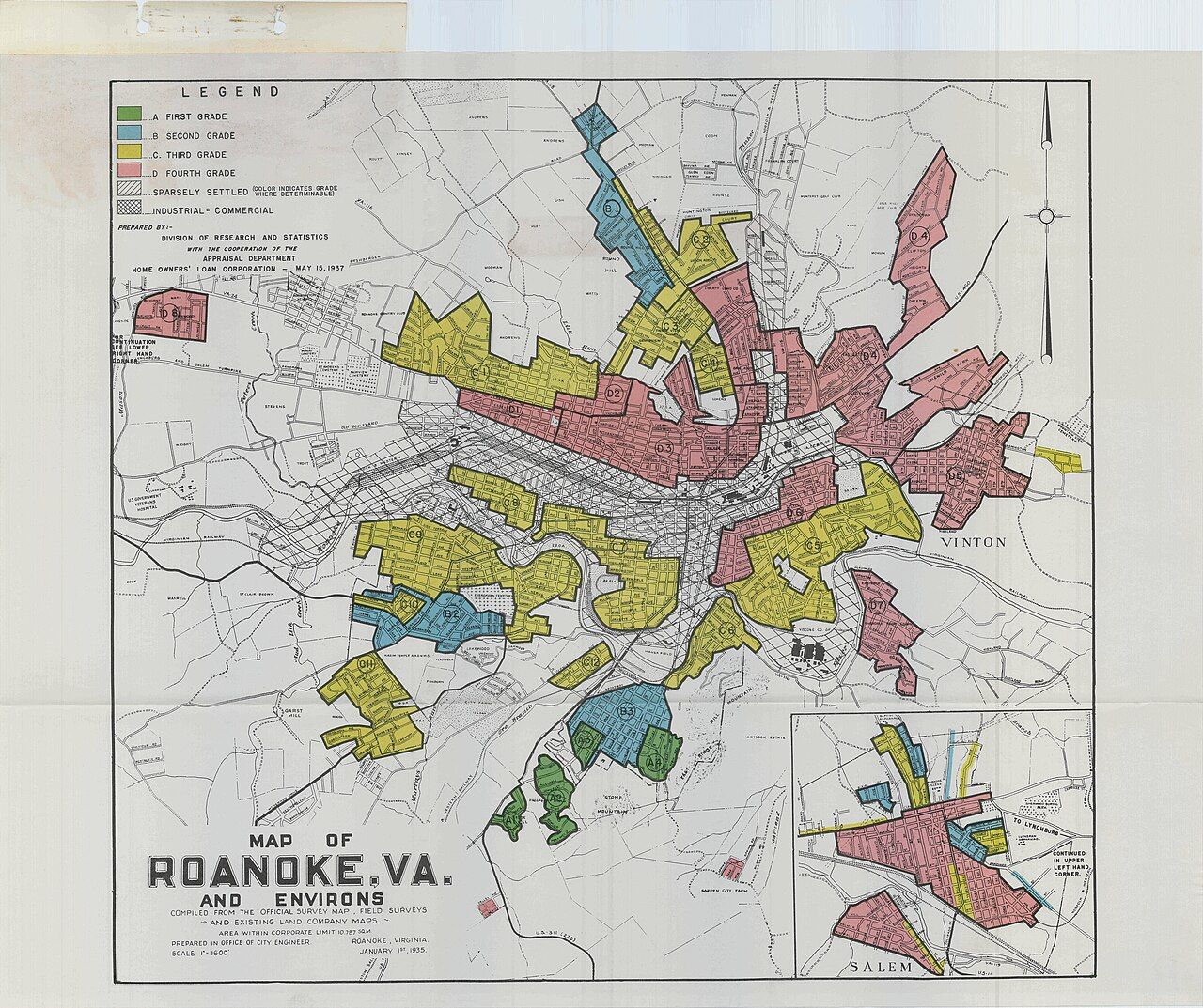
Five things people mean by “equality”
Most arguments about social justice are not disagreements about facts. They are two people using one word for five different ideas. It is worth slowing down and naming them, because once you can hear which sense a speaker is using, a great many heated exchanges resolve into something calmer and more interesting.
Formal equality is the rule that like cases be treated alike: the same law, the same procedure, the same price for everyone. It is the oldest and thinnest idea in the family, and it is genuinely powerful — it is what makes “whites only” signage indefensible on its face. Its weakness is that it is silent about what makes cases alike. A poll tax applied to every voter is formally equal, and was for decades one of the more effective instruments of disenfranchisement in the American South. Equality of opportunity adds that the starting line should be fair: careers open to talents, no arbitrary barriers. In its narrow version it forbids only deliberate exclusion. In the version philosophers call fair equality of opportunity, it demands that people of similar native talent and willingness to use it should have similar prospects, whatever their social origin — a far more demanding claim, since it implicates schools, housing, childhood nutrition and the accident of who your parents were.
Equity is the idea that treating people identically can entrench a difference rather than correct it, so resources should be distributed according to need. This is the reasoning behind wheelchair ramps, interpreter services, Title I school funding and insulin coverage. The popular illustration — three people of different heights behind a fence, given identical crates in one panel and different crates in the next — is useful and also slightly misleading, since its most common third panel simply removes the fence. That third panel is the point: much of what equity chases is a barrier somebody built. Equality of outcome goes further and evaluates the end state directly. Almost nobody defends it in its strict form for individuals, since it would flatten every difference produced by effort and choice. It reappears in a defensible form as a diagnostic: a large, persistent gap between groups is not proof of injustice, but it is a reason to look hard for one.
The fifth idea reframes the whole discussion. In a 1999 article in Ethics called “What Is the Point of Equality?”, the philosopher Elizabeth Anderson argued that egalitarians had spent decades on the wrong question. The point of equality, she said, is not to equalise a quantity of stuff or luck; it is to abolish social hierarchy — to create a society in which people stand as equals and none must grovel, defer or beg. This is relational equality, and its target is domination, humiliation and exclusion rather than the shape of a distribution. Anderson pressed the objection hard against luck egalitarianism, the view associated with Ronald Dworkin, G. A. Cohen and Richard Arneson that inequalities are unjust when they stem from brute luck rather than choice. Luck egalitarianism, she noted, must divide claimants into the deserving and the undeserving, demand that people prove their misfortune was not their fault, and then hand them aid stamped with that judgement. A welfare system built on it would be humiliating by design. Defenders reply that the theory concerns what justice requires, not what a bureaucracy should say out loud. The exchange is unresolved and worth knowing, because both instincts live inside every real policy debate.
| Conception | Core demand | Typical policy | Strongest objection |
|---|---|---|---|
| Formal equality | Same rule applied to all | Anti-segregation law; uniform pricing | Neutral rules can reproduce prior advantage |
| Equality of opportunity (narrow) | No deliberate barriers to competition | Ban on refusing to hire by race or sex | Leaves the starting line untouched |
| Fair equality of opportunity | Similar talent, similar prospects | School finance reform; early childhood programmes | Very demanding; intrudes on family life |
| Equity | Distribute according to need | Ramps, interpreters, Title I funding | Who decides need, and when does it end? |
| Equality of outcome | Equal end states across groups | Hard quotas | Ignores choice and effort; rarely defended strictly |
| Relational equality | No one stands below anyone | Union rights, accessible public space, voice in institutions | Vague about how much material inequality it tolerates |
Injustice with no one at the wheel
Chapter 6 introduced Iris Marion Young’s claim that distribution is not the whole of justice and her social connection model of responsibility. Here is the machinery underneath it, in a case where the paper trail is unusually complete.
In 1933 Congress created the Home Owners’ Loan Corporation to refinance mortgages during the Depression. Between 1935 and 1940, working with local lenders, it produced residential security maps for 239 cities, grading neighbourhoods A through D. Grade D was outlined in red — hence redlining — and the accompanying area descriptions state the criterion plainly: the presence of Black, immigrant or Jewish residents was recorded as a hazard to property values. The Federal Housing Administration then wrote the logic into national policy. Its Underwriting Manual, issued in 1936 and revised in 1938, advised that neighbourhoods should be protected from “inharmonious racial groups” and recommended restrictive covenants as a means of doing so. The FHA insured mortgages; without that insurance, the thirty-year low-down-payment loan that built the American middle class was largely unavailable. Between 1934 and 1968, by most estimates, the overwhelming majority of FHA-insured loans went to white borrowers.
Now follow the consequences forward, because this is where structural analysis earns its keep. A family shut out of the insured mortgage market bought on contract instead — the arrangement Ta-Nehisi Coates documented in North Lawndale, Chicago, in his June 2014 Atlantic essay, in which the buyer accumulated no equity and could be evicted after one missed payment. Housing equity is the principal asset of most American families and the main channel of inherited wealth. Property taxes fund schools. School quality shapes admission and earnings. Neighbourhood shapes exposure to lead, traffic pollution, food retail, policing and green space. The Federal Reserve’s 2022 Survey of Consumer Finances reported median net worth of about $285,000 for white families, $44,900 for Black families and $61,600 for Hispanic families — a gap far larger than the income gap, and one that a single generation of equal wages could not close. Redlining was outlawed by the Fair Housing Act of 1968. The maps stopped; the distribution they created did not.
That is what structural injustice means: a pattern of disadvantage produced by the ordinary, often lawful, functioning of many separate institutions, in which no current participant need harbour any hostility at all. It is worth being precise about the causal claim, since imprecision here invites justified scepticism. Historians and economists debate how much of the present-day gap is attributable to the HOLC maps specifically as against the broader system of covenants, violence, employment discrimination and unequal schooling that the maps recorded. Daniel Aaronson and colleagues, using boundary discontinuities, found substantial and long-lasting effects of the map lines themselves on homeownership and house values; others argue the maps mostly ratified segregation that private actors were already enforcing. The honest summary is that the mechanism is well documented and the precise share of blame between instruments is contested. That is a normal state of affairs in social science, and it does not rescue the claim that nothing happened.
Equality is five different demands wearing one word, and the most consequential injustices are produced not by villains but by neutral-looking institutions compounding an advantage somebody engineered decades ago.
Section 2What Discrimination Is, and Why It Is Wrong

Two shapes of wrong: treatment and impact
Direct discrimination — in American law, disparate treatment — is treating someone worse because of a protected characteristic. It requires, at least in principle, a causal link between the trait and the decision. In the United States the operative statute is Title VII of the Civil Rights Act of 1964, which forbids employment discrimination on grounds of race, colour, religion, sex and national origin; later statutes added age (1967), disability (1990) and, through judicial interpretation, sexual orientation and gender identity (Bostock v. Clayton County, June 2020, where Justice Gorsuch reasoned that firing a man for loving men is impossible to describe without reference to his sex).
Indirect discrimination, or disparate impact, is the harder and more useful concept. A rule that says nothing about race or sex may still fall far more heavily on one group, and it may not be justifiable by the job. The founding case is Griggs v. Duke Power Co., decided unanimously by the Supreme Court on 8 March 1971. Duke Power’s Dan River Steam Station in Draper, North Carolina, had openly restricted Black employees to the labour department until the day Title VII took effect. A high school diploma had been required for the better departments since 1955; on the day the Act took effect the company added satisfactory scores on two standardised aptitude tests, the Wonderlic and the Bennett Mechanical Comprehension Test. In North Carolina at the time, roughly 34 percent of white men and 12 percent of Black men held high school diplomas, and the pass rates on the tests diverged sharply. Chief Justice Burger wrote that the Act “proscribes not only overt discrimination but also practices that are fair in form, but discriminatory in operation,” and required that a challenged practice be shown to bear a demonstrable relationship to the job. Good intent was no defence: Congress had directed its attention to consequences.
The doctrine has had a contested career. In Wards Cove Packing v. Atonio (1989) the Court shifted most of the burden back onto plaintiffs; Congress reversed that in the Civil Rights Act of 1991, codifying the framework in which a plaintiff identifies a specific practice causing the disparity, the employer must show job-relatedness and business necessity, and the plaintiff may still prevail by showing a less discriminatory alternative. Then Ricci v. DeStefano (2009) exposed the fault line. New Haven, Connecticut, administered a promotion exam for firefighters; no Black candidate scored high enough to be promoted, and the city, fearing disparate-impact liability, discarded the results. Twenty white and Hispanic firefighters sued for disparate treatment and won 5–4. The two halves of antidiscrimination law had been set against each other, and the Court held that an employer may not throw out results merely because of the racial distribution unless it has a strong basis in evidence for believing it would otherwise be liable. Whatever you think of the outcome, the structural lesson is durable: a legal regime that forbids both group-blind harm and group-conscious correction leaves institutions a very narrow corridor to walk.
A third shape belongs beside these two and is often forgotten in ethics courses. Under the Rehabilitation Act of 1973 and the Americans with Disabilities Act of 1990, an employer or school may be obliged to change the rule itself — to provide reasonable accommodation unless doing so imposes undue hardship. This is not equality of treatment and not merely a defence against impact; it is an affirmative duty to restructure. It is the clearest place in existing law where equity, in the sense from Section 1, has statutory teeth.
| Legal shape | What plaintiff must show | Employer’s defence | Landmark |
|---|---|---|---|
| Disparate treatment | Adverse action because of a protected trait | Legitimate non-discriminatory reason, not a pretext | McDonnell Douglas v. Green (1973) |
| Disparate impact | A specific neutral practice causing a substantial disparity | Job-related and consistent with business necessity | Griggs v. Duke Power (1971) |
| Hostile environment | Conduct severe or pervasive enough to alter conditions of work | Prompt corrective action; no notice | Meritor Savings Bank v. Vinson (1986) |
| Failure to accommodate | Known disability, needed adjustment, employer refused | Undue hardship; not otherwise qualified | ADA (1990), Title I |
| Intersectional claim | Harm falling on a compound category, e.g. Black women | Varies; courts long resisted combined claims | DeGraffenreid v. General Motors (1976) |
Why it is wrong — three answers, and one bad excuse
Suppose we agree an act is discriminatory. Why exactly is that a moral objection rather than merely a legal one? Three families of answer compete, and they diverge in cases you will meet.
The harm-based account says discrimination is wrong because it sets back interests: the job not offered, the loan denied, the accumulated psychological cost of vigilance. It is intuitive and it fits the compensation logic of the courts. Its difficulty is that it struggles with harmless discrimination. If a restaurant refuses to seat a couple and an equally good restaurant next door seats them immediately, the harm may be trivial while the wrong plainly is not. Deborah Hellman’s demeaning account, developed in When Is Discrimination Wrong? (2008), answers that the wrong lies in expressing that someone is of lesser worth — an act with social meaning, performed by someone with the standing to make it stick. That explains the restaurant. It also explains why a “whites only” sign and a “no shirt, no service” sign are not the same kind of object. Sophia Moreau’s deliberative freedom account says the wrong is that certain traits should not have to figure in your practical reasoning at all: you should be able to decide where to live, whom to marry, what career to attempt without factoring in your race or religion as a cost. Each account captures something. In practice most people reason with all three and should notice which one is carrying the argument.
Now the excuse. Statistical discrimination, analysed by Edmund Phelps and Kenneth Arrow in the early 1970s, is the practice of using group membership as a proxy for an unobserved individual trait — declining to hire young women because some will take parental leave, charging a higher premium because a group’s average claims are higher. The defence offered is that the inference is accurate and the decision-maker is merely rational under uncertainty. There are several good replies. First, accuracy is frequently overstated: the group average is a poor predictor of the individual in front of you, and the practice suppresses the very information that would refine it. Second, it is self-fulfilling. If employers assume a group will not be promoted, members of that group invest less in the credentials that lead to promotion, and the statistic renews itself. Third, and decisively for our purposes, the moral objection does not turn on accuracy. On Hellman’s account you have treated a person as a specimen of a category; on Moreau’s, you have made her race or her fertility a permanent line item in her own life planning. A correct prediction can still be a wrong to the person predicted. This is the single most useful thing to be able to say aloud when someone offers you a spreadsheet as a moral argument.
Implicit bias: what the evidence supports
In 1995 Anthony Greenwald and Mahzarin Banaji proposed that much social cognition is automatic and unavailable to introspection, and in 1998 Greenwald, Debbie McGhee and Jordan Schwartz introduced the Implicit Association Test, which times how quickly people pair category words with evaluative words. The IAT has been taken tens of millions of times and has become the public face of the concept. It also carries more weight in workplace training than the evidence can bear, and you should know why.
Two meta-analyses did the damage. Frederick Oswald and colleagues, in 2013, found IAT scores predicted discriminatory behaviour only weakly, with correlations in the range of roughly 0.1 to 0.15. Patrick Forscher and colleagues, in a 2019 synthesis of 492 studies, found that interventions can shift implicit measures but that those shifts did not reliably produce changes in behaviour. Test–retest reliability of the IAT is modest, meaning an individual’s score bounces. Greenwald and Banaji themselves have written that the IAT is not diagnostic for individuals and should not be used to select or screen people. The responsible conclusion is not that bias is a myth. It is that the IAT is a research instrument for detecting aggregate patterns, not a character assessment, and that awareness training built on the premise of individual diagnosis has a poor track record.
Meanwhile the field-experimental evidence for discrimination itself is strong, and it does not depend on any theory of the unconscious. Marianne Bertrand and Sendhil Mullainathan sent about 5,000 fabricated resumes to help-wanted advertisements in Boston and Chicago in 2001 and 2002, randomly assigning names such as Emily and Greg or Lakisha and Jamal. White-sounding names received 50 percent more callbacks — 9.65 percent against 6.45 percent — a gap equivalent to about eight additional years of experience, and higher-quality resumes raised callbacks for white names much more than for Black names. Two decades later, Patrick Kline, Evan Rose and Christopher Walters sent more than 80,000 applications to 108 large firms and found distinctively white names contacted roughly nine percent more often overall — with the striking result that a fifth of the firms accounted for nearly half of the total gap. That finding matters practically: discrimination in hiring is concentrated, not evenly smeared, which means enforcement aimed at specific employers can accomplish a great deal.
Discrimination has two legal shapes and at least three moral explanations, and the strongest evidence for its persistence comes from field experiments on real employers rather than from any test of what is going on inside anyone’s head.
Section 3The Gradient: Equity Where It Is Measured Best

Whitehall: the finding that reframed public health
Health is where social justice becomes arithmetic, because the outcome variable is death and the records are good. The pivotal work began in 1967, when Donald Reid and Geoffrey Rose enrolled 17,530 male British civil servants into what became known as Whitehall I. Every man had a job, an income, health care free at the point of use and an office in central London. The expectation was that stress and heart disease would cluster at the top — the executive with the ulcer was a fixture of popular imagination. The opposite appeared. Over ten years, men in the lowest employment grade, the messengers and doorkeepers, died of coronary heart disease at roughly three times the rate of the administrators at the top. More striking still, the relationship was not a cliff between poor and comfortable but a smooth social gradient: each grade did worse than the one above it, all the way up. Professional and executive grades did worse than administrators. Nobody in the study was poor.
Michael Marmot, who led the follow-up study Whitehall II from 1985 with 10,308 participants including women, spent his career on the implication. Smoking, blood pressure and cholesterol explained only a minority of the gradient — in the original analyses, roughly a third. What remained tracked something about position itself: control over one’s work, the predictability of demands, the degree to which effort was reciprocated with reward, and participation in social life. This is why social determinants of health is not a euphemism for poverty. It is a claim that where you stand in a hierarchy affects how long you live, at every rung, and it converges neatly with Anderson’s relational egalitarianism from Section 1.
Britain has an unusually clear policy record here. The Black Report, commissioned under a Labour government and delivered in 1980 to a Conservative one, documented widening class differences in mortality; it was released on an August bank holiday weekend in a print run of 260 duplicated copies, an act of burial that made it famous. The Marmot Review, Fair Society, Healthy Lives, followed in February 2010 with six policy objectives and the phrase proportionate universalism — services offered to everyone but with intensity scaled to need. Its ten-year follow-up in February 2020 reported that improvement in English life expectancy had stalled after 2010 for the first time in a century, that the gap between the most and least deprived areas had widened, and that life expectancy for women in the most deprived decile outside London had actually fallen. Marmot attributed this to austerity policy; others point to opioid and alcohol deaths, influenza seasons and the natural exhaustion of cardiovascular gains. The stall itself is not in dispute.
American numbers, quoted accurately
Precision matters here more than passion, because these figures are frequently mangled in both directions. Raj Chetty and colleagues, in JAMA in April 2016, linked 1.4 billion tax records to mortality data and found that at age 40, men in the top one percent of the income distribution could expect to live 14.6 years longer than men in the bottom one percent; for women the gap was 10.1 years. Crucially, life expectancy for the poor varied enormously by city — the poor lived longest in places like New York and San Francisco and shortest in parts of the industrial Midwest — which tells you the gap is not a fixed law of income but a product of local conditions and policy.
On maternal death, the CDC reported a 2021 maternal mortality rate of 32.9 per 100,000 live births overall, with 69.9 for non-Hispanic Black women against 26.6 for non-Hispanic white women — a ratio of about 2.6 to 1. The 2022 figures fell substantially, to 22.3 overall and 49.5 for Black women, as pandemic-related deaths receded; the ratio persisted. Two features of this disparity deserve emphasis because they defeat the easy explanations. It is not abolished by education or income: analyses of New York City data found that Black women with a college degree had worse severe maternal morbidity than white women who had not finished high school. And the pattern is specific — hypertensive disorders, haemorrhage and embolism, with the CDC’s maternal mortality review committees judging a large majority of these deaths preventable. Whatever the mechanism, it is operating inside the health system, not merely upstream of it.
Research funding shows the same shape. Sickle cell disease affects roughly 100,000 people in the United States, predominantly Black; cystic fibrosis affects roughly 30,000, predominantly white. A 2020 analysis in JAMA Network Open by Faheem Farooq and colleagues found average annual federal funding per affected person of about $812 for sickle cell against $2,807 for cystic fibrosis, and private foundation expenditure of about $102 against $7,690. Some of that gap has innocent explanations — foundation money follows the donors a community can mobilise, and cystic fibrosis research had a compelling molecular target. Some of it does not. Both diseases are single-gene disorders of comparable severity, and only one of them spent decades with patients routinely suspected of drug-seeking when they presented in crisis.
Bias built into the instrument
The most instructive contemporary examples are technical, because they show injustice arriving through a validation sample rather than an attitude. Pulse oximetry estimates arterial oxygen saturation from the different absorption of red and infrared light by oxygenated and deoxygenated haemoglobin. Melanin absorbs in the same range. In December 2020, Michael Sjoding and colleagues published in the New England Journal of Medicine a comparison of nearly 50,000 paired oximeter and arterial blood gas readings and found occult hypoxaemia — a true arterial saturation below 88 percent in a patient whose device read a reassuring 92 to 96 percent. Among the patients whose oximeter read in that range, 11.7 percent of Black patients were nonetheless occultly hypoxaemic, against 3.6 percent of white patients — roughly a threefold difference. During the pandemic this was not academic: oxygen saturation gated admission, oxygen therapy, dexamethasone and remdesivir eligibility. The FDA convened an advisory committee in November 2022 and issued draft guidance on device performance across skin pigmentation in January 2025.
A second example is algorithmic. In Science in October 2019, Ziad Obermeyer and colleagues examined a widely used commercial system that flagged patients for high-risk care management programmes, covering some 200 million people annually. The algorithm did not use race. It predicted future health care costs, on the reasonable-sounding assumption that costly patients are sick patients. But less money is spent on Black patients at any given level of illness — because of access, distrust, insurance and clinician behaviour — so at an identical risk score, Black patients were substantially sicker. Correcting the target variable from cost to a direct measure of illness would have raised the share of Black patients auto-enrolled in the programme from 17.7 percent to 46.5 percent. Nobody wrote a racist line of code. The proxy did the work.
Race-adjusted clinical equations belong in the same family. Chapter 8 discussed the removal of the race coefficient from estimated glomerular filtration rate in 2021. The vaginal birth after caesarean calculator, developed by the Maternal-Fetal Medicine Units Network, included terms that lowered the predicted probability of success for Black and Hispanic women, plausibly steering them toward repeat caesarean; a revised race-free version was published in 2021. Spirometry has for a century applied a “correction” assuming lower normal lung volumes in Black patients — a practice with roots in nineteenth-century arguments about slavery — and the American Thoracic Society moved in 2023 to recommend race-neutral reference equations. In every case the debate is real: removing a variable that carries genuine predictive signal can reduce a model’s accuracy, and some clinicians argue that a crude social proxy is better than nothing. The counter-argument, which has largely prevailed, is that race is standing in for exposures, access and structural conditions, and that a model which encodes the consequence of injustice as though it were biology will reproduce that injustice at scale.
| Tool | How bias entered | Clinical consequence | Status |
|---|---|---|---|
| Pulse oximeter | Calibrated largely on light-skinned volunteers; melanin absorbs red light | Missed hypoxaemia; delayed oxygen and COVID therapies | FDA advisory 2022; draft guidance January 2025 |
| Cost-based risk algorithm | Used spending as a proxy for illness | Sicker Black patients not referred to care management | Documented 2019; vendor revised the label |
| eGFR equation | Race coefficient raised reported kidney function | Delayed referral and transplant listing | Race-free CKD-EPI adopted 2021 |
| VBAC calculator | Race and ethnicity terms lowered predicted success | Steering toward repeat caesarean | Race-free version published 2021 |
| Spirometry reference values | Historic assumption of lower “normal” lung volumes | Under-recognised impairment; disability and compensation effects | ATS recommended race-neutral equations 2023 |
Health inequity is a gradient rather than a cliff, it persists after income and education are accounted for, and some of it is manufactured inside clinical practice by devices, equations and proxies that nobody intended as instruments of harm.
Section 4Remedies, and the Best Case Against Each
Preference, and the long argument about it
If a neutral rule reproduces an old injustice, one obvious response is a rule that is not neutral. Affirmative action in the American sense — the phrase entered federal civil-rights policy in President Kennedy’s Executive Order 10925 in March 1961 — has meant everything from outreach and recruitment to explicit preference. The Supreme Court’s treatment of it in higher education is worth knowing in sequence, because each decision narrows the permissible justification.
In Regents of the University of California v. Bakke (1978), Allan Bakke, a white applicant twice rejected by the medical school at UC Davis, challenged a programme reserving sixteen of one hundred places for minority applicants. The Court fractured; Justice Powell’s controlling opinion struck the set-aside as a quota but held that a university’s interest in a diverse student body could justify considering race as one factor among many. Note what happened there: remedying past societal discrimination was rejected as too amorphous a justification, and diversity — an educational-benefits rationale — became the only surviving one. Twenty-five years later, in Grutter v. Bollinger (2003), Justice O’Connor upheld the University of Michigan Law School’s individualised holistic review while the companion case Gratz struck the undergraduate system that awarded a fixed twenty points for minority status. O’Connor added the sentence everyone remembers: the Court expected that in twenty-five years such preferences would no longer be necessary. Fisher v. University of Texas (2016) upheld a narrowly tailored programme 4–3.
On 29 June 2023, in Students for Fair Admissions v. Harvard and its companion against the University of North Carolina, the Court ended it. Chief Justice Roberts, writing for a six-justice majority (Justice Jackson recused in the Harvard case), held that the programmes lacked measurable objectives, used race as a negative and as a stereotype, and had no logical endpoint, and so failed strict scrutiny under the Equal Protection Clause and Title VI. The opinion left two openings: military academies were expressly not addressed, and an applicant may still write about how race has affected her life — though universities may not use that essay as a proxy for the prohibited classification. Institutions across American higher education, including nursing and medical schools with express mission statements about workforce diversity, have since rebuilt admissions around socio-economic indicators, geography and pipeline programmes.
What should you make of it? Take the strongest arguments on each side rather than the convenient ones. For preference: the pipeline argument is empirical and reasonably well supported — physician workforce diversity is associated with improved access and, in several studies, better outcomes for underserved patients, and California’s Proposition 209 in 1996 was followed by sharp declines in underrepresented enrolment at the flagship campuses. Against: preference at the point of admission is a late and blunt intervention that mostly benefits the more advantaged members of the preferred group while imposing the cost on individual applicants who did nothing wrong; and the mismatch hypothesis, argued by Richard Sander, holds that students admitted with substantially weaker preparation may fare worse than they would have at a better-matched institution. Mismatch is genuinely contested — several careful studies find no such effect, and Sander’s bar-passage analyses have been challenged on methodology — and an honest instructor tells you that rather than pretending the literature is settled.
Universalism, targeting, and repair
A different strategy avoids the individual-preference problem entirely. Targeted universalism, developed by john a. powell and colleagues at Berkeley’s Othering and Belonging Institute, sets a universal goal — every child reads at grade level, every pregnancy is safe — then measures how far each group sits from it and tailors the strategy to each group’s actual obstacle. The goal is shared, so the politics are less brittle; the means differ, so the intervention is effective. It is a policy design rule rather than a moral theory, and it maps closely onto Marmot’s proportionate universalism. The Special Supplemental Nutrition Program for Women, Infants and Children and the community health worker model are recognisable instances.
Reparations raises the sharpest version of the question this chapter keeps circling: what is owed for an injustice whose perpetrators and direct victims are dead? Coates’s 2014 essay argued the case largely on twentieth-century housing policy rather than slavery, precisely to answer that objection with living plaintiffs. Concrete programmes exist. Evanston, Illinois, approved in March 2021 the first municipal programme in the United States, funded initially by cannabis tax revenue and offering $25,000 housing grants to residents harmed by discriminatory housing policy between 1919 and 1969. California’s state task force, created by AB 3121, delivered a roughly 1,100-page final report in June 2023 with more than a hundred recommendations. Georgetown University confronted its 1838 sale of 272 enslaved people; students voted in 2019 to tax themselves for a fund benefiting descendants. Federal legislation to study reparations, H.R. 40, has been introduced in every Congress since 1989 without passing. The objections are serious and worth stating fully: identifying eligible recipients and payers, the arbitrariness of drawing lines among many wronged groups, and the political risk that a large transfer discredits the broader project. The counter-argument is that we routinely accept inherited obligations — national debt, treaty commitments, property title itself — and that the ongoing advantage from the original harm is measurable in the balance sheet.
Finally, the unglamorous evidence about what organisations can actually do. Frank Dobbin and Alexandra Kalev, analysing three decades of federal EEO-1 data from 829 firms, reported in the Harvard Business Review in 2016 that the three most popular tools — mandatory diversity training, hiring tests and formal grievance procedures — were associated with declines in managerial diversity, plausibly because compulsion triggers reactance and because grievance systems retaliate against complainants. What worked was structural and voluntary: targeted college recruitment, formal mentoring, self-managed teams, cross-training, diversity task forces and accountable managers. Formal mentoring was associated with increases of roughly 9 to 24 percent in the management representation of Black, Hispanic and Asian-American women and of Hispanic and Asian-American men. The lesson generalises well beyond firms: interventions that change who is in the room and who is accountable outperform interventions that try to change what is in people’s heads.
| Remedy | Mechanism | Best evidence for | Strongest objection |
|---|---|---|---|
| Antidiscrimination enforcement | Penalise identified conduct | Hiring gaps concentrated in a minority of firms | Reaches only provable individual acts |
| Race-conscious preference | Weight the trait at selection | Enrolment collapse after Proposition 209 | Now unlawful in US admissions; cost falls on individuals |
| Class-based preference | Weight income, wealth or school context | Politically durable; captures real disadvantage | Replaces only part of the racial effect |
| Targeted universalism | Shared goal, group-specific strategy | WIC, community health worker programmes | Requires good data and sustained funding |
| Reparations | Direct transfer for documented harm | Evanston (2021); precedent in other settlements | Eligibility, financing, political backlash |
| Structural workplace change | Recruitment, mentoring, accountability | Dobbin & Kalev, 829 firms over 30 years | Slow; invisible; hard to advertise |
Every remedy for structural injustice imposes a real cost on someone, and the serious work is choosing among imperfect instruments on evidence rather than defending one instrument as though it were the principle itself.
Section 5What This Asks of You, Personally

Intersections, and the categories that lose people
In 1976, five Black women sued General Motors in DeGraffenreid v. General Motors. The company had hired Black men into factory jobs and white women into office jobs; it had hired almost no Black women before 1964, and a seniority-based layoff eliminated those hired after. The court dismissed the claim. GM hired Black people, so there was no race discrimination; GM hired women, so there was no sex discrimination; and the plaintiffs could not, the court held, combine the two into a “super-remedy” the statute had not created. Kimberlé Crenshaw used that case in 1989 to name intersectionality: a person standing where two roads cross can be struck by traffic from either direction, and a legal or analytic framework that examines one road at a time will report that nothing hit her.
The concept has since travelled far from its origin, and in some popular usage it has become a ranking system for grievance, which is not what the argument says and not what it is good for. Used well, it is a methodological warning: check whether your data, your policy or your quality-improvement project is averaging away a subgroup. The maternal mortality figures in Section 3 are an intersectional finding — the interaction of race and sex, not the sum of two main effects. So is the observation that disabled women report far higher rates of intimate partner violence than either disabled men or non-disabled women, and that clinical screening protocols designed around one category routinely miss them.
Epistemic injustice: the wrong of not being believed
Miranda Fricker’s Epistemic Injustice (2007) identified a kind of harm the frameworks above do not capture: being wronged specifically in your capacity as a knower. She distinguished two forms. Testimonial injustice occurs when a hearer discounts a speaker’s credibility because of prejudice about her identity — the patient described in the notes as a poor historian who was in fact describing her symptoms accurately to someone who had decided in advance what they were worth. Hermeneutical injustice is subtler: a gap in the shared interpretive resources means an experience cannot be named at all. Fricker’s example is sexual harassment before the term existed. Carmita Wood left her job at Cornell in 1975 because of a professor’s conduct and was denied unemployment benefits because she could not explain her reason for leaving in any language the system recognised; the phrase was coined that year by the group that took up her case.
Health care supplies the clearest current evidence for the first form. In a 2016 study in PNAS, Kelly Hoffman and colleagues surveyed 222 white medical students and residents and found that about half endorsed at least one false biological belief about racial difference — that Black people have thicker skin, or less sensitive nerve endings. Those who endorsed such beliefs rated a Black patient’s pain lower and made less accurate treatment recommendations. This aligns with decades of emergency department data, beginning with Knox Todd’s studies in the 1990s, showing that Black and Hispanic patients with long-bone fractures received analgesia less often than white patients with the same injury. Nursing has looked at itself as well: the National Commission to Address Racism in Nursing, convened by the American Nurses Association, reported in 2022 that 63 percent of surveyed nurses said they had personally experienced an act of racism at work, most commonly from a peer or a patient.
The practical upshot is unusually concrete. Testimonial injustice is repaired by a habit, not a belief: take the history again, in the patient’s words, when your working impression depends on discounting what she is telling you. That habit is also good clinical practice, which is a recurring feature of this material.
Competence, humility and the checklist trap
For twenty years the standard answer to all of this was cultural competence: learn the health beliefs, dietary rules and communication norms of the groups you serve. It produced useful knowledge and one predictable failure mode — the culture card, which converts a person into a representative of a category and invites exactly the stereotyping it was designed to prevent. In 1998 Melanie Tervalon and Jann Murray-García proposed cultural humility instead: a lifelong commitment to self-evaluation, redressing the power imbalance in the clinical encounter, and building accountable partnerships with communities. The difference is that competence is a body of knowledge you can finish acquiring, and humility is a stance you maintain. The best current practice uses both: know that Ramadan affects medication timing, and ask this patient what she actually does.
| Dimension | Cultural competence | Cultural humility |
|---|---|---|
| Goal | Acquire knowledge of group practices | Maintain self-critical openness |
| Endpoint | Achievable; certifiable | Lifelong; never complete |
| Expert in the room | The clinician | The patient, about her own life |
| Failure mode | Stereotyping by checklist | Vagueness; no measurable content |
| Power | Largely unexamined | Explicitly named and addressed |
What you owe for something you did not do
The objection arrives eventually, usually in these words: I never redlined anyone; my family arrived in 1961; why is this my problem? It deserves a serious answer, not a reprimand. The answer runs in two steps. First, guilt and responsibility are different. Guilt is backward-looking and attaches to acts; you are not guilty of the FHA underwriting manual. Responsibility, in Young’s social connection model introduced in Chapter 6, is forward-looking and attaches to participation: because you take part in institutions whose ordinary functioning produces the outcome, you share an obligation to change how they function. That obligation is political and collective, and it is discharged with others, not alone. Second, it is scaled by what Young called parameters of reasoning — your power, your privilege, your interest and your collective ability. A staff nurse and a chief nursing officer do not owe the same thing, and neither owes everything.
Which leaves the question of what a competent professional actually does on a Wednesday. The American Nurses Association’s Code of Ethics states the duty in its eighth and ninth provisions, obliging collaboration to protect human rights and reduce health disparities and requiring professional organisations to integrate principles of social justice. Translating that into practice, five questions do most of the work: Who is missing from this room, this dataset, this trial? What does this rule cost the person least able to comply with it? Whose account am I discounting, and on what evidence? Is this tool validated on people like my patient? And what is the smallest structural change — a schedule, a form, an interpreter line, a referral pathway — that I have the standing to make? None of these requires a movement. All of them are the sort of thing that, done consistently by people in the middle of an institution, changes what the institution produces.
You are not guilty of injustices you did not commit, but you are responsible for the institutions you participate in, and that responsibility is discharged through specific, scaled, unglamorous changes to how your part of the system works.
The chapter in one breath
Social justice becomes tractable once you stop treating “equality” as one idea. Formal equality forbids different rules; equality of opportunity attends to the starting line; equity distributes by need; relational equality targets hierarchy itself. Discrimination has two legal shapes — disparate treatment and disparate impact, the second built in Griggs from the recognition that a neutral rule can do a segregationist’s work — and at least three moral explanations, none of which is defeated by the observation that a statistical generalisation happens to be accurate. The evidence for ongoing discrimination is strongest not in tests of unconscious attitude, where the IAT has proved a weak predictor of behaviour, but in field experiments on real employers. Health is where all of this is measured best: the Whitehall studies found a smooth gradient of mortality by rank among people who were none of them poor, and American maternal mortality remains roughly two and a half times higher for Black women, a gap that education and income do not close. Some of that harm is manufactured by instruments — oximeters, cost proxies, race-adjusted equations — that no one built with malice. Remedies all cost someone something, so choose them on evidence. And responsibility, unlike guilt, follows participation forward rather than blame backward.
Words worth knowing
| Term | What it means |
|---|---|
| Formal equality | The requirement that the same rule be applied to everyone, without regard to protected traits. |
| Equity | Distribution according to need, on the view that identical treatment can entrench an existing difference. |
| Relational equality | Anderson’s view that the point of equality is to end social hierarchy and domination, not to equalise a quantity. |
| Luck egalitarianism | The view that inequalities are unjust when they trace to brute luck rather than to a person’s own choices. |
| Structural injustice | Disadvantage produced by the ordinary functioning of many institutions, without any current agent intending it. |
| Redlining | The 1930s practice of grading neighbourhoods for mortgage risk using the presence of Black and immigrant residents as a hazard. |
| Disparate treatment | Adverse action taken because of a protected characteristic; requires a causal link to the trait. |
| Disparate impact | A facially neutral practice that falls far more heavily on a protected group and is not justified by business necessity. |
| Reasonable accommodation | The duty under the ADA to modify a rule or setting for a disabled person unless doing so imposes undue hardship. |
| Statistical discrimination | Using group membership as a proxy for an unobserved individual trait; accurate on average and still a wrong to the individual. |
| Demeaning account | Hellman’s theory that discrimination is wrong because it expresses that a person is of lesser worth. |
| Deliberative freedom | Moreau’s theory that certain traits should not have to enter a person’s own practical reasoning about her life. |
| Implicit Association Test | A reaction-time measure of automatic association; useful in aggregate research, a weak predictor of individual behaviour. |
| Social gradient | The Whitehall finding that mortality rises stepwise as occupational rank falls, at every level and not only among the poor. |
| Social determinants of health | The conditions of life — work, housing, control, income, environment — that shape health outcomes more than clinical care does. |
| Occult hypoxaemia | True arterial oxygen saturation below 88 percent despite a reassuring pulse oximeter reading of 92 to 96 percent; among patients reading in that range, about three times as frequent in Black as in white patients. |
| Targeted universalism | Setting one universal goal and tailoring the strategy to each group’s distance from it and specific obstacles. |
| Intersectionality | Crenshaw’s point that harm falling on a compound category is invisible to frameworks that examine one category at a time. |
| Testimonial injustice | Discounting a speaker’s credibility because of prejudice about her identity; a wrong done to her as a knower. |
| Cultural humility | A lifelong stance of self-evaluation and attention to power in the clinical relationship, contrasted with a finishable body of cultural knowledge. |
Check yourself
ENVIRONMENTAL AND ANIMAL ETHICS
Every ethical theory you have met so far asked a version of the same question: what do we owe, and to whom? This chapter presses on the second half. A patient in front of you plainly counts. Does a beagle in a toxicology lab? A laying hen in a cage the size of a sheet of paper? A river? A child who will be born in 2085 into a city that floods because of decisions made this decade? These are not abstractions. They are settled every day by regulators writing exposure limits, by legislators pricing carbon, by hospitals choosing anesthetic gases, and by shoppers standing in front of a refrigerated case. You will meet the arguments that widened the moral circle, the evidence that forced science and law to take animal sentience seriously, the distinctive puzzles that make climate obligations so slippery, and the hard record of where environmental harm actually lands — disproportionately on poor communities and communities of color. Then you will learn the tools practitioners use to decide, and where those tools quietly fail.
By the end of this chapter you can
- Distinguish moral status from moral agency, and explain the difference between direct and indirect duties using Kant’s treatment of animals as the test case.
- Compare anthropocentrism, sentientism, biocentrism and ecocentrism on their criterion of moral considerability, and state the strongest objection to each.
- Reconstruct Peter Singer’s argument from equal consideration of interests and Tom Regan’s subject-of-a-life criterion, and explain how speciesism functions as a charge rather than a slur.
- Apply the Three Rs to a research protocol and identify what current United States and European Union law does and does not cover.
- Evaluate the welfarist and abolitionist positions on animal agriculture using concrete figures on scale, confinement and slaughter.
- Explain the non-identity problem, the ethical content of the discount rate, and why common but differentiated responsibilities remains contested.
- Analyze a case of environmental injustice using distributive, procedural and recognition dimensions, and distinguish disparate impact from discriminatory intent.
- Critique cost-benefit analysis, the precautionary principle and life-cycle assessment as decision tools, naming the blind spot of each.
- Identify the highest-leverage sustainability actions in a clinical setting and defend your ranking with evidence rather than intuition.
Section 1Who Counts? Drawing the Moral Circle

Moral status, and the question behind the question
To have moral status is to be the kind of thing that can be wronged, not merely damaged. Smashing a stranger’s laptop is wrong, but the wrong is done to the owner, not to the laptop. The laptop has no interests of its own. The whole dispute in environmental and animal ethics is whether anything besides human beings is more like the owner than like the laptop — and if so, on what grounds.
Notice that moral status is not the same as moral agency. A moral agent can deliberate, weigh reasons and be held responsible. A moral patient can be wronged but cannot be blamed. Infants, people in advanced dementia and people with profound cognitive disability are moral patients whose status nobody serious disputes. That asymmetry does real argumentative work later, because any criterion that excludes animals by demanding rationality tends to exclude some humans too.
The Western tradition long answered the question narrowly. Aristotle ranked nature as a hierarchy with plants for animals and animals for humans. Aquinas absorbed that ranking into Christian theology. René Descartes went furthest: in the 1630s he described non-human animals as bêtes-machines, complex automata whose cries were the creaking of machinery rather than the expression of felt pain. That view licensed vivisection without anesthesia for two centuries, and it is worth remembering that it was a philosophical claim, not an empirical finding.
Immanuel Kant offered the most influential compromise, and it is the one still doing quiet work in a lot of everyday thinking. In his Lectures on Ethics Kant held that we have no direct duties to animals, because duties are owed to rational beings capable of legislating moral law. But we have indirect duties regarding them: cruelty to a dog coarsens the character and makes cruelty to humans easier. On this view, kicking a dog is wrong because of what it does to you. Many people find that conclusion gets the verdict right and the reason spectacularly wrong. The Kantian philosopher Christine Korsgaard argued in Fellow Creatures (2018) that Kant’s own framework, properly worked out, supports direct duties — because animals, like us, are beings for whom things can be good or bad, and that is what makes anything matter at all.
Sentience and the case for animals
The modern turn begins with Jeremy Bentham. In a footnote to his Introduction to the Principles of Morals and Legislation (1789), written while the French colonies still held slaves, Bentham argued that the decisive question about animals is not whether they can reason or talk, but whether they can suffer. If suffering is the bad thing, the boundary of moral concern is sentience — the capacity for felt experience — and species membership is beside the point.
Peter Singer built the contemporary movement on that foundation. Animal Liberation (1975) argues from the principle of equal consideration of interests: a given amount of suffering counts equally, whoever suffers it. Equal consideration does not mean identical treatment — a pig has no interest in voting — but it does mean that a pig’s interest in avoiding pain cannot be discounted simply because the pig is a pig. Discounting it is what Richard Ryder in 1970 named speciesism. The term is a charge with a precise structure, not an insult: it alleges that species is being used exactly as race and sex have been used, as a morally irrelevant marker that conveniently favors the group doing the judging.
The sharpest supporting argument is the argument from marginal cases. Name the capacity that supposedly grounds human moral status — abstract reasoning, language, autonomy, reciprocity. Some humans lack it: a newborn, a person in the late stages of Alzheimer disease. We do not conclude that those humans may be used in painful experiments or eaten. So either the capacity is not what grounds status, or we are applying it inconsistently. Carl Cohen replied in the New England Journal of Medicine in 1986 that moral status attaches to the kind of being one is, so that a human who lacks rationality still belongs to a rational kind. Critics answer that appealing to kind membership rather than actual capacities is precisely what the speciesism charge alleges.
Tom Regan took a rights-based rather than utilitarian route. In The Case for Animal Rights (1983) he argued that any being that is a subject-of-a-life — that has beliefs, desires, memory, a sense of the future, and a welfare that matters to it — has inherent value that cannot be traded away for aggregate benefit. Regan was explicit that this rules out animal experimentation even when the research would save many lives, which is where his view and Singer’s come apart. Singer’s utilitarianism can in principle license a painful experiment with enormous benefit; Regan’s rights view cannot.
Science and law have moved toward the sentientist position, though unevenly. The Cambridge Declaration on Consciousness, signed in July 2012 by a group of neuroscientists, stated that the neural substrates of conscious experience are not unique to humans and are present in mammals, birds and octopuses. The New York Declaration on Animal Consciousness (April 2024) went further, asserting strong scientific support for consciousness in mammals and birds and a realistic possibility of it in reptiles, fish, cephalopods and even some insects. In law, Article 13 of the Treaty on the Functioning of the European Union, in force since December 2009, obliges the Union and its member states to pay full regard to animal welfare when framing key policies, because animals are sentient beings. The United Kingdom’s Animal Welfare (Sentience) Act 2022 went further still, extending legal recognition of sentience to cephalopod molluscs and decapod crustaceans after a systematic review led by Jonathan Birch at the London School of Economics found substantial evidence of pain in octopuses, crabs and lobsters.
Beyond sentience: living things, land and systems
Sentientism has an awkward implication for environmentalism: it cannot directly value a redwood, a wetland, or a species. Trees do not suffer. A species has no nervous system. Yet most people think destroying the last population of a beetle is a genuine wrong and not merely an aesthetic loss. Two families of theory try to capture that.
Biocentrism extends status to all living things. Paul Taylor’s Respect for Nature (1986) argues that every organism is a teleological center of life — it has a good of its own, a direction of flourishing, whether or not it is aware of it. Watering a plant benefits it in a non-metaphorical sense. Taylor’s version is famously egalitarian, denying that human interests automatically outrank a fern’s, which most readers find impossible to live by. Less radical biocentrists allow that the richness of a being’s good affects how much weight it gets.
Ecocentrism shifts the unit of concern from individuals to wholes: populations, species, ecosystems, the land itself. Aldo Leopold’s A Sand County Almanac, published in 1949 shortly after his death, proposed a land ethic in which the community deserving of moral consideration includes soils, waters, plants and animals, and in which rightness is measured by whether an action preserves the integrity, stability and beauty of that biotic community. Arne Naess extended the theme in 1973 into deep ecology, contrasting a shallow environmentalism concerned with pollution and resources for wealthy humans with a deep view that grants intrinsic value to non-human life and calls for a smaller human footprint.
Holism has a real cost, and honest ecocentrists concede it. If the good of the ecosystem is what counts, then culling deer, poisoning invasive rats on an island, or even — on the most aggressive reading — reducing human numbers becomes permissible or required. Regan called this environmental fascism, arguing that individual lives cannot be sacrificed to systemic tidiness. J. Baird Callicott, Leopold’s most careful defender, has spent decades arguing that the land ethic layers onto rather than replaces our duties to individuals. Whether holistic entities can genuinely have interests remains one of the live, unsettled disputes in the field, not a question with a settled classroom answer.
A fourth tradition reframes the whole map. Ecofeminists such as Karen Warren and Val Plumwood argue that the domination of nature and the domination of women share a conceptual structure: a set of dualisms — reason over emotion, culture over nature, mind over body, male over female — in which one side is defined as superior and the other as available for use. Plumwood wrote from unusual experience. In February 1985, while paddling in Kakadu National Park in Australia, she was seized by a saltwater crocodile and survived three death rolls. She described the event as shattering the illusion of being outside the food chain, and it shaped her insistence in Feminism and the Mastery of Nature (1993) that humans are both ecological beings and moral ones.
| Position | Criterion of moral status | Who or what counts | Representative figure | Standard objection |
|---|---|---|---|---|
| Anthropocentrism | Rationality, autonomy, membership in the moral community | Humans only; nature has instrumental value | Kant; Aquinas | Cannot explain wrongs done to sentient animals except indirectly |
| Sentientism | Capacity for felt experience, especially suffering | Humans and sentient animals | Bentham; Singer; Regan | Cannot value plants, species, rivers or ecosystems directly |
| Biocentrism | Having a good of one’s own; being a center of life | All living organisms | Paul Taylor; Albert Schweitzer | Egalitarian versions are unlivable; weighting rules are ad hoc |
| Ecocentrism | Contribution to the integrity of the biotic community | Ecosystems, species, populations, land | Leopold; Naess; Callicott | May license sacrificing individuals for the whole |
| Ecofeminism | Rejection of value dualisms and logics of domination | Relational; resists ranking altogether | Karen Warren; Val Plumwood | Diagnostic power outpaces its guidance for specific cases |
Every environmental and animal argument you will meet rests on a prior claim about which beings can be wronged, and the four main answers — rationality, sentience, life, and ecological wholeness — each buy their explanatory power at a different price.
Section 2Animals in Laboratories, Farms and Fisheries
The laboratory: the Three Rs and the gaps in the law
In 1959 the zoologist William Russell and the microbiologist Rex Burch published The Principles of Humane Experimental Technique and gave the field its organizing framework: the Three Rs. Replacement means substituting non-animal methods wherever possible. Reduction means using the fewest animals consistent with a statistically meaningful result. Refinement means minimizing pain and distress in the animals still used. The framework is now written into law on both sides of the Atlantic, and it is genuinely useful. It is also, by design, a framework for doing animal research better rather than for asking whether a given experiment should happen at all.
The United States Animal Welfare Act, passed in 1966 after Life magazine ran a photo essay on stolen dogs sold to laboratories, sets housing, veterinary care and record-keeping standards. Two scandals forced it wider. In 1981 Alex Pacheco documented conditions in Edward Taub’s deafferentation experiments on macaques at the Institute for Behavioral Research in Silver Spring, Maryland. In 1984 the Animal Liberation Front took videotapes from the University of Pennsylvania Head Injury Clinic showing baboons subjected to whiplash injury while researchers joked on camera, and the laboratory was suspended in July 1985. Congress responded with the Improved Standards for Laboratory Animals Act of 1985, which created the Institutional Animal Care and Use Committee — a local review board, structurally similar to a human-subjects IRB, that must include a veterinarian and at least one member unaffiliated with the institution.
European law goes further on paper. Directive 2010/63/EU requires a formal harm-benefit analysis for every project, classifies procedures by severity, and prohibits procedures involving severe pain that is likely to be long-lasting and cannot be alleviated. The European Union also banned animal testing for cosmetics ingredients in 2009 and the marketing of animal-tested cosmetics in 2013, a prohibition that pushed the global cosmetics industry toward validated alternatives faster than decades of argument had. The Draize eye irritation test, introduced by the FDA scientist John Draize in 1944 and long the emblem of the movement, has largely been displaced in that sector by reconstructed human cornea models and computational screens.
Momentum now sits with new approach methodologies: organ-on-a-chip systems, human induced pluripotent stem cell models, high-throughput in vitro screens, and computational structure-activity modeling. In December 2022 the United States enacted the FDA Modernization Act 2.0, which removed the statutory requirement that a drug be tested in animals before entering human trials and explicitly permits validated alternatives. Be precise about what that law did and did not do: it permits, it does not prohibit, and animals remain the default across most preclinical pipelines. The scientific case for change is not only ethical. Roughly nine out of ten drugs that clear animal testing and enter human trials still fail, most often for lack of efficacy or for unforeseen toxicity, which is a poor record for a predictive model.
The farm: scale, confinement and the welfare argument
Scale is the first thing to get straight, because intuitions calibrated on a family farm are useless here. Roughly 80 billion land animals are slaughtered for food worldwide each year, the overwhelming majority of them chickens; estimates for fish and other aquatic animals run into the hundreds of billions or higher and are far less certain. In the United States alone the figure approaches 10 billion land animals annually, more than nine in ten of them broiler chickens. No other human practice touches sentient creatures on anything close to this order of magnitude.
Confinement is the second. A conventional battery cage gives a laying hen less usable floor area than a sheet of letter paper and no room to spread her wings, nest, perch or dust-bathe. A gestation crate holds a breeding sow in a stall roughly her own body length for most of a four-month pregnancy, so that she cannot turn around. The European Union banned conventional battery cages from January 2012 under Directive 1999/74/EC and restricted gestation crates to the first four weeks after service from 2013. In the United States change has come state by state through ballot measures: California’s Proposition 2 in 2008, Massachusetts Question 3 in 2016, and California’s Proposition 12 in 2018, which uniquely regulated the sale of pork, veal and eggs from confined animals regardless of where they were raised. Pork producers challenged Proposition 12 as an unconstitutional burden on interstate commerce and lost: the Supreme Court upheld it in National Pork Producers Council v. Ross, decided in May 2023.
Genetics has done as much damage as housing. The modern broiler chicken reaches a slaughter weight near 2.5 kilograms in about six weeks; in 1957 the same species took roughly three months to reach a market weight little more than half that. Comparative work by Martin Zuidhof and colleagues in 2014, raising 1957, 1978 and 2005 strains under identical conditions, found the modern bird grew more than four times as large by day 56. That selection carries predictable costs: lameness and skeletal disease, because leg bone cannot keep pace with breast muscle; ascites from cardiovascular strain; and contact dermatitis in birds that sit because standing hurts. The animal-science reformer Temple Grandin, whose curved chutes and center-track restrainers became industry standard and whose audits reshaped slaughter practice for major buyers from 1999 onward, has been blunt that you cannot audit your way out of a genetics problem.
Two further consequences bear directly on health care. First, roughly two-thirds of medically important antibiotics sold in the United States go to food animals; the FDA’s Veterinary Feed Directive, effective January 2017, ended their use purely for growth promotion, but the selection pressure that remains is an argument about human medicine, not only animal welfare. Second, dense confinement of genetically uniform animals in close contact with people is an efficient incubator for zoonoses — the Nipah virus outbreak on Malaysian pig farms in 1998 and 1999 and the continuing evolution of highly pathogenic avian influenza are the standard examples. The Humane Methods of Slaughter Act of 1958, strengthened in 1978, requires that livestock be rendered insensible before shackling, but the USDA has long interpreted it as not covering poultry — which is to say, as not covering the great majority of animals killed.
| Domain | United States | European Union and United Kingdom | Practical gap |
|---|---|---|---|
| Research oversight | Animal Welfare Act 1966; IACUC review required since 1985; PHS Policy for federally funded work | Directive 2010/63/EU; mandatory project-level harm-benefit analysis and severity classification | US law excludes purpose-bred rats, mice and birds; EU law requires justifying the project, not only its conduct |
| Cosmetics testing | No federal ban; several states, California from 2020, restrict sale | Testing banned 2009; marketing of animal-tested cosmetics banned 2013 | Ingredients tested abroad can still reach US shelves |
| Laying hens | Cage bans in roughly a dozen states; no federal standard | Conventional battery cages banned union-wide since January 2012 | US protection depends on the consumer’s ZIP code |
| Breeding sows | Gestation crates restricted by state law and by Proposition 12 sales rules, upheld in 2023 | Crates limited to the first four weeks after service since 2013 | Neither regime bans close confinement outright |
| Slaughter | Humane Methods of Slaughter Act; poultry excluded by USDA interpretation | Regulation 1099/2009 covers birds; stunning required, with religious exemptions | Most US animals killed for food fall outside the humane-slaughter statute |
Welfare, abolition, and what a defensible position looks like
Within animal ethics the deepest split is not between advocates and industry but between welfarists and abolitionists. Welfarists, following Singer’s consequentialism, hold that the wrong lies in suffering, so reforms that remove cages, improve stunning or reduce numbers are genuine moral progress. Abolitionists, following Gary Francione, hold that the wrong lies in property status itself: while animals are legally things, welfare standards will settle wherever they are cheap, and by reassuring consumers those standards may prolong the institution they soften. This is a real disagreement about both strategy and principle, and it has not been settled by argument.
A third position, sometimes called conscientious omnivorism, accepts that killing animals for food can be permissible if they live good lives and die without terror, and aims its energy at how animals are raised rather than whether they are eaten. Critics point out how little of the supply chain that position actually reaches: “natural” and “farm fresh” are unregulated marketing, “cage-free” permits crowded barn housing, and audited certification schemes differ enormously from one another. Defenders reply that a movement demanding total abstention loses the many people who will change most of their diet but not all of it, and that reductions at population scale matter more than purity at individual scale.
Technology may reroute the argument. Singapore approved the sale of cultured chicken in December 2020, the first country to do so; in the United States the FDA issued no-questions letters to UPSIDE Foods in November 2022 and GOOD Meat in March 2023, and the USDA granted label approvals in June 2023. Whether cultivated meat can scale to price parity is a genuinely open engineering and economic question, and several states, Florida among them in 2024, moved to ban its sale outright — a reminder that technological solutions to ethical problems arrive inside politics. Plant-based substitution has meanwhile grown large enough to move agricultural markets, and its environmental case is independent of the welfare case: animal products supply roughly 18 percent of global calories while accounting for well over half of food-system greenhouse emissions and occupying the large majority of agricultural land.
Animal use is governed far less comprehensively than most people assume — the two largest categories, purpose-bred rodents and poultry, sit outside the very statutes named for their protection — and the central live dispute is whether improving conditions counts as progress or as camouflage.
Section 3Climate Change: Harm Across Distance and Time

What we know, and how we came to know it
The physics is old and unglamorous. In 1856 the American scientist Eunice Newton Foote reported that a cylinder of carbon dioxide warmed more in sunlight than one of ordinary air. John Tyndall measured the infrared absorption of atmospheric gases in 1859. In 1896 the Swedish chemist Svante Arrhenius calculated by hand what doubling atmospheric carbon dioxide would do to surface temperature and got 5 to 6 degrees Celsius — higher than the modern best estimate near 3, but the right order of magnitude for arithmetic done with pen and paper. None of this was controversial when it was done; it became controversial only when its implications acquired a price tag.
The measurement that made abstraction concrete began in March 1958, when Charles David Keeling started continuous sampling at the Mauna Loa Observatory in Hawaii. His first readings were near 315 parts per million. The Keeling curve has risen every year since, sawtoothing with the northern hemisphere growing season, and has now passed 420 parts per million against a pre-industrial baseline near 280. The Intergovernmental Panel on Climate Change concluded in its Sixth Assessment cycle, completed with the Synthesis Report in March 2023, that human influence has unequivocally warmed the planet, by about 1.1 degrees Celsius in the 2011 to 2020 decade relative to 1850 to 1900. Copernicus and the World Meteorological Organization reported 2024 as the first calendar year to average more than 1.5 degrees above that baseline — not yet a breach of the Paris goal, which is defined over decades, but a marker nobody expected this soon.
For clinicians the consequences are not projections but caseload. The European heat wave of August 2003 was associated with roughly 70,000 excess deaths, concentrated in elderly people living alone in cities. Heat-related mortality among people over 65 has risen sharply over the past three decades. Warming extends the range and season of Aedes mosquitoes and of Ixodes ticks, alters pollen seasons and asthma burden, degrades air quality through ozone formation and wildfire smoke, and drives displacement, which is itself a health exposure. Attribution science has matured enough that specific events can now be quantified: teams routinely estimate how much more likely a given heat wave or rainfall extreme was made by warming already in the system.
Who owes what, and on what principle
The 1992 UN Framework Convention on Climate Change committed parties to act on the basis of common but differentiated responsibilities and respective capabilities — language that acknowledges a shared problem with unequal authorship and unequal means. Everything contentious about climate diplomacy is contained in how you cash that phrase out, and the arithmetic you choose changes the answer entirely. By cumulative fossil carbon dioxide emitted since the industrial revolution, the United States is responsible for roughly a quarter of the total and the European Union for something near a sixth. By current annual emissions, China is the largest emitter at roughly 30 percent of the global total. By emissions per person, the ranking flips again: an average American emits several times what an average Indian does.
The Paris Agreement, adopted on 12 December 2015 and in force from November 2016, abandoned the attempt to assign binding shares. It set a collective goal — holding warming well below 2 degrees while pursuing efforts to limit it to 1.5 — and left each country to declare its own nationally determined contribution, subject to a five-year ratchet and transparency review. Critics call this an agreement to be graded on effort. Defenders point out that the binding-target approach produced the Kyoto Protocol, which the United States never ratified and Canada left.
Two more recent developments matter. At COP27 in Sharm el-Sheikh in November 2022, parties agreed in principle to a loss and damage fund for countries suffering climate impacts they did little to cause; it was operationalized at COP28 in Dubai the following year with initial pledges of a few hundred million dollars — a sum orders of magnitude below credible estimates of need, but a change in the moral framing from charity to responsibility. And in 2025 the International Court of Justice issued an advisory opinion holding that states’ climate obligations arise from existing treaty and customary international law, and that breaching them can constitute an internationally wrongful act. Advisory opinions do not enforce themselves, but they change what national courts and negotiators can cite.
It is worth holding onto one clear success. The Montreal Protocol, agreed in 1987 to phase out chlorofluorocarbons after Mario Molina and Sherwood Rowland identified the ozone-destruction mechanism, achieved universal ratification, worked, and is projected to return the ozone layer to 1980 conditions around the middle of this century. Its 2016 Kigali Amendment extended it to hydrofluorocarbons, which are potent greenhouse gases. The differences from climate are instructive — fewer substances, fewer producers, cheap substitutes — but the case refutes the claim that collective action on an atmospheric commons is impossible.
| Burden-sharing principle | Core claim | Who pays most | Main objection |
|---|---|---|---|
| Polluter pays | Responsibility tracks emissions caused | Historically high emitters, chiefly the United States and Europe | Much emission predates knowledge of the harm; the actual emitters are dead |
| Ability to pay | Burden tracks capacity, not causation | Wealthy states and wealthy individuals anywhere | Severs the link to wrongdoing; can feel like a tax on success |
| Beneficiary pays | Those enriched by past emissions owe, even if innocent | Present populations of industrialized states | Benefits are diffuse and hard to quantify; contested whether unchosen benefit creates duty |
| Equal per capita shares | The atmosphere is a commons owned equally by all people | High per-capita emitters, including Gulf states, Australia, United States | Ignores geography, climate and existing infrastructure; incentives around population |
| Grandfathering | Cuts measured from current emissions to protect legitimate expectations | Rapidly developing economies | Rewards past emission and locks in inequality; few philosophers defend it |
Four puzzles that make climate ethics genuinely hard
The first is the non-identity problem, set out by Derek Parfit in Reasons and Persons (1984). Large policy choices change who is conceived: different jobs, different migrations, different meetings, different children. A person born in 2085 into a badly damaged world would not have existed had we chosen differently. So it seems we have not made that person worse off than they would otherwise have been, and if harm requires making someone worse off, we have not harmed them. Almost nobody accepts the conclusion, and responses vary: some adopt impersonal principles under which a worse world is worse full stop, some argue that being brought into a life below a decent threshold is itself a harm, some deny that harm requires comparison to a person’s own alternative. The puzzle is not a loophole. It is a demonstration that our ordinary harm concept was built for identifiable victims and breaks under policy scale.
The second is the discount rate. To compare costs today with benefits in 2120, economists discount future values. The choice is enormously consequential: at a 5 percent annual rate, a million dollars of damage a century out is worth under eight thousand today; at 1.4 percent it is worth roughly a quarter of a million. The Stern Review, published in October 2006 for the UK Treasury, used a low rate on the ethical ground that a person’s wellbeing should not count less simply because they are born later, and concluded that strong immediate action pays. William Nordhaus, who won the Nobel in economics in 2018, used a higher market-derived rate and concluded that a more gradual ramp was optimal. They were not disagreeing about physics.
The third is the structure of a commons. Garrett Hardin’s 1968 essay in Science described herders each rationally adding one more animal to shared pasture until it collapses, and the image has dominated policy talk ever since. Two corrections are required. The essay also argued for coercive limits on reproduction, and Hardin’s wider writing ran to openly eugenic and anti-immigrant positions — context rarely supplied when the piece is assigned. More importantly, Elinor Ostrom’s Governing the Commons (1990), which brought her the Nobel in economics in 2009, documented Swiss alpine pastures, Japanese village forests and Spanish irrigation systems that users governed sustainably for centuries. Her design principles — clear boundaries, participatory rule-making, monitoring by users, graduated sanctions, accessible conflict resolution, nested governance — describe what makes shared resources work. The atmosphere lacks most of them, which is diagnostic rather than fatalistic.
The fourth is the problem of the individual. Walter Sinnott-Armstrong argued in 2005 that a single unnecessary Sunday drive causes no detectable harm and so is not itself wrong, though we do have strong obligations to press governments to act. John Broome replies in Climate Matters (2012) that each of us does emit, that emissions do harm, and that a duty of justice not to harm others is not waived by the smallness of one’s share. Shelly Kagan and others argue that even imperceptible contributions matter in expectation, because thresholds exist somewhere and each act carries some probability of triggering one. Courts, meanwhile, have moved: the Dutch Supreme Court upheld the Urgenda ruling in December 2019 ordering a 25 percent cut; the German Federal Constitutional Court held in March 2021 in Neubauer that postponing cuts unconstitutionally burdened the freedom of the young; a Montana court ruled for youth plaintiffs in Held v. Montana in August 2023, affirmed by that state’s supreme court in December 2024; and in April 2024 the European Court of Human Rights, in a case brought by a group of older Swiss women with average age in their seventies who argued heat waves endangered them, found for the first time that inadequate climate policy violated the right to private and family life.
Climate change breaks the ordinary moral machinery of identifiable victims, traceable causes and contemporaneous harm, so the real work lies in choosing defensible principles for sharing burdens and in deciding how much a stranger born in eighty years is worth today.
Section 4Environmental Justice: Where the Harm Lands
A movement born beside a landfill
In 1978 a trucking contractor working for the Ward Transformer Company sprayed roughly 30,000 gallons of oil laced with polychlorinated biphenyls along some 240 miles of North Carolina roadside to avoid disposal costs. The state decided to bury the contaminated soil in a new landfill at Afton, in Warren County — the county with the highest proportion of Black residents in the state, and among its poorest. In September 1982 residents lay down in the road in front of the dump trucks. More than 500 people were arrested over six weeks. They did not stop the landfill, but they created a vocabulary.
Evidence followed the protest. A 1983 General Accounting Office study of hazardous waste landfills in eight southeastern states found three of the four were in communities that were majority Black. In 1987 the United Church of Christ Commission for Racial Justice, under Benjamin Chavis, published Toxic Wastes and Race in the United States, the first national statistical study of the question; it reported that race was the strongest single predictor of where commercial hazardous waste facilities were sited, stronger than income. A twenty-year follow-up in 2007 found the disparities had not narrowed. Robert Bullard, who had begun mapping Houston’s waste sites for a 1979 lawsuit brought by his wife, published Dumping in Dixie in 1990 and gave the field its founding sociology. In February 1994 President Clinton signed Executive Order 12898, directing federal agencies to identify and address disproportionately high environmental and health effects on minority and low-income populations.
Three distinct claims travel under the single label, and separating them sharpens any analysis. Distributive justice asks how burdens and benefits are allocated: who breathes the emissions, who uses the product. Procedural justice asks who was in the room: whether hearings were held at times working people could attend, in languages they read, with technical assistance to interpret a permit application. Recognition justice asks whose knowledge and whose way of life is treated as legitimate at all — a question that dominates disputes over Indigenous land, as at Standing Rock in 2016, where the Dakota Access Pipeline was rerouted away from Bismarck, a majority-white city, to a crossing immediately upstream of the Standing Rock Sioux Tribe’s water intake.
Disparate impact is not the same as proven intent. Almost no modern siting decision comes with a memo saying a neighborhood was chosen because of its race. Environmental justice research documents outcomes: where facilities end up, whose air is worse, whose children have higher blood lead. Some of that pattern comes from land values, some from zoning inherited from segregation, some from the political weakness of communities that lack lawyers and lobbyists. In United States law this distinction is decisive. Under Alexander v. Sandoval (2001), private plaintiffs cannot sue directly under the disparate-impact regulations of Title VI of the Civil Rights Act, which is why so much environmental justice litigation proceeds through permitting, nuisance and state constitutional law instead.
Three case files
Bhopal, 2 to 3 December 1984. At the Union Carbide India Limited pesticide plant, water entered a storage tank holding roughly 40 tonnes of methyl isocyanate. The runaway exothermic reaction vented a heavier-than-air toxic cloud over sleeping shantytowns built up against the plant wall. The refrigeration unit that should have kept the tank cold had been shut down to save money; the flare tower and scrubber were inadequate or offline; the alarm was of the same type used for routine drills. The official confirmed toll is about 3,800; credible estimates of deaths over the following weeks and years run to 15,000 or more, with hundreds of thousands injured. Union Carbide settled with the Indian government in 1989 for 470 million dollars — on average a few hundred dollars per claimant. The chief executive, Warren Anderson, was arrested and released on the day he arrived in India in 1984, returned to the United States, and was never tried. The site was never fully remediated and groundwater contamination persists.
Flint, Michigan, 2014 to 2016. On 25 April 2014, a city under state-appointed emergency management switched its water source to the Flint River to save money. Michigan’s Department of Environmental Quality did not require corrosion control treatment, so the corrosive river water stripped protective scale from aging lead service lines. Residents complained for eighteen months about color, smell and rashes and were told the water met standards. Marc Edwards of Virginia Tech independently sampled homes in August 2015 and found lead at levels that meet the definition of hazardous waste in some samples. On 24 September 2015 Dr. Mona Hanna-Attisha, a pediatrician at Hurley Medical Center, presented blood lead data showing the proportion of Flint children with elevated levels had roughly doubled citywide and tripled in the highest-exposure neighborhoods. A concurrent Legionnaires disease outbreak killed at least twelve people. Flint’s population was about 54 percent Black with around 40 percent living in poverty. The Michigan Civil Rights Commission concluded in February 2017 that systemic racism was a root cause. Criminal prosecutions of senior officials collapsed after the Michigan Supreme Court invalidated the one-judge grand jury procedure used to charge them.
The Louisiana chemical corridor. Along the 85 miles of the Mississippi River between Baton Rouge and New Orleans sit roughly 200 petrochemical facilities, many on former plantation land where the descendants of the enslaved still live. In St. John the Baptist Parish, the National Air Toxics Assessment the EPA released in 2015 identified census tracts with the highest estimated cancer risk from air toxics in the country, driven by chloroprene emitted by a neoprene plant. The EPA finalized a rule in April 2024 tightening chloroprene and ethylene oxide controls; an earlier civil rights investigation was dropped in 2023 after the state attorney general sued. The corridor illustrates the pattern precisely: the products are national, the tax base is modest, and the exposure is measured in the length of a driveway.
| Case | What happened | Proximate cause | Underlying condition | Accountability outcome |
|---|---|---|---|---|
| Warren County, NC (1982) | PCB-contaminated soil landfilled in a poor, majority-Black county | Illegal roadside dumping in 1978; state siting decision | Community with little political leverage | Landfill built; detoxified only in 2003 after 20 years of pressure |
| Bhopal (1984) | Methyl isocyanate release killed thousands and injured hundreds of thousands | Water ingress into a storage tank; safety systems disabled or inadequate | Cost-cutting at an overseas subsidiary; housing built against the fence | 470 million dollar civil settlement; no executive tried; site not remediated |
| Flint (2014) | Citywide lead exposure plus a fatal Legionnaires outbreak | Source switch without corrosion control treatment | Emergency management removing local democratic control; aging lead lines | Settlement fund of 626 million dollars; criminal charges dismissed on procedure |
| Louisiana chemical corridor | Highest modeled air-toxics cancer risk in the United States | Chloroprene and ethylene oxide emissions from adjacent plants | Industrial siting on former plantation land; weak state enforcement | Federal emissions rule finalized 2024; civil rights inquiry abandoned 2023 |
The clinical face of environmental injustice
Air pollution is not a background nuisance; it is one of the largest risk factors for death on earth. The Health Effects Institute’s State of Global Air analysis attributed roughly 8.1 million deaths worldwide in 2021 to air pollution, ranking it second among all risk factors for death worldwide, behind high blood pressure, and second among risk factors for death in children under five, behind malnutrition. Fine particulate matter under 2.5 micrometers penetrates to the alveoli and enters the bloodstream; the Harvard Six Cities Study published in the New England Journal of Medicine in 1993 established the mortality gradient across American cities and underpins modern standards. Within any city the gradient repeats along highways, ports and rail yards, which are not randomly located.
Lead is the cleanest illustration of exposure without a threshold. There is no known safe blood lead level in children; the CDC lowered its reference value to 3.5 micrograms per deciliter in 2021 precisely because the old cutoff implied a safety that does not exist. Effects on IQ, attention and behavior are permanent, they are strongest at the lowest concentrations, and they map onto old housing stock and old service lines, which map onto historic redlining. Heat does the same thing spatially: work by Jeremy Hoffman and colleagues in 2020 found that formerly redlined neighborhoods run several degrees hotter than affluent parts of the same city on a summer afternoon, because they have less canopy and more pavement. A heat wave is therefore not one exposure but many, sorted by the map drawn in the 1930s.
This is where an environmental chapter becomes a clinical one. If you work in a clinic, environmental exposure is part of the history and usually goes unasked: occupation and second jobs, distance from a highway or facility, housing age, well versus municipal water, heat and air conditioning at home, food and pharmacy access. Documenting exposure in the chart is not paperwork; aggregated, it is the evidence base that makes a community’s claim legible to regulators. The precautionary principle — articulated as Principle 15 of the 1992 Rio Declaration and sharpened in the 1998 Wingspread Statement to say that when an activity threatens harm, precautionary measures should be taken even if some cause-and-effect relationships are not fully established scientifically — is the formal statement of a stance clinicians already take when they act on a worrying sign before the confirmatory test returns. Its critics are right that a strong reading can paralyze, since every intervention carries some risk; the useful version shifts the burden of proof toward the party creating the exposure rather than forbidding action.
One legal movement deserves mention because students encounter it and it is easy to caricature. Rights of nature statutes give ecosystems standing to be represented in court, an idea Christopher Stone proposed in his 1972 article “Should Trees Have Standing?” and that Justice William O. Douglas took up in dissent that same year. Ecuador wrote rights of nature into its 2008 constitution, and its Constitutional Court applied them in 2021 to block mining in the Los Cedros cloud forest. New Zealand’s Te Awa Tupua Act 2017 recognized the Whanganui River as a legal person with two appointed guardians, giving effect to a Māori understanding that the river and the people are indivisible. Spain granted legal personhood to the Mar Menor lagoon in 2022 after a citizens’ initiative followed mass fish die-offs. Whether these instruments change outcomes or mainly change who may sue is still being worked out, but they are a serious answer to a real problem: ecosystems previously had no one whose injury the law would count.
Environmental harm is never distributed randomly — it concentrates where political power is thinnest — and analyzing a case well means asking separately who bears the burden, who was allowed into the decision, and whose knowledge was treated as credible.
Section 5From Values to Decisions: Tools, Trade-offs and Practice
The tools regulators actually use, and where each fails
Cost-benefit analysis converts consequences into money so that they can be compared. Since Executive Order 12291 in 1981 it has been mandatory for major United States regulations, which means that in practice a great deal of environmental ethics happens inside a spreadsheet. Two numbers carry most of the weight. The social cost of carbon estimates the damage done by emitting one additional tonne of carbon dioxide; the United States used an interim figure near 51 dollars per tonne from 2021, while the EPA’s 2023 update, using a lower near-term discount rate and updated damage functions, put it closer to 190 dollars. The value of a statistical life converts small mortality risks into money using observed wage premiums for dangerous work; federal agencies use figures in the range of 11 to 13 million dollars. Neither number prices a person. Both price a change in risk across a population, which is a different thing and is routinely misreported.
Cost-benefit analysis has three characteristic failures. It handles distribution badly, because a benefit of a hundred dollars counts the same whether it goes to a hedge fund or a household on dialysis. It handles the unpriced badly: after the Exxon Valdez ran aground in Prince William Sound on 24 March 1989 and spilled about 11 million gallons, valuing the loss of a coastline nobody visits required contingent valuation — asking people what they would pay — and the NOAA panel chaired by Kenneth Arrow and Robert Solow in 1993 concluded such surveys can be informative but are easily distorted by how the question is framed. And it handles catastrophic tails badly, because expected-value reasoning is least reliable exactly where the outcome is irreversible.
That last gap is what the precautionary principle and the planetary boundaries framework try to fill. Johan Rockström and colleagues proposed in 2009 that nine Earth-system processes have safe operating ranges beyond which nonlinear change becomes likely; the 2023 update led by Katherine Richardson assessed six of the nine as already transgressed, including climate change, biosphere integrity, land-system change, freshwater change, biogeochemical flows of nitrogen and phosphorus, and novel entities such as synthetic chemicals and plastics. The framework is contested at the level of exact thresholds and is best read as a claim about the shape of risk rather than a set of precise dials. Its ethical contribution is real: it reintroduces the idea of a limit into a discourse otherwise built entirely on trade-offs.
Life-cycle assessment is the most useful tool for everyday institutional decisions and the most frequently misused. It tallies energy, water, emissions and waste across a product’s whole existence, from raw material to disposal, and it regularly overturns intuitions. A cotton tote bag must be reused dozens or hundreds of times before it beats a thin plastic bag on climate, because growing and processing cotton is resource intensive. Whether a reusable surgical gown or laryngoscope blade beats a disposable one depends heavily on how the laundering or reprocessing energy is generated. That context-dependence is the point: LCA gives you an answer for a specified system, not a universal verdict, and any claim that skips the boundary conditions should be treated with suspicion.
| Tool | Question it answers | Real strength | Characteristic blind spot |
|---|---|---|---|
| Cost-benefit analysis | Do aggregate benefits exceed aggregate costs? | Forces implicit trade-offs into the open and makes options comparable | Indifferent to who gains and who loses; poor with catastrophic tails |
| Social cost of carbon | What is one more tonne of carbon dioxide worth in damages? | Lets climate harm enter ordinary regulatory arithmetic | Swings by a factor of four on a discount-rate choice that is ethical, not technical |
| Precautionary principle | Should we act before the science is settled? | Shifts the burden of proof toward whoever creates the risk | Strong readings can block beneficial action, since inaction is also a risk |
| Planetary boundaries | Are we inside a safe operating space? | Restores the concept of an absolute limit | Thresholds are uncertain and globally aggregated, hiding regional variation |
| Life-cycle assessment | What are the total impacts of this product or practice? | Overturns intuitions and exposes burden-shifting between stages | Results depend on system boundaries and local energy mix; easy to game |
| Rights-based limits | Is anyone’s basic entitlement being violated? | Protects individuals and communities from being averaged away | Offers little guidance when legitimate rights genuinely conflict |
The individual, the institution and the citizen
Personal action gets more attention than it deserves and less credit than it is owed, mostly because people rank actions badly. Seth Wynes and Kimberly Nicholas showed in 2017 that the measures most often recommended in textbooks and government guides — recycling, changing light bulbs, hang-drying laundry — are among the least effective, while living without a car, avoiding a long-haul flight and shifting to a plant-based diet are roughly an order of magnitude larger. Joseph Poore and Thomas Nemecek’s 2018 synthesis in Science, covering nearly 40,000 farms, found food production responsible for about a quarter of global greenhouse emissions and calculated that dropping animal products would cut food-related emissions by roughly half and food-related land use by about three-quarters. That is a genuine lever. It is still not the largest one available to most people, which is their vote, their union, their professional association and their employer.
It is worth being honest about why the individual frame is so heavily promoted. The concept of the personal carbon footprint was popularized by an advertising campaign that BP launched in the early 2000s, complete with a footprint calculator. That does not make the concept useless — measurement is how you find leverage — but it does explain why an industry might prefer a conversation about your commute to one about its extraction plans. The same logic produces greenwashing, a term coined by Jay Westerveld in 1986 after noticing that a hotel’s plea to reuse towels for the reef coexisted with unchecked expansion. The definitive case remains Volkswagen: on 18 September 2015 the EPA issued a notice of violation revealing defeat-device software that detected emissions testing and switched to a clean mode, while on the road the vehicles emitted nitrogen oxides at many multiples of the legal limit. About 11 million vehicles worldwide were affected, costs exceeded 30 billion dollars, the chief executive resigned, and an engineer served prison time. The marketing had been built around clean diesel.
Where does that leave a working adult who cannot personally decarbonize a grid? Three answers are defensible together. First, integrity has value independent of effect: acting consistently with what you believe is part of being a certain kind of person, which is the virtue ethicist’s contribution to a debate otherwise dominated by consequences. Second, individual action is rarely purely individual, because norms are contagious and visible choices change what others treat as normal — the diffusion of rooftop solar clusters street by street for exactly this reason. Third, the highest-leverage action for most people is exercised as a member of something: a licensing board that adopts a standard, a hospital that changes its purchasing contract, an electorate that prices carbon. Judging your ethics by your shopping alone is a category error in both directions — it overstates your guilt and understates your power.
Your own sector: the ethics of a lower-carbon clinic
Health care is not a bystander. Health Care Without Harm estimated in 2019 that the global health sector accounts for about 4.4 percent of net global emissions, which would rank it among the largest emitters if it were a country. Analyses by Matthew Eckelman and Jodi Sherman put United States health care at roughly 8.5 percent of national emissions, the highest share of any national health system. There is an obvious ethical tension in a profession organized around primum non nocere generating pollution that measurably harms health, and the profession has begun to say so: in October 2020 NHS England became the first national health system to commit to net zero, targeting its directly controlled emissions by 2040 and its whole supply-chain footprint by 2045.
The leverage points are not the ones people expect, which is why this is a useful test of everything in this chapter. Inhaled anesthetics are potent greenhouse gases with wildly different potencies: desflurane has a global warming potential roughly twenty times that of sevoflurane over a century, and nitrous oxide is both a greenhouse gas and ozone-depleting, with much of a hospital’s piped supply lost to leaks before it reaches a patient. NHS Scotland stopped using desflurane in 2023 and NHS England moved to decommission it, with no evidence of harm to patients, because equally good alternatives exist. Metered-dose inhalers use hydrofluorocarbon propellants; a single salbutamol canister can carry a footprint comparable to driving a small car a hundred miles or more, while a dry powder inhaler is a small fraction of that. Inhalers alone account for roughly 3 percent of the NHS carbon footprint. Neither switch is automatic — some patients cannot generate the inspiratory flow a dry powder device needs, and pressing a switch on a poorly controlled asthmatic is bad medicine — but the default matters at scale.
The largest lever of all is less visible: avoiding care that should not happen. Every unnecessary CT scan, duplicated laboratory panel, low-value screening test and avoidable readmission carries a full environmental footprint of energy, single-use plastic, reagents, transport and staff travel, on top of its financial cost and its risk to the patient. Estimates of wasteful spending in United States health care commonly run to a quarter of the total. A clinician who practices carefully, follows deprescribing evidence, and declines to order the reflexive extra test is doing environmental work that no recycling program can match. This is a satisfying convergence rather than a trade-off: the environmentally best choice, the fiscally best choice and the clinically best choice point the same way more often than the framing of “green versus safe” suggests.
None of this licenses compromising infection control. Single-use devices exist for good reasons and the answer to a plastic problem is not a sepsis problem. What the evidence supports is more specific: correct waste segregation, because material sent down the regulated medical waste stream is incinerated at many times the cost and carbon of ordinary waste and studies repeatedly find most of it was misclassified; reusable textiles and instruments where life-cycle assessment supports them in your local energy mix; procedure-pack redesign to stop opening items that are routinely discarded unused; and telehealth where it is clinically equivalent, since avoided patient travel is often the single largest component of an ambulatory visit’s footprint.
| Action in a health-care setting | Relative climate impact | Clinical risk | Comment |
|---|---|---|---|
| Removing desflurane from the formulary | Very high per operating room | Negligible; equivalent agents available | Done nationally in Scotland and England without patient harm |
| Fixing nitrous oxide manifold leaks | Very high | None | Audits often find most piped supply never reaches a patient |
| Reducing low-value tests and imaging | High and cumulative | Reduces risk, does not add it | Aligns environmental, financial and clinical goals |
| Switching suitable patients to dry powder inhalers | High in primary care | Low if inspiratory flow is checked | Never switch a poorly controlled patient for carbon reasons alone |
| Correct segregation of regulated medical waste | Moderate | None if done properly | Much of what enters the red stream does not belong there |
| Recycling in staff break rooms | Low | None | Worth doing; a poor proxy for an organization’s seriousness |
Ethical decision tools each answer a narrow question well and fail predictably outside it, so competence means knowing which tool is being used, what it is hiding, and where in your own institution the genuinely large levers sit.
The chapter in one breath
Environmental and animal ethics is what happens when you take the theories from earlier chapters seriously and stop assuming that only present adult humans can be wronged. Once sentience rather than species is offered as the criterion, the scale of animal use — roughly 80 billion land animals slaughtered a year, most of the largest categories sitting outside the statutes supposedly protecting them — becomes very hard to look at calmly, and the split between improving conditions and rejecting property status remains genuinely unresolved. Once you extend concern to people distant in space and time, climate change breaks the ordinary machinery of harm: the victims are not yet identifiable, the causes are everyone’s, and the crucial number in most analyses turns out to be a discount rate that is an ethical judgment in technical clothing. Meanwhile the harm that already exists is not distributed randomly. Warren County, Bhopal, Flint and the Louisiana chemical corridor show a consistent pattern in which exposure follows political weakness, and the law’s demand for proof of intent leaves most of that pattern unaddressed. The tools available — cost-benefit analysis, the precautionary principle, planetary boundaries, life-cycle assessment — each answer one question well and hide something specific. Competence is knowing which is in use, and finding the large lever in your own building rather than the visible one.
Words worth knowing
| Term | What it means |
|---|---|
| Moral status | The property of being a thing that can be wronged in its own right, rather than merely damaged as someone else’s property. |
| Sentience | The capacity for felt experience, especially pain and pleasure; the criterion of moral status defended by Bentham and Singer. |
| Speciesism | Giving less weight to a being’s comparable interests solely because of its species; named by Richard Ryder in 1970. |
| Subject-of-a-life | Regan’s criterion: a being with beliefs, desires, memory and a welfare that matters to it has inherent value that cannot be traded away. |
| Anthropocentrism | The view that only humans have moral status and that nature matters instrumentally, through its usefulness to us. |
| Biocentrism | The view that every living organism has a good of its own and therefore some claim on moral consideration. |
| Ecocentrism | The view, rooted in Leopold’s land ethic, that ecosystems, species and biotic communities are the primary units of moral concern. |
| The Three Rs | Replacement, reduction and refinement — Russell and Burch’s 1959 framework governing the humane use of animals in research. |
| Non-identity problem | Parfit’s puzzle that policies changing who is born make it hard to say that future people were made worse off by our choices. |
| Discount rate | The annual factor by which future costs and benefits are reduced in present-value terms; the central ethical choice in climate economics. |
| Social cost of carbon | The estimated monetary damage caused by emitting one additional tonne of carbon dioxide, used in regulatory cost-benefit analysis. |
| Common but differentiated responsibilities | The UNFCCC principle that all states must act on climate but with obligations scaled to their contribution and capability. |
| Tragedy of the commons | Hardin’s 1968 model of shared resources degraded by individually rational use; substantially qualified by Ostrom’s evidence of successful commons governance. |
| Environmental justice | The distributive, procedural and recognition dimensions of who bears environmental burdens, who decides, and whose knowledge counts. |
| Disparate impact | A pattern of unequal outcomes by race or income regardless of proven discriminatory intent; central to environmental justice evidence and limited in US law by Sandoval. |
| Precautionary principle | The rule that threat of serious or irreversible harm justifies protective action even without full scientific certainty about causation. |
| Planetary boundaries | Rockström and colleagues’ framework of nine Earth-system processes with safe operating ranges; six assessed as transgressed in 2023. |
| Life-cycle assessment | Accounting for a product’s impacts from raw material through disposal; results depend heavily on system boundaries and local energy mix. |
| Greenwashing | Marketing that overstates environmental performance, from vague labels to outright fraud such as Volkswagen’s defeat devices. |
| Rights of nature | Legal recognition of ecosystems as entities with standing, enacted in Ecuador’s 2008 constitution and New Zealand’s Whanganui River settlement. |
Check yourself
TECHNOLOGY, DATA AND ARTIFICIAL INTELLIGENCE
Every shift you work, you hand your judgment to machines dozens of times without noticing: the scanner that confirms a medication, the sepsis alert that fires at three in the morning, the dispensing cabinet that lets you override it, the phone in your pocket logging where you stood while you did all of it. None of those tools arrived with a philosophy attached, yet each encodes decisions somebody made about what matters, who counts and what may be traded away. This chapter takes those decisions apart. It looks at what privacy actually protects and why consent forms so rarely deliver it, at how a well-intentioned algorithm steered care away from the patients who needed it most, and at who is left holding the blame when an automated system kills someone. The aim is not fear of technology. The aim is the vocabulary, the cases and the questions that let you argue about it competently.
By the end of this chapter you can
- Explain why technology is not morally neutral, using affordance, value-sensitive design and the Collingridge dilemma.
- Distinguish privacy, confidentiality and security, and apply contextual integrity to a real data-sharing decision.
- State what HIPAA covers and what it leaves uncovered, and explain why de-identified data is often re-identifiable.
- Analyse a case of algorithmic bias by naming the proxy variable and the pipeline stage where the harm entered.
- Compare at least three formal fairness criteria and explain why they cannot all hold at once when base rates differ.
- Assign responsibility in an automated-system failure using the responsibility gap, the problem of many hands and the moral crumple zone.
- Describe automation bias and alert fatigue, and name countermeasures that are not simply “pay more attention”.
- Apply a structured set of procurement questions to an AI tool proposed for your unit or workplace.
- Summarise the risk-tier logic of the EU AI Act and the purpose of an algorithmic impact assessment.
Section 1Why Technology Is Never Neutral
The tool that has already chosen for you
Historian Melvin Kranzberg opened his 1985 presidential address to the Society for the History of Technology, published the following year as “Kranzberg’s Laws”, with the line that has organised the field ever since: “Technology is neither good nor bad; nor is it neutral.” The first clause disarms the technophobe, the second disarms the salesman. A device carries no moral guilt, but it does carry a shape, and that shape makes some actions easy, some laborious and some practically impossible. The psychologist James Gibson called this an affordance; Donald Norman brought the term into design. A flat plate on a door affords pushing, a handle affords pulling, and if you have ever hauled on a push door you have felt a designer’s decision act on your body.
Now apply that to the electronic health record. A required field forces documentation; an optional one invites blank space. A drop-down offering two choices for sex erases every intersex and many transgender patients from the dataset before a single analysis is run. A name field capped at fifteen characters turns a patient’s identity into a truncation error. A default that copies yesterday’s note forward saves you four minutes and propagates yesterday’s mistake for a week. None of this appears in a policy manual, and all of it governs behaviour more reliably than a policy manual does.
Automotive safety makes the point in blood. Crash-test dummies were built to the dimensions of a fiftieth-percentile male; a fifth-percentile female dummy did not enter United States frontal compliance testing until the advanced-airbag rules phased in from 2003, and the government’s consumer star ratings did not add one until the 2011 model year, seated as the passenger while a male dummy drove. Analysing real crashes, Dipan Bose and colleagues reported in the American Journal of Public Health in 2011 that a belted female driver faced roughly 47 percent higher odds of serious injury than a belted male driver in a comparable collision. Nobody set out to injure women. A default body was chosen, the default became the standard, and the standard became a distribution of harm.
Policy vacuums and the Collingridge trap
In 1985 the philosopher James Moor asked what makes computer ethics distinctive and answered that computers are logically malleable. A hammer does what hammers do; a computer does whatever it can be shaped to do, so it keeps generating activities for which no rule yet exists. Moor named the result a policy vacuum, and observed that filling one usually requires first clearing up a conceptual muddle. Is a synthetic video of your face saying words you never said defamation, theft of your likeness, a species of forgery, or none of these? Until we settle what the thing is, no rule about it can be drafted well.
Waiting for clarity carries a price, described by David Collingridge in 1980 and now bearing his name. Early in a technology’s life you could still steer it, but you do not yet know what it will do; by the time the effects are undeniable, the thing is welded into supply chains, habits, budgets and law, and steering has become ruinously expensive. That is the Collingridge dilemma, and social media is its monument — the design choices that made feeds compulsive were cheap to reverse in 2010 and are close to immovable now. Large language models compressed the same arc into about three years.
Notice what this does to the familiar demand for evidence before regulation. In fast-moving technology, the demand is not neutral: it systematically favours deployment, because harm data can only be generated by deploying. Reasonable people disagree about the remedy. Precautionary approaches put the burden of proof on the developer; proactionary ones argue that delay has victims too, and that the deaths prevented by a diagnostic tool held back for five years are just as real for being invisible.
Dual use, defaults and the limits of “I only built it”
Most powerful technologies are dual use. The chemistry behind organophosphate pesticides produced nerve agents; gene editing that cures sickle-cell disease can edit a germline; and a model trained to design useful molecules can be inverted. Fabio Urbina and colleagues showed exactly that in Nature Machine Intelligence in 2022, flipping the reward function of a drug-discovery model and generating some 40,000 candidate toxic molecules in under six hours. The builder’s standard defence — that the tool is neutral and misuse belongs to the user — holds only if the misuse was unforeseeable and no cheap safeguard existed. Both conditions usually fail.
The constructive alternative is value-sensitive design, developed by Batya Friedman and colleagues from the mid-1990s, which treats human values as design requirements investigated empirically alongside speed and cost, rather than as a compliance box added at the end. Its simplest lever is the default. Eric Johnson and Daniel Goldstein reported in Science in 2003 that European countries with presumed-consent organ donation ran effective consent rates near 100 percent while comparable opt-in countries ran far lower — Austria at almost 100 percent against Germany at 12, separated by more than eighty percentage points. The citizens did not differ. The checkbox did.
Design is legislation by other means: every default, field and interlock distributes ease, effort and risk before any user makes a choice.
Section 2Privacy, Data and the Myth of Consent

Three words people use interchangeably and should not
Privacy is a person’s interest in controlling the flow of information about themselves. Confidentiality is the duty you assume once information has been entrusted to you. Security is the set of technical and physical controls that keep information from leaking. They come apart constantly. A hospital can have flawless security and still violate privacy by licensing a de-identified dataset patients never imagined existed. A nurse can breach confidentiality over coffee with no security failure whatever. Naming which of the three is at stake is usually the first honest step in any argument about data.
The legal idea is younger than it feels. Samuel Warren and Louis Brandeis published “The Right to Privacy” in the Harvard Law Review in 1890, provoked by two new technologies: the portable snapshot camera and a gossip press with the means to circulate its pictures. Their argument was that law already protected property and reputation and now had to protect what they called inviolate personality. Every privacy panic since has followed that template — a device makes cheap what used to be costly, and the social norms that depended on the cost quietly collapse.
Helen Nissenbaum turned this into the most useful working tool in the field. Her theory of contextual integrity, developed from 2004 and elaborated in Privacy in Context (2010), holds that information flows are governed by norms attached to the context in which they arise, not by a general rule of secrecy. You tell your nurse how much you drink; that flow is appropriate. The same fact moving to your employer, your insurer or an advertising exchange violates the norm, even if you technically clicked something once. It explains why “but it was already public” is such a weak defence, and why aggregation can be a genuine harm when every ingredient was innocuous.
The consent that is not consent
The dominant model in commercial technology is notice-and-consent: publish a policy, capture a click, treat everything downstream as authorised. It does not work, and the failure is measurable. Aleecia McDonald and Lorrie Cranor calculated in 2008 that reading the privacy policies a typical American encountered in a year would consume roughly 200 hours. Comprehension is worse than the time cost implies, and the interface is often engineered against the reader. Dark patterns — a term coined by the designer Harry Brignull in 2010 — cover the confirm-shaming, the pre-ticked boxes and the cookie banner where accepting everything takes one click and refusing takes eleven.
Even sincere consent erodes through secondary use: data gathered for one purpose migrating to another. The Havasupai Tribe of the Grand Canyon gave blood to Arizona State University researchers in 1990 for a study of their extraordinary rates of diabetes. The samples were later used for work on schizophrenia, inbreeding and population migration, the last of which directly contradicted the tribe’s account of its own origins. The lawsuit was filed in 2004 and settled in April 2010 for 700,000 dollars, the return of remaining samples and an apology. No hacker was involved. Forms had been signed. The context had been shredded.
Institutions repeat the pattern at scale. Between 2015 and 2016 the Royal Free NHS Trust in London transferred identifiable records on about 1.6 million patients to Google DeepMind to test a kidney-injury alerting app; in July 2017 the UK Information Commissioner’s Office ruled that the transfer breached data protection law because patients would not reasonably have expected it. In 2019 the Wall Street Journal revealed Project Nightingale, a partnership moving records on roughly 50 million Ascension patients to Google. That arrangement was very probably lawful under HIPAA’s business-associate provisions. It detonated public trust anyway, which is exactly what contextual integrity predicts: lawful and appropriate are two different tests.
De-identification, re-identification and the HIPAA gap
HIPAA offers two routes to de-identified data: Safe Harbor, which strips eighteen listed identifiers, and Expert Determination, in which a qualified statistician certifies that re-identification risk is very small. Neither makes data anonymous in the ordinary sense of the word. In 1997 Latanya Sweeney, then a graduate student, took a Massachusetts dataset of state-employee hospital visits stripped of names and matched it against a Cambridge voter roll she bought for twenty dollars, extracting the health records of Governor William Weld and mailing them to his office. Her later estimate that 87 percent of Americans are uniquely identified by five-digit ZIP code, date of birth and sex was recomputed by Philippe Golle in 2006 at closer to 63 percent, and the epidemiologist Daniel Barth-Jones has argued that the Weld demonstration was easier than a typical case because a governor’s collapse was front-page news. The corrections lower the number. They do not rescue the assumption that deleting identifiers makes a dataset anonymous.
Two other demonstrations settled the matter. In 2006 AOL published 20 million search queries from 650,000 supposedly anonymous users; the New York Times identified user 4417749 as Thelma Arnold of Lilburn, Georgia within days, and AOL’s chief technology officer resigned. In 2008 Arvind Narayanan and Vitaly Shmatikov de-anonymised Netflix Prize ratings by cross-matching them with public IMDb reviews, exposing viewing histories with political and sexual implications; Netflix cancelled its planned sequel competition in 2010. Sparse, high-dimensional records of human behaviour function as fingerprints, and deleting the name barely smudges them.
Genetic data is harder still, because it is not only about you. Investigators identified Joseph James DeAngelo as the Golden State Killer in April 2018 by uploading crime-scene DNA to the public genealogy site GEDmatch and working down from third cousins who had never heard of him. In October 2023 a credential-stuffing attack on 23andMe exposed data touching roughly 6.9 million profiles, and the company’s 2025 bankruptcy raised a question no consent form had contemplated: what becomes of millions of genomes when the custodian itself is an asset in a sale?
| Covered by HIPAA | Not covered by HIPAA |
|---|---|
| Hospitals, clinics, pharmacies and labs (covered entities) | Fitness trackers, cycle trackers, symptom checkers, most wellness apps |
| Health plans and clearinghouses | Direct-to-consumer genetic testing companies |
| Vendors handling protected data on a covered entity’s behalf (business associates) | Search engines, social platforms and the ad networks behind them |
| Records, images, billing data and identifiers held by the above | What the patient posts themselves; many employer wellness programmes |
| Breach notification when unsecured protected data is exposed | Data brokers assembling health inferences from purchases and location |
That right-hand column is where most people actually live, so enforcement has had to come from elsewhere. In February 2023 GoodRx paid a 1.5 million dollar penalty in the first action under the Federal Trade Commission’s Health Breach Notification Rule for sharing users’ medication and condition data with Facebook and Google; in March 2023 the therapy platform BetterHelp settled for 7.8 million dollars over similar disclosures. After Dobbs v. Jackson Women’s Health Organization in June 2022, those same uncovered categories — cycle tracking, location history, search queries — acquired criminal-law consequences in some states that nobody had priced in when they installed the app.
| Case | Year | Mechanism of failure | What it teaches |
|---|---|---|---|
| Havasupai blood samples | 1990–2010 | Secondary use far beyond the consented purpose | Consent is bounded by purpose, not by possession |
| AOL search log release | 2006 | Behavioural content alone re-identified the user | Removing names is not anonymising |
| Netflix Prize dataset | 2008 | Linkage attack against a public auxiliary dataset | Risk depends on what else exists in the world |
| Cambridge Analytica | 2014–2018 | About 270,000 app installs harvested friend networks of up to 87 million | Consent does not scale to third parties who never gave it |
| Strava global heatmap | 2018 | Aggregated fitness routes exposed patrol patterns at military bases | Aggregation can leak what single records do not |
| 23andMe breach | 2023 | Reused passwords plus a relative-matching feature | Shared biology means shared exposure across families |
Privacy concerns appropriate flow rather than secrecy, and because de-identification is reversible and most health data sits outside HIPAA, the operative question is always where the information travels next.
Section 3Bias in the Machine
How the bias gets in
A model is a compression of its training data, so it inherits whatever that data recorded, including the recording’s distortions. Harini Suresh and John Guttag separated the sources usefully. Historical bias means the world was unjust and the data faithfully captured it. Representation bias means some groups were undersampled. Measurement bias means the thing you could measure was not the thing you cared about. Aggregation bias means one model was forced onto populations that behave differently. Deployment bias means the tool was used for something it was never built to do. Each has a different fix, which is why “the algorithm is biased” is a symptom, not a diagnosis.
Representation bias has the cleanest illustration. In their 2018 Gender Shades study, Joy Buolamwini and Timnit Gebru tested three commercial gender-classification systems and found error rates of about 0.8 percent for lighter-skinned men and up to 34.7 percent for darker-skinned women. The systems were not built to fail; they were built on face datasets overwhelmingly composed of lighter-skinned men, then reported as accurate on an average that hid the gap. Consequences followed. Robert Williams was arrested outside his home in Detroit in January 2020 on a face-recognition match and held about thirty hours before the case collapsed; Porcha Woodruff, eight months pregnant, was arrested by the same department in February 2023. Detroit settled with Williams in June 2024 and agreed to new limits on how such matches may be used.
Measurement bias is subtler and, in health care, more dangerous. In October 2019 Ziad Obermeyer and colleagues published an analysis in Science of a widely used commercial algorithm that identified patients for extra care management. The vendor could not measure need, so it measured next year’s health-care spending as a stand-in. Because less money is historically spent on Black patients at the same level of illness, the model concluded they were healthier. At any given risk score Black patients had significantly more chronic conditions, and correcting the target variable raised the proportion of Black patients flagged for extra help from 17.7 percent to 46.5 percent. Race was not an input. The proxy variable did all the damage on its own.
Fairness has no single definition
In May 2016 ProPublica reporters Julia Angwin, Jeff Larson, Surya Mattu and Lauren Kirchner examined COMPAS, a recidivism risk score used in Broward County, Florida. Among defendants who did not go on to reoffend, Black defendants were roughly twice as likely as white defendants to have been labelled high risk (about 45 percent against 23 percent), while white defendants who did reoffend were far more often labelled low risk. Northpointe, the vendor, replied that the score was well calibrated: among those given the same score, the actual reoffence rate was about the same regardless of race, which is the property most people intuitively demand of a risk score.
Both were telling the truth. Work by Jon Kleinberg, Sendhil Mullainathan and Manish Raghavan and independently by Alexandra Chouldechova proved that when the base rates of the outcome differ between groups, a risk score cannot simultaneously be calibrated and produce equal false-positive and false-negative rates across those groups, except in degenerate cases. This is an impossibility theorem, not a bug. It means the choice among fairness criteria is a value judgment that engineering cannot settle, and it should be made openly, by people accountable for the consequences, and stated in writing.
| Criterion | What it demands | What it costs |
|---|---|---|
| Anti-classification (“blindness”) | The protected attribute is not an input | Proxies reinstate it; can worsen accuracy for the group it claims to protect |
| Calibration | A score of 0.7 means the same real risk in every group | Compatible with large gaps in who is wrongly flagged |
| Error-rate balance (equalised odds) | Equal false-positive and false-negative rates across groups | Cannot hold with calibration when base rates differ |
| Demographic parity | Equal selection rates across groups | Ignores genuine differences in the outcome; may harm accuracy badly |
| Individual fairness | Similar people are treated similarly | Requires agreement on what makes two people similar — the original dispute |
Two legal concepts help keep the discussion grounded. Disparate treatment is deliberately using a protected characteristic. Disparate impact, recognised in United States employment law since Griggs v. Duke Power Co. in 1971, is a facially neutral practice that falls unequally and cannot be justified by business necessity. Nearly every algorithmic harm in this section is disparate impact. That matters practically: no one has to prove that anyone intended it.
When the instrument itself is biased
Some of the worst distortions predate machine learning and now feed it. In December 2020 Michael Sjoding and colleagues reported in the New England Journal of Medicine that occult hypoxaemia — true arterial saturation under 88 percent despite a pulse oximeter reading of 92 to 96 percent — affected 11.7 percent of Black patients whose oximeter read in that reassuring range, against 3.6 percent of white patients — roughly a threefold difference caused by how skin pigment absorbs light. During the COVID-19 pandemic that gap plausibly delayed oxygen, admission and treatment eligibility for the patients most likely to need them. The Food and Drug Administration issued a safety communication in 2021 and has been revising its performance expectations since.
Similar reckonings followed elsewhere. In September 2021 a joint task force of the National Kidney Foundation and the American Society of Nephrology recommended a new estimated glomerular filtration rate equation with the race coefficient removed, because the old adjustment systematically reported better kidney function for Black patients and delayed referral and transplant listing. Race-based correction factors in spirometry have come under the same scrutiny. If a biased instrument supplies the labels, no amount of modelling sophistication downstream will produce an unbiased model — it will produce a confident one.
Government-scale examples show what happens when nobody audits at all. In the Netherlands, the tax authority’s childcare-benefit fraud system flagged families using indicators including dual nationality; roughly 26,000 families were wrongly accused, ordered to repay tens of thousands of euros, driven into bankruptcy and, in more than a thousand cases, separated from their children. The Dutch data protection authority fined the tax authority 2.75 million euros in 2021 for unlawfully processing nationality data, and the Rutte cabinet resigned in January 2021. In Australia, the Robodebt scheme ran from 2016 and calculated welfare debts by averaging annual tax income across fortnights, an arithmetic that manufactured debts for people with irregular work. About 470,000 debts were unlawful, a settlement worth roughly 1.8 billion Australian dollars followed, and a Royal Commission reported in July 2023. In both, the automation did not invent the cruelty; it industrialised it and stripped out the human who might have said this cannot be right.
Algorithmic bias usually enters through the label, the sample or the instrument rather than through malice, and because competing fairness criteria are mathematically incompatible, someone must choose which errors to tolerate and say so out loud.
Section 4Machines That Decide, and the People Who Answer for Them
The responsibility gap and the problem of many hands
Helen Nissenbaum carried Dennis Thompson’s problem of many hands into computing in 1996: when a system is built by dozens of teams over years, every contributor can truthfully say their part worked as specified while the whole kills someone. Andreas Matthias added the responsibility gap in 2004 — as systems learn from data after release, the manufacturer no longer fully controls behaviour and the operator does not fully understand it, so there is a real risk that nobody is properly answerable. Neither is an excuse. Both are a warning that responsibility must be assigned in advance by design and contract, because it will not assemble itself after the fact.
The canonical software case is the Therac-25, a radiation therapy machine that between June 1985 and January 1987 delivered massive overdoses to six patients in the United States and Canada, at least three of whom died. Nancy Leveson and Clark Turner’s 1993 analysis found a race condition triggered when an experienced operator edited the treatment screen quickly, compounded by the removal of the hardware interlocks that had silently caught the same software fault in the earlier Therac-20, by a cryptic error message operators had learned to bypass, and by a manufacturer who initially insisted an overdose was impossible. Every element there is organisational as much as technical.
The Boeing 737 MAX repeated it at scale. The Maneuvering Characteristics Augmentation System pushed the nose down using input from a single angle-of-attack sensor, was not described in flight manuals, and after a faulty sensor reading, contributed to the loss of Lion Air flight 610 on 29 October 2018 and Ethiopian Airlines flight 302 on 10 March 2019 — 346 deaths. The design pressure was commercial: avoid a new type rating so airlines would not have to retrain crews. Regulators had delegated much of the certification work to the manufacturer. No single engineer chose this outcome, which is exactly the point.
Then there is where the blame actually lands. When an Uber test vehicle struck and killed Elaine Herzberg in Tempe, Arizona on 18 March 2018, the National Transportation Safety Board found the perception system had cycled through classifying her as a vehicle, a bicycle and an unknown object, that the software had no concept of a pedestrian crossing outside a crosswalk, and that Uber had disabled the factory automatic emergency braking. The safety driver, streaming a television show, was prosecuted; the company was not charged. The researcher Madeleine Clare Elish named this the moral crumple zone: like the crumple zone of a car, the human operator absorbs the impact of a systemic failure, protecting the institution that built the system.
Automation bias, alert fatigue and the tired human
Automation bias is the well-documented tendency to over-trust an automated cue. Linda Skitka and colleagues showed in the late 1990s that it produces two distinct failures: errors of commission, where a person follows a wrong recommendation against good contrary evidence, and errors of omission, where a person misses a problem because the system did not flag it. Both increase when workload is high, when the automation is usually right, and when the alternative is doing the work yourself at the end of a twelve-hour shift.
Its mirror image is alert fatigue. The Joint Commission’s Sentinel Event Alert 50, issued in April 2013, reported 98 alarm-related events over roughly three and a half years, 80 of them deaths, and noted the underlying driver: depending on setting, something like 85 to 99 percent of clinical alarms do not require intervention. A clinician who silences ninety-five false alarms has been trained by the system to silence the ninety-sixth. This is not a character flaw to be corrected by exhortation; it is a design failure, and it responds to design fixes such as tuned thresholds, tiered escalation, actionable-only alerting and default settings owned by a committee rather than by the vendor.
The evidence that vendor claims need local checking is now unambiguous. In June 2021 Andrew Wong and colleagues published an external validation of the widely deployed Epic Sepsis Model across nearly 40,000 hospitalisations in JAMA Internal Medicine. The model achieved an area under the curve of 0.63 against the 0.76 to 0.83 the vendor reported, missed about two thirds of patients with sepsis, and generated alerts on 18 percent of all hospitalised patients. Deployed nationally, that is a machine manufacturing alert fatigue while under-detecting the condition it exists to catch. Ironically, as Lisanne Bainbridge argued in her 1983 essay on the ironies of automation, the better automation becomes, the rustier and less prepared its human supervisor is on the rare occasion it fails.
| Arrangement | What the human does | Characteristic failure | Honest example |
|---|---|---|---|
| Human in command | Uses the output as one input among several | Tool ignored; investment wasted | Risk score shown in a chart review |
| Human in the loop | Must approve each action before it happens | Rubber-stamping under time pressure | Clinician accepts or rejects a suggested order |
| Human on the loop | Monitors and can intervene | Vigilance decay; slow takeover | Safety driver supervising an automated vehicle |
| Human out of the loop | Reviews only afterwards, if at all | Errors scale silently before discovery | Automated benefit-fraud flagging |
| Meaningful human control | Understands, can predict, and is accountable | Hard to achieve; often asserted rather than built | The standard most AI policies claim to meet |
Opacity, confabulation and the limits of explanation
People say “black box” loosely. Jenna Burrell distinguished three kinds of opacity in 2016: deliberate corporate secrecy, technical illiteracy on the part of the user, and a genuine mismatch between how high-dimensional statistical models operate and how humans reason. Only the first is straightforwardly a moral fault, but all three block accountability. Cynthia Rudin has argued forcefully since 2019 that for high-stakes decisions we should stop trying to explain opaque models after the fact — post-hoc explanations can be plausible and unfaithful at once — and instead build models that are interpretable to begin with, since the accuracy penalty on structured data is often negligible. Not everyone agrees, and the debate is live.
Generative systems add a distinct failure mode. A large language model predicts fluent continuations; it has no internal representation of what is true, so it produces confabulations — assertions delivered with the same confident register as its correct output. In June 2023 a federal judge in New York sanctioned two attorneys who filed a brief in Mata v. Avianca citing six judicial decisions that did not exist, generated by ChatGPT and then, when challenged, confirmed by asking the same tool whether they were real. In October 2024 the Associated Press reported that a widely used speech-recognition model was inserting fabricated sentences into transcripts, including in medical settings. Fluency is not accuracy, and in health care the difference is measured in patients.
Mental-health applications have supplied the sharpest cautionary tales. In January 2023 the peer-support platform Koko disclosed that roughly 4,000 users had received replies composed with GPT-3. Its co-founder maintained that the feature was opt-in for the volunteers writing those replies and that the exercise was product testing rather than human-subjects research; critics answered that the people receiving the messages had agreed to nothing of the sort. Whether it required ethics review is genuinely disputed. That the recipients were a vulnerable population is not. In June 2023 the National Eating Disorders Association suspended its chatbot Tessa after it gave calorie-restriction and weight-loss advice to people seeking help for eating disorders. Neither was malicious. Both illustrate deployment bias: a tool that behaves acceptably in general is not thereby safe for the specific people it will meet.
Automated systems do not remove responsibility, they redistribute it — usually onto the last human in the chain — so accountability, override authority and verification duties must be designed in before deployment rather than litigated after a death.
Section 5Governing the Machine: Rules, Institutions and You
The rules that now exist
The European Union’s General Data Protection Regulation, applicable since 25 May 2018, did something more interesting than authorise large fines. It codified principles that translate directly into ethical practice: lawfulness and transparency, purpose limitation (data collected for one stated purpose may not drift into another), data minimisation (collect what you need, not what you can), accuracy, storage limitation, integrity and confidentiality, and accountability, meaning you must be able to demonstrate compliance rather than assert it. Article 22 restricts decisions producing legal or similarly significant effects made solely by automated processing. Whether it also creates an enforceable right to an explanation is genuinely contested — Sandra Wachter, Brent Mittelstadt and Luciano Floridi argued in 2017 that the binding text supports only a limited right to information, while Andrew Selbst and Julia Powles argued the opposite. The disagreement is a live scholarly one, not a settled fact.
The EU AI Act, in force since 1 August 2024, is the first broad statute to regulate AI by risk tier. A small set of practices is prohibited outright, including social scoring by public or private actors, untargeted scraping of facial images to build recognition databases, and emotion inference in workplaces and schools. A larger high-risk tier — covering medical devices, employment, education, credit and essential services — carries obligations for risk management, data governance, logging, human oversight and post-market monitoring. Limited-risk systems owe transparency; everything else is unregulated. The prohibitions applied from 2 February 2025 and general-purpose model obligations from 2 August 2025. The high-risk duties have already slipped: a simplification package agreed in 2026 moved stand-alone high-risk systems to 2 December 2027 and high-risk AI embedded in regulated products to 2 August 2028. Check the current text before relying on any date.
In the United States the picture is a patchwork. The Food and Drug Administration has authorised well over a thousand AI-enabled medical devices, most through the 510(k) pathway. The landmark took a different route: the De Novo authorisation of IDx-DR in April 2018, the first system permitted to make a screening diagnosis of diabetic retinopathy without a physician reading the image. The agency’s 2024 guidance on predetermined change control plans finally addressed the awkward fact that a learning model changes after clearance. The National Institute of Standards and Technology published its voluntary AI Risk Management Framework in January 2023 around four functions: govern, map, measure and manage. Illinois has policed biometrics aggressively since its 2008 Biometric Information Privacy Act, which produced a 650 million dollar Facebook settlement approved in 2021 and a 2022 settlement sharply restricting Clearview AI. Colorado passed the first broad state law on algorithmic discrimination in 2024, postponed its start date twice, then in May 2026 repealed and replaced it with a narrower transparency-and-disclosure regime for automated decision-making that takes effect in January 2027 — a fair measure of how unsettled this ground still is. The World Health Organization’s 2021 guidance on ethics and governance of AI for health remains the clearest short statement of principle: protect autonomy, promote wellbeing and safety, ensure transparency, foster accountability, ensure inclusiveness and equity, and promote sustainability.
What an institution owes before it turns the thing on
Documentation practices developed in research have become the practical backbone of institutional ethics. A model card, proposed by Margaret Mitchell and colleagues in 2019, states a model’s intended use, out-of-scope uses, training data, and performance disaggregated by subgroup. A datasheet for a dataset, proposed by Timnit Gebru and colleagues, records how data was collected, by whom, with what consent and for what purpose. An algorithmic impact assessment requires an organisation to state in advance who could be harmed, how the harm would be detected and what would trigger withdrawal. None of these is a guarantee. All of them convert vague optimism into claims someone can be held to.
Local validation is the non-negotiable one. The Epic sepsis case shows that a vendor’s reported performance is a claim about the vendor’s population, not yours, and models drift as coding practices, case mix and staffing change. Serious institutions validate on their own data before go-live, stratify results by race, primary language, insurance status, age and disability, publish thresholds and false-alarm rates to the clinicians who will live with them, monitor continuously, and name a person with authority to switch the system off. That last item is the tell. If nobody can stop it, nobody is governing it.
| Question to ask | Why it matters | Red flag in the answer |
|---|---|---|
| What exact outcome does the model predict? | The label may be a proxy for what you care about | Cost, utilisation or billing codes standing in for need |
| Who was in the training data, and who was not? | Representation bias shows up as subgroup failure | “Proprietary”, or a single-site dataset from another country |
| What is performance in our population, by subgroup? | External validity is not transferable | Only an overall figure, supplied by the vendor |
| What is the alert rate and the false-alarm burden per shift? | Alert fatigue is a patient-safety hazard | Nobody has calculated it |
| Who may override it, and is doing so safe for them? | Override that is punished is not override | Overrides are logged and used in performance reviews |
| What data leaves the building, and under what contract? | Secondary use and re-identification risk | Vendor retains rights to use data for product development |
| What would make us turn it off, and who decides? | An exit criterion prevents sunk-cost paralysis | No criterion, no owner, no review date |
What you owe, on your own shift
Professional codes already cover most of this if you read them as written. The American Nurses Association’s Code of Ethics for Nurses makes protecting privacy and confidentiality a duty of the nurse, not a courtesy of the institution, and obliges you to act when practice conditions endanger patients. The Association for Computing Machinery’s 2018 code obliges computing professionals to avoid harm, to be honest about system limitations and to take special care with systems that become integrated into infrastructure. The American Medical Association has deliberately used the phrase augmented intelligence since 2018 to insist the tool assists rather than replaces clinical judgment. These converge on a short list of concrete duties.
Do not access a record you have no clinical reason to open; curiosity about a celebrity, a neighbour or an ex-partner has ended many careers, and audit logs are read routinely. Do not post about patients, and understand that removing the name does not de-identify a story containing a rare diagnosis, a date and a room layout; four nurses at an Atlanta hospital lost their jobs in December 2022 over one sixty-second video that named no patient at all. Do not paste identifiable patient information into a consumer chatbot, which is a disclosure to a third party under most institutional policies and possibly a reportable breach. Verify anything AI-generated before it enters a record, and document what the tool contributed so the next clinician can weigh it. When you override a system, write down why, because that note is the only evidence that a human was actually in the loop.
When something is wrong, escalate in order: the colleague, the charge nurse or manager, the safety-event reporting system, the compliance or privacy officer, the ethics committee. Do this in writing, and keep dates. External disclosure is a genuine option but a last one, ethically defensible when the harm is serious, internal routes have failed or are futile, and you have evidence rather than suspicion — the pattern Frances Haugen followed in 2021 when she took internal Facebook research to regulators and Congress after concluding the company would not act. Protection for whistleblowers is real in some jurisdictions and thin in others, so knowing your actual legal position before you act is part of acting responsibly.
Law sets the floor and arrives late, so the real work of technology ethics is institutional and personal — local validation, named accountability, honest documentation and a small set of habits you can actually keep on a busy shift.
The chapter in one breath
Technology is not neutral, because every design distributes ease and risk before anyone uses it — a truth visible in a truncated name field, a two-option sex drop-down and a crash-test dummy shaped like an average man. That is why privacy has to be understood as appropriate flow rather than secrecy: the Havasupai samples, the Royal Free transfer and Project Nightingale all involved data moving somewhere the person never contemplated, and Sweeney, AOL and Netflix showed that stripping names does not make records anonymous. The same logic runs through algorithmic bias. Obermeyer’s cost-as-need proxy, the pulse oximeter’s pigment error and the Dutch benefits scandal were failures of labels, instruments and institutions, not of intent, and the impossibility results around COMPAS prove that no formula can spare us the choice of which errors to tolerate. When such systems fail, responsibility does not vanish; it slides down the chain to whoever touched it last, which is what Therac-25, the 737 MAX and the moral crumple zone all teach. The remedy is unglamorous: minimise data, validate locally, audit by subgroup, name who may switch it off, verify before you chart, and say something early and in writing.
Words worth knowing
| Term | What it means |
|---|---|
| Affordance | The range of actions a design makes easy or hard, which shapes behaviour more reliably than any written rule. |
| Algorithmic impact assessment | A structured advance analysis of who a system could harm, how that harm would be detected, and what would trigger withdrawal. |
| Automation bias | Over-trusting an automated cue, producing errors of commission (following a wrong prompt) and omission (missing what was not flagged). |
| Black box | A system whose reasoning is inaccessible, whether through corporate secrecy, user unfamiliarity, or a real mismatch between statistical and human reasoning. |
| Calibration | A fairness and statistics property: a given risk score corresponds to the same real-world probability in every group. |
| Collingridge dilemma | Early on a technology is steerable but its effects are unknown; once the effects are known it is entrenched and hard to change. |
| Confabulation | Fluent, confident output from a generative model that is simply false, because the model predicts plausible text rather than tracking truth. |
| Contextual integrity | Nissenbaum’s theory that privacy is violated when information moves in ways that breach the norms of the context in which it was shared. |
| Dark pattern | An interface deliberately designed to push users toward choices against their own interest, such as a one-click accept and an eleven-click refusal. |
| Data minimisation | Collecting and retaining only what is necessary for a stated purpose, rather than everything technically obtainable. |
| De-identification | Removing identifiers from a dataset; a legal status under HIPAA, not a guarantee of anonymity. |
| Disparate impact | A neutral-looking practice that falls unequally on a protected group and cannot be justified by necessity; no intent need be shown. |
| Dual use | The property of a technology whose beneficial capability is inseparable from a harmful one. |
| Model card | Short documentation stating a model’s intended use, out-of-scope uses, training data and performance broken out by subgroup. |
| Moral crumple zone | Elish’s term for the human operator who absorbs blame for a failure that was distributed across a whole system. |
| Policy vacuum | Moor’s term for a genuinely new capability for which no settled norm or rule yet exists. |
| Proxy variable | A measurable stand-in for something you actually care about; when the stand-in is unequally distributed, bias enters silently. |
| Purpose limitation | The principle that data gathered for one declared purpose may not be reused for an unrelated one without fresh justification. |
| Responsibility gap | Matthias’s worry that with systems that learn after release, neither maker nor operator is fully answerable for behaviour. |
| Value-sensitive design | Friedman’s approach of treating human values as investigable design requirements from the outset, not as compliance added at the end. |
Check yourself
Building an Ethical Practice
Thirteen chapters of theory will not save you at 3 a.m. on a short-staffed unit, or in a meeting where the number everyone needs is the number nobody can honestly produce. What saves people in those moments is not a fresh burst of insight but something duller and far more reliable: a method they had already rehearsed, a sentence they had already practiced, a colleague who had already agreed to be called, and an institution that made speaking up survivable. This chapter converts ethics from a subject into a practice: the documented gap between what people believe and what they do, the structured methods that have been used on real cases for forty years, the linguistics of escalation inside a steep hierarchy, the machinery institutions build and the ways that machinery becomes theater, and the moral cost of the work — distress, residue, injury — together with what is actually known about carrying it.
By the end of this chapter you can
- Explain bounded ethicality and ethical fading, and identify at least four situational forces that reliably degrade ethical behavior in competent, well-intentioned people.
- Evaluate the situationist challenge to virtue ethics and state, fairly, what its critics say in reply.
- Apply the four topics method of Jonsen, Siegler and Winslade and the Veterans Health Administration’s CASES approach to a real case, and say what each method is good and bad at.
- Use James Rest’s four component model to diagnose where an ethical failure actually occurred — sensitivity, judgment, motivation or implementation.
- Build a graded escalation script using Giving Voice to Values, the two-challenge rule and CUS language, and explain the role of psychological safety.
- Describe how ethics committees, ethics consultation and preventive ethics arose and what evidence supports them.
- Apply a just culture analysis — human error, at-risk behavior, reckless behavior — and explain why blame-based responses reduce reporting.
- Distinguish burnout, moral distress, moral residue and moral injury, and match each to an appropriate individual and organizational response.
- Design a concrete personal practice — red lines, a decision journal, a named ally, a review rhythm — that you could still be running in ten years.
Section 1The Distance Between Knowing and Doing
Why good reasoning is not enough
Almost nobody arrives at a serious ethical failure by concluding that wrongdoing is fine. They arrive by not noticing, by reframing, by deferring, by being in a hurry. Max Bazerman and Ann Tenbrunsel gave this cluster a name: bounded ethicality, the systematic and predictable ways in which our ethical behavior falls short of our own standards without our being aware of it. The companion idea is ethical fading, described by Tenbrunsel and David Messick in 2004: the way a decision’s moral dimension quietly drains out of the language used to describe it. A layoff becomes a headcount action. A patient becomes the bed. An inflated charge becomes revenue optimization. Nobody lies; the moral content simply stops being visible, and once it is invisible it cannot be weighed.
The classic demonstration is still the most uncomfortable. In 1973 John Darley and Daniel Batson recruited students at Princeton Theological Seminary, told them to walk to another building to give a talk — for half of them, a talk on the parable of the Good Samaritan — and varied only how rushed they were. On the way, each passed a man slumped in a doorway, coughing and groaning. Of the students told they had time to spare, 63 percent stopped. Of those told they were already late, 10 percent did. Some in the high-hurry condition literally stepped over him on their way to preach about stopping for a stranger. The topic of the talk made almost no difference. Time pressure made all of it.
Stanley Milgram had shown something adjacent a decade earlier at Yale: in his first published condition, 26 of 40 participants — 65 percent — continued delivering what they believed were escalating shocks all the way to the 450-volt switch, because a man in a lab coat said the experiment required them to continue. They did not enjoy it. They sweated, protested, laughed nervously, and continued. Solomon Asch had shown in 1951 that roughly three quarters of participants would, at least once, give an obviously wrong answer about the length of a line rather than stand alone against a unanimous group. None of this proves people are bad. It proves that situations carry moral force, and that a person who has not planned for the situation will meet it with nothing but improvisation.
A correction worth carrying. The behavioral ethics literature contains a famous finding you may have been taught: that signing an honesty declaration at the top of a form rather than the bottom reduces cheating. It did not replicate (Kristal and colleagues, 2020), and the original 2012 paper by Shu, Mazar, Gino, Ariely and Bazerman was retracted in September 2021 after evidence that one dataset had been fabricated. The broader point — that context and salience shape honesty — still stands on other evidence. But a field that studies dishonesty producing a fraudulent result about dishonesty is exactly the kind of thing an ethically serious student should know and repeat. Cite the retraction, not the headline.
The situationist challenge, and the honest reply
Philosophers took these results seriously enough to mount an argument against a whole tradition. Gilbert Harman in 1999 and John Doris in Lack of Character (2002) argued that if behavior is driven this heavily by situational variables, then the robust, cross-situational character traits assumed by virtue ethics may simply not exist. There is no stable trait of honesty; there is honesty-in-the-presence-of-observers, honesty-when-unhurried, honesty-when-the-form-is-clear.
This is genuinely contested, and you should not be told otherwise. Rachana Kamtekar (2004) and Julia Annas have argued that the situationists attack a cartoon of virtue: Aristotle never claimed traits were automatic reflexes immune to circumstance, and phronesis — practical wisdom — is precisely the skill of reading a situation correctly. Others note that the experiments measure one-shot behavior among strangers, which is not where character mainly shows. The most defensible position, and the one this chapter builds on, is a hybrid: character is real but weak, situations are strong, and the practical upshot is identical either way. If you want to behave well under pressure, do not rely on being a good person. Arrange the situation in advance.
How institutions manufacture drift
Organizations do not usually corrupt people by asking them to do something wrong. They corrupt by measurement. Uri Gneezy and Aldo Rustichini ran a twenty-week experiment across ten private daycare centers in Haifa, introducing a small fine for late pickup in six of them. Late pickups went up, and did not come back down when the fine was withdrawn, because the fine had converted a social obligation into a purchasable service. Their 2000 paper is titled “A Fine is a Price.” The lesson generalizes brutally: when you attach a number to a behavior, you tell people the number is what matters, and you tell them the price of noncompliance. A productivity target of thirty patients a day is not a neutral fact about scheduling. It is a statement about how much of your attention each person is entitled to.
Three other mechanisms do most of the remaining damage. Motivated blindness is the failure to see misconduct when seeing it would cost us — the reason auditors, sponsors and supervisors are structurally poor detectors of the wrongdoing of people who pay them. The slippery slope effect means gradual erosion escapes the notice an abrupt change would trigger — though hold the evidence here loosely, because the most-cited laboratory demonstration, Gino and Bazerman’s 2009 study, has since failed to replicate and Bazerman has publicly said he no longer stands by its claims. What carries the point is the case record: accident investigations, audit failures and corporate collapses repeatedly show erosion by increments that nobody flagged. And diffusion of responsibility means that in a group of twelve, the person who should say something is always someone else. Add a hidden curriculum — Philip Jackson’s term from the sociology of education, which Frederic Hafferty brought into medicine in 1994 to name what learners absorb from what is tolerated rather than what is taught — and you have a complete machine for turning idealistic new graduates into people who shrug.
| Situational force | How it actually shows up at work | Countermeasure that works |
|---|---|---|
| Time pressure | The consent conversation compressed to ninety seconds because the room is needed | Protected, scheduled slots for high-stakes conversations; treat the clock as a safety variable, not an excuse |
| Obedience to authority | “The attending wrote for it, so I gave it” | A named, legitimate challenge script and an escalation path that does not run only through the person you are challenging |
| Conformity | Nobody objects to the chart note everyone knows is wrong | Solicit dissent first from the most junior person present; one ally destroys the unanimity effect |
| Ethical fading (euphemism) | “Right-sizing,” “the gallbladder in bay 4,” “revenue integrity” | Insist the decision be restated in plain language naming the human being affected |
| Incentive displacement | Targets, RVUs, quotas, bonus thresholds near period end | Audit what the metric is displacing; never let a single metric carry a bonus cliff |
| Incremental drift | This shortcut, then that one, none large | Written red lines set in advance, plus periodic comparison against practice from three years ago |
| Diffusion of responsibility | Twelve people in the room, no one calls it | Assign the role explicitly — a named devil’s advocate, a designated safety observer |
Notice what every effective countermeasure has in common. None of them asks anyone to be braver or more insightful in the moment. Each one moves the decision earlier, into a calmer time, and makes the right action the default rather than an act of will. That is the whole engineering philosophy of an ethical practice, and everything that follows is an application of it.
Ethical failure is usually a situational and organizational phenomenon rather than a character defect, so the reliable fix is to design the situation in advance rather than to rely on resolve in the moment.
Section 2A Method You Can Actually Use
Four topics, and why the order matters
The most widely used clinical ethics method in the English-speaking world is deliberately unglamorous. Albert Jonsen, Mark Siegler and William Winslade published Clinical Ethics in 1982 with a four-box grid that has survived nine editions because it fits on a whiteboard. The four topics method asks you to fill in, in order: medical indications (what is the diagnosis, what are the realistic options, what will each achieve); patient preferences (what does this person want, are they capable of deciding, is there a valid surrogate or advance directive); quality of life (what will life be like on each path, and by whose judgment); and contextual features (family, money, law, institutional policy, staffing, religion, conflicts of interest).
The sequence is the argument. Beginning with indications forces you to establish what is medically possible before anyone starts debating what is right, which dissolves a surprising number of “ethical” disputes that were actually factual confusion — a family fighting for an intervention that was never on the table, a team assuming a prognosis nobody had confirmed. Putting preferences second embeds respect for autonomy structurally rather than rhetorically. Quality of life comes third precisely because it is the box most vulnerable to the bias of the person holding the pen; healthcare workers and family proxies systematically rate patients’ quality of life lower than the patients rate it themselves, which is the observer half of the disability paradox — Albrecht and Devlieger’s finding that most people with serious persistent disability report a good or excellent quality of life that outside observers assume they cannot have. Contextual features come last so that resources and convenience cannot masquerade as clinical reasoning — but they come, because pretending money and staffing are not in the room is its own dishonesty.
The method’s weakness is real. Four boxes tell you what to gather, not what to conclude. Two competent clinicians can complete the grid identically and disagree about the answer. That is not a fatal flaw — it converts an argument about values into a shared, inspectable record of where exactly the disagreement lives — but anyone who sells the grid as a decision procedure is overselling it.
CASES: a process, not a grid
The Veterans Health Administration built the largest ethics program in the United States and, in 2007, standardized it under the name IntegratedEthics. Its consultation method is the CASES approach: Clarify the consultation request — turn “the family is being difficult” into an answerable ethics question; Assemble the relevant information, including talking to people rather than only reading the chart; Synthesize the information into a recommendation with reasoning; Explain the synthesis to everyone involved; and Support the consultation process afterward, which means documenting it, following up, and feeding patterns back into the system.
Two features distinguish CASES from a philosophical framework. First, the initial step assumes the question as asked is usually the wrong question. A request phrased as “can we make her accept the placement” often turns out to be a capacity question, or a question about who has authority, or a question about whether the discharge options were honestly presented. Second, the last step treats a single case as data. IntegratedEthics pairs consultation with preventive ethics, whose six-step ISSUES cycle (identify an issue, study it, select a strategy, undertake a plan, evaluate and adjust, sustain and spread) rests on the premise that if you consult on the same problem eleven times, the problem is the system, not the case.
The single most useful habit in this chapter. Before analyzing, write the ethics question as one sentence in the form: Given [these facts], is it ethically permissible / obligatory for [this agent] to [this action], and if not, what should be done instead? If you cannot write that sentence, you do not yet have an ethics problem — you have a communication problem, a legal question, a clinical uncertainty, or a personality conflict wearing an ethics costume. A large share of what gets referred to ethics services turns out to be one of those four, which is exactly why clarification is step one of every serious consultation method.
Rest’s four components: locating the failure
James Rest, working at the University of Minnesota, argued in the 1980s that moral behavior requires four psychologically distinct processes, and that failure in any one of them produces the same visible outcome. Moral sensitivity is noticing that a situation has an ethical dimension at all. Moral judgment is working out which action is right. Moral motivation is prioritizing the moral value over competing values — career, comfort, loyalty, sleep. Moral character, or implementation, is having the persistence and skill to actually carry it out.
This is not academic taxonomy. It is a diagnostic tool, and it changes what you do about a failure. A nurse who never registered that a sedation order was a restraint has a sensitivity problem, and the fix is exposure and case discussion. A manager who genuinely could not work out whether the disclosure was required has a judgment problem, and the fix is a framework and a consultant to call. Someone who knew exactly what was right and stayed quiet has a motivation problem, and no amount of further teaching will help — the fix is protection, incentives and culture. And someone who spoke up in a way that got them dismissed as hysterical has an implementation problem, which is a skill deficit and therefore trainable. Training programs overwhelmingly target judgment, which is very often the component that was not broken.
| Method | Origin | Core moves | Best for | Known weakness |
|---|---|---|---|---|
| Four topics | Jonsen, Siegler & Winslade, 1982 | Indications → preferences → quality of life → context | Bedside clinical cases; fast, teachable, chartable | Organizes facts; does not adjudicate value conflict |
| Four principles | Beauchamp & Childress, 1979 | Autonomy, beneficence, nonmaleficence, justice; specify and balance | Naming what is at stake and why parties disagree | No built-in ranking; principles can be cited for either side |
| CASES | VHA IntegratedEthics, 2007 | Clarify, assemble, synthesize, explain, support | Formal consultation with documentation and follow-up | Requires trained consultants and institutional support |
| ISSUES (preventive ethics) | VHA IntegratedEthics, 2007 | Identify, study, select, undertake, evaluate, sustain | Recurring system problems, not one-off cases | Slow; needs data and leadership sponsorship |
| Four component model | James Rest, 1983–1986 | Sensitivity, judgment, motivation, implementation | Diagnosing why a person or team failed | Descriptive psychology, not a normative answer |
| Giving Voice to Values | Mary Gentile, 2010 | Assume the answer; script, rehearse, and pre-answer objections | Acting once you already know what is right | Deliberately skips the “what is right” question |
Writing it down, and disagreeing well
An ethical judgment that exists only in your head cannot be checked, taught, defended or improved. Documentation is therefore not bureaucracy; it is the mechanism by which reasoning becomes reviewable. A usable ethics note has five parts and fits in a paragraph: the question in one sentence, who participated, the ethically relevant facts, the options considered with the reasoning for and against each, and the recommendation with a plan for what happens if it is not followed. Notice that this format makes it visible when a recommendation was made and ignored — which is precisely why weak institutions dislike it.
Two disciplines make group deliberation work. The first is the steel man: before you refute a position, state it in a form its holder would endorse, and get their agreement that you have it right. The second is separating the layers of a disagreement. Almost every stuck ethics argument is really a dispute about facts (what is the prognosis), values (whose judgment of quality of life counts), authority (who decides), or process (was this decided the right way) — and people argue past each other because they are working on different layers. Ask out loud which layer is in dispute. It is astonishing how often that single question ends a forty-minute impasse.
Finally, a method is only useful if it is used before the decision rather than after. Retrospective ethics is called justification, and human beings are extraordinarily good at it. Jonathan Haidt’s social intuitionist work suggests much moral reasoning is post-hoc advocacy for a conclusion intuition already reached; his critics respond that reasoning genuinely changes minds over time, especially in groups with mixed views. Both can be true. The practical implication is the same: run the method early, in company, and in writing.
A written, sequenced method — question first, facts before values, reasoning recorded — outperforms unaided expert judgment, not because it produces certainty but because it makes disagreement visible and reasoning reviewable.
Section 3Moral Courage: Saying It Out Loud, in a Hierarchy

The silence problem is not a courage problem
Chapter 10 dealt with whistleblowing — the last resort, external, career-altering act. This section is about the ninety-nine percent of cases that never get there: the sentence you should say in the next four seconds, to a person more senior than you, in front of others. That act has its own name, moral courage, and its own literature, and the literature says something uncomfortable. In the 2005 Silence Kills study, more than half of the nurses, physicians and clinical staff surveyed said they had witnessed colleagues take dangerous shortcuts, make mistakes or show serious incompetence — and fewer than one in ten had spoken directly to the person involved. These were not cowards. They were people with no script, no protection and a realistic forecast of the cost.
The aviation parallel is exact and instructive. On 6 August 1997, Korean Air Flight 801 struck high ground on Nimitz Hill while approaching Guam; 228 of the 254 people aboard died. The National Transportation Safety Board found the captain had failed to properly brief and execute a non-precision approach, and that the crew failed to monitor and cross-check him. Contributing were the captain’s fatigue, inadequate airline training, and the Federal Aviation Administration’s deliberate inhibition of the minimum safe altitude warning system covering Guam, switched off since 1995 because controllers were getting nuisance alerts. The flight engineer and first officer had misgivings and voiced them faintly and late. Popular accounts read this as a story about deference in Korean culture; that reading is contested, and it is worth resisting, because the underlying pattern is not culturally specific. Ute Fischer and Judith Orasanu, working with US airline crews at NASA, found that captains overwhelmingly framed requests as commands while first officers framed them as hints — a pattern called mitigated speech. Rank produces hedging. Hedging produces ambiguity. Ambiguity kills.
Healthcare’s equivalent case is Elaine Bromiley, a 37-year-old mother of two who went in for elective sinus surgery on 29 March 2005. Her airway could not be secured; three consultants worked on it for more than twenty minutes while her oxygen saturation stayed critically low. A nurse fetched the tracheostomy set. Another told the team an intensive care bed was available. Neither was acknowledged; neither nurse pressed. Elaine never regained consciousness and died on 11 April. Her husband Martin, an airline pilot, responded not by suing but by asking for an independent review and then founding the Clinical Human Factors Group in 2007. His observation has become the field’s founding text: the nurses knew. They just had no permitted way to say it loudly enough.
Giving Voice to Values: assume you already know
Mary Gentile’s Giving Voice to Values, developed at the Aspen Institute and Yale School of Management and published in 2010, makes one radical move. It refuses to spend time on what is right. It assumes you have already worked that out — which, in most workplace cases, you have — and asks the only remaining question: how would you get it done? The curriculum is built on rehearsal, on the finding that people perform under pressure roughly as well as they have practiced, and that the difference between the person who speaks and the person who does not is very often that one of them has said the words before.
Its most transferable tool is the catalogue of reasons and rationalizations. Objections to speaking up are not infinite; there are about four, and they are so predictable you can write the answers in advance. Standard practice: “everyone does it this way.” Materiality: “it is too small to matter.” Locus of responsibility: “it is not your call.” Locus of loyalty: “you would be hurting the team.” Gentile’s point is that if you meet these cold you will lose, and if you have drafted a reply you will not. To “everyone does it” you can answer, calmly and without accusation, that frequency is a description, not a justification, and ask whether we would be comfortable if it appeared in the deposition. To “too small” you can answer that small is exactly how large problems present at this stage, which is the only stage where fixing it is cheap.
The most underrated skill in ethics is grammar. “Did you want to reconsider the dose?” is a question and can be answered no. “I’m concerned about this dose — can we check the weight-based calculation together?” is a statement plus a specific, small, face-saving action, and is far harder to brush off. Speaking up fails on syntax more often than on nerve. Own the concern with “I,” name the specific observation rather than the person’s judgment, and end with a concrete next step that takes under sixty seconds.
The escalation ladder
Aviation solved this by making the challenge mandatory rather than brave. Crew resource management grew out of a NASA workshop held in June 1979, convened after research and a run of accidents — the 1977 Tenerife runway collision, the 1978 Portland fuel-exhaustion crash — pointed at communication and leadership on the flight deck rather than at stick-and-rudder skill. Among its products is the two-challenge rule: if you raise a safety concern twice and receive no adequate response, you are required to escalate or to take control. That single design move relocates the risk. The junior person is no longer choosing to be difficult; they are complying with policy, and the person who ignored two challenges is the one out of compliance.
Healthcare imported this through TeamSTEPPS, built jointly by the Agency for Healthcare Research and Quality and the Department of Defense and released in 2006. Its CUS script is three graded sentences — “I am Concerned,” “I am Uncomfortable,” “This is a Safety issue” — deliberately worded so that everyone in the room recognizes which rung has been reached. Virginia Mason Medical Center in Seattle went further in 2002, adapting Toyota’s andon cord into the Patient Safety Alert system: any employee can stop the process, and a manager must respond immediately. The point of all of these is identical. They convert an act of individual heroism into a routine procedural step with a name.
| Rung | What it sounds like | Use when | What it costs you |
|---|---|---|---|
| 1. Curious question | “Help me understand the plan for the potassium — I want to make sure I chart it right.” | You may simply be missing information; low stakes, time available | Nothing; preserves everyone’s standing |
| 2. Named observation | “The weight in the chart is in pounds and the order looks calculated on kilograms.” | You have a specific, checkable fact | Very little, if you name the fact and not the person |
| 3. CUS language | “I’m concerned. I’m uncomfortable. This is a safety issue and I need us to stop.” | Rung 2 was heard and not acted on; harm is plausible | Real social friction; protected by policy where TeamSTEPPS is adopted |
| 4. Two-challenge escalation | “I’ve raised this twice. Per policy I’m calling the charge nurse and the on-call attending.” | Two clear challenges have produced no adequate response | You will be resented by someone; you will also be correct |
| 5. Stop the line | “I am stopping this until we resolve it.” / Filing a formal safety alert | Imminent, serious, irreversible harm | High; requires an institution that has genuinely committed to it |
| 6. External report | Regulator, licensing board, accreditor, protected disclosure | Internal channels are exhausted or compromised (see Chapter 10) | Potentially your job; requires documentation and legal advice |
Psychological safety is the enabling condition
Amy Edmondson, studying hospital nursing units in the mid-1990s, found something she initially took to be an error in her data: units with better leadership and stronger teamwork reported more medication errors, not fewer. The units were not making more mistakes. They were counting them. That observation grew into the construct of psychological safety — a shared belief that the team is safe for interpersonal risk-taking — which her 1999 paper established as a predictor of team learning, and which Google’s internal Project Aristotle later identified as the strongest differentiator among its own teams.
This matters enormously for how you read your own workplace. A unit with no incident reports and no ethics consultations is not a virtuous unit; it is very probably a silent one. If you supervise anyone, the diagnostic question is not “do people speak up here” but “when did someone last tell me I was wrong, and what visibly happened to them afterward?” Everyone junior to you knows the answer to that question, and it is the only ethics policy they actually believe.
Speaking up is a trainable skill built on rehearsed scripts, graded escalation and an institution that makes challenge mandatory rather than brave — and a workplace with no complaints is far more likely to be frightened than good.
Section 4The Machinery: Committees, Consults and Just Culture
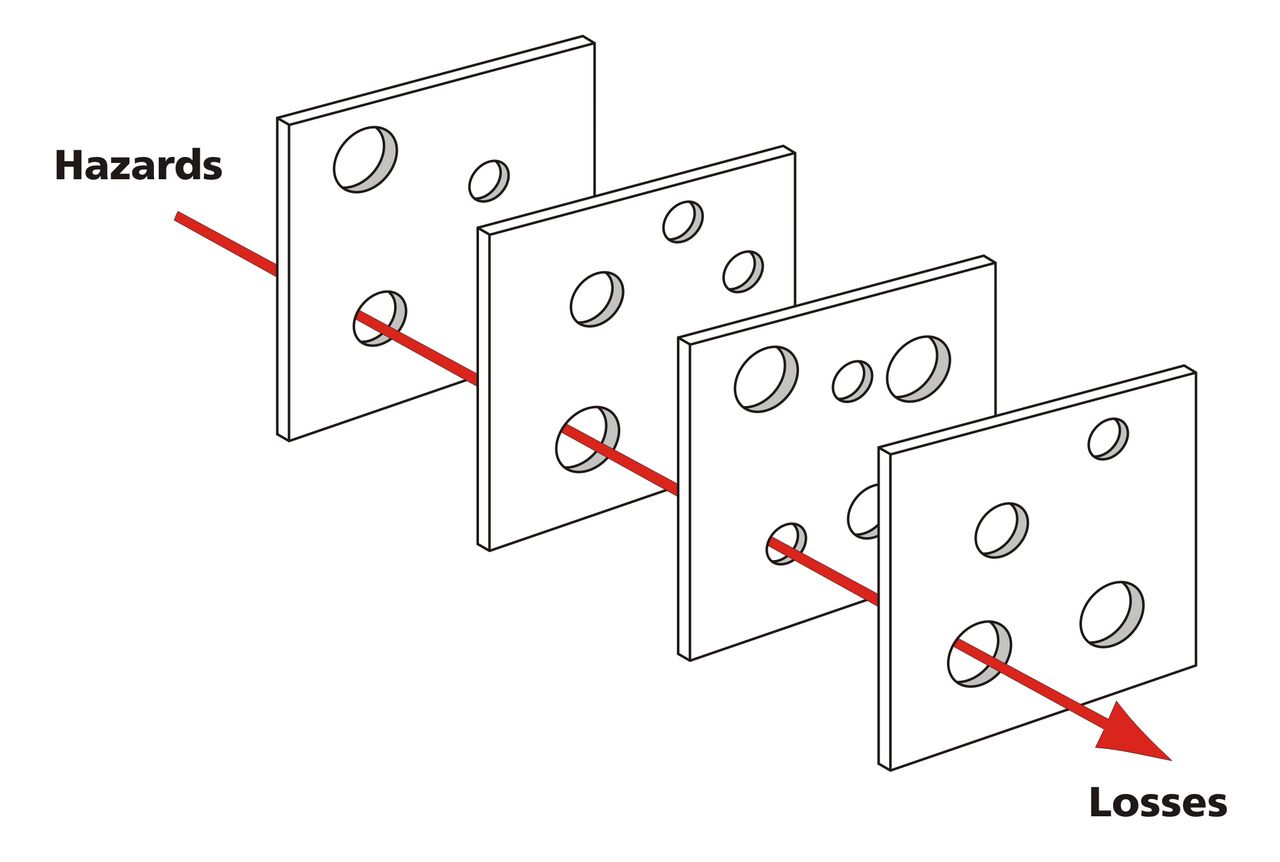
Where ethics committees came from
The American hospital ethics committee has an unusually precise origin. When the New Jersey Supreme Court decided In re Quinlan on 31 March 1976 — permitting Joseph Quinlan to authorize withdrawal of his daughter Karen Ann’s ventilator — the court cited a 1975 law review article by the pediatrician Karen Teel, who had suggested that hospitals convene ethics committees to share the burden of such decisions. The court effectively recommended the mechanism, and hospitals started building it.
The second push was uglier. On 9 April 1982 an infant known publicly as Baby Doe was born in Bloomington, Indiana with Down syndrome and esophageal atresia with a tracheoesophageal fistula, which surgery could have repaired. His parents declined surgery and feeding; the Indiana courts declined to intervene; he died six days later, on 15 April. The federal response produced the “Baby Doe rules” and the Child Abuse Amendments of 1984, which encouraged hospitals to establish Infant Care Review Committees. By 1992 the Joint Commission required accredited hospitals to have a mechanism for addressing ethical issues in patient care — and the committee became near-universal, for the ordinary reason that accreditation required it.
What do these bodies do? Three things, and it is worth keeping them separate: case consultation, policy development (do-not-resuscitate rules, surrogate hierarchies, conscientious objection procedures, allocation protocols) and education. The largest national survey, by Ellen Fox, Sarah Myers and Robert Pearlman in 2007, found ethics consultation services in 81 percent of US general hospitals and in every hospital with more than 400 beds — but a median of only three consultations per year, and only 41 percent of the people performing them had any formal supervised training. That combination, near-universal presence and thin capability, is the honest picture. It is why the American Society for Bioethics and Humanities published Core Competencies for Healthcare Ethics Consultation in 1998 and revised it in 2011, and why it created the Healthcare Ethics Consultant-Certified credential in 2018.
Common misconception: that an ethics consult is a tribunal that decides. In almost every American hospital it is advisory. It clarifies the question, gathers the parties, identifies the ethically defensible options and documents the reasoning; the decision stays with the patient, the surrogate and the responsible clinician. That is not weakness — a committee with authority to overrule would concentrate exactly the power that ethics exists to check. It does mean that if you request a consult expecting someone to make the problem go away, you will be disappointed, and if you request one expecting an inspectable record of how a hard call was reached, you will not.
Does any of it work?
There is more evidence than skeptics assume and less than enthusiasts claim. The strongest single study remains Lawrence Schneiderman’s randomized trial published in JAMA in 2003: 551 patients in the intensive care units of seven US hospitals, randomized to offered ethics consultation or usual care when value-laden conflict arose. Mortality was unchanged — consultation is not a treatment — but among patients who ultimately died in hospital, consultation was associated with about three fewer hospital days, one and a half fewer ICU days and nearly two fewer days on a ventilator, and at least eighty percent of the physicians, nurses and family members interviewed said it had been helpful. Read carefully, that is a result about reducing non-beneficial treatment in cases where everyone was stuck, which is precisely what the service claims to do.
The more transformative idea is that individual consults are the wrong unit of analysis. The Veterans Health Administration’s IntegratedEthics program built preventive ethics alongside consultation on exactly this premise: if the same conflict recurs, you have a system defect. When a hospital consults eleven times in a year about surrogate decision-makers who cannot be located, the answer is not eleven excellent consultations. It is a change to the admission process that asks every patient who should speak for them, and a place in the record where that answer lives. This is the ethics equivalent of moving from treating cases to changing the water supply.
Just culture: what to do after something goes wrong
The most consequential institutional idea in this chapter is just culture, articulated for healthcare by David Marx in 2001 and grounded in James Reason’s work on human error. It begins from a hard empirical fact: punishing error suppresses reporting, and suppressed reporting blinds the organization, so blame-based responses make the next patient less safe. But its opposite — a blanket no-blame culture — is equally indefensible, because some conduct genuinely warrants sanction and staff know it. Just culture threads between them by asking not how bad was the outcome but what was the behavior.
| Behavior | What it means | Example | Correct response |
|---|---|---|---|
| Human error | An inadvertent slip, lapse or mistake — doing other than intended | Grabbing a look-alike vial from an adjacent bin during a busy handover | Console. Support the person; redesign the process, labeling or storage |
| At-risk behavior | A drift into a shortcut whose risk is not recognized or is mistakenly believed justified | Skipping the second-nurse check because it “always slows things down and never catches anything” | Coach. Make the hazard visible, remove the incentive to drift, restore the barrier |
| Reckless behavior | Conscious disregard of a substantial and unjustifiable risk | Diverting controlled substances; operating while intoxicated; falsifying a record | Discipline. Sanction, report to the board, and still examine the system that enabled it |
Two tests keep this honest. Reason’s substitution test asks whether another similarly trained, similarly experienced person in the same circumstances, with the same information and the same staffing, would plausibly have done the same thing; if the answer is yes, you have a system problem wearing an individual’s name. And outcome bias must be actively resisted: the identical shortcut is judged trivial when the patient is fine and criminal when the patient dies. Judging the behavior rather than the outcome is unnatural, and it is the entire discipline.
The case that taught this to a generation of British clinicians is that of Hadiza Bawa-Garba. Six-year-old Jack Adcock died of sepsis at Leicester Royal Infirmary on 18 February 2011. The trainee paediatrician caring for him had returned from maternity leave that day, was covering the emergency department, the children’s assessment unit and the wards across six floors without a consultant on site, and the hospital’s electronic results system had failed for hours. She was convicted of gross negligence manslaughter in November 2015; in January 2018 the High Court, on the General Medical Council’s appeal, ordered her erased from the register; in August 2018 the Court of Appeal overturned that and restored a suspension. It was also widely believed that her own written reflections had been used against her — the trial judge and the GMC dispute this — but the belief alone measurably chilled candid reflective writing among trainees across the United Kingdom. That is the deepest lesson in the case: in a system that runs on voluntary honesty, the perception that honesty will be weaponized is nearly as destructive as the reality.
When the machinery becomes theater
Structures can be built to look ethical rather than to be ethical, and the tell is always the same: the structure exists but has no teeth, no data and no consequences. Enron had a sixty-four-page code of ethics. Its board twice suspended that code’s conflict-of-interest provisions in 1999 so that chief financial officer Andrew Fastow could run the off-balance-sheet partnerships that later destroyed the company. The code was not violated in secret; it was formally waived, in minutes, by the people who wrote it.
The research points the same way. Linda Treviño, Gary Weaver and colleagues, surveying employees across six large US companies in 1999, found that whether a company had a code mattered far less than whether employees believed leaders were personally committed and consistent — and that the single most damaging thing they measured was a program employees read as existing mainly to protect senior management from blame. Meanwhile the Ethics & Compliance Initiative’s survey work has tracked self-reported retaliation against US employees who reported misconduct climbing from about 22 percent of reporters in 2013 to 44 percent in 2017 and to roughly 79 percent by 2020. Definitions and samples shift between waves, so treat the exact numbers with care; the direction is the warning: hotlines without protection are data-collection systems for identifying people to punish. Judge an ethics program by four things — who it reports to, whether anyone senior has ever been sanctioned by it, what happened to the last person who used it, and whether it publishes anything.
Ethics infrastructure earns its keep only when it converts single cases into system change and responds to failure by judging behavior rather than outcome — and a program with no teeth, no data and no visible consequences for the powerful is worse than none.
Section 5Carrying It: Distress, Repair and a Practice That Lasts

Four different injuries that get called one thing
Working adults in health and human services are routinely told they are “burned out” and offered resilience training. Often the label is wrong, and a wrong label sends help to the wrong address. Burnout, as Christina Maslach defined and measured it from 1981, is an occupational syndrome with three dimensions — emotional exhaustion, depersonalization or cynicism, and reduced sense of personal accomplishment — caused chiefly by chronic workload and control mismatch. The World Health Organization classified it in ICD-11 in 2019 as an occupational phenomenon, explicitly not a medical condition.
Moral distress is something else. Andrew Jameton named it in 1984 in a nursing ethics textbook: it arises when one knows the ethically right course of action but institutional constraints make it nearly impossible to pursue. The pain is not exhaustion; it is the specific misery of complicity. Elizabeth Epstein and Ann Hamric added the crucial temporal insight in 2009. Distress does not fully resolve when the episode ends; it leaves what George Webster and Françoise Baylis had called moral residue, and successive episodes stack on that residue in what Epstein and Hamric named the crescendo effect — each new case starting from a higher baseline than the last. This is why the eighth futile resuscitation hurts more than the first, and why a person can leave a job that has not changed in any measurable way.
Moral injury is more severe again. Jonathan Shay coined it in Achilles in Vietnam (1994) to describe the wound produced when a legitimate authority betrays what is right in a high-stakes situation; Brett Litz and colleagues broadened it in 2009 to include perpetrating, failing to prevent, or bearing witness to acts that violate deeply held moral beliefs. In July 2018 the physicians Wendy Dean and Simon Talbot argued in STAT that clinicians were being misdiagnosed with burnout when they were morally injured — unable to deliver the care they knew patients needed because of forces beyond their control. The reframing caught on because it moves the pathology from the worker to the conditions, and the treatment from yoga to structural change. Not everyone accepts it; some researchers argue the term is being stretched past usefulness, and that debate is unresolved.
| Condition | Core experience | Root cause | What actually helps | What insults people |
|---|---|---|---|---|
| Burnout | “I have nothing left.” | Chronic overload, low control, insufficient reward or community | Staffing, schedule control, reduced administrative burden, real recovery time | A resilience module added to an already full workload |
| Compassion fatigue | “I cannot feel for one more person.” | Repeated empathic engagement with suffering; secondary traumatic stress | Caseload variation, peer processing, trauma-informed supervision | Being told to care more |
| Moral distress | “I know what is right and I am prevented from doing it.” | Institutional constraints: policy, hierarchy, resources, fear | Removing the constraint; ethics consultation; escalation paths that work | Being coached to accept what should be changed |
| Moral injury | “I took part in something that violated who I am.” | Betrayal by legitimate authority; participation in or witness to serious wrong | Acknowledgment, moral repair, meaning-making, specialist mental health care | Any framing that locates the defect in the injured person |
What is known to help, and what is theater
The American Association of Critical-Care Nurses published the Four A’s in 2004 as a structured response to moral distress: Ask whether what you are feeling is moral distress rather than fatigue; Affirm your distress and your professional obligation to act on it; Assess the source, severity and your own readiness to act; and Act, with a plan that anticipates resistance and preserves you. Its virtue is that it ends in action. Naming distress without changing anything simply teaches people to tolerate it, which is how organizations quietly convert an ethics problem into a wellness problem.
At the group level, the most durable intervention is Schwartz Rounds. Kenneth Schwartz was a Boston healthcare attorney who wrote “A Patient’s Story” for the Boston Globe Magazine on 16 July 1995 about his own lung cancer treatment, arguing that small acts of kindness from staff had made the unbearable bearable. He died that September, having founded the center that bears his name. Schwartz Rounds are a monthly, hour-long, multidisciplinary meeting where staff discuss the emotional and ethical dimensions of a case — explicitly not the clinical management, and explicitly with cleaners, porters and clerks in the room alongside surgeons. They now run in hundreds of organizations across North America and, through the Point of Care Foundation, the United Kingdom. An English evaluation led by Jill Maben in 2018 found that the proportion of regular attenders screening positive for poor psychological wellbeing halved over eight months, from 25 to 12 percent, while non-attenders barely moved, from 37 to 34 percent. Attendance is self-selected and the evidence base remains modest, so treat that as encouraging rather than settled.
Cynda Rushton at Johns Hopkins has developed moral resilience — the capacity to sustain or restore integrity in response to moral adversity — as the individual-level counterpart. The idea is sound and the caution is essential: resilience language is easily conscripted as a way of asking staff to absorb institutional failure indefinitely. Rushton herself insists it is not a substitute for changing the conditions. At the policy level, the National Academy of Medicine’s 2019 consensus report Taking Action Against Clinician Burnout put the burden squarely on system design, and the Dr. Lorna Breen Health Care Provider Protection Act — signed on 18 March 2022 and named for a New York emergency physician who died by suicide on 26 April 2020 — funded programs to reduce the licensing and credentialing questions that had long punished clinicians for seeking mental health care.
Test any wellness offering with one question: does it change the conditions, or does it change my tolerance for the conditions? Both have a place — sleep, therapy and peer support are genuinely protective — but an employer that offers only the second is asking you to subsidize its staffing model with your nervous system. The tell is where the intervention sits on the calendar: if resilience training is mandatory and the ethics consult service is optional, you have your answer.
Moral repair when you are the one who was wrong
You will get something wrong. Not may — will. The philosopher Margaret Urban Walker, in Moral Repair (2006), argues that what wrongdoing damages is not primarily a rule but a relationship and a set of expectations, and that repair therefore requires acknowledgment, accountability and the restoration of trust rather than merely a penalty. Practically, that means four moves: tell the person what happened in plain language and promptly; take responsibility without hedging into the passive voice; make it right materially where that is possible; and change something so it does not recur, then tell them what you changed.
This is not naive. The University of Michigan Health System adopted a communication-and-resolution approach in 2001 under Richard Boothman: full disclosure, proactive investigation, apology and compensation where care was unreasonable, and firm defense where it was not. Allen Kachalia and colleagues reported in Annals of Internal Medicine in 2010 that the monthly rate of new claims fell from 7.03 to 4.52 per 100,000 patient encounters, lawsuits from 2.13 to 0.75, and median time from claim to resolution from about sixteen to about eleven months. It was a before-and-after study at a single academic center during years when claims were falling nationally, so the size of the effect is arguable; the direction has held up in later communication-and-resolution programs. Most US states now have apology-protection statutes of some kind, and the Agency for Healthcare Research and Quality published its CANDOR toolkit in 2016 to spread the model. Honesty after harm is not only right; on the best available evidence it is also cheaper than concealment.
A practice you could still be running in ten years
Everything in this chapter reduces to a small number of habits that survive contact with a real career. Donald Schön distinguished in 1983 between reflection-in-action — thinking while doing, the expert’s adjustment mid-procedure — and reflection-on-action, the deliberate review afterward. Professionals get the first through experience. The second only happens if it is scheduled.
| Habit | What it is concretely | Rhythm | Why it works |
|---|---|---|---|
| Written red lines | Three to five things you will not do, written before anyone asks — falsify a record, chart an assessment you did not perform, stay silent about a colleague impaired at work | Written once; reread annually | Pre-commitment beats in-the-moment resolve; removes the item from negotiation |
| Decision journal | Four lines on any hard call: the question, the options, why you chose, what you expected to happen | At the time, not after | Defeats hindsight bias and gives you real data on your own judgment |
| A named ally | One person, ideally outside your reporting line, who has agreed in advance to be called and to tell you the truth | Standing agreement | Asch showed a single dissenting ally collapses the conformity effect |
| Rehearsed scripts | Three sentences you have said aloud: the CUS escalation, the refusal, the disclosure opener | Practiced, not just read | Under pressure you perform at the level you rehearsed, not the level you understand |
| Scheduled reflection | Twenty minutes monthly reviewing the journal; one case discussed with a colleague | Monthly | Reflection-on-action does not happen spontaneously in a busy life |
| Drift check | Compare your current practice against your practice three years ago on one specific behavior | Annually | Incremental erosion is invisible at the daily scale and obvious at the multi-year scale |
| An exit number | The condition under which you would leave, defined before you are trapped by salary, seniority or fear | Reviewed with any major change | An unstated exit condition is never met; a stated one preserves your capacity to refuse |
None of this is heroic and that is the point. The people who hold up over decades are rarely the most philosophically sophisticated. They are the ones who wrote things down, kept one honest friend, practiced the difficult sentence before they needed it, and treated their own integrity as something to be maintained rather than assumed. Ethics, done properly, looks less like a moment of moral clarity and more like a maintenance schedule.
Moral distress, residue and injury are injuries of conditions rather than character, so the durable practice pairs honest self-maintenance — red lines, a journal, an ally, scheduled reflection — with an insistence that the conditions themselves be changed.
The chapter in one breath
Ethical failure in working life is rarely a failure of belief. It is a failure of noticing, of language, of nerve and of design — which is why hurried seminarians walked past a groaning man and why competent nurses watched a woman’s oxygen saturation collapse for twenty minutes without pressing the point. That diagnosis dictates the cure. Because situations are strong and resolve is weak, you move the decision earlier: a written method that puts the question first and the facts before the values, a rehearsed sentence, a named ally, a red line set before anyone asks. Because rank produces hedging, institutions make challenge mandatory rather than brave, through graded escalation language and the two-challenge rule. Because a single case is almost never a single case, ethics consultation has to feed preventive work that changes the system. Because blame suppresses reporting, just culture judges behavior instead of outcome and applies the substitution test before it applies a sanction. And because the work leaves a mark — distress, residue, injury — a serious practice pairs honest self-maintenance with a refusal to accept resilience as a substitute for changing conditions. Ethics, sustained over a career, looks less like clarity and more like maintenance.
Words worth knowing
| Term | What it means |
|---|---|
| Bounded ethicality | The predictable, unconscious ways our behavior falls short of our own ethical standards, described by Bazerman and Tenbrunsel. |
| Ethical fading | The disappearance of a decision’s moral dimension from the language used to describe it, so it is never weighed. |
| Motivated blindness | Failure to see misconduct when noticing it would be costly to us — the structural weakness of auditors, sponsors and supervisors. |
| Situationism | The claim, urged by Harman and Doris, that behavior is driven so heavily by circumstance that stable character traits may not exist; contested by Kamtekar and Annas. |
| Four topics method | Jonsen, Siegler and Winslade’s 1982 grid: medical indications, patient preferences, quality of life, contextual features, worked in that order. |
| CASES approach | The Veterans Health Administration’s consultation process — clarify, assemble, synthesize, explain, support. |
| Preventive ethics | Treating recurring ethics conflicts as system defects and fixing the process rather than repeating the consult. |
| Four component model | James Rest’s account of moral behavior as sensitivity, judgment, motivation and implementation, any one of which can fail. |
| Giving Voice to Values | Mary Gentile’s method: assume you know what is right, then script, rehearse and pre-answer the predictable rationalizations. |
| Mitigated speech | Hedged, indirect language used by subordinates toward superiors; a documented contributor to aviation and clinical disasters. |
| Two-challenge rule | A requirement that if a safety concern is raised twice without adequate response, the person must escalate or take control. |
| CUS | The TeamSTEPPS escalation script: “I am Concerned, I am Uncomfortable, this is a Safety issue.” |
| Psychological safety | Amy Edmondson’s construct: a shared belief that the team is safe for interpersonal risk-taking; predicts reporting and learning. |
| Just culture | A response framework distinguishing human error (console), at-risk behavior (coach) and reckless behavior (discipline). |
| Substitution test | Asking whether a similarly trained person in the same circumstances would plausibly have acted the same way; if yes, the problem is the system. |
| Outcome bias | Judging the severity of a behavior by how badly it happened to turn out rather than by the behavior itself. |
| Moral distress | Jameton’s term for knowing the right action but being prevented from taking it by institutional constraint. |
| Moral residue and crescendo effect | Webster and Baylis’s term for the distress that does not fully resolve, and Epstein and Hamric’s account of later episodes building on an ever-higher baseline. |
| Moral injury | The wound from betrayal by legitimate authority, or from committing, failing to prevent or witnessing acts that violate one’s deep moral beliefs. |
| Moral repair | Margaret Urban Walker’s account of restoring damaged relationships and expectations through acknowledgment, accountability and change — not merely penalty. |